-
Average rating
15
Games
0
Votes cast
Heartbeat
Shipped Titles
Games (15)

Submarine Commander
Sol1999
Introducing a whole new gaming experience.... JVC's submarine commander puts you in control of a nuclear powered submarine and teaches you the stealth and tactics needed for anti submarine warfare. Using hi-tech weapons, sonar, radar and periscope you must defeat adversaries, control sea communication lines and dominate the maritime battlespace. Having passed these tests you can play in the games mission mode featuring over twenty tense command sorties.
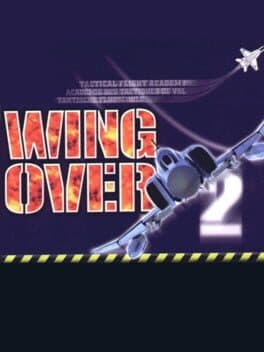
Wing Over 2
Beluga Computer1998
The sequel to the 1997's overlooked Wing Over, Wing Over 2 features a far more involved story mode and leaves behind the tournament-style gameplay which drove the first instalment.
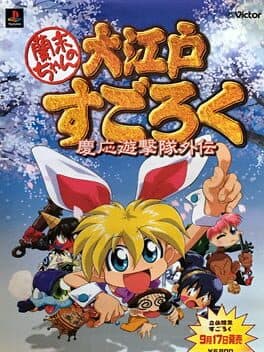
Rami-chan no Ooedo Sugoroku: Keio Yuugeki-tai Gaiden
Victor Entertainment1998
Rami-chan no Ooedo Sugoroku: Keio Yuugekitai Gaiden is a 1998 video game for the PlayStation. Developed by Victor Interactive Software, it is the third and last game in the Keio Flying Squadron series, and was released only in Japan. While the first game is a side-scrolling shoot 'em up and its sequel, Keio Flying Squadron 2, is a platformer with shooter sections, the third game is a party game. Like the first two games, the third game refers to Japanese culture, both ancient and modern simultaneously.
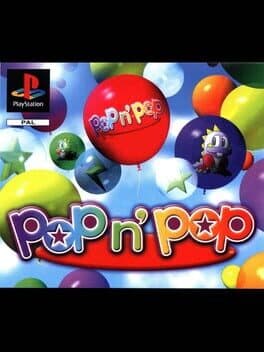
Pop'n Pop
Dreams1998
Pop'n Pop is a puzzle game similar to Puzzle Bobble; the player's goal is to release colored bubbles from the bottom on the screen within a limited amount of time, trying to match three or more bubbles of the same color. The difference in this version is that bubbles cannot bounce on the walls; the player can only release them vertically. The game features characters from various Taito games, such as Bub and Bob from the Bubble Bobble series, Tiki from The New Zealand Story, the dwarves from Doko Doko Don, and others.
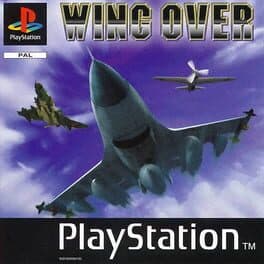
Wing Over
Beluga Computer1997
Wing Over is an arcade flight sim released for the PS1 in 1997. Featuring system link support for multi-player and a full single player tournament system, as well as a large roster of characters and planes to choose from, Wing Over has earned the title of a cult classic on the PS1.

Peak Performance
CAVE Interactive CO1997
PEAK PERFORMANCE is a racing game based on the Chevrolet Pikes Peak International Hill Climb. The signature course, Pikes Peak Hill Climb, is a solitary climb up a mountain, with more turns on one track than most have in an entire game. This track, as with half of the other four courses, features a combination of dirt and pavement in both urban and rural settings, providing enough variety and difficulty to keep things interesting. Each of the game's 25 cars has its own feel, giving the game a good amount of depth and keeping the replay value high. Each car can also be colored, named, and completely customized, right down to the wheels.
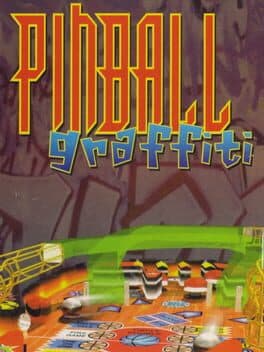
Pinball Graffiti
1996
The first true 32 bit pinball tables. View your extreme skills from any angle and any perspective with 3D panning camera angles and sweeping crane shots, and even an inside the ball perspective. Sampled sound effects and video clips make these super fast tables the only ones worth playing.

Impact Racing
Funcom Dublin Ltd.1996
Part automotive racing, part shooter, Impact Racing lets you choose from five different cars which vary in degrees of speed, power, engine size, payload, armor strength, and grip. While racing on any of the twelve tracks, your car is capable of destroying other vehicles in its path. Each of the five cars is equipped with an endless supply of laser beams. During the race you can add to the arsenal by collecting heatseekers, mines, exploding firewalls, concussion missiles, and smart bombs. You can also pick up extra time and armor along the way. In order to progress through the game and race in bonus rounds, you must complete the courses and destroy a certain number of cars during an allotted time period.
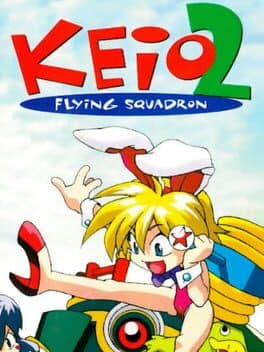
Keio Flying Squadron 2
Victor Entertainment1996
Keio Flying Squadron 2 was released in 1996 for the Sega Saturn in Japan, Europe, and Australia. The second installment of the series continues the story of Rami's adventures as the Keeper of the Secret Treasure (a sphere passed down through generations of Rami's family). Rami races Dr. Pon and a new rival Himiko Yamatai for an ancient treasure that can be unlocked with six spheres. Two of the stages retain the shoot-'em-up style of the first game, but the lesser dragons can be obtained as bonuses only. Mainly the stages consist of sidescroling platformer stages. These scroll from right to left on the Japanese version and left to right on all other versions. Several bonuses can be collected including three weapons (Rami can also bounce on the heads of enemies to defeat them): A large mallet, used only for hitting enemies An umbrella, used to hit enemies, float and deflect overhead obstacles A bow, used to shoot arrows at enemies. Besides the platformer and shoot-'em-up stages, there is vertically scrolling special stages, an underwater stage and a rollercoaster stage, making the game a multi-genre platformer. Points spheres can be collected throughout the game. A reward system accessed from the main menu unlocked helpful hints and behind-the-scenes extras depending on the highest and lowest scores achieved through playing.
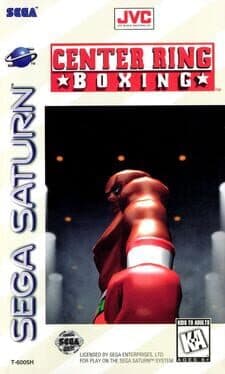
Center Ring Boxing
Victor Entertainment1995
Center Ring Boxing is an unlicensed 3-D polygon boxing game where the player can choose from 30 different male or female boxers and compete in six different weight divisions. They may also create their own boxer and use them to rise through the ranks to become champion choosing from one of five distinct styles of boxing. There is also a trainer by the name of Snake that will help train the player as they progress thorough the game as well as become a selectable character along with a hidden character in two-player versus mode once the player becomes heavyweight champion. A practice mode also is present that will allow the player to get accustomed to the game's controls and features 12 different camera angles and a replay mode that will the player to view their previous fight in it's entirety.
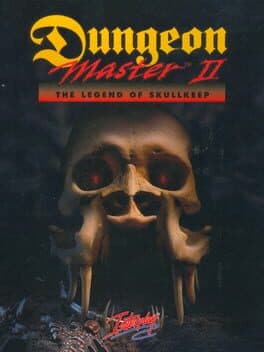
Dungeon Master II: The Legend of Skullkeep
FTL Games1994
Dungeon Master established several new standards for role playing and computer games in general. Dungeon Master was a realtime game instead of the traditional turn-based approach that was prevalent until then. Instead of using text-based commands to interact with the environment, players directly manipulated objects and the environment by clicking the mouse in the enlarged first-person view. Abstract Dungeons and Dragons style experience points and levels were eschewed in favor of a system where the characters' skills were improved directly via using them. It also introduced some novel control methods including the spell casting system, which involved learning sequences of runes which represented the form and function of a spell's effect. For example, a fireball spell was created by mixing the fire symbol with the wing symbol. This kind of attention to detail and focus on the user interface was typical of the game and helped create an often captivating sense of craft and ingenuity. Other factors in immersiveness were the then-revolutionary use of sound effects to indicate when a creature was nearby, and (primitive) dynamic lighting.
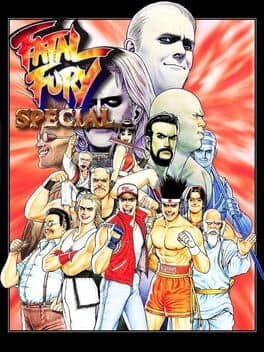
Fatal Fury Special
JVC Musical Industries1993
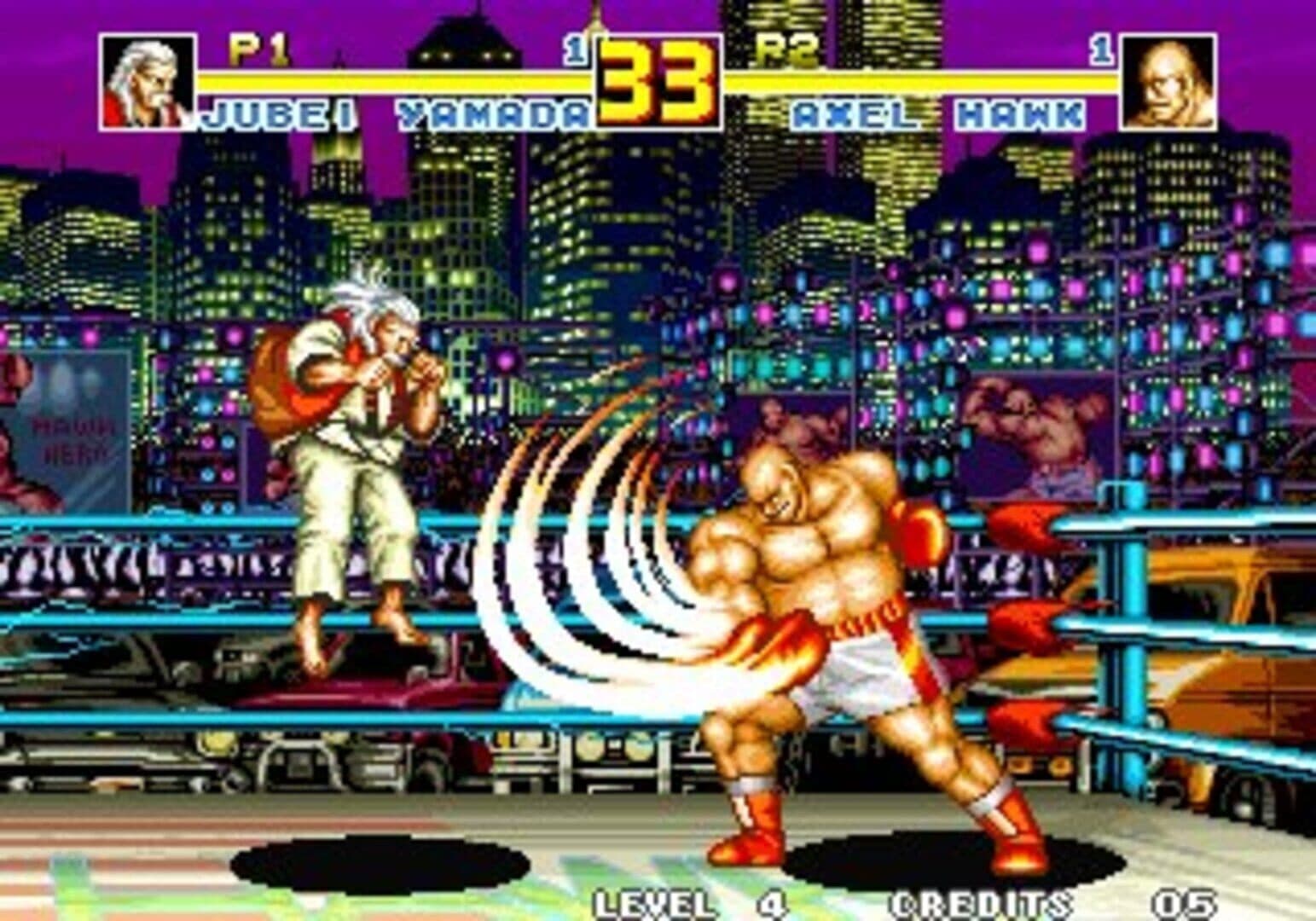
The GRANDMOTHER of all battles! 15 of the FATAL FURY series' top stars gather in the match of the millenium! Use the resurrected Geese Howard and Wolfgang Krauser in a dazzling arena! All you have ever wanted in a fighting game is here in FATAL FURY SPECIAL!
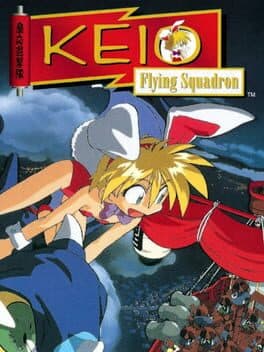
Keio Flying Squadron
Victor Entertainment1993
Keio Flying Squadron (慶応遊撃隊 Keiōyūgekitai?) is a scrolling shooter video game developed and published by Victor Entertainment in 1994 for the Sega/Mega CD in Japan, Europe, and North America. It is the first game of the Keio Flying Squadron series with a simple shoot-'em-up style of play. Gameplay The game consists of the protagonist Rami riding on top of Spot, who can shoot fireballs at enemies. When Spot is not firing, two smaller dragons (Companion fighters) appear one after another to assist Rami and Spot. The lesser dragons shoot smaller fireballs and can be sacrificed to do larger damage, only to reappear when Spot ceases to shoot. Release In Europe, a demo of the first level of this game was provided by Sega Pro magazine. The game seemed to end after the first level, but in fact the whole game was accessible on the disc by using a level-select cheat to skip to the second level, and then continuing through the game. Reception Retro Gamer included among top ten Mega CD games, calling it "a perfectly acceptable substitute" OF Konami's Parodius that features "similar style of horizontally scrolling wackiness and puts the Mega-CD hardware to good use to produce some excellent cut-scenes and a brilliant CD-quality soundtrack."

Wonder Dog
Core Design1992
Wonder Dog is a platform game developed by JVC and released for the Sega CD console in 1992. The game follows the story of Johnny, a boy who is transported to a magical world by a talking dog named Wonder Dog. Johnny is tasked by the dog to save the kingdom of Screamania from the evil Queen Vorka. The game takes place across various themed levels, such as a haunted castle, an underwater cave, and a toy factory. Throughout the game, the player controls Johnny, who has the ability to transform into different forms with special abilities. For example, he can transform into a flying car, a submarine, or a robot with extendable arms. The goal of the game is to collect keys to open doors to the next level, defeat bosses in each level, and collect items to increase Johnny's health and time. The game also features an animated soundtrack and colorful graphics typical of games from the era. Overall, Wonder Dog is a fun and exciting game that offers a unique and challenging gameplay experience for fans of platform games.
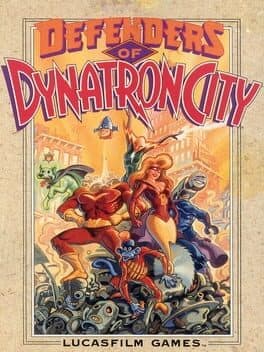
Defenders of Dynatron City
Lucasfilm Games1992
The game centers on a team of superheroes who protect a futuristic metropolis from Dr. Mayhem and his robotic henchmen.