-
Average rating
40
Games
0
Votes cast
Heartbeat
Shipped Titles
Games (40)
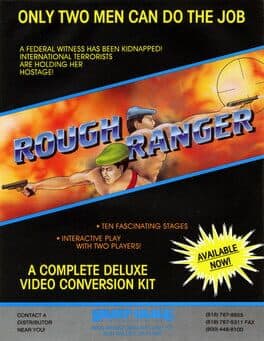
Rough Ranger
SunA Co.1988
Rough Ranger is a side-scrolling arcade platformer / shooter with gameplay and controls nearly identical to Namco's Rolling Thunder.
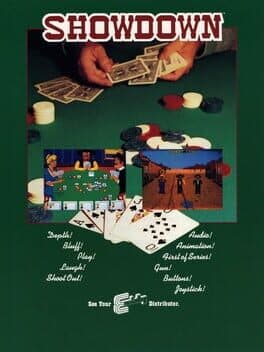
Showdown
Exidy1988
A shooting game with a Western motif. The player uses a gun, mounted to the cabinet, to play a game of poker with Tex (or Doc in some versions), Dolly and Rawhide.
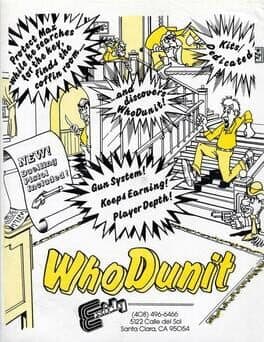
Who Dunit
Exidy1988
A murder mystery shooter where the player uses the gun (mounted to the cabinet) to protect Max from a variety of attacks as well as give him directions.
Hit 'N Miss
Exidy1987
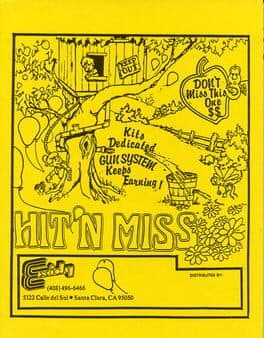
A rifle game where the player shoots the "bad" targets while avoiding the friendly/good targets. The game has a child-friendly theme with balloons, cuddly animals, etc.
Crackshot
Exidy1987
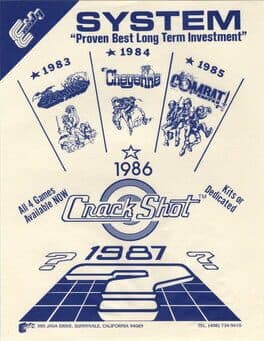
A shooting gallery style game. A player must use his skill to shoot a number of 'good' targets, while not shooting the 'bad' ones, before time runs out. The game has several levels including a bar, Varmit Alley, Bank Robbers, Robots, Birds, outer space, Bank robbers again and a Bonus 'Slot machine' level.
Chiller
Exidy1986
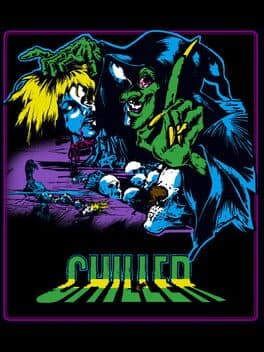
One of the most controversial games of the 1980's, Chiller was an arcade light-gun game. Banned in the UK, the player was tasked with torturing and murdering victims in various settings.
Cheyenne
Exidy1984
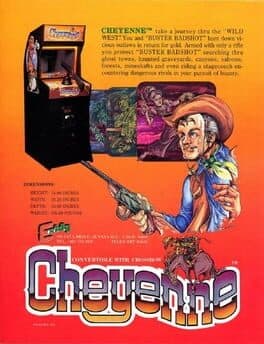
A shooting game, with a western motif. The player uses a gun (mounted to the cabinet) to escort the sheriff through a variety of dangers, gathering bounty for capturing criminals.
Bristles
First Star Software1983
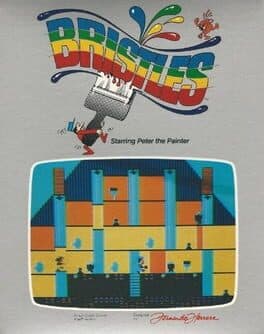
Originally available for home computers in the '80s, developer First Star Software has ported Bristles to the Atari 5200. Featuring eight different game screens and six levels of platforming action, players must attempt to paint a house while avoiding Bucket Chucker and his Flying Half-Pints. Only 100 copies of Bristles were produced, and were first made available at the 2004 Classic Gaming Expo.
Crossbow
Exidy1983
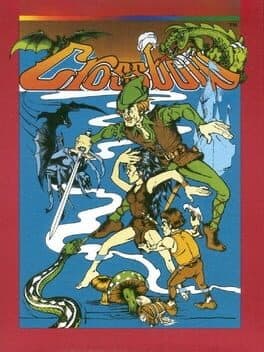
Players protect adventurers in this early light gun arcade game
Flip & Flop
First Star Software1983
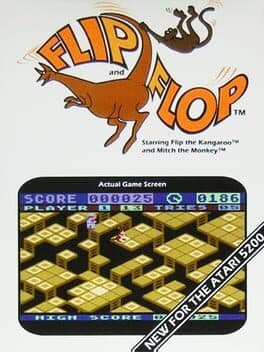
Flip and Flop is an isometric platform game by Jim Nangano for First Star Software. The player controls Flip, a kangaroo, who jumps around on top of the platforms and Mitch the monkey, who hangs underneath platforms.
Fax
Exidy1983
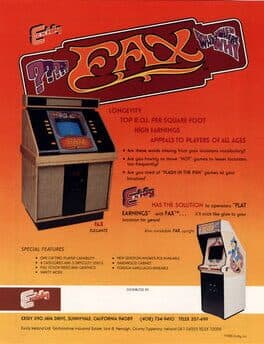
Fax is a trivia game which asks questions about a number of topics, including: General Knowledge, Sports, History and Entertainment. This was released by Exidy in 1983 and written by Vic Tolomei and Larry Hutcherson hopeful to play on the Trivial Pursuit craze as it was released over a year earlier than the registered Trivial Pursuit versions (produced by Bally/Sente). The game came in what was essentially a jukebox cabinet (complete with a woodgrain finish), which lent itself to possible markets outside of the typical arcade setting. It had a 9-inch monitor mounted in the center, logo on the bezel itself and a row of buttons on each side of the screen to accommodate two player simultaneous play. Fax used unique compression to hold nearly 3700 questions in as small of storage as possible. Exidy also sold several EPROM replacement kits that provided new questions but they are nearly impossible to find today.
Victory
Exidy1982
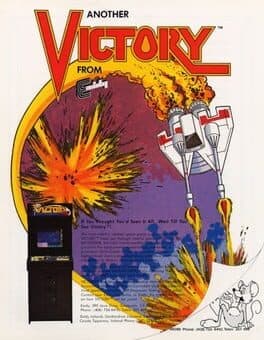
Victory is a game which you control your Battlestar to destroy an alien force which has overrun your planet. This force has installed radar and quark silos on your planet and use their deadly armada to drop paratroopers to the surface to release the quarks. All is not lost however as your Battlestar is equipped capable lasers and shields as well as the “Doomsday Device”. This game was released by Exidy in 1982 and programmed by Vic Tolomei. Your controls are a spinner and 4 lighted buttons (Thrust, Fire, Shield and Doomsday). The hardware for this game is impressive for its time, containing multiple processors and speech/audio chips which add very much to the game experience. Later, there was an upgrade kit that was sold to convert Victory games to a game called “Victor Banana”, changing the in-game graphics to match a more comical theme.
Pepper II
Exidy1982
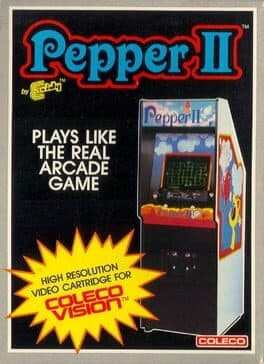
Pepper II is a maze game with zip! The object of Pepper II is simple enough, all you do is zip closed sections of the maze and they will become filled with color. Zip in all the sections of the maze and it's complete. However, if you backtrack you might unzip your path, so be careful! Each stage has four mazes you must complete to move on, but you can move from maze to maze by using the exits located at the top, bottom, and sides of the screen. And don't forget about the bad guys trying to take you out all the while. If one touches you you're toast! You can fight back by zipping sections of the maze closed that contain power-ups that will make you invincible for a short time or clear the screen of all the baddies. The game keeps getting harder as you progress to higher stages.
Teeter Torture
Exidy1982
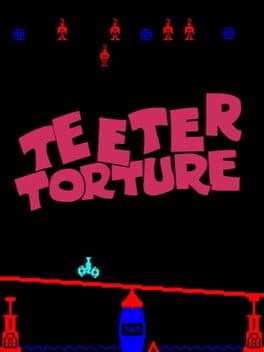
Teeter Torture is a game that has rather mysterious origins. Only a single cabinet has even been found for it. (Fortunately it has been making regular appearances at the California Extreme show for a number of years.) For years there was even confusion as to whether it was an Exidy-produced prototype or some bootleg running on the Exidy hardware.
Hard Hat
Exidy1982
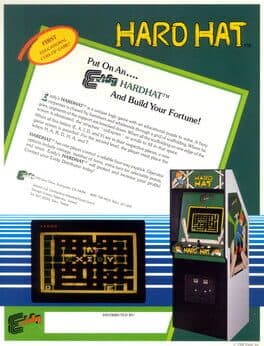
In this Maze game the letters forming the word "Hard Hat" are scattered throughout the maze. It is your task to pull them back in their oreiginal places while not being hit by the enemies.
Astro Chase
First Star Software1982
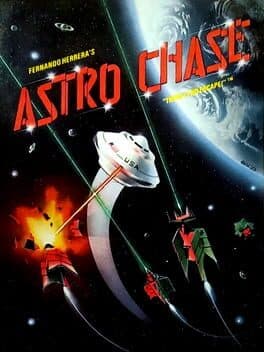
Astro Chase is a multidirectional shooter written by Fernando Herrera for Atari 8-bit computers. It was published by First Star Software in 1982 as the company's first game. Parker Brothers licensed it, releasing cartridge versions for the Atari 8-bit family and Atari 5200 console in 1983 and a Commodore 64 version in 1984. Exidy licensed it for arcade use with its Max-A-Flex cabinet.
Mouse Trap
Exidy1981
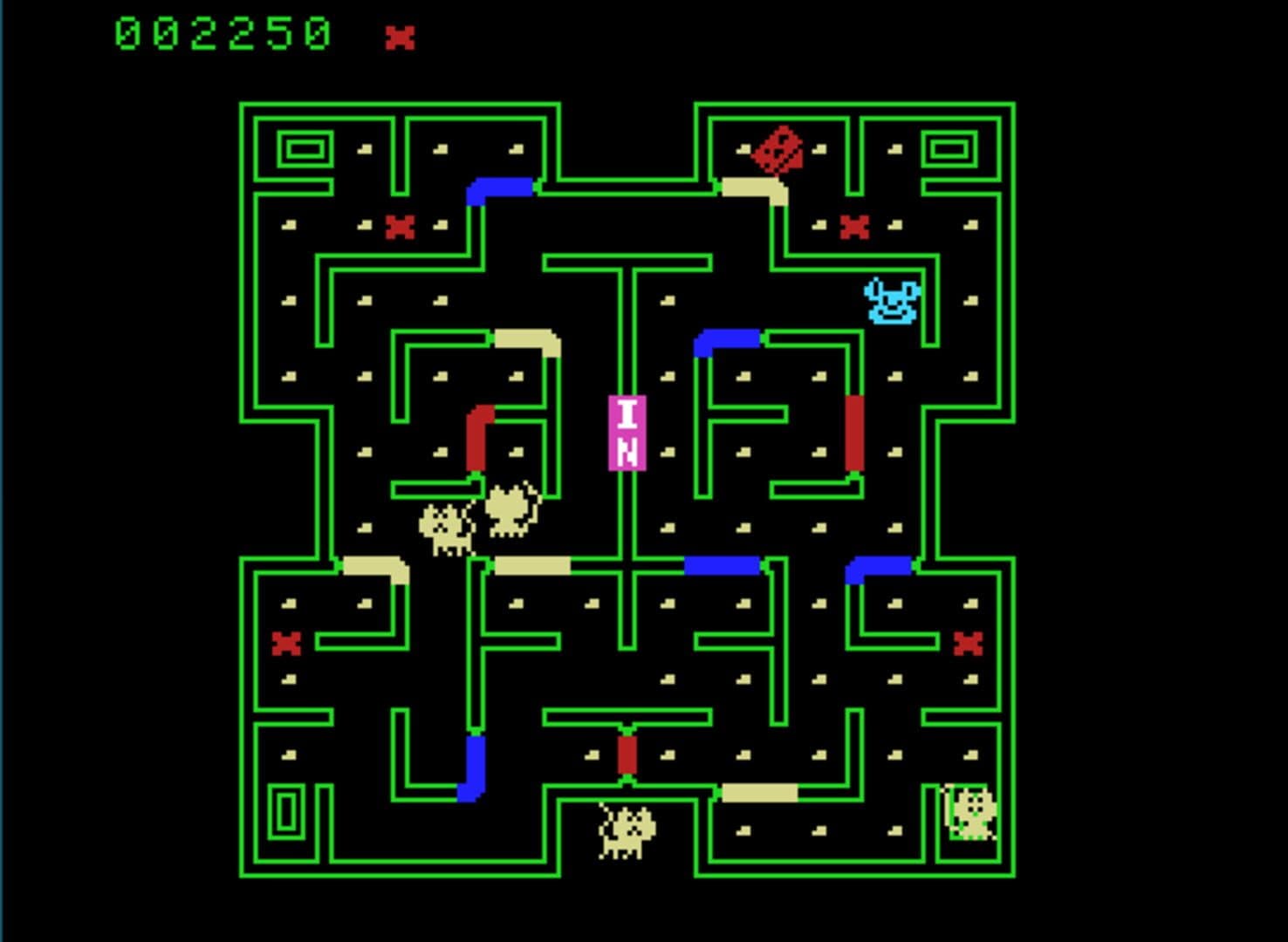
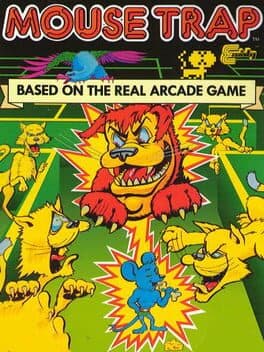
Mouse Trap delivers cheesy, nostalgic fun for all the family! The classic childhood game arrives on Steam with more customisation, modes and cheese!
Venture
Exidy1981
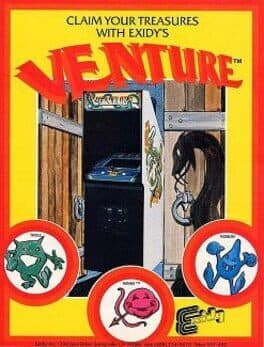
In Venture you control the adventurer Winky who sets out to collect treasure. You start out on an overview map of a dungeon which shows several rooms containing treasure. Since you cannot kill any enemies while rummaging through the dungeon corridors you have to dodge them on your way to the treasure rooms since they will kill you instantly. After entering one of the rooms you are able to fight the various monsters lurking in the rooms while you collect the treasure. Be careful not to linger to long in the treasure rooms because an "Evil Otto" like monster will appear which is invincible and will hunt you down until you leave the room again. After having collected every treasure in every room of a dungeon you move on to the next dungeon.
Tail Gunner 2
Exidy1980
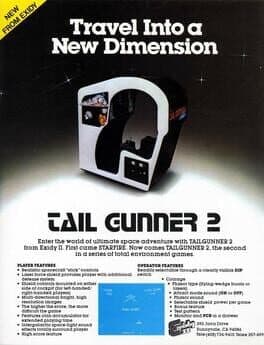
Tail Gunner 2 is the sequel to Cinematronic's Tail Gunner, produced after Exidy purchased the original developer Vectorbeam. It is essentially the same game as Tail Gunner, but produced in a deluxe sit-down cabinet.
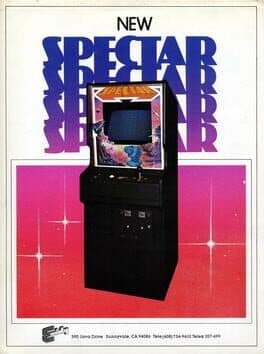
Spectar
Exidy1980
Spectar, released by Exidy in 1980, is the follow-up of Targ. Gameplay is apparently unchanged, you control a vehicle called Whummel into a 9x9 grid maze, chasing down, and being chased by, the alien invaders. Targs have evolved into the more dangerous Rammers, and Spectars appears more often, shooting at player's ship. You use a 4 way joystick to guide your vehicle in the maze, and a pushbutton to shoot at enemies. Up to two players can alternate in gameplay. The most noticeable difference from his predecessor is that to complete a level you must now collect all the gems in the maze, in a Pacman-like game. Rammers and Spectars continue to appear from flashing pods, so you cannot rest and plan your course easily, or you will be overwhelmed by the alien force. Graphic is highly improved compared to his predecessor: the maze now has barricades that must be avoided or can be used as a shielding against the enemies, and has ten environement settings, changing from the "square-block town" of Targ to a city, a forest, a lunar landscape and many more. The enemies too are smarter and faster, and the fact that they go on spawning from the pods makes the game a even more frenzy challenge.
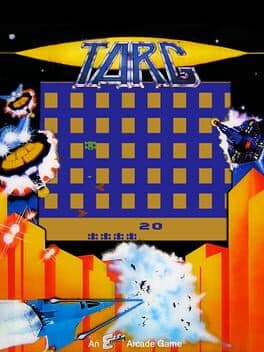
Targ
Exidy1980
Targ is a one or two player shooter game released by Exidy in 1980. Your town is invaded by Targ riders, you must manouvre the heroic vehicle Whummel to destroy them. From time to time, a Spectar comes into screen, and can be destroyed for extra bonus. Action takes place into a 9x9 grid, "Crystal City", where the player's vehicle must avoid and chase down 10 enemy wedge-shaped vehicles. When all enemies are destroyed, you are awarded an extra bonus and can access the following level. Two players can alternate in the game. You use a 4 way joystick to control the Whummel, and a pushbutton to fire at enemies. Progressing in the gameplay causes the Targs to become faster and smarter, for a fast and furious gameplay. A small trivia on the game and characters name: apparently, Targ stands for Target, Spectar stands for Special Target. This game has a sequel, always released in 1980, Spectar.
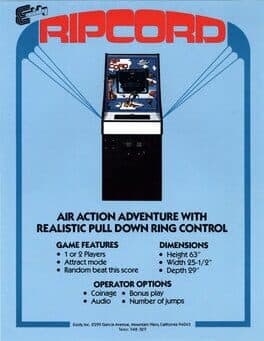
Rip Cord
Exidy1979
Rip Cord was another black & white game released by Exidy in 1979. It was designed and programmed by Arlan Granger. The goal of the game is to jump out of the plane and land safely on one of the many targets down below. The challenge is to avoid the numerous enemy helicopters that occupy the sky in between your plane and the ground. You control the timing of your jump with the Jump button, at which point your parachutist begins hurtling toward the ground out of control. Pressing the D-Ring button shortly afterwards releases the chute and slows your descent. More importantly, it allows you at this point to control your left/right position via the paddle control to help you avoid the enemies.
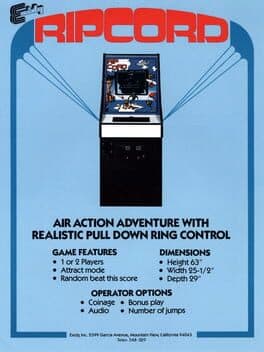
Ripcord
Exidy1979
As a stuntman the player has to parachute on target zones while dodging helicopters and planes on the way down.
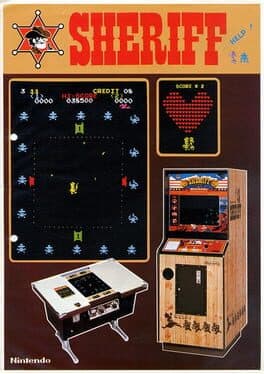
Sheriff
Nintendo R&D11979
The bandits who kidnapped your girlfriend have surrounded you. Now you have to shoot your way out.
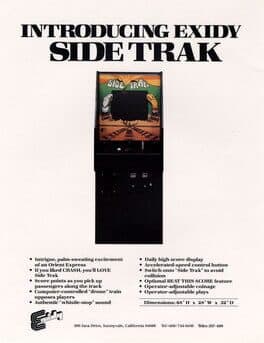
Side Trak
Exidy1979
Side Trak is a black & white man-versus-machine game where the goal is to pick up all of the waiting passengers with your train while avoiding the computer-driver "killer engine" which aims to take you out in a head-on collision. You can control your train via the "fast" button which allows you to temporarily increase your speed on the tracks. You can also use the joystick to switch between several tracks at various junction points. Each time you make a complete circuit around the track and pass the start marker on the outside track, another car is added to your train. Passengers picked up from the outermost track are worth 10 points. Passengers picked up from each successive inner track are worth an additional 10 points. On top of that, passengers picked up when you have additional cars in tow add another 10 points to car. Side Trak is the first of several games that were developed on a common Exidy platform which would eventually become host to their most popular games. Early revisions of the platform — Side Trak included — had custom sound generators tailored for each game, along with a primitive tone generator that could play one of two very short preprogrammed sequences of notes. (Later games eventually included a common sound system.)
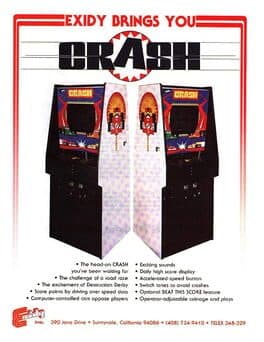
Crash
Exidy1979
A variation on Gremlin's Head On by Exidy.
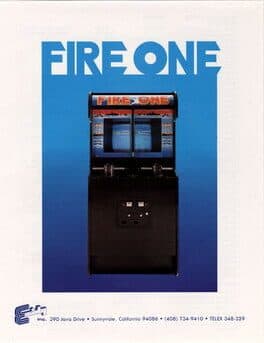
Fire One
Technical Magic1979
Fire One! was a player-versus-player or player-versus-computer submarine showdown, designed and programmed by David Rolfe, Ted Michon, and Susan Ogg for Exidy in 1979. The cabinet was split into two halves, with each player controlling their first-person submarine perspective on their half of the screen. The primary objective of the game is to find and destroy the enemy's submarine, while avoiding the enemy's torpedoes. Through your virtual periscope you are free to launch one of your 8 torpedoes to take out any of the enemy's various ships for extra points. It takes some time to reload each torpedo tube, so you must be judicious in how you plan your attacks. In addition to being able to control the left/right rotation of your periscope, the game also features a submerge button which you can use to temporarily hide from the enemy. Holding this button down keeps you hidden but also keeps you out of the action, allowing the enemy free reign over the seas.
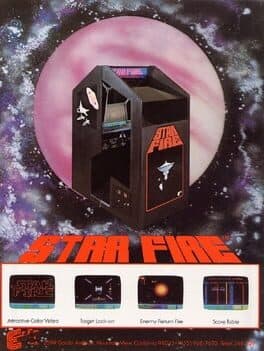
Star Fire
Technical Magic1979
Star Fire is an early color game programmed by David Rolfe with graphics designed by Ted Michon and Susan Ogg. It was released by Exidy in 1979. Star Fire is a first-person space shooter where your mission is to seek out and destroy enemy spacecraft while avoiding incoming missiles. If a number of elements of Star Fire seem similar to Star Wars, your eyes are not deceiving you. Star Fire was originally designed as a Star Wars game, with the eventual hope that either a license would be purchased or that they would change enough of the elements to avoid any legal entanglements. Originally, the authors had hoped that Midway would pick up the game for distribution, but they passed and instead Exidy purchased the game and released it. Star Fire was the first game to come in an environmental cabinet, designed by Michael Cooper-Hart. Even more importantly from a historical perspective, Star Fire was the first game to keep a high score list where the player could enter his or her initials. Prior games had tracked the concept of a high score, but Star Fire was the first to let you personalize the high score entry and display a top ten list with your initials next to your high score. An update to Star Fire, simply called "Star Fire II", was intended to go into the last run of Star Fire units. It features a more refined high score display and easier high score input.
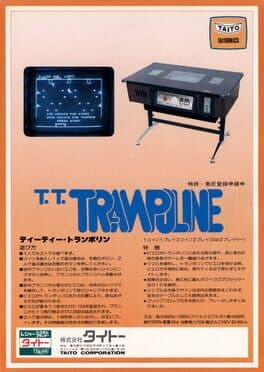
Trampoline
Exidy1978
This is Exidy's sequel to Circus. It was originally developed under the name Trapeze, but only one board of this version is known to exist and it is not thought to have been released i North America. The game did however find success in Japan and was released by Taito in several variations under the Trampoline name in upright and tabletop arcade cabinets.
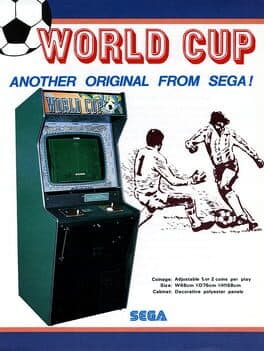
World Cup
Sega Enterprises, Ltd.1977
World Cup is a soccer game in which two players can play against each other. Football players are moved around using a trackball and the ball can be shot using a rotary joystick. When a player moves over another which has the ball, the ball is stolen.
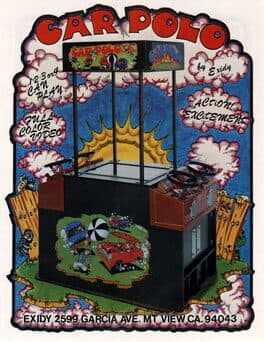
Car Polo
Exidy1977
Car Polo is a Sports game, developed and published by Exidy, which was released in 1977.
Circus
Exidy1977
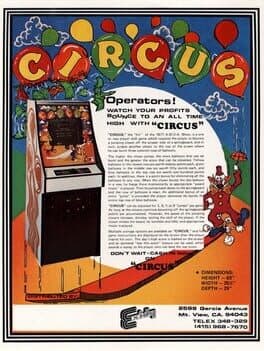
Circus was one of the first games produced by Exidy that used a CPU (6502) to control the game logic instead of hand-crafted hard-coded logic circuits. It ran on a black & white monitor with a color overlay that gave each row of balloons at the top of the screen a different color. It was designed and programmed by Edward Valeau and Howell Ivey of Exidy in 1977. Circus came in an upright dedicated cabinet, and may have also been available in a cocktail configuration as well. Circus machines had white sides with red painted sideart of several balloons in flight. The front of the machine was decorated with a large ornate monitor bezel that also doubled as a marquee (or nameplate). This bezel showed several clowns in a circus scene and had the game title spelled out with multicolored balloons. The control panel was unadorned, save for an analog spinner and a start button. The whole machine was finished off in black T-molding. At least 13,000 units, possibly as many as 20,000, were produced.
Superbowl
Exidy1977
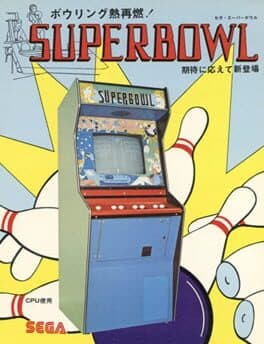
Superbowl is an arcade game released by Sega in 1977. It is a reworked version of Robot Bowl, a 1977 arcade game by Exidy (licensed to Sega) which, despite its name, has nothing to do with American football but instead bowling. Super Bowl was released exclusively to a Japanese audience - other markets saw Exidy's original game.
Robot Bowl
Exidy1977
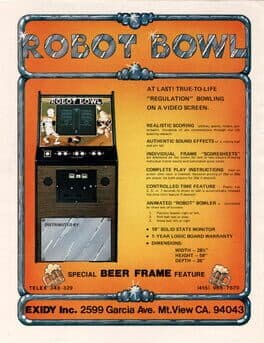
Robot Bowl was a black & white bowling alley game designed and programmed by Edward Valeau and Howell Ivey of Exidy. The game featured one or two robot bowlers playing with the standard bowling rules. To control the outcome, the game had five buttons: left, right, shoot, hook left, and hook right. "Hooking" the ball was the key to getting a good score, as you could only hook the ball after it had been thrown. This made it easy to pick up a spare, but the game made up for it by making splits very common. Robot Bowl was available in two different dedicated cabinets, an upright and a cocktail, both of them used the same internal hardware. The Robot Bowl upright was of the common 1970s 'short cabinet' design, as the machine had no marquee and was only as tall as the monitor. Some machines also had a decorative 'ball return' on the front at the very bottom of the cabinet. There is an interesting story behind that. At the time the game was created, Exidy had just purchased Fun Games and had a number of cabinets left over from one of Fun's driving games. They used these cabinets to get Robot Bowl into production quickly. The only problem was that the cabinets had a hole in the front where the gas pedal had been. Michael Cooper-Hart suggested that they silk-screen the words 'Ball Return' over the hole. The Robot Bowl cocktail was a square box with a perfectly round top. The player controls were on either side of the monitor (and you actually had to look at the game sideways to play). This machine had no decoration of any kind.
Alley Rally
Exidy1976
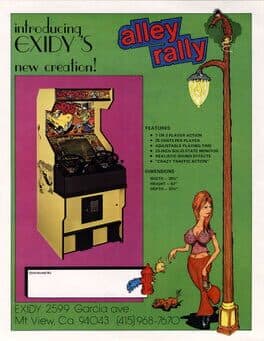
Car racing through crazy traffic.
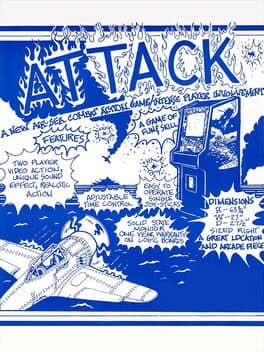
Attack
Exidy1976
An air and sea combat game where the battle is between a plane and a ship.
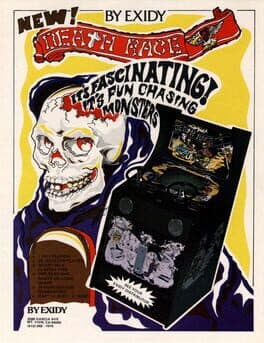
Death Race
Exidy1976
Death Race is a vehicular combat game that puts your car in an open space with gremlins. Your goal is the crash into the gremlins so you can brutally and cruelly kill them. Upon dying, they scream. In the spot where the gremlin once was, a cross-shaped gravestone will be left. This clutters the playing field, making it harder to move around. There are dotted lines on the sides, representing two narrow "safe" zones on the left and right sides of the screen for the gremlins, as your car will crash on contact with the dotted lines.
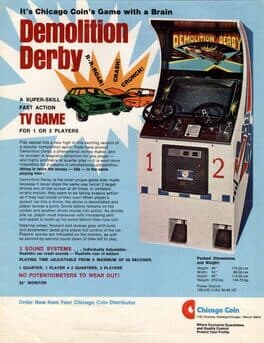
Demolition Derby
Exidy1976
A black and white driving game where each player controls a pursuit car that tries to demolish drone cars to score points. Challenging and fast-moving super skill play, and never plays the same twice! Two target drones are always on the screen, darting around in competive evasive action as though they are controlled independantly. When a player has his or her car hit a drone, the drone is demolished and a point is scored. Drone wreckage remains on the screen and another comes into action. As drones pile up, each player must maneuver with increased speed and skill to increase his or her score before time is up. (Destruction Derby was the Exidy release from 1975, it was later licensed to and released by Chicago Coin as Demolition Derby in 1976)
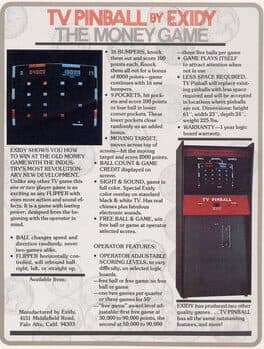
TV Pinball
Exidy1974
Exidy's first game, a ball-and-paddle game inspired by pinball mechanics.
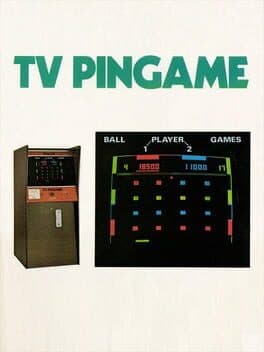
TV Pingame
Exidy1974
A pinball game where a ball and paddle are used to knock out bumpers, hit pockets and a moving target at the top of the screen to score points. Keep ball in play by bouncing it back up and knock out all the targets for bonus points. It has been produced under different names by Chicago Coin, Exidy and Midway Manufacturing Co.