-
Average rating
163
Games
0
Votes cast
Heartbeat
Shipped Titles
Games (163)
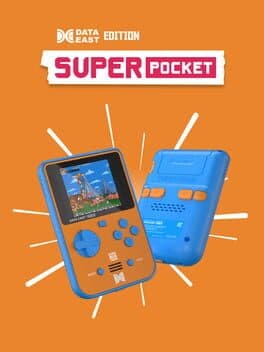
Super Pocket: Data East Edition
Data East2025
Carry the ‘80s arcade in your pocket with the HyperMegaTech! Super Pocket Data East Edition! Features 18 arcade hits just as you remember them, including BurgerTime, Bad Dudes vs. Dragon Ninja, Joe & Mac: Caveman Ninja and more
Data East Arcade 1
Data East2021
Compatible with both Handheld and VS models, the Data East Arcade 1 collection includes the following titles: - Bad Dudes Vs Dragon Ninja (released as Bad Dudes in North America) - Breakthru - Burger Time - Chain Reaction (released as Magical Drop Plus 1! in Japan) - Dark Seal (released as Gate of Doom in North America) - Darwin 4078 - Lock 'n' Chase - Sly Spy (released as Sly Spy: Secret Agent in Europe) - TumblePop - Wizard Fire (released as Dark Seal II in Japan)

Data East Co-op Pack #1
Data East2021
This bundle includes 4 iconic co-op arcade games: - Bad Dudes - Two Crude - Joe & Mac - Caveman Ninja - Heavy Barrel
Data East Arcade Collection #1
Data East2021
This bundle includes 8 iconic arcade games from Data East: - Super BurgerTime - Gate of Doom - Super Real Darwin - Express Raider - Bad Dudes - Two Crude - Joe & Mac - Caveman Ninja - Heavy Barrel
Retro Classix 4in1 Pack: Sly Spy, Shootout, Wizard Fire & Super Real Darwin
Data East2020
SLY SPY: It is the year 199X, Secret Agent Sly must protect the U.S. from a nuclear missile attack from the terrorist organization CWD (Council for World Domination). Play an arcade classic! SHOOTOUT: Stop the criminal gangsters and save the civilians in this action-packed shooter. WIZARD FIRE: Wizard Fire a is classic multiplayer action RPG for one to two players. Originally released in 1992, and a noted classic arcade title from the 90s. SUPER REAL DARWIN: The player takes control of a fighter ship capable of mutating into different shapes. The ship's appearance changes with upgrades as the player obtains weapons.
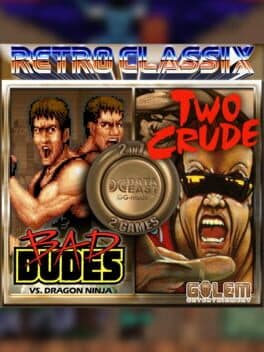
Retro Classix 2in1 pack: Bad Dudes & Two Crude Dudes
Data East2020
BAD DUDES: "President Ronnie has been kidnapped by the ninjas. Are you a bad enough dude to rescue Ronnie?" The Bad Dudes must pursue the ninjas through the streets of New York City, a moving big rig truck, a large storm sewer and much more, in order to save President Ronnie. TWO CRUDE DUDES: Play one of two hulking mercenaries hired by the American government to stop the 'Big Valley' terrorist organization. Take back control of post-apocalyptic New York City.
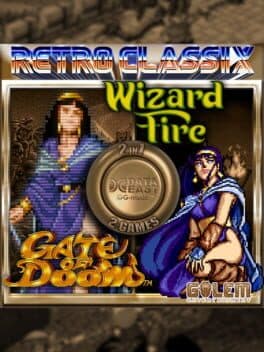
Retro Classix 2-in-1 Pack: Gate of Doom & Wizard Fire
Data East2020
GATE OF DOOM a is classic multiplayer action RPG for one to two players. Originally released in 1990, and a noted classic arcade title from the 90s. WIZARD FIRE a is classic multiplayer action RPG for one to two players. Originally released in 1992, and a noted classic arcade title from the 90s.
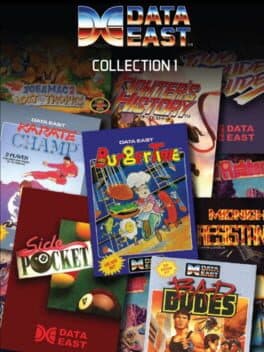
Data East Collection 1
Data East2020
Data East Collection 1 is the first compilation of classic Data East games for the Evercade. It contains 10 classic games. Games included: - Burger Time - Fighter's History - Midnight Resistance - Burnin’ Rubber (Bump 'N' Jump) - Karate Champ - Joe & Mac 2: Lost in the tropics - Side Pocket (Mega Drive version) - Magical Drop 2 - Two Crude Dudes (known as Crude Buster in Japan) - Bad Dudes

BurgerTime Party!
Data East2019
Peter Pepper's Burger is the hottest grill in town, thanks to its classic menu of award-winning puzzles and patties. But when retro gaming's master chef can't take the heat of inventing a brand-new burger, the ingredients that got chopped from Chef Peter Pepper's latest recipe take matters into their own comically oversized gloves. Out of the trash can leap four nefarious Food Foes, edible enemies with an appetite for revenge! In the ultimate battle of man vs. food, will cook or cuisine reign supreme? In 1982, Chef Peter Pepper and the Food Foes delighted arcade-goers worldwide with the action/puzzler BurgerTime. The classic gameplay returns in a fresh, colorful package full of tasty twists and scrumptious surprises as BurgerTime Party! for the Nintendo Switch system! Iron-willed chefs can individually tackle the solo campaign or join up to three friends in local multiplayer, either by working cooperatively to defeat the Food Foes together, or by taking control of one or more Food Foes to stop the other team's chef(s) from completing their culinary masterpieces. With over 100 jumbo-sized stages and a variety of all-new modes and challenges, however you play, have it your way!
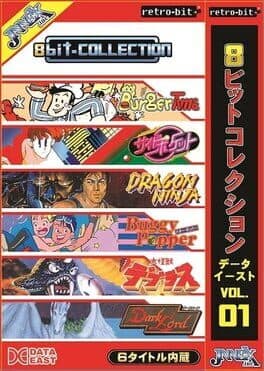
8bit-Collection Data East Vol. 01
Data East Corporation2018
Six Data East classics on one Famicom cartridge.
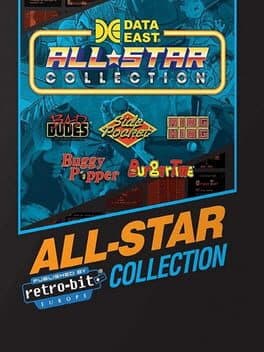
Data East All-Star Collection
Data East2017
A compilation of Data East NES games on one cartridge.
Data East Classic Collection
Data East2017
A compilation cartridge of Data East SNES titles.
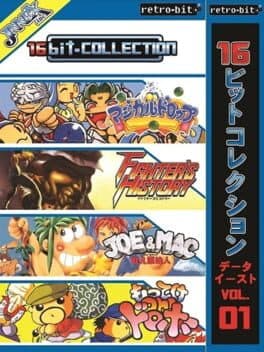
16bit-Collection Data East Vol. 1
Data East2017
Four Data East classics on one cartridge for Super Famicom. Included on this cartridge: Magical Drop (known as Chain Reaction in the West) Joe & Mac Fighter's History Motteke Oh! Dorobou
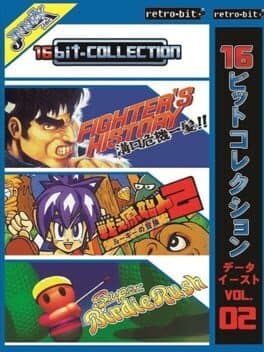
16bit-Collection Data East Vol. 02
Data East Corporation2017
Three additional Data East games compiled together for the Super Famicom. Included on this cartridge: Fighter's History: Mizoguchi Kiki Ippatsu!! (known as Fighter's History 2 in the West) Tatakae Genshijin 2: Rookie no Bouken (known as Congo's Caper in the West) Super Birdie Rush
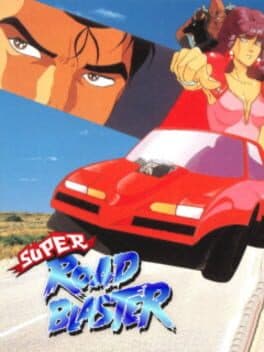
Super Road Blaster
Data East2012
As with other laserdisc-based arcade games from the same time, the gameplay consists of on-screen instructions overlaid over pre-recorded full motion video animated footage of high-speed chases and vehicular combat. The player controls the cross-hair to steer their car toward the correct directions according to the green arrows flashing and beeping beside it, while controlling the gas pedal, brake and booster whenever they light up. The game has nine stages. Upon successfully completing a level, the player is graded on the reaction time. Different difficulty levels can be selected. In Normal Mode, pop-up icons and audio tones signal when to turn left or right, brake, hit turbo, or hit other cars. In Hard Mode, there are no on-screen icons to guide the player. The Snes version is a unofficial port that star releasing beta versions on 2011. However, the game does not run on a stock SNES. It relies heavily on the MSU1 Media Enhancement Chip, a somewhat new chip which allows 4GB of additional storage space, full motion video playback and stereo PCM audio
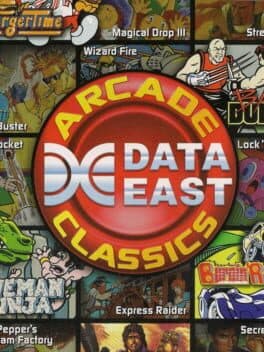
Data East Arcade Classics
G1M22010
Re-live some of the greatest arcade games of all-time in this compilation of Data East hits! More bang for your buck! Re-live your arcade marathons with 15 classic games in this jam-packed collection. Whether you're shooting baddies mid-freefall in Secret Agent or defending your cavewoman from vicious dinos in Caveman Ninja, this ultra-fun compilation lets you keep playing as long as your fingers can last; no quarters required! Features • Includes 15 classic arcade games: - BurgerTime - Peter Pepper’s Ice Cream Factory (the rare sequel to Burger Time) - Bad Dudes vs. Dragon Ninja - Burnin’ Rubber - Caveman Ninja - Crude Buster - Express Raider - Heavy Barrel - Lock ‘n’ Chase - Magical Drop III - Secret Agent - Side Pocket - Street Hoop - Super Real Darwin - Wizard Fire • Unlock multiple rewards by achieving 75 different goals. Earn Music Soundtracks, Gallery Items, Classic Arcade Marquees and Bezels, and much more. • Link your high scores to your Miis • Save, load and pause the game at any point during play; no quarters required! • Team up with or play against your friends in any game—they’re all two player in addition to single player

Magical Drop 3
Data East2000
Released in Japan as "Magical Drop III + Wonderful" and in Europe simply as "Magical Drop III", this version packages Magical Drop III: Yokubari Tokudaigou! with a console port of Magical Drop Plus 1! The game features a slightly slower gameplay pace than the Japanese version, omits the "Arcade" version and gallery from the Japanese release, and translates the game's script into multiple languages. Unlike previous versions released outside of Japan, this game retains the Japanese voice work; similarly, the port of Magical Drop Plus 1! is based on the Japanese version instead of Chain Reaction.

Tantei Jinguji Saburo: Tomoshibi ga Kienu Ma ni
Data East1999
Tomisibi ga keinu ma ni (aka Touka ga Kienu Aidani) (lit. While the Light Remains) is the seventh game in the series. As with previous entries in the series, the game progresses mostly through menu selection, as you slowly piece together a solution to the case. The game features multiple endings.

Revive... Sosei
Data East Corporation1999
The protagonist of the game, a high-school student, finds himself and other characters (mostly female high school students) trapped in a marine research facility. Exploring the abandoned building, the hero discovers the research staff died under mysterious circumstances. Was this a murder committed by a human being, or some sort of an unknown evil force? The hero does not have much time to think, since whatever took the lives of the scientists also threatens to murder them...
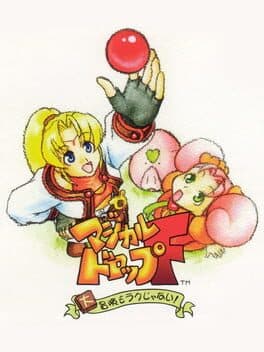
Magical Drop F: Daibouken Mo Raku Janai!
SAS Sakata1999
Magical Drop F - Daibouken Mo Rakujyanai! is the fourth main Magical Drop game. It was released exclusively for the Sony PlayStation on October 21, 1999. Magical Drop F includes character-specific items that have various effects when activated.

Tantei Jinguji Saburo Early Collection
Kouyousha1999
Early Collection is a PlayStation compilation release that includes four early games from Tantei Jinguji series from NES era. In addition to four full games, the game features new opening video and with plenty of other extras accessible via main menu.

Tantei Jinguji Saburo: Yume no Owari ni
Data East1998
The first game in the Jinguuji Saburo series was released on the NES in 1987. The series told the different cases of a 32 years old detective named Saburo Jinguuji out to solve deadly crimes, that is supported by a cast which includes his assistant Yoko Misoni and local police inspector Sanzo Kumano.

Doukoku Soshite...
Sakata SAS1998
In this game, you play the role of a high-school student. A bus takes him and his classmates to the school every day. But this time, just when the hero was talking to one of his classmates, the lovely girl Riyo, a car drove up to the bus, there was a sound of a crash, and then the hero became unconscious. When he woke up, he found himself, his classmates (most of whom were girls), and a couple of unknown people in a locked room in a strange mansion. Soon the hero realizes something terrible is going on in the mansion. People are being killed under mysterious circumstances, their corpses hidden; he finds a memo soaked in blood and a photograph. Will he be able to solve the mystery and to protect the people destiny brought him together with?

Winter Heat
Sega AM31997
Winter Heat is the home conversion of the DecAthlete (also known as Athlete Kings) sequel, replacing decathlon by Winter sports. Competition (in Arcade, Saturn or Practice modes) includes 11 events featuring eight athletes of different nationalities - Li Huang, Karl Vain, Joe Kudou, Ellen Reggiani, Aleksei Rigel and Rick Blade are joined by B.B. (replacing Jef Jansens, who appears as a secret athlete) and Johann Stensen (instead of Femi Kadiena). The game is a typical Winter-sports game, in the line of those released by Epyx but with a more arcade feel. The events include: Speed Skiing: A simple dashing event where the goal is to descend the hill as fast as possible (in speeds over 200 km/h). Action is reduced to mash the button to gain speed. Ski Jumping: Composed by four parts: The run up (mash the button to gain speed), the jump (selecting the angle), the flight (mash the button to gain extra length) and the landing (pressing the action button too early will lose valuable meters, too late will cost the jump). Downhill: A simplified version of the real downhill event. It's impossible to miss the gates, and the challenge is to get a strong start-up, keep a straight path not losing speed hitting the fences and hitting the action button to jump hills perfectly. Short Track Speed Skating: A straightforward event where the directional pad controls the direction of the athlete along the speed button to control the pace. As the event runs for over 40 seconds, it's possible to hold second position, making the opponent cut air resistance which allows the player to reach fastest speeds with less button presses. Skeleton: The first event in the ice tunnels, it requires a fast run-up followed by a strong entrance in the tunnels. By pressing the action button it's possible to slow down the sled and make more controlled turns, or the athlete can fall from it, which not only loses time but also requires a small run-up. Slalom: Just like the Downhill, it's impossible to miss a gate in the Slalom. After an initial sprint the player has to press the action button to approach each flag in the best way possible. Hitting the button too early or too late will make the athlete hit the flag, losing valuable time. Aerial: An event similar to the Ski Jump. Instead of offering a "click-along" version, the player starts by setting the difficulty of the jump, and then three parts follow: in the run-up, the player sets the speed by mashing the speed button, followed by the jump which sets the strength (by pressing the action button) and when the athlete leaves the launch ramp, the player must mash the speed button once again to complete the jump. To complete a jump, the player must fill each section of the jump bar by making enough button presses Bobsleigh: In all similar to the Skeleton, except there's no option to slow down. Speed Skating: Another simple button-mashing event but with a twist: speed must be controlled on the turns, or the athlete will slip out losing a few seconds in the process. The speed can be controlled by a color graph above the power bar. Snowboard: A mix between the Slalom and Downhill. There are several gates to be passed, plus two jumps. Unlike the other two events, it's possible to miss a gate, which carries a one second penalty for each missed. Cross Country: The stamina-influenced event. There's a long track with some hills that can be taken for advantage, as during downhill slopes it's possible to gain a lot of speed without losing stamina.
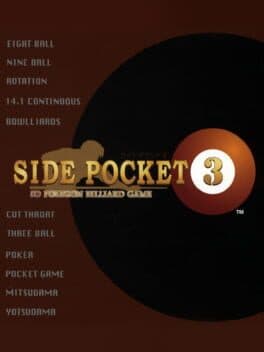
Side Pocket 3
Data East1997
Side Pocket 3 is a Japan-exclusive pocket billiards video game for the PlayStation and Sega Saturn. Like its predecessor, Side Pocket 2, it features the in-game likeness of a real-life professional pool player. In this case, it's JPBA member, Kyoko Sone. Unlike the prior installments in the Side Pocket series, Side Pocket 3 renders the pool room environment with 3D polygons. In spite of this, the table can still be viewed in a traditional, top-down fashion. Play modes consist of: story mode, training mode, trick game mode, and versus mode. Game variants include: eight ball, nine ball, rotation, 14.1 continuous, bowlliards, cutthroat, three ball, poker, pocket game, mitsudama, and yotsudama.
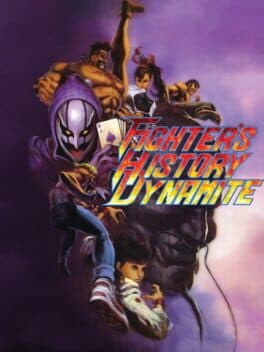
Fighter's History Dynamite
Data East1997
Fighter's History Dynamite was ported to the Sega Saturn in Japan in 1997. This version was also bundled with Fighter's History: Mizoguchi Kiki Ippatsu!! as a bonus.
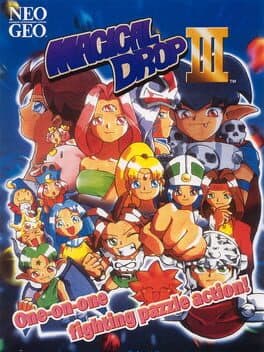
Magical Drop III
Data East1997
Control a clown to pull in and throw back balloons hurled from the top of the screen. If you line up three or more balloons of the same color in a vertical row, they will burst. If you're not quick enough, the balloons will squash the clown and the game is over. Once you've got the hang of bursting balloons, you'll need to master combos and chains. The third Magical Drop game, first released in 1997, was also developed for the Neo Geo. This games adds representatives for the remaining Tarot Major Arcana, as well as introducing a "daughter" Strength character that more closely resembles the traditional depiction of Strength. The game adds a third button, which allows players to add rows to their field at any time. Additionally, attacks now sends lines to the opponent in non-even rows that vary by character. Hirameki mode is replaced by Adventure Mode, which is a board game that challenges players to reach Empress before CPU-controlled rivals. The English versions of Magical Drop III remove the hardest difficulty setting in Vs. CPU Mode and rival opponents in Adventure Mode.
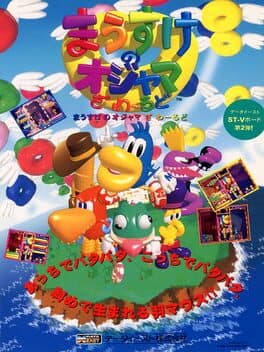
Mausuke no Ojama the World
Data East1996
Puzzle game released for Sega Titan Video arcade hardware similar to Puyo Puyo.
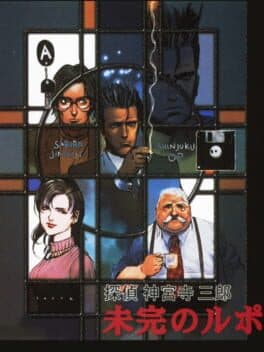
Tantei Jinguji Saburo: Mikan no Report
Data East1996
Tantei Jingūji Saburō ~ Mikan no Rupo is a Japanese style adventure game in the detective/mystery genre. It is the 5th game in the Jake Hunter / Tantei Jingūji Saburō series, being released between Toki no Sugiyuku Mama ni... (1990) and Yume no Owari ni (1998). While following the same formula of the previous titles, the game features a "Zapping System", allowing the player to see the story from the perspective of other characters as well as Jingūji. Also featured in this title is car chase and following suspects in the form of 3D mini-games, although these features would rarely be seen again in future releases.
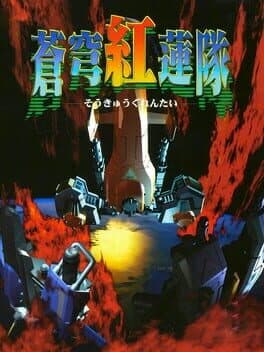
Soukyuu Guren-tai
Raizing1996
Soukyuu Guren-tai is a vertically scrolling shooter game released by Raizing in 1996 for Arcades, with a Saturn port released in 1997. The game is unusual in that, rather than using a 3:4 aspect ratio to better suit the vertically-oriented gameplay, it uses a horizontal monitor (4:3) in the style of Neo Geo vertical shooters as well as the later Radiant Silvergun and Giga Wing. There is an English version of the game titled Terra Diver, but it was never officially released.
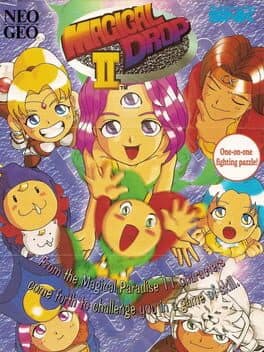
Magical Drop II
Data East1996
Magical Drop is played in a style and gameplay similar to Compile's (now Sega's) Puyo Puyo and Taito's Puzzle Bobble franchises; a "stack" of random colored bubbles descend from the top, and a player is defeated when a bubble hits the bottom. Bubbles can be picked up and dropped by the player's "clown" at the bottom, and are destroyed when three or more of the same color are put together on a single column. "Chains" are formed either when a single drop caused a chain reaction, or when more than one group of bubbles is destroyed in quick succession. The game is normally played with two players (one may be a computer opponent), and chains cause the opponent's stack to descend faster. There are 24 characters, all but the Black Pierrot being named after a tarot card (although the Strength card has been represented by two characters throughout the series). Different characters have different attack patterns. The columns of the opponent's stack will descend at different rates relative to each other depending on the character chosen. This causes a disjunction of colors that may make it more difficult for the other player to clear their stack. For example, with the character Devil, all the columns will descend at the same rate, whereas with Sun, the middle columns will descend faster than the others.
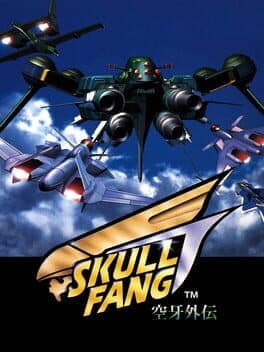
Skull Fang
Data East1996
The nefarious "Lagnalok" organization returns in the third game in the Kugha series of shoot 'em ups, but this time the fighter pilots of Skull Fang squadron are ready to take them on.
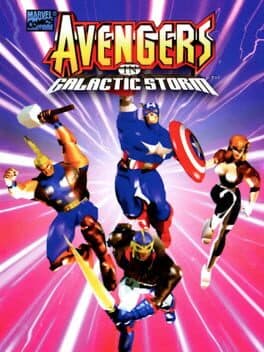
Avengers in Galactic Storm
Data East1996
Avengers in Galactic Storm is a 1995 fighting arcade game based on characters in the Marvel universe, primarily the Avengers but also the Kree. The game's plot and roster of playable characters are based on the Operation: Galactic Storm story arc. This was one of Data East's last fighting games, as well as their third and last game based on The Avengers.
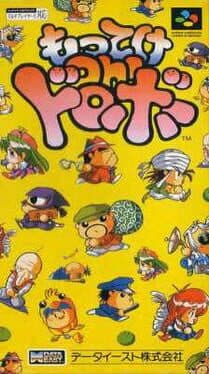
Motteke Oh! Dorobou
1995
Motteke Oh! Dorobou is a Miscellaneous game, published by Data East, which was released in Japan in 1995.
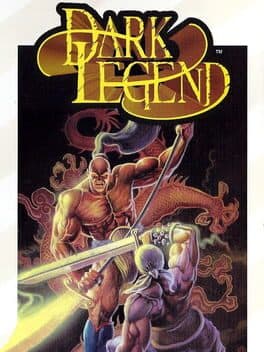
Dark Legend
Data East1995
Select between a group of 11 fighters and clash against each other using your specific moves and attacks. Additionally, each character fights with his own unique weapon, but depending on how much you block your weapon can break and you must finish the fight barehanded and using a different moveset and generally faster (but less powerful) attacks.
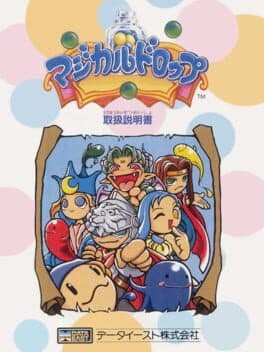
Magical Drop
Data East1995
Magical Drop is a 1995 competitive arcade puzzle game created by Data East Corporation. It is the inaugural game of the Magical Drop series. Magical Drop is based on a game called Drop-Drop created by Russ Ltd, a Russian company. The arcade game received an updated version named Magical Drop Plus 1! that features aesthetic improvements and also introduces a "Solo Play" mode. Magical Drop Plus 1! was released in North America and Europe as Chain Reaction; in this version, the puzzle pieces are changed from spherical Drops to various items (such as food or celestial bodies) and the character-unique voice acting is replaced by a single male narrator. All versions of the original arcade game were developed for Data East's "MLC" arcade hardware.

Minnesota Fats: Pool Legend
Data East1995
Minnesota Fats: Pool Legend (released in Japan as Side Pocket 2) is a pocket billiards video game for the Sega Genesis and Sega Saturn, featuring famed billiards player Rudolf "Minnesota Fats" Wanderone. It was released as a sequel to Data East's earlier success, Side Pocket. The objective is to travel through different cities and defeat AI-controlled hustlers. The player can also take on another human player in order to prove his worthiness at the pool table. The player can participate in a story mode and play against a set of pros in six different pool halls in an attempt to face off against Minnesota Fats himself. There are seven different variations of pool to play: Eight-Ball, Nine-Ball, Rotation, 14-1 rack, Three ball, Cut Throat & One Pocket. There is also a Versus Mode to let players take on any opponent of their choice including a two-player option to take on a friend and a Tournament Mode. Players can also try out the Trick Mode that has the player try to compete 16 different trick shots. The Saturn version of the game largely plays the same as the Genesis version, but includes a training mode, a short documentary on Minnesota Fats, and a completely different plot in the story mode. In the Genesis version, the player takes the role of an unnamed rookie pool player seeking to challenge Minnesota Fats, and cutscenes are computer-animation. In the Saturn version, the player takes the role of Minnesota Fats himself, in his quest to challenge fictional pool hustlers from around the United States; live-action, full-motion videos (FMVs) are used for the cutscenes. In Japan, the title Side Pocket 2 is only used in the Saturn version, whereas the Genesis version retains the Minnesota Fats: Pool Legend title.
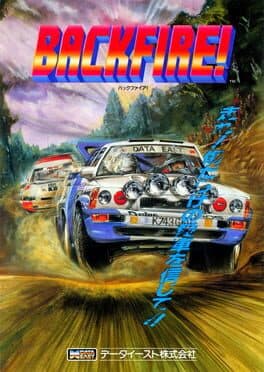
Backfire!
Data East Corporation1995
A small action game for 1-2 players, walk about and blast as many enemies as you can, and hopefully make it to the end.
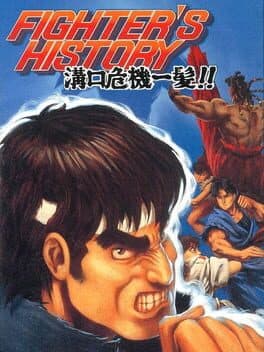
Fighter's History 2
Data East1995
Fighter's History: Mizoguchi Kiki Ippatsu!! is a Super Famicom sequel to Data East's arcade fighting game series, featuring a story mode where Mizoguchi travels throughout the world to battle a mysterious masked figure (who Data East fans probably already know). It's the third game in the Fighter's History series, and the last one published by Data East. The game was initially released only in Japan for the Super Famicom on February 17, 1995, under the title of "Fighter's History: Mizoguchi Kiki Ippatsu!!". In 2017, Retro-Bit published the game for the international release as part of their compilation Data East Classic Collection, under the new title of "Fighter's History 2".
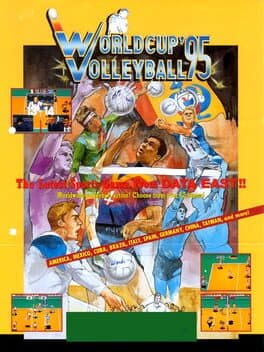
Worldcup Volleyball '95
Data East1995
World Cup Volleyball '95 is a volleyball simulation game developed by Data East and released in 1995 for arcades. World Cup Volleyball '95 is a simple volleyball game. The game utilizes a top-down side view of the field and a two button scheme, with 12 countries for the player to choose.
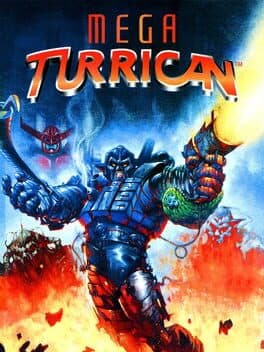
Mega Turrican
Factor 51994
The Machine has enslaved the galaxy under its tyrannical rule. As Bren McGuire, the last survivor of the United Freedom Forces, it is your duty to destroy the evil forces of the Machine that have devastated the galaxy.

Creature Shock
Interactive Studios1994
The earth is overpopulated and mankind must find a second home. The spaceship Amazon is sent to investigate Saturn and Jupiter for possible colonization. Near the end of its mission, all contact is lost with the ship except for a distress beacon. The player is part of the crew sent to the Amazon's last known location to find out what happened. Creature Shock is a first-person shooter with Full Motion Video and arcade-like elements. Aliens of all sizes and types will try to destroy the team, but each one has a weak point that can be exploited. The fighting takes place on the surface of asteroids and within mazes of passageways underground. There are also two 3D sections where the player gets to pilot the ship.

Heracles no Eikou IV: Kamigami kara no Okurimono
Data East1994
You join your friends Plato and Epipha from the mythical city of Atlantis. Their fine professor has been researching possibilities of ever lasting life. Soon after the game begins, an event happens that transcends life as they know it. You will encounter life, death, Pandora’s Box, Heracles, and even the gods themselves! You must unravel the mystery of what happened. You must help Heracles in his quest too. You will travel by boat, saba, submarine, and even on the legendary Pegasus! You will journey to the underworld, under the sea, and even to the heavens above! The Glory of Heracles awaits you!
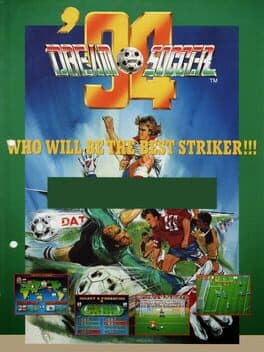
Dream Soccer '94
Irem1994
A soccer game from Irem, Japan. (Data East Corporation license for the rest of the world) Fast arcade football game released during the 1994 World Cup fever, with exaggerated physics, special shots and simplified controls for immediate handling.
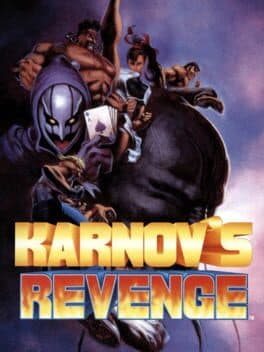
Karnov's Revenge
Data East1994
Karnov's Revenge, also known as "Fighter's History Dynamite" in Japan, is a 1994 arcade fighting game, and the followup to Fighter's History. All returning characters have new moves, and Clown and Karnov are now playable characters while newcomers Zazie and Yungmie were introduced. The Super Famicom game "Fighter's History: Mizoguchi Kiki Ippatsu!!" is heavily based on Dynamite, and is believed to have been meant as a port. Dynamite itself would be ported to the Sega Saturn, and Mizoguchi Kiki Ippatsu!! was even thrown in as a bonus.
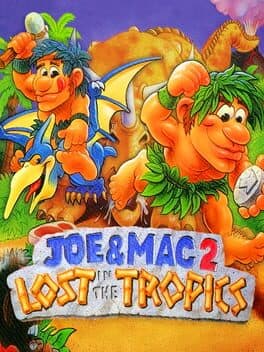
Joe & Mac 2: Lost in the Tropics
Data East1994
Improving on the original's platformer/brawler co-op gameplay, this game adds adventure and role-playing game elements that create a more involving experience compared to the first game. You can now collect coins in the levels to purchase items from Tiki Village, such as meat to recover your health, or even remodel your hut back at your home village. The game also uses a password system to track your progress. The game also shifts to an overhead map so you can wander to whichever level you wish, and return to completed levels to earn more money or power-ups.
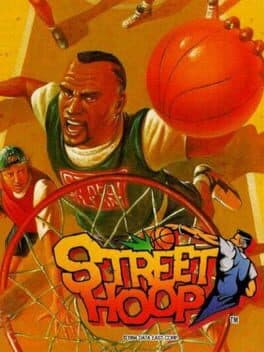
Street Hoop
Data East1994
The legendary 3 on 3 arcade basketball game returns.
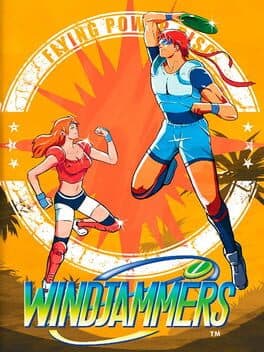
Windjammers
Data East1994
Windjammers (also known as Flying Power Disc in Japan) is a fast paced sports arcade game released by Data East on the Neo Geo arcade system in 1994 and later on the Wii Virtual Console in Japan on June 22, 2010. Following the bankruptcy of Data East, the intellectual rights for this game were acquired by Paon. It was delisted in Japanese Virtual Console for the Wii on December 24, 2013, making it the only delisted Neo Geo game for the Wii Virtual Console. The game mechanics are essentially the same as Pong or air hockey, where players continuously shoot the disc at the goal zone of the opponent attempting to score. The game can be played against the computer or in a 2 player versus.
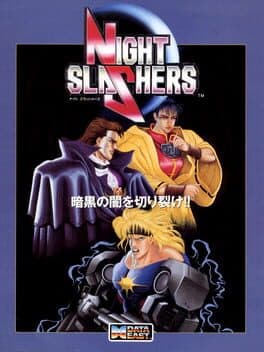
Night Slashers
Data East Corporation1993
The dead have risen from their graves, and monsters and mutants prey upon what's left of the living. Three monster hunters have joined together, using their knowledge of the occult to slay the undead scourge.

High Seas Havoc
Data East1993
High Seas Havoc, known in Japan as Captain Lang, was also for arcade machines running on a Sega Mega Drive/Genesis based cabinet.
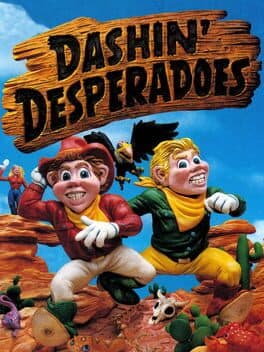
Dashin' Desperadoes
Data East Corporation1993
Will and Rick were like two peas in a pod or more accurately, two cowpokes in a corral. In other words, these two cowboys were best of friends and nothing could tear them apart that is, until Jenny came to town. Since her arrival, the two best friends have become bitter rivals, each vying for her attention and affection. When Jenny's father decides to send her on a trip around the world, Will and Rick decide to race each other to see which one of them will accompany her. Through deserts, icebergs, shark-infested waters, and even ancient ruins these two go head-to-head in the wackiest race you've ever seen. In split-screen action, you and your opponent (either the computer or a friend) will have to use fancy footwork and a few tricks to be the first to the finish line and win Jenny's heart.
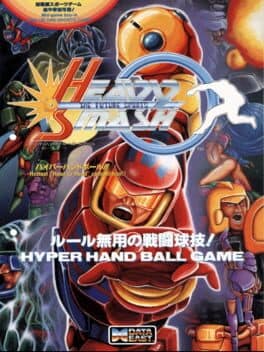
Heavy Smash
Data East Corporation1993
Heavy Smash portrays a futuristic, armored, no-rules version of handball. The player is allowed to select one of various national teams (plus a robot team with a space station as home turf), some of them with an unique armor design reflecting some kind of perceived national tradition (a samurai armor for Japan and a sort of sci-fi football outfit or USA, for example) and some other being just palette swaps. Each team has a distinctive special shot, which has to be loaded up with a power gauge and each team member, in addition to tackling and roughing up opponents with no penalty whatsoever, can even perform a ranged attack in order to gain ball control. At its core, it's the typical “win or go home” coin-op sports game, with increasing difficulty and opponent skill each match.
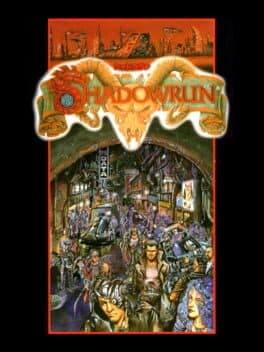
Shadowrun
Beam Software1993
Shadowrun, based on the pen-and-paper RPG of the same name, is a futuristic sci-fi/fantasy game, taking inspiration from Neuromancer, Blade Runner, and other cyberpunk stories.
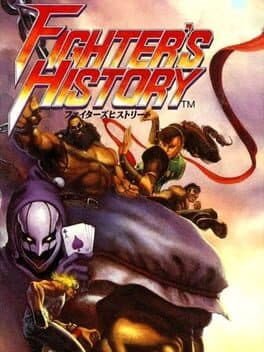
Fighter's History
Data East1993
Fighter's History is a 1993 arcade fighting game developed and published by Data East. It's the inaugural game in the Fighter's History series. The main unique feature of the Fighter's History is its weak point system, which allows the player to temporarily stun an opponent by repeatedly hitting their weak point. Fighter's History became infamous for being the subject of a lawsuit against Data East by Capcom, who claimed the game is too similar to its hit title, Street Fighter II, and as such is copyright infringement on its property. The case was found in Data East's favor however, as the court found that the copied elements were scenes a faire, elements necessary for depicting the scenario. The game was later ported to the Super Nintendo Entertainment System in 1994, and followed by a sequel Karnov's Revenge for Neo Geo. There are three different gameplay modes are available. CPU Battle is the traditional arcade mode, where the player select a character and try to complete the game by beating all of the other fighters. In survival mode, the player select a team of five characters to go up against another team. And finally versus mode, where the player can go up against his friends.
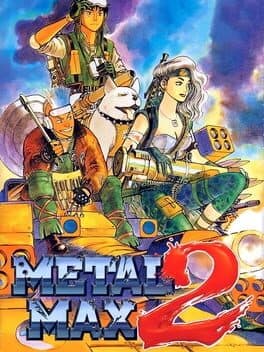
Metal Max 2
Data East1993
Metal Max 2 is the second entry in the Metal Max series. It was a vehicle combat RPG published in Japan by Data East for the Super Famicom in 1993. Ten years later, the game was ported to the Game Boy Advance with a few new bounties by Now Production under the title Metal Max 2 Kai. On December 8, 2011, a full remake with upgraded graphics in the vein of Metal Max 3 and using its game engine was released in Japan for the Nintendo DS and titled Metal Max 2 ReLOADED. Metal Max 2 ReLOADED added a shared inventory, option to play as a female, okama or reijin, new character classes, subclasses and skills from Metal Max 3, new characters, bounties, bosses, sidequests, locations, items and vehicles, expanded storyline and backstories of characters and monsters, increased difficulty over the SNES and GBA versions, the final boss of the game has a third form and a new game+ option has been added.
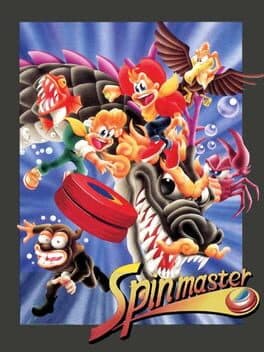
Spinmaster
Data East1993
Spinmaster is a platform/beat 'em up arcade game developed and released by Data East in 1993. The story follows the main character Johnny and his sidekick Tom as they battle their way through treasure-seeking, mad scientist, Dr. De Playne's henchmen in a quest to save Johnny's girlfriend Mary and get their hands on a hidden treasure. Both playable characters are armed with yo-yos but can also upgrade to other weapons (such as throwing stars, icicle daggers and guided missiles) to defeat all enemies and help them open treasure chests.
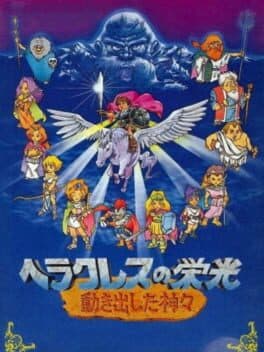
Heracles no Eikou: Ugokidashita Kamigami
SAS Sakata1992
Heracles no Eikou: Ugokidashita Kamigami is a spin-off entry in the Glory of Heracles series for the Gameboy and is a direct continuation of the first game. The title was developed by SAS Sakata and published in Japan on December 27, 1992 by Data East. An English fan translation was released by HTI in 2012 under the title "The Glory of Heracles: Snap Story."
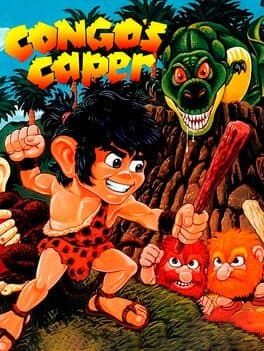
Congo's Caper
Data East1992
Congo the monkey and his girl, Congette, were in the jungle minding their own business when a magic ruby dropped out of the sky and turned them both into half-humans. To make matters worse, the ruby also spawned a demon-kid who grabbed Congette and took off. Now you've got to hunt down the kid and find your girl, while adapting to your new form. You'll make your way through ghost towns, pirate ships, ninja castles, and the belly of a Tyrannosaurus on your search. There are 35 levels of side-scrolling action in all, and you'll have your hands full with tons of wild animals that will try to stand in your way. As you run, jump, swim, attack, and dive your way through the game, keep your eyes open for special gems that will give you special powers and open secret levels.
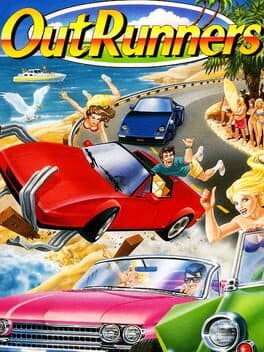
OutRunners
SEGA AM11992
Outrunners is a driving game that allows you to gon a world tour of various stages. Follow the selected drive course by choosing one out of the 8 different type cars whose characteristics such as perspectives, power, transmission, steering wheel manoeuvrability, etc. are different. Appealing to young chouples who drive in a stylish manner, players who skillfully make turns at the corners, and so on, amid the beautiful sceneries throughout the world, this game is sure to enhance the activation of the locations.
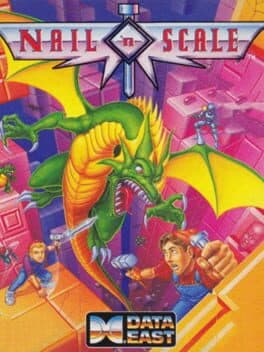
Nail 'n Scale
1992
Nail 'n Scale is an Action game, developed and published by I'Max, which was released in 1992.
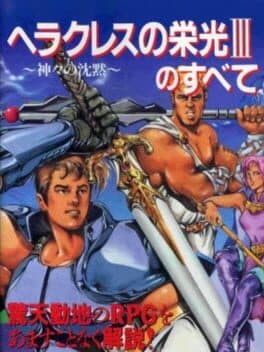
Heracles no Eikou III: Kamigami no Chinmoku
Data East1992
Heracles no Eikou III: Kamigami no Chinmoku is the third installment of the series. Originally released for the Super Famicom, it was released on the Japanese Virtual Console in 2007 and a mobile phone in 2008 by G-Mode. The game's plot and setting are loosely based around various episodes included in Greek mythology. The hero begins the game in a state of total memory-loss, but discovers that he has somehow acquired a mysterious power that shields him from all bodily harm, essentially making him immortal. The only clue the hero has in discovering his own identity is a mysterious dream that he sees every night, and he begins his journey in search of the location shown in the dream. The gameplay borrows various motifs from ancient mythology, particularly the concept of immortality. An immortal character can execute certain actions that other characters cannot, like jumping off high cliffs without being injured. The game's writer, Kazushige Nojima, composed a storyline where the hero encounters the Greek gods while trying to discover his own true identity. Like the game's predecessor, Heracles no Eikō II: Titan no Metsubō, the game focuses on its rich storyline rather than the game system, which does not differ significantly from other role-playing video games of the period.
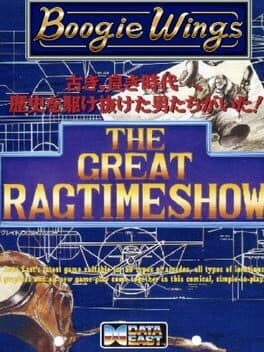
Boogie Wings
Data East1992
Boogie Wings (known in Japan as The Great Ragtime Show (ザ・グレイト・ラグタイムショー?)) is a side-scrolling shooter arcade game released by Data East in 1992. The game contains unique gameplay, along with many nonsensical or comedic themes not present in other games of the genre, but was never ported to other consoles because of its relative unpopularity in arcade centers.
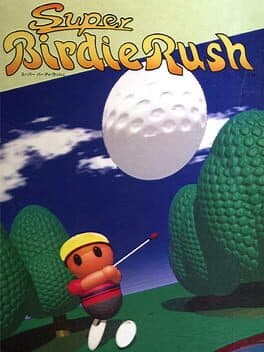
Super Birdie Rush
Data East1992
Super Birdie Rush is a Sports game, developed and published by Data East, which was released in Japan in 1992.
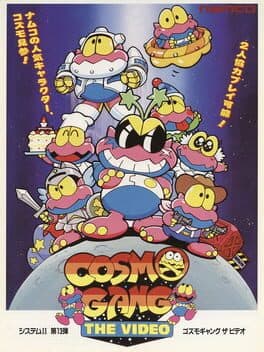
Cosmo Gang the Video
Namco1992
Cosmo Gang the Video is a fixed shooter arcade game based on the redemption game Cosmo Gang.
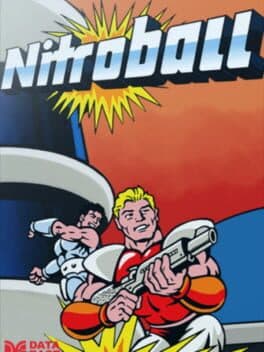
Nitro Ball
Data East1992
Holy hell is Nitro Ball a blast to play! (Known as Gun Ball in Japan) Data East took the balls-to-the-walls action of such titles like MERCS and Ikari Warriors and combined it with pinball, of all things. What's so incredible is that it works marvelously, and everything that makes both genres so much fun individually are seamlessly integrated. For instance, shooting foes can knock them into bumpers or special bonus targets, which earn you power ups and a ton of points. Each of the five stages has a cool theme, like zombies and space aliens, and mimics the length of a pinball field, with a big and nasty boss at the end. This is perhaps the only negative thing to be said about Nitro Ball: it's too short. The meager selection of play fields, while impressive and fun, are nowhere near enough, and you're left wanting more.
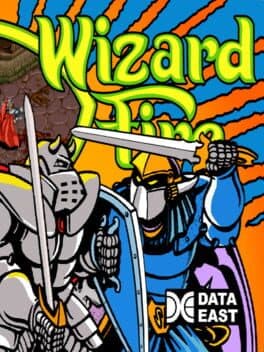
Wizard Fire
Data East1992
Wizard Fire was released in the US as such, although it is a direct sequel to Gate of Doom and Data East archives still refer to the game as Gate of Doom II. The series is known as Dark Seal in Japan. The class types to choose from are wizard, bard, knight, elf or dwarf. Each of the heroes has a unique standard attack, access to magic and one passive ability. The wizard does maximum magic damage, the bard is resistant to poison, the knight is immune to disease, the elf has increased mobility and the dwarf is resistant to confusion. Unlike the previous game, magic attacks are not unique to each class, though specific characters have a higher chance of using certain attacks. There is also the chance, for any class except the wizard, that the spell will fail and you will transform into a pig for a short time.
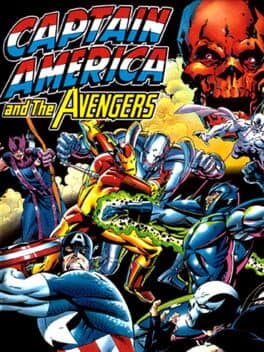
Captain America and the Avengers
Data East1991
Captain America and the Avengers is an arcade game released by Data East in 1991. It features the Marvel Comics characters The Avengers in a side-scrolling brawling and shooting adventure to defeat the evil Red Skull.
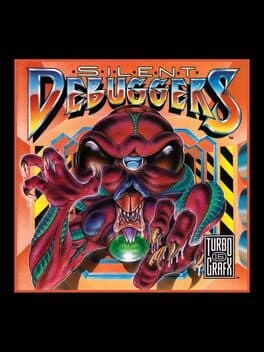
Silent Debuggers
Data East1991
Make your way through a dungeon-like space station and defeat the prowling monsters in this real-time first-person shooter. You're a member of the elite Debuggers, a group of warriors who are jacks-of- all-trades. Assigned to inspect an unmanned space station, you have exactly 100 minutes to get in, destroy the monsters lurking in each block, make your way to the lowest level and deactivate the automatic detonator placed there. With each monster that slips by you, the core block becomes harder to survive in, so speed is key in preserving the facility and each separate block. Experience the thrill of survival as the timer ticks away and you uncover the truth of the events that occurred.
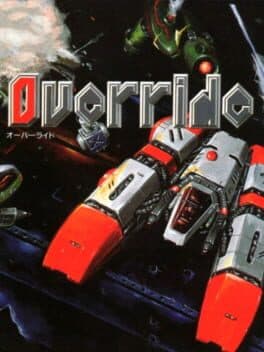
Override
1991
Override is a Data East vertical-scrolling shooter game released for the PC Engine in 1991. Later that year, Sting Entertainment, the creator of the original Data East game, developed and self-published a version for the X68000 released as Last Battalion. It is the first recorded game developed by Sting Entertainment and the X68000 version is now available as a free "one stage only" demo download on Sting's website. On September 4, 2007, G-Mode published the Override version of the game for the Wii Virtual Console which (like its 1991 release) was reserved exclusively for the Japanese market.
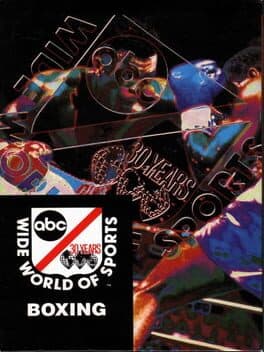
ABC Wide World of Sports Boxing
Acme Interactive1991
ABC Wide World Of Sports Boxing is a boxing computer game released in 1991. The game allows for more than just boxing, letting the player create and then train and manage their own character. It is based on the American Broadcasting Company (ABC) program Wide World of Sports and was released at the time of the program's 30th anniversary. Sportscaster Dan Dierdorf, then a boxing commentator for ABC, is featured in this game. The game was known in the European market as TV Sports Boxing, part of Cinemaware's TV Sports series and was published by Mindscape.
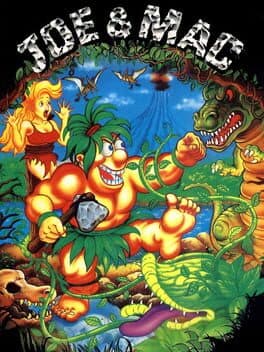
Joe & Mac
Data East Corporation1991
The Super NES version of Joe & Mac is a reworked game which features an overworld map used to choose the levels (unlike in other versions where all of them have to be played), which were longer, plus some bonus stages (either in the levels or out in the world map) and a different final boss.

China Town
Data East1991
A Japan-exclusive falling-block tile-matching puzzle arcade game by Data East, where players form melds of mahjong tiles and attempt to form high-scoring mahjong hands.
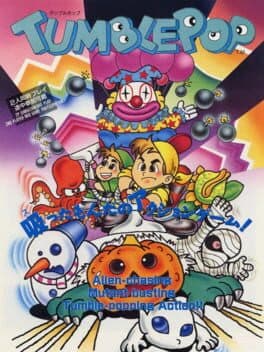
TumblePop
Data East1991
Tumblepop is a 1991 platform arcade video game developed by Data East first published in Japan by Namco, then in North America by Leprechaun Inc. and later in Europe by Mitchell Corporation. Starring two ghosthunters, players are tasked with travelling across different countries, capturing enemies and throwing them as bouncing ball, jumping on and off platforms to navigate level obstacles while dodging and defeating monsters in order to save the world.
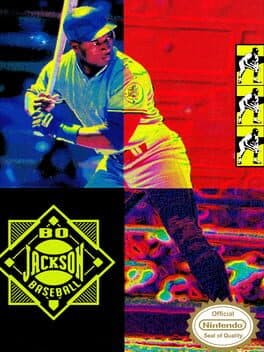
Bo Jackson Baseball
Beam Software1991
Bo Jackson Baseball, known as TV Sports: Baseball in Europe, was released for the Nintendo Entertainment System and ported to the Amiga and IBM PC in 1990. The game is named after and features Bo Jackson, a professional baseball player in the 1980s.
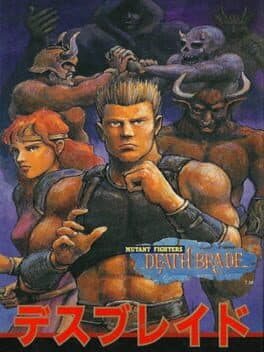
Mutant Fighter
Data East1991
Warriors clash against each other in a series of "Death Matches" in a quest to claim the throne and become king or queen of all fighters.
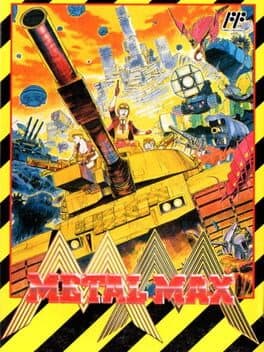
Metal Max
Crea-Tech1991
Metal Max is a 1991 vehicle combat role-playing video game developed by Crea-Tech and published by Data East for the Nintendo Famicom exclusively in Japan on May 24, 1991 and later re-released on the Wii Virtual Console on April 27, 2010. It is the first of the Metal Max series. Metal Max is set in a futuristic post-apocalyptic world, where the surviving humans cluster in underground villages and ruins while "monster hunters" fight the monsters and outlaws outside.
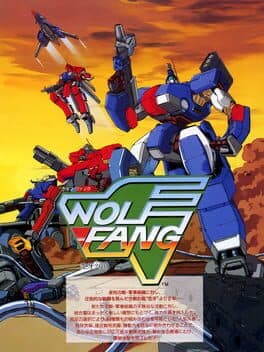
Wolf Fang: Kuhga 2001
Data East1991
Wolf Fang: Kuuga 2001 was released in Japanese arcades in 1991. It was released in arcades outside Japan and re-titled Rohga: Armor Force. The arcade versions outside Japan however, have a number of things cut. There is no story intermissions between the stages and there is no stage selection leading to 4 different endings found on the Japanese version, but the game cycles through all 12 stages like in the Japanese version's expert mode.
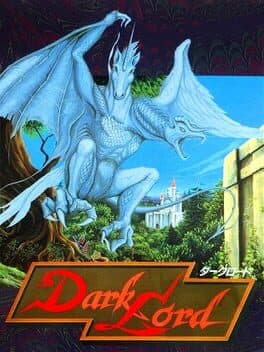
Dark Lord
Data East1991
Dark Lord is a Role-Playing game, developed and published by Data East, which was released in Japan in 1991.
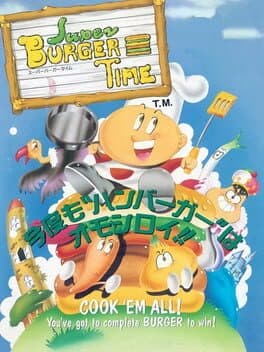
Super BurgerTime
Data East1990
Super BurgerTime was an arcade sequel to the original BurgerTime, which adds simultaneous multiplayer to the standard gameplay.
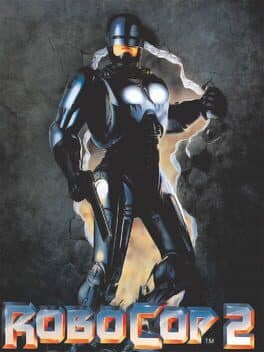
RoboCop 2
Data East1990
RoboCop 2 is a series of video games published in the 1990s by Ocean and Data East for various home computers and video game consoles. They are based on the movie of the same name. Three different games were produced, each produced on two systems. The version for the Commodore 64 and NES was a simple left-to-right scrolling platformer, in which RoboCop was required to collect/destroy at least two-thirds of the drug "nuke" in each level and arrest two-thirds of the suspects by running into them (in contrast to shooting them). If RoboCop does not manage to attain the required amounts of nuke or number of arrests then he has two chances in the game to prove his efficiency at a shooting range. If he succeeds, he may continue onto the next level. If he fails, or if both chances at the shooting range are already used up, he must repeat the level. The version for the ZX Spectrum and Amstrad CPC was also a platform game, but one that offered movement in both directions (vertically and horizontally) as well as into various areas providing an element of exploration. There were also a number of puzzle sub-games that had to be completed to progress in the game. The version for the 16-bit Commodore Amiga and Atari ST was similar in nature to the 8-bit Spectrum and Amstrad CPC versions, but contained completely different levels to take advantage of the extra power offered by these computers. There was also an arcade-only version of RoboCop 2, developed and published in 1991 by Data East (who still held the rights to create arcade games based on the franchise), which allowed up to two players at once (one controlling the original RoboCop, the other controlling a slightly purple-hued clone). The game followed the basic premise of the movie, but had some major sequential differences.
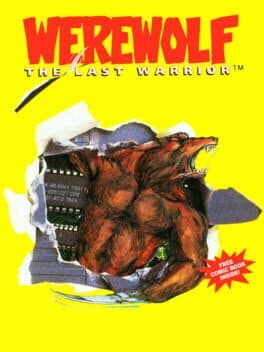
Werewolf: The Last Warrior
Data East1990
He's BAD, RAD and extremely MAD - because to a WEREWOLF, there's nothing like revenge! The world's been destroyed by Dr. Faryan, a twisted madman possessed by an ancient spirit. Faryan's henchmen rule. But one buff warrior's been granted magical powers of the wolf and is now out to bust-up Faryan. And when WEREWOLF finds him, the fur and fangs will fly!

Tantei Jinguji Saburo: Toki no Sugiyuku Mama ni
Arc System Works1990
Tantei Jinguuji Saburou: Toki no Sugiyuku Mama ni is an Adventure game, published by Data East, which was released in Japan in 1990. The 4th installment of the Tantei Jinguuji Saburo (Jake Hunter) series where Jinguji investigates a simple burglary while Yoko searches for a young boy's home.

Little Magic
Data East1990
Little Magic is a Strategy game, developed and published by Data East, which was released in Japan in 1990.
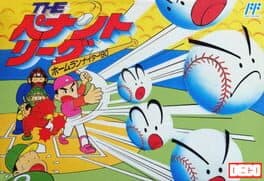
Home Run Nighter '90: The Pennant League
1990
Home Run Night '90: The Pennant League is a Sports game, developed and published by Data East, which was released in Japan in 1990.
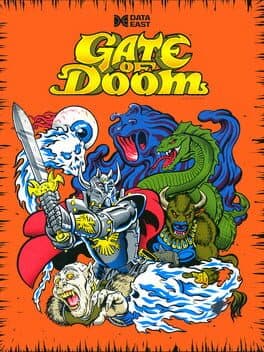
Gate of Doom
Data East1990
Fantasy hack and slash game with a lot of digital speech. A diagonal scrolling action game allowing players to choose 4 characters including Knight, Wizard, Bard and Ninja.
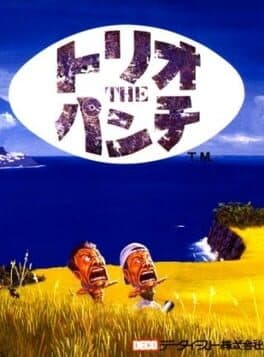
Trio the Punch: Never Forget Me
Data East Corporation1990
Trio The Punch is a beat 'em up game where the player chooses a character from three playable characters, and fights numerous enemies across a side-scrolling game screen. Most of the levels are played scrolling to the right, but some loop around the left and right edges of the screen. Other levels allow the player to scroll upwards or downwards by jumping, while some do not contain scrolling at all. The game is completed when the player finishes all 35 levels. The player controls their character with an 8-way joystick and 3 buttons (attack, jump, and special attack). Certain enemies leave behind a heart on the screen after being defeated, and collecting the required number of these hearts for each level causes a boss to appear, who must be defeated in order to complete the level. However, bosses appear from the start in some levels, so hearts do not always need to be collected.

The Cliffhanger: Edward Randy
Data East Corporation1990
A fast moving platform game in which the player controls the Indiana Jones-esque and unfortunately named 'Edward Randy'. The levels are an inventive mix of standard platform action and 3-D scrolling levels; the latter usually having the player driving a jeep and repelling the enemy attacks. The game is based on the archetypal Hollywood action blockbuster and features a filmic score to back up the on-screen action. The player's only weapon is a whip - another nod to the Indiana Jones character - which can be used to both attack enemies and as a 'rope', to enable the player to reach distant platforms.
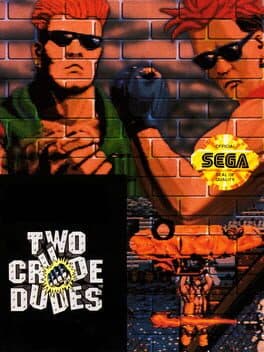
Two Crude Dudes
Data East1990
Two Crude Dudes is a 1991 beat 'em up arcade game produced by Data East. The game was later ported to the Sega Genesis in 1992. Outside Japan, the port was released under the name Two Crude Dudes. In Japan, the game was titled: Crude Buster. In the game, players control one of two mercenaries hired by the U.S. government to stop the terrorist organization "Big Valley". Their objective is to retake control of a ruined New York City from Big Valley after a nuclear explosion the group caused.
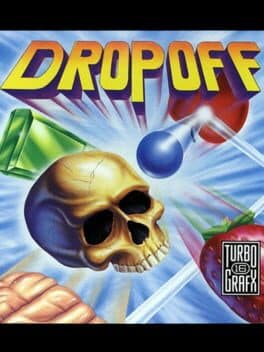
Drop Off
1990
There's no waking up from this nightmare! You'll need all your nerve and strategy to get out alive! A dream of giant apples and diamonds goes berserk when they turn into deadly demons raining down on your head! You have to shoot 'em down with a steel ball. Ricochet your shots to knock 'em off in bunches! They're coming fast, and each level is more threatening than the last! Why are those skulls laughing? Shoot first and ask questions later!
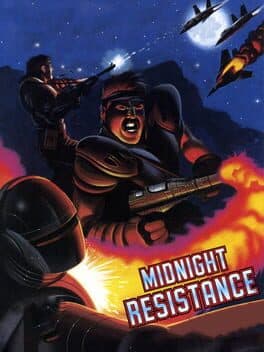
Midnight Resistance
Data East1989
Midnight Resistance is a side-scrolling action shooting game produced by Data East for the arcades in 1989. The game was ported by Data East to the Sega Mega Drive in 1990 and by Ocean Software to various home computer platforms during the same year. The game is set in a dystopian future where the player controls a member of a resistance movement who goes on a mission to rescue his kidnapped family from a mad scientist.

ABC Monday Night Football
Data East1989
ABC Sports and Data East team up to take you to the gridiron! Strap on your helmet, put that black stuff under your eyes and prepare yourself for football, Frank Gifford style! Features AFB voice synthesis technology.
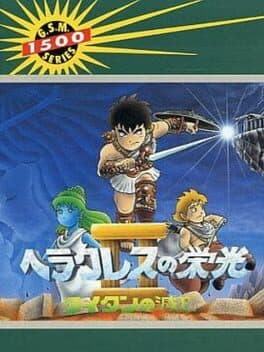
Heracles no Eikou II: Titan no Metsubou
1989
This Dragon Quest-styled game unfolds in ancient Greece, where the hero must traverse the land and do battle with great beasts and monsters of mythology! This game is part of a larger series of Heracles games that have seldom been released outside of Japan.

RoboCop
Sakata SAS1989
RoboCop is a beat 'em up action game.

Sly Spy
Data East1989
It is an action arcade game released by Data East in 1989, and is inspired by the James Bond movie franchise.
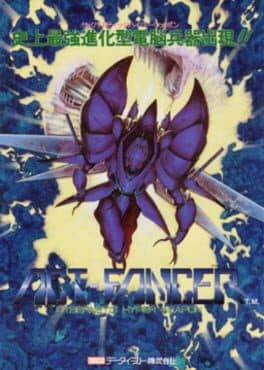
Act-Fancer: Cybernetick Hyper Weapon
Data East1989
It features a cyborg battling against alien creatures, while collecting power-ups and defeating bosses to advance levels.
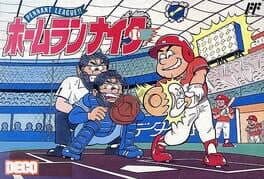
Home Run Nighter: Pennant League!!
Data East1989
Home Run Nighter: Pennant League!! is a Sports game, developed and published by Data East, which was released in Japan in 1989.
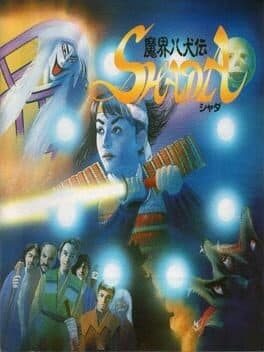
Makai Hakkenden Shada
Data East1989
A PC Engine Action-RPG based on the famous Japanese novel series Nansou Satomi Hakkenden. The gameplay is at least partly inspired by Falcom's Ys series. Makai Hakkenden Shada is an action-RPG from Data East that was released on the PC Engine (the Japanese TurboGrafx-16) in 1989. The game bears more than a close resemblance to Falcom's Ys: specifically the first game in the series, The Vanished Omens, which was a huge success for the PC Engine a few months prior as well as being a generally well-regarded computer RPG before then. As well as having a similar nude female figure in the opening intro, the game also borrows Ys's combat system: fighting occurs by walking into enemies at a slight angle, causing them to collide with the player character's weapon (which hurts them) rather than the player character himself (which hurts the player character). The various gauges for health and experience are also similar. Makai Hakkenden Shada is based on a centuries-old Japanese novel series called Nansou Satomi Hakkenden, or "Eight Dog Chronicles", that features eight half-brother samurai who are all descended from the same dog and have the Japanese word for "dog" somewhere in their names. While these books have been referenced or adapted many times in other media such as manga and film, Makai Hakkenden Shada and the Famicom RPGs Satomi Hakkenden and Shin Satomi Hakkenden: Hikari to Yami no Tatakai are the only direct video game adaptations. Okami also contained an oblique reference to the novels. Unlike Satomi Hakkenden, which eventually allowed the player to recruit all eight of the central characters of the novel series, Makai Hakkenden Shada only has the one playable character. Instead, other characters from the novels occasionally appear to help the player.

Winning Shot
Data East1989
A golf sim from Data East for the PC Engine. It later received a rerelease on the Wii Shop in Japan. Winning Shot is a golf game for the PC Engine/Turbogfrafx-16 and was the very first game based on the sport to be released for the system. Up to four human players can play, though because of the nature of golf, each player takes alternating turns depending on their distance from the hole. The game has many similar features to golf games of this era - the player can select which club to use, whether or not to hit the ball at a slight angle to adjust its trajectory and which direction to hit the ball towards, before hitting the requisite power gauge at the right point to send the ball flying as close to the hole as possible.

Tantei Jinguji Saburo: Kiken na Futari
Data East Corporation1989
Tantei Jinguuji Saburou: Kiken na Futari is the third game in the Jinguuji Saburo series, known in the West as Jake Hunter. It was originally released across two Famicom Disk System disks, the second of which went on sale several months after the first. The game was eventually localized, as part of the Jake Hunter: Detective Chronicles DS compilation of his early cases, as Jake Hunter: Crash and Burn. In this game Detective Jinguuji Saburo/Jake Hunter must solve the mystery behind a sudden death during a motorcycle race. The intrigue is deepened when the body recovered is actually of a different racer.
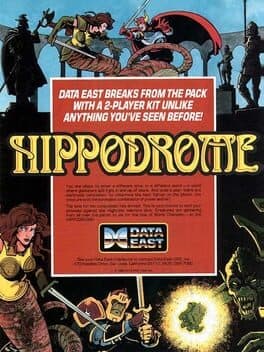
Hippodrome
Data East1989
This is a mythologically-themed gladiator game with simple controls, allowing players to move left and right, jump, and attack. Players choose one of two human fighters, who must overcome eight terrifying and monstrous fantastic opponents (eg. dragon, wizard, scorpion-man) in the ring to win a tournament and rule the kingdom for one year. Between bouts, players can visit a store and upgrade their equipment, granting them different health, range and damage bonuses. A second player can join in at any time to challenge the current player, but only the winner can proceed in the tournament. This game is succeeded by Mutant Fighter.
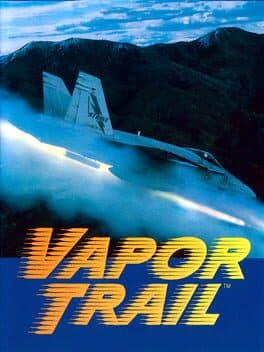
Vapor Trail
Data East1989
Vapor Trail is a shoot-'em-up that features 2 players controlling the jet fighters simultaneously for battle across numerous levels.
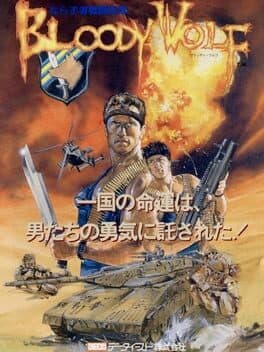
Bloody Wolf
Data East1988
Snake and Eagle, two commandos of the Bloody Wolf special forces, receive instructions from their commander to destroy the enemy's heavily armed base to rescue the President and any allies who have been reported as MIA. Based off the 1988 arcade game, this single-player, top-down, run and gun shooter takes a nod to Contra-style gameplay, allowing one of the two mercenaries to blast their way through eight levels of enemy opposition armed with only a knife and a machine gun. Along the way, new weapons such as shotguns, bazookas, flash bombs and grenades grenades can be added to the arsenal, as well as health and defensive power-ups. Players can even find a motorcycle to ride in some areas, or swim through certain parts of a level. The President and your fellow soldiers need you!
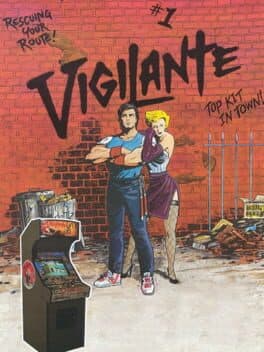
Vigilante
Irem Corporation1988
On the baddest streets of the city they know your name. You are lean and mean... the karate master they call the Vigilante! Your turf was left alone. Your friends and neighbors lived in peace. Until the Rogue gang got too big for their britches. You chilled, hoping things wouldn't get too rough. No such luck. They've taken your girlfriend Maria, and there's only one thing you can do... get her back... anyway you can! You have fists of steel! Legs like pistons! And courage that just won't quit! You will need all three because the Rogues are waiting with knives, guns and a whole bunch of nasty punks. And you'll have to fight fast. If the Rogues make it back to their headquarters before you rescue Maria, all hope will be lost. But catch them first and you'll fight the leader of the Rogues. Win Maria... and your turf... will remain safe. Feel any pressure? No way. You're the Vigilante!
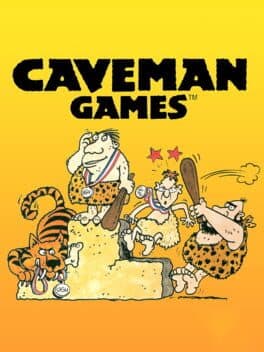
Caveman Games
Dynamix1988
Olympic Games set in the stone age. Events include clubbing, dino-racing, fire-making, mate-tossing, saber racing and the dino vault. Supporting up to six players, you must select your caveman from a total of six different characters with different backgrounds, all with different skills and drawbacks.
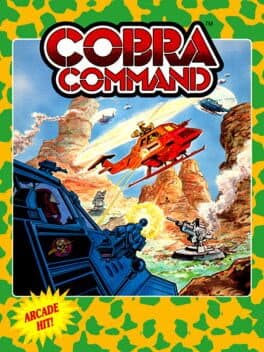
Cobra Command
Data East1988
A horizontal helicopter shoot 'em up for Arcade and NES, where the player is tasked with both eliminating enemy forces as well as rescuing hostages.

Soccer League: Winner's Cup
SAS Sakata1988
Soccer League - Winner's Cup is a soccer game developed by SAS Sakata for the Famicom, and published by Data East in 1988. During game play, field scrolls horizontally across the screen. Players select one of eight international teams and attempt to win the World Cup. The teams that the player can select include: Japan, Germany, Brazil, France, South Korea, England, Argentina, and the USA. Players may choose to play solo against the computer, or compete head to head with another player. Although the game was never released outside of Japan, most of the options are written in English.
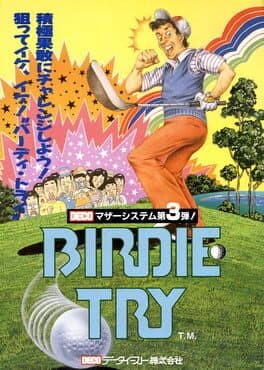
Birdie Try
Data East Corporation1988
A golf game that was released in Japan.

Be-Bop High School: Koukousei Gokuraku Densetsu
Data East1988
Be-Bop High School: Koukousei Gokuraku Densetsu is an Adventure game, developed and published by Data East, which was released in Japan in 1988.
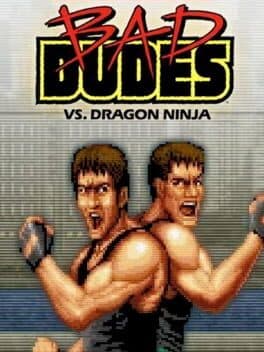
Bad Dudes vs. Dragon Ninja
Data East1988
Bad Dudes Vs. DragonNinja, often referred to simply as Bad Dudes (on the American NES port of the arcade original), and known in Japan simply as DragonNinja is a 1988 arcade game developed and published by Data East. It was also ported to many computer and game console home systems. Bad Dudes is a side-scrolling beat 'em up where the players are set in the role of the titular duo tasked with rescuing "President Ronnie" from ninja kidnappers. It was met with commercial success, and a generally positive to mixed critical reception. It has since become widely known for its general premise and introductory cut scene.

Donald Land
Data East1988
When the Gumon Family takes over McDonaldland and captures Ronald's friends including Grimace, Birdie, the Fry Guys, and others, it's up to the jolly clown himself to put an end to their vile machinations and eat hamburgers across numerous locales leading up to the final castle headquarters of the Gumon Family.
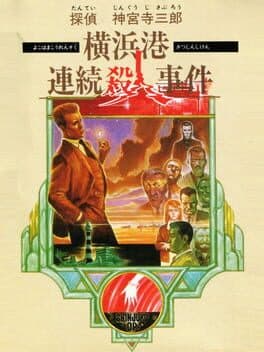
Tantei Jinguji Saburo: Yokohama-ko Renzoku Satsujin Jiken
Data East1988
The second game in the Tantei Jinguuji Saburo franchise. The top down RPG style investigation is removed in this game, making this a purely menu based adventure game. A murder happens in the port of Yokohama, as detective Jinguuji Saburo, you are tasked to investigate the twists and turns of the case to find the culprit.
Battle Rangers
Data East Corporation1988
Battle Rangers, is a run and gun arcade game released by Data East in 1988. Two soldiers attempt to rescue a kidnapped presidential candidate and free as many P.O.W.s as possible.
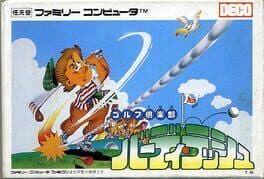
Golf Club: Birdie Rush
Data East1988
Golf Club: Birdie Rush is a golf game developed by Data East and published for the Famicom towards the end of 1987. It employs a far off bird's eye view throughout the game. It features 18 holes and allows players to play in a stroke game, or a tournament, and allows players to play alone, or head to head. It was only released in Japan, and it was followed up with a sequel for the Super Famicom called Super Birdie Rush in 1992.
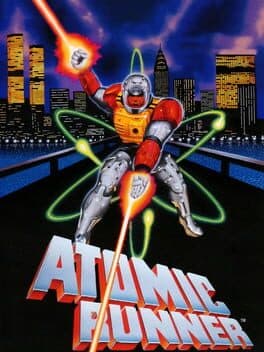
Atomic Runner
Data East1988
The player takes the role of Chelnov, a coal miner who miraculously survives the malfunction and explosion of a nuclear power plant. Chelnov's body gains superhuman abilities due to the massive amount of radiation given off by the explosion, and a secret organization seeks to harness those abilities for its own evil purposes. Chelnov must battle and defeat the secret organization using his newfound abilities.
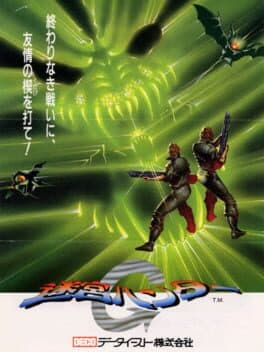
Meikyuu Hunter G
Data East Corporation1987
Meikyuu Hunter G is a multi-directional shooter arcade game which got released by Data East Corporation in 1987, only in Japan; however, it was later adapted by Data East USA as The Real Ghostbusters (under the license from Columbia Pictures Television, as it had been based on their animated series of the same name) for the United States later that year, and added a third yellow-suited player (Egon Spengler, as the unnamed blue- and red-suited protagonists for this original Japanese version became Peter Venkman and Ray Stantz). Two extra stages and an ending sequence were also added for the US version as the original Japanese one started over after the eighth one, along with several new powerups (including Slimer, although he is only referred to as "Green Ghost") and ghosts that appear after the unnamed enemies are killed (which can be beamed up, and put into "Ghost Storage" at the end of a stage); beaming up 100 ghosts is worth an extra life.
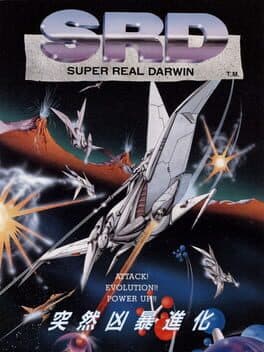
SRD: Super Real Darwin
Data East1987
SRD: Super Real Darwin is a 1987 vertical scrolling shooter arcade game developed and published by Data East. It is the sequel to Data East's 1986 arcade game, Darwin 4078. The player takes control of a small fighter ship capable of mutating into different shapes. The ship's appearance will change with upgraded weapons as the player obtain more power-ups.

Platoon
Ocean Software1987
The film Platoon featured a squad of five soldiers on their mission for the US Army in Vietnam. In this action game based around the film, you take control of these five guys in turn, with the chance to switch between them as they each take one of the 3 hits that would kill them. The game recreates each of the sections of the film, starting with a side-scrolling journey through the jungle, with paths to cross both horizontally and vertically, and the ability to jump or duck hazards. You will need to blow up a bridge and then locate a village, which contains a torch, a map and a trap-door. The enemy has booby-trapped the area and are launching airstrikes, so the danger is not all from enemy ground soldiers.
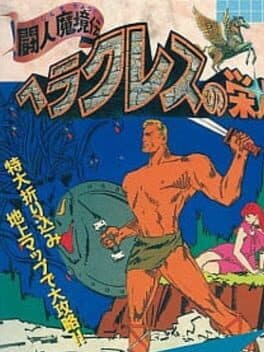
Heracles no Eikou: Toujin Makyou-den
1987
Heracles no Eikou: Toujin Makyou-den is a Role-Playing game, published by Data East, which was released in Japan in 1987.
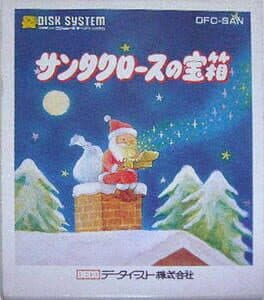
Santa Claus no Takara-bako
1987
One month a year, we celebrate this season, thank you for the wonderful memories. And in appreciation for this year, while people send the gifts, Christmas is for us a time to round off the memories of one year, a time to give those close words of gratitude in a Christmas card. Thank you for the wonderful memories this year. With feeling of gratitude, our gift to you. Merry Christmas.

Tantei Jinguji Saburo: Shinjuku Chuuou Kouen Satsujin Jiken
Data East1987
The first installment in the long-running Tantei Jinguuji Saburo (Jake Hunter) series about the mystery behind the death of a young woman whose corpse was discovered in Shinjuku Central Park. Tantei Jinguuji Saburo: Shinjuku Chuo Koen Satsujin Jiken ("Detective Saburo Jinguuji: Shinjuku Central Park Murder Mystery") is the first in a long-running series of crime-themed adventure games from Data East regarding the detective Saburo Jinguuji, or Jake Hunter as he is known in the West. As with all the games that follow, the goal of the game is to discover the perpetrator behind a murder by talking to witnesses and suspects, gathering clues and deducing facts about the case. The player can use a menu of options with which to control Detective Jinguuji's investigation, such as "Talk" and "Look" commands to get a better sense of the world of the game.
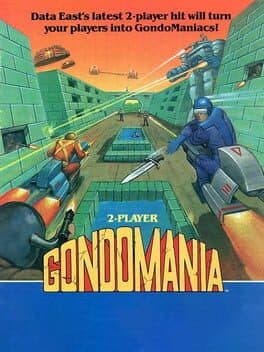
Gondomania
Data East Corporation1987
Arcade game released by Data East in 1987. Top-down shooter featuring rotating joysticks.
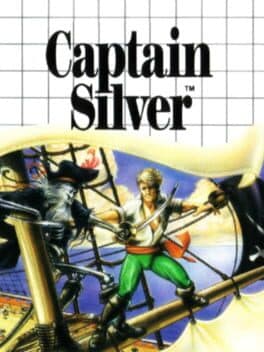
Captain Silver
Data East1987
Captain Silver is a side-scrolling action game released for the arcades by Data East in 1987. In the game, the player control a young sailor named Jim Aykroyd who goes on a journey to seek the lost treasure of Captain Silver, facing various perils along the way. Home versions were released for the Master System by Sega and for the NES by Tokuma Shoten.

Heavy Barrel
Data East1987
Heavy Barrel is a 1987 overhead run and gun arcade game by Data East. Terrorists have seized the underground control complex of a nuclear missile site, and it is up to the player to infiltrate the base and kill the enemy leader. Players begin armed with a laser gun with unlimited ammunition and a limited supply of grenades. Improved weapons and grenade powerups are made available within the game, either in plain sight or within crates that must be unlocked using keys. Additionally, crates may contain orbs or one of the six pieces of the Heavy Barrel superweapon. Like SNK's Ikari Warriors, the original arcade version featured 8-way rotary joysticks. The name of the game is from an in-game weapon. The Heavy Barrel is found in six pieces and is an energy cannon capable of destroying any enemy in the game with a single shot (except the final enemy, and possibly one other boss that may have required two shots). The weapon has a wide arc of fire and can be fired as fast as the player's trigger finger permits, but after thirty seconds its use is exhausted, at which point the bearer reverts to his previous weaponry. Best used to get past tough bosses, the weapon could be built several times in a single game (probably three or four times). In a two-player game, whoever collects the sixth piece is equipped with the Heavy Barrel.
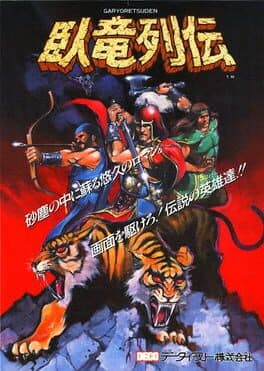
Garyo Retsuden
Data East1987
Choose one of 3 characters and shoot at all advancing enemies in this top-down vertical-scrolling action game. Collect items to increase your speed and firepower.
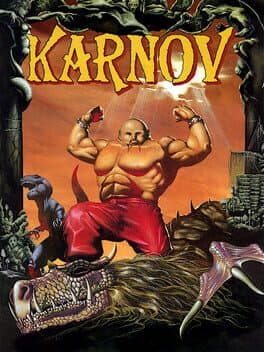
Karnov
Data East1987
Karnov is a 1987 platform arcade game. It is the debut of Data East's mascot of the same name. After Data East became defunct due to bankruptcy in 2003, Paon, a company comprising former Data East staff, acquired the rights to Karnov, along with multiple other Data East games. In the game, players take control of the title character Jinborov Karnovski, or "Karnov" for short. Karnov is a strongman popularly illustrated as being from an unspecified part of the Soviet Union's Central Asian republics as shown on the original arcade flyer and again in Karnov's Revenge.
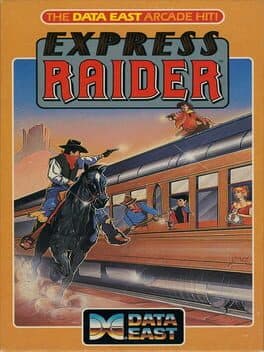
Express Raider
Data East1986
Express Raider was produced by Data East in 1986.
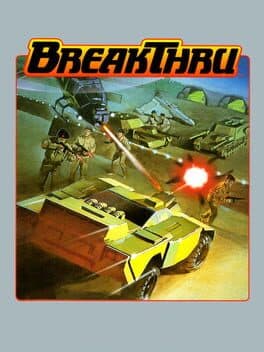
BreakThru
Data East1986
BreakThru is a 2D side-scrolling vehicle shooter. Your mission: race, jump, and blast your way through five levels (mountains, bridge, plains, city, and airfield) of enemy defenses to recapture the stolen jet fighter. A host of enemy soldiers, mines, vehicles, and aircraft will try to stop you, though. Oh yeah... and don't forget to watch out for those rocket attacks and falling rocks!
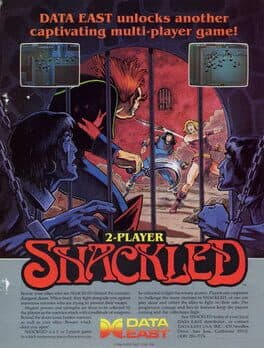
Shackled
Data East1986
Move your player through a maze-like level. Shoot enemies and collect treasures and keys.
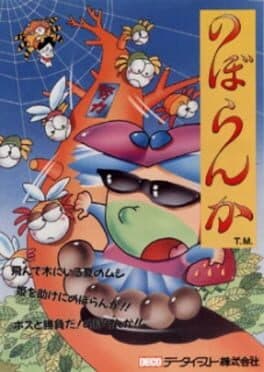
Noboranka
Coreland1986
This game is a vertical scrolling shoot 'em up where the player controls a character that has to climb a tree and shoot bug-like enemies. The story is that the princess has been kidnapped by the villains of the Insect World, and Zippy Bug has to rescue her. After shooting the enemies, they drop fruits that the player can collect for extra points, and skulls that are deadly if touched. The player is able to fly for a short time, and every time this is done, one of the letters from the 'I Love You' at the bottom of the screen is used up. The letters regenerate over a small period of time. There are also other items, such as the key, which surrounds the player in a bubble and makes him invulnerable to 1 hit. Another item is a ring which seems to instantly replenish all of the used up 'I Love You' letters. One other item is the ham...
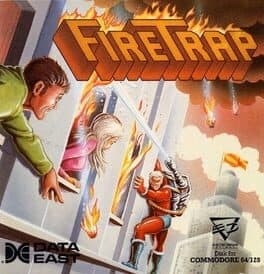
FireTrap
Wood Place Inc.1986
Set Your Computer Alive With FireTrap Firetrap scorched its way through the arcades. Now it's ready to burn its way onto your screen. If you've got cool hands, get ready to climb the burning skyscrapers, putting out fires as you go, to rescue the people trapped inside. Firetrap is hot!
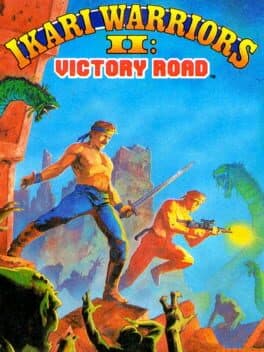
Ikari Warriors II: Victory Road
SNK1986
When we last saw Paul and Vince, they had saved the Colonel and were about to head for home in a special plane given to them by the General. But then, while in flight over the ocean, the sky suddenly blackens - the ocean begins to churn - and the plane goes spinning! A booming voice fills the cockpit: "Hear me, Warriors! Zang Zip, the War Dog, has enslaved the people of Earth. Only you can save us from his grip of evil!" Caught in a time warp, hurled thousands of years into the future, Paul and Vince know they have no choice but to meet this impossible challenge head-on. After all, they are professionals... they are the Ikari Warriors!
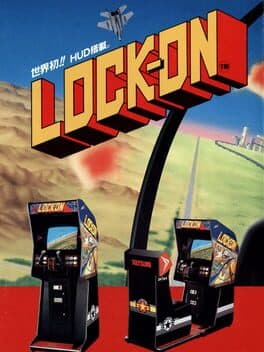
Lock-On
Nihon Bussan1986
Lock-On is a 1986 first-person combat flight simulator video game with a futuristic theme. It was developed by Tatsumi and licensed to Data East for US distribution. Its graphics feature scaling sprites and a full-screen rotation effect. The game consists of 20 levels. Gameplay is similar to After Burner: the plane follows a predefined path, but the player can steer it slightly to evade incoming missiles. The player can fire guns and homing missiles, the latter of which requires the eponymous lock-on first.
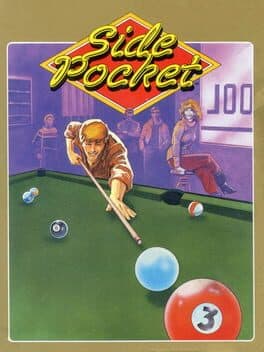
Side Pocket
Data East1986
Side Pocket is a pocket billiards video game originally released into arcades by Data East in 1986. The arcade version was eventually ported to six home console platforms and two sequels to the game were produced, as well as a spin-off series called Pocket Gal. G-Mode currently owns the intellectual property rights to the Side Pocket series, and licenses these games globally.
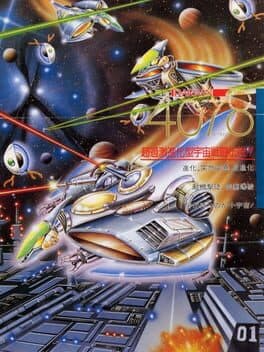
Darwin 4078
Data East1986
Darwin 4078 is an arcade game released by Data East in 1986. The game is a vertical scrolling shoot 'em up like Xevious, but as the title indicates, Charles Darwin's theory of evolution is incorporated into the gameplay.
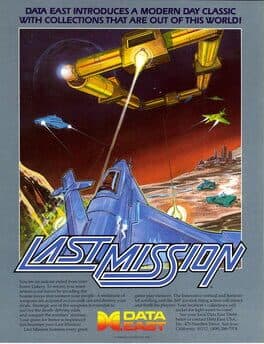
Last Mission
Data East1986
The players assume the role of an alien-humanoid space pilot who has been exiled from their home galaxy for committing an unlearned crime. The only way the player character can return is to restore their honor; the only way to do so is to invade and defeat the alien invaders who have been known to frequently attack the player character's people using a ship called the Main Fighter.
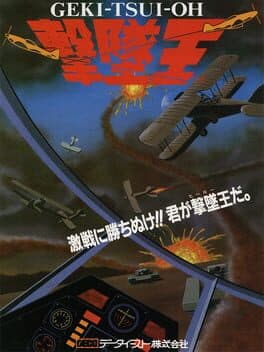
Zero Target
Data East Corporation1985
Zero Target, known in Japan as Shooting Down King, is a shooter video game developed by Data East and released in 1985 for arcades. In Zero Target the player controls a fighter plane, with the action seen from a first person view inside of the fighter's cockpit. The player can move the view in any direction, with a targeting reticule in the middle of the screen used to aim at enemy fighters.
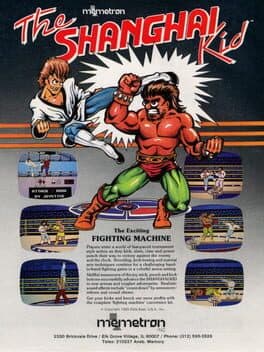
Shanghai Kid
Taito1985
A fighting game from 1985, notable for being the first to implement a combo system. It is the first game in the Flying Dragon (Hiryuu no Ken) series.
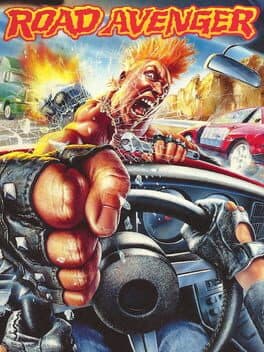
Road Avenger
Data East Corporation1985
Players assume the role of an angry cop on a wild ride as he pursues a gang of bikers who killed his wife. Players need to race through oncoming traffic, squeeze between trucks, trash motorcycles and steer through lots of explosions. The only thing needed are quick reflexes to follow the instructions on the screen (with an increasing difficulty) in order to keep the animation going.
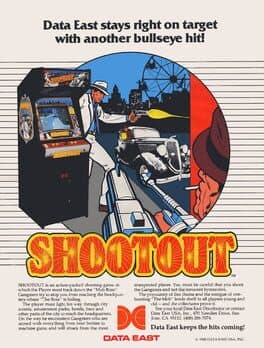
Shoot Out
Data East1985
Player controls with two buttons and an 8-way joystick. One button shoots the gun, the other allows the player to jump enemy bullets and other attacks. The 8-way joystick is used to specify the direction of movement, pointing down to crouch and the different up directions to indicate angle of the shot. At the start of the game, player must practice in the target practice room, then play through the next 7 stages to beat the game; however, the game will loop after the 7th stage is completed. In stages 1 thru 8, the object is to shoot a certain number of criminals and avoid shooting civilians. If the player is hit by an enemy or if the player shoots a civilian, the player will lose a life. When all lives are lost, the game ends. Besides criminals and civilians, some objects in the backgrounds of the seven stages can be shot to earn extra points, such as amusement park rides and signs.

Ring King
Woodplace1985
Ring King (known as "King of Boxer" in Japan, and "King Boxer" in Europe) is a boxing game in which the action in the ring is viewed in a 3D top-down view and a full range of moves is provided, with the standard jabs complimented by body punches and the ability to dodge, duck or raise your guard. Each punch weakens your opponent's strength which can slightly recover during a round break. A rain of well placed blows can produce a quick knockout, but normally you must hit your opponent many times before he goes down. The game has three play modes. There is training mode to train your player before you enter a tournament. A ranking mode where you can select one of the three championships, Rookie, Japan and World. Each championship can be played at five difficulty levels. The third mode is the tournament mode. To reach the number one spot in the ranking or tournament mode you must train your boxer well. Before you start you must create your character and set his initial abilities, strength, speed and stamina. Each won bout increases these abilities slightly. The abilities of your opponent and you are visible in the status bar at the top of the screen during the game. Strength is represented with a boxing glove, speed with a shoe and stamina with a dumb bell. This game can be played by one player against the computer or by two players against each other. A password is given after each won bout and it enables you to continue with the next match in a tournament at a later time.
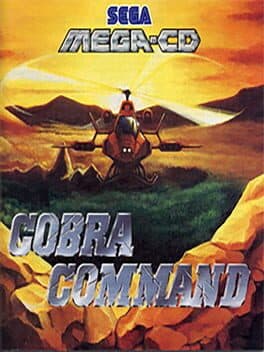
Cobra Command
Data East1984
Terrorists are threatening the Free World and have amassed a diabolical force. Only the brave pilot of Cobra Command can vanquish the terrorist threat and save the free world from total destruction. The player assumes the role as pilot of the LX-3 Super Cobra helicopter. The missions go across the New York City streets, the Statue of Liberty, the Atlantic Ocean, Italy, the Grand Canyon and the enemy's headquarters on the Easter Island.
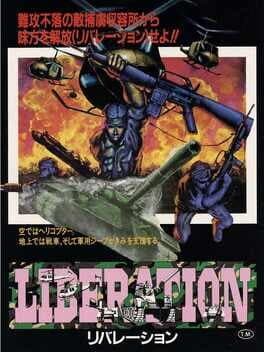
Liberation
Data East1984
Liberation is a 2D scrolling top down shooter. The game has two sections - first, the player controls a helicopter, flies over forests, shoots enemies and searches villages. After the helicopter lands, the player controls a tank or other vehicle and must rescue prisoners in the village. Shooting in the helicopter section is quite typical, but as opposed to most other top down shooters, the screen isn't automatically just vertically moving, the player can freely fly over the battlefield (but he can shoot only forward). Tank control is similar to Jackal - the vehicle moves and shoots in every direction. In garages, the tank can be replaced by a jeep.
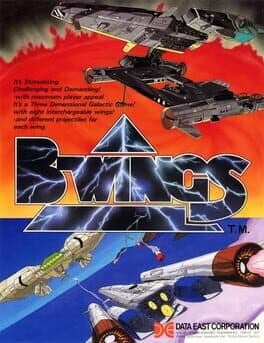
Battle Wings
Data East1984
Battle Wings, known in Japan either as B-Wing (ビー・ウィング) or B-Wings (ビー・ウィングズ), is a vertically scrolling shooter first released as an arcade game by Data East in 1984. The game was ported by Data East to the Family Computer in 1986, and was Data East's very first home release for this platform. The game consists of 45 levels (30 in the Family Computer version), and no background story or plot is given. The player controls a ship called the FX-1, and collects power-up parts (called a "wing") to progress through the levels and ultimately defeat the Gobunasu armored mobile fortress in the final level. The game consists of two different top-view screen levels, where the player can press the second button to descend to the ground whenever they do not have a power-up. The player is unaffected by attacks from airborne units while they are playing on the ground level, but the ship is automatically brought back into the air after a certain period of time. The player can still be hit by attacks from ground units while they are on the ground level, and can also lose their ship by crashing into obstacles. The 8-way joystick controls the player's movements, and one button is used for shooting, and the other is used for descending to the ground (or un-equipping wings). The background image continues infinitely when the player scrolls in the horizontal directions. Completing the final level of the game causes the score counter to increase to 9,999,999 points, which the player can enter as their high score. The player can also score cheap points by equipping and un-equipping their power-up. Pressing the button twice while the un-equipping animation is occurring cause the player to gain 2,000 points. The player gains an extra life every 40,000 points, so it is possible to gain lives almost infinitely. If the player gains over 10,000,000 points in this way before completing the final level, the counter takes over 20 minutes to increase to 99,999,999 points.
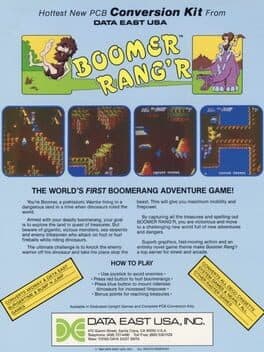
Boomer Rang'r
Data East Corporation1983
A caveman runs around tossing his boomerang at enemy cavemen and prehistoric creatures. Pick up potions to spell out BOOMER RANG'R to move to next level. For even more fun, kill a dinosaur rider and mount his dinosaur!
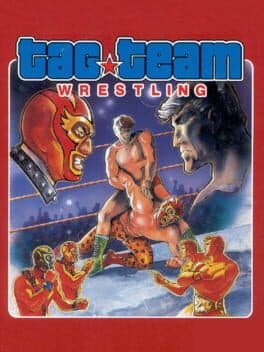
Tag Team Wrestling
Quicksilver Software1983
You are challenged to match the awesome skills of your opponents...to gain the Title in the World Super Championships of TAG TEAM WRESTLING Teamwork and stamina are the keys, as you and your partner battle your way through the Title Matches on your quest for the Belt. Attack your opponents with Body Slams, Drop Kicks, Backbreakers, Flying Head Butts, or even throwing them out of the ring! To win, its a pin for a count of three. Nothing can match the super excitement as the crowd cheers over this mania on the mat. Prepare yourself for Tag Team Wrestling!
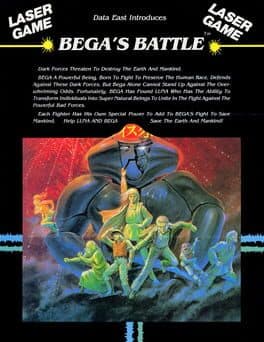
Bega's Battle
Data East1983
Data East used footage from the film Harmagedon to create a laserdisc video game titled Bega's Battle. It was released in June 1983. In the game, the player to take on the role of the robot Bega (Vega) whose goal was to stop the invasion forces of the alien Varga (Genma), while also rescuing his three friends who had been kidnapped by them. Even among laserdisc games Bega's Battle has become somewhat rare because many of the machines were converted into Cobra Command machines as part of a discount deal offered by Data East in exchange for the internals of the Bega's Battle arcade cabinet. Similar to Astron Belt, the game used the footage mainly for backgrounds, while the actual gameplay was a shooting game with sprites laid over the video. Bega's Battle also used brief full-motion video cut scenes to develop a story between the game's shooting stages. Years later, this would become the standard approach to video game storytelling. Bega's Battle also featured a branching storyline. The Twin Galaxies world record for Bega's Battle was set by Steve Harris (later the founder of Electronic Gaming Monthly) on July 18, 1983.
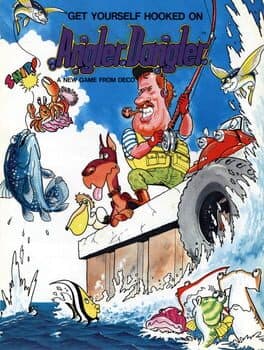
Angler Dangler
Data East Corporation1982
A fishing game from Data East. Position yourself to throw your hook to the best spots and reeling in your catch past hazardous rocks.
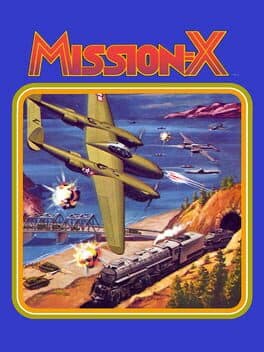
Mission X
Data East1982
Mission X is a vertically scrolling shooter played from a top down point of view.You are pilot of a World War II plane on a mission to destroy as many enemy targets as possible. Your missions will be flown over land and sea, and can take place during the day or at night. Try to earn as many points as you can by dropping bombs on the land targets which include bridges, tanks, trains, boats, and more. The enemy will be trying their best to stop you, and will send out large numbers of tanks, anti-aircraft missiles, and planes to try to destroy you!
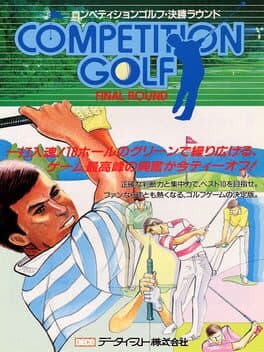
Competition Golf: Final Round
Data East1982
Competition Golf: Final Round is a golf simulator.
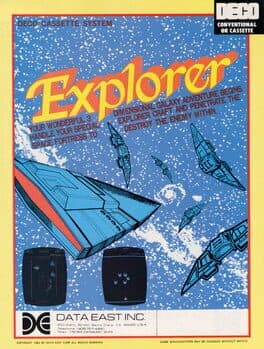
Explorer
Nichibutsu1982
Horizontal space shooter
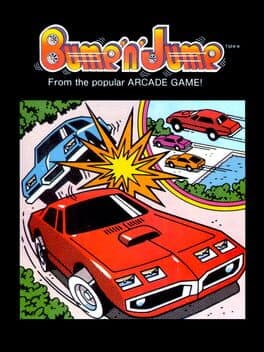
Bump 'n' Jump
Data East1982
Bump 'n' Jump is an overhead-view vehicular combat game developed by Data East and originally released in Japan as "Burnin' Rubber". The arcade version was available as both a dedicated board and as part of Data East's DECO Cassette System. It was distributed in North America by Bally Midway. The goal is to drive to the end of a level while bumping enemy vehicles into the sides of the track and jumping over large obstacles such as bodies of water. The arcade game was a commercial success in Japan and North America. The game was ported to the Atari 2600, Intellivision, ColecoVision, Nintendo Entertainment System, and Sharp X1. The Famicom version of Burnin' Rubber was published as "Buggy Popper" in Japan in 1986.

BurgerTime
Data East1982
BurgerTime is a 1982 arcade game created by Data East for its DECO Cassette System. The game's original title, Hamburger, was changed to BurgerTime before its introduction to the US. The player is chef Peter Pepper, who must walk over hamburger ingredients located across a maze of platforms while avoiding pursuing characters. The game was popular in arcades. In the US, Data East USA licensed BurgerTime for distribution by Bally Midway. The Data East and Midway versions are distinguished by the manufacturer's name on the title screen and by the marquee and cabinet artworks.
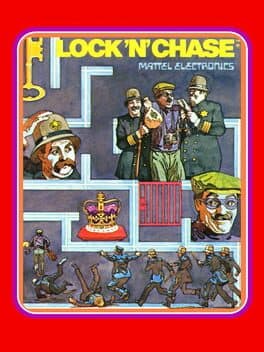
Lock 'n' Chase
Data East1981
Lock 'n' Chase is a 1981 maze arcade game developed and published by Data East in Japan in 1981, and later published in North America by Taito. Lock 'n' Chase was Data East's response to Pac-Man. The game's main character is a thief. The object of the game is to enter a maze and collect all the coins and, if possible, any other treasure that may appear. The thief must then exit the maze (a vault) without being apprehended by the Super D (policemen). The thief can close doorways within the maze in order to temporarily trap the Super D and allow him to keep his distance from them. Only two doors can be closed at a time. The Super D policemen are named Stiffy, Scaredy, Smarty, and Silly.
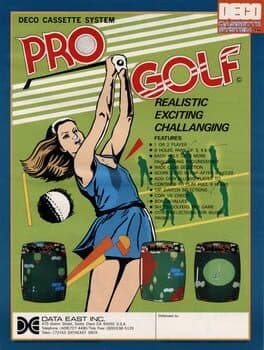
Tournament Pro Golf
Data East1981
A golf game featuring 9 levels. After the 9th hole, the courses repeat.
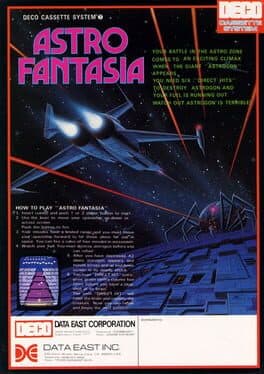
Astro Fantasia
Data East Corporation1981
This is a "Galaga" style vertical shoot'em up with a few unique twists that make it interesting. You pilot a single fighter ship against an armada of enemies (sound familiar?). There are 2 different play screens that alternate.
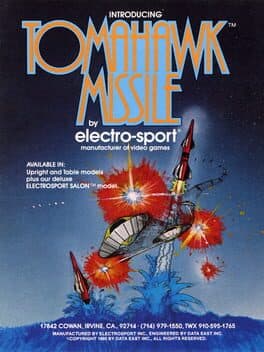
Tomahawk Missile
Data East Corporation1980
Galaxian clone - seabound this time around.
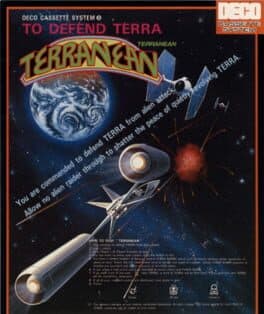
Terranean
Data East Corporation1980
An arcade sci-fi shoot-'em-up by Data Est, where a lone ship must defend the planet Terra from alien forces.

HWY Chase
Data East Corporation1980
A "Galaxian" type game. Shoot the flashing car (alien) on the screen the clear the level. HWY (pronounced Highway) Chase was released in December 1980 in the Japanese arcades. It was the very first video game made for this system (Cassette No. 01) along with Sengoku Ninja-tai (known as Ninja out of Japan) and Manhattan. It is said the title HWY Chase (HWY instead of Highway) was selected to easily recycle source code and materials made for 'Mad Rider', released earlier as a PCB, and known as 'Mad Alien' out of Japan.

Mad Alien
Data East Corporation1980
Also known as "Mad Rider" and "HWY Chase", Mad Alien is one of Data East's earliest arcade games. It's also the first game released on their cassette-based hardware. The gameplay is a mixture of Space Invaders and Monaco GP.
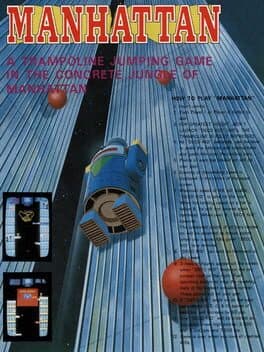
Manhattan
1980
Manhattan is a trampoline jumping game where you play as the "Deco Kid" who ricochets pinball like between two skyscrapers for style points.
Astro Fighter
Data East Corporation1979
The game of Astro Fighter consists of 4 waves and a refueling stage, which are then repeated with increasingly higher difficulty. The player's task is to eliminate the four successive waves of different types of attacking craft, while avoiding being hit by missiles and bombs, and then refuel by shooting the 'GS' ship before repeating the process. The player starts with 3 lives and receives a bonus life on reaching a score of 5000. 300 bonus points are received for shooting each 6 falling bombs and for 950 for hitting the GS ship accurately on the first shot. A very large bonus of 10,000 is given for getting through 4 waves and refueling by using exactly 2 shots more than the minimum needed. As the higher levels of Astro Fighter are difficult to survive consistently, even for the best players, the highest scores have been achieved by the achieving the 10,000 bonus deliberately.
Circus
Exidy1977
Circus was one of the first games produced by Exidy that used a CPU (6502) to control the game logic instead of hand-crafted hard-coded logic circuits. It ran on a black & white monitor with a color overlay that gave each row of balloons at the top of the screen a different color. It was designed and programmed by Edward Valeau and Howell Ivey of Exidy in 1977. Circus came in an upright dedicated cabinet, and may have also been available in a cocktail configuration as well. Circus machines had white sides with red painted sideart of several balloons in flight. The front of the machine was decorated with a large ornate monitor bezel that also doubled as a marquee (or nameplate). This bezel showed several clowns in a circus scene and had the game title spelled out with multicolored balloons. The control panel was unadorned, save for an analog spinner and a start button. The whole machine was finished off in black T-molding. At least 13,000 units, possibly as many as 20,000, were produced.
Depthcharge
Gremlin Industries1977
Depthcharge is a single-player arcade game released in 1977 by Gremlin Industries for the Sega VIC Dual system board. The game presents the player with a cut-away view of a section of ocean, on the surface of which is a destroyer with submarines passing beneath it. The player drops depth charges (up to six at a time) to destroy the submarines and moves the ship back and forth in order to avoid the submarines' mines. Up to four submarines may be present at any given time, each of which bears a score for destroying it that increases with its depth. The game was imported and released in several versions by Japanese publishers. Esco Trading released the game as Detphcharge, Taito as Sub Hunter, Sega as Depthbomb and in two versions by Data East - first as Submarine and then as Battleship in a two-in-one cabinet.