-
Average rating
403
Games
0
Votes cast
Heartbeat
Shipped Titles
Games (403)
Sega Vintage Collection: Streets of Rage
Ancient2012
Join Axel, Blaze, and company as they battle the evil Mr. X across all three Streets of Rage games. Originally released for the Sega Genesis, the classic brawler series has now been updated for release on Xbox LIVE Arcade! Earn all new achievements, take on challenging new game trials, compete with others players across Xbox LIVE Leaderboards, and clean up the streets with a friend in two player local and online co-op!
Sega Vintage Collection: Golden Axe
Sega CS12012
Grab your axe, swords, and mythic steeds to fight against evil in all three classic Golden Axe entries! Originally released for the Sega Genesis, the classic fantasy brawler series has now been updated for release on Xbox LIVE Arcade! Earn all new achievements, take on challenging new game trials, compete with others players across Xbox LIVE Leaderboards, and take on the forces of evil with a friend in two player local and online co-op!
Sega Vintage Collection: Alex Kidd & Co.
Sega Enterprises, Ltd.2012
Get SEGA Vintage Collection: Alex Kidd & Co., Arcade game for PS3 console from the official PlayStation website. Know more about SEGA Vintage Collection: Alex Kidd & Co. Game.
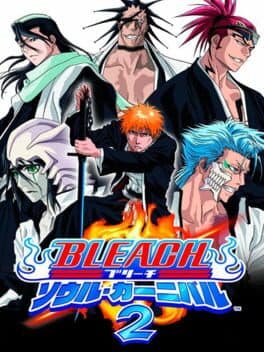
Bleach: Soul Carnival 2
2009
The game follows the story of the manga from the start of the series, until Ichigo's victory over Ulquiorra Cifer. The game's story is told through voice acting and text. There are also some cinematics which were taken right from the anime that are shown most often during fights scenes.
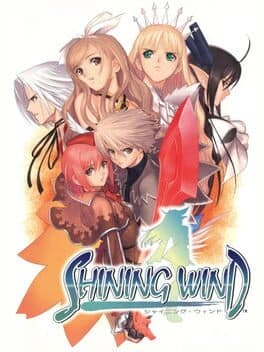
Shining Wind
Nextech2007
Shining Wind is the sequel to Shining Tears. The main characters from Shining Tears appear in Shining Wind as well.
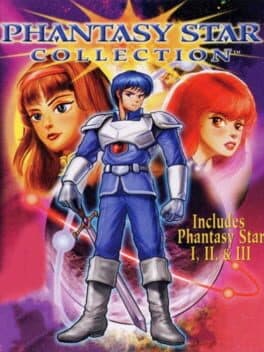
Phantasy Star Collection
Sega Enterprises, Ltd.2002
Phantasy Star Collection is a compilation of Phantasy Star games that was released on the Game Boy Advance on November 26, 2002 in the United States and in March 2003 in Europe. This version, produced by Digital Eclipse, altered the classic titles in order to function within the Game Boy Advance's resolution. Strangely, the bundle omitted the fan-favorite Phantasy Star IV: The End of the Millennium from its selection of games, only offering Phantasy Star, Phantasy Star II, and Phantasy Star III: Generations of Doom.
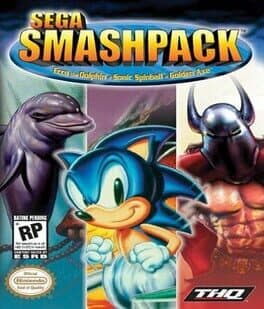
Sega Smash Pack
Sega Enterprises, Ltd.2002
The handheld version of Sega Smash Pack was released for Game Boy Advance simply titled Sega Smash Pack and featured three games, two of which had been included in the first Smash Pack. While Ecco the Dolphin and Sonic Spinball were developed using the original source code, Golden Axe had to be recreated from scratch.
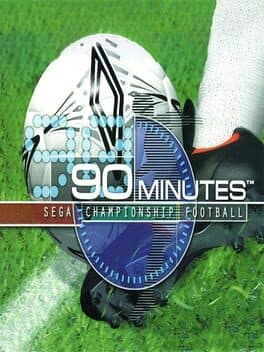
90 Minutes: Sega Championship Football
Smilebit2001
Gameplay follows the norms of the genre - A to pass, B to throw a high lob, X to shoot, Y to change players, with the triggers to perform modifiers (though passes and lob shots) and sprint, although these can all be changed in the options. The player can also assign special tactics to each direction on the d-pad to adapt quickly according to the flow of the game.
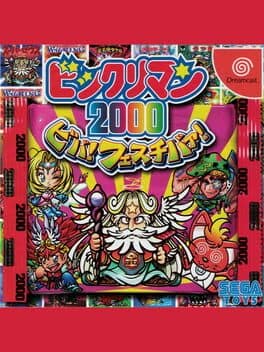
Bikkuriman 2000: Viva! Festival!
Sega Enterprises, Ltd.2000
The game is a collection of mini-games. The player selects Sei Tenshi Takeru to move around a park and play the attractions. One of the mini-games is free and can be used to gain coins, with other attractions requiring coins to participate.
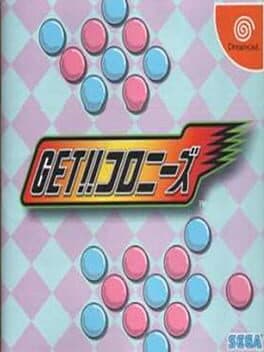
Get!! Colonies
Sega Enterprises, Ltd.2000
Puzzle game on the Sega Dreamcast. Object of the game is to fill the playfield with more of your colored spheres than your opponent. Get!! Colonies was originally released as "Hello Kitty: Lovely Fruit Park"... no... seriously, it was. The game was then re-skinned for a wider audience.
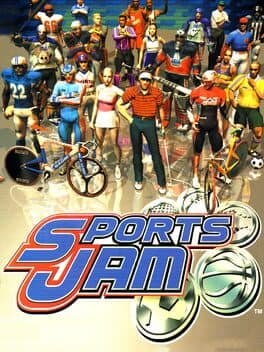
Sports Jam
WOW Entertainment2000
Sports Jam has eight competitive sports for players to master in head-to-head 2-player matches. The goal is for the player to earn the title King of Sports, and this can only be done by mastering all 12 events including Football, Baseball, Hockey, Basketball, Tennis, Soccer, Golf and Cycling.
Hello Kitty no Waku-waku Quiz
Sega Enterprises, Ltd.2000
Hello Kitty no Waku-waku Quiz is a Miscellaneous game, developed and published by Sega, which was released in Japan in 2000.
Virtua Athlete 2000
Climax Entertainment2000
The top 7 events from Track and Field come to life like never before as players vie for the top sports honor - "The World's Greatest Athlete!" Using the latest 3D graphics, Virtua Athlete 2000 challenges you to use quick reflexes, sharp eye-hand coordination, and split-second timing to master each of the events.
Advanced Daisenryaku: Europe no Arashi - Doitsu Dengeki Sakusen
SystemSoft2000
A turn-based strategy game for the Dreamcast. Part of the long-running Daisenryaku franchise.
Kiteretsu Boy's Gangagan
Sega Enterprises, Ltd.2000
Kiteretsu Boy's Gangagan is a game for the Sega Dreamcast only released in Japan. Players can use the Dreamcast Microphone to give voice commands in-game.
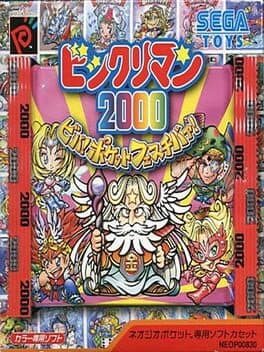
Bikkuriman 2000: Viva! Pocket Festival!
Sega Enterprises, Ltd.2000
A tie-in game for the Bikkuriman 2000 anime in Japan. The game's Neo Geo Pocket Color version could link to Dreamcast version. This game was released only in Japan.

Ogami Ichiro Funtouki: Sakura Taisen Kayou Show - Benitokage Yori
Red Company2000
An adventure game about Ogami preparing a real world Sakura Taisen stage play.
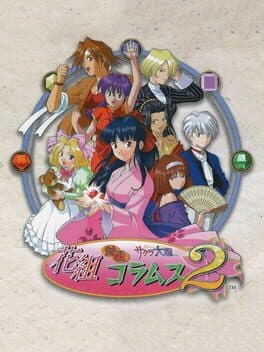
Hanagumi Taisen Columns 2
Sega Enterprises, Ltd.2000
The members of the Sakura Wars Hanagumi meet together and confront again with the falling object puzzle. Compete with Sakura fans all over the country while staying at home for online matches! Using the communication function of Dreamcast, you can play online. You can test your skills with "Hana Kora" fans nationwide at home. Of course, you can also enjoy Sakura-related information on the Internet. A variety of game modes with a story and a single play! A variety of game modes are available, including the Red Boy vs Red Lizard Mode, where members of the Hanagumi clash over the protagonist, the 2P battle mode in which players compete with each other, and the 1P mode in which columns are played intently. Of course, there is also a story mode where you can get a glimpse of the daily lives of the Hanagumi members.
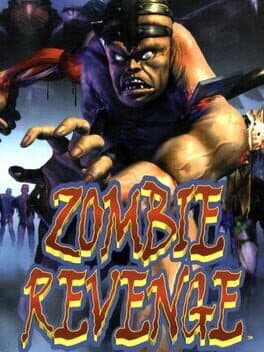
Zombie Revenge
Sega Enterprises, Ltd.1999
A 3D beat'em up released as an Arcade and later ported to Dreamcast. It served as a House of the Dead spin-off, where players had to take down hordes of zombies and monsters using not only their fists, but also melee and ranged weapons.
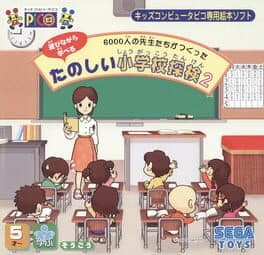
6000-nin no Sensei-tachi ga Tsukutta Tanoshii Shougakkou Tanken 2
Sega Enterprises, Ltd.1999
6000-nin no Sensei-tachi ga Tsukutta Tanoshii Shougakkou Tanken 2 is a Sega Pico educational game. It is the sequel to 6000-nin no Sensei-tachi ga Tsukutta Tanoshii Shougakkou Tanken 1.
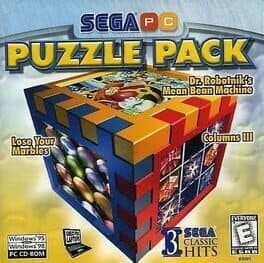
Sega Puzzle Pack
Sega Enterprises, Ltd.1999
The second pack titled Sega Puzzle Pack (Sega Archives from USA Vol. 2 in Japan) featured three games.
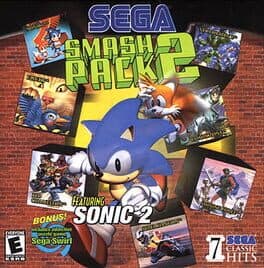
Sega Smash Pack 2
Sega of America1999
The third pack titled Sega Smash Pack 2 (Sega Archives from USA Vol. 3 in Japan) featured eight games.
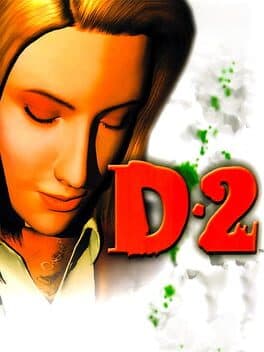
D2
WARP1999
A survival horror video game developed by WARP for the Dreamcast. It was published by WARP in Japan in 1999 and then by Sega in North America in 2000. D2 was written and directed by Kenji Eno, and serves as the third and final entry in the D series after D and Enemy Zero. Like the previous two games, D2 stars the digital actress Laura and serves as an independent story unrelated to either game. D2 is also WARP's final game before changing their name to "Superwarp" and transitioning from video game development to online network services in August, 2001.
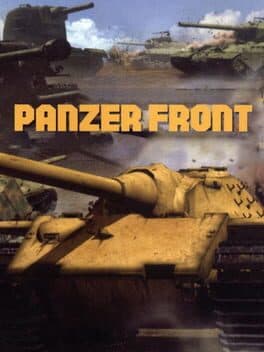
Panzer Front
Enterbrain1999
Set in various theaters of World War II, this tank sim pits Russian, German, and American armor against each other in a series of missions designed to test both strategizing and twitching abilities, albeit with a heavy emphasis on the former. The game offers two main modes, Tank Select and Tactics. Tank Select is an arcade-style mode, with exaggerated tank capabilities and basic missions, most revolving around killing whatever moves. Tactics offers a selection of 28 different maps with a variety of terrain, opposition, and victory conditions. The missions are almost evenly divided between Russian, American, and German missions, but secondary factors mix things up so thoroughly that the different capabilities of each army's tanks are only a small drop in the bucket full of strategic factors you have to consider.
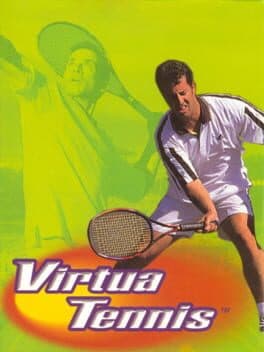
Virtua Tennis
Sega AM31999
Virtua Tennis is a tennis game in which it is possible to control one of eight licensed players and uncover the secret stars. As well as the traditional arcade mode, you can play in the exhibition mode, with four-player action via doubles play. Once you've mastered those modes, take on the world in the world circuit mode, with unique training games, different challenges and shops to buy clothing, equipment, stages and playing partners.

Hello Kitty Lovely Fruit Park
Sega Enterprises, Ltd.1999
Hello Kitty puzzle.
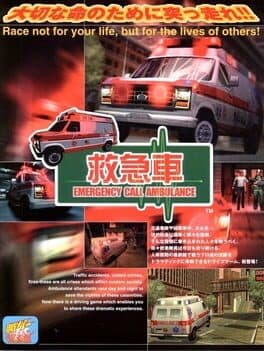
Emergency Call Ambulance
Sega Enterprises, Inc. (USA)1999
Emergency Call Ambulance is an arcade game released in October of 1999 by Sega. It is a single-player game, and the controls are made up of a steering wheel, gearshift, and gas and brake pedals. The game has been noted for being exceptionally hard, mainly in the cases after the first victim. There are two forms of gameplay: Automatic Transmission and Manual Transmission.
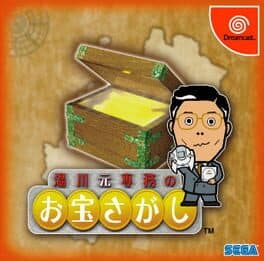
Yukawa Motosenmu no Otakara Sagashi
Sega Enterprises, Ltd.1999
Yukawa Motosenmu no Otakara Sagashi was a game that was used as a promotional item for the Dreamcast and for its online capabilities. This game was only released in Japan.
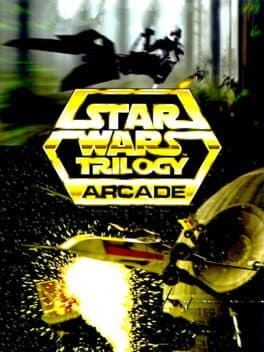
Star Wars Trilogy Arcade
LucasArts1998
Star Wars Trilogy Arcade is an arcade game first released in 1998. The game is a 3-D rail shooter based on the original trilogy of Star Wars films and was released along with the special editions of these films. Sega also released an accompanying pinball game. The game is not to be confused with Star Wars Arcade, another Star Wars game released to arcades by Sega in 1993.
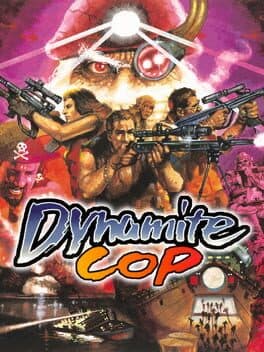
Dynamite Cop
SEGA AM11998
A beat 'em up video game published by Sega and initially released in arcades on Sega Model 2 hardware. It is the sequel to the 1996 game, Dynamite Deka which was released outside Japan as Die Hard Arcade. The game was ported to the Dreamcast and released internationally in 1999, this time without the Die Hard license. A third sequel, Asian Dynamite, was released only in arcades.
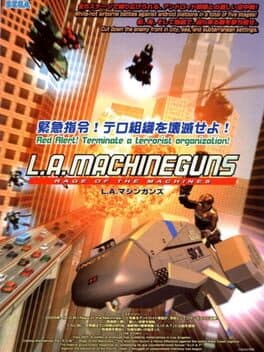
LA Machine Guns
Sega AM31998
A sequel to Gunblade NY, LA Machine Guns is a light gun game that casts the player as a machine gunner on an attack helicopter. The game runs on Sega Model 2 arcade hardware.
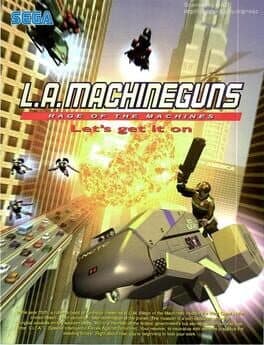
L.A. Machineguns: Rage of the Machines
Sega Enterprises, Ltd.1998
In 2025, a militia of androids, who call themselves the "R.O.M." - "Rage Of the Machines", has suddenly materialized in Los Angeles. The androids launch a fierce offensive against the entire West Coast regions and the federal government responds by mobilizing its ace counterterrorist forces "S.I.F.A.T". Against the backdrop of the Pacific coast, a struggle of unparalleled intensity has begun.
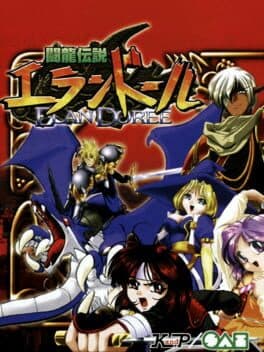
Touryuu Densetsu: Elan Doree
Sai-Mate1998
Touryuu Densetsu: Elan Doreé is a fantasy-themed 3D fighting game; it is notable for its dragon-based, aerial combat mechanics. It was originally released in arcades on Sega’s ST-V hardware in November 1998 and later ported to the Sega Saturn in 1999.
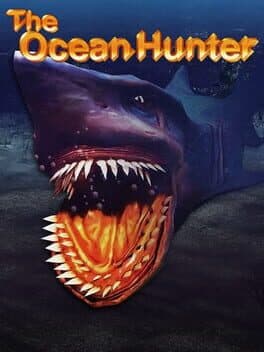
The Ocean Hunter
Sega Enterprises, Ltd.1998
The Ocean Hunter is played by using two mounted turret-like guns on the arcade cabinet. The game is capable of being played with either one or two people simultaneously. The player takes the role of an underwater adventurer searching for the Seven Great Monsters of the Seven Seas, hoping to collect on the bounties placed on their heads for attacks on shipping vessels, humans and native marine life. The player proceeds to go throughout the game in a set path, shooting at various hostile ocean life along the way. The game is played progressing through various levels, each with its own design and layout. Upon reaching the end of the level, a boss is encountered. Each boss is named after a famous mythological sea monster: Kraken, Leviathan, Charybdis, Ahuizotl, Karkinos, Midgardsorm, and Rahab. There are also dozens of mini-bosses in the game, many of them also named after sea monsters.
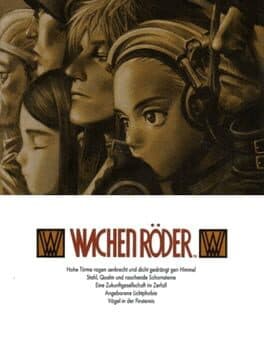
Wachenröder
Sega Enterprises, Ltd.1998
Wachenröder is a turn based game with 3D maps and set in the victorian era. The story takes place in a dark future on the island Edward, which is ruled by the noble and magnanimous King Wizar.
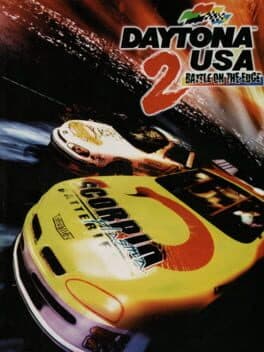
Daytona USA 2: Battle on the Edge
Sega AM21998
Daytona USA 2: Battle on the Edge is an arcade racing game released by Sega in 1998 as a follow-up to the extremely successful Daytona USA. The game featured vastly superior graphics, utilizing the Sega Model 3 hardware. The majority of Daytona USA 2 cabinets were released as deluxe models (with far fewer Twin Cabinets), which could be linked together for up to four players. A notable change from the original is that the player has the choice from multiple cars, each with varying capabilities for varying levels of player experience. Just like before, the game has three courses – a Beginner course with 8 laps, an Advanced course with 4 laps, and a long Expert course with 2 laps. The 'time lap' mode also returns, and is accessed in the same manner – by holding down start at the transmission select screen. Like the original game, mirrored versions of the tracks can also be played by holding down the Start button when selecting the course. It is recommended, however, that the player has had mastery of the course beforehand. By request, an arcade operator could put the game on Grand Prix or Endurance mode to increase the number of laps in a game. Finishing a race in the top 3 in any course allows the player to view an "ending" and see the game credits.
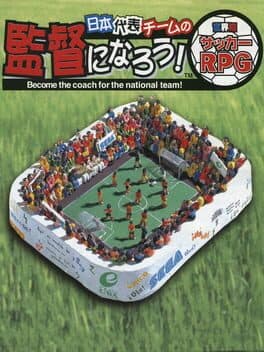
Nihon Daihyou Team no Kantoku ni Narou! Sekaihatsu, Soccer RPG
Sega Enterprises, Ltd.1998
Nihon Daihyou Team no Kantoku ni Narou! Sekaihatsu, Soccer RPG is a soccer-themed RPG by Sega and Enix released on the Sega Saturn exclusively in Japan in 1998.
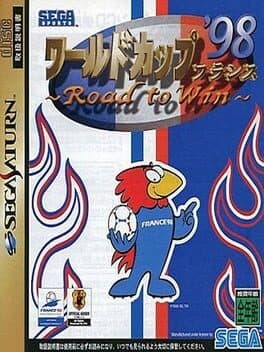
World Cup '98 France: Road to Win
Sega Enterprises, Ltd.1998
World Cup '98 France: Road to Win, not to be confused with FIFA Road to World Cup 98 is a football game released for the Sega Saturn. World Cup '98 France recycles its core engine and much of its content from earlier Sega-published football games, particularly Sega Worldwide Soccer 98. This is the last Saturn football game whose lineage can be traced back to 1995's Victory Goal. The next game in the series, Sega Worldwide Soccer 2000 was built from the ground-up by Silicon Dreams for the Dreamcast.
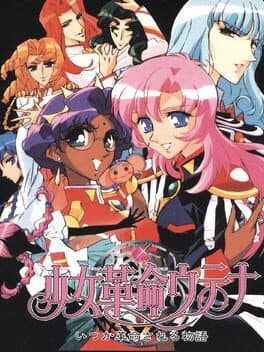
Shoujo Kakumei Utena: Itsuka Kakumei Sareru Monogatari
Sega Enterprises, Ltd.1998
Based on the 1997 anime, Shoujo Kakumei Utena: Itsuka Kakumei Sareru Monogatari tells an original story which is set between episodes eight and nine of the TV series. The main character of the game is an original character who transfers to Ohtori Academy. The game is in the style of a visual novel with strong dating sim elements. The major characters each possess a statistic called "Heart's Nobility" which the player affects through dialog choices that appear sporadically during play. Each character's level of Heart's Nobility determines how the game will end. The special endings available for characters that end with particularly high Heart's Nobility represent the game's dating sim element, but because it is set within the larger plot of the TV series the relationships are usually somewhat platonic, or one-sided affections on the part of the main character.
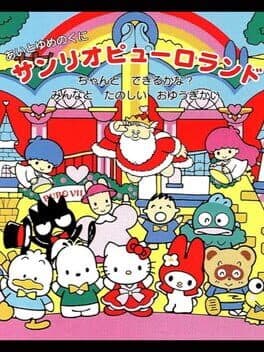
Ai to Yume no Kuni Sanrio Puroland: Chanto Dekirukana? Minna to Tanoshii Oyuugikai
Sega Enterprises, Ltd.1998
A Japan-only Sanrio-themed Sega Pico game, released on May 1, 1998.
Sega Ages Vol. 11: Phantasy Star Collection
Sega Enterprises, Ltd.1998
Relive the series that revolutionized RPG gaming! Explore the vast Algo Solar System and do battle with an arsenal of weapons, magical spells, and armor. Defeat the evil King Lassic to restore peace to the galaxy! Uncover the shocking secrets of the Motavian society! Live through three generations to conquer monstrous mutations!
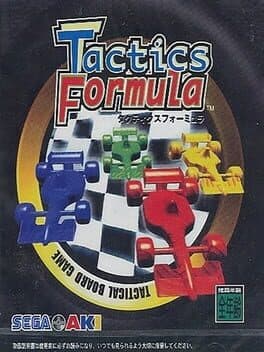
Tactics Formula
AKI Corporation1997
It is a strange mixture of a formula one racing game and a turn-based strategy title, in which rather than racing in real time, the player needs to decide every move in advance taking into account physics and statistics of the cars.
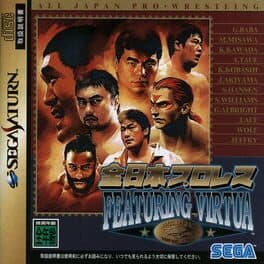
Zen-Nippon Pro Wrestling Featuring Virtua
Scarab1997
25 years of All Japan Pro Wrestling comes to Sega Saturn, and now the warriors of Virtua Fighter has taken to the ring to challenge the champions of the world! 12 wrestlers compete to showcase their skills and win the Triple Crown. 3 modes of play allows friends go head-to-head and compete in the ultimate battle of spirits!
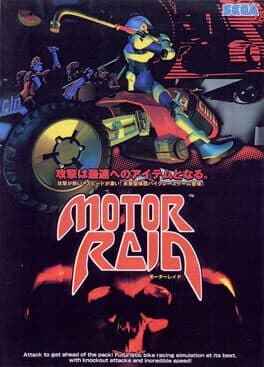
Motor Raid
SEGA AM11997
A motorcycle racing and combat game where racers drive and fight on unique tracks located on different planets.
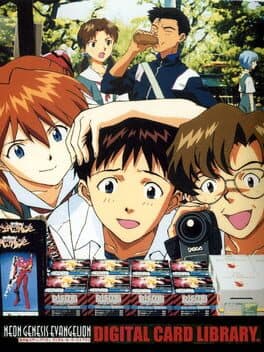
Neon Genesis Evangelion: Digital Card Library
Sega Enterprises, Ltd.1997
Neon Genesis Evangelion: Digital Card Library is a Miscellaneous game, developed and published by Sega, which was released in Japan in 1997.
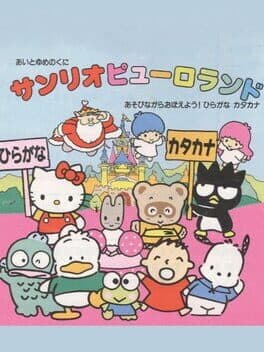
Ai to Yume no Kuni Sanrio Puroland Asobinagara Oboeyou! Hiragana Katakana
Sega Enterprises, Ltd.1997
A Sega Pico game featuring characters created by Sanrio.
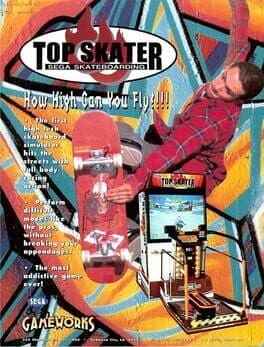
Top Skater
Sega Enterprises, Ltd.1997
Top Skater is an arcade game released by Sega in 1997, and built on the Sega Model 2 hardware. It was one of the first arcade games to feature a skateboard controller interface. In Top Skater, players stand on a skateboard-like platform which swung side-to-side or tilted, manipulating the actions of the avatars in the game. Similar games were made for skiing, snowboarding and other sports of this nature. The game consisted of various ramps, rails and other skating objects from which the player could do tricks to gain points. The main sponsor of the game was Coca-Cola. The soundtrack of the game consisted entirely of these songs by the punk rock band Pennywise. The game's style is like that of the later and more known Sega game Crazy Taxi, noticeably the character art design and music type. Top Skater was also directed by Kenji Kanno. A lesser known sequel called Air Trix was made in 2001.
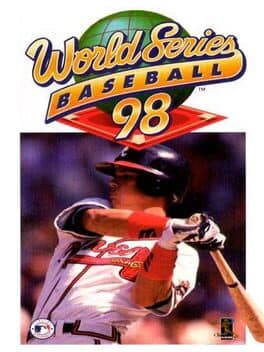
World Series Baseball 98
BlueSky Software1997
This years addition of World Series Baseball has new rosters and schedules updates statistics stat tracking in 27 categories and modes of play.
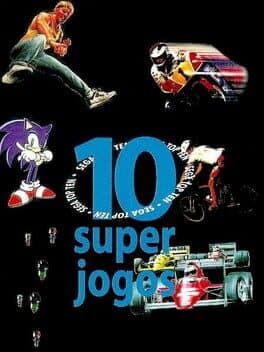
Sega Top Ten
Tec Toy1997
10 Genesis classics on one cartridge, released in Brazil by Tec Toy and in Asian territories by Sega themselves.
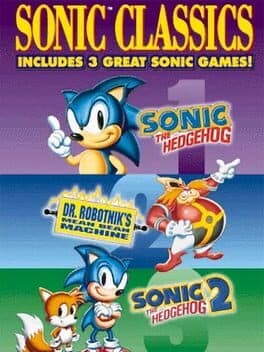
Sonic Classics
Sega Enterprises, Ltd.1997
Sonic Classics compiles three games from the Sonic The Hedgehog series onto one cartridge. They are: Sonic the Hedgehog, Sonic the Hedgehog 2, Dr. Robotnik's Mean Bean Machine Each of the three games control the same as their stand-alone versions. The games are selected from a menu, however only one game can be played at once. Also, even though Sonic The Hedgehog 2 is on this cartridge, it is not possible for this game to lock-on to Sonic And Knuckles to create Knuckles the Echidna.
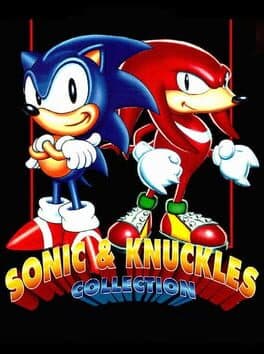
Sonic & Knuckles Collection
Sonic Team1997
A collection including: Sonic the Hedgehog 3 Sonic & Knuckles Sonic 3 & Knuckles Blue Sphere Sonic The Screensaver
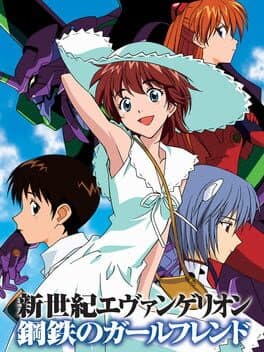
Shinseiki Evangelion: Koutetsu no Girlfriend
Gainax1997
Neon Genesis Evangelion: Girlfriend of Steel, also known as Neon Genesis Evangelion: Iron Maiden, is a video game based on the Gainax anime/manga series Neon Genesis Evangelion, released officially only in Japan for the PlayStation, Sega Saturn, PlayStation 2, PSP, Windows (PC), and Macintosh. On January 20, 2005 a sequel was released titled "Neon Genesis Evangelion: Girlfriend of Steel 2nd" for the Playstation 2, and while it does feature much of the cast of the original game, the story is unrelated to the original's.
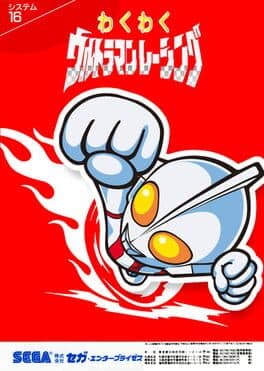
Waku-waku Ultraman Racing
Sega Enterprises, Ltd.1996
Waku Waku Ultraman Racing is a Kiddie Ride and Arcade Game based on the Ultraman Series. Riders sit on Ultraman, and control Ultraman or Ultraseven as they race against several Kaijus and Alien Baltan. At some point during the race, the riders will have to fight Baltan to win the race. The ride ends when the riders reach the goal.
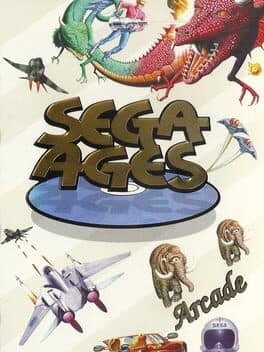
Sega Ages
Sega Enterprises, Ltd.1996
Sega Ages: Volume 1 contains three games previously released in Japan as stand-alone titles; Sega Ages Space Harrier, Sega Ages OutRun and Sega Ages After Burner II.
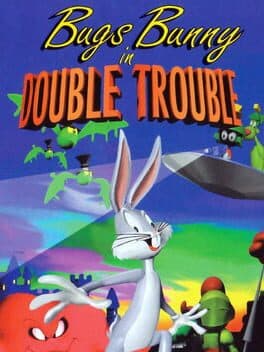
Bugs Bunny in Double Trouble
Probe Entertainment1996
BUGS BUNNY has dreamed his way into double trouble. A Mad Scientist is after Bugs' brain! To escape, bugs must use the Scientist's Televisor to travel through dreamland and outwit his LOONEY TUNES pals, including DAFFY DUCK, ELMER FUDD, and YOSEMITE SAM. But Bugs' nightmare doesn't end there. Before he can rest, Bugs must rocket to Mars to battle MARVIN THE MARTIAN and his trusty dog K-9. Move fast or... "That's all Folks!"
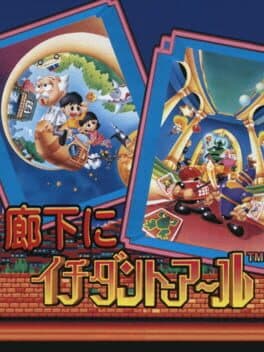
Sega Ages Vol. 5: Rouka ni Ichidant-R
Kuusoukagaku1996
Sega Ages Rouka ni Ichidant-R is a compilation released under the "Sega Ages" line for the Sega Saturn. It includes a port of Puzzle & Action: Ichidant-R and Quiz Rouka ni Tattenasai!. It was released exclusively in Japan in 1996.
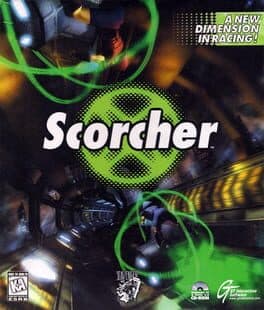
Scorcher
Zyrinx1996
Scorcher is a futuristic racing video game for the PC and the Sega Saturn. The game focuses on special motorcycles that reach up to 450 km/h racing through dangerous tracks in a dystopian year 2021.
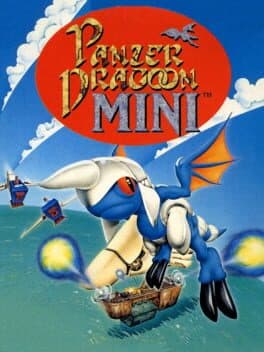
Panzer Dragoon Mini
Sega Enterprises, Ltd.1996
One thousand years into the future, you live in constant fear of the Dark Dragon and his giant cyborg insect armies. Armed with a deadly weapon from the ancient past and the guidance of your armored blue dragon, you must save your people from endless swarms of deadly foes. Fulfill your destiny and keep the Dark Dragon from reaching the tower; or die trying.

Sonic Blast
Aspect1996
Fully rendered graphics thrust Sonic into an exciting 3D playing environment. An all new gameplay perspective puts you in the middle of Sonic's 3D adventure! The evil genius Robotnik is after the Chaos Emeralds and it's up to Sonic to stop him. Rescue the innocent Flickies before Robotnik turns them into part of his evil plan! Sonic Blast was the last Sonic game for the Game Gear. The game was also ported to the Sega Master System in Brazil by TecToy and released in December 1997, making it the last game ever made for that system. While this game was released at the end of 1996 in conjunction with the similarly named Sonic 3D Blast, it is worth noting that the two games have little in common. No enemies, levels, or bosses, are shared between the games. The story is also completely different. Sonic and Knuckles join together to collect five of a Chaos Emerald's pieces and confront Dr. Robotnik at Silver Castle.
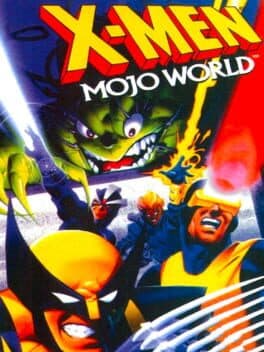
X-Men: Mojo World
Sega Enterprises, Ltd.1996
X-Men: Mojo World, a video game released in 1996 for the Game Gear system, features Wolverine and Rogue as the initial playable X-Men, with Gambit, Cyclops, Havok, and Shard unlockable later on. The game utilizes the same engine as its predecessor, X-Men: Gamesmaster's Legacy, and was also launched for the Master System in Brazil by Tec Toy. Set in a dystopian future, Mojo hosts a deadly TV show where participants engage in fights to the death. Having imprisoned certain X-Men from the past, Mojo aims to recreate their most epic battles. Wolverine and Rogue must enter the game, rescue their friends, and ultimately defeat Mojo to return home. Players start by choosing either Wolverine or Rogue. As each new level is conquered, additional X-Men become available, starting with Gambit, followed by Cyclops, Havok, and finally Shard. If any X-Men perish, the player must restart the level, selecting from the remaining characters. When all X-Men are defeated, the game concludes. Each character can activate their unique power at will. Wolverine employs his claws, Rogue can fly, Gambit hurls explosive cards, Cyclops unleashes optic blasts, Havok fires plasma blasts, and Shard utilizes energy blasts. Characters have both an energy meter and a power meter, depleting when they take hits or use their powers. Energy and power-restoring items can be found throughout the game. The gameplay primarily revolves around navigating through six levels, with each level culminating in a boss battle against well-known comic characters such as Magneto, Fitzroy, a Sentinel, and others.
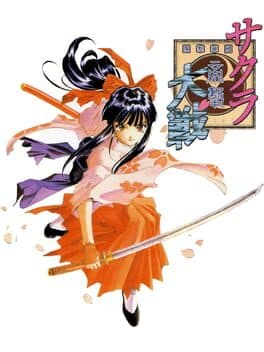
Sakura Taisen
Red Company1996
Released in 1996 for the Sega Saturn, Sakura Taisen is the first game in the iconic Japanese game franchise. It combines strategy RPG elements with dating sim-style character interactions to make "A Storm of Romance amid Taishou Cherry Blossoms!"
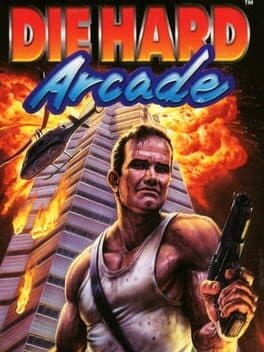
Die Hard Arcade
Sega Technical Institute1996
Die Hard Arcade is a beat 'em up for two players, who play as either John McClane or Chris Tompsen (Bruno Delinger and Cindy Holiday in the original Japanese version). Players fight their way through waves of enemies, using their fists, feet, and a variety of weapons that can be collected from enemies or the environment, from household items such as brooms and pepper shakers to high-damage missile launchers and anti-tank cannons. Most weapons are automatically lost at the end of each action scene, but hand guns can be retained so long as they have ammunition remaining. The typical level structure is a number of minions the player must defeat in many rooms, followed by a boss. Bosses can be anything from human minions of White Fang to spider robots. Quick Time Events are interspersed between many of the scenes. In these events, the player(s) may be running and turning a corner and they face an enemy, so they must perform a designated command to avoid being injured or to help defeat an enemy. In some cases failing a Quick Time Event will result in loss of health, as is usual for QTEs, but failing most will put the player characters into an additional action scene which they otherwise would not have to complete. Cut scenes are interspersed into the action.
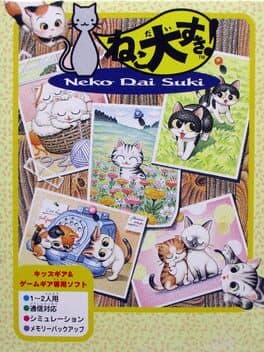
Neko Daisuki!
Sega Enterprises, Ltd.1996
A pet simulator, similar to Tamagotchi, where you take care of a small kitten.
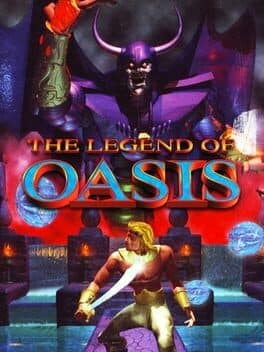
The Legend of Oasis
Ancient1996
The Legend of Oasis is the prequel to Beyond Oasis, also known as The Story of Thor. Like its predecessor, it is an action game with role-playing elements. The gameplay is quite similar to that of Beyond Oasis. Leon can attack with melee weapons or use a bow for long-ranged attack. His armlet also allows him to summon spirits, who would damage the enemy or heal Leon. Instead of the usual experience points system the game features "ranks" (equivalent to levels); higher ranks increase the protagonist's hit points and can be gained by recovering his health multiple times.
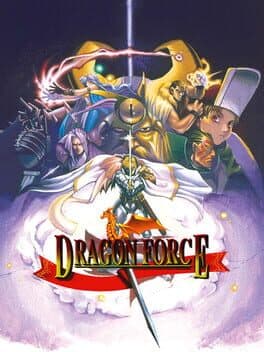
Dragon Force
Sega CS11996
Dragon Force is a real-time strategy RPG where players choose one of eight rulers to unite the continent of Legendra against a revived evil god. The game features large-scale battles with up to 100 soldiers per side, alongside army management and character development. It’s known for its fast-paced gameplay, multiple storylines, and high replay value.
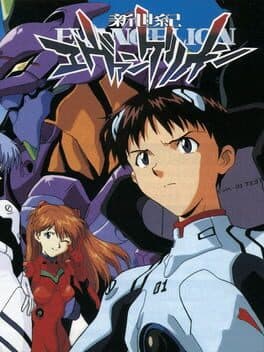
Neon Genesis Evangelion: 1st Impression
Sega AM21996
The first Evangelion video game, released for the Sega Saturn in 1996, shortly after the TV series's run. The story is set after the episode ASUKA STRIKES!, with Shinji badly injured and suffering amnesia as the result of an Angel battle and needing to retrain (by sparring with Asuka in Unit-02) and having to defeat the Angel to regain his memories. The game features RPG elements and FMV clips for combat; most of the animation is original to 1st Impression (with the voices of the original Evangelion voice actors and some other content recycled from the TV series).
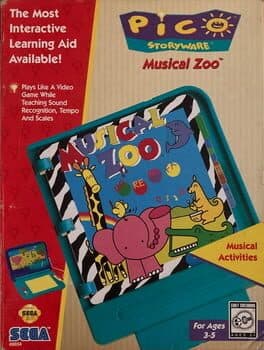
Musical Zoo
Sega Enterprises, Ltd.1995
Musical Zoo is a Miscellaneous game, developed and published by Sega, which was released in 1995.
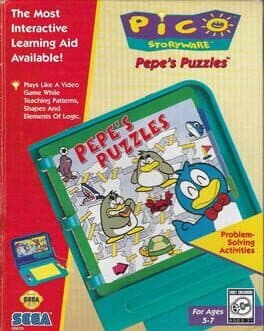
Pepe's Puzzles
Sega Enterprises, Ltd.1995
Pepe's Puzzles is a puzzle game created for small children between the ages of 5-7 years old. There are three different kinds of mini-games found in this game; Mazes, Puzzles, and Sequential Memory/Matching Games. There are 5 different mazes to choose from, all with their own gimmicks. The main goal in the maze mini-games is to get to the flag, but each mini-game involves a different way to do so. One is simple movement, one is following arrows, one is a specifically colored path, one involves picking up all the fish food before reaching the flag, and one has X or O spaces on the maze. There are two different puzzles to choose from; a slide puzzle and a jigsaw puzzle. There are bad penguins that should be avoided in both puzzles. There are 4 different matching/memory games to choose from. One is simply matching fish, one is remembering the correct pathways by color, one has you turn the pages of the book to find an object, and one has you match the colored shapes in order. There are 2-3 difficulty levels depending on the mini-game, and it primarily focuses on teaching problem-solving and logic skills.
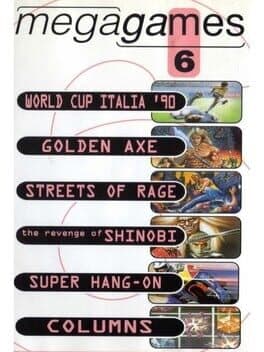
Mega Games 6
Sega Europe1995
Six Genesis games collected on one cartridge.
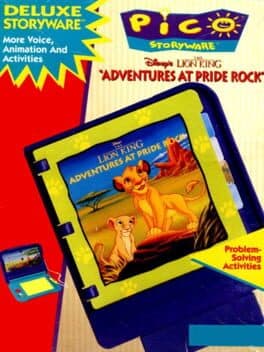
Disney's The Lion King: Adventures at Pride Rock
Realtime Associates1995
Disney's The Lion King: Adventures at Pride Rock is based on the 1994 Disney animated film. It offers several activities in Simba's universe:
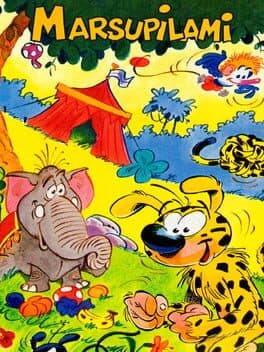
Marsupilami
Apache Software Limited1995
Marsupilami is a character created by Belgian cartoonist "Franquin". Marsupilami is a long tailed made-up character who was stolen from the jungle and performs in a circus. After helping the other animals escape, Marsupilami must make his way back to the country he came from - Palombia. The aim is to guide his Elephant companion, Bonelli, through the levels, passed obstacles and traps. As he progresses, he gains more abilities by collecting power ups. Each level is timed so each action must be thought about carefully.

Sky Target
SEGA AM11995
Another 3rd person perspective arcade flight sim by Sega, similar to their classic After Burner in gameplay but featuring new gameplay mechanics and an entirely polygonal engine. As in most games of it's type your objective is to clear a number of stages by shooting anything that moves, but at the end of each stage you can select where to go next thanks to branching paths a-la Darius, which coupled with 4 different planes to select give the game an increased gameplay value. No multiple lives are given, but you get a life bar (which can be replenished in-flight) to help you outlast your enemies.
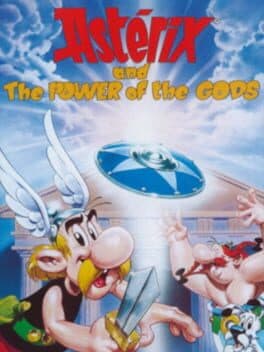
Astérix and the Power of the Gods
Core Design1995
Emperor Caesar's forces have stolen the legendary shield of Vercingetorix and it is Asterix and Obelix's mission to return it to the Gaulish village. Play as either character as your adventure takes you through over 20 levels, through Lutetia, Egypt, Alexandria and Mesopotamia on your way to Rome itself!
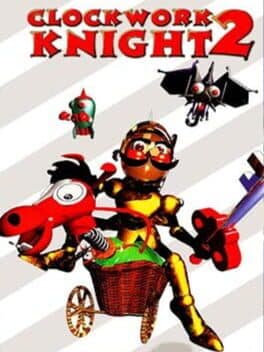
Clockwork Knight 2
Sega Enterprises, Ltd.1995
Clockwork Knight 2 uses identical gameplay to that of its predecessor, right down to using all the same items and having four rooms with three levels each, plus a final boss. However, there are three minor additions: Four playing cards are scattered around each level. Spinning all four cards gives players a Gold Key; collecting all 32 cards in the game yields a secret code. There are some forced scrolling levels in which Pepper rides on the back of his steed Barobaro. Attacking is done not with Pepper's key in these levels, but by firing Barobaro's head at enemies. An additional game mode called "Bosses Galore" lets the player control either Pepper or Ginger in fighting all the bosses of both Clockwork Knight games one after the other. Doing well in this mode is said to unlock a mini-game.
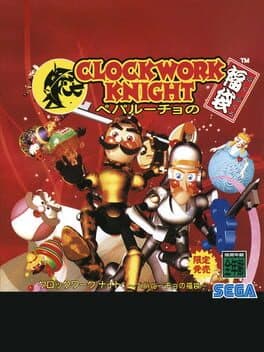
Clockwork Knight: Pepperouchau no Fukubukuro
Sega Enterprises, Ltd.1995
Clockwork Knight: Pepperouchau no Fukubukuro is a compilation of Clockwork Knight 1 and 2. It came with a free set of Clockwork Knight round style Calendars for the year 1996.
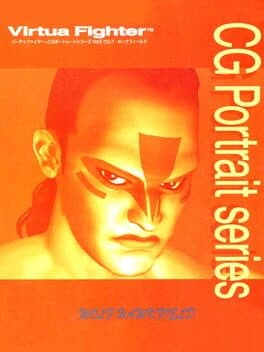
Virtua Fighter CG Portrait Series Vol. 5: Wolf Hawkfield
Sega Enterprises, Ltd.1995
Virtua Fighter CG Portrait Series Vol. 5 Wolf Hawkfield is a digital museum of Virtua Fighter 2 artwork for the Sega Saturn.
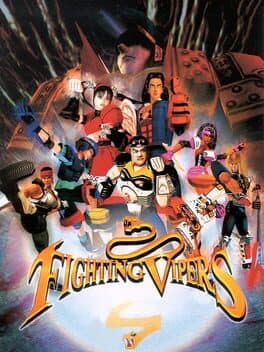
Fighting Vipers
Sega AM21995
Fighting Vipers is a 3D fighting video game created by Sega AM2. While it shares the game engine with AM2's Virtua Fighter 2, it distinguishes itself with enclosed arenas and an armour mechanic. The game is primarily designed for Western audiences, incorporating a U.S. setting and embracing more freeform styles of martial arts.

Garfield: Caught in the Act
Point of View1995
Odie scares Garfield while they are watching television and they fall on the TV, breaking it. Both characters attempt to repair it before Jon Arbuckle catches them; however, the thrown spare parts become an electronic monster known as the Glitch, transporting Garfield into the TV. Players take control of the titular cat across levels of varying themes on the television in order to defeat the Glitch and escape the TV.
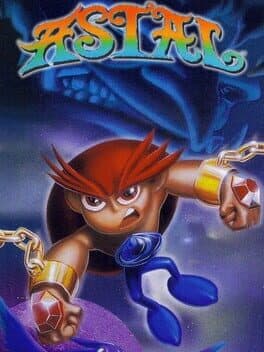
Astal
Sega Enterprises, Ltd.1995
Somewhere in the universe, The Goddess Antowas created a world from a single jewel. On this world, Quartilia, she created the sky, earth, and air. To inhabit this world, she created two humans - from a green jewel, a girl: Leda, who has the power to make things live on Quartilia. And from a red Jewel, a boy: Astal, whose purpose was to protect Leda. Content with her creation, Antowas slept. While she slept, the evil Jerado tried to take over Quartilia. To ensure victory, Jerado created a warrior: Geist. Geist kidnapped Leda, and held her at the bottom of the ocean. In an effort to get her back, Astal tore Quartilia apart, awakening Antowas. As punishment, Antowas banished Astal to Quartilia's moon. Leda took pity on Astal, and gave him her jewel. Once Astal and Jerado were dealt with, Antowas went back to sleep. However, Geist was still free, and Quartilia was not restored from the changes Jerado wrought. From his prison on the moon, Astal witnessed Geist kidnap Leda again. Consumed with the need to protect her, he freed himself and returned to Quartilia. Now Astal journeys in search of Leda through a Quartilia transformed by Jerado's dark design, along with a strange bird who for some reason just won't leave him alone...
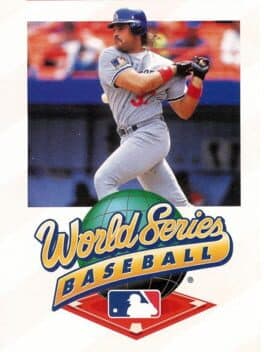
World Series Baseball
Sega Enterprises, Ltd.1995
World Series Baseball, known in Japan as Hideo Nomo World Series Baseball, is a Sega Saturn baseball game developed and published by Sega. An entry in the titular World Series Baseball series of baseball titles, the game was first released in the United States in November 1995, with a worldwide release in the following months. In Japan, World Series Baseball game is sponsored by professional Japanese baseball player Hideo Nomo. The game later received a 1996 sequel, World Series Baseball II. This Saturn version is unrelated to the Sega Mega Drive and Sega Game Gear games of the same name - it is a brand new entry, despite not having a brand new name (although during development it was known as Grand Slam Baseball), which takes advantage of the system's 3D graphics. Japanese version possibly to make this distinction, being sponsored by Hideo Nomo. This of course, can cause further confusion, as there is a Nomo Hideo no World Series Baseball for the Game Gear also. It would not be the last game to disregard previous entries in the series - a 2001 World Series Baseball exists also.
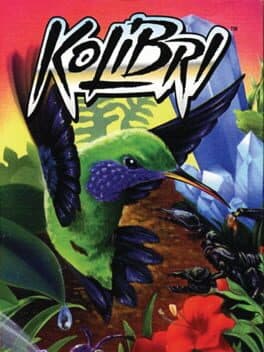
Kolibri
Novotrade1995
Kolibri is a side scrolling shooter, featuring a hummingbird hero acrosss 19 levels in a variety of natural settings, with multiple objectives as solving puzzles, clearing all enemies, or free romaing exploring in any directions.
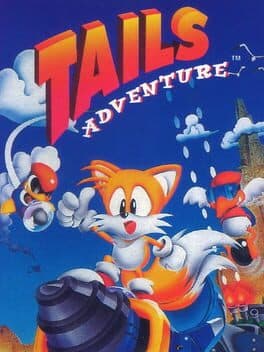
Tails Adventure
Aspect1995
Tails must stop the Battle Fortress bird army from taking control of Tails Island to rule over the animals. On land, in the air, and at sea, Tails battles some pretty tough birds! Depending on the Japanese and international version of the game, Tails Adventure is either a prequel or continuation of the Sonic the Hedgehog games for the Sega Genesis. The game mixes traditional platforming and role-playing elements, as Tails is using different items and abilities, as well piloting his creations Remote Robot and Sea Fox, to travel across Cocoa Island to liberate it from the Battle Kukku Empire. Like many Sonic games for the Game Gear, Tails Adventure has been ported onto numerous compilation titles and other games as an unlockable game. It later received a re-release on the Nintendo 3DS in 2013.
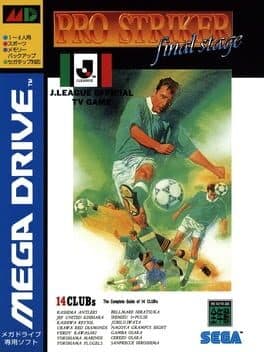
J. League Pro Striker Final Stage
Sega CS31995
Pro Striker Final Stage is a 1995 football game by Sega for the Sega Mega Drive made with the J. League license. Though arguably a "sequel" to J. League Pro Striker, J. League Pro Striker Perfect and J. League Pro Striker 2, Final Stage in fact uses an entirely different engine (most notably, the game is played horizontally rather than vertically) with many more added features.
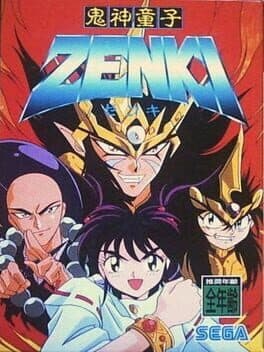
Kishin Douji Zenki
Sega Enterprises, Ltd.1995
Enno Ozuno, Master of the Enno temple used the demon guardian spirit Zenki to defeat the demon goddess Karuma. After defeating Karuma, he later sealed Zenki away in a pillar until needed again. Centuries later, his descendant, a school girl named Chiaki Enno is able to free Zenki, although the demon currently has the form of a brattish demon child. To transform this extremely defiant demon into the form that made him useful by her ancestor, she uses a bracelet that appeared on her wrist when servants of Karuma broke the seal that imprisoned a seed of Karuma. Zenki appears because the seeds of Karuma start appearing and turning people into monsters and Zenki needed again to eradicate this menace
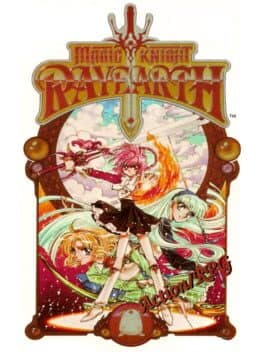
Magic Knight Rayearth
Sega Enterprises, Ltd.1995
The balance in the magical world of Cefiro is supported by the prayers of the lovely princess Emerald. When the evil Sage Master imprisoned her, the existence of the entire world was endangered. Using her spiritual powers, the princess contacted three Japanese high-school girls, Hikaru, Umi, and Fuu, turned them into Magic Knights, and summoned them to Cefiro, where their goal is to save her and to restore the balance. This adaptation of the eponymous manga and anime series is an action game with light role-playing elements, somewhat similar in style to Zelda games. The protagonists are all the three girls, but the player can controls only one of them at a time. Each one has advantages and disadvantages, as well as different fighting styles: Hikaru uses swords, Umi a rapier, and Fuu a bow. The player advances through the game by exploring the world, talking to non-playable characters, and fighting enemies in real-time combat. There is no experience system; new abilities (among them swimming and jumping) are gained as dictated by the story, and must be used in certain points in order to advance.
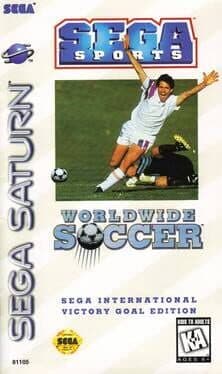
Worldwide Soccer: Sega International Victory Goal Edition
Team Aquilla1995
Focused on national teams (12, including Italy, Spain, Denmark, Netherlands, England, Argentina, France, USA, Germany, Romania, Belgium and Brazil), the game offers a 2.5D environment (polygonal stadium and sprites for players) and three camera angles (back, isometric and side) with four zooming levels. Modes include Exhibition, World League (either single or double, with 44 matches and a grand final to crown the Grand Champion), S-League (just one round, 11 matches), cup knockout and penalty shootout, the game keeping track of statistical information of each competition. Gameplay is regular arcade, with simplicity being privileged over tactical knowledge or complex controls, with the game offering the possibility to choose between three types of controls. Other options include the ability to choose one of four difficulty levels, length of each half (3, 6 or 15 minutes) and weather conditions (fine, rain or random).
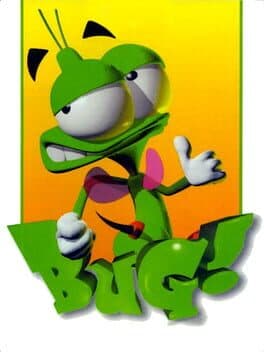
Bug!
Realtime Associates1995
Bug! is a platformer where you play as a bug who must go through 6 worlds in order to rescue his family who has been kidnapped.
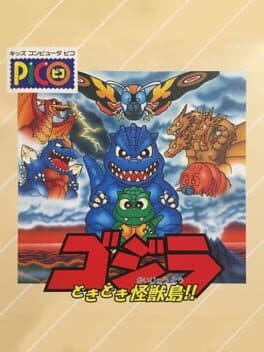
Godzilla: Doki-doki Kaijuu-tou!!
Sega Enterprises, Ltd.1995
Godzilla: Heart-Pounding Monster Island!! is a game for the Sega Pico developed by Sega and released on July 25, 1995. The game consists of multiple "pages," which act as hub levels. Each page contains multiple kaiju, which can be clicked on and interacted with. This causes some kaiju to perform different animations, while with some kaiju it will activate minigames. The player is in control of Godzilla.
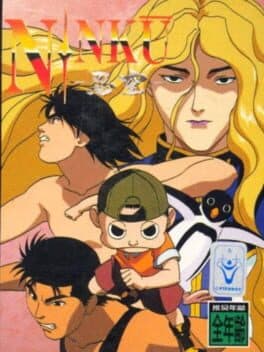
Ninku
Sega Enterprises, Ltd.1995
Ninku (忍空) is a Sega Game Gear action game based on the anime series of the same name.
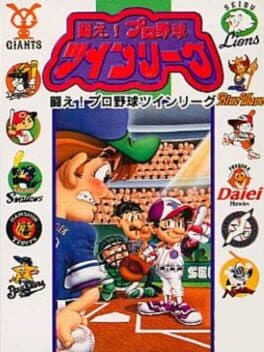
Tatakae! Pro Yakyuu Twin League
Sega Enterprises, Ltd.1995
Tatakae! Pro Yakyuu Twin League is an NPB baseball game for the Sega Game Gear. It features all of the teams in the Central and Pacific Leagues of NPB in 1995 and features several game modes.
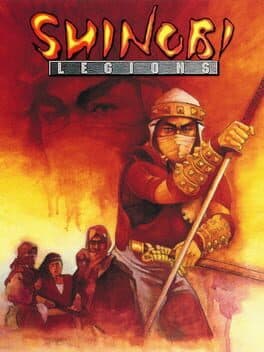
Shinobi Legions
SEGA AM71995
Shinobi Legions, known as Shinobi X in Europe and as Shin Shinobi Den in Japan, is fifth and final game in original Shinobi series. It was developed and published by Sega in 1995 for Sega Saturn.
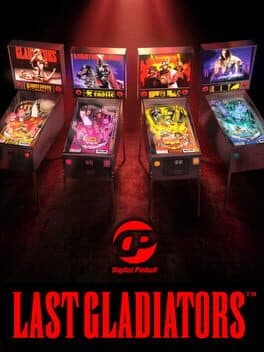
Digital Pinball: Last Gladiators
KAZe1995
Digital Pinball: Last Gladiators is a pinball game originally for the Saturn. Now available 30 years later for PC and Mac
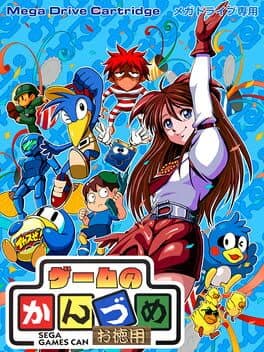
Game no Kanzume Otokuyou
Sega Enterprises, Ltd.1995
Value Games in a Can is a compilation of Sega Game Toshokan games released for the Sega Mega Drive, a "digest" version of the Mega-CD collections Game no Kanzume Vol. 1 and Game no Kanzume Vol. 2. It was released exclusively through the Japanese Sega Channel.
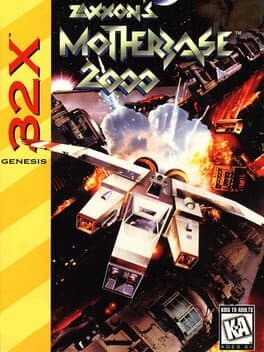
Zaxxon's Motherbase 2000
CSK Research Institute1995
This 32X-exclusive sci-fi shooter is similar gameplay-wise to Sega's arcade game Zaxxon. The graphics consist of a diagonally scrolling playfield which creates a pseudo 3D environment. The backgrounds are drawn using 2D scrolling planes, but the enemy and ship objects are drawn using 3D flat-shaded polygons. Although the basic goal of each of the 9 levels is to shoot everything without getting shot, the game has a strategic element. Your basic spacecraft has very little firepower, and can only sustain one hit. To make matters worse, there are very few power-ups. In order to survive, you have to jump on top of enemies and take control of their weapons systems. This system allows for a large variety of player-controllable ships.
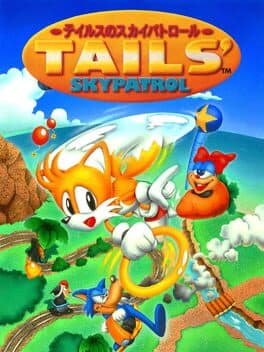
Tails' Skypatrol
SIMS Co., Ltd1995
While flying his plane, Tails discovers a small island and lands to investigate. While initially appearing to be uninhabited, he eventually comes upon an old woman. She declares herself to be the great Witchcart, and claims the island and everything on it as her own, threatening to transform any dissidents into crystal. She then heads off with her henchmen, and Tails, determined to stop her, chases after them. It is one of two handheld games on the Game Gear to feature Sonic's sidekick Miles "Tails" Prower as the main character. The game follows the adventures of Tails as he tries to save an island from Witchcart, who claims to be able to turn dissenters into crystals with her magic. It was originally released on 28 April 1995 as an exclusive game to the Japanese market. However, Tails' Skypatrol later saw an overseas release as it was included as an unlockable minigame in the Nintendo GameCube's Sonic Adventure DX: Director's Cut, and was re-released as one of the featured games in Sonic Gems Collection.
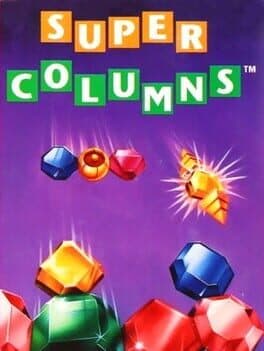
Super Columns
Sega Enterprises, Ltd.1995
Super Columns is charged with new ways to play and win at this intensely gripping puzzle game. Magic gems can suddenly flip the screen while Bomb gems can blast up to 5 gems at once! Hook up to a friend with your Gear to Gear connection and really test your skills!
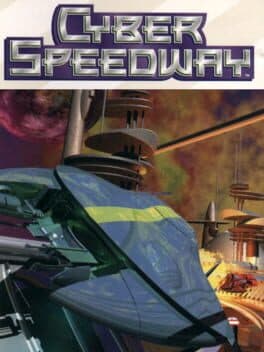
Cyber Speedway
Nextech1995
Cyber Speedway (Gran Chaser in Japan) is a 1995 racing video game developed by NexTech and published by Sega for the Sega Saturn. It is a spiritual sequel to 1993 computer game CyberRace, as both games have a similar theme, and vehicles designed by Syd Mead
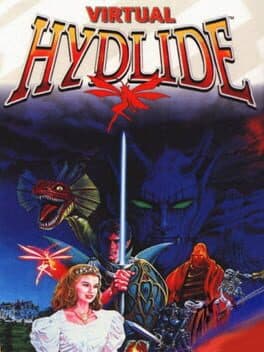
Virtual Hydlide
T&E Soft1995
Action/RPG's don't get more real than this! Discover the ultimate fantasy world in this compelling epic adventure! An enchanted realm known as the Dream World has been captured an army of supernatural warriors, zombies, vampires and more infest the once peaceful land, awaiting new battles and conquests. You are a hero, born to the sword. Your mission is to free Dream World from the grip of the undead maravders by using your wits, your sword, and few magic items you uncover in your travels.
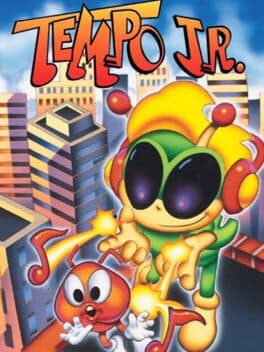
Tempo Jr.
SIMS Co., Ltd1995
Music can be fun! Tempo, the hip-hoppin' grasshopper lives in the musical world of planet Rhythmia. It's up to Tempo to save the rhythm and give King Dirge the blues! Tempo boogies, spins, snaps his fingers and slings notes to zap King Dirge's tune-swiping ants.
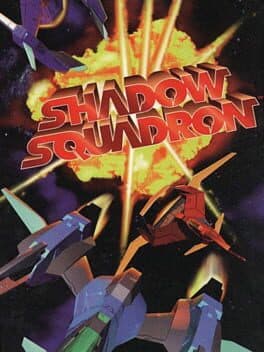
Shadow Squadron
Sega Enterprises, Ltd.1995
Shadow Squadron is a 3D space combat shooter. The player controls a space fighter in a series of battles against huge enemy ships. There are 2 different types of ships to fly, and 6 different missions. In most missions, the player has to destroy several locations on a large ship in order to blow up the whole thing. There are two ways to play the game. First, one can directly control the ship and maneuver it around the 3D polygon environments. Second, the player can let the 32X do the flying, and simply control a gun turret.

Fahrenheit
Sega Enterprises, Ltd.1995
The North American version of Fahrenheit contains both the SEGA CD and the SEGA CD 32X releases of the game. Both the SEGA CD and the 32X console add-ons are required in order to play the SEGA CD 32X disc.
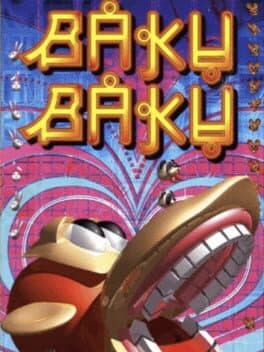
Baku Baku
Sega AM31995
The player must line up falling blocks of animals and foodstuffs. When an animal is aligned adjacent to a tile of its favoured food, the animal eats the food. Larger groups of connected food of the same type scores higher when eaten. When animals eat foodstuffs, they also make random blocks fall on the opponent's area, right after the currently falling blocks. The object of the game is to make one's opponent not be able to place more blocks.
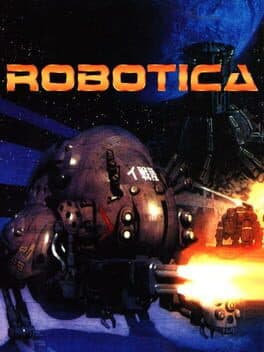
Robotica
Genki1995
Play with friends and defend The Tower from corrupt robotic organisms.
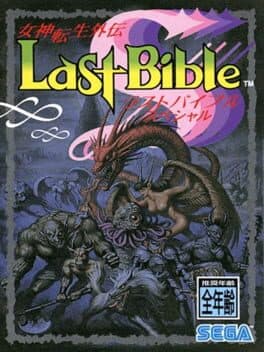
Megami Tensei Gaiden: Last Bible Special
Atlus1995
Megami Tensei Gaiden: Last Bible Special is an RPG for the Sega Game Gear. Special is the only entry in the series to feature 3D dungeon exploration mechanics similar to Wizardry and Etrian Odyssey. Outside of spell and item names, as well as some party mechanics, it has very little in common with other titles in the series.
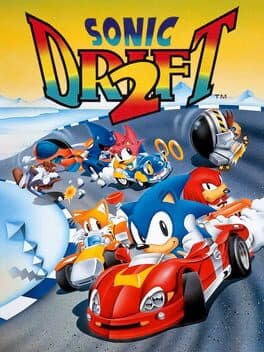
Sonic Drift 2
Sega Enterprises, Ltd.1995
Start your engines and prepare for the race of your life! Choose from 7 of your favorite characters including Sonic, Knuckles and Robotnik, each with his own special powers. Plug in your Gear to Gear connector and take on a friend through over 17 courses in the ultimate Chaos Grand Prix!
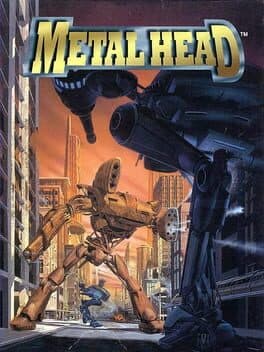
Metal Head
Sega Enterprises, Ltd.1995
Bullets fly and circuits try in heavy-duty cyborg techno-slaughter. You control Metal Head, the ultimate cyborg warrior, patrolling the charred urban destruction of the great war. And a murderous mecha-force is gunning for you! INCREDIBLE 3-D textured polygon graphics engulf Metal Head in searing firefights as cyber troops, hover craft and ground attack vehicles annihilate the planet! You are the ultimate tech-destroyer - with chain guns, missiles, radar tracking and Heads-up Display! Head-banging heavy-metal music amps you up for pure warfare! 24 megs of cyber-combat rock through war torn urban streets, bombed out farmland, scorched forests and bullet-riddled 'burbs!
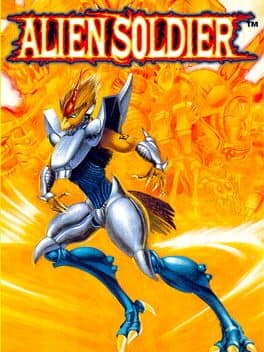
Alien Soldier
Treasure1995
The planet Sierra is being attacked by Scarlet, a terrorist group lead by a vicious creature named Xi-Tiger who is plotting to destroy the human race. With vengeance, our hero Epsilon-Eagle will fight against Xi-Tiger as well as the terrorist organization that he formerly led.
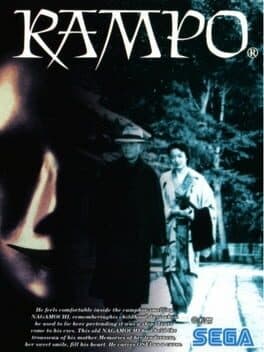
Rampo
System Sacom1995
Rampo is an interactive movie which uses pre-rendered backdrops and live actors. The game features Edogawa Rampo, a Japanese mystery novel writer, as a protagonist.
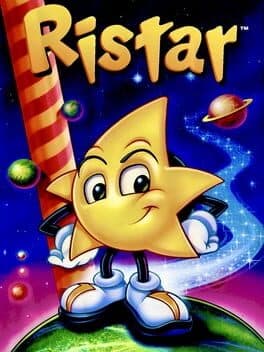
Ristar
Sega Enterprises, Ltd.1995
Ristar is a platform game developed and published by Sega for the Sega Genesis in 1995. A Sega Game Gear game, of the same name and genre, Ristar, was also released, which shared similar themes while possessing different level design and gameplay mechanics. The game stars an anthropomorphic cartoon star who uses his hands and long, stretchable arms to both move and combat enemies. Reception for the game has been generally positive, but the game's initial release was overshadowed due to the imminent ending of the Genesis's lifecycle and the succession of the Sega Saturn and other fifth generation video game consoles. While never receiving any sequels, Sega has re-released the game a number of times digitally and on Sega-themed compilations, and has occasionally given Ristar himself cameos in other Sega properties.
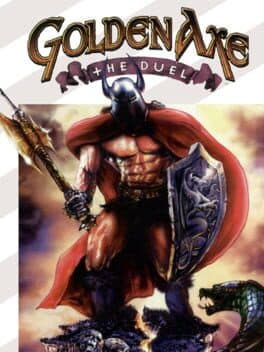
Golden Axe: The Duel
Sega Enterprises, Ltd.1995
Many years have passed since the last war with Death Adder. But, as memories of those dark times begin to fade, another war is beginning. Out of the mists of time, a magical axe is discovered. The legend of the axe is well known throughout the land, for it is told that this axe is the very one which Gillius Thunderhead used to slay Death Adder. Over time, the powers of the axe have grown. It is said that the artifact can grant its owner anything his or her heart desires. Young and old, good and evil, many are drawn towards the power of the weapon. Thus begins the war of the Golden Axe.
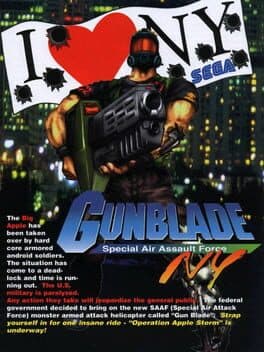
Gunblade NY
Sega AM31995
A machine gun game in which the player boards a chopper flying over New York City to take out terrorists. It was released in arcades in 1995 and was published by SEGA. On July 25 2005, a Terrorist attack was unleashed in New York's Times Square by a faction called BEAR EX (Android Invaders) who aim to overthrow the government. The Special Air Assault Force (The S.A.A.F.) were called in to take care of the job.
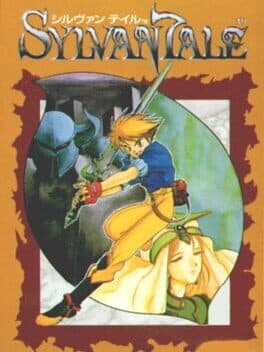
Sylvan Tale
Sega Enterprises, Ltd.1995
Sylvan Tale follows the typical action-adventure game formula: The player controls a character who must solve puzzles, fight enemies, and talk to non-player characters in order to acquire special powers and items that will allow him to unlock new areas of the game world and solve the puzzles within. While the player may revisit areas, the game progresses in an essentially linear fashion, as each area can only be accessed if Zetts(the player character) has acquired a specific item or ability from the previous area.
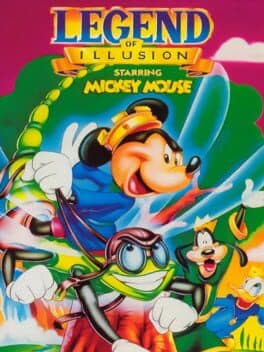
Legend of Illusion Starring Mickey Mouse
Aspect1995
Mickey is tricked into a perilous quest when the kingdom is threatened by an evil cloud of darkness. As temporary king, Mickey must solve riddles, find maps and avoid trickery across 5 magical lands to save the Tree of Life from the cowardly King Pete.
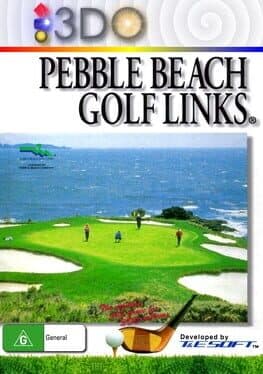
Pebble Beach Golf Links
T&E Soft1995
Up to six players can play a round of golf on the world-famous Pebble Beach golf course in Sega Sports' Pebble Beach Golf Links. It features seven play modes including Tournament, Stroke Play, Skins Play, and Match Play, and narration and strategy by golf pro Craig Stadler. You also have the option of creating your own player and selecting your own custom set of golf clubs to challenge Craig Stadler and other AI players on the course. Stats, such as handicaps and course records, are tracked throughout the game. Also, if you ever tire of taking on your friends and the AI, you can play the game in Watch Mode and simply lay back and watch Craig Stadler take on the competition on the Pebble Beach course.
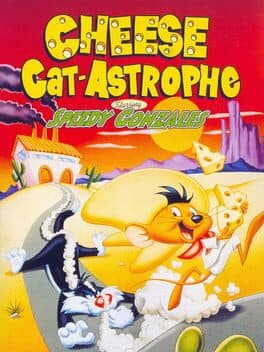
Cheese Cat-Astrophe starring Speedy Gonzales
Cryo Interactive1995
Sylvester's alter ego, the dastardly Dr. Cheesefinger, has "kidnapped" the cheese supply and Speedy Gonzales' girlfriend, Carmel. Can this "speedy-mouse" outwit the callous cat and rescue the village cheese supply?
Sega VR-1
Sega Enterprises, Ltd.1994
A motion simulator arcade attraction released for SegaWorld arcades in 1994. Using Sega VR headsets, it was the first released video game to utilize head-tracking VR technology.
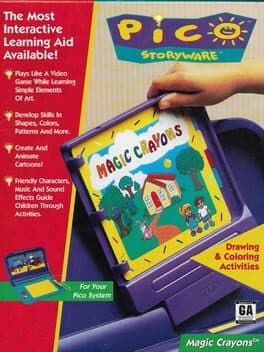
Magic Crayons
Sega Enterprises, Ltd.1994
Beware! The Color Miser is on the loose vacuuming up color wherever he goes. Your children will learn about shapes, colors, patters and more as their artistic expression takes over. They'll exercise their imagination creating toys and recoloring over 15 different scenes! Using characters from the story and their own original art, your children will create and animate their own cartoons!
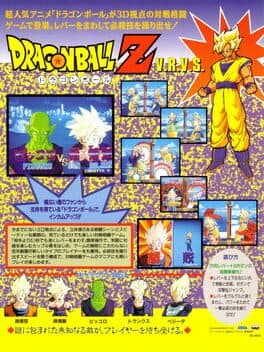
Dragon Ball Z: V.R.V.S.
Banpresto1994
Dragon Ball Z: V.R.V.S is a fighting game released in 1994 for the Sega System 32 arcade platform by Sega and Banpresto.
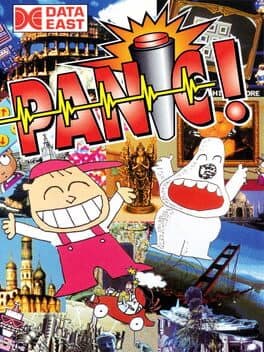
Panic!
Sega Enterprises, Ltd.1994
Panic is a single-player, horror game that puts you in the shoes of David, a young man who struggles with mental disorders. As you join him on his journey you will discover an immersive narrative experience that will stay with you long after you finish your journey.
College Football's National Championship
Sega Enterprises, Ltd.1994
It features 32 college powerhouses from four major divisions, letting you play exhibition games or letting you compete in a tournament to achieve an #1 ranking, as opposed to competing in a season to obtain it. It also has the option to play it on Team Player letting you control four players at once.
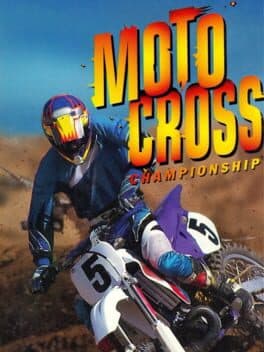
Motocross Championship
Artech Studios1994
Motocross Championship is the only dirtbike racing game for the 32X. The action takes place from a behind-the-bike perspective, and makes use of the 32X's hardware bitmap scaling to present a 3D graphical effect.
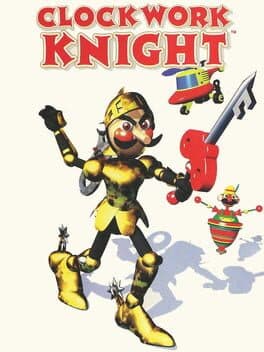
Clockwork Knight
Sega Enterprises, Ltd.1994
Clockwork Knight is a 2.5D side-scrolling platformer where you play as the toy soldier Sir Tongara de Pepperouchau III. The game offers a combination of pre-rendered 3D graphics and 3D environment. The game has four rooms Pepper must traverse; Betsy's room, Kevin's room, Kitchen and Attic, each containing two levels and a boss fight at the end, with a total of five bosses and eight levels.
Beyond Oasis
Ancient1994
Prince Ali has excavated a gold armlet which belonged to a powerful sorcerer. As soon as Ali tried on the armlet, a strange fire with a face appeared and spoke to him. “The power of the gold armlet is now your’s to wield. Find the four spirits this gold armlet governs and stop the evil ambitions of the one with the silver armlet.”
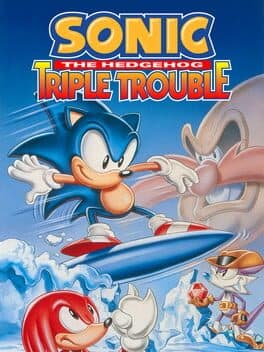
Sonic the Hedgehog: Triple Trouble
Aspect1994
Sonic and Tails are back with three times the fun and three times the trouble! Dr. Robotnik is building the ultimate super-weapon with the help of Knuckles, but you can stop him by getting the Chaos Emeralds first. Rip across snow and water on Sonic's new jet skateboard or zip underwater in Tails' "Sea Fox". But look out - Nack the Weasel is after the Emeralds, too!
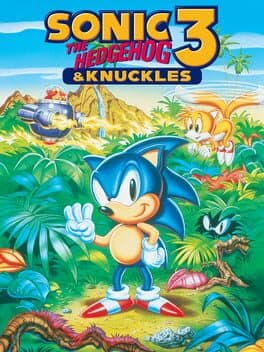
Sonic the Hedgehog 3 & Knuckles
Sega Technical Institute1994
Sonic the Hedgehog 3 & Knuckles (or simply Sonic 3 & Knuckles or Sonic 3 Complete Edition) is a platform video game which is the result of locking-on Sonic & Knuckles with Sonic the Hedgehog 3 using the former catridge's unique "lock-on" technology. It is essentially a large combined game of its two lock-on components and contains all Zones from the said games and also contains special features unique to this game. This would have been the original Sonic the Hedgehog 3 the developers intended but time constraints by Sega resulted in the game being split into two.
Sonic & Knuckles
Sonic Team1994
Sonic and Knuckles join forces to defeat rotten Dr. Robotnik's Death Egg invasion! Play Sonic & Knuckles by itself or Lock-on with other Sonic games. This game's revolutionary Lock-on technology adds all new features to your other Sonic games for ultimate replays! Play as Sonic and let loose on Robotnik with amazing new powers. Play as Knuckles and tackle Robotnik and Metal Sonic with bare-fisted attacks, high-speed glides and wall-climbing power! Lock-on with Sonic 3 and transform Floating Island into a huge 34 meg Sonic-epic loaded with new secrets! Play as Sonic, Knuckles, and even Tails - with Game Save! Lock-on with Sonic 2 and play as Knuckles with all his signature moves!
Ai to Yume to Bouken Sanrio Puroland!
Sega Enterprises, Ltd.1994
Ai to Yume to Bouken Sanrio Puroland! is a Japan-only Sanrio-themed Sega Pico game.
Pro Yakyuu GG League '94
Sega Enterprises, Ltd.1994
The game is a sequel to Pro Yakyuu GG League, sharing many of the features and graphics. Now the number of game modes are narrowed down to an Open Mode, Versus Mode and Tournament Mode and no team editing, just Players Data. There are also new teams for its time, voice samples, auto play, different view perspectives and four different stadiums to play in.
YuYu Hakusho: Sunset Fighters
Treasure1994
YuYu Hakusho: Makyou Toitsusen is a 1994 fighting game for the Sega Mega Drive by Treasure made with the Yu Yu Hakusho license — the second such game, after Nextech's adventure game Yu Yu Hakusho Gaiden. Interestingly, TecToy published the game in Brazil as YuYu Hakusho: Sunset Fighters, however the game has not been released elsewhere. M.I.J.E.T. fan-translated the game to English in 2007. The game is a 4-player fighting game. A and B attack and C blocks, with various combos along the way. Up jumps.
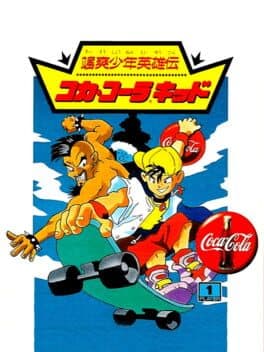
Sassou Shounen Eiyuuden: Coca-Cola Kid
Aspect1994
Coca-Cola kid is a sidescroller starring the Coca-Cola Kid, the Coke mascot in Japan in the 1990's. Cokey must hit the streets and take on Team Evil who just went and kidnapped his teacher, Ms. Sakurako. Skate through the city and be brave!
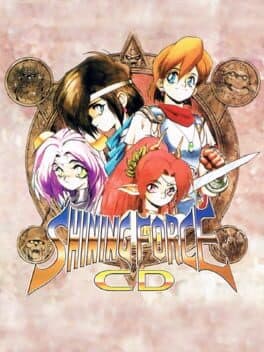
Shining Force CD
Sonic Co. Ltd1994
This strategy RPG is a remastered compilation of two earlier Shining force titles: Shining Force Gaiden (originally released in Japan only) and Shining Force: The Sword of Hajya, both for the Game Gear. The two stories put players in the role of Nick, a hero of royal blood who must rescue Queen Anri of Gardiana and reclaim the kingdom of Cypress from the evil empire of Iom's clutches.
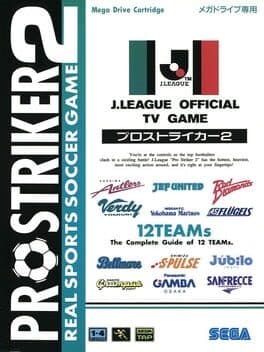
J.League Pro Striker 2
Sega Enterprises, Ltd.1994
J.League Pro Striker 2 (Jリーグプロストライカー2) is the sequel to the football game J.League Pro Striker, created by Sega in 1994 for the Sega Mega Drive.
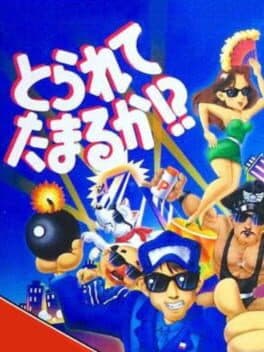
Torarete Tamaruka!?
Sega Enterprises, Ltd.1994
Torarete Tamaruka!? is an Action game, developed and published by Sega, which was released in Japan in 1994.
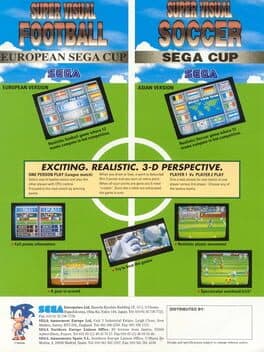
Super Visual Football European Sega Cup
Sega Enterprises, Ltd.1994
A pseudo 3-D soccer game where sprite-based players pursue the ball on a scaled pitch.
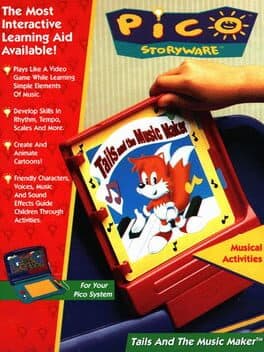
Tails and the Music Maker
Novotrade1994
Tails and the Music Maker is game that feature Tails "Miles" Prower as the main character. It debuted on the Sega Pico.
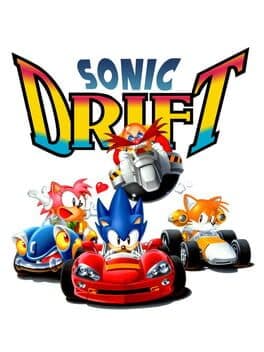
Sonic Drift
Sega Enterprises, Ltd.1994
Sonic Drift is a racing game whose gameplay style and controls are heavily based on Sega's arcade game Out Run. Here, the players race around a race course against the other three characters for a top position in the race. The game's single player mode is Chaos GP, where the player's goal is to win three different circuits (green, yellow and red). Each circuit is made of six different race courses that the player is taken through in succession. Each race course is composed of a circuit which needs to be completed thrice. The playable characters have rather simple controls, their basic actions being accelerating to move forward, breaking, and moving left or right on the tracks. In tight corners, the player can break while turning in a specific direction, allowing them to drift through the corners. If the player overuses this method though, the playable character starts spinning out of control. Should the player move outside the race tracks, the racer's acceleration will decreases noticeably on the rough terrain. The race track's sidelines also have obstacles that will stop the player altogether if the playable characters crash into them. The player can as well collect Rings along the race tracks to perform special moves unique to each character.
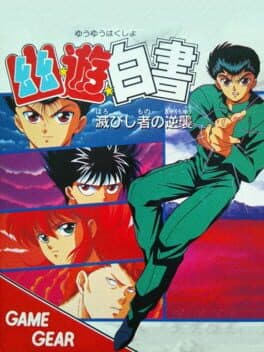
YuYu Hakusho: Horobishi Mono no Gyakushuu
Sega Enterprises, Ltd.1994
YuYu Hakusho: Horobishi Mono no Gyakushuu is an action game for the Sega Game Gear. It is based upon the YuYu Hakusho manga and anime series.
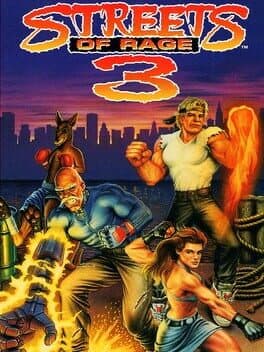
Streets of Rage 3
Ancient1994
The mysterious crime boss Mr. X has enlisted the help of Dr. Dahm in creating lifelike robots to replace key city officials, and soon will be able to run the entire city by remote control. Strategically placed bombs are being used to distract the city police while Mr. X deals with the city leaders one by one.
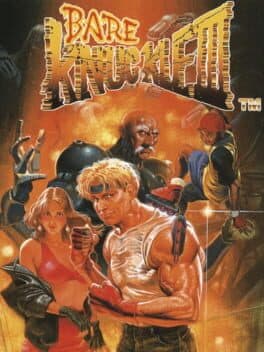
Bare Knuckle III
Ancient1994
Bare Knuckle III is the Japanese version of Streets of Rage 3. The Japanese version is known for having a more balanced challenge due to some gameplay changes made to the Western version in its localization. The plot was also heavily modified.
Game no Kanzume Vol. 2
Sega CS11994
This Sega CD compilation contains some of the Phantasy Star II text adventures, which were previously released over Sega's MegaNet service.
Game no Kanzume Vol. 1
Sega CS11994
This Sega CD compilation contains some of the Phantasy Star II text adventures, which were previously released over Sega's MegaNet service.
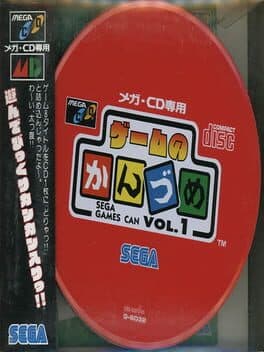
Game no Kandume: Sega Games Can Vol.1
Sega CS11994
A compilation of Sega Meganet games, released exclusively in Japan for the Sega Mega-CD.
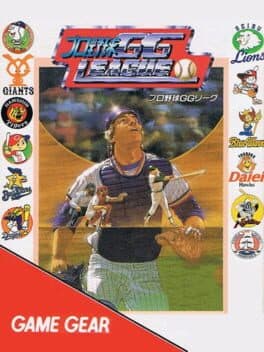
Pro Yakyuu GG League
Sega Enterprises, Ltd.1993
Pro Yakyuu GG League is a Sports game, developed and published by Sega, which was released in Japan in 1993.
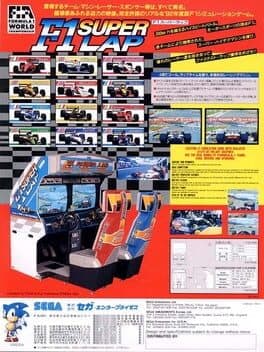
F1 Super Lap
Sega Enterprises, Ltd.1993
A colorful F1 simulation game with realistic graphics, somewhat similar to F1.
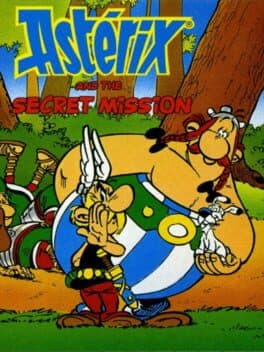
Astérix and the Secret Mission
Sega Enterprises, Ltd.1993
Getafix the Druid is out of magic potion! If Caesar finds out, it's invasion for sure. Asterix and Obelix set out to find the necessary herbs. A mission through all sorts of Roman-infested terrain - seas and rivers, forests and deserts, temples and ruins.
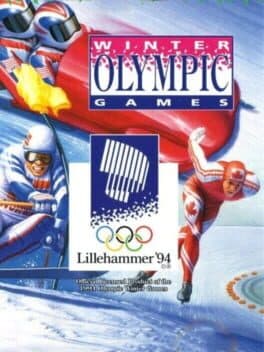
Winter Olympic Games
Tiertex1993
Winter Olympic Games is the officially licensed game for the Winter Olympics tournament of 1994 in Lillehammer, Norway. The European version (Winter Gold) does not feature the license, but is otherwise the same game. The player can compete for one of 20 different nations in 7 different events: downhill skiing, biathlon, ski jumping, bobsleigh, slalom skiing, short track ice skating and freestyle moguls. Each discipline can be practiced on its own before the actual competition. Competition can either be the full set, only the first or last half, only the downhill disciplines, or without the downhill disciplines. Controls and perspectives differ by event: the downhill ski events are shown in isometric perspective. The athlete's course is controlled relative to the screen. He can crouch to accelerate and also put the skis together to brake. Jumps in freestyle and ski jumping are triggered through the buttons. Biathlon is seen from a side-scrolling perspective. The buttons are used to accelerate, taking into account the athlete's constitution indicated by a heart meter. The shooting is done by moving a crosshair over the targets and pushing a button. Short track is seen from a top-down perspective, with the athlete's movements controlled through alternating pushes of left and right on the d-pad. Bobsleigh is seen from a third-person 3D perspective behind the sleigh.
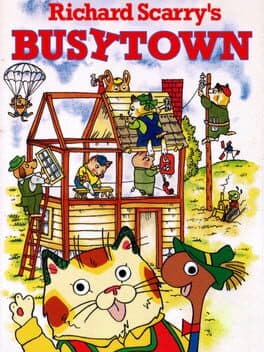
Richard Scarry's Busytown
Novotrade1993
This early version is different from its PC counterpart with this version featuring six different stages to choose from and each with their own type of gameplay. Additionally, the player can choose these different locations at the main screen that has the player become Lowly Worm and fly around the map using his Apple Helicopter. It also features many characters from Scarry's children's books.
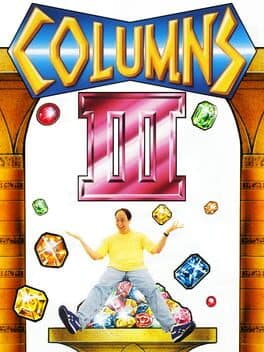
Columns III
Sega Enterprises, Ltd.1993
Arrange the blocks of jewels falling from the top of the screen. If three or more jewels of the same colour are lined up vertically, horizontally, or diagonally, they disappear. Don’t allow them to pile up to the top, or you will lose the game.
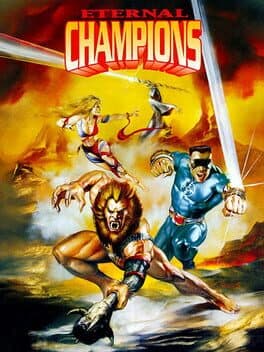
Eternal Champions
Sega Enterprises, Ltd.1993
Sega released Eternal Champions for their Mega Drive/Genesis in 1993, hoping to capitalize on the fighting game mania that the game industry was in the midst of following the massive success of Street Fighter II (1991) and Mortal Kombat (1992). The game tried to set itself apart with unique features like a heavier emphasis on its story, characters pulled from different time periods, reflectable projectiles, force fields, fighters that carried weapons, a training mode where players had to defend themselves against robotic traps, a novel method of executing moves, and elaborate stage-specific finishing moves called "Overkills".
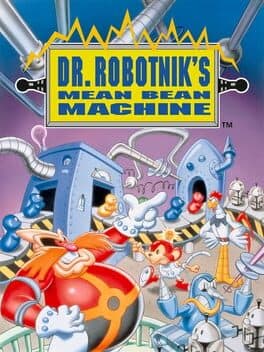
Dr. Robotnik's Mean Bean Machine
Compile1993
Dr. Robotnik is changing the jolly folk of Beanville into devious little robots that will help rid Planet Mobius of music and fun forever. Group the beans together to help them escape, and compete against Robotnik’s wily henchbots!
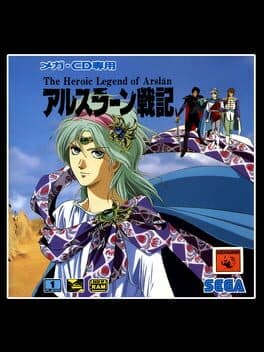
Arslan Senki
Sega Enterprises, Ltd.1993
A Strategy RPG based off the popular Manga similar in vein to Fire Emblem released only in Japan on the Sega CD.
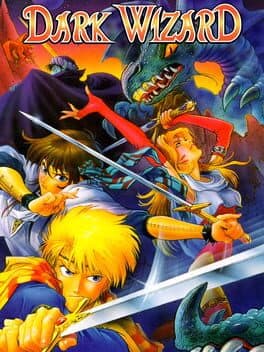
Dark Wizard
Sega Enterprises, Ltd.1993
These are epic times for the people of Cheshire. The kingdom of Quentin is the last stronghold in all of Cheshire against the forces of darkness. But Quentin's king has been killed in battle. Cheshire desperately needs a successor to come forward and lead the warriors of light against the forces of darkness and, eventually, against the Dark Wizard himself. If you fail, darkness will rule Cheshire - forever!
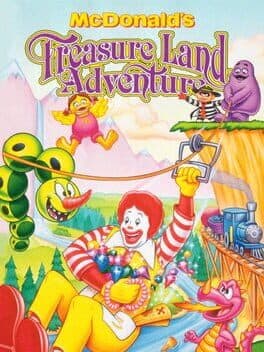
McDonald's Treasure Land Adventure
Treasure1993
McDonald's Treasure Land Adventure is a side-scrolling adventure starring Ronald McDonald. After finding a piece of a treasure map, the yellow clown travels through four different levels (Forest, Town, Sea and Moon). He's off to find and defeat the baddies who have the other pieces of the map. Ronald can jump, shoot and use his scarf to grab onto hooks to jump to higher levels. Jewels and flowers collected in each level can be used to purchase extra lives and power-ups in shops between levels.
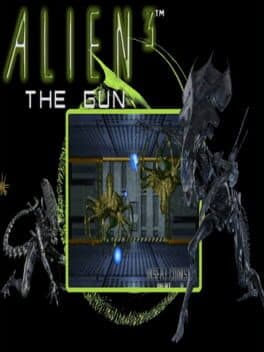
Alien3: The Gun
Sega Enterprises, Ltd.1993
Using cabinet mounted guns you and another player blast away the Aliens in an attempt to save the prison planet. You are also given a limited number of grenades to use when the going gets tough. The gameplay is very close to Sega’s other lightgun games from the period such as Gunblade and Jurassic Park. This game was based on the movie of the same name.
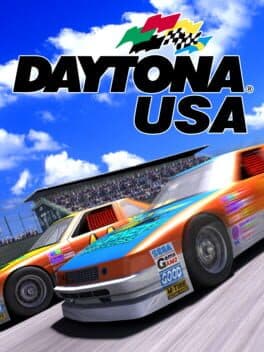
Daytona USA
Sega AM21993
The player is put behind the wheel of a stock car (known as the Hornet), with the choice of three tracks as well as an automatic or manual transmission. The player's objectives are to outrun the competing cars, and complete the race before time runs out.
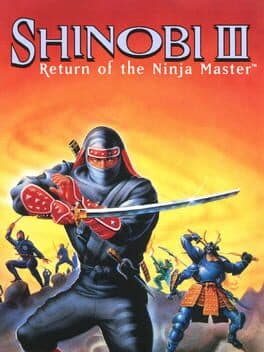
Shinobi III: Return of the Ninja Master
Sega Enterprises, Ltd.1993
Shinobi III: Return of the Ninja Master, released as The Super Shinobi II in Japan, is the fourth game in the Shinobi series and a direct sequel to The Revenge of Shinobi.
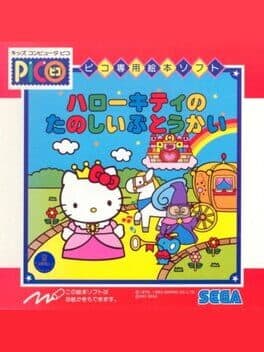
Hello Kitty no Tanoshii Butoukai
Sega Enterprises, Ltd.1993
a Sega Pico game based on the Hello Kitty franchise and a launch title for the console in Japan. It was only released in Japan and in Brazil, where it is known as Hello Kitty No Castelo.
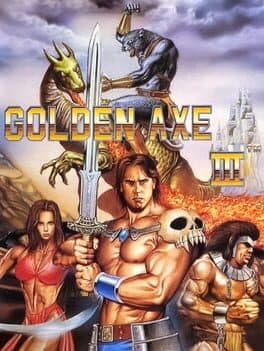
Golden Axe III
Sega Enterprises, Ltd.1993
Chaos is spreading across the land once again as the Prince of Darkness arises to conquer the world. To stop him and retrieve the legendary Golden Axe, four heroes step forward to accept the challenge.
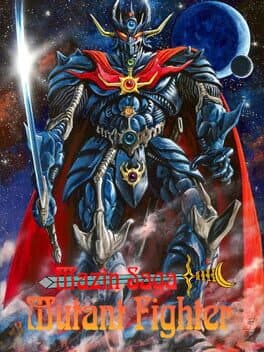
Mazin Saga: Mutant Fighter
Almanic1993
A beat em'up/versus fighting game based on the MazinSaga manga by Go Nagai, which was in turn a spin-off of Nagai's original Mazinger Z.
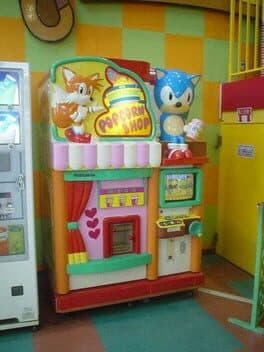
SegaSonic Popcorn Shop
Sega Enterprises, Ltd.1993
A hybrid popcorn machine and arcade game released only in Japan. Players would choose from three different flavors of popcorn and turn the crank to help Sonic and Tails cook it, then to help them escape from Robotnik when he tries to destroy the operation. Once the popcorn is done, it is dispensed in a bag with Sonic inviting the player to come back any time.
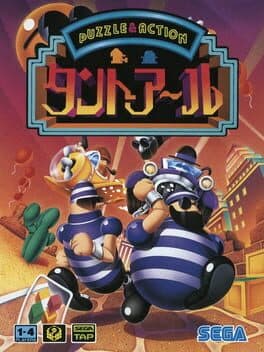
Puzzle & Action: Tant-R
Sega Enterprises, Ltd.1992
Puzzle & Action: Tant-R is a Sega System C puzzle game developed and published by Sega. It is the first in Puzzle & Action series, and has subsequently been ported to the Sega Mega Drive and Sega Game Gear. Though the arcade version of Tant-R reached South Korea, the Mega Drive version remained exclusive to Japan and no versions of the game have ever made it to North America or Europe. Tant-R borrows its graphical style from Bonanza Bros., and is therefore often seen as a spin-off. The two were paired with the game's sequel, Puzzle & Action: Ichidant-R in volume 6 of the Sega Ages 2500 series for the PlayStation 2. Tant-R was also paired with Quiz Shukudai wo Wasuremashita for a compilation on the Sega Saturn. A spinoff Saturn game – Sega Ages Vol.1 Shukudai ga Tant-R – was also made.
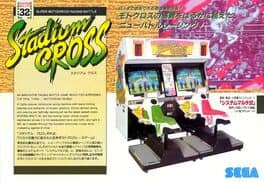
Stadium Cross
Sega Enterprises, Ltd.1992
Stadium Cross is a motocross racing game where you race motorcycles in stadiums. The bikes can also perform wheelies, high jumps and realistic corner turns. It supports up to eight people racing each other at a time. The riders can hinder each other.
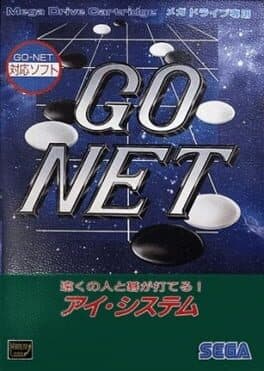
Go Net
Aisystem Tokyo1992
Go Net is a rare Sega Mega Drive cartridge developed as a joint venture by Sega and Aisystem Tokyo and released exclusively in Japan in 1992. Combined with a Sega Mega Modem and subscription, it allows playing Go with other owners of the cartridge. An archive of developer Aisystem Tokyo's company profile shows that a Windows version was made sometime later.
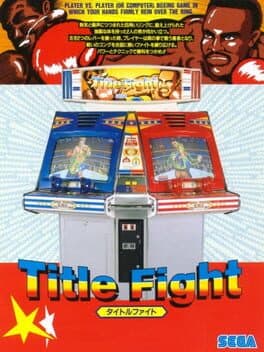
Title Fight
Sega AM31992
Title Fight is a behind-the-back boxing game developed by Sega-AM3 and released by Sega for arcades (using Sega System 32 hardware) in 1993. A spiritual successor to Sega's 1987 game Heavyweight Champ, Title Fight features a similar twin-joystick control setup that corresponds each oversized joystick (or "glove handle") with each of their boxer's arms, giving the illusion of throwing actual punches and guarding or dodging their opponent. The game follows one of several boxers in their journey to winning the championship belt. Title Fight takes full advantage of the hardware's sprite-scaling effects not only for the large character sprites, but also for the ring itself (which now rotates in a 3D space, allowing for 3D side-stepping). It also features linked multiplayer, one of the few boxing games of its type to do so.
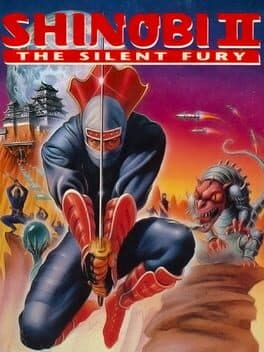
Shinobi II: The Silent Fury
Sega Enterprises, Ltd.1992
Shinobi II: The Silent Fury is a SEGA Game Gear exclusive sequel in the Shinobi series, following up on the original Game Gear Shinobi.
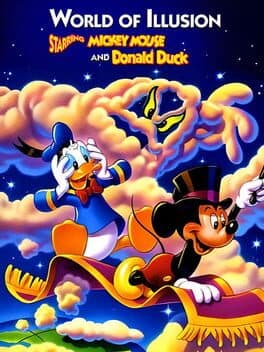
World of Illusion Starring Mickey Mouse and Donald Duck
Sega Enterprises, Ltd.1992
Alakazam! Here's classic Disney fun with your favorites, Mickey Mouse and Donald Duck! Transported into a world of wonder, Mickey and Donald must perform amazing feats of magic to defeat a crafty Sorcerer and find their way back home!
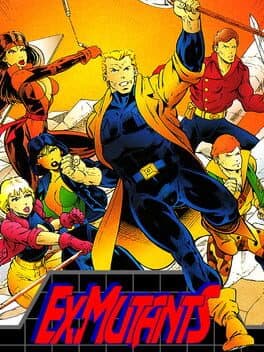
Ex-Mutants
Malibu Interactive1992
Action game based on the Ex-Mutants comic book series by Malibu Comics. Leaping from the pages of the popular comic book come the Ex-Mutants. Choose Shannon or Ackroyd as you weave your way through the nuclear wasteland to battle the minions of the evil Sluggo and restore the human race!
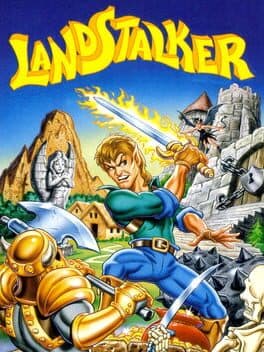
Landstalker
Climax Entertainment1992
You are Nigel, an elf and treasure hunter extraordinaire. Assisted by his new partner Friday, Nigel will travel to a distant island in a search of a legendary treasure.
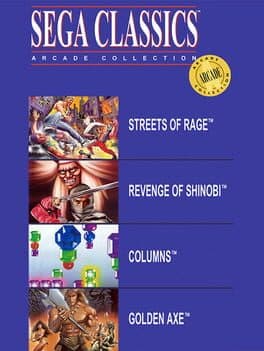
Sega Classics Arcade Collection 4-in-1
Sega Enterprises, Ltd.1992
Sega CD
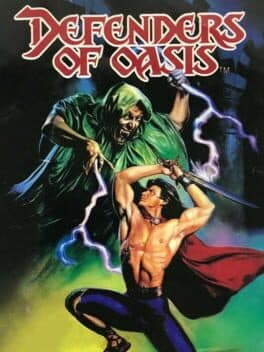
Defenders of Oasis
Sega Enterprises, Ltd.1992
As the Prince, you must defend the world of Oasis from the dark forces in this challenging real-time role-playing game!

Jennifer Capriati Tennis
System Sacom1992
This is a tennis game featuring the game modes Exhibition, Circuits, and Training. Exhibition allows for either singles or doubles play. Circuits mode involves the player competing to win four major tournaments: the Sydney Open, Paris Open, London Open and the Florida Open. The player can also customize their own tennis player by choosing their race,sex, and tennis wear color. Players can also choose whether their tennis player is right or left handed, their type of spin, forehand, and backhand. They can also distribute a set amount of points between skills such as the power forehand, backhand, their footwork, and their net game. The game also offers the option of either playing on lawn, hard or clay surfaces.
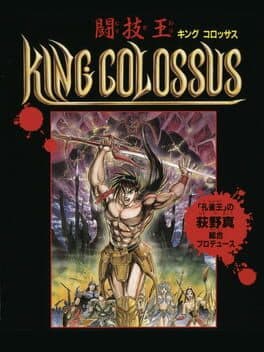
King Colossus
Sega Enterprises, Ltd.1992
King Colossus is a top-down action role-playing game. You fight monsters by equipping weapons and swinging them in real time. There is a variety of accessories and items to find in the game, as well as different obstacles to overcome in the dungeons. Never released outside of Japan.
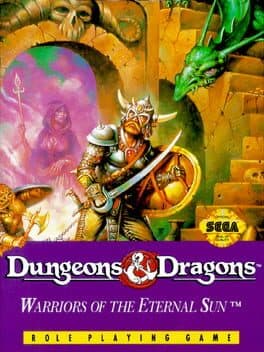
Dungeons & Dragons: Warriors of the Eternal Sun
Westwood Associates1992
Dungeon & Dragons: Warriors of the Eternal Sun is set in the world of Mystara, a setting of the Dungeons & Dragons game. The characters find themselves in a strange, red-hued world in which the horizon slopes upward in all directions, eventually vanishing into a crimson haze at the limits of sight. Their mission is to find and make allies in this new world or else the kingdom and its culture will perish. The player leads a party of four characters (either the default party or one that the player has created). Characters and races can be chosen from the normal D&D options. The gameworld is viewed from an isometric perspective and the characters can roam around in realtime. Battles are turn based. Like most role-playing games, the gaming experience focuses on exploration, inventory management and character development.
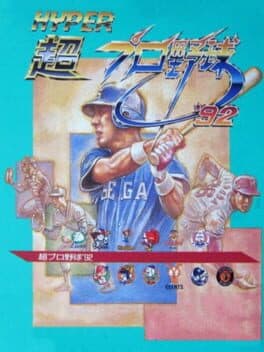
Hyper Chou Pro Yakyuu '92
Sega Enterprises, Ltd.1992
Hyper Pro Yakyū '92 follows the traditional rules of baseball. The player can choose to play as one of Japan's professional baseball teams. Following that, the player has the option to play in the small or big baseball field. During the gameplay, the player will play the role of the batter to try and strike the ball thrown by the pitcher. If the ball is successfully hit, the player must control the batter to do a full run around the field square.
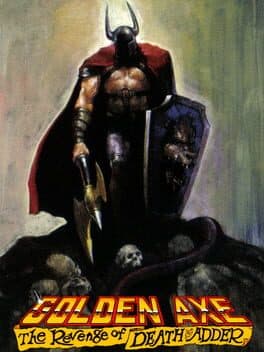
Golden Axe: The Revenge Of Death Adder
Sega Enterprises, Ltd.1992
Golden Axe: The Revenge of Death Adder is a side-scrolling arcade hack 'n' slash game released in 1992 by Sega. It was the first 32-bit game in the series. It still remains an arcade exclusive as of 2010. The player characters are Goah the giant, Stern the barbarian, Dora the Kentauride, and Little Trix, a young elf lad who carries a pitchfork. None of the characters from the first game are playable, although Gilius Thunderhead from the first game rides on Goah's back. The main enemy is once again Death Adder.
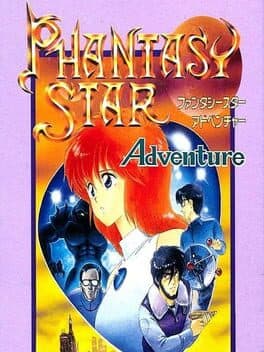
Phantasy Star Adventure
Japan System House1992
This game is a Japanese-style adventure game set in the Phantasy Star universe. The player interacts with the game world by choosing available options such as "See", "Talk", "Move", etc. There are a few puzzles to solve and a few encounters with hostile characters (in a "pseudo-RPG" turn-based fashion), but the largest part of the game is dedicated to exploration and dialogue with the characters.
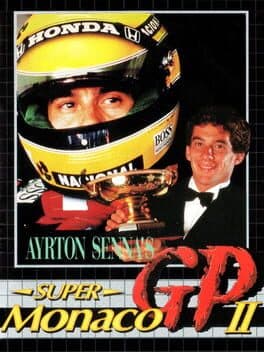
Ayrton Senna's Super Monaco GP II
Sega Enterprises, Ltd.1992
Ayrton Senna's Super Monaco GP II or simply Super Monaco GP II is a racing game developed and published by Sega for the Sega Mega Drive, Sega Master System and Sega Game Gear in 1992. It is a sequel to Super Monaco GP, but this time the game is sponsored by Ayrton Senna (who won the Monaco Grand Prix six times). Also unlike the previous game, Super Monaco GP II was not released in arcades or for any non-Sega console or computer. At the time of release it was regarded as the most realistic racing experience on home video game consoles, and the fact that it was endorsed by Ayrton Senna meant the game was very popular. However, due to these celebrity endorsements, it is unlikely Super Monaco GP II will be re-released without cutbacks.
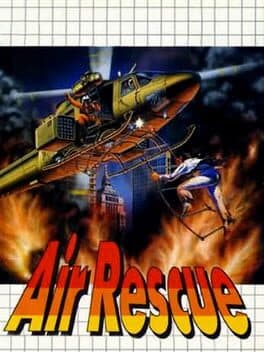
Air Rescue
SEGA AM11992
Air Rescue is similar to Choplifter!. You are a driver of a helicopter and the object is to rescue hostages without being shot down by soldiers, jeeps, tanks, choppers, and ground-based missiles, and bring them back to base. A maximum of four hostages can fit into the helicopter at any given time, so it is necessary to make more than one trip. You can choose from a variety of weapons that you can use to shoot down enemies. There are five rounds, which take you through theme parks, burning skyscrapers, army bases, sunken submarines, and caverns. The round ends when you have taken the required number of hostages to the bases.

Marky Mark and the Funky Bunch: Make My Video
Digital Pictures1992
Make My Video: Marky Mark and the Funky Bunch is a video game based on real-time editing of music video footage. The setup is that a brother and sister pair is arguing about what would make the best Marky Mark video. Since they can not agree, they enlist help from some other people: A boxer and his trainer, a trio of teenage girls, the members of a garage band, and their parents. Each group has their ideas about what an ideal Marky Mark video should or should not contain. The specifications normally come in the form of a set of pictures they either do or don't want to see, and perhaps some effects. The game has three Marky Mark videos from which to choose: "Good Vibrations", "I Need Money", and "You Gotta Believe".
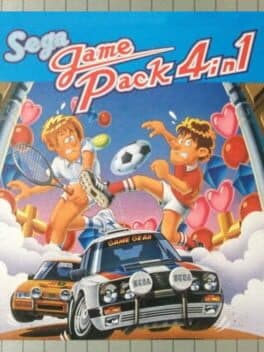
Sega Game Pack 4 in 1
Sega Enterprises, Ltd.1991
Sega Game Pack 4 in 1 is a collection of four video games released by Sega in 1992 for their Game Gear handheld console and was generally included with new consoles. The games include Flash Columns, Penalty Shootout, Tennis and Rally.
Ribbit
Sega Enterprises, Ltd.1991
Ribbit! (リビット!) is an arcade game developed and published by Sega for Sega System C hardware. It's similar in nature to Frogger, in that the user controls a frog, capable of moving in four directions. Your task is to eat all the small bugs while avoiding bigger ones.
Paddle Fighter
Sega Enterprises, Ltd.1991
Paddle Fighter (パドルファイター) is a sports game for the Sega Mega Drive, released exclusively in Japan via the Sega Game Toshokan service. Paddle Fighter is a glorified version of air hockey, with a few special moves allowing you to protect your goal for a few seconds, and lock the puck so that it can be hit in the desired direction.
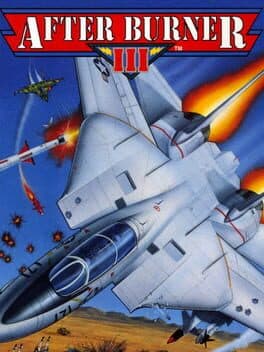
After Burner III
CRI Middleware1991
You're strapped into the Navy's fiercest jet fighter-the F-14 Tomcat. Kick in the afterburner to outrun deadly cannon fire "hot on your six." Pull up hard...lock and launch! Roll 360 degrees to blow desert tank patrols, radio towers, and missile sites into oblivion.
Line of Fire
Sanritsu1991
Just as you stole the enemy's secret weapon and started back, the enemy spotted you! Now you must fight your way back to safety. But be careful! You're in the line of fire.
Aworg: Hero in the Sky
Sega CS11991
Aworg: Hero in the Sky is an action game for the Sega Mega Drive, released exclusively in Japan via the Sega Game Toshokan service.
Sega Chess
Probe Software1991
Patience, cunning and a desire to be the best - the keys to becoming a master of chess. Sega Chess gives even the most seasoned player the game of a lifetime!
Running Battle
Opera House1991
A beat-em-up in which you take control of policeman Grey, who sets out to avenge the murder of his partner Brody and destroy the gang "Soldiers of Darkness" lead by "M".
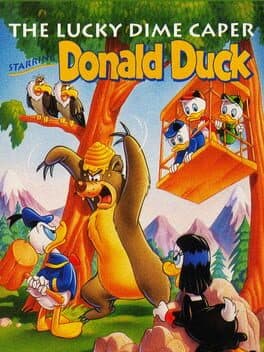
The Lucky Dime Caper Starring Donald Duck
Sega Enterprises, Ltd.1991
Sorceress Magica De Spell and her rotten ravens have kidnapped Huey, Dewey and Louie! Worse yet, she's snatched Uncle Scrooge's Lucky Dime! Join Donald Duck in his quest to prove that Magica is no match for him.
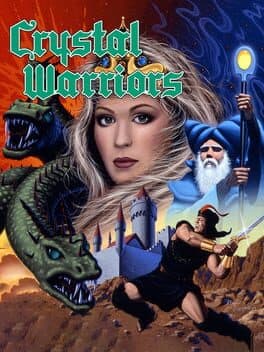
Crystal Warriors
Sega Enterprises, Ltd.1991
The continent of Tyramus has lived in peace for almost a century, thanks to the four elemental crystals of the kingdom of Arliel. However, peace is threatened by the invading armies of the Jyn Empire, led by Emperor Grym, who wants to use the four crystals to rule over Tyramus. Fortunately, Princess Iris can escape with one of the crystals and now the player has to protect her and the crystal and somehow find a way to drive back the hordes of Jyn. Gameplay in Crystal Warriors is quite similar to Shining Force. The player fights in turn-based battles controlling different characters like fighters, healers, rangers and mages, all with different strengths and skills. Whenever two units engage in battle, they enter a duel mode lasting for up to two turns. In this mode the player can choose between four commands: "battle" (attack), "retreat", "spell" and "monster". While the first three commands are quite self-explanatory, the "monster" command is interesting. Whenever a non-human enemy is defeated, it can be tamed and be used in battles. While most monsters do not have many HP they can serve as good attackers for physically weak characters or take some hits in order to protect his master. In-between battles the player can visit towns to rest, buy weapons and spells or recruit new party members.
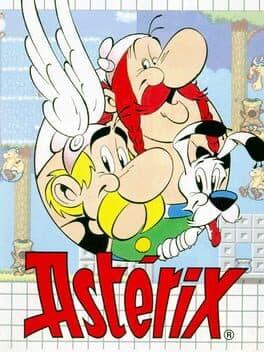
Astérix
Sega Enterprises, Ltd.1991
The Romans have kidnapped Getafix, who is the only one that can brew the magic potion the Gauls need to stand against the Romans. Asterix and Obelix embark on a journey to free him. You can play as either Asterix or Obelix which play slightly differently (Obelix is slower, but can manipulate objects, Asterix moves faster).
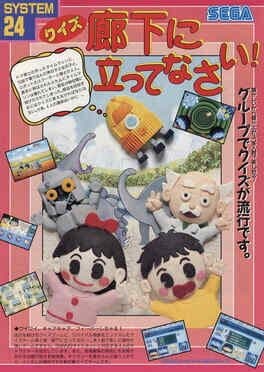
Quiz Rouka ni Tatte Nasai!
Sega Enterprises, Ltd.1991
Quiz Rouka ni Tattenasai! is an arcade game revolving around solving quizzes.
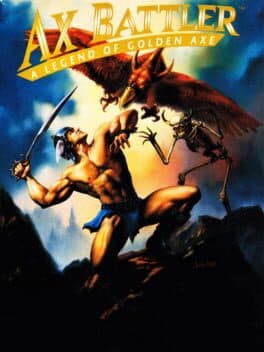
Ax Battler: A Legend of Golden Axe
Sega Enterprises, Ltd.1991
Use your wits and your razor sharp sword to recapture the Golden Axe from the diabolical Death Adder. Defeat skeletons and giant bats in dark, deep chasms and caves. And summon Earth, Thunder and Fire Magic to fight gargoyles that come to life before your eyes!
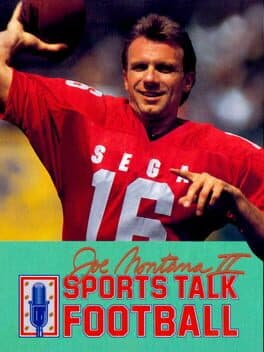
Joe Montana II: Sports Talk Football
BlueSky Software1991
NFL Sports Talk Football '93 Starring Joe Montana is the sequel to Joe Montana II Sports Talk Football, released by Sega for the Sega Mega Drive in 1992. It was followed by NFL Football '94 Starring Joe Montana.
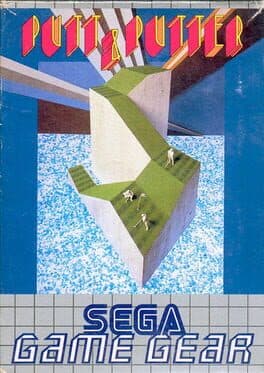
Putt & Putter
SIMS Co., Ltd1991
Putt & Putter is an isometric mini-golf game for 1-2 players. The game has different height levels.
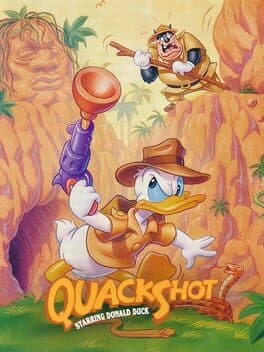
QuackShot Starring Donald Duck
Sega Enterprises, Ltd.1991
QuackShot starring Donald Duck is a steady Disney run-and-jump platformer, with a little puzzle-solving element. Characters are mostly based on Disney's cartoon series Duck Tales. Donald and his three nephews get their hands on a treasure map and set out to hunt the big prize. Donald travels throughout the world, to places like Egypt, India, South Pole, and even Transylvania, while his nephews fly an airplane. As a weapon Donald uses plungers that can freeze the enemies or stick to walls which can then be used for climbing. Other wacky weapons are popcorn and bubblegum.
Golden Axe II
Sega Enterprises, Ltd.1991
The Lord of Darkness, Dark Guld, has arisen again. Wielding the famous Golden Axe, he has destroyed entire countries with his evil clan, forcing the world into chaos. Once again, three brave warriors stand up to face the oppressors, and won’t rest until the Golden Axe is returned to its rightful place.
Jewel Master
Sega Enterprises, Ltd.1991
An army of demons terrorizes the land. Bone-hurling skeletons wait to torture your mere flesh and blood. Mythgard's only salvation rests in the hands of the JEWEL MASTER. Capture the rings of Earth, Wind, Fire and Water. Each ring holds an elemental magic. Combine the rings to attain many mystical weapons. But choose carefully - only certain combinations can protect you. Battle an onrush of Sandworms, Moth-Bats, and Subterranean Ogres. Face the fiery heat of the Red Phoenix. Fight Ghouls, Dragons, and giant Scorpions. Force them to taste the fire of the Jewels!
Streets of Rage
Sega Enterprises, Ltd.1991
Streets of Rage is a side-scrolling beat 'em up video game developed and published by Sega in 1991 for Mega Drive/Genesis. It is the first installment of the Bare Knuckle/Streets of Rage series which was followed by Streets of Rage 2 and Streets of Rage 3.
Golden Axe Warrior
Sega Enterprises, Ltd.1991
World peace is at stake! Death Adder, a wicked giant, has stolen the nine crystals from the kingdom of Firewood and has hidden them in nine labyrinths that he has created. These nine magic crystals protected the people from evil – especially from Death Adder's grasp. But now that the crystals are lost, the world is defenseless! Someone must put an end to the fiend's realm of darkness, death and destruction! Do you have what it takes to bring back peace and happiness? Trek through deep, dark forests and sail across vast, stormy seas. Chop down trees with your Battle Axe and move rocks with your magic spells to find secret caves. When you take on Death Adder's gruesome monsters, think only of winning – or else you won't find the nine crystals. And when you do, you'll find the Golden Axe – the only weapon that can crush Death Adder!
Riot City
Wetstone1991
The plot begins when narcotics agents Paul and Bobby are committed to putting an end to the drug syndicate known as "MID". MID's secret hideout is located on Riot Island, an island full of uninhabited ruins with people moved inside of it while turning it into a slum. Buildings include apartments, hospitals, factories and even a casino. During their heavy research on MID, they unexpectedly received a phone call from MID. When Paul heard the voice of his girlfriend Catherine crying for help on the phone while being hung up without explaining, he assumed she'd been abducted, making him and Bobby head toward Riot Island and save her.
Rad Mobile
Sega AM21991
Rad Mobile is a first person perspective racer and had the player engage into a non-stop road race across the USA while avoiding traffic and police cars under the time limit. The only player controlled car is a Ferrari 330 P4 type prototype racing against computer controlled opponents driving generic cars. The player would race with fifteen other rivals across the track, all attempting to prevent the player from winning. During some of the courses the player would have the opportunity to activate different controls, which include headlights for night driving and windshield wipers during rainstorms. If the player does not activate these controls when prompted, effects such as a restricted view of the road or a wet windshield will occur.
Bahamut Senki
Sega Enterprises, Ltd.1991
A turn based strategy war game only released in Japan. The world of Bahumut is divided into eight powerful countries, four of which are ruled by humans or human-like creatures, while the other four are ruled by evil forces. These countries constantly wage war against one another trying to dominate and destroy the others. It's the player's job to choose which country to control and make it the most powerful country in all of Bahumut. At the beginning of each turn, you control your leader and take certain actions such as: recruit soldiers, declare war, engage in diplomatic talks, ect. In battles you can control several units of soldiers or magical creatures you can summon to assist you in battle.
Battle Golfer Yui
Santos Ltd1991
Gil Hazard, president of the Hazard Foundation, is secretly Professor G, the leader of the evil Dark Hazard organization. He has designs on world domination, and has plans to use the power of golf toward this end; this is the Battle Golfer project. Yui Mizuhara and Ran Ryuzaki are two ordinary high school girls who just so happen to be golf prodigies, and so are prime candidates for the Battle Golfer project. They are abducted by Professor G, but are rescued by a mysterious man before they can be taken under his control. Having escaped, Yui hears about a golf tournament being held by the Hazard Foundation, and suspecting more nefarious plans, she secretly enters the tournament to stop him for good.
Factory Panic
Japan System House1991
Sneak into the factories owned by a vicious tycoon and get the quality products to the people who rightfully deserve them!
Dottori-kun
Sega Enterprises, Ltd.1991
This is a game that Sega used in-house to test the hardware it was developing during the late 1980s through the early 1990s. It is a simple game that lacks sound and the familiar player prompts (e.g. "insert coin"). It was never fully developed nor intended to be released to the public.
M.V.P.
Sega Enterprises, Ltd.1990
Comical baseball game.
The Cyber Shinobi
Sega Enterprises, Ltd.1990
The Cyber Shinobi is the SEGA Master System exclusive sequel to Shinobi. In some context the game has the subtitle Shinobi Part 2. It was the first Shinobi game to not have an Arcade counterpart.
Phantasy Star II Text Adventures
Sega Enterprises, Ltd.1990
A series of 8 text-based games released exclusively in Japan for the Sega Game Toshokan download service. Each title revolves around one character, telling the backstories of every party member available to play as in Phantasy Star II.
Space Gun
Images Software1990
Space Gun is a first-person, shoot 'em up arcade game released by Taito in 1990. It was later distributed for various home games consoles in 1992, and in 2005, it was included as part of the compilation Taito Legends on the PlayStation 2, PC and Xbox. It is set aboard a crippled space station that has been overrun by hostile alien creatures; there are human crew members that the player must attempt to rescue while destroying the alien creatures. Space Gun features simulated gore, giving the player the ability to shoot limbs off the creatures while blood splatters appear on screen. Various weapon upgrades can be found during gameplay. The music from the game is featured on several commercially released compact discs. It was fairly well received by critics both in arcades and when released for home systems. It was one of only a few games that supported a light gun peripheral for some of the home systems releases.
Dragon Crystal
M21990
A roguelike "dungeon" crawler that leads you through 30 levels on your quest to find a way to return to your own world. You're caught in a fantastic world of unearthly beauty and deadly demons. You'll pass through thirty worlds in search of the Magic Goblet. There's no way out of this musical nightmare...until you find it.
Decap Attack
Vic Tokai1990
To help “pull things together,” the brilliant doctor Frank N. Stein carefully fashioned Chuck D.head from the leftover parts of some other people that we don’t talk about. Somehow he couldn’t quite get the head right – how many heads do people need again? Head bone connects to the... what bone? Well, to cut a long story short, there’s this island which is made up of body parts (like they are sometimes), and the fearsome villain max D. Cap has separated all the parts to gain total control. It’s now up to Chuck D. Head to go over there, and sort it all out.
Shadow Dancer: The Secret of Shinobi
Sega Enterprises, Ltd.1990
Shadow Dancer: The Secret of Shinobi, also known as just Shadow Dancer, is a side-scrolling action game produced by SEGA that was originally released for the SEGA Genesis in 1990. It has been re-released via downloading services such as the Wii's Virtual Console and Steam in 2010. It was also included in the Sega Genesis Collection for the PlayStation 2 and PlayStation Portable but it was omitted in PAL version (Sega Mega Drive Collection). It is the second game in the Shinobi series released for the Mega Drive, following The Revenge of Shinobi. However, it is not a continuation of the previous game, but rather a loose adaptation to the 1989 arcade game Shadow Dancer. Like in the original arcade game, the player controls a ninja followed by a canine companion. The Secret of Shinobi was well received by critics.
A.B. Cop
Sega Enterprises, Ltd.1990
It is the future and motorcycle cops now use air bikes to patrol the streets and catch criminals. You are one cop, and over various missions you are to chase after various criminals and catch them within a time limit. Once all the criminals are caught, you then have to smash into the gang leader within a new time limit, decreasing his energy bar until it is empty. The gameplay of this title is similar to Chase H.Q.. Be careful, as the leader has a weapon and when hit slows you down.
Castle of Illusion Starring Mickey Mouse
Sega Enterprises, Ltd.1990
Minnie Mouse has been kidnapped by the evil witch Mizrabel, and it's up to Mickey Mouse to venture through the mysterious worlds of the Castle of Illusion to rescue her in this 2D platformer (and collaboration between Disney and Sega).
Fatal Labyrinth
Sega Europe1990
Dragonia, the castle of doom, has been resurrected! But the ghouls from the castle have stolen the Holy Goblet, the source of light. Without it, the world will be trapped in darkness forever. Don your armour and pick up your weapon.

Putter Golf
Sega Enterprises, Ltd.1990
Putter Golf is a golf game developed and published by Sega for the Sega Mega Drive. It was only available in Japan as a download through the Sega Game Toshokan service. Putter Golf is essentially (but whether or not it officially is is unknown) a Mega Drive version of Putt & Putter: a very simple golf game with an isometric perspective. Rather than compete on wide open courts however, the game opts for much smaller levels which would only require a putter (much like minigolf). As well as this, there are a number of obstacles which can get in your way, from bumpers to lava.
Alex Kidd in Shinobi World
Sega Enterprises, Ltd.1990
After ten thousand years, the once banished Dark Ninja returns to make another attempt to take over the Miracle World. Someone's definitely got to stop him! Guess who dares to meet the challenge? You! You're Alex Kidd, the prince who knows no fear. A lovely girl has been kidnapped and her life is at risk! And she's your girlfriend from the planet Shinobi! By holding her hostage, the Dark Ninja plans to realize his fiendish scheme. She must be saved before it's too late! You need more than courage to be successful. Transform into a fireball and burn up enemies that come at you. Jump up and across towering walls with your amazing wall-climbing skills. Turn into a tornado and twist your way out. And when you encounter the Dark Ninja, think only of winning. Otherwise you'll lose your girl and, worse yet, the Miracle World will be doomed forever!
Columns II: The Voyage Through Time
Sega Enterprises, Ltd.1990
Columns II: The Voyage Through Time is the sequel to the Sega puzzle game Columns. It was only released in arcades in Japan until it was later ported to the Saturn under the title Sega Ages: Columns Arcade Collection.
Aerial Assault
Sanritsu1990
A sidescrolling shooter in which you fight your way through 5 missions, each with a boss to defeat at the end. Along the way you find Power-Ups to help your odds either by improving your weapon or speed. Three difficulty levels are available (careful: "Easy" does not let you reach the very end)
ESWAT: City Under Siege
Sega Enterprises, Ltd.1990
The city is besieged by wanted criminals, and as a police officer it is your duty to stop them. The first criminals in the wanted list can be stopped with your service weapon an some fast reactions, but once you're facing the toughest criminals in town you'll need to use the cyber suit, which provides additional protection and higher firepower. Unlike other versions of this game, this Genesis cartridge doesn't follow the layout of the arcade game. The levels, rather than being linear, feature some platform elements, and the enemies in the first levels are no longer bank robbers or hit-men, but soldiers and robots instead. And the setting is no longer your typical American city, but a futuristic megalopolis.
Whip Rush
Vic Tokai1990
Whip Rush is a side-scrolling space shooter released in 1990 for the Sega Mega Drive System and subsequently for its American counterpart, the Sega Genesis. Whip Rush's gameplay style is very similar to R-Type: The title ship flies through 7 dangerous stages and is forced to fight large bosses using timed attacks. The ship's Options are similar to the ones in Curse or Psychosis: The ship can be equipped with two Options at a time and the player can rotate them around the ship changing their directional fire at the same time. The player has a total of three weapons to choose from and can change the ship's speed through eight different speed levels. Extends are awarded and there are no checkpoints, but if a player loses all their lives and continues, they have to restart the level over again.
Phantasy Star III: Generations of Doom
Sega Enterprises, Ltd.1990
Just as you’re about to marry Maia, the mysterious woman you found on the shore, a winged dragon grabs her and disappears. This is the tragic start of what seems like a never-ending journey into a world of loathsome creatures and wicked souls that spans three generations.
Super Real Basketball
Sega Enterprises, Ltd.1990
The original version (relased in Japan and Europe) of the game released as Pat Riley Basketball in North America.
Columns
Sega Enterprises, Ltd.1990
Go back in time to a bygone civilization: the ancient world of Phoenicia. There you will play a simple and captivating game where sparkling, rainbow-coloured jewels drop one after another. According to the ancient merchants, by arranging three or more of the same jewels horizontally, vertically or diagonally, you shall perform miracles.
Danan: The Jungle Fighter
Sega Enterprises, Ltd.1990
Danan, the infant who was rescued from the remains of a wrecked airplane by Jimba, a young Amazon tribesman, came home from hunting one day to find his guardian mortally wounded! What happened to Jimba? Who would do such a thing? Help Danan to find the answers — stalk the hot, wet jungles of the Amazon, putting the pieces together as you go, and avenge Jimba's death!
Crack Down
Sega Enterprises, Ltd.1989
Ben and Andy, the two top Special Service agents have accepted a very dangerous assignment – the elimination of Mr.K and his Artificial Life System. Mr. K plans to rid the earth of human life forms using the killer robots he’s created, and no one but Ben and Andy can stop him!
Line of Fire
Sega Enterprises, Ltd.1989
A machine gun game by Sega.
Galaxy Force
Sega Enterprises, Ltd.1989
CAUTION: FOUR MEGA POWER! Not double, not triple, but FOUR times the playing power of a regular cartidge. You get the hottest space combat, the baddest explosions, and the coolest sounds ever! Journey to four different planets, each with stunning but deadly landscapes. There's so many awesome enemies, you won't have time to stargaze!
Wrestle War
Sega Enterprises, Ltd.1989
Wrestle War is the name of a video game which was released in the arcades in 1989, and for the Sega Mega Drive/Genesis console in 1991 in Japan, Australia, and Europe only. and was published and developed by Sega. Despite being released the same year as the National Wrestling Alliance/World Championship Wrestling's WrestleWar pay-per-view, it is not associated with any wrestling promotion. The original Japanese game cover featured a Hulk Hogan look-alike, with a bandana that spelled "Hogan". It was changed for the European and US releases for royalties reasons. It did not change the wrestlers faces though, which still are similar to those of real wrestling stars of the time. Wrestle War has also been released as part of the Sega Smash Pack The player takes control of Bruce Blade, a rookie wrestler, through a series of matches to win the Sega Wrestling Alliance championship belt by facing the following wrestlers, each possessing their unique wrestling moves: Mohawk Kid Sledge Hammer (based on Bruiser Brody) Mr. J (based on Jason the Terrible) Don Dambuster (based on Road Warrior Hawk) Nim Rod Falcon (based on Mil Mascaras) Titan Morgan (based on Hulk Hogan) Buckskin Rogers (based on Stan Hansen) Grand Kong (based on Abdullah the Butcher)
Sword of Sodan
Discovery Software International1989
Like Søren Grønbech's other game Datastorm, Sword of Sodan was most noted on the technical side, as the sprites were large and distinctive-looking. Your task (as either a hero or heroine) is to dethrone the tyrannous Zoras the Necromancer, and avenge his killing of your father. There are 11 levels to take on, with indoor and outdoor settings. Your character has a range of sword-slashing and jumping moves, which must be used to their full effect if you are to make progress. The game features digitised sound and speech, as well as an action-replay feature, an unusual concept outside sports games at the time.
Abrams Battle Tank
Dynamix1989
Frontline heat. Behind the gun of an M1A1. 0400 Hours: Mission Briefing, Soviet FST-1's and BMP's are pouring over the border into West Germany. Ready your crew and move out! 0415 Hours: Choose the right weapons. Reconnaissance reports aircraft and infantry, too, so balance your load of Sabots, HEAT rounds and AX's. 0500 Hours: Patrol the road to Bonn. Only minor clashes so far. Check your NAV map and damage screen. You have enough fuel to weed out the recon units, but will your ammo hold out? 1045 Hours: The heat is on. Your 120mm gun slams you against the seat as you blast another T-80. Gutted tanks litter the battlefield, pillars of smoke streak the sky, but the enemy keeps rolling. You swing your turret around and spot a Soviet assault chopper. His sights are on you. 2230 Hours: Get home alive. Cross the bridge and you're home free. You're glued to the gunner's sights, straining to detect enemy movement with thermal imaging. The ballistic computer locks on. Range 1326m. Pray he's alone.
688 Attack Sub
Electronic Arts1989
688 Attack Sub is a classic modern submarine simulation which puts you in command of either the American Los Angeles or the Soviet Alfa class nuclear-powered submarines. Most of the systems you would expect such as sonar and periscope are featured and nicely presented in VGA. The game offers ten missions for both the Soviet and American side in a Cold War scenario, that grows progressively hotter. Nice to see that the two sides' submarines have their own graphic sets in the game, even with some pseudo-cyrillic labels on the Russian side.
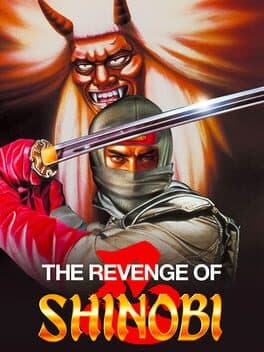
The Revenge of Shinobi
Sega Enterprises, Ltd.1989
The Revenge of Shinobi, known as The Super Shinobi in Japan, is the continuation of Shadow Dancer - the arcade sequel to Shinobi. The game was the first Shinobi title developed exclusively for home consoles.
Dragon Slayer: The Legend of Heroes
Nihon Falcom1989
In this epic role-playing game, you must guide Prince Logan all accross the beautiful and dngerious world of Isrenasa in the quest to regain his throne. This game features a huge world to explore and many companions to join you on your journey. This game features one of the largest quests and most advanced interface of any role-playing game for the TurboDuo system.
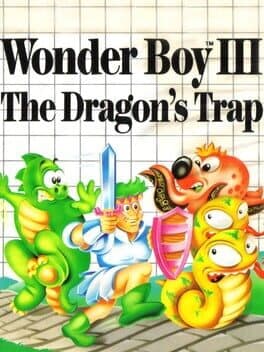
Wonder Boy III: The Dragon's Trap
Sega Enterprises, Ltd.1989
A direct sequel to Wonder Boy in Monster Land, you wander through the lands using multiple forms that each have different abilities. Each defeated boss unlocks a new form that has to be used to advance to a new area, while shops give you access to new equipment for money.
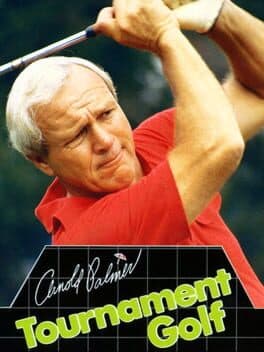
Arnold Palmer Tournament Golf
Sega Enterprises, Ltd.1989
Select your level of play, and then head for the pro shop to choose between Black Carbon, Glass Fiber, and Ceramic Clubs. Tee off by yourself or play 18 holes with a friend. Besides the One and Two Player modes there's also a practice mode, match play (head to head), and a full-blown international tournament, where you'll stroke it out against 15 competitors.
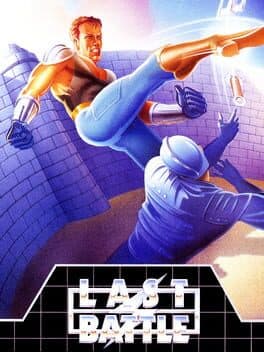
Last Battle
Sega Enterprises, Ltd.1989
Last Battle: Legend of the Final Hero is a side-scrolling action game similarly to its predecessor Black Belt. The player takes control of Aarzak (Kenshiro in the Japanese original), who fights against his enemies using his punches and kicks. Aarzak can attack while standing, jumping, and crouching, for a total of six basic attacks. In addition to his life gauge, Aarzak has a power-up meter that will gradually fill as he defeats enemies. When the meter reaches a certain point (depending on the stage), Aarzak will transform into a super-powered state, allowing him to perform rapid punches and kicks for the rest of the stage. The game's levels (with the exception of boss battles and maze stages) feature a time limit at the lower-right corner of the screen; but unlike other time limits, instead of killing the character immediately when it reaches, it will instead gradually drain the player's life gauge until the player completes the level. The game is divided into four stages or chapters, each featuring several levels. After completing a level the player will be shown a map which displays the player's current location and the paths they can take. Most of the levels are linear side-scrolling segments where the player must simply walk from one to side to the other while fighting every enemy who gets in the way. Other levels are dungeon mazes in which the player must figure out the correct path to the goal while avoiding traps. The player will encounter various allies throughout the game that will increase Aarzak's offensive or defensive strength, or replenish their health. The game features several one-on-one encounters with bosses as well. The player must sometime complete levels in a certain order in order to finish a chapter. 'Last Battle' is also notorious amongst gamers for its harsh difficulty throughout. The original Japanese version is based on the Fist of the North Star mangas/animes. During the translation process all references to Fist of the North Star were removed - similar to its predecessor Black Belt.
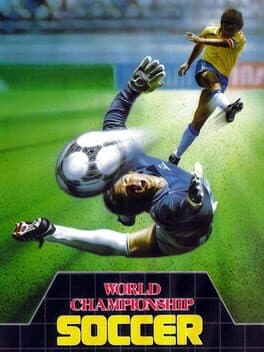
World Championship Soccer
Sega Enterprises, Ltd.1989
The game presents a top-down view of a simple version of soccer (there are no fouls, substitutions, or strategies). Players must dribble and pass the ball towards one end of the field and try to score a goal by forcing the ball into the opposing team's net.
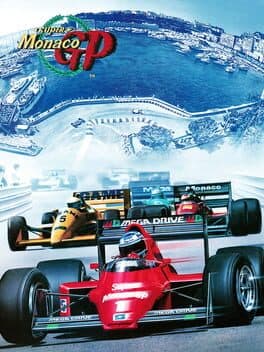
Super Monaco GP
Sega Enterprises, Ltd.1989
A superb Formula One racing game from Sega that took sprite-scaled graphics to a whole new level. The game's single track offered a very reasonable representation of the famous Monaco Grand Prix circuit. Players could chose to race with one of three different skill/gear settings : Beginner : Automatic Gears Intermediate : 4-Speed Manual gears Professional : 7-Speed Manual Gears Before entering the Grand Prix, a qualification lap had to be completed. In the event of qualifying, the qualifying time determined the player's position on the starting grid. During the race itself, checkpoints had to be reached within a set time, or the race was over.
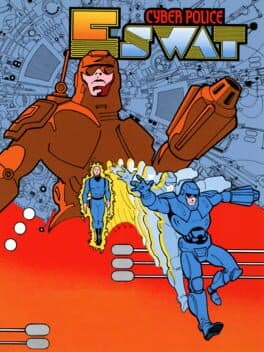
Cyber Police ESWAT
Sega Enterprises, Ltd.1989
The game is a sidescrolling platformer similar to Shinobi. The game is set in the near future, where the player controls a blonde police officer named Duke Oda who, over a series of levels, turns into the cyborg E.S.W.A.T. At first, as a rookie member of the Cyber Police force in the city of Liberty, the player has to clean the streets of an overwhelming crime wave and terminate the most wanted criminals. In the first and second levels of the game, the completely human Duke Oda can only utilize a single shot weapon and can only survive one hit. A second hit will kill him.
Phantasy Star II
Sega R&D 21989
Gameplay is similar to the original Phantasy Star, the first game in the series. Its battle system is turn-based, allowing the player to choose commands for their party of up to four characters. Each of the eight characters has a different set of preferred weapons and armor, as well as techniques, suited to the character's job. The player must defeat enemies in the overworld and in dungeons to advance in the game. The game abandoned the first-person view that the first game used for dungeons and battles. Phantasy Star II instead uses a top-down perspective for exploration and a third-person view in battles.
Strider
Capcom1989
The controls of Strider consist of an eight-way joystick and two action buttons for attacking and jumping. The player controls Hiryu himself, whose main weapon is a tonfa-like plasma sword known as "Cypher". He can perform numerous acrobatic feats depending on the joystick/button combination used. Pressing the jump button while Hiryu is standing still will cause him to do a regular vertical jump, while pressing the jump button while pushing the joystick left or right will enable him to do a cartwheel jump. Hiryu can also slide under or through certain obstacles and enemies by first crouching down and then pressing the jump button. As well as his sliding move, both jumps can also be used to destroy weaker opponents. Hiryu is able to latch onto certain platforms, and climb across walls and ceilings using a metallic hook. While running down a sloped surface, Hiryu can gain enough momentum to allow him to do a longer cartwheel jump than usual. Numerous power-ups can be obtained from item boxes carried by certain enemies. These includes an extension to Hiryu's attack range that lasts for one hundred slashes, two types of health aids (represented by the kanji used to write Hiryu's name: 飛 and 飛竜), a max health extension (represented by the kanji 竜, the second character in Hiryu's name), an extra life, and a power-up that not only makes Hiryu invulnerable to attack but also increases his own attack abilities via shadow images of himself for 15 seconds.[3] Hiryu can also summon robotic companions known collectively as "options" that help him fight enemies. These consist of up to two mushroom-like droids, a saber-toothed tiger and a hawk, known individually as Option A, B and C respectively. The game has five stages: the Kazakh Soviet Socialist Republic (called "St. Petersburg" during the arcade game's attract sequence), the Siberian Wilderness, the Aerial Battleship Balrog (געלראב), the Amazonian Jungle, and the Grandmaster's lair itself, the Third Moon. Each of the stages is divided into a number of smaller sections, each with their own time limit and checkpoint location. The player has a three-point health gauge (which can be increased to five points with the health extensions. Hiryu will lose a life when either his health gauge is fully depleted, by moving him off the screen entirely (like falling into a bottomless pit) or when the game's timer reaches zero. It's Game Over when all of Hiryu's lives are lost, but the player can be given the opportunity to continue.
Bay Route
Sun Electronics1989
Bay Route is a platform "Run and gun" arcade game developed by Sunsoft and published by Sega in 1989. Players control a soldier and shoot terrorists, collect power-ups, and defeat bosses to advance levels. Players can select one of four configurations on their gun.
Alex Kidd in the Enchanted Castle
Sega Enterprises, Ltd.1989
The whole Kidd family is upset! Alex’s father, King Thor, is missing, and they suspect he has been kidnapped by Ashra, the mean ruler of the planet Paperock. Alex speeds to Paperock to investigate, but the creatures of Paperock decide to hinder his efforts and try to keep him away from Sky Castle, Ashra’s hideaway. Luckily Alex knows how to jump, punch and kick his way through the most stubborn of enemies.
Last Survivor
Sega Enterprises, Ltd.1989
Last Survivor (ラストサバイバー) is an arcade game originally released in 1988 by Sega for the Sega X Board arcade hardware. Last Survivor is one of the first examples of a 3D third-person shooter, and involves players traversing a maze shooting at opponents. It pre-dates experiments by id Software (often credited for inventing the first person shooter genre) by two years. It relies on rotary joystick controllers, and had then-revolutionary ray-casting graphics. As an early example of the genre, its gameplay is slower and less fluid than modern third person shooters.
Bomber Raid
Sanritsu Denki Co., Ltd.1989
Fly your plane through five levels, shooting enemy planes, submarines, helicopters, and other enemies along the way, and use your equipped cluster bombs if necessary. You need to destroy a target that is outlined in your mission briefing. You have three lives and limited cluster bombs. To help you along the way, you can shoot a power pod to score points, increase your firepower, and gain some help from fellow squadrons.
OutRun 3-D
Sega Enterprises, Ltd.1988
Strap yourself in and take a 3-D ride on the wild side. Sega's Out Run 3-D is so close to reality it will leave you breathless! As your car whips around treacherous curves and over hills, you can almost feel the engine screaming and the wind whipping through your hair!
Rescue Mission
Sega Enterprises, Ltd.1988
Rescue Mission is a shooting game. Using the Light Phaser peripheral, the player is required to shoot waves of enemy soldiers to protect a medic on a rail cart who slowly moves around the level rescuing injured friendly soldiers.
Hot Rod
Sega Enterprises, Ltd.1988
A hot rod racing game from Sega. Upgrade your car with the money awarded from completing races quickly.
Scramble Spirits
Sega Enterprises, Ltd.1988
Sega's take on the 1943 style of vertically scrolling shoot 'em ups was set in the future. Your fighter plane is aged and under-powered, yet you must face down large planes, tanks and ground targets to achieve victory. Each level ends with a close-viewed section of particular intensity before finally facing a boss. Smart bombs are occasionally found lying around, and can destroy everything on the screen, although you can't use them on the bosses. A simultaneous 2-player mode is provided.
Excite League
1988
Sega early Japanese baseball game. Screen is divided to top and bottom.
Poseidon Wars 3-D
Sega R&D 21988
Battle Stations! Battle Stations! Your country is being attacked. You'll be fighting on the U.S.S. Poseidon; an armor-plated attack cruiser with radar, sonar, 76mm cannons and surface-to-surface missiles. First come the training rounds. They'll throw everything they have at you... jets, cruisers, torpedoes, cannons. And then the fun really starts! Combat missions! You're on the open seas. You have blips on the radar. Line up your gunsights and let 'em have it. You pick up an enemy cruiser on your sonar. Get ready with an armor piercing missile and send them to Davey Jones locker. If you complete your missions, you will be awarded with the Navy's highest honor... a promotion to Fleet Admiral.
Osomatsu-kun Hachamecha Gekijou
Sega Enterprises, Ltd.1988
The game was based on the Manga/Anime series Osomatsu-kun by Fujio Akatsuka; players controlled the title character and encountered many of the series' characters in a strange (but comical) world.
Cyborg Hunter
Sega R&D 21988
The Year: 2242. You're the toughest bounty hunter in the galaxy. You've amassed a fortune by defeating the most vicious creatures known to man. And now, deep inside the enemy Cyborg Fortress, you can almost taste your next paycheck. But there's a little work to be done before you cash in. Like blasting swarms of deadly Cyborgs with your powerful psycho gun. And a battle-to-the-death showdown with Vipron, the vile Cyborg leader. Prepare yourself for one explosive payday!
Gain Ground
Sega Enterprises, Ltd.1988
In Gain Ground, players control one of a set of characters at a time. There are twenty characters, each with different weapons. To beat a level, players must reach the exit point with at least one character or destroy all enemies on the level before time runs out. Littered across the level are captive characters, which can be rescued by walking over, then escorting the controlled character to the exit point. If a player controlled character is killed, that character turns into a captive, except that they will disappear if the next active player controlled character dies, exits the level without them, or the player has no characters left in their party. The game is over when all controlled characters in the party are killed without any reaching the exit. However, there are three continues which allow a player to restart the level with their original three characters. There are 40 levels in the arcade version of the game. The Master System and the Genesis/Mega Drive have 50 levels in the game.
Wonder Boy III: Monster Lair
Westone1988
The monsters are attacking the quiet town of Xenobia. Guide Leo and Priscilla to wipe out the monsters using the Legendary Weapons.
Super Thunder Blade
Sega R&D 21988
Super Thunder Blade is a shooter for the Sega Mega Drive/Genesis console, published by Sega. It was one of three launch titles for the console in Japan (the others being Space Harrier II and Altered Beast), as well as being one of the six launch titles for the console for its U.S. launch. It is a follow-up to the 1987 arcade game Thunder Blade. It was released for the Virtual Console on September 17, 2007. It was also included in the Sega Genesis Collection for PlayStation 2 and PlayStation Portable in 2007 and in Sonic's Ultimate Genesis Collection for Xbox 360 and PlayStation 3.
Altered Beast
Team Shinobi1988
The Sega Genesis/Mega Drive has different enemy layouts and input mechanics from the original arcade version.
Cyberball
Atari Games1988
Cyberball is an Atari Games arcade game of 7-man American football, using robotic avatars of different speeds, sizes, and skill sets. The game replaced the standard downs system with an explosive ball that progresses from "cool" to "warm", "hot", and "critical" status as it is used. Players can only defuse the ball, resetting it from its current state back to "cool" by crossing the 50 yard line or by change of possession, whether through touchdown, interception or fumble. A robot holding a critical ball while being tackled is destroyed along with the ball. The robots also possess finite durability. As offensive units are tackled, they wear down, finally issuing smoke and then flames after a number of hits. A flaming robot will explode when hit, thereby fumbling the ball. Players can upgrade robots with faster and more durable units using money bonuses they earn during play.
Power Drift
Sega Enterprises, Ltd.1988
Power Drift is a kart racing game released in arcades by Sega in 1988. More technologically advanced than Sega's earlier 2.5D racing games, like Hang-On (1985) and Out Run (1986), in Power Drift the entire world and track consist of sprites. The upgraded hardware of the Sega Y Board allows individual sprites and the background to be rotated–even while being scaled–making the visuals more dynamic. Designed and directed by Yu Suzuki, the game was a critical and commercial success upon release in arcades. It was subsequently ported to various home computers in Europe by Activision in 1989, followed by a PC Engine port published in Japan by Asmik Ace in 1990. It was not released on Sega consoles until the Sega Ages release for the Sega Saturn in 1998.
Passing Shot
Sega Enterprises, Ltd.1988
This is a conversion of the SEGA coin-op game of the same name, playing lawn tennis around the world. The player travels from France, to Australia, to the US and end up in England and get to listen to the national anthem of each country. There are four difficulty levels to select the skill of the computer controlled player. One or two players may play but always against the computer. In a two player game, both players play as a doubles team. The game starts off looking behind the player as the style of serve is chosen (top spin, curve, etc) and then it switches to a top down view for the rally.
Megumi Rescue
Aicom1988
Megumi Rescue lets you control a rescue party of three to save people from a burning building. The group consists of two people holding a jumping sheet, and a third fire fighter bouncing on the sheet to reach the building's inhabitants at the windows.
Super Racing
Sega Enterprises, Ltd.1988
Super Racing is a Racing game, published by Sega, which was released in Japan in 1988.
Lord of the Sword
Sega Enterprises, Ltd.1988
The followers of the evil Ra Goan have toppled the king from the throne. None are brave enough to take his place. The Elders have decreed that any man who can pass three tests will become King of Baljinya. Find the Tree of Merill. Defeat the Goblin of Balala Valley. Destroy the Statue of Evil. It sounds easy. But the followers of Ra Goan are waiting to stop you! It's an adventure that will take you across rivers and oceans, through swamps and over mountains. You have a sword and a bow. But magical weapons may become yours... for a price. Pass the tests and you shall be king. But remember: There's more to being a Lord of The Sword than hacking apart thine enemies!
Tensai Bakabon
Sega Enterprises, Ltd.1988
Tensai Bakabon is an Action game, published by Sega, which was released in Japan in 1988.
Kenseiden
Sega Enterprises, Ltd.1988
A Master System side-scrolling platformer set in a fantasy version of feudal Japan featuring multiple paths to explore and crazy, potbellied monkeys to kill.
Hoshi wo Sagashite...
Sega Enterprises, Ltd.1988
The game revolves around a dog and his family. Being one of the earliest adventure games for an 8-bit console system, the game tends to be simplistic compared to today's adventure games. As a Japan exclusive video game, literacy is required in the Japanese language in order to play the game. The character seems to have an anime-like influence as the people are watching out for the dog that is sitting on a log. Among the human beings, however, is an alien-like creature. While the literal translation would be Searching the Stars..., the actual alternative title is The Story of Mio.
Ace Attacker
Sega Enterprises, Ltd.1988
Ace Attacker is a top-down volleyball game for one or two players. There are eight national teams available (Brazil, Cuba, France, Italy, Japan, Korea, Russia, USA) and matches are divided over six tiers, from an elimination match and three group matches to the semifinal and then the final. The difficulty level of the computer opponent increases in three steps from beginner through intermediate to expert.
Galactic Protector
Sega Enterprises, Ltd.1988
Galactic Protector is a Sega Master System shoot-'em-up game developed and published by Sega. It stars Opa Opa of Fantasy Zone and Zillion fame, who must save various planets from enemies and debris hurtling towards them. The game is built specifically for the Paddle Control, and therefore cannot be played on a standard Master System Control Pad. This also makes emulating the game tricky. Like the Paddle Control itself, Galactic Protector was not released outside of Japan. It was released as part of the Fantasy Zone Complete Collection for the PlayStation 2, also Japan only.
Dead Angle
Seibu Kaihatsu Inc.1988
Armed only with your trusty Tommy gun, you must exterminate all the main gangster families in order to reach the main kingpin so you can save your girl. Beware, they are waiting for you and will not go down without putting up a fight in this challenging shoot'em up.
Maze Hunter 3-D
Sega R&D 21988
You are trapped in a twenty-level creature filled maze. Your job is to make your way to the bottom and get out alive. Pick up the iron bar and use it to destroy enemies that get in your way. Find the silver key to open the locked warp portal leading to the next level. Requires 3-D glasses to play.
Blade Eagle 3-D
Sega Enterprises, Ltd.1988
Blade Eagle 3-D is a vertical shoot-em-up which has no story involved. You just have to shoot your way on three planets (you have to travel through space first), blasting as many enemies as possible. Along the way, there are several bosses that you have to defeat. The later ones drop a power-up, which you can use to upgrade your ship. Some of the power-ups include double shots and laser beams. Another power-up gives you the ability to have an extra ship on your side and will join the fight, and will later serve as a backup. Blade Eagle is designed for play in conjunction with the Sega 3-D Glasses. If you play without the 3-D glasses, it will look like as if there are two of your ships, not just one. If there are four enemies approaching you, they will look like eight.
Thunder Blade
Sega Enterprises, Ltd.1987
A helicopter shoot-'em-up developed by Sega. The Arcade version made use of Sega's 3D super scaler technology to create city environments where the buildings would appear to have depth. The subsequent home versions sadly lacked this feature.
Bullet
Sega Enterprises, Ltd.1987
Bullet is an overhead run'n'gun twin-stick shooter for up to three players, set in a dark future. The left joystick will move your character around while the right joystick will make your character fire in the pressed direction, allowing you to move and shoot freely in different directions.
Shooting Gallery
Sega Enterprises, Ltd.1987
This is a light gun game where players shoot a single type of target in each round, including birds, balloons, blimps, balls, and spaceships. A specific number of hits is required in each round and if it is not met the game ends.
Sonic Boom
Sega Enterprises, Ltd.1987
Sonic, Tails, Knuckles, and Amy Rose team up once again to explore an ancient world. Players will have to use each character\'s unique abilities individually and in combination with the team to defeat the evil Dr. Eggman once again.
Gangster Town
Sega Enterprises, Ltd.1987
The time is the wild 1920's. The place is a great American city that has been taken over by rampant crime. The corruption is led by cruel and cunning gangsters who have let fear and destruction loose in the city. You are the only hope for law and order to return. As a member of the FBI, you wear the badge of the bravest. Your mission: rid the city of these thugs. Armed with your machine gun and plenty of courage, you're dedicated to making gangsters a thing of the past. But it won't be easy. The streets are riddles with gunfire, the local nightclubs are now criminal hang-outs, and the waterfront's docks are in the grip of the most menacing crime-lover, Big Boss. It's you or them - good luck, you'll need it!
Missile Defense 3-D
Sega Enterprises, Ltd.1987
War has been declared between two super powers. At play are real nuclear missiles and the outcome looks dim. If their missiles make contact, there's no chance for survival. Luckily there's hope. You and The Eliminator, the only anti-nuclear laser in operation. Aboard a fugitive space station, you're armed for intervention and your mission is clear: stop all nuclear missiles. But it won't be easy. Because those missiles are being launched at you, too. So play for keeps. This is the most important challenge you may ever face.
Phantasy Star
Sega Enterprises, Ltd.1987
The time: Space Century 3240. The place: The Algol Star System. It began when King Lassic turned evil and let hordes of hideous, magical creatures run amok on the three planets. When her brother was killed, Alis vowed to avenge his death and put an end to Lassic forever. Join her in a journey across time and space to worlds where creatures speak...where magic and science combine to take you on the ultimate video quest. Phantasy Star is total adventure role playing with towns full of people and shops...16 level dungeons full of traps and treasure...three companions who will help you if you find them and some of the most awesome graphics ever put in a video game.
Sorcerian
Nihon Falcom1987
Sorcerian is a side-scrolling action-RPG. The player can create up to ten characters, from whom up to four members can be present in a party at the same time. Each character is highly customizable, with four different classes/races (fighter, wizard, elf, and dwarf) and over 60 possible jobs/occupations (ranging from clown to exorcist) available for them to perform; each has its own strengths and weaknesses, affecting the seven primary attributes (strength, intelligence, protection, magic resistance, vitality, dexterity, and karma) in different ways, as well as different equipment limitations. The player can choose from fifteen different scenarios, or quests, to play through in the order of their choice. The party must battle enemies and perform tasks within the given levels to clear each scenario, before moving onto another scenario of their choice. The player controls the entire party at the same time, with all four members running in a line, jumping in sequence, and attacking in unison. The party members follow behind in a manner similar to the Options in the arcade shooter Gradius (1985). Sorcerian also employs class-based puzzles, such as using a high-strength character to force open doors. All the characters have a default starting age of 16. Each time a player begins a new scenario, a year passes by, while additional time passes by in towns as a character goes through training or enchants items. The characters age at different rates depending on their race, with humans reaching old age at 60, dwarves at 100, and elves at 200. Upon reaching old age, for every year that passes, a character can die permanently at a random time. There is also an “Advance Time” to speed up the flow of time. Another new feature of Sorcerian was its episodic format that extended across various expansion packs. Besides the default fifteen scenarios that come with the game, there were a number of additional scenario packs released. The aging system was created with the additional scenario packs in mind.
Zillion II: The Tri Formation
Sega Enterprises, Ltd.1987
They're at it again. The dreaded Norsa Empire is back... and stronger than ever before. This time they won't make any mistakes. Others have tried to stop them and all have failed. The evil Baron Ricks knows you are coming. And it's a trap! But you're the galaxy's last hope. Can you do what's never been done before?
Zaxxon 3-D
Sega Enterprises, Ltd.1987
The enemy has built battle fortresses in the farthest reaches of space. There's only one way in... and one way out. Your Mission: To infiltrate the enemy's defenses and destroy their motherships!
Alex Kidd: BMX Trial
Sega Enterprises, Ltd.1987
As young Alex, your job is to go through an obstacle course and get to the main exit without other competitors trying to push you off your bike. You start out in Blackwood Forest, but depending on which scene you're in, you can travel to Cactus Desert, South Seas, Pyramid River, or Alex's home, Radaxian.
Great Golf
Sega Enterprises, Ltd.1987
Keep your head down. Eyes on the ball. Grip the club firmly... and swing. Welcome to the Sega Master's Tournament where you need to play better than "par" if you want to win. So tee-up for some real fun. And remember to play with caution. This championship course has been groomed for a truly competitive challenge. Eighteen holes full of roughs, bunkers and water hazards will put your nerves to a real test. But not to worry. You've got some clever moves to meet the challenge of a "dog leg" fairway or a tricky green. So go for a sneaky slice or hard hook to outplay the rest. Winner takes all! FORE!
Aztec Adventure
Sega Enterprises, Ltd.1987
Gameplay involves the player trying to reach Paradise by exploring ten different lands, including desert, marshes, ruins, underground waterways, and forest. While exploring you can collect weapons, by destroying plants. A variety of in-game weapons can be found, some more powerful than others. Some weapons can be used against bosses, which can take a certain amount of hits from the player's default weapon, unless he has companions. The player's companions need to be hired with gold, and until he pays them they remain your enemies. Players must either bribe them or battle them to make them join his quest.
Aztec Adventure: The Golden Road to Paradise
Sega Enterprises, Ltd.1987
Aztec Adventure is an action game that was released on the Sega Master System by Sega in 1987 in Japan, and 1988 in Europe and the US.
Penguin Land
Sega Enterprises, Ltd.1987
Penguin Land, known as Doki Doki Penguin Land Uchū Daibōken (どきどきペンギンランド宇宙大冒険? lit. "Thump Thump Penguin Land: Great Outer Space Adventure") in Japan, is a Sega Master System game and the second game in the Doki Doki Penguin Land series. In this game you play as a penguin going through a puzzle platformer stage and try to guide your egg around the polar bears, rocks and other hazards to the end of the stage. The game has a total of 50 stages and a level editor which can save up to 15 additional levels. The level editor data is stored on the game's battery back-up RAM.
Alex Kidd: High-Tech World
Sega Enterprises, Ltd.1987
Life isn't always easy for the Crown Prince of Radactian. When the High-Tech World arcade opened up, someone in your castle tore the map into eight pieces! But it's such a cool arcade, you have to go there. It's a challenge worthy of any Kidd!
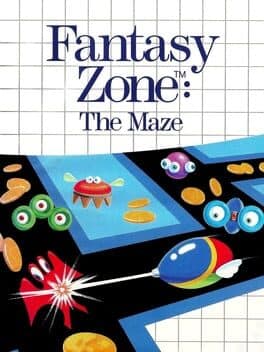
Fantasy Zone: The Maze
Sega Enterprises, Ltd.1987
The evil Menons have returned... in multi-level bases which are hidden in seven different planets! The brave Opa-Opa has been called to battle their evil threat. And joining him in the fight is his younger brother, Upa-Upa. Your Mission: Guide this brave team of brothers through level after level of treacherous mazes. Get the golden coins stolen by the Menon hoard and use them to purchase powerful weapons. The Fantasy Zone is counting on you! Don't let them down.
Toki no Senshi: Chrono Soldier
Sega Enterprises, Ltd.1987
The mid-eighties saw the inception of a genre known as run-and-guns, which were popularized by the likes of Capcom's Commando and SNK's Ikari Warriors. At their base, these games were akin to shoot-em-ups, except they didn't take place in airplanes or starcrafts as was the norm of the time. Most of them did not scroll automatically and allowed the player a bit more breathing room hence, but they still pressured players with lots of bullets and aggressive enemies. Most big companies offered at least one top-down on-foot shooter, Sega naturally included. Their best-known contribution to that front in the eighties was Alien Syndrome, their tribute to the Alien series which involves two soldiers destroying frightening xenomorphs on derelict vessels. It was different from other Commando-likes in that you could move in any direction around the map and didn't just keep going up like most other such games.
Zillion
Sega Enterprises, Ltd.1987
Zillion is a space adventure platform video game designed for the Sega Master System as a companion for the Zillion anime series in 1987. The game is a free-scrolling platform/adventure, similar to Epyx's Impossible Mission, in which objects must be inspected to enable things by accessing codes.
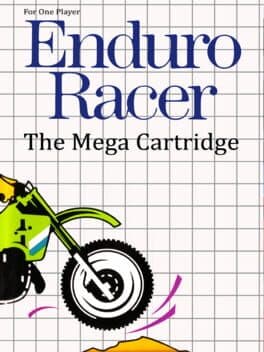
Enduro Racer
Sega Enterprises, Ltd.1987
In this game you play the role of an endurance bike racer. The gameplay involves you racing against the clock to get to the finish line and jumping over ramps. At the end of each race you get points for how many cars or bikes you have overtaken with which you can upgrade your bike. There are various different terrain for you to race on including desert beach and dirt tracks plus a number of things to slow you down or even knock you off of your bike all together. The main idea is to find the best route through each level to shave off valuable seconds in order to over take more cars and bikes. The Japanese version of the game has more Tracks than the European and US versions have. Among them is a snow track which is one of the hardest tracks in the game, because there is a lot of stones on the thin road.
Kung Fu Kid
Sega Enterprises, Ltd.1987
A beat-'em-up game developed and published by Sega for the Sega Master System. It is a sequel to the SG-1000 game Dragon Wang (ドラゴン・ワン), in which the player reprises the role of Wang, a kung fu master. In Brazil this game was re-released as Sapo Xulé O Mestre do Kung Fu in 1995, complete with graphical changes. This can be played for free in the browser at the Internet Archive.
Sukeban Deka II: Shoujo Tekkamen Densetsu
Sega R&D41987
Sukeban Deka II: Shoujo Tekkamen Densetsu is an Adventure game, published by Sega, which was released in Japan in 1987.
SDI
Sega Enterprises, Ltd.1987
SDI: Strategic Defense Initiative, or simply titled SDI and sometimes known as Global Defense. Players control a satellite and must destroy enemies by moving a crosshair over them and firing the satellite's weapons.
Great Basketball
Sega Enterprises, Ltd.1987
This is basketball at the professional level. Full of international competition from the first jump ball to the last jump shot. Whether it's four on three or three on two - the action is fast and furious. And there are no favorites in this demanding play. You'll be called for double dribbling, cheered for every slam-dunk and carried off the court for making the winning free throw. But so will your opponent. So go for it. Your tough offense can put a "fast break" in the opposing team's stride while your defense remains solid as a rock. But think fast - because two can play at this game - and only one can win!
Great Football
Sega Enterprises, Ltd.1987
Playoff fever grips you. And no wonder. You're the driving force that can take your football team to the top in this rough and tumble contest between the leagues. The outcome of the game is in your hands. As the quarterback, you select the plays. Line up the formations. Call the signals and carry the ball. Cut down your opponent with deadly blocking. Intercept a pass. Make a flying tackle. All you need is skill. Strategy. Cunning. And nerve. For non-stop action that charges across the screen. You decide to pass. It looks good. Touchdown!
Great Volleyball
Sega Enterprises, Ltd.1987
Great Volleyball (グレートバレーボール) is a sports game developed and published by Sega for the Sega Master System. It is part of the Great Sports series and was released internationally in 1987.
Woody Pop
Sega Enterprises, Ltd.1987
Woody Pop is an Action game, published by Sega, which was released in Japan in 1987.
Time Scanner
Sega Enterprises, Ltd.1987
An arcade interpretation of pinball featuring the flippers, ramps, targets, bonus multipliers etc. of the classic genre it serves to replicate. Each level has a specific graphical style - in keeping with the 'time travelling' theme of the game's title - with each of the game's four tables split into two sections. When the player enters either the top or bottom section of a table, the screen will scroll vertically up or down respectively to follow the action.
Fantasy Zone II
Sega Enterprises, Ltd.1987
Fantasy Zone II: The Tears of Opa-Opa is the sequel to Fantasy Zone, in which you control Opa-Opa, a pretty colored ship with wings on its side. You must destroy the large creatures in each world before moving on to the next. Your task becomes difficult by other small creatures that happen to pass by. If you destroy a large creature, they will drop a dollar bill, which you can pick up and use at the shop to buy items and powerful weapons such as laser beams, x-way shots, and big wings. Another way to get money is to shoot certain kinds of enemies all in a row. More often than not, some large creatures will reveal a warp gate rather than a dollar bill. You can go through the warp gate to get to another part of the land, and destroy more large creatures. Only one of them will have a warp gate in the form of a 'stop' sign - that is your ticket to the round boss, but you must defeat all large creatures in order to pass through it. Also like in the original can you walk on the ground to avoid approaching enemies, and spend money in the shop to get new weapons (but they only last for a limited time).
High School Kimengumi
Sega Enterprises, Ltd.1987
Adventure game based on the manga by Motoei Shinzawa with the same name.
Captain Silver
Data East1987
Captain Silver is a side-scrolling action game released for the arcades by Data East in 1987. In the game, the player control a young sailor named Jim Aykroyd who goes on a journey to seek the lost treasure of Captain Silver, facing various perils along the way. Home versions were released for the Master System by Sega and for the NES by Tokuma Shoten.
Alien Syndrome
Sega Enterprises, Ltd.1987
The time bomb is set. It's the only sure way to get rid of these aliens. For good. They're vile. Vicious. And villainous. And they've infested our outcolony. They're holding hundreds of inhabitants hostage. Some of them your friends. So get in there. And get blasting. Inside, you'll find state-of-the-art weaponry. It's yours for the taking. There's sector after sector to purge. Each more intricate than the one before it. And there are Super Aliens to confront. Each more hideous than the one before it. Get the hostages out. And get as many aliens as you can. Before the blast gets all of you.
Champion Kendo
Sega Enterprises, Ltd.1986
Champion Kendo is a simplistic kendou game built for the SG-1000 and MSX. It was only released in Japan.
Great Ice Hockey
Sega Enterprises, Ltd.1986
Welcome to the Big Leagues. Here's a rough and tumble hockey game that takes a steady hand and quick reflexes. Because your mean opponents mean business. Teams line up in full defense. Tackle one another. Scramble for the puck. Drive relentlessly for a goal. Victory for your team depends on you. So you need sharp techniques. Quickness. Power. And smooth stick-shifting ability. Show you have the right touch, hit the puck straight into the goal. But just relax your guard, and see why they call the game of hockey "wrestling on ice."
Trap Shooting
Sega Enterprises, Ltd.1986
In Trap Shooting, shoot discuses that are thrown into the air. If you miss, then they will fall into the distance. Your gun is reloaded after each go.
Marksman Shooting
Sega Enterprises, Ltd.1986
In Marksman Shooting, you shoot red spots on a several number of targets in order to score points before they disappear. Try to shoot at least ten targets, otherwise your qualification score may be low. If you beat the qualification score, you proceed to the next round. Otherwise, the game ends.
Hang On & Safari Hunt: The Combo Cartridge
Sega Enterprises, Ltd.1986
Sega's arcade hit racing game Hang On and a light gun shooter named Safari Hunt both fit onto this launch era cartridge for the Sega Master System.
Safari Hunt
Sega Enterprises, Ltd.1986
Safari Hunt is a hunting game where one must shoot as many animals with a limited amount of ammunition. One must shoot the various game animals to acquire enough points to advance to the next round.
Ace of Aces
Artech Studios1986
Ace of Aces is a combat flight simulator developed by Artech Digital Entertainment in 1986. The game takes place during World War II and the player flies a RAF Mosquito long range fighter-bomber equipped with rockets, bombs and a cannon. Missions include destroying German fighter planes, bombers, V-1 flying bombs, U-boats, and trains.
Astro Warrior
Sega Enterprises, Ltd.1986
Basic Sega shoot-em-up in which you must guide your ship through three zones while avoiding hazards. Your only weapon are bullets as your only defense, but if you shoot the flashing red pieces on the terrain, chances are that a green ship will approach you, and if you collect this ship, your weapons will be upgraded so that you shoot a laser beam instead. Keep collecting ships and you can shoot up to three laser beams at once. At the end of each zone, you will come across a boss that takes multiple hits to kill. If you manage to conquer all three zones, you are back to where you started. The whole point of this game is to earn as many points you can without losing all of your lives.
Alex Kidd: The Lost Stars
Sega Enterprises, Ltd.1986
Alex Kidd: The Lost Stars features Alex Kidd and Stella searching for the twelve Zodiac signs.
Dunk Shot
Sega Enterprises, Ltd.1986
A four-player basketball game that is played from a bird's eye view of the court. The game can be played as one person versus the computer, two players either competing or cooperating, or three or four players with two players per team.
The Ninja
Sega Enterprises, Ltd.1986
Adventure through the dark region of the Hado empire to find what is in the darkness that lies there and to go up against enemies that'll try to stop you.
Alex Kidd in Miracle World
Sega Enterprises, Ltd.1986
Journey through the planet Aries to the beautiful City of Radactian, and save it from the evil Janken the Great. Alex Kidd in Miracle World was considered to be Sega's answer to Super Mario.
OutRun
Sega AM21986
You play as two different people in the same creepy motel, and everything you think you know keeps changing. One moment you're Allison, running from something in her past, and the next you're Emma doing a late-night cleaning shift. You see the same events from totally different angles. You're JUDGE!
Action Fighter
Sega Enterprises, Ltd.1986
Take to the streets or take to the skies. Because Action Fighter is the incredible, transformable combat vehicle. You start out on a customized cycle. Built with enough speed and power to jump over water and overtake enemies. Then, by finding the right parts along the way, you'll change your cycle into a supercharged, state-of-the-art sports car. Next, add two turbojets to make your car airborne. And take to the skies. Down hyped-up helicopters and jet spaceships from above. And no matter which vehicle you're manning- or who you're after- get ready to stand by for action!
Gardia
Coreland1986
Gardia is an arcade vertical shoot-'em-up game released by Sega Enterprises, Ltd. and Coreland for Sega System 1 hardware in 1986. Similar to Namco's Xevious, the player controls a space ship capable of firing at air targets with one button, and ground targets with another.
Hokuto no Ken
Sega Enterprises, Ltd.1986
Hokuto no Ken is a video game released in Japan on July 20, 1986 by Sega for the Sega Mark III gaming platform. It is a side-scrolling action game that follows the events depicted in the first television series from Kenshiro's battle against Shin and his gang to his final showdown with Raoh. The game consists of side-scrolling levels where the player must reach the goal while defeating numerous enemy grunts and sub-bosses along the way, each leading to a one-on-one battle with the stage's boss. Despite featuring similar gameplay, this game is unrelated to Toei's video game version of Hokuto no Ken for the Family Computer released a few months later. The game's lead programmer was Yuji Naka, who would later be known for his work on the Sonic the Hedgehog game franchise. Despite appearing on the cover artwork, Rei does not actually appear in this game. The original Mark III version game is included along with an enhanced remake in Sega Ages 2500 Hokuto no Ken for the PlayStation 2 in 2004. The game was later re-released for the Wii Virtual Console in Japan on February 26, 2008. An overseas version of the game was produced for the western Master System titled Black Belt, which lacked the Hokuto no Ken license of the Japanese version and featured altered graphics as a result.
Marksman Shooting/Trap Shooting/Safari Hunt
Sega Enterprises, Ltd.1986
Three Sega Light Phaser games on one cartridge.
Ghost House
Sega Enterprises, Ltd.1986
The player controls Mick, a young vampire hunter out to destroy five vampires in each stage before proceeding to the next. Everything is out to stop Mick from completing this tasks and making his way out of the mansion. The player has to punch, or jump on, his enemies to defeat them. Arrows will be flying from either direction and will attempt to hit Mick on the head, and he must either duck or jump on them for extra points. Players can jump or touch lights to freeze everything on screen for a few seconds. Rather than punching, the player can collect a sword on the lower level by jumping on it as it flies past him.
Fantasy Zone
1986
The Fantasy Zone is a solar system consisting of eight brightly colored, fantastic planets. The evil Menons are trying to take over all of the planets in the Fantasy Zone by using misappropriated foreign currency to build their forces. It is the player's job to recover all of the coins and save the solar system! Fantasy Zone is an arcade style shooter for one or two players. The goal is to destroy all of the creatures on each planet and collect as many of the lost coins as possible. At the end of each level is a large enemy that will have to be defeated before moving on to the next world. At various points in the game, the player will be able to find a parts shop, which allows purchasing improvements for his spaceship, including better weapons and faster engines.
Wonder Boy
Escape1986
Wonder Boy is a 1986 platformer video game published by Sega and developed by Escape (now known as Westone Bit Entertainment). It was the first in the long-running Wonder Boy series of games and was followed up by five sequels, Wonder Boy in Monster Land, Wonder Boy III: Monster Lair, Wonder Boy III: The Dragon's Trap, Wonder Boy in Monster World and Monster World IV. It was also the basis for the Adventure Island series.
Hang-On Jr.
Sega Enterprises, Ltd.1986
A simpler Hang-On installment with easier courses.
Great Soccer
Sega Enterprises, Ltd.1985
This version of Great Soccer is on the SEGA card. The other version of Great Soccer is on the SEGA cartridge and an entirely different game.
Rock n' Bolt
Action Graphics, Inc.1985
Louie The constructor struts pieces to their location. The Girders are constantly moving back and forth. It is your job to lock them down, and then get back to where you started the level. There are 100 levels, and two types of levels. One is just locking down, the others you have to put them in a specific location. There are three levels of difficulty to choose from, you just get paid more the harder the level, and you have less time to complete the level. The objective of the game is to lock platforms into place according to a supplied map. There are three levels of difficulty; the second and third level have time limits.
Super Tennis
Sega Enterprises, Ltd.1985
Super Tennis, is a sports game developed and published by Sega for the Sega Master System.
TransBot
Sega Enterprises, Ltd.1985
Thwart an underground invasion with your transforming weaponry. The ground is scarred by craters, a reminder of the recent Dalaus invasion. And continuous acid rains give the sky an eerie irridescence. You are the only Transbot pilot left from the now defunct regime. So you must battle wave after wave of orbiting debris. To try to get to the notorious Dalaus artificial intelligence computer. Fortunately, your astro-plane can go through 6 different transformations. Turn into a robot warrior and more. By the time you transform, you should be able to penetrate the fortress of Dalaus. And rid the galaxy of her evil influence forever!
Great Baseball
Sega Enterprises, Ltd.1985
You're the manager. And you can field a total of 26 ball teams to battle for league leadership. Pick the team of your choice. Designate the starting pitcher. Then, play ball! And get ready for some of the most exciting baseball since the game was invented. Will it be a slugging match? A pitching duel? Need a pinch hitter or relief pitcher? You decide. It just takes the right strategy. A cool head. And sure ball control. And if you want batting practice, call up The Home Run Contest. A great feature of Great Baseball that lets you swing at 20 perfect pitches. It's going... It's going... It's gone!
Pit Pot
Sega Enterprises, Ltd.1985
Pit Pot is an Action game, developed and published by Sega, which was released in Japan in 1985.
World Soccer
Sega Enterprises, Ltd.1985
World Soccer, known as Great Soccer in the US and Super Futebol in Brazil, is a sports game developed and published by Sega for the Sega Master System. The game was rereleased in Japan a year later under the name Sports Pad Soccer, which was bundled with the Sega Sports Pad.
My Hero
Coreland1985
My Hero (Seishun Scandal in Japan) is a Sega video game released via arcade in 1985 and was later ported to the Sega Master System in 1986. The gameplay takes the form of a simple side-scrolling beat 'em up fighting game, which was seen as being frustratingly difficult at several points in the game.
Hang-On
Sega Enterprises, Ltd.1985
Hang-On is an arcade game designed by Yu Suzuki and released by Sega in 1985. In the game, the player controls a motorcycle against time and other computer-controlled bikes. It was one of the first arcade games to use 16-bit graphics and Sega's "Super Scaler" technology that allowed pseudo-3D sprite-scaling at high frame rates. It also introduced a motion-controlled arcade cabinet, where the player's body movement on a large motorbike-shaped cabinet corresponds with the player character's movements on screen, inspiring arcade games that followed and anticipating the modern motion control trend.
Teddy Boy
Sega Enterprises, Ltd.1985
In Teddy Boy you must scramble from maze to maze - each more magnificent than the one before it - bumping off bugs, guppies, snails, dominos and more as you go. Grab precious points for tennis shoes, teddy bears, snails, and other identifiable objects. And try to avoid the ugly Den Den, a snapping dragon head. Or you'll be forced to wake up to reality.
Champion Pro Wrestling
Sega Enterprises, Ltd.1985
A colorfully cartoonish professional wrestling game.
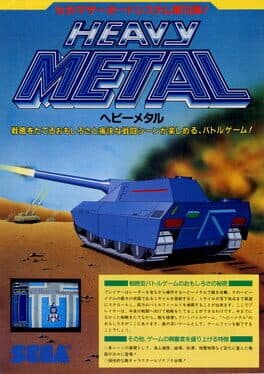
Heavy Metal
Sega Enterprises, Ltd.1985
A tank shooter from Sega.
Doki-doki Penguin Land
Sega Enterprises, Ltd.1985
Doki-doki Penguin Land is a 1985 game initially developed by Sega for the SG-1000. It is a platform-based puzzle game, where a penguin must guide an egg down the screen making sure not to break it. The basic aim of Doki-doki Penguin Land is to guide an egg from the top of the screen to the bottom. To do so means digging downwards, making sure it does not smash in the process. As a puzzle-platformer, everything is affected by gravity, and if the egg falls from a great height, it will smash. Success is achieved by making your way down the playfield carefully. You control a penguin. 1 jumps, 2 digs. The penguin can push the egg left or right, and can jump on it to make sure it doesn't get stuck against a wall. Digging affects the tile one block left (or right) and one block down away from the penguin's position, meaning it is impossible to dig straight downwards. If the egg gets into a position where it cannot be moved left or right, jumping and landing on it will cause it to smash. The penguin cannot be damaged, but can be temporarily stunned, the objective being to protect the egg, not necessarily yourself. If the player leaves the screen from the bottom he/she will emerge from the top.
Flicky
Sega Enterprises, Ltd.1984
Flicky is an arcade game made by Sega. First released in arcades in 1984, Flicky was also released at the time for the SG-1000, and then ported to the MSX and Japanese computers Sharp X1, Fujitsu FM-7 and NEC PC-8801. It was later ported to the Sega Mega Drive/Genesis in 1991. Flicky was designed by Yoji Ishii, who was with Sonic Team until August 1999, when he formed Artoon, his own company.
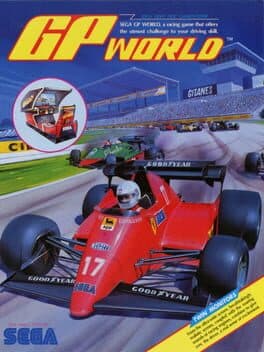
GP World
Sega Enterprises, Ltd.1984
A Racing Game where you chose one of the 3 tracks and race against the computer generated cars.
Mister Viking
Sega Enterprises, Inc.1984
The players navigates a Viking in search for treasure through this shoot 'em up.
World Grand Prix
Sega Enterprises, Ltd.1984
Feel the excitement of the starting line up and take in the atmosphere before letting your throttle unleash to send your formula one-style vehicle around the courses at incredible speeds! In the amazing World Grand Prix you must battle your way up the pack to snatch pole position and maintain it for as long as possible to whoosh over the finish line first in each race to become the true tarmac racing champion!
Future Spy
Sega Enterprises, Ltd.1984
A shooting 'em up game where you pilot an F-15 around various obstacles including missiles, airplanes, helicopters, cities, destroyers, carriers, submarines, tanks, and others while shooting or firing missiles at them.
Champion Soccer
Pony Canyon1984
Bring your team to the big leagues, win the championship, this is a great soccer game which will take you by surprise and challenge you to score the goal of the match.
Frogger II: ThreeeDeep!
Parker Brothers1984
In Frogger II, you need to guide your frog to safety in three different locations. Starting out underwater, reach the top of the pond while avoiding dangerous alligators and fish (you can ride a turtle for safety!). Once on top of the pond, hop across logs, birds, and even a whale to the life preserver trailing behind a tugboat. In the third location you have to hop across a flock of birds to reach a cloud at the top of the screen. Each frog has a time limit to safely reach one of the homes on each of the three screens. You move on to the next level when a frog has safely reached each of the homes on all screens.
Championship Lode Runner
Brøderbund Software1984
The object of the game is to pick up all the gold pieces (which appear as piles of gold) and get them to the top. Using non-violent methods, enemies had to be overcome. Bumping into enemies cost the player a life and all of his hard-earned gold pieces. Fifty of the hardest levels ever designed are used and they had to be tackled in proper sequential order. While games can be saved, the player automatically loses a life for restoring his game.
F-16 Fighting Falcon
Nexa Corporation1984
A first-person jet fighter simulation game created for the Japanese MSX and ported to the Sega Master System. Also known as F-16 Fighter. The goal is to fly an F-16 and take down opponents in dogfights.
SWAT
Coreland1984
Aliens try to build a tunnel from their vessel to your home base to infiltrate you. Your task is to prevent them from doing so.
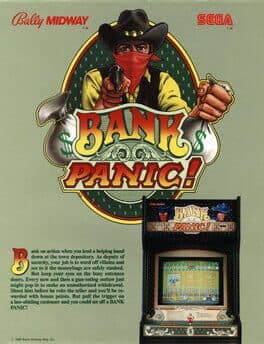
Bank Panic
Sanritsu1984
Bandits are holding up a bank and have taken people hostage, and as a gunslinger, it's your job to shoot them. The bank has 12 doors, and the bandits are behind each one of them. When they pull a gun out at you when you open a door, you have only a few seconds to shoot them before they shoot you. If you shoot them too early (ie: before he sticks his gun out at you), it is considered unfair, and you won't score any points, but if you're too late, he'll shoot you and you lose one of your three lives.If you waste too much time, a bandit will come out from one of the doors and stick dynamite on it. You must then shoot the dynamite to get rid of it. If you're lucky, either a man or a woman will throw you a bag of gold coins. If you shoot any of these people by accident, you also lose a life. More often than not, the person will throw his/her hands up, saying "I haven't got anything". That's when they will be replaced by bandits. Some men will carry three to five pieces of gold on top of their heads, and shooting at all of the gold will award you with a bag of gold coins. Others will be tied up with rope. If you shoot the rope, there's more money for you, because not only will you receive one bag of gold coins, but you'll get three bags of gold coins.
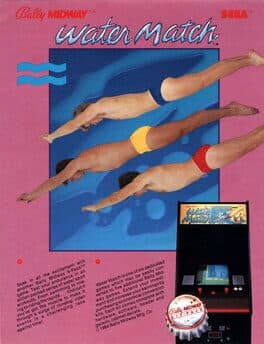
Water Match
Sega Enterprises, Ltd.1984
A game featuring various water sports including free-style swimming, one-man kayaking, four-man boating races and so on.
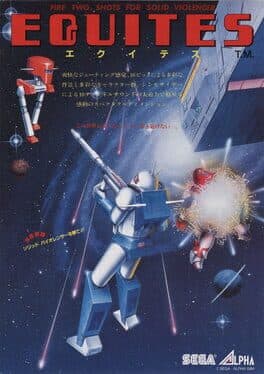
Equites
Sega Enterprises, Ltd.1984
A vertical space shooter with two modes of operation: ground based and air based. Some enemies can only be killed when they are either walking or flying. Tunnels lead to underground bases that contain bonuses and power-ups.
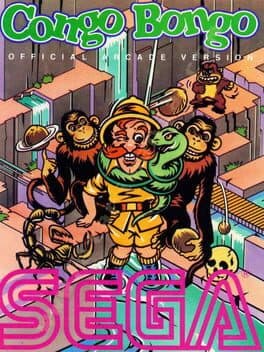
Congo Bongo
Sega Enterprises, Inc.1983
Congo Bongo is an isometric platform arcade game released by Sega in 1983. The game has come to be seen as Sega's answer to the highly successful Donkey Kong game that was released two years prior. The player takes the role of a red-nosed safari hunter who tries to catch an ape named "Bongo". The hunter seeks Bongo to exact revenge for an apparent practical joke in which Bongo set fire to the hunter's tent, giving him a literal "hotfoot". The game was named by Peter W. Gorrie who was the CFO of Sega at that time.
Regulus
Sega Enterprises, Inc.1983
Regulus is an arcade shoot-'em-up game released for Sega System 1 hardware in 1983. Players control a tank, capable of moving in eight directions. One button fires forward, while another launches bombs further up the screen. The play area continuously scrolls upwards and players need to avoid enemies and obstacles.
Star Jacker
Sega Enterprises, Ltd.1983
Star Jacker is an early vertical scrolling shooter with some interesting characteristics. The player starts out with three fighters with all of the fighters moving and shooting at the same time. Two fighters trail the lead fighter. Star Jacker features a similar scheme with the Namco game Xevious in that the fighters shoot at enemy fighters in the air while dropping bombs on enemies and targets on the ground level. When any of the fighters is killed, the game momentarily pauses and re-centers the player fighters before continuing at the same point. The game is over when all of the player's fighters are destroyed. Star Jacker allows no continues.
Sindbad Mystery
Sega Enterprises, Ltd.1983
Sindbad Mystery is an arcade game developed by Sega for Sega G80 (raster) hardware in 1983. It was ported to the SG-1000 in the same year. It follows a boy named Sindbad who must avoid monsters while piecing together a treasure map, similar to Pac-Man. He can also use a digging mechanic to trap enemies, similar to Heiankyo Alien and Space Panic. The game was re-released as part of the Sega Saturn game, Sega Ages Memorial Selection Vol. 2 in 1997.
Thunderground
Sega Electronics1983
There are six Core nuclear bases on the planet's surface. You must burrow underground to each of these bases and destroy them. But be warned, they are guarded by patrolling Core Ranger tanks that if they get you in their line of fire, will destroy you. There are two types of tanks. The white Sentry tanks only move through existing tunnels and will only fire on you if there is clear space between you and them. The blue Digger tanks will create their own tunnels to pursue you. There is also a Sentry tank at the bottom of the screen that slowly moves towards your reserve tanks. If this tank reaches you reserves before you destroy all six bases, you lose a life. The game is over if you lose all lives. There are enemy supplies buried in random areas that if you get them will get you bonus points. Later levels have the bases only appear one at a time or have no dirt between you and the enemy tanks, leaving them to pursue you from the start.
Tapper
Marvin Glass and Associates1983
Tapper is a 1983 arcade game released by Bally Midway. The goal of the game is to serve beer and collect empty mugs and tips. Upon failing, the bartender skids along the table out of frame, while upon victory he drinks a beer of his own.
Up'n Down
Sega Enterprises, Ltd.1983
Up'n Down is a vertically scrolling game that employs a pseudo-3D perspective.[citation needed] The player controls a purple dune buggy that resembles a Volkswagen Beetle. The buggy moves forward along a single-lane path; pressing up or down on the joystick causes the buggy to speed up or slow down, pressing right or left causes the buggy to switch lanes at an intersection, and pressing the "jump" button causes the buggy to jump in the air. Jumping is required to avoid other cars on the road; the player can either jump all the way over them, or land on them for points. To complete a round, the player must collect 10 colored flags by running over them with the buggy. If the player passes by a flag without picking it up, it will appear again later in the round. The roads feature inclines and descents that affect the buggy's speed, and bridges that must be jumped. A player loses a turn whenever the buggy either collides with another vehicle without jumping on it, or jumps off the road and into the grass or water.
Galaxy Ranger
Sega Enterprises, Ltd.1983
Interactive Laser Disc space battle game with computer-generated overlaid graphics. Control a space craft to defend against attacking enemy waves then destroy the enemy command ship. Huge explosions. Video images are from a Toei film - Message From Space.
Astron Belt
Sega Enterprises, Ltd.1983
The player controls a lone spacecraft on a mission to singlehandedly take down the entire enemy armada. Enemy fighters and ships shoot at the player, and there are mines and other objects that must be shot or avoided. The game is divided into waves. At the end of each wave is a command ship that must be destroyed. In later waves the enemy fighters move and shoot more aggressively, and their shots are more accurate. Some waves take place in open space, while others require the player to battle enemies while flying through narrow trenches and tunnels. The player is on a timer at the beginning of the game, with an unlimited number of lives available. The length of the timer can be adjusted by the machine operator, but is normally 60 seconds. After the timer expires, the player is given a limited number of additional lives. When all of those lives are lost, the game ends.
Yamato
Sega Enterprises, Ltd.1983
In the game the player takes control of the Yamato battleship (which was sunk off Kyushu during World War II), firing at enemy ships and planes while avoiding missiles and torpedoes.
Champion Baseball
Alpha Denshi1983
Player chooses team and plays baseball against computer. Game ends when player is tied or losing at the end of an inning or nine innings have been played.
Super Zaxxon
Sega Enterprises, Ltd.1982
You pilot an attack shuttle whose mission is to strafe the enemy's "Asteroid City". Destroy fuel tanks, gun implacements, missiles, fighters and a large dragon. The game uses the same isometric perspective as the original, but the new version's overall speed is much faster.
Tac-Scan
Sega Enterprises, Inc.1982
Fly your squadron of five ships around shooting down the enemy pilots. When you get hit, you simply lose one of your ships. After each round, you'll get a replacement ship which you have to maneuver into your formation or it's lost forever. In Tac-Scan, you control which direction you fly, though your planes stay in the same location of the screen.
Zoom 909
Sega Enterprises, Inc.1982
Zoom 909 is an arcade game developed by Sega for VCO Object arcade hardware. It was released worldwide in 1982, however after obtaining a license for Buck Rogers, western versions of the game became known as Buck Rogers: Planet of Zoom. Both Zoom 909 and Buck Rogers: Planet of Zoom are largely the same game minus some minor graphical differences. Though most home ports of the game are based on Planet of Zoom, Zoom 909 was brought to the Japanese MSX in 1983 and SG-1000 in 1985. These versions take more liberties with the formula, introducing a top-down stage as level 3.
Buck Rogers: Planet of Zoom
Sega Enterprises, Inc.1982
Sega released the arcade video game Buck Rogers: Planet of Zoom in 1982. It was a forward-scrolling rail shooter where the user controls a spaceship in a behind-the-back third-person perspective that must destroy enemy ships and avoid obstacles; the game was notable for its fast pseudo-3D scaling and detailed sprites. The game would later go on to influence the 1985 Sega hit Space Harrier, which in turn influenced the 1993 Nintendo hit Star Fox. Buck is never seen in the game, except assumedly in the illustration on the side of the arcade cabinet, and its only real connections to Buck Rogers are the use of the name and the outer space setting. Home versions were released for the Atari 2600, Atari 5200, Atari XE, ColecoVision, Coleco Adam, Intellivision, MSX and Sega SG-1000 video game systems, and the Commodore VIC-20, Commodore 64, Texas Instruments TI-99/4A, Apple II and ZX Spectrum computers. A version for IBM PC using CGA graphics was also available.
Pop Flamer
Jaleco1982
Operate POP FLAMER with lever to crush ballons avoiding or burning up monsters. Be careful! If hit by electro-shock wave emmited by HARADON, POP FLAMER will be paralyzed for a while. Flaming distance comes to be shorter gradually. Replenish fuel supply by crushing balloons. Throw flame to exterminate frogs if blocked by them. Get POWER DRINK to change to SUPER MOUSE and swallow monsters nearby. POP FLAMER disappears if touched by monsters.
Star Trek: Strategic Operations Simulator
Sega Electronics1982
Star Trek: Strategic Operations Simulator is an arcade action game where you take control of the Starship Enterprise. Your mission is to save the Federation from NOMAD! Before you get a chance at destroying NOMAD, you'll have to battle your way through ten levels (each consisting of multiple rounds). In each round you may encounter Klingon fighters, deadly anti-matter saucers, asteroid fields, and deadly meteors, all of which are capable of depleting the Enterprises energy. The game ends when your energy supply has completely run out. To fight these dangers, the Enterprise is equipped with an unlimited supply of phasers and a limited supply of photon torpedoes. Each round also contains one or more starbases; if you dock at a starbase, some of your supplies (such as energy and torpedoes) will be replenished. The game is played from two points of view; the top of the screen contains a third person view of the Enterprise (along with the ships gauges), and on the bottom of the screen is a first person point of view
Pengo
Codeten1982
The player controls Pengo, a red penguin that resides in the Antarctic. The game takes place in an overhead maze made of ice blocks, where Pengo fights the trolling, blob-like Sno-Bees. The objective of the game is for Pengo to survive a series of rounds by eliminating all Sno-Bees, while amassing bonuses by bringing together the three diamonds dispersed in the maze.
Zektor
Sega Enterprises, Inc.1982
You have to infiltrate eight space cities which are held captive by robots. Asteroids-style you fight the robot squadrons.
Super Locomotive
Sega Enterprises, Ltd.1982
You control a train that must get to the station by avoiding or shooting enemy trains.
Ali Baba and 40 Thieves
Sega Enterprises, Ltd.1982
Ali Baba and 40 Thieves is a maze arcade game released by Sega in 1982. Players take the role of the famous Arabian hero who must fend off and kill the forty thieves who are trying to steal his money. The game is based on the folk tale of the same name. It was ported to the MSX platform, and then a Vector-06c port was made based on the MSX version.
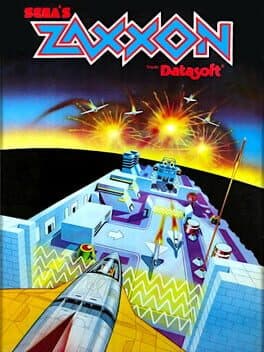
Zaxxon
Sega Enterprises, Ltd.1982
Zaxxon is a 1982 isometric shooter arcade game developed and released by Sega. The game gives the player the experience of flying a fighter craft through a fortress while shooting at enemy entities (missiles, enemy gunfire, etc.) The object of the game is to hit as many targets as possible without being shot down or running out of fuel, which can be replenished paradoxically, by blowing up fuel drums.
Turbo
Sega of America1981
Racing game that leads you through several surroundings (e.g. cities, snowy landscapes, bridges, tunnels etc.).
Borderline
Compile1981
Borderline is a free running first person adventure heavily inspired by the momentum-based gameplay from Mirror’s Edge. You are tasked with working against the city of Greyhawke’s most notorious mega corporations, uncovering their secrets while navigating through their state-of-the-art security.
005
Sega Enterprises, Ltd.1981
005 is a 1981 arcade game by Sega, in which the player's mission is to take a briefcase of secret documents to a waiting helicopter. It is one of the first examples of a stealth game. The player controls a spy who must avoid the enemies as he makes his way through buildings and warehouses, where he will have to dodge the enemies' flashlights and use boxes as hiding spots.
N-Sub
Sega Enterprises, Ltd.1980
N-Sub is one of the earliest naval video game titles. The object of the game is to maneuver an on-screen submarine, the "N-Sub," with the joystick and sink the enemy fleet with torpedo fire in the Cobalt Blue Sea. Torpedoes can be fired vertically or horizontally by means of two separate 'FIRE' buttons and 3 torpedoes can be fired in rapid succession by keeping the button depressed. The enemy ships attack the N-Sub with missiles, torpedoes and depth charges. One round is over after the attack by the enemy fleet of twelve ships (No. 1 Fleet Black, No. 2 Fleet Blue) and the loop attack by the enemy destroyer. Enemy attack gains in ferocity with each new round. Bonus points are awarded if the fleet of twelve ships and the destroyer are destroyed. One extra N-Sub is added if players attain high score. The game is over when all of a player's N-Subs are sunk.
Car Hunt
Sega Enterprises, Inc.1980
Car Hunt is a clone of Head-On.
Tranquillizer Gun
Sega Enterprises, Ltd.1980
You control a big-game hunter who must use a tranquilizer gun to stun animals like snakes, elephants, gorillas and lions. The hunter must also bring the animals back to his truck.
Space Trek
Sega Enterprises, Ltd.1980
One of the early space shooters.
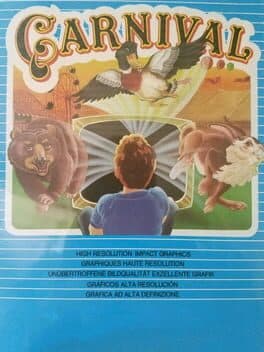
Carnival
Sega/Gremlin1980
The goal of the game is to shoot at targets, while carefully avoiding running out of bullets. Three rows of targets scroll across the screen in alternating directions; these include rabbits, ducks, owls, and bonus items. If a duck target crosses the bottom row without being shot, it will come to life and begin flying down toward the player. Any ducks that reach the bottom of the screen in this manner will eat some of the player's bullets. Objects also periodically appear among the targets that will give the player extra bullets or points when hit. A spinning wheel with eight pipes sits above the rows of moving targets; these pipes and all targets must be shot in order to complete the round. At the end of each round, the player receives bonus points for all bullets remaining in his supply. He then plays a bonus round, where a large white bear with a target walks across the screen. Each time the bear is shot, it rears up for a second, then begins walking more quickly in the other direction. The object is to shoot the bear as many times as possible until it escapes off the screen. Following the bonus round, the next wave begins. Later bonus rounds add more bears to the screen. In higher levels, there are more duck targets and fewer extra bullet targets, putting a premium on accurate shooting. The game ends when the player runs out of bullets.
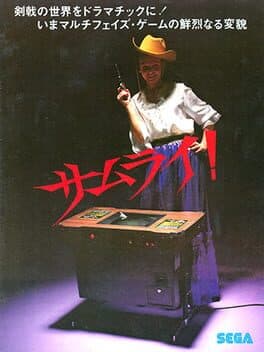
Samurai
Sega Enterprises, Ltd.1980
Samurai is a 1980 arcade game developed by Sega which runs on VIC Dual arcade hardware. You play as a Samurai tasked with killing all of your opponents.
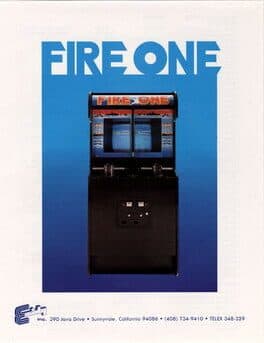
Fire One
Technical Magic1979
Fire One! was a player-versus-player or player-versus-computer submarine showdown, designed and programmed by David Rolfe, Ted Michon, and Susan Ogg for Exidy in 1979. The cabinet was split into two halves, with each player controlling their first-person submarine perspective on their half of the screen. The primary objective of the game is to find and destroy the enemy's submarine, while avoiding the enemy's torpedoes. Through your virtual periscope you are free to launch one of your 8 torpedoes to take out any of the enemy's various ships for extra points. It takes some time to reload each torpedo tube, so you must be judicious in how you plan your attacks. In addition to being able to control the left/right rotation of your periscope, the game also features a submerge button which you can use to temporarily hide from the enemy. Holding this button down keeps you hidden but also keeps you out of the action, allowing the enemy free reign over the seas.
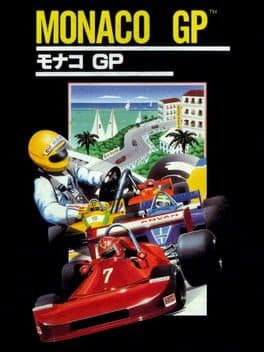
Monaco GP
Sega Enterprises, Ltd.1979
Monaco GP is an arcade game that was released by Sega in 1979. The game was released in three cabinet styles, a vertical upright cabinet, a cocktail table and sit-down 'deluxe' cabinet. A sequel, Pro Monaco GP, was released in 1980, and was later followed by Super Monaco GP and Ayrton Senna's Super Monaco GP II. Monaco GP was ported to the SG-1000 in 1983.
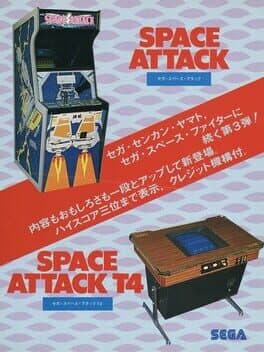
Space Attack
Sega Enterprises, Ltd.1979
SPACE ATTACK is a retro shooter with a 1970s feel. You can upgrade your ship according to your preference. Enemy battles show physics-based behavior. The difficulty level is set low for those who are not familiar with the game.
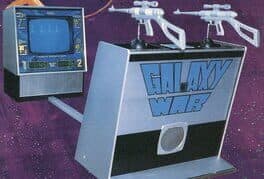
Galaxy War
Sega Enterprises, Ltd.1978
Galaxy War is a discrete logic arcade game released by Sega in 1978. It is a shooting game which is very similar to Bullet Mark—four types of targets, such as spacecraft and disks, are aimed at by one or two players. There is a bullet indicator and you can fire the trigger while squeezing the trigger.
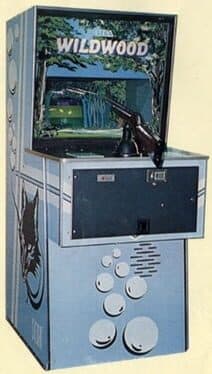
Wildwood
Sega Enterprises, Ltd.1978
Wildwood is a light gun/shooting game released by Sega in 1978. Like most early Sega arcade games it uses discrete logic rather than a microprocessor to produce its gameplay.
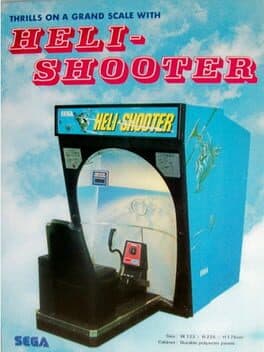
Heli-Shooter
Sega Enterprises, Ltd.1977
Electro-mechanical helicopter flight-sim arcade game released by Sega in 1977.
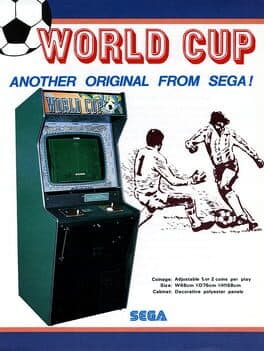
World Cup
Sega Enterprises, Ltd.1977
World Cup is a soccer game in which two players can play against each other. Football players are moved around using a trackball and the ball can be shot using a rotary joystick. When a player moves over another which has the ball, the ball is stolen.
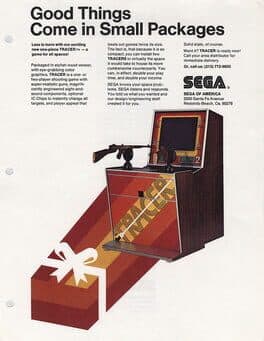
Tracer
Sega Enterprises, Ltd.1976
Sega Tracer released in 1976 as a compact version of its predecessor Bullet Mark. These early light gun games provided a bridge between electro-mechanical arcade and early video games.
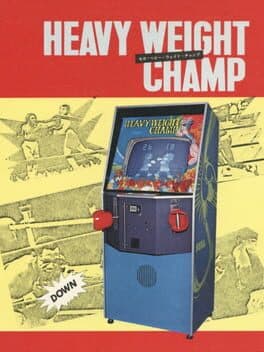
Heavyweight Champ
Sega Enterprises, Ltd.1976
A rudimentary boxing arcade game released by Sega in 1976. The controls consist of a boxing glove used to simulate punches. The game would see a remake a decade later in 1987.
Rock'n Bark
Sega Enterprises, Ltd.1976
Rock'n Bark, sometimes erroneously labeled as "Rock'n Park", is a 1976 discrete logic game by Sega with twin Tommy Guns. It is similar to Sega's earlier 1975 game Bullet Mark - complete with the "Bullet Mark" branding on the cabinet, suggesting it may have earlier been a cabinet variant or sequel.
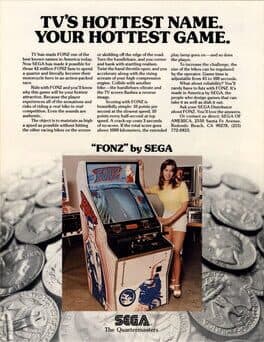
Fonz
Sega Enterprises, Ltd.1976
An early motorbike racing game developed and published by Sega in 1976, based on the character Fonz from the TV show Happy Days. Versions of the game are also known as Man TT and Moto-Cross. It uses a pseudo-3D, third-person perspective.
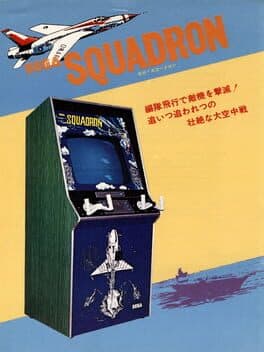
Squadron
Sega Enterprises, Ltd.1976
You have found a connection terminal of a group of mercenaries or operators of some kind of SMP but no luck it's locked... will you find the different secrets hidden in this terminal? Thig game will ask you to think like a detective to resolve some easy and hard puzzle through the game, and internet
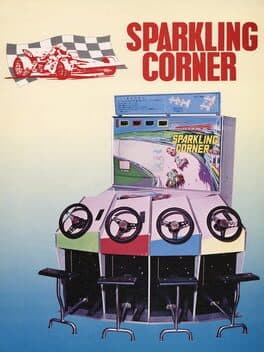
Sparkling Corner
Sega Enterprises, Ltd.1976
A four-player racing game by Sega. The four cars race along the screen in a side view, with collisions between them causing them to slow down. The winner is the car which has travelled the furthest during the allotted time.
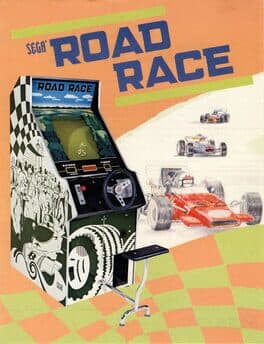
Road Race
Sega Enterprises, Ltd.1976
An early driving/racing game developed and published by Sega in early 1976. The game was notable for its introduction of a pseudo-3D, third-person perspective.
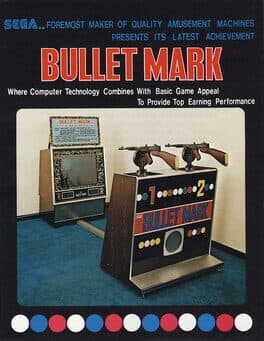
Bullet Mark
Sega Enterprises, Ltd.1975
A light gun game by Sega released in 1975. The unweildy cabinet proved unpopular with distributors, leading to the development of a scaled-down version called Tracer in 1976. This game was the first Sega game to be produced in America.
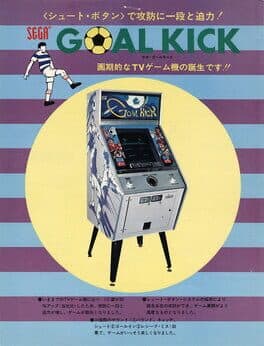
Goal Kick
Sega Enterprises, Ltd.1974
A ball-and-paddle game from Sega.
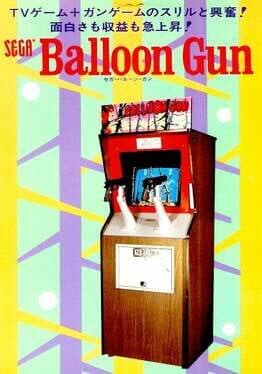
Balloon Gun
Sega Enterprises, Ltd.1974
Released by Sega in 1974, it was an early first-person light-gun shooter video game, featuring both single-player and multi-player modes.
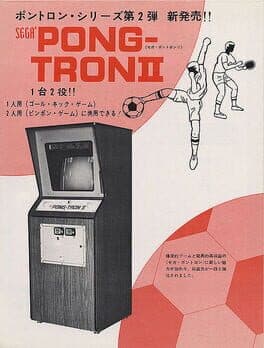
Pong-Tron II
Sega Enterprises, Ltd.1973
Pong-Tron II is the follow-up to Sega's first arcade video game.
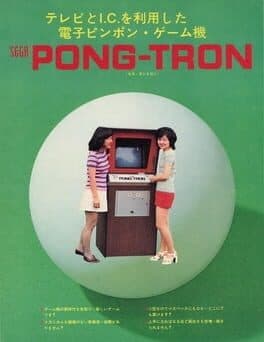
Pong-Tron
Sega Enterprises, Ltd.1973
Sega's first "video" arcade game. Unlike their earlier amusement games, it uses discrete logic as opposed to being electro-mechanical. The game used boards imported from the United States mounted in a Sega-produced cabinet.
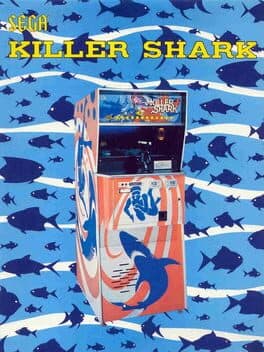
Killer Shark
Sega Enterprises, Ltd.1972
Killer Shark is a first-person light-gun shooter arcade game that was published by Sega in 1972. The objective of the game is for the player is to repeatedly shoot the approaching sharks. The arcade received moderate success, but gained considerable notoriety after it was featured in the 1975 movie Jaws, seen being played by a gamer at a local beachside arcade in the community of Amity Island. This bit of levity left a major impression on audiences and made Killer Shark the first, and most famous shark arcade game ever.