-
Average rating
506
Games
0
Votes cast
Heartbeat
Shipped Titles
Games (506)
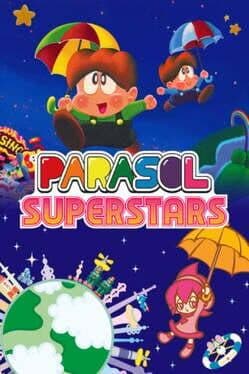
Parasol Superstars
Taito2026
Get ready for a double dose of platforming nostalgia and charm as two beloved titles come together in one vibrant package. Parasol Superstars unites the classic bubble-blasting acclaimed adventure Parasol Stars: The Story of Bubble Bobble III with the cosmic, retro-inspired platformer Spica Adventure—new to western gamers—delivering hours of arcade-style action and timeless fun.
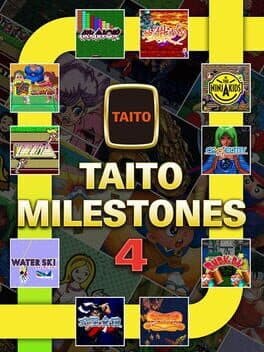
Taito Milestones 4
Taito2026
The 80s were a simpler and more colorful time. Especially in the arcades! With the Taito Milestones 4 collection, you can transport yourself back to the era of hairspray, neon, and pixels, and experience ten games from a variety of genres. Whether you enjoy sports, martial arts, platformers, shoot 'em ups, or even blocks and balls, you’re guaranteed to find something magical here. WATER SKI Released: 1983 Control a water skier being pulled by a motorboat while avoiding obstacles. Jump to dodge small obstacles, and hit a jump ramp to earn points! Just beware of the shark... FIELD DAY Released: 1984 This colorful sports festival includes seven unique games, such as three-legged race and tug-of-war. Up to four players can join, with two players competing in each match. Who will be the ultimate victor? TYPHOON GAL Released: 1985 Wear down your opponent’s stamina with punches and kicks, then finish them off with big techniques like the shoulder throw or brain buster! It’s a fight for the ages! ARKANOID Released: 1986 The classic block-breaking game! Arkanoid is easy to understand yet hard to master. Use the paddle-like craft Vaus to bounce balls, destroy blocks, and defeat the boss DOH! Elegant, simple and totally addictive! BONZE ADVENTURE Released: 1988 Yokai time! Two Buddhist priests must fight snakes, giant eyeballs, ghosts, spiders, and more to exorcise the evil from Enma, the king of the underworld. Too scared to go alone? Ask a friend to play with you! KURI KINTON Released: 1988 You are the master martial artist Kinton! Kick and punch your way through hordes of thugs to rescue an intelligence officer of the WSPO (World Shadow Police Organisation) and his daughter. Failure is not an option! SYVALION Released: 1988 Pilot the golden dragon-shaped mecha Syvalion to thwart Earth’s invasion by a mysterious army. The storyline changes dramatically with each playthrough, featuring over 100 different ending! DON DOKO DON Released: 1989 Join lumberjacks Bob and Jim as they set out to rescue the kidnapped king and princess of Marry Land. Use their trusty mallets to defeat any enemies standing in their way! CAMELTRY Released: 1990 Rotate the screen to guide a ball to the goal! Press the shake button to make the ball jump, and hold it to increase rolling speed. Can you get through the mazes in time for a high score? THE NINJA KIDS Released: 1990 When a peaceful town of puppets is overrun by a cult seeking to resurrect a demon, four ninja puppets take up the fight. This unique action fest supports up to four players at the same time!
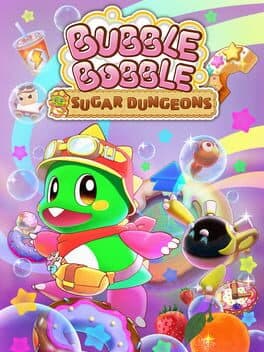
Bubble Bobble: Sugar Dungeons
Taito2025
Adventure again and again! Get stronger! The first step-up Bubble Bobble in the series! Go on an adventure through strange dungeons that change every time you step inside!
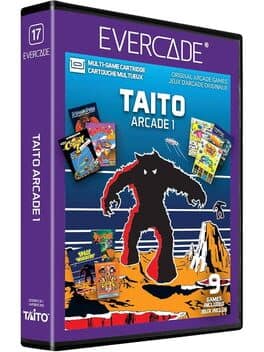
Taito Arcade 1
Taito2025
9 all-time TAITO classics arrive on Evercade! Includes the legendary SPACE INVADERS and the beloved BUBBLE BOBBLE, plus DON DOKO DON, GROWL, THE LEGEND OF KAGE and more!

QQQbeats!!!
Taito2025
QQQbeats!!! is a new game that features both rhythm and puzzle elements. Support is included for two-player online and offline battles.
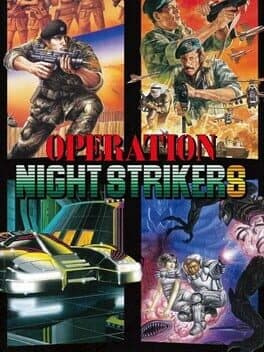
Operation Night Strikers
M22025
Taito's 80's arcade hits hit back! Four milestones of the 80s arcade movement in one action-packed compilation!
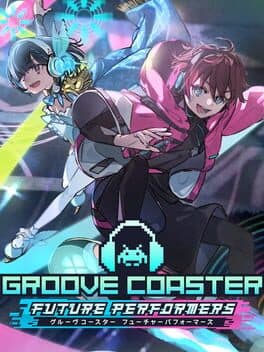
Groove Coaster: Future Performers
Taito2025
Groove Coaster: Future Performers, unlike previous entries in the Groove Coaster series, is a completely new game redesigned from the ground up. New elements have been introduced across all aspects of the game, including controls, music score, and the world setting. Do not miss this all-new Groove Coaster.

Time Gal Re:birth
2025
A sequel to LaserDisc-based game Time Gal following a new character named Luna, who is sent on a mission to stop the villain Luda as well as Reika, the original game's protagonist.
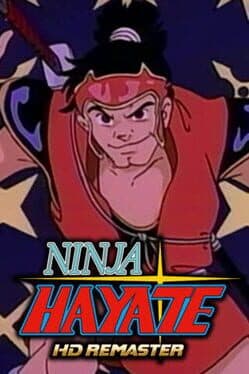
Ninja Hayate HD Remaster
Taito Corporation2025
Encounter relentlessly-attacking ninjas, their ninja dogs, zombie samurai and more, all whilst avoiding countless deadly traps in your mission to save the princess from the evil ninja clan who kidnapped her in this thrilling, interactive anime adventure! First appearing in arcades in 1984, Ninja Hayate was Taito's 1st Laser Disc game, and this release features visuals remastered from the original laser disc.
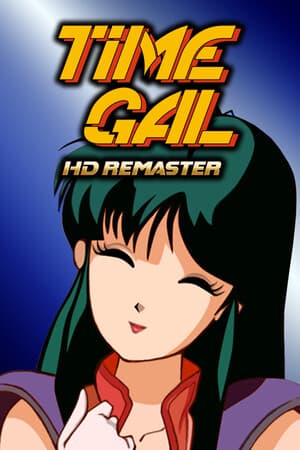
TIMEGAL HD-Remaster
TAITO CORP.2025
Reika, the Time Gal, is warping onto Steam from 1985! Encounter dinosaurs, cavemen, giant robots, aliens, maniacally laughing villains, and more in this time-travelling, interactive-anime adventure!
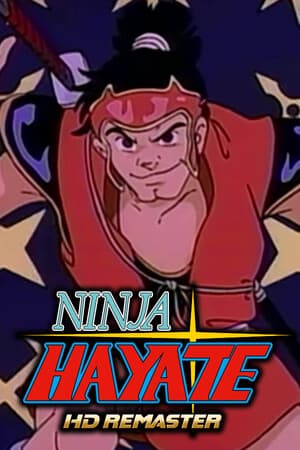
NINJA HAYATE HD-Remaster
TAITO CORP.2025
Ninja Hayate infiltrates Steam, braving the evil ninja clan's lair and battling a dragon in this thrilling, interactive anime adventure, remastered from its 1984 debut!
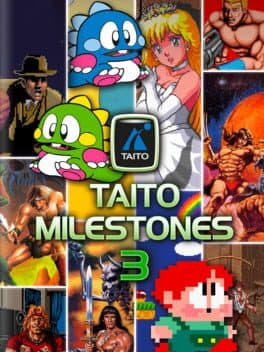
Taito Milestones 3
Taito2024
The collection will include the following 10 titles: - Bubble Bobble (1986) - Cadash (1989) - Champion Wrestler (1989) - Dead Connection (1992) – First-ever port - Rainbow Islands: The Story of Bubble Bobble 2 (1987) - Rastan Saga (1987) - Rastan Saga II (1988) - Runark (1990) - Thunder Fox (1990) - Warrior Blade: Rastan Saga Episode III (1991)
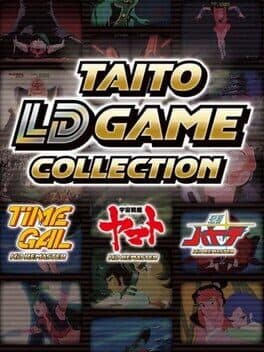
Taito LD Game Collection
Taito2023
A collection of Taito's LaserDisc games: Time Gal, Uchuu Senkan Yamato (Space Battleship Yamato), and Revenge of the Ninja for Nintendo Switch.
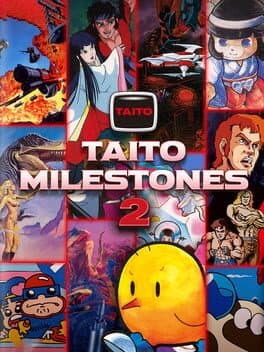
Taito Milestones 2
Taito2023
On the heels of last year’s first Taito Milestones comes a new collection with more of Taito’s arcade classics.
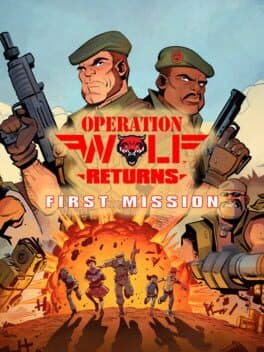
Operation Wolf Returns: First Mission
Taito2023
Experience once again the iconic Rail Shooter released for Arcade back in 1987, now reinterpreted in a regular or VR version. The game captures the essence of the original game, immersing you in an action-packed atmosphere reminiscent of the non-stop action films of the 1980s.
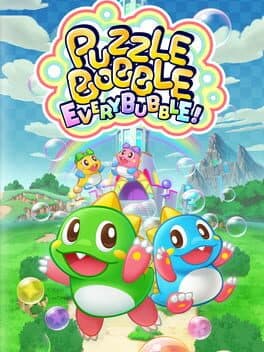
Puzzle Bobble Everybubble!
Taito2023
A new title in the Puzzle Bobble series featuring a four player co-op story mode.
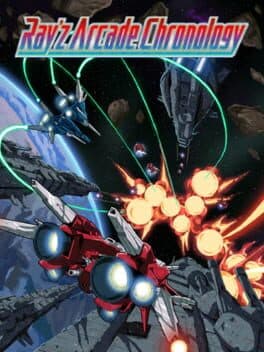
Ray'z Arcade Chronology
M22023
Lock-on to an exhilarating sci-fi shooting fest with the trilogy which put Taito on the 90s arcade shooting map: The Ray Series, together in one collection for the first time!
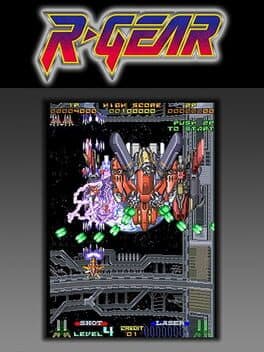
R-Gear
Taito2023
A cancelled follow-up to Taito's 1994 shooting game Rayforce that was shelved in favour of development of Raystorm - a single stage prototype for the game was made but was formerly unreleased bar for some screenshots and videoclips. As part of the Ray'z Arcade Chronology the prototype build consisting of a single stage was released as a bonus standalone game, featuring new music from series composer Tamayo Kawamoto.

Music Diver
Taito2022
A rhythm game from Taito where players use drumsticks to hit notes by striking parts of the screen as well as regions of a plastic ring placed around the screen.
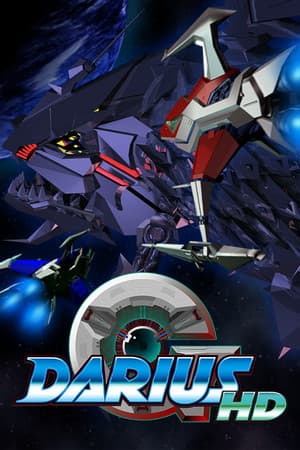
G-Darius HD
TAITO CORP.2022
You will see the creation of new lives... Capture enemies and fire them back at their allies as enormous beams of energy in this horizontally scrolling shooting game, featuring 5 versions of G-Darius with new features, enhancements, and Steam exclusive extras!

Tetote x Connect
Taito2021
Tetote x Connect is an arcade rhythm game released by Taito. The game features a touch-screen interface, where players tap on the screen and follow the movements of their partner to dance to the rhythm! Players can customize their partners in a variety of accessories, and also play to numerous songs from anime, artists, and labels such as Sega, Vocaloid, anime openings, and many more!
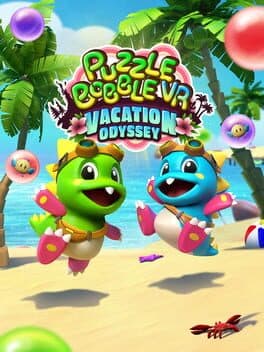
Puzzle Bobble 3D: Vacation Odyssey
Survios2021
Bursting with the same cheerful energy, adorable characters, and timeless gameplay as its predecessors, Puzzle Bobble 3D: Vacation Odyssey is the next evolution of the classic Japanese action puzzle game franchise—with the immersive fun of 3D!
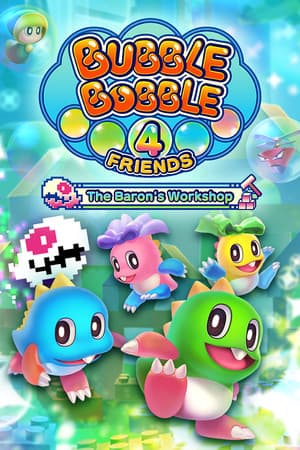
Bubble Bobble 4 Friends: The Baron's Workshop
TAITO CORP.2021
Use your bubble-blowing abilities to trap your enemies and conquer a variety of stages in this action-puzzle game! Includes the original arcade game, The Baron is Back expansion, and a new exclusive Workshop Mode only on Steam!
Puzzle Bobble VR: Vacation Odyssey
Taito2021
Bursting with the same cheerful design, adorable characters, and timeless gameplay as the originals, Puzzle Bobble VR: Vacation Odyssey is the next evolution of the classic Japanese action puzzle game franchise – with the immersive fun of virtual reality!
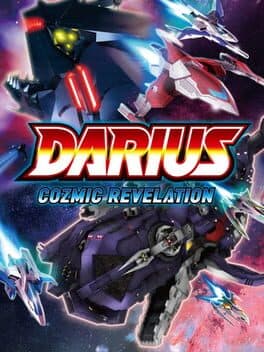
Darius Cozmic Revelation
Pyramid2021
A sequel to the Cozmic Collection, Darius Cozmic Revelation was released for PlayStation 4 and Nintendo Switch on February 25, 2021 in Japan, containing the games G-Darius HD and Dariusburst: Another Chronicle EX+. The western release will contain the Game Boy version of Sagaia as a bonus on the cartridge. A future update also adds G-Darius Ver. 2 to the compilation.
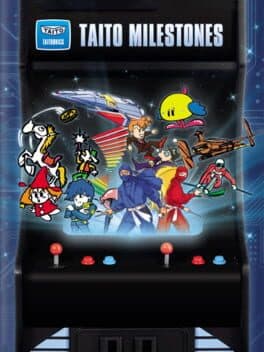
Taito Milestones
Taito2021
Nintendo Switch Taito Milestone containing 1980s arcade games collection. Taito Milestones includes the following titles: - The Ninja Warriors - Halley’s Comet - The Fairyland Story - Chack’n Pop - Elevator Action - Alpine Ski - Wild Western - Front Line
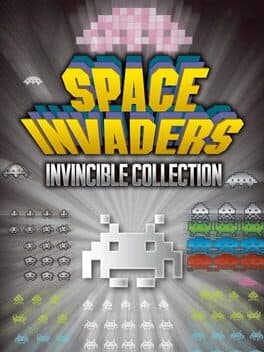
Space Invaders: Invincible Collection
Taito2020
A collection of Space Invaders games released in Japan. A Special Edition with 3 extra games was also released, with additional physical items from select retailers. An international release of the Special Edition is planned for Europe from Strickly Limited Games. This collection contains 6 titles with 2 extra versions: - Space Invaders (1978, Arcade, Original) - Space Invaders (1978, Arcade, Color) - Space Invaders Deluxe (1979, Arcade) - Majestic Twelve: The Space Invaders Part IV (1990, Arcade) - Super Space Invaders ’91 (1990, Arcade, Majestic Twelve Overseas Version) - Space Invaders Extreme (2018) - Space Invaders Gigamax 4 SE (2018) - Arkanoid vs Space Invaders (2016, As Free DLC)
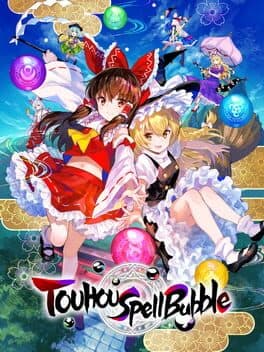
Touhou Spell Bubble
Taito2020
Touhou Spell Bubble is a versus puzzle game which combines Puzzle Bobble-style orb shooting with rhythm elements
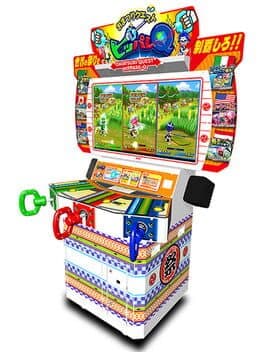
Omatsuri Quest Hippare-Q
Taito2019
A divergent experience-based variety arcade game is now available! A humorous festival quest that everyone can enjoy. It is a new game that can be played together by up to 3 people, such as cooperative play and battles! You can play 12 kinds of festivals (stages). Make full use of the operation method and aim to clear the target score!
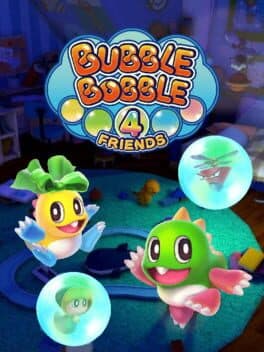
Bubble Bobble 4 Friends
Taito2019
After more than 10 years, Nintendo Switch players can look forward to a sequel of the cult 80's game series Bubble Bobble by TAITO. The new Bubble Bobble 4 Friends was developed by the original studio TAITO Corporation and will include a brand new local 4-player mode. As in the previous highly popular series, the thrilling and epic bubble fight starts again!

Groove Coaster: Wai Wai Party!!!!
Taito2019
Rhythm Game x Roller Coaster!!!!
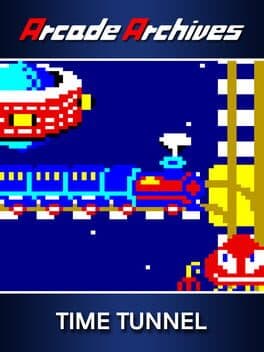
Arcade Archives: Time Tunnel
Taito2019
Time Tunnel is an action game released by Taito in 1982. Pass the objectives on each stage and then pass through the Time Tunnel! Connect train carriages, pick-up passengers, and transport them to the...space station?! Skillfully change the railway points to maneuverer the train, avoiding any obstacles.
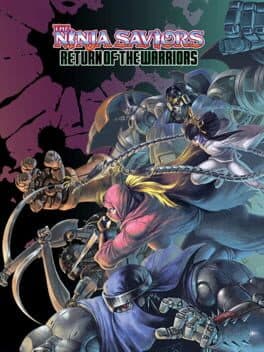
The Ninja Saviors: Return of the Warriors
Taito2019
Alluring audio! Pixel art perfection! Beat-em up beauty! Discover how hard a 32,000kg ninja hits with The Ninja Saviours!
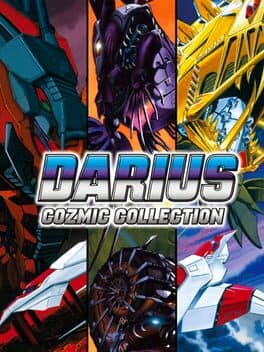
Darius Cozmic Collection
M22019
Announced by Taito in July 2018, comes Darius Cozmic Collection for the Nintendo Switch. The Standard Edition offers four of the classic arcade games from the series of this side-scrolling shoot ‘em up. The titles available in the standard collection are: Darius (Arcade) Darius II (Arcade) Sagaia (Arcade) *Darius II Overseas Version Darius Gaiden (Arcade)
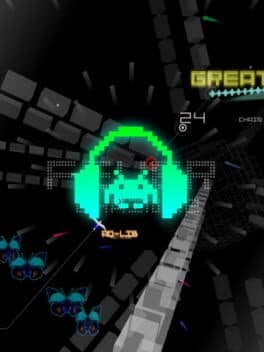
Groove Coaster
TAITO CORP.2018
Riding the rhythmic rails of success from smart phone, into the arcades, now GROOVE COASTER arrives on Steam! Are you ready to ride a roller coaster of sound and light through a universe of music?
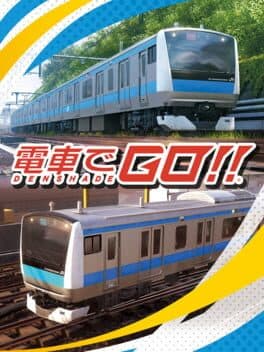
Densha de Go!!
Taito2017
Densha de Go!! (loosely translated to "Go by Train!!") is an electric train simulation game developed by Taito and released by Square Enix for arcades (using PC-based Taito Type X4 hardware) in Japan on November 7, 2017. The first mainline arcade release of the Densha de Go! series in 14 years (after Densha de Go! Ryojou-hen), Densha de Go!! features a deluxe multi-monitor cockpit housing (with four screens, three large ones to form a panoramic view and one touchscreen to display ) resembling E231-500 series trains, and modern high-definition graphics built on Unreal Engine 4. While the game only included parts of the Yamanote Line and the Chuo-Sobu Line from the start, it received additional routes (with new vehicles) in regular bi-yearly updates (including parts of the Osaka Loop Line, the Hanshin Main Line, the Chuo West Line, and the Meitetsu Nagoya Main Line, as well as an extension of the Yamanote Line). In 2019, the game received an alternate "compact" cabinet resembling those used in the original arcade game. It also received two bonus "Fukkoku-ban" game modes, providing a faithful recreation of two of the original arcade games: one for Densha de Go! (on June 26, 2019) and one for Densha de Go! 2: Kousoku-hen 3000-bandai (on September 25, 2019). The game also received a child-friendly spin-off known as Densha de Go!! Kids, which uses a more simplistic cabinet. It later received a revamped console version for the PlayStation 4 and Nintendo Switch in 2020-2021 as Densha de Go!! Hashirou Yamanote-sen. This version is notable for having the full Yamanote Line, as well as routes parallel with it. On March 10th, 2021, the Keihein Tohoku Line was added.
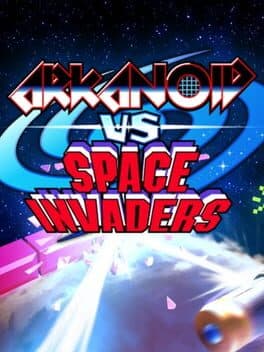
Arkanoid vs. Space Invaders
Taito2017
Two of Taito's most beloved arcade classics combine with cameos from their other releases to produce one frantic title.
Magicians Dead
Byking Inc.2016
Arcade beat-'em-up with motion controls that pits magicians against psychics.

Groove Coaster 3 Link Fever
Taito2016
The 3rd edition of Groove Coaster Arcade series.
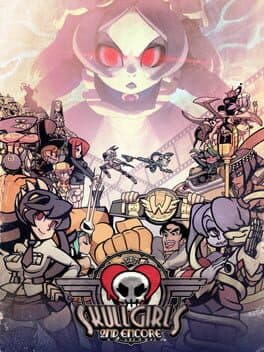
Skullgirls: 2nd Encore
Lab Zero Games2015
--Main Stage Game at Evo 2022!-- The ultimate Skullgirls experience: Featuring 14 hand-animated characters, fully voiced story mode, countless palettes, and unparalleled GGPO-based multiplayer netcode.
Groove Coaster 2 Heavenly Festival
Taito2015
The second installment in the Groove Coaster arcade series released by Taito.
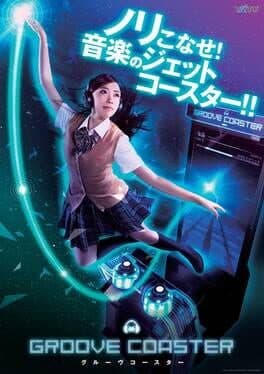
Groove Coaster AC
Taito2013
The Arcade version of Groove Coaster.
Card de Renketsu! Densha de GO!
Taito GM R&D Sect. #22012
Card de Renketsu! Densha de GO! is a train simulator arcade game by Taito released on April 19, 2012 for the 15th anniversary of the Densha de GO! series. For the first time in the series, the player uses cards to compose his train.
Elevator Action Deluxe
Taito2011
Elevator Action returns in this deluxe downloadable for XBLA and PSN.
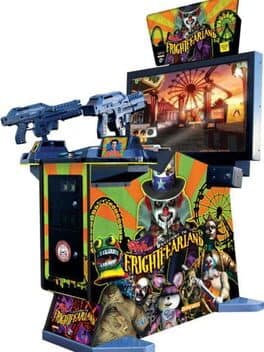
Shh...! Welcome to Frightfearland
Taito2011
An arcade light-gun shooter that serves as the second entry in the Panic Museum series. The game stars two special agents investigating the disappearance of a town of 100 people as they stumble into an evil plot involving killer clowns, American folk tale figures, and a sentient runaway roller coaster.
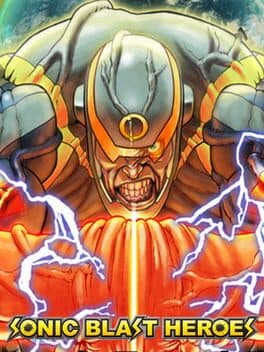
Sonic Blast Heroes
Taito2011
Sonic Blast Man returns to arcades 17 years after his last outing.
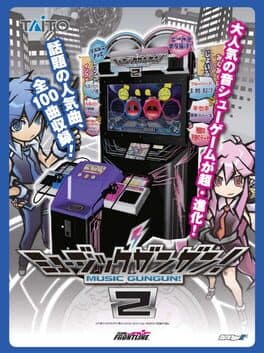
Music GunGun! 2
Taito2011
The 2nd installment of Taito's rhythm-shooting arcade game.
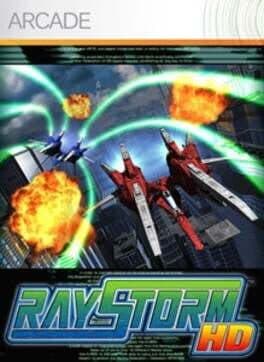
RayStorm HD
Taito2010
The classic shooting game returns with the original gameplay and newly updated graphics in RAYSTORM HD. You control the R-GRAY, a fighter plane equipped with a lock-on laser system, and battle your way through eight stages. A variety of game modes includes Arcade Mode and Extra Mode, with four selectable planes including the untested new R-GEAR. Rankings can be registered, and replay data can be uploaded and downloaded online.
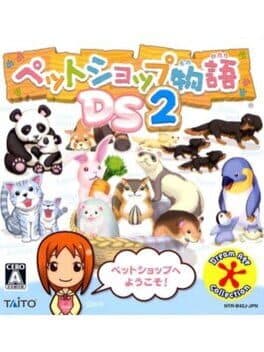
Pet Shop Monogatari DS 2
Taito2010
Japan-only sequel to My Pet Shop.

Minna no Suizokukan
Jupiter Corporation2010
The player helps out at an aquarium by taking care of animals, feeding them, and training them through a series of minigames.
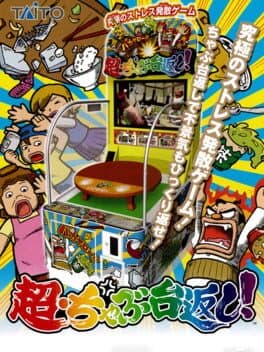
Cho Chabudai Gaeshi
Taito2010
Cho Chabudai Gaeshi is an arcade game equipped with a plastic table peripheral. The player has to hit the table with their hands and flip it to score points.
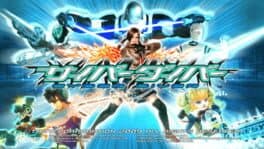
Cyber Diver
Taito2009
Cyber Diver is an Action game, developed and published by Taito Corporation, which was released in Japan in 2009.
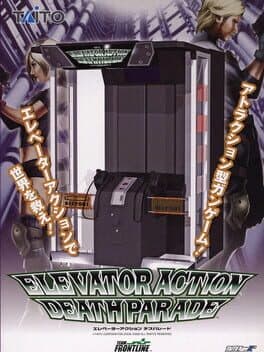
Elevator Action: Death Parade
Taito2009
Elevator Action: Death Parade is a light-gun shooter with an Elevator Action license.

Cooking Mama 3: Shop & Chop
Taito2009
In Cooking Mama 3, players use the stylus as the ultimate cooking utensil to create 80 all new dishes including chili con carne, tulip chicken, mushroom quiche and more. For the first time players can shop for the necessary ingredients before they start cooking in 200 different mini-games that let them chop, grate, slice, and stir up phenomenal foods. Cooking Mama 3 also lets aspiring chefs create their own dishes by combining ingredients together in delicious new ways. In addition, the game features multiplayer cooking challenges and five other gameplay modes. As recipes progress from simple to complex and from small to large dishes, players must do their best to meet Mama's expectations and impress their hungry friends. If friends think a dish is delicious, gamers will get to unlock another new friend!
Bust-A-Move Live!
Taito2009
Bust-A-Move returns, with its original gameplay still intact: Fire bubbles at the bubble clusters on each stage to destroy them!

Minna no Doubutsuen
Square Enix2009
Come and visit the zoo! Manage your very own zoo where you can interact with animals!
Space Invaders: Infinity Gene
Taito2009
Space Invaders, the game that defined video games for generations, is back with a new twist! The game starts off looking like the classic Space Invaders, but as you play through the game, it evolves. Unlock new stages, new power ups, and new features. The full game features a total of 133 stages from both Normal Mode and the breathtaking Challenge Mode where stages change with each playthrough. You can even blast your way through unique stages evolved from your very own music! Compete against other players from all around the world in real time with the appropriately named Real Time Rankings! Space Invaders Infinity Gene is the pinnacle of outer space shooting action! The more you play, the more the game evolves!
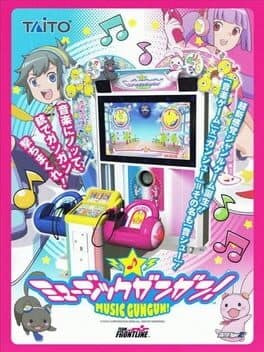
Music GunGun!
Taito2009
An rhythm-based shooter arcade game.
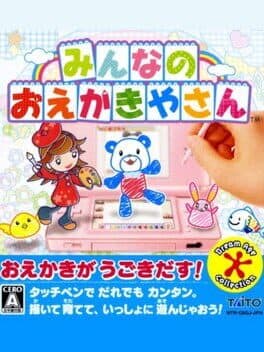
Minna no Oekakiya-san
Taito2009
A drawing game, developed and published by Taito.
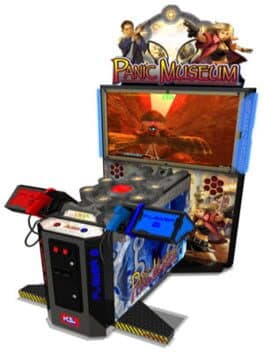
Panic Museum
Taito2009
Panic Museum, titled Haunted Museum (ホーンテッド ミュージアム) in Japan originally, is a light gun arcade cabinet game created by Taito and developed by GameWax. The game sees you as two investigators solving a case of several missing persons that leads you to a museum, you and your light gun partner get trapped inside by supernatural forces. What follows is a series of exhibits come to life and worlds forming around our characters as they must shoot their way through each encounter and deal with mummies, dinosaurs, and more. This is the first game in the Haunted Mansion series of games, the sequel being "Shh...! Welcome to Frightfearland".
Arkanoid Plus!
2009
Relive the old school days of Arkanoid… ARKANOID Plus! is an updated version of the original arcade blockbuster. Players must destroy colored blocks by guiding an Energy Ball around the screen using a spaceship called a VAUS. The game features a host of new modes and settings which radically alter the gameplay experience: "Arcade Mode" consists of 61 Rounds divided into left and right versions with two types of boss characters appearing in the last Round; "VS Mode" lets players face off against a friend or the CPU; and the unfailingly frantic "Time Mode" challenges players to clear Rounds within a strict time limit. Factor in the subtle differences arising from the choice of “Lives” or “Barrier” rules, along with a plethora of exciting items, and it’s clear you’re in for hours and hours of blockbusting fun!
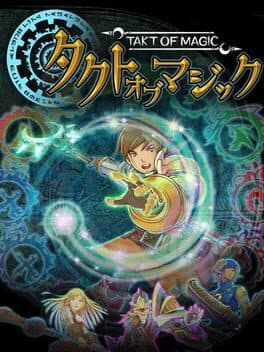
Takt of Magic
Taito2009
Takt of Magic is a Wii video game by Nintendo released in 2009 in Japan. The game has yet to be announced elsewhere in the world. The game is a spiritual successor to Lost Magic on the Nintendo DS, and has similar gameplay, though is not a sequel. In the game the player will use the Wii Remote to cast spells by drawing a certain pattern. In all there are over 100 spells that you can execute. As in most games of this type (such as Lost Magic and Final Fantasy XII: Revenant Wings), you'll be given a map of the overworld before each battle so you can make a plan. Once you enter a battle, you'll be able to choose four characters to fight alongside your main character. The status of your partner is indicated by their icon's facial expression.
Arkanoid Live!
Taito Corporation2009
First appearing in the 1980’s as a new style block-breaking game, ARKANOID, appears on Xbox LIVE Arcade having accomplished even further evolution. Enjoy Arkanoid in high-definition with beautifully choreographed background movies and background music. Loaded with 120 stages in all and colorful cooperative and versus modes.
Bust-A-Move Plus!
Taito2009
Bust-A-Move Plus! is a simple but hugely addictive puzzle game in which you must try to burst a multi-colored mass of bubbles with your very own bubble launcher.
Space Invaders Extreme 2
Project Just2009
High-speed action-packed game play returns with the addition of exciting head-to-head battle modes, a challenging new time attack mode, and expanded game play progression that goes beyond Fever Time to SUPER FEVER TIME! Space Invaders Extreme 2 - faster and more exhilarating than ever before!
Hopping Road
Taito2009
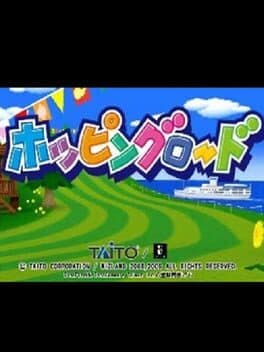
Hopping Road is an arcade game released by Taito in March 2009. The game is based on pogo sticks, popular in Japan in the 1990s. You play as small animals and race another player (and computers) using a pogo-stick like controller you jump up and down on.

Gardening Mama
Cooking Mama Limited2009
A spin-off of the Cooking Mama franchise, this game puts Mama in the role of a gardener. Gardening Mama is the first Gardening game for the Nintendo DS.
Space Bust-A-Move
Lancarse2008
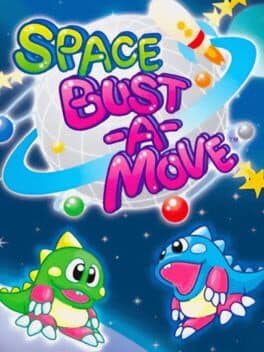
The smash-hit classic arcade game is going where no bubble has gone before in Space Bust A Move! Help the twin brothers, Bub and Bob, as you journey to distant planets to collect "Cosmo Bubbles" in order to stop the evil Devilin from taking over the galaxy. With intense multiplayer competition, improved graphics, customization options, and mini-games, you've never busted bubbles like these!

Cooking Mama: World Kitchen
Cooking Mama Limited2008
The goal of the game is to complete a meal of the player's choice. The player cooks in steps, for example, if making sushi, the player will cut the fish in one step, and do the rice in another. Every time a meal is finished, other meals are unlocked, and so are other characters, family and friends.
Space Invaders Get Even
Cattle Call2008
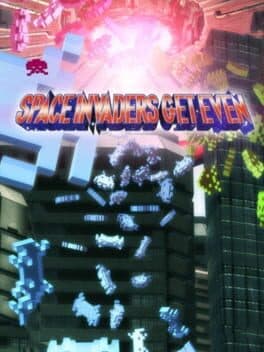
Space Invaders Get Even is a video game by Taito for the Wii. Originally intended as a retail release, the game was released as a downloadable WiiWare game instead. It was released in Japan on August 26, 2008, in Europe on November 7, 2008, and in North America on December 1, 2008.
My Pet Shop
Taito2008
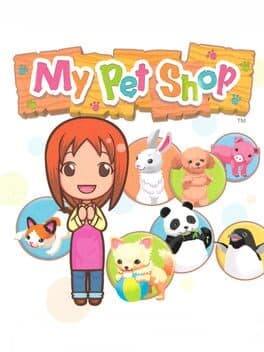
In My Pet Shop, the player takes the role of a young girl who just moved from Gold City to Green Town with her mother. As in this town, nobody owns a pet, her mother decides to open a pet shop. The player will help at the pet shop by helping the customers with various tasks, such as finding a pet, or taking care of one (walking, bathing, entering contests, etc.). To find a pet, the player will first need to gather information, and go outdoors to find and befriend animals. Animals, and sometimes items, are found by moving the stylus in specific places. Once an animal is found, an exclamation mark appears and it will come out, and the player can now try catching it. To do so, food and various items will be used. Some strategies, such as waiting a few turns for a shy animal to approach by itself may also be needed. When a task is done, the player will get an allowance.
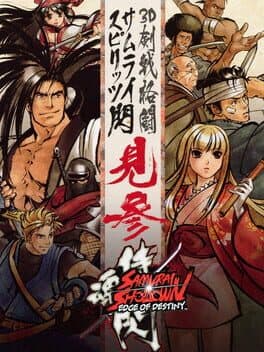
Samurai Shodown: Edge of Destiny
K22008
Samurai Shodown: Edge of Destiny follows a young European girl named Suzu, rescued from a sinking ship off Japan's coast, adopted by the Amori Clan and raised as Princess Suzu. A decade later she saves Takechiyo, a self-proclaimed master of martial arts, after his ship sinks and he ends up washed on the beach; soon after this chance meeting, the tables turn when Princess Suzu mysteriously disappears and Takechiyo pledges to find his missing rescuer.
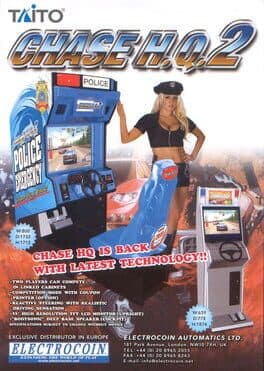
Chase H.Q. 2
Taito2007
This modern sequel to the classic chasing game by Taito carries a similar formula with modern graphics. You are a cop that can pick between three different indestructible cars to chase criminals down, smashing their vehicles until they can't budge another inch, gaining points in the process. As such, this is not a racing game, the timer only exists to provide a level of challenge to the game.

Cooking Mama 2: Dinner With Friends
Cooking Mama Limited2007
As in the original The Cooking Mama, players in The Cooking Mama 2: Dinner with Friends, prepare various culinary dishes using the Nintendo DS's touch screen. Following the on-screen instructions of the titular "Mama", the player uses the stylus to perform various activities such as chopping vegetables or mixing ingredients. Each of these tasks is performed by completing a short minigame, with a number of minigames strung together to form an entire dish from a catalog of 80 different recipes. After completing a dish, the player's cooking performance is evaluated and given a numerical score (out of 100) along with a corresponding medal. Failing to accomplish a step in Let's Cook mode or getting a "fail" within steps (in various ranges), the player will receive a "Broken Silver" medal, in which the medal is similar to that of the Silver medal with an addition: a crack. Unlike in previous Cooking Mama titles, bonuses earned during minigames do not influence the overall score, but instead accumulate as "bonus stars". For every 5 such bonuses which are earned, the player earns an unlockable item upon completion of the recipe.
Raiden IV
MOSS Co., Ltd.2007
THE ROAR OF THUNDER IS BACK! THE SERIES THAT CHANGED THE HISTORY OF ARCADE SHOOT'EM UPS IS COMING TO XBOX 360! Instill fear in your enemies with devastating attacks and earn the acclaimed title of Master Ace!
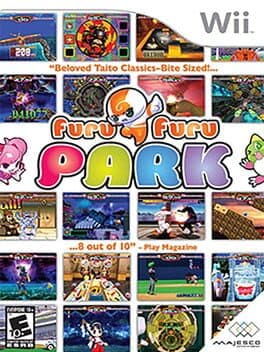
Furu Furu Park
Taito2007
Furu Furu Park is a unique arcade experience that features 30 different mini games that all take advantage of the range of motion possible via Wii Remote play. Take on a friend in three multiplayer modes including Love Challenge where you can try your best to impress the girls! Play 30 unique mini-games utilizing the Wii Remote, including: Skateboard and Skateboard Extreme: Skate the half pipe and pull off tricks! Pinch Hitter: Swing the Wii Remote like a baseball bat to hit a home run. Submarine Escape: Help your submarine escape the giant robot chasing you. Hammer Throw: Whirl the Wii Remote to gain power then toss your "human hammer." Super Karate: Execute offensive and defensive maneuvers to defeat your opponent. Treasure Hunter: Collect treasure while avoiding bombs and the crumbling platform. Bird Man: Pedal like mad and keep your bird man in the air! Safe Cracker: Memorize the combination then enter the code to crack the safe. Takoyaki: Use the Wii Remote to pour batter, add sushi and flip before it burns! Arkanoid: Keep the ball and your paddle moving in this arcade classic. Snow Cone: Hold the Wii Remote horizontally and crank it to make snow cones! Puzzle: Hold the Wii Remote vertically and turn it to fit the puzzle pieces in place. Pocky & Rocky: Hold the Wii Remote "NES Style" and shoot all of the enemies. Sudden Death: Face off against defenders and the goalie to score the goal. Bubble Bobble: Burst all of the bubbles in this arcade classic! Dragonfly Hunter: Flick the dragonflies off their perch with your finger. Rev the Engine: Hold the Wii Remote horizontally and twist forward to rev the engine and make awesome music! Unwrap the Mummy: Use your Wii Remote to unwrap the mummies. Swan Runner: Avoid obstacles and pick up power-ups while moving through a tunnel. Swan Shooter: Maneuver your ship and blast enemies in this high flying shooter. Cameltry: Manipulate the maze to reach the end. Sonic Blastman 20XX: Punch the asteroids out of the sky before they reach the planet. Robo Clash: Use the Wii Remote like a hammer to smash the robot. Sushi and Sushi Fever: Serve sushi dishes to match customer orders. Two single player modes include Free Battle (choose any of the 30 Mini Games and play at your own pace) and Challenge Mode (choose 5 of the 30 mini-games, play them in succession and get judged on your scores). Face off against a friend in 3 multiplayer modes: finish with the high score in Challenge Mode, practice in Free Play Mode or check your compatibility in the Love Challenge.

Watashi no Happy Manner Book
Taito2007
A Nintendo DS game by Taito.

Rozen Maiden: Gebetgarten
Tamsoft2007
"Rozen Maiden: Gebetgarten" is the sequel to "Rozen Maiden: Duellwalzer" for the Playstation 2. The game features 3D aerial battles and visual novel segments following the story of the second season of the Rozen Maiden anime, "Rozen Maiden: Träumend".

Cooking Mama: Cook Off
Office Create2007
Cooking Mama is the follow-on game after the Nintendo DS Cooking Mama game. This time mama teaches you to cook up some delicious international dishes from 10 different countries. After you've mastered your skills you'll want to see how you fair against some of the other chefs out there. With multiplayer you can cook against a friend to see who really is the grill master. With the unique controls of the Wiimote, you use it to actually move utensils to "cook."
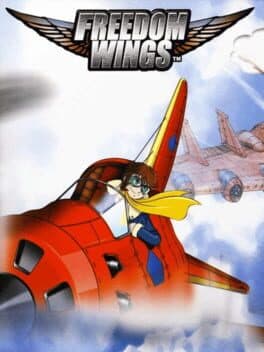
Freedom Wings
Taito2006
Freedom Wings, known in Japan as Ore no Sentouki (オレのせんとうき?), is a flight simulator developed by Taito and published by Natsume in the US and Zoo Digital Publishing in Europe. The game combined elements of flight simulators and RPGs as players earned experience points for combat, earn money and maintain other statuses.
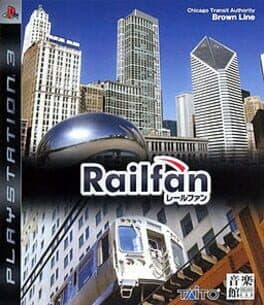
Railfan
Taito2006
The first PS3 installment of Ongakukan's Train Simulator series. It features three different rail lines - JR East's Chuo Line between Mitaka and Tokyo, the Keihan Electric Railway's Main Line between Demachiyanagi and Yodoyabashi, and the Chicago Transit Authority's Brown Line between Fullerton and the Loop. In a first for the series, it features full HD video, as well as the ability to view the train from an external viewpoint. In addition, the game also features a "Densha de Go!" mode emulating the gameplay of that series.
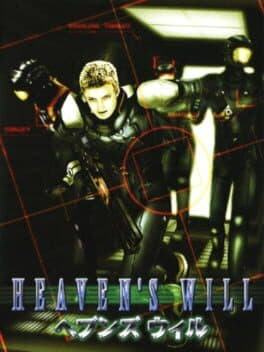
Heaven's Will
Global A Entertainment2006
A sci-fi action game in which you play a man who awakens one day having completely lost his memory and finds himself trapped in a labyrinth.
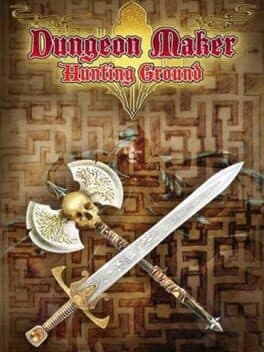
Dungeon Maker: Hunting Ground
Global A Entertainment2006
Dungeon Maker: Hunting Ground is an action RPG where the player creates their own unique dungeon using purchased pre-crafted pieces. Each day, as the player adds to his dungeon, wandering monsters come to inhabit it. The deeper the player builds his dungeon, the more deadly the monsters and their treasures. A deep and well-crafted dungeon might attract the ultimate evil creature for you to try and defeat using a variety of items, weapons, and spells that have been acquired along the way. The nearby city offers equipment, food, quests, and quirky characters to aid you in your adventure.
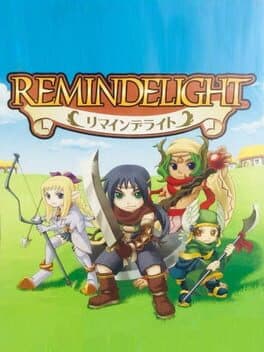
Remindelight
Japan Art Media2006
Remindelight is an action role-playing game in which the player chooses one of four characters to play as, who have different abilities, weapons and magic styles for the player to use. These include Surf Flood, who can use fire magic but is mostly focused on sword fighting; Kuurie Le Grasseld, who can use a bow, but is focused on water magic; Tolon, who uses a spear and wind magic; and Enju Fullhorn, who uses an axe and earth magic. The player navigates the overworld, and uses the touchscreen to break obstacles; they can also touch enemies' sprites to engage in battle, and move to the separate battle mode.
Exit 2
Taito2006
Exit 2 is the sequel to the PlayStation Portable game Exit. The developers promised more focus on puzzles rather than action and platforming. It was released in Japan and Korea in 2006 and in Europe and Australia in 2007.

Mushi! Machi no Konchuu Monogatari
Marionette2006
A Nintendo DS game release in 2006.
Bust-a-Move: Deluxe
Taito2006
Join Bob and Bub plus new characters, never before seen games and ways to play including spooky Ghost Mode! Pop matching colored bubbles to solve puzzles in a variety of game types including head-to-head play. Whether you are a first-timer or an expert bubble launcher, you will be sure to find brain-teasing fun in the over 1000 puzzles available in Bust-A-Move Deluxe!
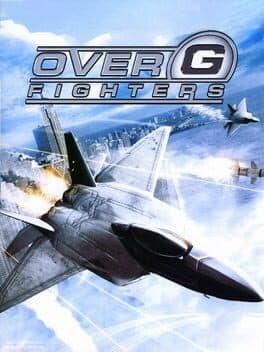
Over G Fighters
Taito2006
Over G Fighters is the only modern jet fighter game to deliver intense and exciting aerial combat showcasing the awesome power of modern aircrafts on Xbox 360. In Over G Fighters, a terrorist organization threatens the world's peace and security as players take to the skies in a united world air force. Players command more than 30 of the most powerful jet fighters ever conceived and battle for air superiority in massive dogfights in the skies above Europe, Asia, Africa and North America. Players combat enemies in the air and on the ground with challenging and dangerous strike missions against well defended targets deep in the heart of hostile territory. Harnessing the power of the Xbox 360, Over G Fighters depicts a precise recreation of the world's most distinguished jet fighters in battle. Key Features: Fly the world's most powerful fighters: Fly every modern jet fighter in the Western arsenal including the F-22A Raptor, the US air superiority fighter of the 21st century. Face more than 90 Western and former Soviet enemies and get in the cockpit of the F-15E Strike Eagle, F-16C Fighting Falcon, F/A-18C Hornet, Su-27 Flanker, MiG-29A Fulcrum, and F-117A Nighthawk. Attempt more than 80 intense missions in a modern-day global conflict: Players take the fight to the enemy in aerial battles all over the world and face massive, challenging missions with interlocking sub-missions. After successfully completing the sub-missions, players will attack the most challenging primary mission objective. Check six: With 360-degree cockpit views from realistic, highly detailed and functional instrumentation. Players will feel the G-forces and hear the roar of jet engines in 5.1 channel stereo as they ignite the after burner. Get right into the action: Kick the tires and light the fires! Players can jump right into the action and instantly engage in dogfights either one-on-one or in massive dogfighting "furballs." Flight data recorder: Players can save their combat triumphs and learn from their defeats by recording and replaying their aerial exploits. Xbox Live online gaming service for up to eight players online: Engage in head-to-head dogfights or cooperative team play between squadrons on huge detailed maps with varied geographies.
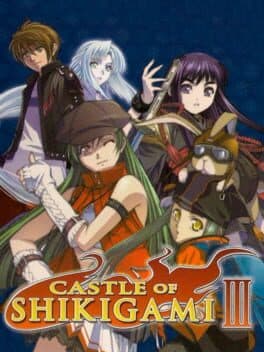
Castle of Shikigami III
Alfa System2006
Castle of Shikigami III is a vertical scrolling shoot-'em-up game in the Castle of Shikigami series. Your proximity to enemy units and gunfire determines your score and firepower. Each character has their own specialized weapons and powers, anything from chain lightning to psychic blades. Experience a wide variety of scenarios with fully voiced dialogue. Dodge a never-ending barrage of bullets alone or with a friend. Switch between two characters in the middle of the fight to improve your chances for survival!
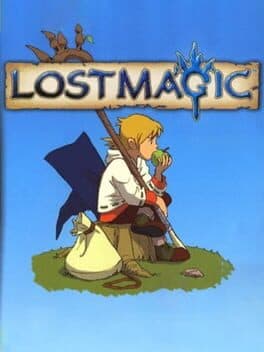
LostMagic
Taito2006
LostMagic is an action RPG set in a mysterious realm where monsters wield unimaginable power and the fate of the universe is held together by seven magical wands. As a wizard in this realm, the player will use the stylus to unleash magic spells and command numerous monster squads in magical battles.
Taito Memories Pocket
2006
This was a portable version of Taito Memories that was released for the PSP in 2006.
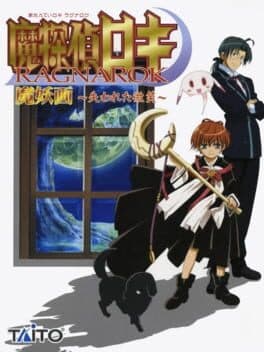
Matantei Loki Ragnarok Mayoukaku: Ushinawareta Bishou
Taito2005
You take control of Loki, the hero of the story, to various locations, gathering information together with Yamano, Mayura, and others, and use clues to solve the case.
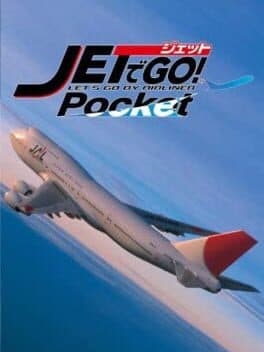
Jet de GO! Pocket
Taito2005
Jet de GO! Pocket is the third installment of Taito's flight simulation series for Sony consoles and the first one to be released on PSP. The first title in the series, Jet de GO!, was released on PlayStation in 2000 and its sequel, simply titled "Jet de GO! 2", was released on PlayStation 2 in 2002. Just like its predecessors, the game allows the player to take the captain's chair in the cockpit of a commercial airliner making flights to and from major Japanese cities such as Tokyo, Osaka and Sapporo. The game features a variety of airplanes such as the Boeing B747, B777 and B767, different weather and daytime conditions and flight plans. The player can choose between three game modes: Flight, Trial and Replay. Since the game is endorsed by Japan Airlines, a real world airline, it is not actually possible to "crash" an airplane. Collisions with the ground are shown in a simplified fashion where the plane simply stops once it touches down, resulting in a "Game Over" screen. Although the game was only released in Japan, it features partially English menus.
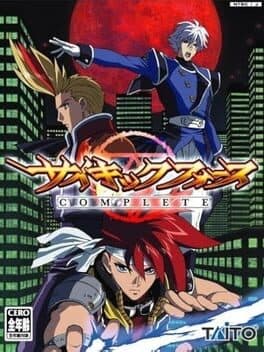
Psychic Force Complete
Taito2005
Psychic Force Complete is a PlayStation 2 compilation exclusively released in Japan. This collection brings together three notable entries in the Psychic Force franchise: the original Psychic Force game, Psychic Force 2012, and an enhanced version called Psychic Force 2012 EX. The compilation offers players an improved gaming experience with refined graphics, new voice recordings, and additional bonus materials.

Bubble Bobble Revolution
Marvelous Interactive2005
Originally released as an arcade game by Taito in 1986, Bubble Bobble starred two dinosaurs - Bub and Bob who co-operate to make their way through a hundred levels to rescue their girlfriends. This addictive two player game went on to be released on most console formats. Now the game is reborn on the Nintendo DS with all new graphics, split screen action and the classic gameplay. 100 new exciting levels to explore. All new power bubbles and bubble attacks. Microphone activated challenges and Bubble mini-games. Includes a perfect re-creation of the original Bubble Bobble arcade machine game.
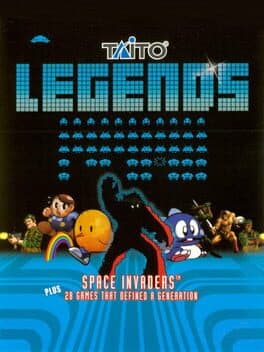
Taito Legends
Atomic Planet Entertainment2005
Taito Legends is a games collection for PlayStation 2, Xbox, and Windows. It includes; - Space Invaders (1978), - Phoenix(1980), - Space Invaders Part 2 (1980), - Colony 7 (1981), - Electric Yoyo (1982), - Jungle Hunt (1982), - Zoo Keeper (1982), - Elevator Action (1983), - Great Swordsman (1984), - Return of the Invaders (1985), - Bubble Bobble (1986), - Gladiator (1986), - Tokio (1986), - Exzisus (1987), - Plump Pop (1987), - Operation Wolf (1987), - Rainbow Islands (1987), - Rastan (1987), - Super Qix (1987), - The New Zealand Story (1988), - Operation Thunderbolt (1988), - Battle Shark (1989), - Continental Circus (1989), - Plotting (1989), - Volfied (1989), - Ninja Kids (1990), - Space Gun (1990), - Thunderfox (1990), - Tube It (1993).
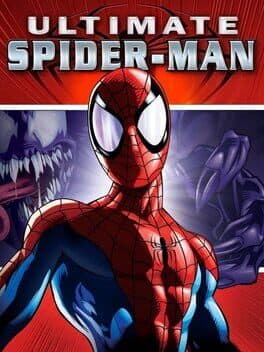
Ultimate Spider-Man
Beenox2005
Based on the comic book of the same name, Ultimate Spider-Man lets you play as either the hero Spider-Man or his arch-nemesis, Venom. Use the unique combat techniques of either Spider-Man or Venom to battle a host of Spider-Man characters. Artistic contributions by the creators of the series make for an authentic Spider-Man experience.
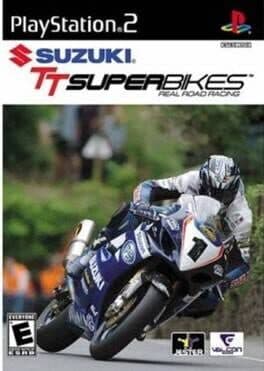
Suzuki TT Superbikes: Real Road Racing
Jester Interactive2005
Suzuki TT Superbikes features more than 50 vehicles from all over the world, and includes the world famous 37.73 mile Isle of Mann racetrack. For the highest level of realism possible, the course itself has been mapped using data supplied by the government and data captured by the development team. In addition to the traditional racing, the game also features a "Mad Sunday" mode that brings riders from all over the world to test their chops on the mountain. Supplementary modes, such as two-player split-screen and sidecar multiplayer are also included, as are bikes from all classes -- from 125cc all the way to the F1 1000ccs!
Taito Memories Joukan
Taito2005
A Compilation of Taito games which includes: – Space Invaders Color – Lunar Rescue – Alpine Ski – The Fairyland Story – KiKi KaiKai – Bubble Bobble – Rastan Saga – Kuri Kinton – Syvalion – Bonze Adventure – Cameltry – Don Doko Don – Flipull – Ah Eikou No Koshien – Majestic Twelve: The Space Invaders Part IV (Super Space Invaders '91) – Runark (Growl) – Pu-Li-Ru-La – Metal Black – Grid Seeker: Project Storm Hammer – Dungeon Magic – Space Invaders DX – Darius Gaiden – Elevator Action Returns – Cleopatra Fortune – Puchi Carat
Taito Memories II Joukan
Taito2005
Taito Memories Joukan was released in 2005 for the Japanese PS2 and contains 25 of Taito's arcade games from the 80s and early 90s: - Ah Eikou No Koshien - Alpine Ski - Bubble Bobble - Cameltry - Cleopatra Fortune - Darius Gaiden - Don Doko Don - Elevator Action Returns - Flipull - Grid Seeker - Jigoku Meguri - Kiki Kaikai - Kuri Kinton - Light Bringer - Lunar Rescue - Majestic Twelve: The Space Invaders Part IV - Metal Black - Puchi Carat - PuLiRuLa - Rastan Saga - Runark - Space Invaders Color - Space Invaders DX - Syvalion - The Fairyland Story
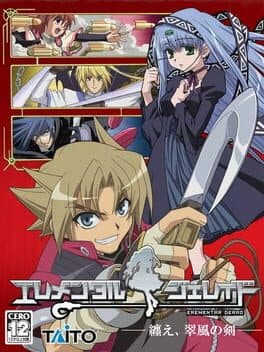
Erementar Gerad: Matoe, Suifu no Ken
2005
A fighting game for the Playstation 2 made by Taito based on the anime and manga of the same name.
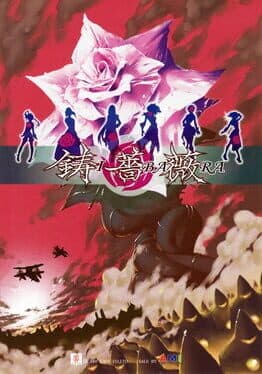
Ibara
CAVE Interactive2005
Ibara is a vertical scrolling shoot 'em up. The back story revolves around a group of sisters, led by Professor Teresa Rose, who want to destroy all technological progress in the land of Edelweiss, essentially turning it into a rose garden. Players can choose to either lead the characters Bond or Dyne and their airplanes through several levels of "bullet hell"-style gameplay in an attempt to defeat the sisters. The player's weapons arsenal consists of a main gun and bombs. Bombs must be collected in fragments, and once the player has all of them, the Hadou Cannon can be used. Staying behind the cannon will make the player invincible for the duration of the effect. Additionally, enemies drop various "options," up to two of which can be attached to the wings of the plane to further increase fire power. The game has a ranking system. If the player does really well, they go up in rank and thus boss battles will be a lot harder. Rank can be strategically decreased either by dying or by collecting roses, which are created from enemy bullets when the player sets off a bomb. Scoring works by collecting gold medals dropped by destroyed enemies. They must be quickly collected to keep up a scoring chain. Once a new medal pops up, and the medals on screen already haven't been collected yet, the chain is broken.
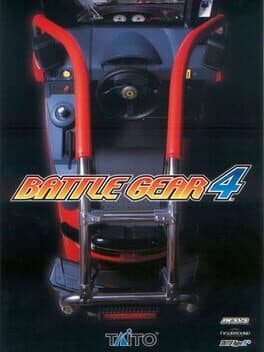
Battle Gear 4
Taito2005
A driving simulator where by players race street legal cars on narrow Japanese speedways. The focus of the game is on manual shifting, drifting and quasi-legal driving tactics. When compared to the Battle Gear 3, there are certain features changed in this game. * The addition of European models (for example, Volkswagen Golf and Renault Clio (Lutecia) V6) and the European stages (with notable examples of the Monaco track and Monte Carlo Rally) representing a departure from Initial D. * The Takumi Mode in Battle Gear 3 is removed. Instead, a severe speed penalty is implemented into the system, forcing the player to use the brakes. * A more extensive tuning system is available to the key users. Instead of simply modding the external parts, the performance hardwares are available as well this time. These can be performed in the online virtual garage. * A player can also activate the "Garage Extension" functions. This includes the benefit of having a team, customizing decals, vinyls and setting names and such.
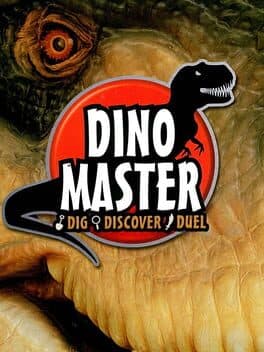
Dino Master
creative office2005
Dino Master is a game for the Nintendo DS system similar to a fusion of Pokémon and the arcade game Qix. The player takes the role of "Dave the Digger", who excavates fossils from various sites while avoiding enemies. The fossils can then be revived into living dinosaurs and pitted against each other in Battle Mode.
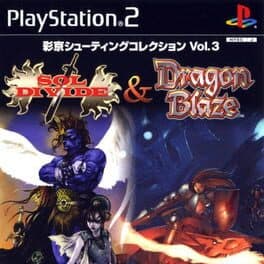
Psikyo Shooting Collection Vol. 3: Sol Divide & Dragon Blaze
Psikyo2005
A Japanese compilation of a top-down bullet hell shooter and an adventure game.
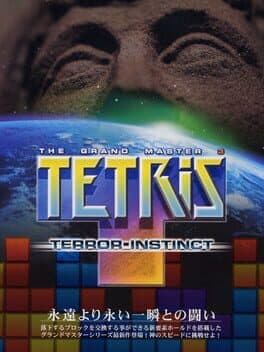
Tetris: The Grand Master 3 - Terror‑Instinct
Arika2005
This game was released in 2005. The game now runs on PC-based hardware, specifically the Taito Type X. The level system has been expanded in many forms with increasingly stricter requirements to reach the Grand Master rank. Modes include Easy, Sakura (a puzzle mode also seen in Tetris With Cardcaptor Sakura: Eternal Heart), the traditional Master mode, and Shirase (an extension of T.A. Death with even harsher speed, garbage, and levels beyond 999). It also features World and Classic Rules, the former added by Arika due to The Tetris Company's recent policy changes.
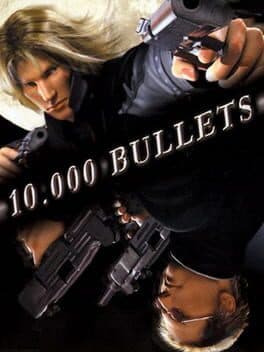
10,000 Bullets
Blue Moon Studio2005
10,000 Bullets is an action/third-person shooter in which the gun-wielding player character battles numerous enemies and bosses in different environments. Styled similar to cinematography found in The Wachowskis' The Matrix film franchise and gameplay mechanics in games such as Dead to Rights and Max Payne, the player is given an ability to slow down time and thus dodge multitudes of flying bullets and other obstacles. The first level, "enhancement", slows down all action, including the player character. The second level, "Blitz", slows down only the enemies, allowing the player to move around at normal speed. The third level, "frozen time", halts everything around the player, who again maintains normal speed. By pressing the shoulder buttons, the player can lock-onto and switch aim at the various enemies. Successfully dispatching several foes in a row earns the player bonus points, which can be used at the end of a stage to purchase upgrades like more health, as well as special attacks and acrobatic evasion skills that can be mapped to certain controller buttons. The game features four playable characters (Crow, Alice, Dragon, and Boris), each of which has their own unique set of abilities. Between the action sequences, the player must advance the plot through a graphic adventure-style interface, where certain characters must be spoken to in order to continue.
Puzzle Bobble Pocket
Taito2004
The famous Puzzle Bobble series made a version ready as a launch title for the PSP. This title brings the classic puzzle gameplay that the series is known for, with four modes to choose from: Single, Endless, VS and Survival.
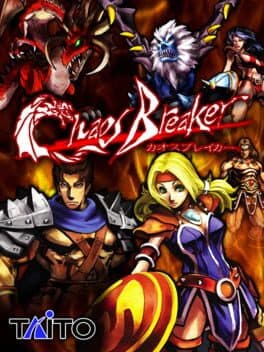
Chaos Breaker
Eolith2004
Chaos Breaker/Dark Awake: The King Has No Name is a fantasy-themed sprite-based 2D fighting game developed by Eolith and released exclusively in Japan arcades. Players select a team of 3 characters, similar to The King of Fighters series. There are 18 playable characters, 3 bosses, and six different races featured in the game, including: Human, Dark Elf, Elf, Orc, Dwarf, and Undead.
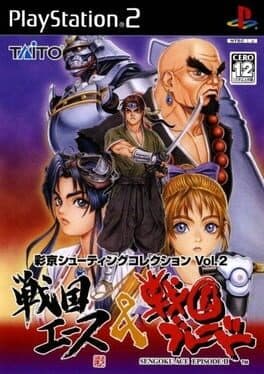
Psikyo Shooting Collection Vol. 2: Sengoku Ace + Sengoku Blade
Psikyo2004
A two game compilation that was released as part of the Psikyo Shooting Collection in Japan.
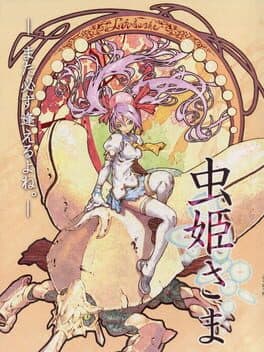
Mushihimesama
CAVE Interactive2004
Battle huge "Koju" bugs in CAVE's beautiful fantasy shooter, Mushihimesama. Experience the thrill of bullet hell from the masters of the genre as you evade visually stunning shot patterns with thousands of bullets.
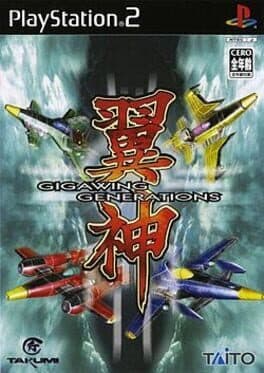
Gigawing Generations
Takumi Corporation2004
The latest entry in Takumi's Giga Wing series of shooters arrives on the PS2, complete with the series' trademark "Reflect Force" system where you raise a barrier around your ship that launches bullets back at your enemy. Score is a big part of the game. What other game lets you get twenty digit scores?
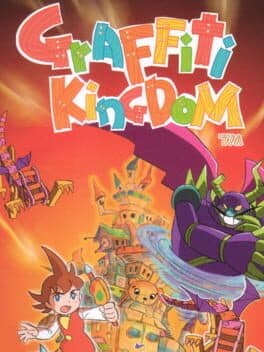
Graffiti Kingdom
Taito2004
Graffiti Kingdom is the sequel to Magic Pengel, an action adventure game developed by Taito. In the game, you play as a prince who must use his magic wand to save his parents and his home. Use the in-game drawing tools to transform your character into three different creatures at anytime, turn 2D shapes into 3D objects, and pull off a variety of special attacks
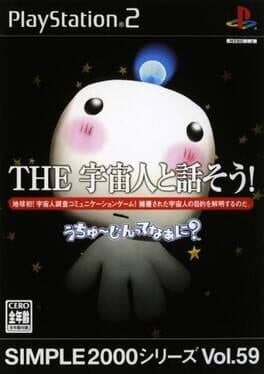
Simple 2000 Series Vol. 59: The Uchuujin to Hanasou! Uchuujin-tte Naani?
Taito2004
The Uchuujin to Hanashi Sou! is an Action game, developed by Taito Corporation and published by D3Publisher, which was released in Japan in 2004.
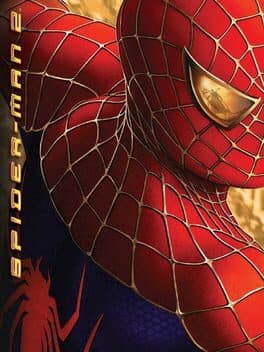
Spider-Man 2
Treyarch2004
In the console version of "Spider-Man 2", Manhattan becomes a gamer's playground as you take the role of Spider-Man in a battle against the nefarious Doc Ock. Based on the plot of the movie Spider-Man 2 and the heroes and villains created by Marvel, the game allows players to encounter unique and dangerous villains as they patrol the streets and rooftops of the biggest city created in any Super Hero game to date. As Spider-Man, players must master new combo moves as they protect the denizens of New York City from the nefarious Doc Ock and other classic Marvel villains by swinging, jumping and wall-crawling through 19 new levels that extend beyond the film. With an unprecedented depth of gameplay, players experience original storylines featuring Vulture, Shocker, Rhino, and Mysterio all while battling through graphically rich 3D environments.
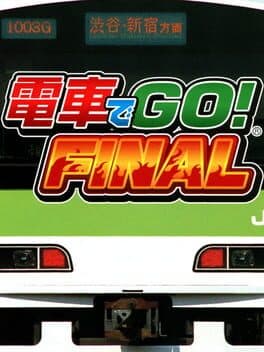
Densha de Go! Final
Taito GM R&D Sect. #22004
Densha de Go! Final (loosely translated to "Go by Train! Final") is an electric train driving simulation game developed and published by Taito for the PlayStation 2 in Japan on May 27, 2004. It was later ported to the PC by Unbalance on December 17, 2004. Part of the Densha de Go! series, Final features a significantly upgraded graphics and audio, a revamped penalty system (using a point-based system from Densha de Go! Ryojou-hen and Densha de Go! Shinkansen), a combo-based scoring system, an improved Navigation System display, and unlockable route extensions. In addition to standard play, the game includes an alternate play-style where players can instead (or alongside the driver player for two-player multiplayer) act as the train's conductor. Train Conductors must open and close the train doors at the correct time, choose the next correct station to stop at, and make in-car announcements. The game includes four routes: the Yamanote Line, the Chūō Main Line, the Osaka Loop Line, and the Tōkaidō Main Line. Playable in both directions, it features the entirety of the Yamanote Line and Osaka Loop Lines, the Rapid section of the Chūō Main Line between Tokyo and Takao, and the section of the Tōkaidō Main Line between Kyoto and Kobe. This version of the game was later ported to the PlayStation Portable in piecemeal, all part of the "Densha de Go! Pocket" line of releases: - Densha de Go! Pocket: Yamanotesen-hen (loosely translated to "Go by Train! Pocket: Yamanote Line Edition") was released on September 29, 2005, including only the Yamanote Line. - Densha de Go! Pocket: Chuuousen-hen (loosely translated to "Go by Train! Pocket: Chūō Line Edition") was released on January 19, 2006, including only the Chūō Main Line. - Densha de Go! Pocket: Osakakanjousen-hen (loosely translated to "Go by Train! Pocket: Osaka Loop Line Edition") was released on March 30, 2006, including only the Osaka Loop Line. - Densha de Go! Pocket: Toukaidousen-hen (loosely translated to "Go by Train! Pocket: Tōkaidō Line Edition") was released on July 27, 2006, including only the Tōkaidō Main Line. To celebrate the series' 20th anniversary, the game was later released as a standalone plug-and-play unit on February 8, 2018 as Densha de Go! Plug & Play.
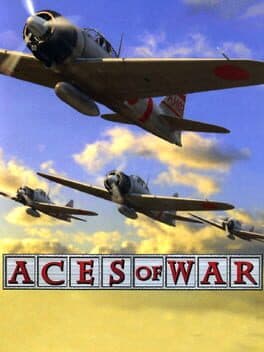
Aces of War
Marionette2004
In Aces of War you take control of 40 different types of aircraft in an attempt to change the course of events. Avoid enemy fire, bomb enemy ships and attack enemy fighters, and then watch the replays of your heroic actions just as if you were part of a war blockbuster. And for some real dogfight action you can try shooting your pals out of the sky in the great VS mode, or you can let them be your wingmen in the cooperative mode.
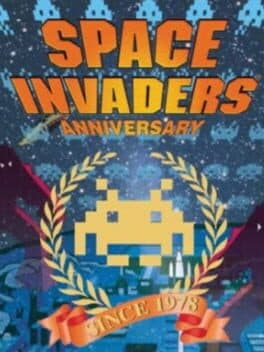
Space Invaders Anniversary
Taito2003
Space Invaders Anniversary celebrates the 25th anniversary of the oldest Taito franchise.
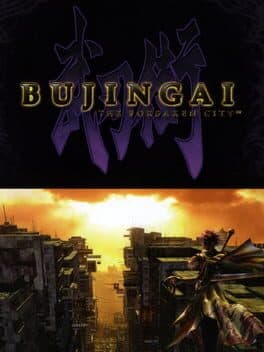
Bujingai: The Forsaken City
Taito2003
An isolated island-city stands as home to much of what remains of the human race. The ancient technology which annihilated most of the earth has now opened a gateway to a hellish dimension, unleashing a horde of demons upon the city. One warrior, armed with a pair of swords and an arsenal of magic spells, goes to battle the army of demons. This warrior's name is Lau, and thousands will die by his hand.
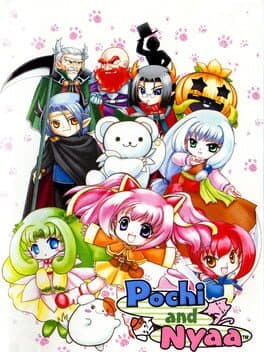
Pochi and Nyaa
Aiky2003
Pochi and Nyaa is a puzzle game made by Taito (Makers of Puzzle Bobble/Bust-A-Move) and Aiky. The story behind it is that in every 1000 years there is a Tournament held by the animal gods Pochi (the Dog) and Nyaa (the Cat) in decision who will be the top star for the next millennium, although they need the power of Earth's people to do so. The gameplay is similar to Super Puzzle Fighter and Puyo Pop, but with a few differences.
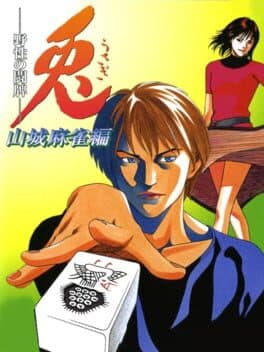
Usagi: Yasei no Touhai - Yamashiro Mahjong-hen
Warashi2003
A tag-team Mahjong game featuring the cast and setting of the manga series Usagi: Yasei no Touhai, with each character sporting unique abilities and styles of play.

Takahashi Naoko no Marathon Shiyouyo
Taito2003
Marathon simulation game featuring Olympic long-distance runner Takahashi Naoko. The goal is to train athletes in your sports club to become professional marathon runners. Actual runners from many nations can be chosen for your club. Naoko's coach Yoshio Koide also appears to offer advice, training regiments, and to encourage the player. Notable for its realistic animations, and for being mentioned on the first episode of GameCentreCX.
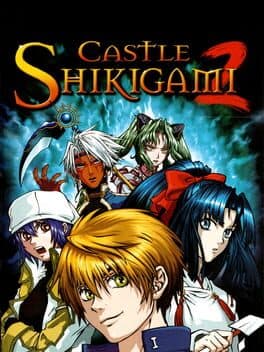
Castle Shikigami 2
Alfa System2003
Sequel to Shikigami no Shiro, SS2 is a vertical-scrolling shooter with sci-fi elements. As in most games in the genre, the game puts you in control of a small fighter as you attempt to make your way past several stages filled with enemy ships charging and attacking you in different patterns. The game features 7 distinct characters with psychic powers (which manifest in-game as bomb-type attacks and other special moves) and unique fighters, and the game features a story mode for each character, in which they have different dialogue and plot-sequences for each boss fight. Also included is a weapon system similar to Psyvariar's in which you can enhance your power and rate of fire by scraping incoming bullets.
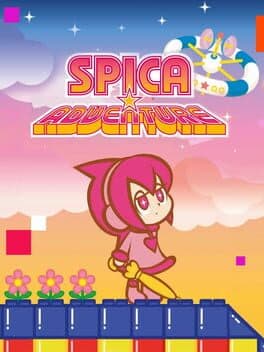
Spica Adventure
Taito2003
A 2005 Arcade action-platformer game developed by Taito. A girl with a versatile umbrella must power through a series of fast-paced stages.

Energy Airforce: aimStrike!
Taito2003
Energy Airforce: aimStrike! is the second title in Taito's military flight sim series, and is greatly expanded over its predecessor. Several new types of aircraft have been added, including the F/A-18 Super Hornet, F-15 Eagle, and A-10 Thunderbolt II, and the need to pass license tests to unlock aircraft has been removed. As before, the game includes a wide range of missions, including both air-to-air and air-to-surface missions, and there is also a mission generator called Strike Mode, where the player can set up a wide range of options and play a free mission.
Tensai Bit-Kun: Gramon Battle
Garakuta-Studios2003
Tensai Bit-Kun: Gramon Battle is a tactical role-playing video game released in 2003 only in Japan.
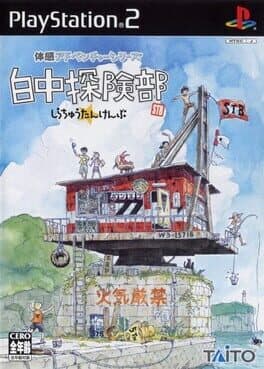
Shirachuu Tankenbu
Nextech2003
Adventure game from Taito, in which the happenings of two summers -- one past, one present -- intersect. Set in a ficticious small-town, the mature plot deals with friendship and memories.
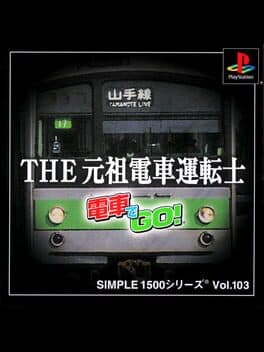
Simple 1500 Series Vol. 103: The Ganso Densha Utenshi - Densha De Go!
Taito2003
The player can choose from a variety of tracks and trains and will then have to drive the train to the designated stations while sticking to the tight schedule, stopping exactly at the marked positions, obeying all signs and signals, and ensuring passenger safety and comfort. Whenever the player makes a mistake, points are deducted from a counter which at the start of each round is initialized to a value depending on the selected difficulty. If it reaches zero, the game is over. This title features, among others, the Yamanote Line around Tokyo, and parts of the To-kaido- Main Line.
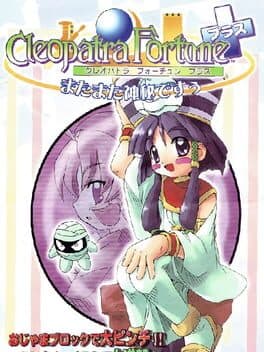
Cleopatra Fortune Plus
Taito2002
Cleopatra Fortune Plus is an Egyptian themed falling block puzzle game following Cleopatra Fortune. Expanding on the original, blocks can be rotated counter-clockwise, breaking colored gems builds up items with powerful effects when cleared, and a rival that can drop larger blocks appears. In addition, a story mode is present unlike the original.
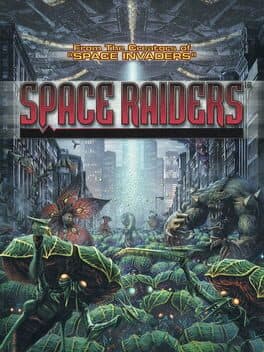
Space Raiders
Tommo Inc2002
Space Raiders is a third-person shooter taking place after an alien invasion of Earth. The game is a spin-off of Taito's Space Invaders with similar gameplay but in a 3D destroyed city setting. The player can take control of three characters. These are Justin, a youngster knocked out and left for dead after his friends got slaughtered while on the run from the aliens, Ashly, the camerawoman who is trying to find her boyfriend who went missing after the invasion, and Naji the policeman who lost his partner in a fight with the aliens.
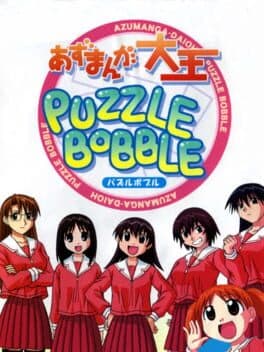
Azumanga Daioh Puzzle Bobble
MOSS Co., Ltd.2002
This is a version of the traditional Puzzle Bobble / Bust-A-Move originally made by Taito but featuring characters from the Manga and Anime series "Azumanga Daioh". It was released only in Japan.
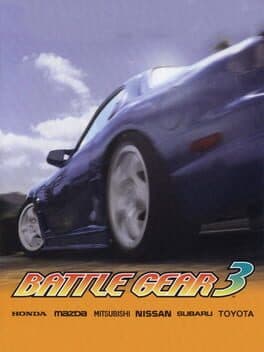
Battle Gear 3
Taito2002
Battle Gear 3 is a 2002 arcade online racing game released by Taito and based on real Japanese locations such as Hakone and touge races on board tuned sports cars licensed by famous Japanese makers including Nissan, Toyota and Mazda. On December 15, 2003, Taito released an updated System 246 version named Battle Gear 3 Tuned and featuring seven extra cars including the Mazda RX-8 Type-S (SE3P) and the Nissan 350Z (Z33). Also, four new tracks (the B courses) including a secret one, were added, as well as an exclusive "Takumi Mode". The Takumi Mode gives the player a finishing time/reduced speed penalty each time the car hits a wall. The purpose of this feature is to offer a more realistic and artistic driving experience dixit the developer himself. This principle was used one year later by Polyphony Digital in Gran Turismo 4. By Christmas of the same year, Nextech Entertainment ported Battle Gear 3 to the PlayStation 2 with an opening CG movie, an exclusive "Event Race" online contest mode and some extras from the updated version, consisting of four cars (D-Class) and two courses (B). The Battle Gear (BG) franchise has a popular following in Asia due to the continuation of the Side by Side arcade and PlayStation 1990s series. In late 2002, a PAL version of Battle Gear 2 was licensed by Midas Interactive and published as Tokyo Road Race in Europe and Oceania. Both "Net Ranking" and "Network" modes were removed though. By July 2005, Battle Gear 4 was launched in Japan on Taito's latest 2.5 GHz CPU based Type X+ system board. This new episode introduced official tuned cars such as the Nismo Fairlady S-Tune Z33, Nismo Skyline S-Tune R34 or the Apexi RX-7 FD3S (D1GP'05 version), and even licensed European makers for the very first time.
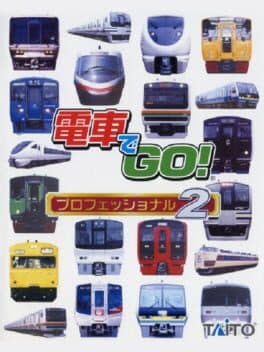
Densha de GO! Professional 2
Taito GM R&D Sect. #22002
Densha de Go! Professional-shiyou 2 (loosely translated to "Go by Train! Professional Specification 2") is an electric train driving simulation game developed and published by Taito for the PlayStation 2 in Japan on October 25, 2002. It was later ported to the PC by Unbalance on April 30, 2003. The sequel to the 1999 home console entry in the Densha De Go! series, Densha de Go! Professional-shiyou, Professional-shiyou 2 features a graphical upgrade and a new set of real-life train routes: the Shōnan-Shinjuku Line, the Tsurumi Line, the Kosei Line, the Seto-Ōhashi Line, and the Nagasaki Main Line to Sasebo Line. One new feature added to the series is the ability to save and resume route progress, and to start progress from a designated station.
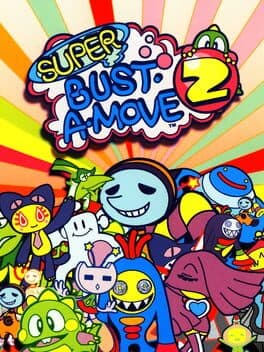
Super Bust-A-Move 2
Taito2002
Super Bust-A-Move 2 offers arcade-style action and screen-clearing puzzle solving in an immersive environment full of vivid characters. It features a single-player puzzle mode that lets you play through multiple stages and multiple game types as each of the stories behind each of the game's characters is explained, and information is gradually revealed. There is also a battle mode that lets you challenge your friends or the computer as you compete in a best-of-three match. You can also create your own mind-bending, bubble-busting puzzles, play them, and save them to a memory card to challenge your friends. There is a scalable difficulty feature that adjusts the game for players of all skill levels.
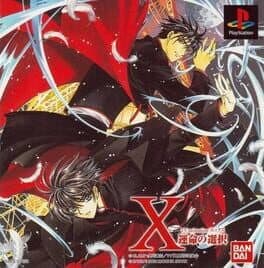
TV Animation X - Unmei No Tatakai
Taito2002
X: Unmei no Tatakai is an 3D fighting game that features a story mode, set in the television series continuity, and a versus mode, which allows players to compete against each other using any of the Dragons of Heaven or Earth. The game was not released outside Japan and it has two different endings.
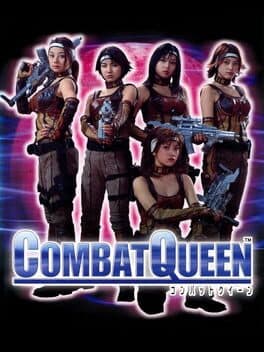
Combat Queen
General Entertainment2002
Combat Queen is an FMV on rail shooter for the PlayStation 2 developed by Taito
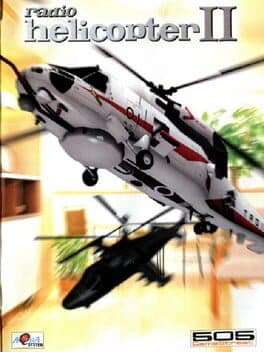
Radio Helicopter II
Aqua Systems2002
Here comes the sequel of Radio Helicopter! You can simulate a helicopter moving in a large haouse, trying to avoid obstacles like armchairs, beds and wardrobes. Collect every star in the room to proceed to the next one and find new environments. Explore every inche of the big house to find stars.
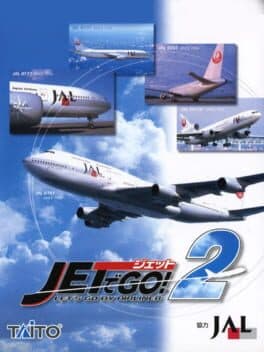
Jet de GO! 2: Let's Go by Airliner
Taito2002
Jet de GO! 2 (translated 'Let's go by Airliner! 2') is an airliner simulation featuring passenger jets of Japan Air Lines (JAL). It is the direct sequel of the first Jet de GO! game that was released for PS2 and Windows.
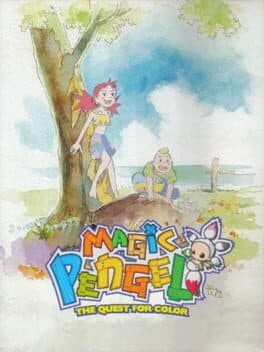
Magic Pengel: The Quest for Color
Taito2002
Magic Pengel is centered on the player, as a character able to manipulate a "Pengel" (which looks like a stylized fairy combined with a paintbrush) to create a creature, or "Doodle". Using the Pengel (pronounced "pen-jell") as a cursor, the player simply sketches out the limbs, body, and other features. Depending on the amount of magic ink expended, and the types of body parts, the creature will be given certain statistics and created. With the help of Zoe and Taro, the character trains and battles using custom-created designs, which can be traded to or battled with the creations of other players. As the Doodles battle, they become more powerful, and earn points towards the purchase of pre-created Doodles, and extra abilities towards customizable creation. Combat functions according to three selections: attack, magic, and block, as well as a charge command. The three basic maneuvers follow a standard rock-paper-scissors methodology, but repetitiveness is minimized due to the varied attributes of the Doodles, as well as the inability to successively repeat any selection.
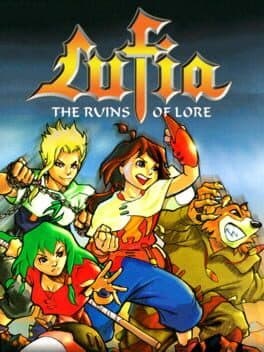
Lufia: The Ruins of Lore
Atelier Double2002
This exciting new chapter in the Lufia saga follows the adventures of Eldin, Torma, and Rami, a group of friends and would-be hunters as they set out in search of treasure, only to discover that fate has much more in store for them! Will they be able to solve the mysteries of the ancient ruins and stop the power-hungry leader Ragule from resurrecting the ancient beast, or will Ragules ambitions be realized at the expense of mankind? Prepare for the Adventure of a Lifetime!
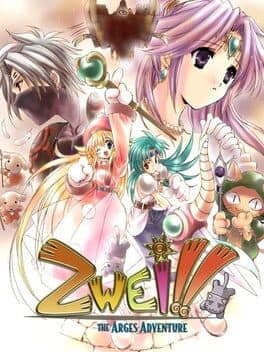
Zwei!!: The Arges Adventure
Nihon Falcom2001
Filterless fashionista Pipiro and poindextrous punster Pokkle are ordinary step-siblings facing an ordinary day in their ordinary little burg...until a grand theft macguffin occurs and they decide to become unlikely heroes for cash and glory (in that order). This goes about as well as you’d expect.
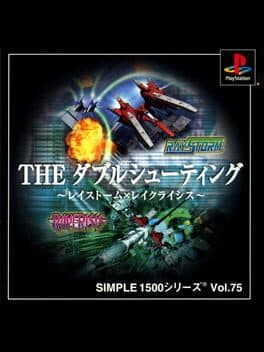
Simple 1500 Series Vol. 75: The Double Shooting - Raystorm & Raycrisis
Taito2001
Simple 1500 Series vol. 75: The Double Shooting - Raystorm & Raycrisis is a compilation of 2 Taito arcade game shooters. 1 - RAYSTORM: The year is 2219 and the Secilia Federation has initiated a plan to destroy Earth. So far, the evil federation has been highly successful in destroying much of the planet's defensive forces and resources. With world destruction at hand, the fate of mankind is looking for a savior. 2 - RAYCRISIS: The sequel to RayStorm, RayCrisis: Series Termination takes place in a time when the future of mankind hangs in the balance. Determined to create the ultimate neural interface between man and machine, a rogue scientist named Leslie McGuire cloned herself and hardwired the clone's mind into directly into Con-Human, a powerful, worldwide computer network. Con-Human's AI quickly took over the clone's consciousness and was driven insane. Unable to comprehend the complexities of sentience and the human psyche, the Network went on a killing spree that wiped out most of Earth's 13 billion citizens.
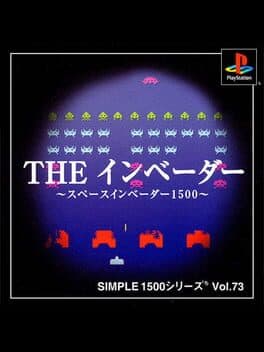
Simple 1500 Series Vol. 73: The Invaders - Space Invaders 1500
Taito2001
The Invaders - Space Invaders 1500 features the originals arcade machines (with and without background artwork) and a new 3d mode, called Space Invaders 3D that features a new graphics 3d engine, a first person view and other camera angles and vibration function for all the modes modes.
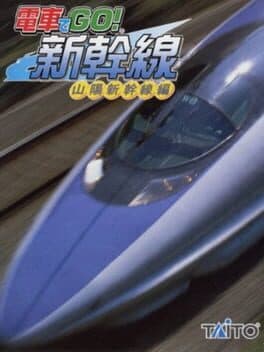
Densha de GO! Shinkansen: Sanyou Shinkansen-hen
Taito GM R&D Sect. #22001
Densha de Go! Shinkansen: Sanyoushinkansen-hen (loosely translated to "Go by Train! Shinkansen: Sanyou Shinkansen Edition") is an electric train driving simulation game developed and published by Taito for the PlayStation 2 in Japan on September 20, 2001. It was later ported to the PC by Unbalance on December 13, 2002. A spin-off of the Densha de Go! series, Shinkansen focuses on the titular high-speed rail line San'yō Shinkansen (through the entire route both ways, between Shin-Ōsaka and Hakata). The game was later ported to the Wii as Densha de Go! Shinkansen EX: Sanyoushinkansen-hen (loosely translated to "Go by Train! Shinkansen EX: Sanyou Shinkansen Edition") on March 1, 2007. This version features a new "Kids Mode" utilizing the Wii Remote's motion control.
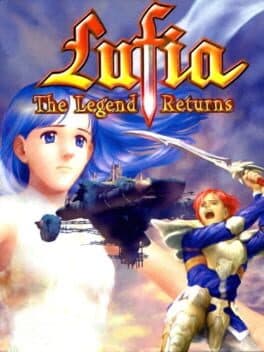
Lufia: The Legend Returns
Neverland2001
The island of the Sinistrals, Doom Island, sank deep into the sea after the second Doom Island War. It was believed to be in an eternal sleep, but has once again begun silently beating, preparing to make its appearance in the sky for the third time. The evil Sinistrals have again been resurrected and released an unforseen terror on the land. A force has awaken witin you... a spiritual flow that draws you to a conflict that will save the world! The power of Maxim's legendary bloodline lives in you... The thread of destiny guides you through an adventurous journey looking for an unknown destination!
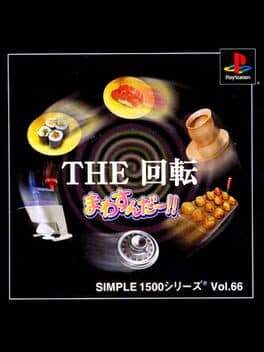
Simple 1500 Series Vol. 66: The Kaiten - Mawasun Da!!
Taito2001
Simple 1500 Series vol. 66: The Kaiten - Mawasun Da!! is a collection of a lot of wacky mini games with a difficult control method since in most of the games the player has to turn quickly the left analog stick to gain speed and is really hard to do it.
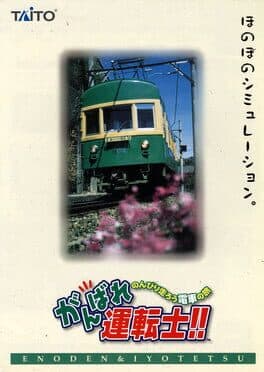
Ganbare Untenshi!!
Taito2000
Ganbare Untenshi!! (loosely translated to "Good Luck, Driver!!") is an electric train driving simulation game developed and released by Taito for arcades in Japan on October 2000. A spin-off of the Densha de Go! series (and using the same engine as Densha de Go! 3 Tsuukin-hen), Ganbare Unten-shi!! focuses on light rail transit with two routes: the Enoshima Electric Railway and the Iyo Railway. While much of the game is the same as the main series, it modifies the braking and throttling controls for added precision and adds controls for operating the vehicle's doors. Due to street traffic, maintaining a timetable is not as strict as previous entries and the time-based penalty system is replaced with a "lives"-based one.
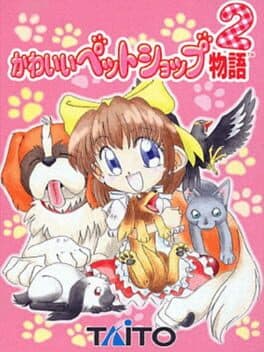
Kawaii Pet Shop Monogatari 2
Taito2000
Similar to its predecessor, this is an animal-raising RPG adding more animals and improvements. The protagonist's father, who runs a pet shop, goes missing after a shipwreck. The protagonist takes over the pet shop management and embarks on an adventure with her exceptional pets to find clues about her father's whereabouts.
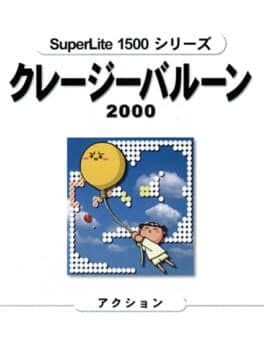
SuperLite 1500: Crazy Balloon 2000
Taito2000
Crazy Balloon was first released in 1980 as an arcade machine by Taito. This is a game of strategy and skill! The object of Crazy Balloon is to guide a delicate swaying balloon through a maze of pin wheel obstacles.
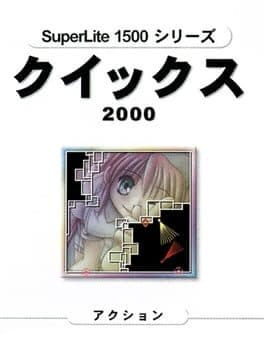
SuperLite 1500 Series: Qix 2000
Taito2000
Qix 2000 offers both a perfectly-translated version of the original and the insanely fun arrangement version, which updates the graphics (giving the Qix itself a Tempest X3-style psychedelic flair) and adds a few power-ups to the mix. The speed-up power-up makes even slow draw fast, and fast draw faster, but the speed-down power-up negates that effect - and heaven help you if you hit the latter while already operating at normal speed.
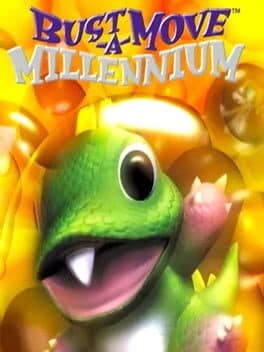
Bust-A-Move Millennium
Dreams2000
BUST-A-MOVE MILENNIUM EDITION on Game Boy Color brings a bevy of often-requested new features to this classic puzzler. Bubbles of different colors descend from the top of the screen in clumps. Using your blaster that fires colored bubbles of your own, you must attempt to clear the screen as best as you can. BUST-A-MOVE MILENNIUM EDITION offers five unique modes of play. In the returning Puzzle mode, you'll play through a huge number of new stages of bubble-busting action that require careful planning and fast reflexes. Challenge mode also returns to test your BUST-A-MOVE skills. In the brand new Story mode, you'll take on a series of increasingly difficult computer opponents in a battle to the finish. Also new is a mode that allows you to play as long as you can last. Of course, the biggest and best addition to BUST-A-MOVE MILENNIUM EDITION is the two-player link cable Versus mode. Now you can grab a friend and show off your BUST-A-MOVE skills! You get all of this plus enhanced graphics and other new options.

Densha de GO! Ryojou-hen
Taito GM R&D Sect. #22000
Taito's 13th entry in its train simulation series, this one focused on electric trams and light rails. Ganbare Unten-shi!! (loosely translated to "Good Luck, Driver!!") is an electric train driving simulation game developed and released by Taito for arcades in Japan on October 2000. A spin-off of the Densha de Go! series (and using the same engine as Densha de Go! 3 Tsuukin-hen), Ganbare Unten-shi!! focuses on light rail transit with two routes: the Enoshima Electric Railway and the Iyo Railway. While much of the game is the same as the main series, it modifies the braking and throttling controls for added precision and adds controls for operating the vehicle's doors. Due to street traffic, maintaining a timetable is not as strict as previous entries and the time-based penalty system is replaced with a "lives"-based one. The game was later ported to both the PlayStation 2 (on July 25, 2002) and PC (by Unbalance on June 5, 2003) as Densha de Go! Ryojou-hen (loosely translated to "Go by Train! Emotional Travel Edition"). This version features features an updated graphics engine (based on Densha de Go! Shinkansen) and adds four additional routes: two from the Keifuku Electric Railroad and two from the Hakodate Transportation Bureau.
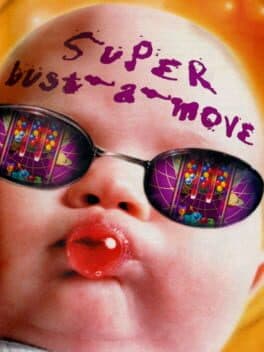
Super Bust-A-Move
Taito2000
Super Bust-A-Move introduces some new elements to the series (and removes some others): Large bubbles are found in certain levels. Shooting a bubble of the same color at them makes every bubble in the level change into that color. In some levels, the pointer and the bubbles that are shot are of a very small size, enabling the player to shoot bubbles between small gaps. These bubbles grow into normal size after being clustered. Occasionally, a conveyor belt will surround the level. This makes bouncing off the ceiling and the walls significantly tricky, since the bubbles' trajectory will change upon bouncing. Levels do not always have the usual rectangular shape. Some of them are jagged or have walls inside them, which forces the player to change strategy. Small blocks appear in some levels. They change the bubbles' trajectories, much like walls, but they move down with the level and fall off when they touch the line. The pulley system introduced in Puzzle Bobble 4 is nowhere to be seen. Chain Reaction is only present in 2P battles, but it is completely optional.
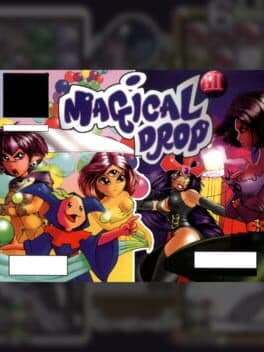
Magical Drop 3
Data East2000
Released in Japan as "Magical Drop III + Wonderful" and in Europe simply as "Magical Drop III", this version packages Magical Drop III: Yokubari Tokudaigou! with a console port of Magical Drop Plus 1! The game features a slightly slower gameplay pace than the Japanese version, omits the "Arcade" version and gallery from the Japanese release, and translates the game's script into multiple languages. Unlike previous versions released outside of Japan, this game retains the Japanese voice work; similarly, the port of Magical Drop Plus 1! is based on the Japanese version instead of Chain Reaction.
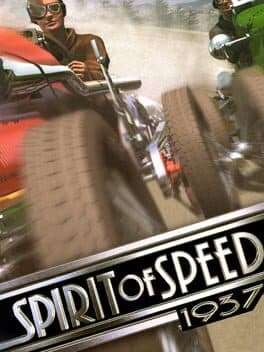
Spirit of Speed 1937
Broadsword Interactive2000
Spirit of Speed 1937 is a racing video game developed by Broadsword Interactive and published by both Acclaim Entertainment for the Dreamcast and by Microprose for PC. The game was released in North America on June 29, 2000. Spirit of Speed 1937 allegedly takes gamers back to the 1930s when motorsports were in their infancy and drivers raced for the thrill of speed, the danger, and the glamor that came with it.
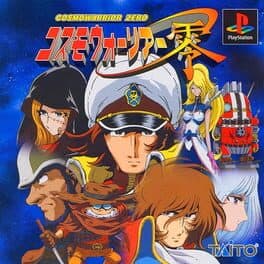
CosmoWarrior Zero
Taito2000
Cosmo Warrior Zero, originally created and supervised by Reiji Matsumoto, a game combining an action/shooting game and a digital comic! A game with 3 modes that invite the player into a new "Matsumoto World"!
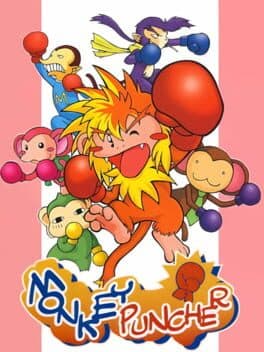
Monkey Puncher
Atelier Double2000
Monkey Puncher is a video game for the Game Boy Color, developed by Atelier Double, published by Taito, and released in March 2000. The game's goal is to train a monkey to fight in organised boxing matches in order to save the main character's father and sibling.
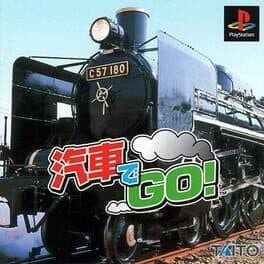
Kisha de GO!
Taito GM R&D Sect. #22000
Kisha de Go! is an offshoot of the Densha de Go! series. This version of the game allows players to drive a steam train, rather than an electric train like the other entries. The coverage included portions of the Keihin-Tōhoku Line, Shin'etsu Main Line and Ban'etsu-Sai Line. The controls were made slightly more complex to reflect steam operation.
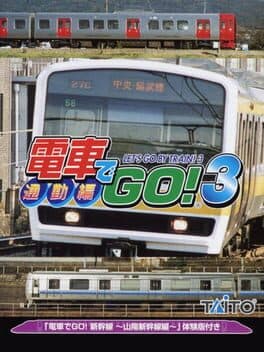
Densha de GO! 3 Tsuukinhen
Taito GM R&D Sect. #22000
Densha de Go! 3 Tsuukin-hen (loosely translated to "Go by Train! 3 Commuting Edition", also known as "Let's Go by Train! 3") is an electric train driving simulation game developed and released by Taito for arcades in Japan on March 2000. The sequel to the 1998 game Densha de Go! 2 Kousoku-hen, Densha de Go! 3 uses updated arcade hardware for improved 3D graphics (such as a higher-resolution user interface and improved models for both the trains and environment) while revamping the scoring calculation, adding online leaderboards, adding multiple time-of-day options (including morning, noon, evening, and night), and including two additional game modes ("Family Mode" for beginner players and "Tetsujin Mode" for advanced players). It features a new set of real-life train routes, including the Sasaguri Line, the Kagoshima Main Line, the San'yō Main Line, the San'in Main Line, the Chūō Main Line, and the Chūō-Sōbu Line. The game later received an update on October 2000, known as Densha de Go! 3 Tsuukin-hen: Daiya-kaisei (loosely translated to "Go by Train! 3 Commuting Edition: Diagram Revision"). This version updates some minor things, including the timetable and scoring calculation. It is the last arcade entry in the series in 14 years, prior to Densha de Go!! The original version was later ported to the PlayStation 2 on March 15, 2001, while the Daiya-kaisei version was later ported to the PC by Unbalance. The PS2 version also included a demo of Densha de Go! Shinkansen on a bonus disc, and later received a re-release (sans demo) as part of D3Publisher's Simple 2000 series of budget games, as Simple 2000 Series Vol. 22: The Tsuukin Densha Utenshi - Densha de Go! 3 Tsuukin-hen, on March 27, 2003.
Psyvariar: Medium Unit
Success Corporation2000
Psyvariar is a vertical scrolling shooter released in arcades in 2000 by Success. The game contains a variety of stages and it features a 'buzz' gameplay style, making it possible to earn levels by dodging enemy bullets.
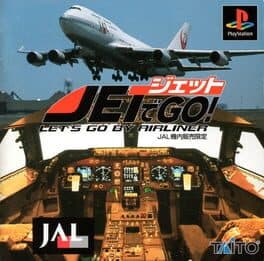
Jet de GO! Let's Go By Airliner
Racdym2000
Jet de GO! is a spin-off from the famous Densha de GO! series by Taito. Instead of trains, this title focus exclusively on flying planes. Players can take off and land with a Jetstream 31 turboprop, a mid-range Boeing 767 or a long haul Boeing 747. The game modes include Flight mode, Cruise mode and Lesson mode.
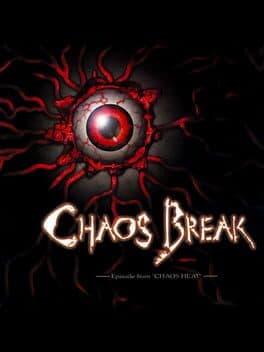
Chaos Break
Taito2000
Chaos Break is a third-person shooting game, with echoes of survival horror such as Resident Evil. Set in an abandoned biochemical laboratory on an isolated island, the two player characters, Mitsuki and Rick, are part of an investigatory and cleansing force sent to find out the cause of an 'anomalous thermal reaction'. This game is a spin-off, set in the same universe as the arcade game Chaos Heat.

Densha de Go! Nagoya Tetsudou-hen
Taito GM R&D Sect. #22000
A release not seen in arcades, this Densha de Go! entry focuses on Meitetsu's railroad lines in Nagoya, including the series' only monorail. You play as a train engineer which serve the Meitetsu Nagoya line in Japan. There are many kinds of trains that you can drive, from express trains to monorails. Some trains are locked until you finish a mission, for example you can only drive monorails until you've finished the commuter and express train missions. All of the game parts, except the menu and station names, are in Japanese. In addition or the Meitetsu Nagoya Line, coverage includes Meitetsu Inuyama Line, Meitetsu Minomachi Line and Meitetsu Monkey Park Monorail Line. This was the first version to feature a monorail, and also featured a Meitetsu hybrid light rail route which ran both on regular train lines and as a sort of urban tram on special lanes in city streets. Part of the gameplay of this required the user to stop for regular traffic signals and avoid car traffic. This was the Densha de Go player's first opportunity to drive a vehicle much lighter (and thus shorter stopping distance) than standard trains. In this version, the driver must sound the horn before beginning to accelerate out of a station. This is unique to this title. The gameplay, physics, and strictness of this version were all somewhat relaxed compared to previous versions. The game was published by Taito for the Sony PlayStation in Japan on January 27, 2000. It was later ported to the PC by Unbalance on December 1, 2000. The PS1 version later received a re-release as part of D3Publisher's Simple 1500 series of budget games, as Simple 1500 Series Vol. 102: The Densha Untenshi - Densha de Go! Nagoya Tetsudou-hen, on August 29, 2002.
RC de GO!
Taito1999
RC de Go! is an arcade racing video game developed by Taito Corporation, first released to Japanese arcades in 1999 for Taito's G-NET system. It was later released for the PlayStation, with publishing in North America and PAL territories handled by Acclaim Entertainment.

Power Shovel
Taito1999
Based on Taito's Japanese arcade game, Power Shovel puts players behind the controls of three earthmovers in a variety of construction-oriented events. Three modes of gameplay are available: Arcade King, License Mode, and Level Editor. Arcade King includes missions from the coin-op, such as demolishing a car, knocking over houses, and pouring large amounts of curry sauce over rice. Money earned in this mode is used to unlock more mini-games, artwork, music, and other items. Two players can also compete against each other in these events in a best of three competition. Players take turns completing each task until a winner is declared. License Mode provides a series of timed tests (like knocking over poles, parking and digging sand) that must be completed in order to gain your operator's license. The Level Editor lets players design their own courses on a 6 x 6 grid, with obstacles such as holes, electric fences, cones, and sheds. The three available shovels vary in their size, speed, capacity, and digging ability. In each event, players have the option of a first- or third-person perspective.
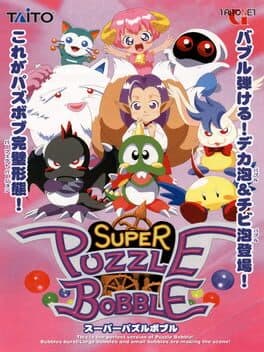
Super Puzzle Bobble
Taito Corporation1999
Super Puzzle Bobble (スーパーパズルボブル Sūpā Pazuru Boburu) is an arcade puzzle game in the Puzzle Bobble series developed by Taito and released in 1999. Super Puzzle Bobble's gameplay is relatively the same as previous entries. However, it introduces several new features and elements to the series. These include smaller bubbles for the player to hit small areas, big bubbles which change every bubble color in the level to itself, and blocks which can move the pointer to different areas on the board.
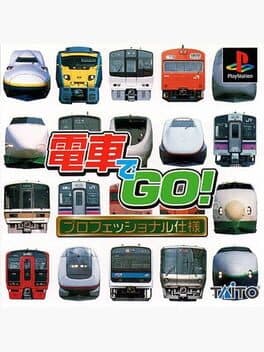
Densha de GO! Professional
Taito GM R&D Sect. #21999
A train simulation game by Taito featuring the lines from Densha de Go! 1 and 2, as well as some Kantou area portions of the Toukaidou Line. Some of the strictness of the previous games was reduced through a number of features, including the addition of a panel at left which allowed the user to see a map of the upcoming track segment, including showing speed limits, which greatly reduced the required amount of track memorization, and allowed the player more time to react. The overall reduction of strictness in the game reflected Taito's shift in emphasis from arcade to home-play versions as time went on.
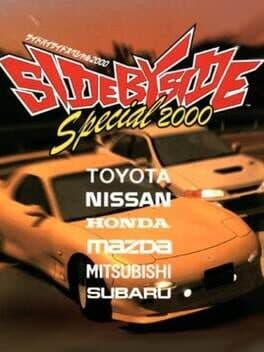
Side by Side Special 2000
Taito1999
Side By Side is an arcade racing game series from Taito that focuses on touge and drifting. The series started in 1996 in the arcades and was followed next year by a sequel. Also in 1997 a PS1 port was released, called Side By Side Special, a remix that combined the two arcade games into one. Side by Side Special 2000 features different cars, dual shock support and even more features.
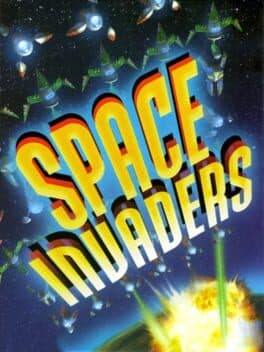
Space Invaders
Z-Axis1999
Space Invaders is a game in which the player controls a laser cannon by moving it horizontally across the bottom of the screen and firing at descending aliens. The aim is to defeat five rows of eleven aliens—some versions feature different numbers—that move horizontally back and forth across the screen as they advance towards the bottom of the screen. The player defeats an alien, and earns points, by shooting it with the laser cannon. As more aliens are defeated, the aliens' movement and the game's music both speed up.

Kawaii Pet Shop Monogatari
Taito1999
Kawaii Pet Shop Monogatari is an RPG where you manage a pet shop, raise animals, participate in competitions, and travel for events. Complete various requests to improve your shop's reputation. The protagonist's grandmother, who runs a pet shop, falls ill and is hospitalized. In her place, the protagonist takes over managing the pet shop and sets off on an adventure with excellent pets to find ingredients for a medicine to cure the illness.
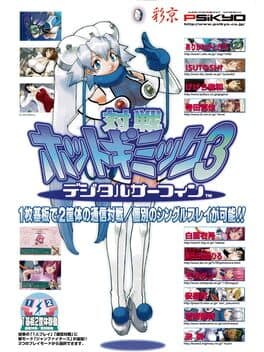
Taisen Hot Gimmick 3: Digital Surfing
Psikyo1999
A very meta game, it is an arcade game that mimics playing a game of mahjong on a PC. It also received a PC port, only increasing the mind screw of its concept.
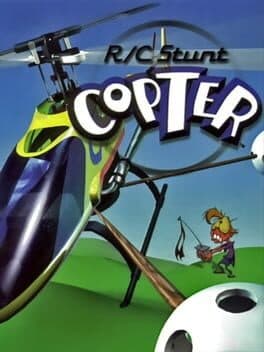
R/C Stunt Copter
Shiny Entertainment1999
R/C Stunt Copter is an Action game, developed by Shiny Entertainment with Big Grub and published by Titus Software, which was released in 1999. It was made with the intention of capturing what it is really like to pilot an RC helicopter. Being made by Shiny, the game also includes many fun and macabre challenges like trying to crash your helicopter into a target painted on a cow.
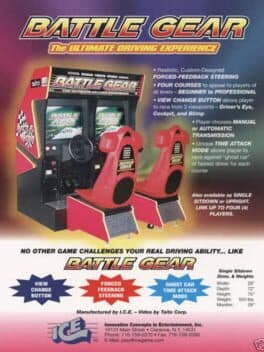
Battle Gear
Taito1999
Battle Gear is an entry in Taito's racing series previously known as Side by Side.
Densha de Go! 2
Taito GM R&D Sect. #21998
Densha de Go! 2 Kousoku-hen is a train driving simulation game. It was released in the arcades in Japan in 1998. It was ported to PlayStation, Nintendo 64, WonderSwan, Neo Geo Pocket Color, Windows, Dreamcast, and Game Boy Color. The Nintendo 64 version was titled Densha de Go! 64.
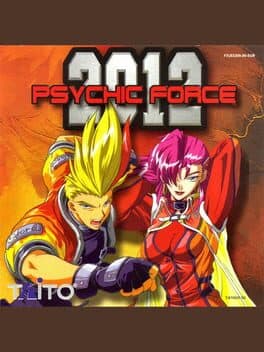
Psychic Force 2012
Taito1998
Psychic Force 2012, the sequel to Psychic Force, is a one-on-one fighting game with a twist. The matches take place inside a giant floating cube. You are able to fly, using your psychic abilities, around a 3D arena with six walls. Each of the ten available characters, Might, Regina, Wendy, Emilio, Setsuna, Patty, Gudeath, Genshin, Carlo, and Gates, are controlled with three buttons: guard, weak attack and strong attack. The effect varies with the distance. Next to the regular life meter, there is also a power meter. By using special moves, the meter is drained and your moves are limited. It is possible to recharge, and the capacity of the power meter expands when you lose a lot of health. Additionally, each fighter has its own unique moves, energy attacks and a weapon, which they use, mid-flight, to pummel their opponent. There are three main game modes: training, versus and a story mode using static anime-inspired images and in-engine cut scenes to tell the story. The story centers around two groups of psychics with differing ideals about co-existence with humans. In the middle of this are several neutral psychics with ties to members in either group.
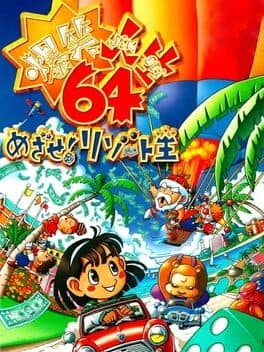
Bakushou Jinsei 64: Mezase! Resort-ou
Taito1998
Bakushou Jinsei 64: Mezase! Resort-ou is an interactive board game for the Nintendo 64 based on The Game of Life. It was released only in Japan in 1998.
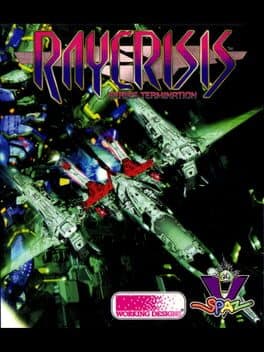
RayCrisis: Series Termination
Taito1998
RayCrisis, known as RayCrisis: Series Termination in North America, is the third game released in the "Ray" series of Taito shooting games. Chronologically, it is considered a prequel to the first game, RayForce. First released for arcades in 1998, it supported co-op mode for two players, which the PlayStation ports released in 2000 lack; these ports are the only games in the "Ray" series to lack co-op.
Chaos Heat
Taito1998
Chaos Heat is a co-op shooter with beat 'em up elements released by Taito for arcades in 1998. It was the first game released for Taito's G-Net arcade system. There are 3 characters to choose from with different stats and weapons, they all have an invincible dodge roll and a melee attack combo if close to enemies. The game has 5 stages that are made of multiple arenas which usually require a key card hidden on an enemy to progress, There are also objectives that split the path leading to different bosses and locations, though the final stage doesn't change.
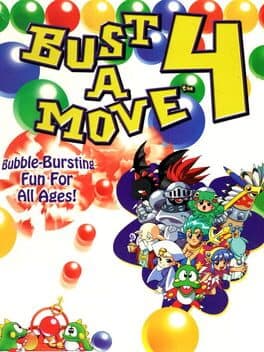
Bust-a-Move 4
Taito1998
Puzzle Bobble 4 (also known as Bust-a-Move 4 in North America and Europe) is the third sequel to the video game Puzzle Bobble and is the final appearance of the series on the Arcade, PlayStation and Dreamcast. The game is also the final title to be recognizably similar in presentation to the original. Building upon the success of Puzzle Bobble 3, the game adds a pulley system that requires two sets of bubbles, attached to either side of a rope hanging across two pulleys. The game contains a story mode for single player play. In total, the game features 640 levels. The console version features a level editor to either create and save a level, set a succession of levels, or to create an unlimited amount of extra levels and stages. It also has an alternative "story mode".
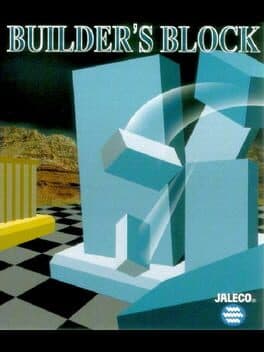
Builder's Block
Taito1998
Builder's Block (known as "LandMaker" in Japan and Europe) is a puzzle game in which you must construct buildings and then eliminate them for points. Although a certain color can only eliminate itself, the object of this game is to match colored blocks together to form buildings. Once you have made a building, you can eliminate it by shooting a block on the corner of it. The larger the building, the more benefits you'll reap when you destroy it! The game can be played three different ways: Puzzle mode, Battle mode, and Arcade mode. In the Puzzle mode, you must travel to one of seven different courses and construct specific size buildings. You must not destroy the buildings in this mode. The object is to build cities for the specific course or region you're in and make the cities grow.
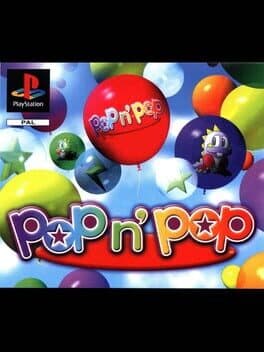
Pop'n Pop
Dreams1998
Pop'n Pop is a puzzle game similar to Puzzle Bobble; the player's goal is to release colored bubbles from the bottom on the screen within a limited amount of time, trying to match three or more bubbles of the same color. The difference in this version is that bubbles cannot bounce on the walls; the player can only release them vertically. The game features characters from various Taito games, such as Bub and Bob from the Bubble Bobble series, Tiki from The New Zealand Story, the dwarves from Doko Doko Don, and others.
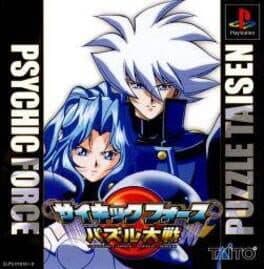
Psychic Force Puzzle Taisen
C.P. Brain1997
Psychic Force Puzzle Taisen is a puzzle spin off of the Psychic Force series, it was only released in Japan.
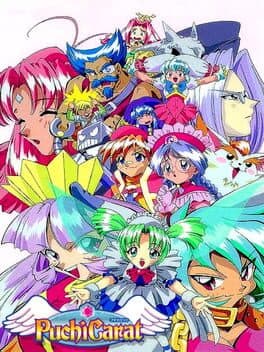
Puchi Carat
ITL1997
A 1997 arcade game developed by Taito (now SquareEnix) subsequently ported to PlayStation and Game Boy Color. The arcade version was re-released in 2006 as part of Taito Legends 2 for PlayStation 2, Xbox and PC. Later the game was released on the PlayStation Network. The general objective of the game is to destroy gem-like blocks using a ball and paddle.
G-Darius
Taito1997
G-Darius is a shoot'em up arcade game, released by Taito in 1997. It is the fourth arcade installment of the Darius series and the first in the entire series to feature three-dimensional polygonal graphics. Much like previous installments in the Darius series, G-Darius is a two-dimensional horizontally scrolling shoot'em up set in a fictional future.
Densha de GO!
Taito GM R&D Sect. #21997
Densha de GO! is a 1997 train simulator arcade game developed and published by Taito in Japan. Players are tasked with driving a train, adhering to the schedule and obeying signals and speed restrictions. It features real-world train lines from Japan, including the Yamanote Line and Keihin-Tohoku Line. The game was ported to the PC, Sega Saturn, and PlayStation. The concept for Densha de Go! was inspired by designer Akira Saito's personal fascination with Japanese train lines and railroads. He wanted to create a game that allowed players to familiarize themselves with driving a train. The controls were his primary focus as he wanted them to be accurate and responsive, and to mimic the controls of a real train—his father worked for the Kyoto City Transportation Bureau Facilities Division, which made this easier to accomplish. Saito included real-world railroads and trains to appeal towards other railroad enthusiasts, thinking that it could also attract more "ordinary" players for its realistic, familiar theme. As arcades at the time were dominated primarily by racing and fighting games, he believed its unique concept could make it stand out. Densha de Go! is among Taito's most successful games, preceded only by Space Invaders. The PlayStation version sold over one million copies. The game was well-received by critics for its controls, attention to detail, and unique concept. Some felt that its home releases lacked enough content and had poor visuals. It was followed by a long series of sequels, spin-offs, and reimaginings, beginning with Densha de Go! 2 in 1999.
Arkanoid Returns
Taito1997
Arkanoid Returns is an arcade game released by Taito in 1997 as part of the Arkanoid series. It was the fourth overall, and third to be released in arcades. The game was since ported to the PlayStation, with an updated home release being released afterwards titled Arkanoid R 2000. All versions were released exclusively in Japan, currently making it the only game in the series to never receive an international release. The enemy known as 'DOH' still did not get the message and after many years of silence decides to attack once again. The 'Vaus' space vessel better be ready to face new, yet familiar challenges, in order to stop 'DOH' once again. The gameplay remains similar to Arkanoid: Doh it Again, the previous game in the series released for the Super Nintendo, in that it features the same powerups , some re-used level designs, and the same board size. The initial arcade game contains only 50 levels, the environment changing every 9 levels.
Ray Tracers
Taito1997
The Tracer Team is looking for a few good drivers. Don't get the wrong idea, though. In Ray Tracers a "good driver" always exceeds 150 mph, crashes into everything possible and uses up nitro boosters like they're going out of style. so, have you got what it takes? A futuristic city is terrorised by Black Kaiser, an armed racer gang. Cindy Gibson believes the gang were responsible for her father's death and she wants revenge. Inheriting her father's awesome racing cars, Cindy creates Ray Tracers and recruits the best racers she can find. Now the real battle begins in a search for the truth! Created in the best anime traditions, Ray Tracers is instantly addictive and immensly playable. Varied scenery, tunnels, dips, sudden drops and obstuctions just begging for you to decimate! The monster-fast, explosive arcade smash from Taito - Ray Tracers.
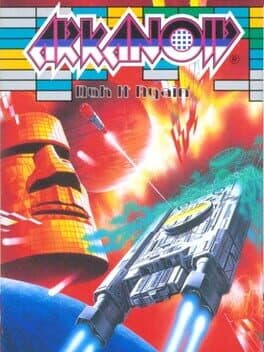
Arkanoid: Doh It Again
Taito1997
Much like the game Breakout, the player controls the "Vaus", a space vessel that acts as the game's "paddle" which prevents a ball from falling from the playing field, attempting to bounce it against a number of bricks. The ball striking a brick causes the brick to disappear. When all the bricks are gone, the player goes to the next level, where another pattern of bricks appear. There are a number of variations (bricks that have to be hit multiple times, flying enemy ships, etc.) and power-up capsules to enhance the Vaus (expand the Vaus, multiply the number of balls, equip a laser cannon, break directly to the next level, etc.), but the gameplay remains the same.
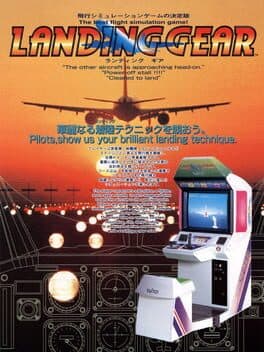
Landing Gear
Taito1996
In Landing Gear the player simulates control of aircraft much like its predecessor Top Landing. The controls require the player to use a joystick to control the plane to bank left, right, up or down as well as a lever to power the engine up or down. The game offers the Beginners' Class and Expert Class difficulties. The player takes control of a training biplane, but will get the opportunity to fly better and bigger aircraft through progression. The gameplay shows a realistic console of aircraft controls and a 3D landscape, in which the plane takes off, flies around and lands. The player must follow take off, flying and landing procedures to achieve as many points as possible, but can lose the game if an accident happens.

Magical Date: Doki-doki Kokuhaku Daisakusen
Taito1996
Magical Date is a skill game and dating sim published by Taito in 1996 for arcade and PlayStation. In this game, the player picks one of three possible girls to date and then starts off in a square as in a board game, proceeding to other squares which have different mini games. At junction points the player is asked questions about their date and has to pick the correct answer, or she will become upset. Released in October 1996 in Japan only. The subtitle of this game translates from Japanese as 'Cruel Heartthrob Tactics'.
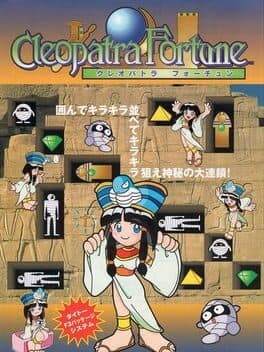
Cleopatra Fortune
Taito1996
Cleopatra Fortune is a falling-block puzzle game featuring a cutesy anime Egyptian theme. Groups of stones and gems of different shapes fall from the top of a well. Gems can be cleared by enclosing them within a group of stones, and stones can be cleared by making complete rows from them. Blocks will fall when those under them are cleared, which can create chains for more points. The game includes three different play modes. First is a standard endless mode where play continues until the player is overwhelmed by the blocks. Second is a versus mode for two players. Last is a puzzle mode where the player is given a set field, a set sequence of drops, and a specific goal such as clearing all the gems or achieving a chain of a certain length. The puzzle mode has the player rescuing Cleopatra's friends who have been trapped in a pyramid by the evil Sphinx.
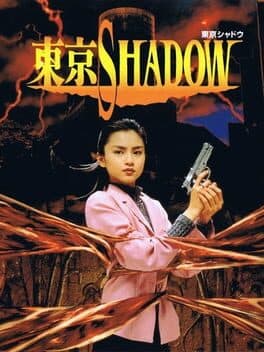
Tokyo Shadow
High Tech Laboratory Japan1996
An FMV adventure based on the eponymous light novel series by Aya Nishitani (the mind behind the Digital Devil Story novels, the basis of the Megami Tensei series). This horror-detective mystery adventure game takes place within the streets of a modern day Tokyo. In the town of Shibuya, the protagonist, Hedei, is killed by a demon while going on a date with his girlfriend and subsequently becomes a ghost. He then becomes able to travel between the spiritual world and the real world, defeating the demons roaming around town, and finally, destroying the demon Megiddo. The player can go around town looking for clues and finding the demons to advance the game. The game features different endings depending on the player's choices.
Bubble Bobble Also Featuring Rainbow Islands
Taito1996
Bubble Bobble Also Featuring Rainbow Islands (commonly shortened to just Bubble Bobble & Rainbow Islands) is a compilation of both Bubble Bobble and Rainbow Islands, two popular arcade games developed by Taito in the 1980s and early 1990s. It was released for the Sega Saturn (alongside PlayStation and PC versions) in 1996.
Bust-A-Move 3
Taito1996
The second sequel to Puzzle Bobble. It was released into arcades in September 1996 and later ported to the Sega Saturn, Sony PlayStation, Game Boy, Nintendo 64 and Microsoft Windows. It would be the final appearance of Puzzle Bobble on the Sega Saturn. Like its predecessors, the player is tasked with shooting balls at groups of balls, creating groups of 3 or more, which are then removed from play. A European remake is entitled Bust-a-Move 3 DX. released in America as Bust-a-Move '99.
Fighters' Impact
Polygon Magic1996
Fighters' Impact is 3D fighting game. The player can choose 1 from 8 playable characters (the game has a couple of bosses too) and fights against the others. Game has special combo system (players can come up with their own combos), and characters have a special sub-styles of fighting. The game uses 3 buttons: for punch, kick and evade. Rules are simple - the player must beat the opponent in 2 rounds. (The game has a small arcade-only update, named Fighters' Impact A.)
RayStorm
Taito1996
RayStorm is a scrolling shooter set hundreds of years in the future, and was one of the launch titles for the Sony PlayStation. RayStorm consists of eight stages where players must pilot their "R-Gray" spaceships shooting down anything that moves. Like all of the games in the Ray Series, enemies can be shot down with a primary weapon or by holding down a missile button to lock on to multiple enemies.
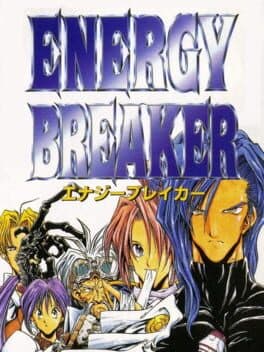
Energy Breaker
Neverland Co.1996
Energy Breaker is a tactical RPG in which you play as Myra, an amnesiac young woman with a thirst for adventure. The story begins with Myra being visited in a dream by a mysterious woman calling herself Selphia, only to meet her in real life the next day. On the advice of Selphia, Myra heads to Eltois, the Wind Forest, hoping to catch up with a man who may know about her past. Shortly after arriving at the Wind Forest, Myra joins up with Lenardo, an old scientist who's hunting for the Reincarnation, a legendary flower whose scent is said to have the power to bring the dead back to life... Energy Breaker utilizes a Tactics Ogre-style battle system, but it also allows the player to freely explore the world. It also includes character designs by Yasuhiro Nightow of Trigun fame.
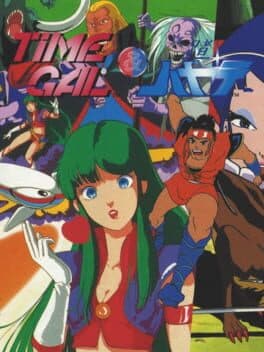
Time Gal & Ninja Hayate
Taito1996
Time Gal & Ninja Hayate is a compilation game on Sega Saturn and PlayStation.
Bust-A-Move 2: Arcade Edition
Taito1996
Bub and Bob are back! Like in Tetris in reverse, you shoot bubbles at an array of different-colored bubbles stuck in an ever descending ceiling, attempting to match them up three by three to make them disappear. This edition contains both puzzle challenges, multiplayer and normal progressive stages.
Chaos Seed: Feng Shui Kairouki
Neverland1996
Delve into the depths of vast underground labyrinths, seeking aid from the spirit world in bringing life back to a dying planet! Chaos Seed is a role-playing game with elements of action and strategy blended in. Players will have to make smart use of their resources and use feng shui to their advantage to proceed.
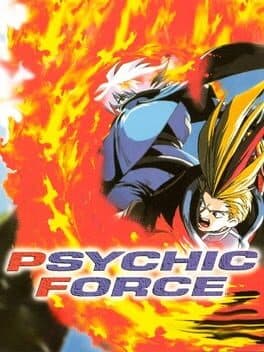
Psychic Force
Taito1995
The plot of Psychic Force takes place in the year 2010, where selected individuals are blessed with the power of psychic abilities. All people imbued with this power are called "Psychiccers" and uses a specific element such as fire, light, wind, electricity, gravity, time, or ice in fighting. Psychiccers are shunned by normal people in general because of their unnatural abilities and that most cases turn violent and deadly from within sight. All of that changes one day when a mysterious Psychiccer organization known as NOA appears and offers Psychiccers a place from within their company. Headed by a young British Psychiccer man named Keith Evans, NOA seeks to create a perfect utopia for Psychiccers and that they'll eliminate anyone who tries to stand in their way. Challenging NOA's ambition is a small independent group known as Anti-NOA and that one of its members, a young American Psychiccer man named Burn Griffiths, seeks to confront and stop his old friend Keith from going through with his extreme plans of creating a Psychiccer-only world.
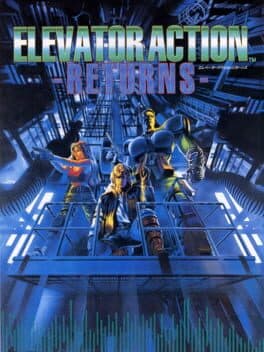
Elevator Action Returns
Taito1995
Elevator Action Returns, also known as Elevator Action II, is a 1994 run and gun arcade game developed and published by Taito. It is the sequel to Elevator Action (1983), featuring a much more gritty and realistic setting. Returns retains the elevator-based gimmick from the original, but expands the gameplay system and replaces the spy motif with a new scenario involving a paramilitary team fighting against a terrorist group.
Daibakushou: Jinsei Gekijoh - Zukkoke Salaryman-hen
Act Japan1995
Daibakushou: Jinsei Gekijoh - Zukkoke Salaryman-hen is a Miscellaneous game, developed by Act Japan and published by Taito Corporation, which was released in Japan in 1995.
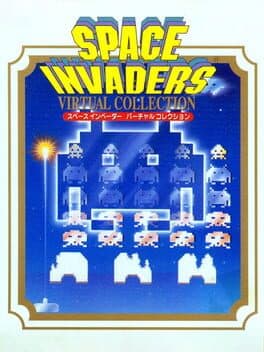
Space Invaders: Virtual Collection
Taito1995
Attention all Earthlings! Relentless alien hordes have been identified near you. Prevent the dangerous Space Invaders from landing on your territory. Use your cannon to defend against waves of descending alien invaders. Don't let them hit the ground or it's all over for you and the Earth! Destroy them and score points!
Twin Cobra II
Takumi Corporation1995
Twin Cobra II is the sequel to Twin Cobra. The game was in development by Toaplan, but it was closed down in 94. Since Taito owned the Tiger-Heli/Twin Cobra rights, being the publishers they let Takumi finish up the game. It was their first release.
Gekirindan
Taito1995
Gekirindan is a vertical shoot-'em-up by Taito where players select one of three different fighters against an army of mechs through different time periods.
Jupiter Strike
Taito1995
Jupiter Strike is a 3D shooter where you control a ship flying through space and have to battle multiple waves of aliens, asteroids, fly across planets, inside space stations and battle huge enemy bosses. The game only allows you limited movement of your ship, allowing you to focus on targeting and destroying as much as you can in your path.
Dangerous Curves
Taito1995
Arcade racing game punished and developed by Taito.
Bust-A-Move Again
Taito1995
Puzzle Bobble 2 is a tile-matching video game by Taito. The first sequel to Puzzle Bobble, it was titled in Europe and North America as Bust-A-Move Again on the arcade and Bust-A-Move 2 Arcade Edition on the home consoles. The game builds on the original by adding a tournament style variation on the two player game for play against the computer and by adding a branching map to the one player game, allowing the player to periodically select one of two groups of five levels to play next, leading to different game endings. Some of the contestants in the new tournament mode are based on characters from Bubble Bobble, including variations on a Monsta and a Mighta. Completion of the single player game gives the player a code which can be entered to unlock 'Another World' for the single player game, which features subtle changes to the existing levels to increase their difficulty and changes to all backdrops to resemble levels from Bubble Bobble. The various enemies from Bubble Bobble also make an appearance in the background of the credits sequence. The North American version of the original arcade release is much different than the other versions. One of the most major changes in this version is that Bub and Bob were removed from the game and replaced with a pair of disembodied hands. Also, the characters that were in the Vs. CPU mode were removed and replaced with a generic computer. The backgrounds from the original version were also removed and replaced with 15 new backgrounds, but this also means that the backgrounds get looped in the Puzzle mode, which is 30 stages long. The audio was also changed, and the voices in the game were removed, even though they were in English anyway. These changes were only made for the Taito F3 System version, since the Neo Geo and console releases are based on the original Japanese version.
Space Invaders '95: The Attack of Lunar Loonies
Taito1995
Space Invaders '95: The Attack of the Lunar Loonies is an Action game, developed and published by Taito Corporation, which was released in 1995.
Lady Stalker: Kako kara no Chousen
Climax Entertainment1995
An isometric RPG, Lady Stalker was the sequel to the more adventure game focused LandStalker.
Saibara Rieko no Mahjong Hourouki
Natsume Inc.1995
Saibara Rieko no Mahjong Hourouki is a Miscellaneous game, developed by Natsume and published by Taito Corporation, which was released in Japan in 1995.
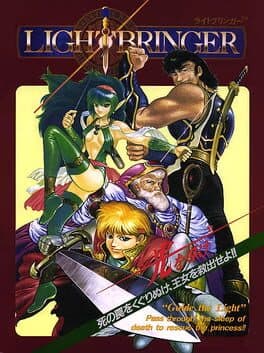
Lightbringer
Taito1994
《Lightbringer》是一款单机卡通漫画风格动作类Rogue肉鸽游戏,在游戏的世界里,有一种独特的魅力,它能让你每一次的挑战都充满未知,每一次的决策都至关重要,每一次的冒险都刻骨铭心。这,就是肉鸽类游戏的魅力。而《Lightbringer》,更是肉鸽游戏中的一颗璀璨明珠,等待着你的探索。在这里,你不是一个简单的玩家,而是一个真正的魔法师,为了守护家园,义无反顾地踏上征程。在《Lightbringer》的冒险之旅中,随机事件是最让人期待的元素之一。你永远不知道下一秒会发生什么。无论你是肉鸽游戏的忠实粉丝,还是喜欢挑战和冒险的玩家,《Lightbringer》都将是你不可错过的游戏。
Daibakushou: Jinsei Gekijoh - Ooedo Nikki
Act Japan1994
Daibakushou: Jinsei Gekijoh - Ooedo Nikki is a Miscellaneous game, developed by Act Japan and published by Taito Corporation, which was released in Japan in 1994.
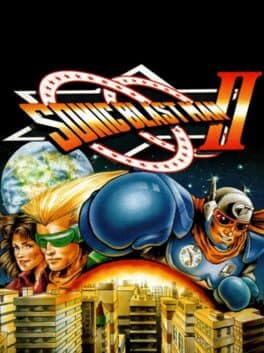
Sonic Blast Man II
Taito1994
Heavy Blast Man is once again trying to take over the Earth. People are being turned into hideous monsters and being made to serve him. Sonic Blast Man returns along with some new friends, Sonia and Captain Choyear. Together, they battle Heavy Blast Man and his minions to save the Earth from destruction. You control one of three characters in this side-scroller, as you fight your way through various levels filled with enemies and bosses. Beat them up with the basic punches and kicks or use your super moves to get out of tight spots.
Honkakuha Igo: Gosei
Aisystem Tokyo1994
Honkakuha Igo: Gosei is a Miscellaneous game, developed by Aisystem Tokyo and published by Taito Corporation, which was released in Japan in 1994.
Bubble Symphony
Taito1994
Bub and Bob are once again transformed into bubble dragons and have to climb up the Rainbow Tower to fight the Super Dark Great Dragon, while collecting potions to turn back into human form. Bubble Memories does very little to change the gameplay of the series, except for introducing giant enemies on some levels, different bosses, and a way to blow giant bubbles after charging up (especially for killing the giant enemies). (Giant bubbles can be blown by charging up the character. The bubble button is held until the character's horns begin flashing, and then releasing the button.) There are a total of 80 levels, while the last 10 levels can only be accessed by collecting 7 potions.
The Flintstones: The Surprise at Dinosaur Peak!
1994
Pebbles and Bamm-Bamm have wandered away from home and it looks like Fred and Barney found them. Unfortunately, an active volcano stands in the way. Now, Fred and Barney must travel across the pre-hysterical world of Bedrock to rescue the kids! Fred swings a mean club and Barney's sling carries a nasty sting in this adventure for the whole family. Scale the side of a cliff, use crocodiles as trampolines, and leap into action as Bedrock's most famous citizens go looking for their children. Collect the hidden five fabled fire gemstones to pay a greedy Pterodactyl to return Pebbles and Bamm-Bamm to their homes!
Darius Gaiden
Taito1994
Darius Gaiden is a two-dimensional shoot'em up. The player controls a space ship named the Silver Hawk and must guide it through scrolling stages, destroying enemies and avoiding obstacles along the way. The ship is armed with forward-firing missiles, aerial bombs and a protective force-field, all of which can be upgraded by various power-ups that are dropped by specially-colored enemies when they are destroyed by the player. New to the Silver Hawk's arsenal in Darius Gaiden is the 'black hole bomb.' When fired, the black hole bomb will create a large vortex in the center of the screen, which sucks in enemies and projectiles on the screen for a short moment, until it explodes into a powerful ball of lightning that inflicts massive damage onto every enemy on the screen. Another feature introduced Darius Gaiden is the ability to capture minibosses, who appear in every stage. Each miniboss has a small, circular ball placed on them that, after receiving enough damage, will detach and float away, causing the miniboss to turn idle. If the player collects the ball, the miniboss will follow and aid the player. After a brief period of time, or the player loses a life, the miniboss will explode. A few months following release, update to the arcade version was later released entitled "Darius Gaiden Extra Edition". This version of arcade game contains rearranged levels, as well as automatically-enabled auto fire, two extra weapon power levels (bigger wave shot and a bigger red wave shot as well) and an all-stage mode which can be accessed by starting the game in 2P side.
Super Kyuukyoku Harikiri Stadium 2
NOW Production1994
Super Kyuukyoku Harikiri Stadium 2 is a Sports game, developed by Now Production and published by Taito Corporation, which was released in Japan in 1994.

Global Champion
Taito1994
Global Champion follows the same fighting game conventions established by Street Fighter II. The player's character fights against his or her opponent in best two-out-of-three matches in a single player tournament mode with the computer or against another human player. The player has a character roster of nine fighters to choose from, and three bosses, each with their own unique fighting style and special techniques.
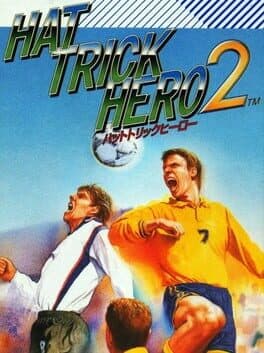
Hat Trick Hero 2
Neverland1994
Hat Trick Hero 2 is a Japan-exclusive video game for the Super Famicom. A North American release Super Soccer Champ 2 was scheduled, however it was canceled. The game permits players to play soccer on an international level with all the national teams that took part in the 1994 FIFA World Cup, except the inclusion of Japan instead of South Korea. Most of the text is in Japanese; including the players' surnames. Eight different players can become the captain of the player's team and the team can use one of five different formations (4-4-2, 4-3-3, 3-5-2, WM and libero). All of the formations are used in modern day soccer except for the WM formation (which saw common use in England during the 1930s). The star player (captain) chosen kicks a shot (super shot or hyper shot) that pushes the goalkeeper into the stands, just like in Hat Trick Hero. Exhibition, world league (similar to a World Cup tournament) and Taito Cup (24 teams to beat) are the three possible variations in the game. After beating all the 23 national teams in the Taito cup mode, there is a final game against a team with the abbreviation "NLC". Mode 7 graphics give the game a sense of perspective. Hat Trick Hero 2 is the sequel to Football Champ in Japan (where it was known as Hat Trick Hero), and is loosely based on the coin-operated video game Hat Trick Hero '93.
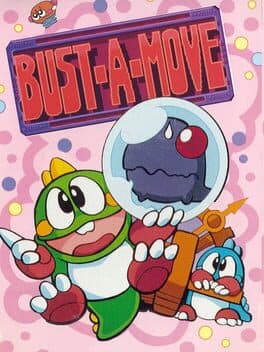
Bust-A-Move
Taito1994
Bust-A-Move (also known as Puzzle Bobble) is a real-time puzzle game in which the player controls a device called "pointer" at the bottom of the screen, aiming and releasing randomly colored bubbles upwards. Depending on the aiming, the bubbles may float up directly or bounce off the walls, changing their trajectory. The goal is to aim the bubbles in such a way that they will touch identically colored ones. When such bubbles form a group of three or more, they pop and disappear from the screen. If the ceiling of the area is covered by too many bubbles, it will gradually descend; the game is over when it nearly reaches the player-controlled pointer. Should the player fail to release the bubbles within a specific time limit, they will be released automatically, unaffected by the pointer's aiming.
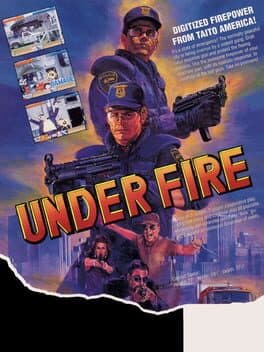
Under Fire
Taito1994
A once peaceful city has been turned into a complete nightmare by an extremely violent gang who call themselves "Hoppers". The officers of the Special Police are called in to mow down the Hoppers and save the city from certain doom! There are six rounds of pure mayhem as you mow down enemies in quick succession, as well as having to avoid innocent bystanders. Unlike many gun arcade games during this time period, Under Fire uses an infrared sensor to track gun movements instead of the timing of a CRT monitor, eliminating the need of screen flashes.
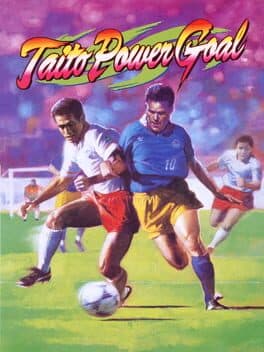
Taito Power Goal
Taito1994
A soccer game on Taito F3 hardware.
The Flintstones: The Treasure of Sierra Madrock
Taito1994
Rock this town! Join the gang from Bedrock on their latest fun filled adventure. It's your chance to play with the stars! -12 megs of excellent action! -One or two players! -Five worlds with multiple stages provide hours of entertainment! -Races, roulette, and many more mini-games! -Awesome intermission screens bring Bedrock to life!
RayForce
Taito1994
RayForce (released in western Arcades as "Gunlock") is a top-down shooter. There are seven levels to play, ranging from battles in the atmosphere of planets to battling over mountain ranges, each with their own standard huge bosses at the end of these levels. The player takes control of a starfighter called the RVA-818 X-LAY, out to destroy any opposing forces.
The Jetsons: Invasion of the Planet Pirates
Sting Entertainment1994
George Jetson was about to run out to work when his pal Captain Zoom appears out of thin air. Zoom tells him that Zora, the leader of SPREE ("Space Pirates Revelling in Evil Enterprises"), is planning on looting this solar system of all its resource! Unfortunately, in his last encounter with Zora, Zoom has used up all his strength and now he is powerless so he asks George to take over. He gives George his Pneumo Osmatic Precipitator (or P.O.P.) and bids him good luck. Can George save his family and this galaxy? Guide George through 9 stages of intergalactic action armed with only his wits and the P.O.P....which is like a super vacuum. The P.O.P. can be used as a traveling tool by sucking onto walls and ceilings, it will enable George to climb up and across platforms. As a weapon, the P.O.P. can be used to suck up blocks or enemies and spit out at other enemies. George can also use the P.O.P. to breathe under water! Talk about multi-functional! George's conditions are indicated by the number of hearts he has at the top of the screen. By collecting more hearts, it will refill George's health. Food items will increase your score and by getting a high enough score in each stage, you may get to play a bonus game.
Ninja Warriors
Natsume Inc.1994
Ninja Warriors plays as a side scrolling beat 'em up, and is a single player adaptation of The Ninja Warriors arcade game. Players can choose from 3 different Ninja Warriors: Ninja, Kunoichi or Kamaitachi. The characters play differently, but share some common controls. Each can attack, jump, grab the enemy, block attacks or unleash a special attack on the entire screen. This special attack charges up gradually and can be reset by being knocked to the ground.
Super Chase H.Q.
1993
Super Chase H.Q. is an enhanced sequel to Chase H.Q. As usual, you must drive your way towards a criminal's vehicle, which is known to be involved in some crime, while avoiding passing cars to gain points. Your car also comes equipped with three turbos, which can be useful if you are way behind the vehicle. But this time, cars aren't just the only things that you have to worry about. You will also encounter bikes that shoot or throw firebombs at you, as well as cars that go the wrong way. (If you crash into one of these, you'll be sent flying through the air.) Not to mention other obstacles such as barricades. Furthermore, as well as the criminal's damage indicator, you also have your own. When you finally catch up with each criminal, they are likely to shoot at you if you get too close to their vehicle, but you may encounter criminals who have different ways of attacking you. The fourth criminal, for example, launches a missile at you if you are further behind him. Once you are shot at and hit, your indicator decreases for every time you are hit, but this rule does not apply when you're hit by passing cars. When your indicator is empty or when you're out of time, the game ends. When you complete each round, a statistics screen will appear, and you are awarded points based on the time remaining, how much damage you've done, and the number of nitros that are used. One of the options allow you to display the game's speedometer in either MPH or Km/h. The game also has a storyline, which can be viewed in between rounds.

Tube-It
Taito1993
Players attempt to stack tubes to complete them in this puzzle arcade game from Taito.
The First Funky Fighter
1993
The beautiful Chris has been kidnapped by flying crocodiles! Now Chris's boyfriend Randy must fight his way through hoards of reptilian monsters to save her!
AI Shogi
ASCII Entertainment Software, Inc.1993
AI Shogi is a Miscellaneous game, developed and published by Taito Corporation, which was released in Japan in 1995.
Super Kyuukyoku Harikiri Stadium
1993
Super Kyuukyoku Harikiri Stadium is a Sports game, published by Taito Corporation, which was released in Japan in 1993.
Super Nova
Taito1993
Darius Force, also known in North America as Super Nova, is a shoot 'em up game released for the Super Nintendo in 1993. One main difference between this game and the rest of the Darius games is that the player can choose one of three Silver Hawks to play. The green one is the Silver Hawk of Darius. The blue one is the Silver Hawk of Darius II. The red one is a new prototype of Silver Hawk that exists only in this game. There are three power-ups in this game, which can be obtained in three ways: - Destroying a complete formation of ships like in Darius II and Darius Twin or amoebas. - Destroying a flashing meteor during a meteor rain. - Destroying a futuristic cage on the floor and/or ceiling of an area. The power-ups for this game are the red bubble (shot and bomb power up), the blue bubble (shield regenerate and level up), and the green bubble (randomly gives a bonus point or an extra ship). There is also a special power up that can destroy all enemies on screen if it's destroyed (like Darius II) or can make the Silver Hawk shoot a powerful laser beam if its grabbed by the player. There is no power up bar, which means that if a Silver Hawk is destroyed, the shots and bombs are powered down to the minimum level. Also, when the player loses a ship on a stage, it is returned to the 'check point' (not identify in game) of that stage, if the ship has lost during a boss also return the last 'check point' before the boss appear. Like Darius Twin, the player uses (by default) the Y button for shot and the B button for dropping bombs. As long as the player keeps pressed both buttons, the shots are powered down one level. The player can switch between bombs and side laser guns by pressing the R button. The stages map for this game is very different of the rest of the Darius games. This map contains 15 stages, but only allows the player to take the forward or up paths, until the player reaches the L, N or O stage. Each one of those three stages contains its own boss and ending.
Daibakushou: Jinsei Gekijoh - Doki-doki Seishun-hen
Act Japan1993
Daibakushou: Jinsei Gekijoh - Doki-doki Seishun-hen is a Miscellaneous game, developed by Act Japan and published by Taito Corporation, which was released in Japan in 1993.
Prime Time Figther
Taito Corporation1993
Prime Time Fighter is a 2D versus boxing game where you participate in an all weight boxing tournament - as all weight classes have been merged in to the Prime Time Fighter world championship. The game offers six boxers from around the world to choose from, each with their own moves. They are: Tamshing Vaortao from Thailand, Shouichi Kanou from Japan, Michael Eldorado from the USA, Aldebaran Nipper from Canada, Bruce Hasimikov from Rusia and Storm Viper form Brasil. You can win with a K.O. or a technical K.O. over three rounds. It's possible to play solo or against a friend.
Lufia & the Fortress of Doom
Neverland1993
The Sinsitrals, four masters of Doom, arrived in this land on their floating island 100 years ago. You will begin your quest by travelling through time to join in a temendous battle against them--and you will determine the outcome. When you return to present time, you and Lufia, your companion, must join forces with two others to prevent the Sinistrals from regaining control of your world. It will be a long and difficult task--This land is larger than that of most RPG games. And in the end, the balance of fate will be overturned in a contest of love and betrayal that could destroy you all.
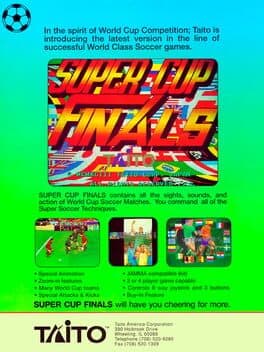
Super Cup Finals
Taito1993
A soccer game with a perspective playing field. Play against the computer or other human players.
The Jetsons: Cogswell's Caper
Natsume Co., Ltd.1993
George must save Planet M38 from Cogswell's destruction! Elroy, Jane, Judy, Astro and Rosie the Robot will give George the things he needs to meet the challenge. Using his anti-gravity boots, glider, and jet board, George will be walking on ceilings, dodging aliens and flying through danger on his way to stop Cogswell. Leap into the future and rescue another world with the JETSONS!
International Tennis Tour
1993
International Tennis Tour is a video game about tennis and being an international superstar. There are practice, exhibition, and career mode where the player is given a generous number of dollars and must compete on the world tennis circuit in order to gain more money.
Bubble Bobble Part 2
Taito1993
A new breed of heroes! Cubby and Rubby, descendants of the famous Bubby, must battle the Skull Brothers and their army of fiends to rescue a friend in danger. Fortunately, our dinosaur heroes can blow bubbles that will destroy their foes. They will rain fire, floods and tornado!
The Flintstones: King Rock Treasure Island
1993
The Flintstones: King Rock Treasure Island is an Action game, developed and published by Taito Corporation, which was released in 1993.
Gensou Tairiku Aurelia
1993
You start the game as a nameless warrior (you can name the hero as you like). He returns to his home village, only to find it burnt down, and his beloved woman dead. Kneeling at her grave, the warrior swears revenge, but this quest soon turns out to go far beyond it, as demonic forces are threatening the land! Gensō Tairiku Aurelia is a side-scrolling action RPG. You control the warrior (and other characters whom you can control later in the game) by moving him through platform locations - towns, forests, dungeons, etc. In towns you can talk to people to advance the plot. In wilderness areas, you fight enemies by attacking physically or using magic spells in real time. You can also jump in this game. You get experience points for defeating enemies, gain levels and stronger magic.
Ryu Jin
Taito1993
Ryu Jin is a vertical shooter produced by Taito in 1993.
Batsugun
Toaplan1993
Experience the epic conclusion of Toaplan's legendary shooter series with Batsugun including the lauded Special version! Choose your favorite character and spaceship in this thrilling genre-defining bullet-hell action. Now on PC with modern enhancements!
Command War : Super Special Battle & War Game
Taito1992
It's a strategy game, that sees you moving troops around a simple board. When one of your troops meets one of the enemy's troops, they enter a little battle.
Grid Seeker: Project Storm Hammer
Taito1992
Grid Seeker: Project Storm Hammer(グリッドシーカー)is a vertically scrolling shoot 'em up arcade game developed by Taito. In it, players control one of three different modern fighter crafts and can collect enemy bullets using shielded guns known as Grids.
Chase H.Q. II
Taito Corporation1992
Similar to Chase H.Q. in this sequel you drive on a freeway trying to catch up with five criminals who have committed felonies, with time against you. You can choose one of three vehicles to drive: a sports car, 4-wheel drive, and a semi truck. Each one of them having their advantages and disadvantages.
Daibakushou: Jinsei Gekijoh
Taito1992
Daibakushou: Jinsei Gekijoh is a Miscellaneous game, published by Taito Corporation, which was released in Japan in 1992.
Dino Rex
Taito1992
A game where a different types of dinosaurs fight each other using their teeth and claws until one defeats the other. All dinosaurs have little human masters. The master of the losing dino will be eaten at the end of the fight. Taito, the Dino Rex maker, released 403 different machines in our database under this trade name, starting in 1967. Other machines made by Taito during the time period Dino Rex was produced include Arabian Magic, Dead Connection, Euro Champ '92, Galactic Storm, Grid Seeker: Project Storm Hammer, Star Trax, Warrior Blade: Rastan Saga Episode III, Racing Beat, Pu-Li-Ru-La, and Power Blade.
The Jetsons: Robot Panic
1992
Robots have attacked Orbit City and only George Jetson can stop them. With the help of his family, George will navigate through multiple levels filled with robots and hazards. Ultimately, he will have to defeat the robot leader to save the day in THE JETSONS: Robot Panic.
Power Blade 2
Taito1992
Time to sharpen the blade! NOVA is suddenly called to take action against a cyborg army. The Delta Foundation has developed a line of fighting robots that pose a threat to national security. NOVA has been picked to eliminate the danger by destroying the Delta Foundation - all five locations. Fortunately, he will be using different suits which give him the ability to walk on ceilings, swim long distances, and fly - not to mention the latest top secret suit. And of course, NOVA will be wielding the ancient Power Blade, a weapon of art and science. He must draw on all his skills and cunning to defeat these near-perfect fighting machines!
Knight Quest
1992
Sir Will accepts a series of bold quests to defend his land. Battling dread beasts and wizards most foul, the brave Knight shall face his greatest fears - and his finest hours.
Arabian Magic
Taito1992
The game is set in the mythical world of The Arabian Nights. Some time ago, the Evil One plagued the peaceful kingdom of Shahariyard. In order to save the King - who, by sorcery, had been transformed into a monkey - a group of heroes must find the Jewel of Seven Colors and release the evil hex. However, formidable monsters are lurking along their path. Prince Lassid, Princess Lisa, Sinbad and Afshaal, each armed with their own special magic and powers, set out on the quest for the Jewel of Seven Colors. Suspenseful battle scenes, skillful sword fights and a "magic lamp," which fells all enemies in a single blow, await the players. Their adventure to restore peace to the kingdom now begins.
Little Samson
Takeru1992
Leaping, smashing, scorching, and exploding its way into your collection! Little Samson—the rarest and most coveted game of the 8-bit era—arrives on modern systems for everyone to enjoy!
Gun Buster
Taito1992
An extremely innovative first-person shooter by Taito.
Riding Fight
Taito1992
Burn and Keith are bounty hunters, two men ready and willing to take on the advanced crime of the cybernetic future in exchange for cold, hard cash with the use of their hoverboards.
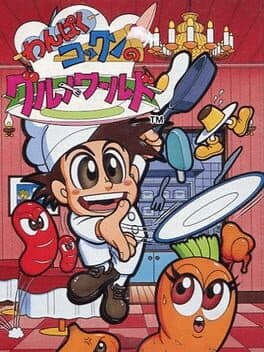
Wanpaku Kokkun no Gourmet World
EIM1992
Wanpaku Kokkun no Gourmet World is a 2D platformer. Later released as Panic Restaurant in the West with a changed main character sprite and increased difficulty.
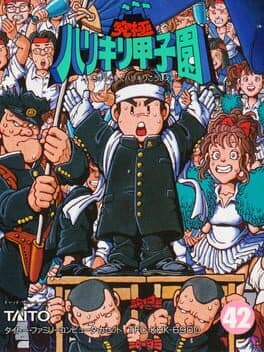
Kyuukyoku Harikiri Koushien
1992
Kyuukyoku Harikiri Koushien is a baseball game for the Famicom, not unlike any of the others. The main drawing point with this one is that there are close to 100 teams you can choose from. Plus, the traditional baseball stats are not used; rather each player has a set rating for strength and speed, and that is all you get to go by. A neat addition is the power meter, which can help your team get ahead if used properly.
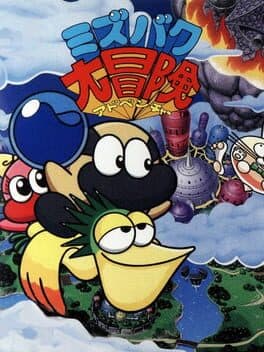
Mizubaku Daibouken
Taito1992
This is a single player platform game that features Hipopo, a platypus (referred to as a hippo) who must fight his way through a large number of enemy-packed levels in search of his missing girlfriend - rescuing other platypuses along the way. Hipopo is armed with water bombs which can be thrown at enemies to soak and damage them. Once soaked, the enemies can then be kicked and destroyed completely. Enemies left unkicked however will dry out and recover after a short period of time. The level design presents moving platforms, collapsible floors, boats and water-wheels all making an appearance. Small plants also appear on certain levels which can be "watered", causing them to grow and creating new platforms. Appropriately enough for a game which features water as the main weapon, many of the enemies and the later levels have a fire thematic. He can also collect cakes and other items to gain more points.
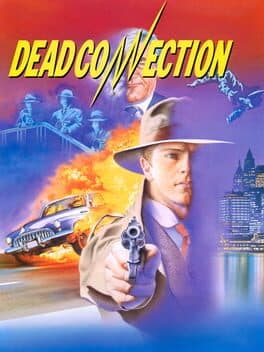
Dead Connection
Taito1992
Dead Connection is an arcade game released by Taito in 1992. The game takes place on September 5, 1953 "in a big city somewhere". It features a group of detectives who set out to fight a crime family. The game has a strong Film noir vibe, shown through the appearance of the detectives and the featuring of a female protagonist. Each stage is preceded by a short cinematic interlude that explains the transition between the game's different locales.
Ring Rage
Taito1992
This battlerama has eight different characters to choose from, each decked out with their own colorful costumes, personal fighting styles and special power moves. The characters are Deckard, K. O. Joe, Killer The Shaddam, Spike, Knuckle, Yasha-The Ninja Warrior, Gunboat Rodie, and B. B. Scorpion. Challenges include battles in the ring, crazy cage matches, warehouse wars, and junkyard brawls.
Silent Dragon
Taito Corporation1992
In the 1990's, a dark force appears on our planet. it's the evil Dr. Bio, the twisted genius behind "Bio-Roid". By using advanced biotechnology, he creates mutant life forms with superhuman strength, terrorizing the human population. To stop the evil doctor, four men, each with courage and fortitude, are chosen to wage a just war against these creatures. And now, that battle has begun!
Kick Master
KID Corp.1992
In this game the player will have to use 5 keys, 4 of which must be pressed one at a time, as soon as the blue ball is in the place corresponding to the key and then press the enter key, done that the sphere should disappear and then the character will kick the object in front of you.
Warrior Blade: Rastan Saga Episode III
Taito1991
Warrior Blade in the final game in the Rastan series by Taito. Unlike the Previous two games, Rastan III is a beat-em-up.
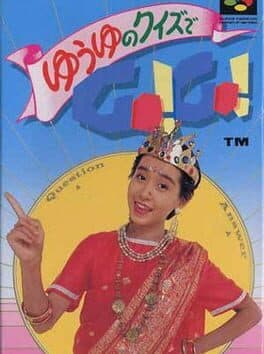
Yuuyu no Quiz de Go! Go!
Taito1991
Quiz game released by Taito for the Arcade (1990) and Super Famicom (1992). The game features teen idol Yukiko Iwai (the eponymous Yuuyu) both in the game and on the cover. Yuuyu no Quiz de Go! Go! is a quiz game from Taito that uses the likeness of teen idol Yukiko "Yuuyu" Iwai. The player answers questions on various topics from anime to politics to score points, making sure not to accrue too many wrong answers. Success is based on a percentage rather than a quota: in order to pass a round with a requirement of 60, the player has to correctly answer three out of every five questions (or better). Yuuyu was a member of the idol group Onyanko (Kitten) Club, which were hugely popular in Japan during the late 80s. She emcees the in-game quiz show via digitized photos and voice samples, introducing the many rounds and frequently chanting "Go! Go!".
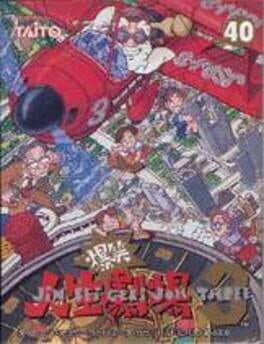
Bakushou!! Jinsei Gekijoh 3
Taito1991
Bakushou!! Jinsei Gekijoh 3 ("Burst of Laughter!! Theater of Life 3") is a virtual life board game developed and published for the Nintendo Entertainment System by Taito on December 20th, 1991 in Japan. It is the third installment in the Bakushou!! Jinsei Gekijou series and follows in the same tradition by allowing up to four players to take part and travel around a virtual board through chance rolls, playing out a virtual life in its entirety from childhood to senior citizenship making important decisions along the way.
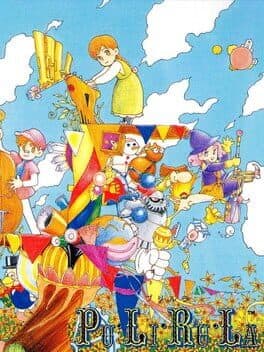
Pu Li Ru La
Taito1991
Pu·Li·Ru·La is a surreal arcade beat 'em up created by Taito, first released in 1991. Pu·Li·Ru·La takes place in Radishland, a land where time is kept correctly flowing with a time key. However, "a bad man appeared and stole the time key to stop the time flow. The towns were attacked one by one, the time flow was stopped and they received damage", as the English translation explains. Zac and Mel, the playable characters, are requested by an old man to defend their town. The old man also gives the children a "magic stick" to fight with
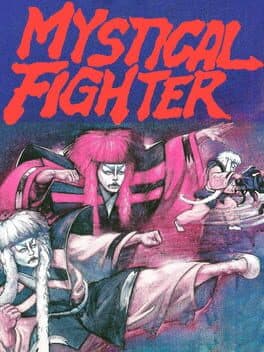
Mystical Fighter
KID1991
A kabuki warrior steps into a time portal to go back to the Shogun dynasty to defeat the evil lord Kabuki. The game is basically a side-scrolling beat-em up game, with the player controlling the kabuki warrior. The player can deliver kicks and punches to hordes of enemy minions throughout each stage. Other moves at the the players disposal are jump kicks, the ability to lift enemies and throw them, and the ability to grab enemies and spin them like a tornado. The player can also use a special magic power that gets charged by picking up scrolls throughout the level. The player can also find life bar refills throughout a stage also.
Ashita no Joe
Wave Corp1991
The player stars as Joe Yabuki, an aspiring boxer, as he goes from an unknown kid from the rough side of town to a boxing champion. The game follows the traditional beat 'em up format, with some portions taking place inside a boxing ring and others taking place in the back alleyways, as Joe trains, fights bullies, and then fights in the boxing ring.
Metal Black
Taito1991
A shoot 'em up released by Taito. It is both "Project Gun Frontier 2" and "Darius III"; the game was developed by the Gun Frontier team, and ties to the original Darius development still exist. Players control the Black Fly on their mission to defeat the forces of Nemesis in hopes of saving the human race. Players collected many small power-ups to build their weapon's power. Players could then unleash a large beam attack that would drain their power level back to zero. Bosses could also collect these power-ups and use similar beam attacks. When a player's beam collided with a bosses, it would culminate in a spectacular reaction before the more powerful attack would push the weaker down.
SD Keiji: Blader
NMK Co. Ltd.1991
SD Keiji: Blader is a Role-Playing game, developed by NMK and published by Taito Corporation, which was released in Japan in 1991.
Acrobat Mission
UPL1991
The players takes controls on one of two surviving fighters pilots, 'Jet' a male pilot and 'Nova' a female pilot and both flying the Icarus, a fast and powerful space-fighter, which comes equipped with a Standard laser. Two more weapons are available throughout the game - the wide shot (W) which spreads out in front of the ship and the Hurricane shot (H) which fires clusters of rotating balls of energy. Holding the fire button charges up a special attack and each weapon features a different energy blast and damage factor. The ships can also hold a maximum of two smart-bombs, one under each wing - although they can be activated by the players, they also do fall off easily and can be detonated by enemy shots. Interestingly, the Icarus can't collide with other ships or any part of the scenery - instead, it bounces off and only suffers damage from enemy shots. However, once the shield is depleted, the ship will fly out of control for a few seconds and grant the players a last chance to inflict damage to any remaining enemies before it explodes.
Solitary Fighter
Taito1991
Violence Fight received a sequel in 1991, which was technically released after Street Fighter II, but according to internet lore only three weeks part the two. Internet sources also claim that this update was originally called Violence Fight II in Japan, but there is no solid proof to that claim. The only available versions are named Solitary Fighter. It's generally the same game, although the two bosses from the original are playable here. When fighting in the wider arenas, mostly female mooks keep appearing one at a time to support the main opponent, which are taken out with a few hits, but nonetheless very annoying. The bonus rounds add a bear to the tiger, but both fights now take places in cages with bars so thick that it's sometimes hard to see what's going on.
Tetrastar: The Fighter
Home Data1991
Tetrastar The Fighter is a 3D shooter by Home Data and published by Taito. In the year 2089, humanity forms an alliance with the intergalactic Baal empire but soon Earth finds out about the alien's true intentions. A group of resistance assembles the project Tetrastar to prepare for the potential upcoming threat. But the project lead by the general Nelson is soon put on hold and a short lived peace settles in. But the whole thing was nothing more than a hostile invasion and the Baal empire finally breaks the alliance and attacks Earth. The player's first mission is to prevent New York to be destroyed and then to retrieve Omega, the faithful robot navigator, to warp to the alien's mother world. The Tetrastar super fighter can move around the screen and fire a standard Vulcan gun. Special weapons become available later in the game from Bombs (WID), Homing Missiles (AAM), Napalm Bombs (NAP) and the powerful Bio Cannon (BIO) - they are accessible via the Select button and triggered by pressing A. They all come in limited quantities and must be refilled by picking up power-pods along the way. Tetrastar features nice stages and cutscenes between them unfold the game's episodic story.
The Adventures of Star Saver
A-Wave1991
A police officer named Tony and his sister are forced to go inside an unidentified flying object by a group of aliens who are planning to invade the galaxy. They are later exiled to a distant planet after refusing to engage in espionage for their side. Tony finds himself stranded on a strange planet where nothing is familiar (and without his sister). However, a mech that has a vast knowledge of telepathic skills saves him and empowers Tony with the ability to take on the aliens' army. This machine becomes an important ally in the battle to save Tony's sister and stop the extraterrestrial invasion before it's too late. The game forces players to fight strange aliens across the galaxy. Players collect power-ups while in the mech but loses it after a single hit. The game includes some surreal enemies like a typical dog and some music notes. In the Japanese game, you play as the girl trying to save your brother. In the international version, you play as the boy instead, trying to save your sister.
Spanky's Quest
Natsume Co., Ltd.1991
Wicked witch turns fruits into monsters, Mopoland Population famished! Welcome to Mopoland, where the evil witch Morticia has cast an evil spell and turned all the fruits of the mighty kingdom into fiendish monsters. Spanky, our primate hero is on a quest. Armed with his magic ball, Spanky must hunt down Morticia through six grueling levels to liberate Mopoland, and save it’s citizens from a certain famine. -Fun, playful characters. -Password continue feature. -Unique traps and bonus rooms. -Fantasy/Adventure for the entire family.
Ah Eikou No Koushien
Taito1991
Ah Eikou no Koushien is an arcade baseball game which is played under normal baseball rules with the exception being that players can charge themselves up to attempt a better hit or pitch.
Darius Twin
Taito1991
Darius Twin is a shoot 'em up video game released for the Super NES in 1991. It was the first new installment in the Darius series to not be originally designed for the arcades, and also the first to have a normal 4:3 screen-ratio. Interestingly, while it's a unique game in the Darius series, it appears to reuse sprites and background designs from Darius and Darius II. Also, while the names of the bosses are new, they really are reworkings of previous bosses for the most part.
Power Blade
Taito1991
22nd CENTURY WARRIOR! When New Earth's Master Computer is attacked by aliens, only NOVA, lord of the ancient Power Blade, can hope to battle through to Control Center and restore the Database!
Bakushou!! Jinsei Gekijoh 2
Taito1991
Bakushou!! Jinsei Gekijoh 2 ("Burst of Laughter!! Theater of Life 2") is a virtual life board game developed and published for the Nintendo Entertainment System by Taito on May 22nd, 1991 in Japan. It is the second installment in the Bakushou!! Jinsei Gekijou series and similarly follows the previous game by allowing up to four players to take part and travel around a virtual board through chance rolls, playing out a virtual life in its entirety from childhood to senior citizenship making important decisions along the way. Introduced in this version was the concept of going to prison for crimes, and gambling in a casino.
Kyuukyoku Harikiri Stadium III
Taito1991
Kyuukyoku Harikiri Stadium III is a Sports game, developed and published by Taito Corporation, which was released in Japan in 1991.
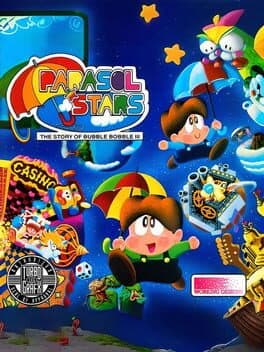
Parasol Stars: The Story of Bubble Bobble III
Taito1991
Break out the bandages and get ready for some finger-searing action! Join Bubby on his latest quest to save the universe, this time with a Magic Umbrella. Umbrella!? Yes, Umbrella! This powerful parasol puts the elements themselves at your command! Shock the tonnage out of the whales with Lightning! Fry the feathers off the crazed, beady-eyed birds with Fire! Or, drown the demented dinosaurs with a tidal wave of Raindrops! Need help? Your buddy Bobby is always nearby. Have a friend plug into your TurboTap and blast into two player simultaneous play. Be prepared for a quest that will take you to eight amazing planets, forcing you to uncover the secret that will unleash the Parasol Stars! Parasol Stars is the third game in the Bubble Bobble franchise (and is often labeled "Parasol Stars: The Story Bubble Bobble III"), as well as a semi-official sequel to the second Bubble Bobble spin-off, Rainbow Island.
Gun Frontier
Taito Corporation1991
Gun Frontier is a 1990 arcade vertical shoot-'em-up developed by Taito. Taking place on the planet gloria, a newly colonised planet with a manner of living similar to that of the american west, the player fights to defend settlers from airborne pirates, many of which are shaped after guns of the old west. Guns and bombs are levelled-up and collected by dropped power-ups, which are money-themed, with the gun upgrades shown as American dimes and bombs as gold bars.
Super Space Invaders
Tiertex Design Studios1990
Space Invaders is the most famous video game ever! Now SUPER SPACE INVADERS has arrived with a host of amazing new features - wave after wave of weird and hostile aliens, fantastic multiway scrolling playfields, huge end of level mega monsters and secret levels for only the best to find! It'll drive you crazy, but you won't be able to leave it alone!
Football Champ
Taito1990
An arcade football/soccer game. The game scrolls horizontally at a slight angle, and recreates the coin-op's close-up zoom effect after a player scores. Only a small area of the pitch is on screen at a time, but there is a scanner to show the whole pitch. Although the game has a referee, he often loses attention, and these moments give you a chance to foul, punch or side-swipe opposition players. One and two player options are included.
Minivader
Taito1990
A simplified Space Invaders game featuring unique rounds. This game was made due to laws mandating that arcade cabinets be shipped with games, and was thus made to minimize costs. The enemies do not fire back, there is no scoring system, and the game has no sound.
Growl
Taito1990
The player begins the game by choosing from one of four different forest rangers, each with a different amount of health, attack strength, and jumping height. The game's controls consists of an eight-way joystick for moving the character and two action buttons (attack and jump). The player can perform a variety of different attacks (punches, kicks, and finishing blows) depending on the position of an enemy. By pressing both buttons while surrounded by enemies, the player can perform a special attack that strikes every enemy around him. By pressing both buttons while holding the joystick upwards, the player will perform a longer jump. The player can procure weapons by destroying barrels and wooden crates or disarming certain enemies. There are a total of eight weapons which can be obtained: three melee weapons (a pipe, a sword and a whip), two throwing weapons (knives and hand grenades), and three firearms (a pistol, a machine gun, and a rocket launcher). The barrels and crates can also be picked up and thrown at enemies as well. When the machine gun or rocket launcher runs out of ammunition, these are still wielded by the player as melee weapons. The pistol, on the other hand, is thrown by the player after all of its bullets are used. The player can drop his current weapon by pressing down and attack while wielding it. If a weapon lies on the ground after a certain period, it will vanish completely. There are seven regular stages (called rounds) and a bonus game, for a total of eight stages. The locations include a city, a moving train, a boat, a jungle, a cavern, and the hideout of the poachers. There are six types of enemy characters throughout the game, excluding the final boss (who has two forms). There are also animal helpers that will help out the player after they're rescued from a poacher, such as an eagle, a herd of deer, and an elephant.
Liquid Kids
Ocean France1990
Hipopo waddles through many cute levels in search of his girlfriend. He rescues other captured hippo-like animals on the way. He throws globes full of water that gushes when it hits a wall or creature. The water attack is exactly like Taito's Bubble Bobble water attack. The game is a 4-way scroller with very large levels and lots of surprises. Many of the levels have moving platforms, collapsing floors and other obstacles.
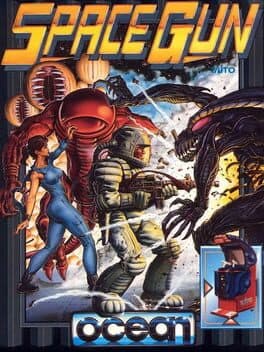
Space Gun
Images Software1990
Space Gun is a first-person, shoot 'em up arcade game released by Taito in 1990. It was later distributed for various home games consoles in 1992, and in 2005, it was included as part of the compilation Taito Legends on the PlayStation 2, PC and Xbox. It is set aboard a crippled space station that has been overrun by hostile alien creatures; there are human crew members that the player must attempt to rescue while destroying the alien creatures. Space Gun features simulated gore, giving the player the ability to shoot limbs off the creatures while blood splatters appear on screen. Various weapon upgrades can be found during gameplay. The music from the game is featured on several commercially released compact discs. It was fairly well received by critics both in arcades and when released for home systems. It was one of only a few games that supported a light gun peripheral for some of the home systems releases.
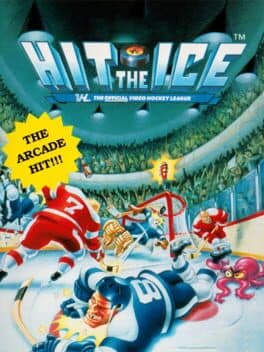
Hit the Ice: The Video Hockey League
Williams Electronics Games1990
This radical hockey game pits you and your team against some of the toughest skaters ever to burn a hole in the ice! Victory goes to the team that kicks, punches, and high-sticks its opponent into slush. Standard hockey rules apply, plus a few surprises to stir things up. So lace on your skates and fasten your face mask - hockey is about to break loose!
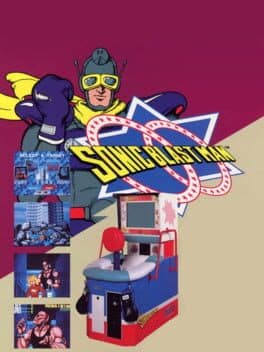
Sonic Blast Man
Taito1990
The player dons real boxing gloves and punches a padded target as on-screen opponents react.
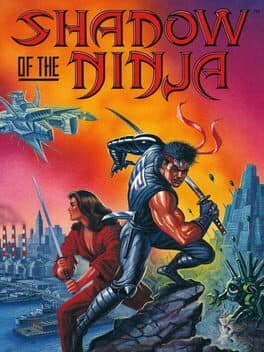
Shadow of the Ninja
Natsume Co., Ltd.1990
Shadow of the Ninja, originally released in Japan as Yami no Shigotonin Kage, and later released in Europe as Blue Shadow, is a 1990 futuristic ninja-themed side-scrolling action game by Natsume for the Nintendo Entertainment System.
Dungeon Magic: Sword of the Elements
Natsume Inc.1990
500 years ago, the Kingdom of Granville fought a terrible war with Darces the Dark Overlord. A great hero, the warrior "Magi", rose to challenge Darces. He owned six magical swords and a powerful suit of armor that was impervious to all but the most powerful of magic. Five of his six swords were Elemental blades, each created from the rarest metals on earth. The sixth blade, "Tores", used an even more powerful metal. Using his powers, Magi defeated Darces, and exiled him to a far away land. After defeating Darces, Magi grew old and died. Now, on a dark, stormy night in the Kingdom of Granville, Darces the Dark Overlord returns to the land. According to an old saying, "When the shadowed veil returns to mask the midday sun, the Fire of Serpents will rise again; Five shall become the One. The elements now heed his call, and hope is born alive; We will have our peace once more when One becomes the Five."
Aqua Jack
Taito1990
A hovercraft is piloted over water and land while dodging bullets and avoiding objects by shooting or jumping over them. Enemies are shot in the air and on water or land to advance levels. The game has eight levels.
Palamedes
Taito1990
A puzzle game by Taito.

American Horseshoes
Taito1990
Each player can choose from one of four characters: Lucky Lou, Diamond Dave, Tossin' Tom and Mayhem Mary. There are two pitches in each inning. Players may select grip and throwing angle prior to each pitch. The rolling of the trackball determines the distance of each pitch. After each inning the scoring with shown with an overhead shot of the stake area. Each player's score is shown throughout the game at the top of the screen. Up to nine innings can be played per game.
Air Inferno
Taito1990
Air Inferno is a 1990 flight simulation video game published by Taito Corporation in North American territories.
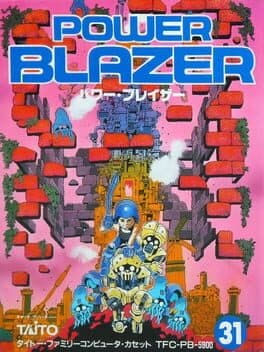
Power Blazer
Natsume Co., Ltd.1990
The player takes control of Steve Treiber, a highly trained soldier on a lone mission behind enemy lines. He is the only one capable of taking Brain Master offline and to save the world. Our young hero is armed with a powerful combat-boomerang called the 'Power Blazer'. The game was later westernized as Power Blade.
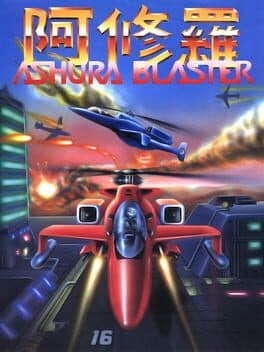
Ashura Blaster
Visco1990
An upward-scrolling helicopter game. Shoot everything in your path.
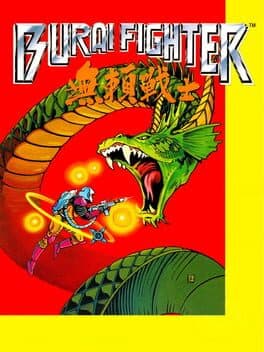
Burai Fighter
Taxan1990
In a remote corner of the galaxy, there lives a race of super-brains known as the Burai. For thousands of years, their vast mental capabilities have been focused upon one goal: the conquest of the universe! To accomplish this, they are creating huge armies of robo-mutants - bizarre creatures, half robot and half living flesh. With their seven manufacturing bases producing thousands of robo-mutants each day, the Burai armies will soon overrun the galaxy - unless you can stop them! Strap on your proton pack, charge up your laser cannon, and prepare to do battle with the deadliest army of mutant rogues in the universe. You must somehow penetrate the seven bases of the Burai, where you will confront a super-mutant guarding each base - monstrous creatures like the Giganticrab, Jawsipede, and Fangskull - until finally, you face the terrifying Slimedragon! But with the awesome arsenal of weapons at your command, victory may still be within your reach. It's up to you to rid the universe of the evil Burai once and for all!
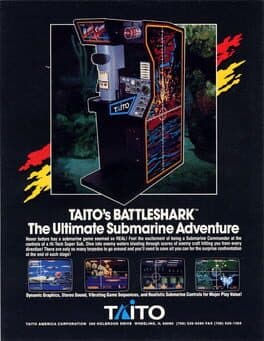
Battle Shark
Taito1990
Battle Shark is a first-person shooter which has the player looking through a 'periscope' in order to destroy the enemies. This game features simulated damage whenever the player gets hit by either an enemy torpedo or a missile.
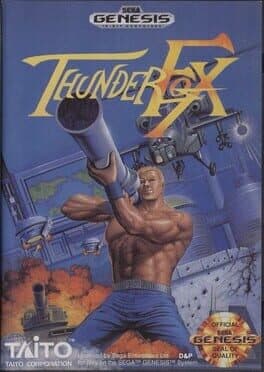
Thunder Fox
Taito1990
Thunder Fox is an arcade game created by Taito. It was released in arcades in 1990 and for the Sega Mega Drive/Genesis in 1991. It was later released on various consoles such as the Xbox and PlayStation 2 in a compilation of Taito classics. The title of the compilation is Taito Legends. The gameplay for Thunder Fox is similar to other popular side scrolling action games like Namco's Rolling Thunder (video game), and Sega's Shinobi (arcade game). There are three buttons for each player - Attack, which normally is used to make Thunder and Fox (the game's heroes) stab with their knives. Jump, and a Weapon button which fires or throws a weapon acquired by the heroes. What makes this game unique is that the game gives players the opportunity to allow players to use their obtained weapons (save for the hand grenades) as melee weapons which helps conserve ammunition for when it's needed.
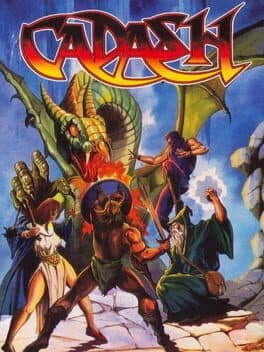
Cadash
Taito1989
Cadash is an early example of what would become a fairly common trend in Japanese-made arcade games of the early 1990s: the "platform-RPG". Cadash borrows many principles of Zelda II: The Adventure of Link's gameplay, combining side-scrolling platform action with an RPG system of statistics, levels, money and magic. Four characters can play at once in the arcade version, and up to two players may select from four different characters in the console versions: fighter, mage, priestess, and ninja, each with different attacks, statistics and skills. Players then proceed through each level, killing monsters and bosses, collecting keys to unlock doors and collecting gold and experience. Gold is also taken from slain foes and treasure chests. Villages sell items, weapons, armor and (in the console versions) extra lives, with each village encountered providing better equipment. Some villagers and benevolent creatures will also provide information. The arcade version has a limited game time, which can be extended by buying progressively more expensive hourglasses at shops, or by picking up rare bonuses. In shops, and in hidden places, are medicinal herbs which restore 10 HP if brought to zero, and antidotes which cure poison inflicted by specific foes. There are also two elixirs in the game that act like medicinal herbs, except that they restore all HP. There are five stages in the game. Stages one, two and four consist of two worlds, above and below ground. Stage three consists of three worlds. Stage five is set entirely within Castle Cadash. The environments differ significantly, from pleasant meadows to caves, and from forests to underwater environments. Some foes encountered in these levels are derived from common mythology while others are completely made up for the game.
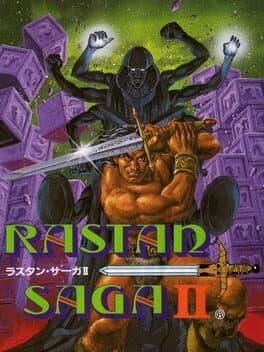
Rastan Saga II
Taito1989
Rastan Saga 2 is the sequel to Rastan, containing the same hack-em'/slash-'em gameplay as the original. You are a warrior who must get through a number of levels, and trying to collect gems which can only be obtained by defeating the end-of-level bosses. Collecting power-ups along the way awards you with extra life or better weapons.
Hellfire
Toaplan1989
In this classic arcade-like game from 1984, take on the role of the mythical hero Ulysses as he performs a series of tasks, set by the gods to prove his worthiness. Test your might against the slopes of Mount Olympus, the Gorgon, Minotaurs, and other monsters.

Twin Hawk
Toaplan1989
Twin Hawk is a 1989 vertically scrolling shooter arcade game developed by Toaplan and published by Taito. Twin Hawk resembles other shooters of the time, specifically Toaplan's earlier game, Flying Shark. Also like Toaplan's other games, there were various differences between the Japanese version and other versions, including a checkpoint system and higher difficulty for the former. Unusually, the game contains no flying enemies; thus, a complete lack of physical obstructions and a stronger focus on the numbers and speed of ground forces. Another draw of Twin Hawk is the game's unique "smartbomb" in the form of a group of friendly planes; pressing button 2 once will call in six Flying Fortresses to surround and protect the player's plane, and provide back-up fire. They are easily taken down by enemy fire, so the player must use them wisely. Pressing button 2 again immediately after the call-in will sacrifice the planes for a more typical smartbomb. Otherwise, pressing button 2 while any other plane is on-screen will suicide them all into the nearest enemies below.
Plotting
Taito1989
The screen is broken into two halves where each player controls their own game. This strategy game starts out simple where the player hits one block at a time but it becomes more difficult when other obstacles start preventing a direct hit on the desired block.
Nastar
Taito1989
Rastan Saga II (ラスタンサーガ2?), known in Europe as Nastar and in North America as Nastar Warrior (except for the North American Sega Mega Drive/Genesis version, which was known as Rastan Saga II) is a hack and slash platform arcade game developed and released by Taito in 1988. It is the sequel to Rastan Saga (released simply as Rastan in North America).
On the Ball
Taito1989
An action/puzzle game originally developed by Taito Corporation for their F2 arcade system hardware. The player rotates a maze around a free-falling ball with the goal of guiding the ball out of the maze within a set time limit.
Champion Wrestler
Taito1989
Champion Wrestler gained popularity in the arcade, and now it is reborn on the PC Engine! Up to 2 people can play simultaneously as well, and you can also enjoy a large number of wrestlers and tag team. In order to take the TWF championship belt, the game will challenge you with formidable enemy skills.
Crime City
Taito1989
Play as policemen Tony Gibson and/or Raymond Broady in this multi-scrolling beat-em-up shooter. Shoot at a variety of enemies as you make your way through the various levels to reach the end bosses. Pick up power-ups including better weaponry, bullets and health drinks.
Chuka Taisen
Taito1989
Enter the wild, fun-filled world of Mike Chen. He's out to learn the secrets of the five lands so he can become a powerful wizard of the skies! Already he has tamed a cloud to carry him around. He has learned the art of the shooting Ki force from his fingertips! but standing against him are more wacky, zany creatures than you can shake your chopsticks at! Bird men. Flying cat heads. Pigs with guns. And flying bowls of soup! Sounds funny...but remember that each can zap you with a touch! You do have a couple of tricks up your sleeve. Collect power-up pots to fly faster and make your Ki force even more powerful! Defeat the mid-round bosses and you will earn the use of true magic...fireballs, guardian flames and bouncing bombs. Defeat the five world guardians and you'll become a Cloud Master! Fail, and you'll be locked in combat forever. Are you really going to let a flying dumpling get the best of you?
Puzznic
Taito1989
Puzznic is a tile-matching puzzle arcade game developed and produced by Taito in 1989 and was ported for the Nintendo Entertainment System, Game Boy, PC Engine, Sharp X68000, Commodore Amiga, Atari ST, Amstrad CPC, Commodore 64, MS-DOS and ZX Spectrum between 1990 and 1991. Home computer ports were handled by Ocean Software; the 2003 PlayStation port was handled by Altron. An Apple IIgs port was completed in 1990, however was never commercially released (a leaked copy was however circulated). A clone for the PC, Brix, was released by Epic MegaGames in 1992. The Japanese arcade and FM Towns version has adult content during game play; a naked woman is revealed at the end of the level. Puzznic bears strong graphical and some gameplay similarities to Flipull/Plotting. An indie remake was made in 2009 for iPhone, called Gem Panic, and a range of Puzznic clones called 'Puzzle Magic' have appeared on mobiles. Many games share the same basic gameplay of Puzznic but have added extra features over the years:- Puzztrix on the web and on PC, Addled and Germinal on the iPhone, Puzzled on mobile phones.

Continental Circus
Taito1989
Continental Circus, released as Continental Circuit in North America, is a racing simulation arcade game, created and manufactured by Taito in 1987. It was later ported to various home computers in 1989, including the Amiga, Amstrad CPC, Atari ST, Commodore 64, MSX and ZX Spectrum. It was then released in 2005 for the PlayStation 2, Xbox and PC as part of Taito Legends. The arcade version of this game comes in both upright and sit-down models, both of which feature shutter-type 3D glasses hanging above the player's head. According to Computer and Video Games in 1988, it was "the world's first three dimensional racing simulation." The home conversions of Continental Circus lack the full-on 3D and special glasses of the arcade version, or the detailed graphics, but retain the essential gameplay structure.
Demon's World
Toaplan1989
Demon's World, released in Japan as Horror Story, is a platformer arcade game that was developed by Toaplan and published by Taito in 1989. This game is multi-regional, meaning that it can be configured for different regions via the DIP switches. These settings change the legal warnings, can display the Taito licensing message and can change the title between the English version (Demon's World) and the Japanese version (Horror Story).
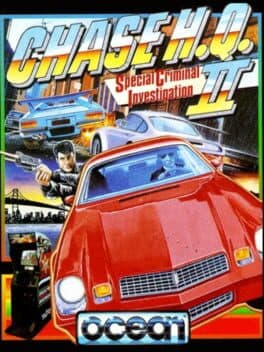
S.C.I.: Special Criminal Investigation
Taito1989
Chase H.Q. II- Special Criminal Investigation- continuing where Chase H.Q. left off. Your mission is to track down, chase and apprehend the dangerous criminals. It's faster- explosive power sends you bulleting through various terrains- hold the line or plough the field! It's tougher- the criminals wield some heavy hardware- but so do you! You can shoot but you must dodge their flak... heavy gunfire, trucks unloading their cargo onto your bonnet... it's the meanest pursuit game to hit the micro screen. The extra features will leave you gasping for extended play- weather changes, bodyguard squads, grenade lobbing bikers, gun-choppers... just play it!... we dare you to stop!
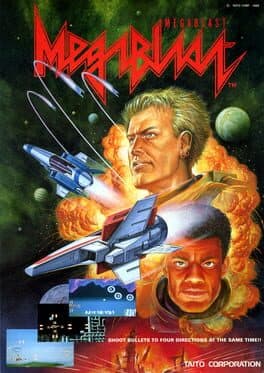
Megablast
Taito Corporation1989
Megablast (メガブラスト) is a 1989 Horizontal scrolling shooter arcade game released by Taito in Europe and Japan. One or two players could control space fighters assigned to deal with an alien invasion using incredible firepower through eight stages. The game is somewhat parodical as many of the game’s mini-bosses resemble previous Taito game characters and the ending theme consists of a Beethoven song. In the future, Earth has achieved a state of global peace, but one problem has arisen: a wholesale disappearance of young women. A top-secret planetary protection organization investigates the strange disappearances and discovers that the women are being abducted by aliens. The aliens hail from the planet Zancs, where a rampant disease has sterilized the entire female population. Unable to mate with their own kind, the people of Zancs have found the perfect reproductive substitutes in the women of Earth, abducting them to keep the planetary population steady. Two fighter pilots - Downson and Bogey - are ordered to rescue the women of Earth, including one of the pilot's significant others, by flying to Zancs and eliminating any threats the inhabitants pose.
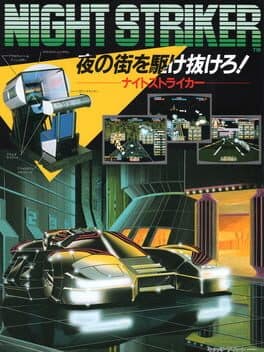
Night Striker
Taito1989
Night Striker (ナイトストライカー) is an arcade game developed by Taito. It is a futuristic on-the-rails shooter which plays similarly to Sega's Space Harrier, though has you pilot a hover vehicle instead. The game was brought to the Sega Mega-CD in 1993, where graphically it was downscaled for the weaker hardware. It was also brought to the Sega Saturn as Night Striker S (ナイトストライカーS) in 1996 - essentially the same game, but with an extra "Saturn Mode" and a few small enhancements. No versions have ever left Japan.
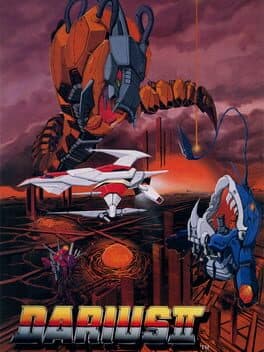
Darius II
Taito1989
Darius II is a 1989 arcade video game developed by Taito. It is the direct sequel to the 1987 Darius. It was later released as Sagaia in Japan in 1991 for the Game Boy as well as non-Japanese ports. A remake was released for the PC Engine Super CD-ROM as Super Darius II in 1993. A Mega Drive conversion was released in Japan in 1990; it was later released for the Genesis in the United States and Brazil in 1991, where it was renamed Sagaia. Changes include a boss rush mode (via a code) and various modifications to levels and mechanics, such as the boss Steel Spine being moved to another level and the boss Killer Higia being replaced with a similar creation called Nehonojia. This conversion does not support two players, so the ability to choose between Proco Jr. and Tiat Young was added; Proco plays like normal, while Tiat starts every life off with one power level to every weapon. A Master System conversion, developed by Natsume, was released in Europe and Brazil in 1992, also titled Sagaia. It is somewhat based on the Mega Drive port, and while Tiat Young and her abilities are still present (though even more limited), many zones (and thus bosses) have been completely removed. The Super CD-ROM version features an entirely new set of bosses, major changes to levels, and a fully arranged soundtrack including new songs.
Kyuukyoku Harikiri Stadium: Heisei Gannen-ban
Winkysoft1989
Kyuukyoku Harikiri Stadium Heisei Gannen-ban is a Sports game, developed by WinkySoft and published by Taito Corporation, which was released in Japan in 1989.
Don Doko Don
Taito1989
The players are bearded dwarves who must defeat various enemies by using a mallet to stun them. Players can pick stunned enemies up and throw them at other enemies to destroy them. Destroyed enemies leave behind fruit which can be collected for points. Once all enemies are destroyed play proceeds to the next level which is generally more difficult. Throughout the game, various power-ups can be collected, which represent potions, hammers, or books help the players' character speed up, receive more power, or kill in different ways. In certain screens various secret levels can be accessed.
Final Blow
Taito1989
Final Blow is a boxing arcade game created in 1988 by Taito. The name would remain the same for all ported platforms, except for the Sega Mega Drive/Genesis versions, which Sega released outside Japan as James 'Buster' Douglas Knockout Boxing featuring Buster Douglas himself in 1990 immediately after his victory over Mike Tyson. The game is essentially a side scrolling boxing game where the player moves left and right to control a screen sized boxer. When the timing is right, the player can unleash a final blow punch which can sometimes KO the opponent in a single strike. The home versions contained a spectator mode where the player can watch their favorite boxers compete.
Castle of Dragon
Athena1989
It's a 2D action game focused on hack & slash with occasional platforming sections. Castle of Dragon contains eight stages and after the first three stages the game allows the player to choose from five levels at will while all the five stages must be completed to beat the game.
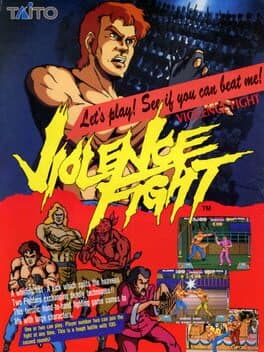
Violence Fight
Taito1989
The game takes place during the early 1950s in the United States, where an underground tournament known as the "Violence Fight" had become very popular among the criminal underworld and the public at large; criminals, especially mobsters, along with other public nuisances and upstanding citizens are allured by its stakes and thrill. The contestants, drawn from all across the country, compete for large sums of money and the title of "No. 1 Quarreler." As the game begins, the tournament even attracts a young fighter named Bad Blue (or "Bat Blue") from Los Angeles who competes for the title of No. 1 Quarreler and aspires to share a small fortune with his manager, "Blinks."
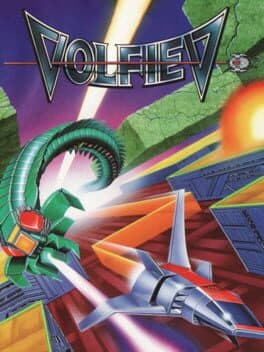
Volfied
Taito1989
Once in the game, using the arrow keys you can move the 'Scanner' ship around the 'Shield Line' at the parameter of the playing area. While moving around this edge the ship is protected from the aliens by a shield indicated by a glowing circle around the ship. This shield is not infinite and care should be taken to complete each level as quickly as possible. A counter indicates the level of shield that you have: when it reaches zero then any contact with an alien is deadly whether you are on the 'Shield Line' or not. The idea of the game is to cut areas out of the screen without touching any of the aliens. This is done by pressing the SPACE key which initiates the 'Laser Cutter' and moving off the 'Shield Line' and rejoining it somewhere else. While you are in the process of drawing a line, your shield is inactive and touching an alien is fatal. Similarly, if one of the aliens touches the line then it will send a charge down the line towards you and you must quickly return to the safety of the edge before it reaches you. When you rejoin the 'Shield Line' the area that does not contain the 'Boss' alien will be filled (points are gained by trapping the other aliens) and the 'Shield Line' will be adjusted to surround the area that is left. The level is completed when a certain percentage of the total area has been filled in. This percentage starts at 80% but may increase in the later levels.
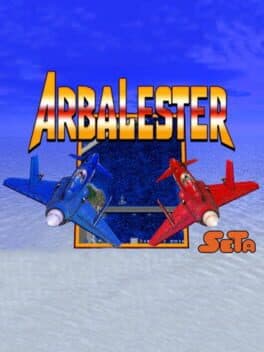
Arbalester
SETA Co. Ltd.1989
Arbalester is a scrolling shoot 'em up arcade game released by SETA in 1989, licensed to Taito and Romstar. The player controls a fighter jet and shoots enemies in the air and on the ground, collects power-ups, and defeats bosses to advance levels.
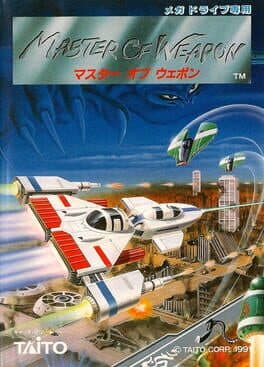
Master of Weapon
Taito1989
An entire week of nuclear war on Earth destroys its global environment. The survivors of the war gather their strength and resources in an attempt to bring Earth back to the way it was. Using a super computer called God System, the survivors start their first step in rebuilding Earth by having the God System create machines capable cleaning and reconstructing much of what has been lost from the war. However, without warning, a mysterious mutant entity known as "N" takes over the God System; creating three strange guardian statues based on Greek mythological figures, N manipulates the God System's machines and programs in order to attack mankind. The survivors create an artificial human called Yukiwo – built to harness perfect dexterity and strength – as well as a super-powered jet for him to pilot in order to reclaim Earth from N.
Fudou Myouou Den
Quest1989
In a land of impossible evils... all paths lead to the Dark Lord! A beautiful princess cries out in terror, and a world despairs in darkness. Only you, the hero warrior Victar, can traverse chasms of fire and mountains of doom to battle the fiendish gatekeeper and confront the Dark Lord. In your cunning and skillful hands, the Demon Sword grows with a magical power more lethal than all the wretched weapons of the Dark Lord's legions. Gather your courage, grasp your blade and release the power that is yours to control!
Bakushou!! Jinsei Gekijoh
Taito1989
The first game in the Bakushou!! Jinsei Gekijoh series and is a four-player NES board game simulation that plays like Milton Bradley's The Game of Life. It was only released in Japan on March 17th 1989. Bakushou!! Jinsei Gekijoh ("Burst of Laughter!! Theater of Life") is the first game in a long-running series developed and published by Taito for the Nintendo Entertainment System in Japan that allows players to live an entire lifetime, moving through various stages of life and accruing as much wealth as possible. It is based on the Jinsei Game, or The Game of Life as it is known in the west. Up to four human players take turns moving around a board by a number of squares as indicated by dice rolls and make various life decisions, or are passively shown events happening to them, which determine their success. The game was followed by two sequels for the NES and four for the SNES.
Yamamura Misa Suspense: Kyoto Hana no Misshitsu Satsujin Jiken
1989
The second in the Yamamura Misa Suspense series of murder mystery adventure games. It was published by Taito for the Famicom in Japan only. Yamamura Misa Suspense: Kyoto Hana no Misshitsu Satsujin Jiken is the second game based on the work of Japanese mystery novelist Misa Yamamura (the first being Yamamura Misa Suspense: Kyouto Ryuu no Tera Satsujin Jiken) and, like the first, concerns a murder in the picturesque Japanese city of Kyoto. As with the first game, and conversely to other Famicom adventure games around at the time, Hana no Misshitsu Satsujin Jiken has a dynamic bar of commands the player can perform; it changes to reflect what actions are currently possible for the player character in that area, so that they don't waste too much time trying every action in every location to find the next clue. These actions are also represented with symbolic icons, rather than typed out as words.
Halley Wars
Taito1989
The Halley's Comet is back from outer-space and scientists all over the world are excited by this event. But this time, things do not really go according to plans and an unexpected fleet of alien spaceships appears from behind the comet. Their destination is Earth and Humanity's finest spaceship and pilot is sent to counter the attack.
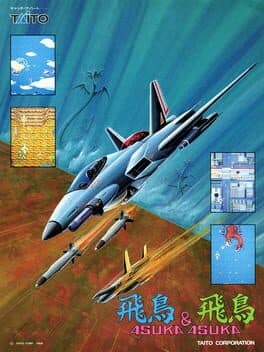
Asuka & Asuka
Taito1989
A mysterious invasion force known as the Galaxy Highters invades the Earth in the year 1996. With their abilities in space time manipulation, they are able to invade several time lines in Earth’s history and occupy each one simultaneously. In order to stop the Galaxy Highters, Earth’s militaries design the 'Flying Bird', a jet fighter capable of time travel, enabling it to fly into occupied time lines.
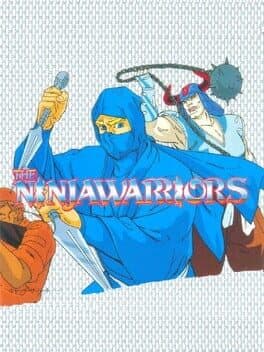
The Ninja Warriors
Taito1988
The Ninja Warriors presents side-scrolling hand-to-hand combat. Players take control of Kunoichi or Ninja and fight wave after wave of Banglar forces across five levels.
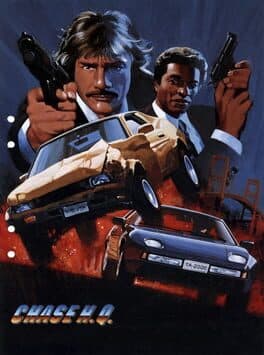
Chase H.Q.
Taito1988
At the start of each level the player is informed who they are pursuing, a great distance away: They must apprehend the criminal before their time limit expires. The criminal's car is constantly moving away, so if the player repeatedly crashes or drives too slowly, the criminal will escape. At some points during the game the road splits, and the correct turn must be taken, otherwise it will take longer to catch the criminal. When their vehicle is reached, the time limit is extended; the vehicle must be rammed a number of times until the criminal is forced to stop, then is arrested. The game includes five levels. As both the initial time limit to reach the criminal and the time extension to ram the criminal are just 60 seconds, the game is very short - a player who is able to finish the game on one credit will enjoy at most ten minutes of game-play. Interestingly enough when Nancy at Chase HQ (at the start of every level) calls on the radio the frequency is always 144.X (various)Mhz. This is actually the 2-meter band of amateur or ham radio frequencies. Although superficially similar in technology to Sega's Outrun, Chase HQ features significant technical advancements over that title in the presentation of perspective, hills and track splits.
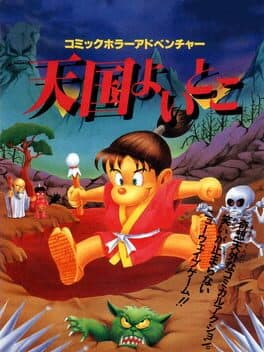
Tengoku Yoitoko
Taito1988
Tengoku Yoitoko is an arcade game where a young man is sent to heaven to fight against various monsters.
Top Landing
Taito Corporation1988
Top Landing is a 3D flight simulator released by Taito for the arcades in 1988. The object of the game is to land an airliner during any number of adverse conditions. It is the second of four games in Taito's "Landing" series.
Recordbreaker
Taito1988
Recordbreaker is a multi-event sports game for one or two players, where the player tries to achieve a world-record score in each of ten competitions. The events include: 100m sprint, 4x100m relay, Triple jump, Pole vault, Long horse, 100m swimming, Weightlifting, Horizontal bar, 100m hurdles and Shot put. The events can be played in any order, although losing an event results in the end of the game.
Fighting Hawk
Taito1988
Player needs to control a large plane and shoot at tanks and helicopters. The bomb button actually fires a bunch of missiles that lock-on and track your enemies.
Raimais
Taito1988
Raimais is a maze chase arcade game released in April 1988 in Japan. The object of the game is to drive your vehicle around a maze in order to clear the maze of dots while avoiding the enemy. The game consists of 32 mazes total plus boss fights.
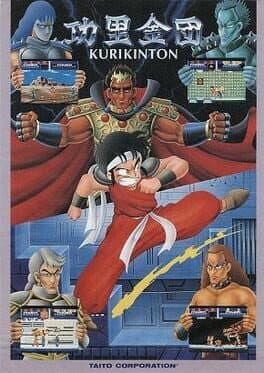
Kuri Kinton
Taito1988
The player controls a Chinese police officer who has been assigned to infiltrate an underground base to rescue a high-ranking police officer and his daughter, who have been kidnapped by a gang.

Operation Thunderbolt
Taito1988
Operation Thunderbolt is the exciting sequel to Operation Wolf. An airliner is hijacked by terrorists en-route from Paris to Boston, who threaten to kill all hostages on board if their mates aren't released from jail. Instead of reaching its destination, the airliner makes a landing in Kalubya, Africa, and all the hostages are hidden in various locations. The authorities have asked the hero from Operation Wolf to rescue the hostages, but only this time, the hero brings his friend along for the ride. There are eight missions to complete in Operation Thunderbolt, and each one has you shooting down soldiers, choppers, and tanks. The gameplay varies every one or two missions. In some missions, you are driving a jeep or controlling a boat, while in others, you are walking while you're shooting. You have a limited supply of ammo, and a limited supply of rocket bombs, but you can always stock up by shooting down crates falling from the sky, or by killing a cat or dog that get in the line of fire. Also from crates, you can get special items like bulletproof vests, rocket bombs, and different weapons.
Akira
Tose1988
Akira is a 1988 adventure video game by TOSE for the Family Computer console exclusively in Japan. It is based on Akira, the 1988 animated film version of Katsuhiro Otomo's manga of the same name.
U.S. Championship V'Ball
Technos Japan1988
Play as two muscle-bound beach heroes playing volleyball in cities across the USA. The game features funky music and challenging game play. Computer opponent skills grow greater as levels increase or play against a human opponent.
Truxton
Toaplan1988
The ruthless Gidans invite you to an explosive space scramble! Head into the mighty Super Fighter and disintegrate your foes in all directions with various upgradeable weapons. Toaplan's no-frills vertical shooter Truxton speeds onto PC with new features and quality-of-life updates!
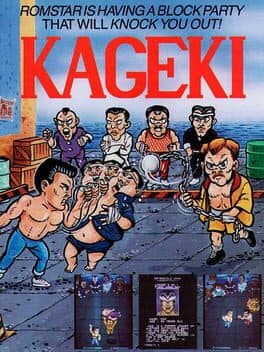
Kageki
Kaneko1988
In this game, you play a bandage-fisted street boxer who must fight every member of The Motorcycle Gang Warriors, including their leader. The game has nine rounds where you must face a different opponent. In each round, your opponent must be knocked down three times in order for you to win. After you have defeated the first eight opponents, you will finally meet face to face with the leader, and if you defeat the leader, you have beaten the entire gang and the game ends.
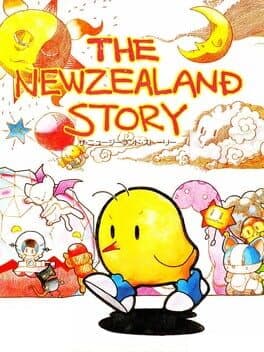
The NewZealand Story
Taito1988
Tiki, a sneaker-wearing kiwi who must save his lover Phee Phee and several of his other kiwi chick friends who have been kiwi-napped by a large blue leopard seal. The player has to navigate a scrolling maze-like level, at the end of which they release one of Tiki's kiwi chick friends trapped in a cage.
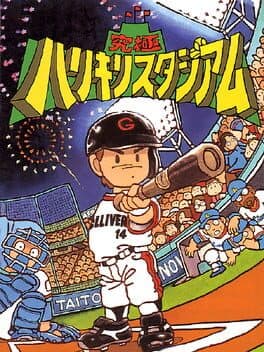
Kyuukyoku Harikiri Stadium
Taito1988
Kyuukyoku Harikiri Stadium is a baseball game developed by Taito Corporation. It was published in Japan for the Famicom in 1988. It is the first of the series of baseball games that was informally known as "Harisuta", which saw four games published for the Famicom, and two more for the Super Famicom. The starting entry contains 13 teams, 12 of which are modeled after real Japanese teams, while a 13th team (the I team) consists of a team of women players who represent various idols or models who were popular at the time. The game features a single player mode against the computer, a head-to-head mode for two players, or a home run mode where you compete to see who can hit the most home runs. Before the end of 1988, a version of the same game was released with an updated player roster, under the title Kyuukyoku Harikiri Stadium '88 Senshuu Shin Data.
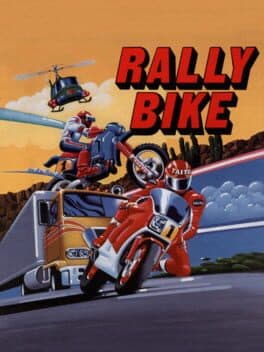
Rally Bike
Toaplan1988
Rally Bike is a bird's eye viewed motorcycle road racing game, where the player controls a motorcycle and must cross the finish line before an established number of competitor bikes. Fuel is a major obstacle, as running out of it results in game over. Any accident will cause great reduction of fuel, and stopping to refuel will cause competitor bikes to take advantage. Competitors never run out of fuel.
Insector X
HOT-B1988
The player controls an insect-sized warrior named "Kai", who takes on a vast army of cyborg insects to free the insect world from the dark ruler queen. The game uses two buttons: an upgrade-able main shot and a seemingly random selection of secondary weapons.
Twin Eagle
SETA Corporation1988
A helicopter vertical shoot 'em up that debuted in the Arcades in 1988 before being ported to the NES the following year.
Bonze Adventure
Taito1988
The player controls a Buddhist monk, Bonze Kackremboh. His weapons are Buddhist prayer beads, called "mala" beads, which can be powered up until they become almost as large as the player. The monk battles snakes, giant eyeballs, ghosts and other enemy creatures.
Rainbow Islands: The Story of Bubble Bobble 2
Taito1987
Rainbow Islands is a 1987 arcade game developed and published by Taito. The arcade version was licensed to Romstar for North American manufacturing and distribution. The game is subtitled "The Story of Bubble Bobble 2" and is the sequel to Taito's hit game Bubble Bobble from the previous year. It is the second of four arcade games in the Bubble Bobble series. The game was ported for numerous home computers and game consoles.
Renegade
Technos Japan1987
Unlike Technos' subsequent game Double Dragon, the playing field is limited to one two-screen-wide area (a subway platform, a harbor, an alley, a parking lot and the hideout of a gang) and does not scroll continuously. Out of the four stages in the game, the first, second and third each begin with the player fighting a group made up of two different types of small fry enemies: one with fewer hit points and a stronger attack (usually armed with a weapon) and one with more hit points, but with a weaker attack and the ability to grab the player from behind, making him vulnerable to other enemies' attacks. When only three underlings remain (in any combination of the two) their boss will come in from the sidelines and join the fight. When the boss is defeated, any remaining enemies retreat off the bottom of the screen, and the stage ends. The second stage follows this same formula, but begins with a series of enemies riding motorcycles trying to run the player down, and brings in the normal enemies once the bikers have been defeated. The third stage is a gang of women; their boss is a very large woman who cannot easily be knocked to the ground. The fourth stage features a single type of knife-wielding enemy who can kill the player with one hit. Once the player has defeated this first wave of enemies, the main character proceeds to enter a building at the far right of the stage. There, he faces three more knife-wielding enemies and the final boss, a mobster whose gunfire is also deadly with one hit. Once the final boss is defeated, the main character exits the building and is greeted by his rescued girlfriend, who proceeds to give him a kiss. The game then begins the next cycle with an increased difficulty. In addition to an eight-direction joystick, there are three buttons; left attack, right attack, and jump. Pressing the attack in the direction the character is facing will punch, while attacking in the opposite direction will perform a rear kick. Jumping, followed immediately by one of the attack buttons, which will perform a jumping kick in the direction of the attack. Pressing the joystick twice quickly either left or right will cause the player to run, at which point attacking in the direction of the run will perform a running punch, jumping will automatically perform a flying kick, and attacking in the opposite direction will bring the player to a sudden halt and perform a back-kick. Pressing down over a downed enemy will make the player sit on top of the enemy, at which point attacking toward the enemy will cause the player to pummel him. The bosses can only be sat on if all normal enemies have been defeated, and unless the boss' energy level is low enough, he'll throw the player off.
Darius
Taito1987
Darius is a two-dimensional horizontally scrolling shoot 'em up set in a fictional future. Uniquely among shoot 'em ups, the game's screen is three times wider than conventional size, and the arcade cabinet uses an arrangement of three screens to accommodate it. The player controls an ornate fighter spacecraft, named the Silver Hawk, and must navigate through scrolling terrain while battling a variety of fighter craft, ground vehicles, turrets, and other obstacles throughout the game's stages (referred to as zones in the game). The ship's arsenal consists of forward-firing missiles, aerial bombs and a protective force field, all of which can be upgraded by power-ups (in the form of large, colored orbs) that are dropped by specially-colored enemies throughout the game's zones. When the player reaches the end of a zone, a boss appears, which must be defeated to proceed. Once the boss of a zone is destroyed, the player is given a choice of which zone to play next via a branching path. While there are 28 zones in total, only seven can be played in a single run. A Sega Mega Drive port was produced in 2019 that is pre-installed in the Mega Drive Mini as a bonus game.
Tournament Arkanoid
Taito1987
Tournament Arkanoid is a sequel to the original Arkanoid, developed by Taito and published by Romstar in the United States in 1987. The game has 32 stages with different arrangements of blocks, some of them are much more challenging than his prequel.
Wardner
Toaplan1987
In Wardner, you take on the roll of a short, chubby guy whose name I am not aware of. The game starts when you and a girl are approached by a wizard promising a "fantasia" of sorts. You follow the wizard, and he kidnaps the girl, commenting that she will make a nice gift for Mr. Wardner. We can't have that, can we?On your quest to save your friend, you have to travel across 5 levels, to reach the evil Mr. Wardner. You will have to destroy monsters, jump over and duck under various traps, and collect gold and orbs to help you with your journey.You have a weapon meter on the bottom of the screen, which shows your current weapon, and weapon power (1 to 8). All weapons use the same power, so if you change weapons, you won't lose the power. The power, rather than making your weapon stronger, lets you fire it faster.
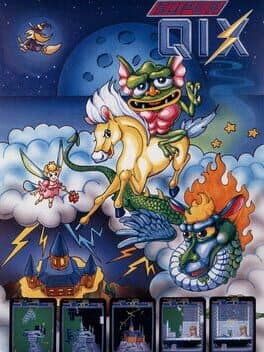
Super Qix
Taito1987
Super QIX is the 3rd installment in the QIX franchise where players try to reveal a hidden picture.
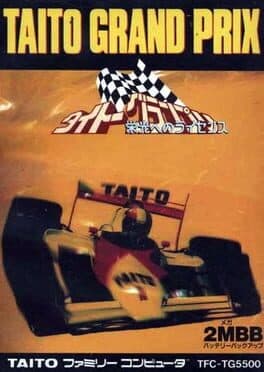
Taito Grand Prix
1987
Formula One racing game with RPG elements published by Taito in 1987 for the Famicom. It was never released outside of Japan.
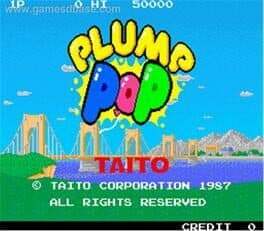
Plump Pop
Taito1987
In Plump Pop, players control two animals with a trampoline, which is used to launch a baby of that animal species into balloons.
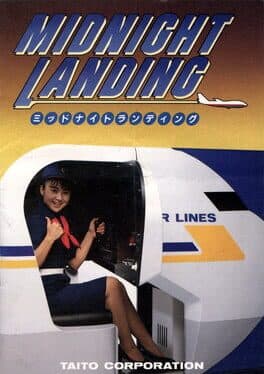
Midnight Landing
Taito1987
A 3D flight simulator released by Taito for the arcades in 1986.
Yamamura Misa Suspense: Kyoto Ryuu no Tera Satsujin Jiken
Taito1987
American investigator Catherine Turner has just been accused of a crime committed on the grounds of Kyoto's most famous temple and must prove her innocence by examining crime scenes, collecting evidence and talking to suspects. The first in a series of murder mystery games by Taito written by and named for Japanese mystery writer Misa Yamamura.
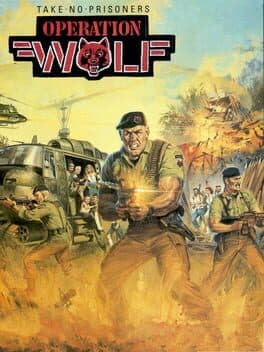
Operation Wolf
Taito1987
In the steamy jungles of South America, heavily armed extremists are holding innocent civilians prisoner. Little do these terrorists know that real terror is about to land on their front porch! The sound of rotor blades and staccato bursts of gunfire echo through the valleys. Terrorists be warned! Operation Wolf is going to teach you what terror is all about! Operation Wolf consists of six missions, which are displayed on the Operations Map Screen. A mission is completed when all enemy forces are reduced to zero. The current level is completed when you escape from the airport with the prisoners. Your injury level increases when the enemy hits you. The game automatically ends if the injury indicator on the right side of the screen becomes completely red. You can reduce your injury level by getting power drinks.
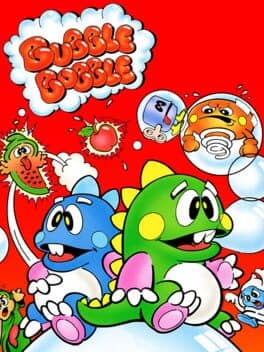
Bubble Bobble
Taito1987
Bubble Bobble is a platform game, with each level being a single screen. The enemies must be cleared from a level to go to the next one. With one player controlling Bub and the other controlling Bob, the player can jump and collect items for points (such as fruit). The real power Bub and Bob have however is the ability to blow bubbles. These bubbles can be as platforms to leap on, or to trap enemies. Enemies trapped in a bubble must be popped by jumping into them, wherein they'll turn to fruit. Additionally, power-ups sometimes float by in bubbles. They include lightning, which flies out horizontally at enemies, and water, which drags the player and enemies straight down flowing over platforms. Taking too long to complete any level will summon Baron Von Blubba, who will float around the screen trying to destroy the player.
Minelvaton Saga: Ragon no Fukkatsu
1987
In the kingdom of Palmeccia both the King and Queen have been murdered by the hands of a servant of Ragon, son of the Zuhl. Take control of the Prince of Palmeccia in a quest for revenge and to kill the evil Ragon.
Thundercade
SETA Corporation1987
A nuclear powerplant has fallen into the hands of terrorists and you pilot a motorcyle equipped with machine guns that can be improved along the way. Make your way through difficult terrain and battle against loads of terrorists on foot, in cars, tanks and submarines who will try to stop you. Reach the plant and shoot all the terrorists to save the day.
Kyuukyoku Tiger
Toaplan1987
The original Japanese version of Twin Cobra, a 1987 Shooting Game developed by TOAPLAN. Kyukyoku Tiger has a swathe of differences to it's overseas counterpart, most notably reverting the player to a previous checkpoint on death rather than respawning them, and being one-player only. There are also more minor changes in factors such as the amount of shots the player can have on screen at once. The game was a success for Toaplan in arcades, reportedly reaching 10 Million worldwide players, and a number of console ports were made in the 90s. A sequel, Kyukyoku Tiger II/Twin Cobra II, followed in 1995, though this was developed by Takumi Corporation following TOAPLAN's bankruptcy in 1994.
Kyonshies 2
Taito1987
A Famicom adventure game developed by Taito and based on an obscure Japanese movie of the same name. Kyonshiizu is the Japanese name for Jiang Shi, the Chinese hopping vampire.
KiKi KaiKai: Dotou-hen
Bits Laboratory1987
One night, while Sayo-chan is fanning a ceremonial fire, she is visited by the Seven Lucky Gods, who warn her of a great, impending danger. Suddenly, a band of mischievous goblins appear and kidnap the gods, quickly retreating to a faraway mountain range. Sayo-chan, determined to help the gods, sets off on a journey across the countryside, where she confronts a number of strange creatures from Japanese mythology, including yokai, obake, and yurei-like monsters. After defeating several powerful goblin leaders, Sayo must battle their leader, the ancient serpent Orochi
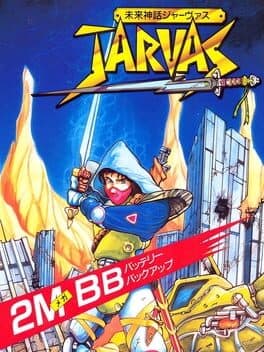
Mirai Shinwa Jarvas
1987
Mirai Shinwa Jarvas is a RPG developed and published by Taito. It is about a man named Jarvas who travels back in time from the future to conquer the world of the past and become the leader. You must get people to join your side and take over enemy castles. This game is generally considered pretty bad by most. When you begin the game, you are given no information about where you are and where you should attempt to go. Once you find a town, you must join a guild. You can only increase your level by returning to the guild once you have accumulated enough experience.
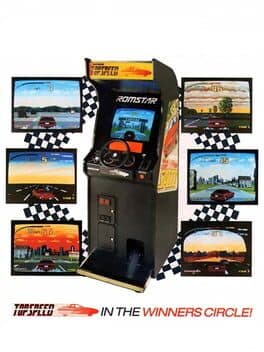
Top Speed
Taito1987
A driving game by Taito that was licenced to Romstar for the US.
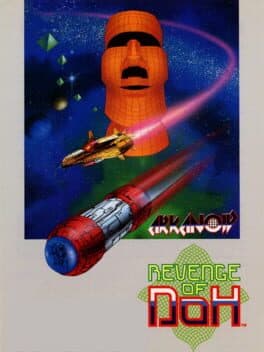
Arkanoid: Revenge of Doh
Taito1987
Arkanoid - Revenge of Doh (a.k.a. Arkanoid 2) is an arcade game released by Taito in 1987 as a sequel to Arkanoid. The mysterious enemy known as DOH has returned to seek vengeance on the Vaus space vessel. The player must once again take control of the Vaus (paddle) and overcome many challenges in order to destroy DOH once and for all. Revenge of Doh sees the player battle through 34 rounds, taken from a grand total of 64. NEW FEATURES: Revenge of Doh differs from its predecessor with the introduction of "Warp Gates". Upon completion of a level or when the Break ("B") pill is caught, two gates appear at the bottom of the play area, on either side. The player can choose to go through either one of the gates - the choice will affect which version of the next level is provided. The fire-button is only used when the Laser Cannons ("L") or Catch ("C") pill is caught. The game also features two new features for bricks. Notched silver bricks, like normal silver bricks, take several hits to destroy. However, after a short period of time after destruction, they regenerate at full strength. Fortunately, clearing a level does not require that any notched bricks be destroyed. Also, some bricks move from side to side as long as their left and/or right sides are not obstructed by other bricks. The US version features an entirely different layout for Level 1 that feature an entire line of notched bricks, with all colored bricks above it moving from side to side. The game features a mini-boss in the form of a giant brain, which will help you practice for DOH. Home versions of Revenge of DOH also featured a level editor, where players could create their own levels or edit and replace existing levels, with the exception of two levels: the mini-boss and DOH.
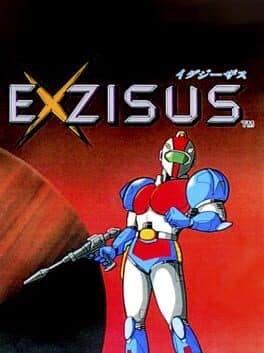
Exzisus
Taito1987
Exzisus was produced by Taito in 1987. Taito released 403 different machines in our database under this trade name, starting in 1967. Other machines made by Taito during the time period Exzisus was produced include Arkanoid - Revenge Of Doh, Double Dragon, Dr. Toppel Tankentai, Flying Shark, Hishou Same, Great Gurianos, Inspiration Baseball, Tokio, Storming Party, and Soldier Of Light.
Sky Shark
Toaplan1987
Sky Shark (released in Japan as "Hi Sho Zame", and in Europe as "Flying Shark")is a military-themed vertically scrolling shoot 'em up game in which players take control of the titular biplane through five increasingly difficult levels in order to defeat an assortment of military enemy forces like tanks, battleships, airplanes and artillery as the main objective. The title initially appears to be very standard, as players control their plane over a constantly scrolling background and the scenery never stops moving until a runway is reached. Players have only two weapons at their disposal: the standard shot that travels a max distance of the screen's height and three bombs. The bombs are powerful weapons capable of obliterating any enemy caught within its blast radius. Various items are scattered through every stage that appear by destroying certain enemies: Shooting down colored waves of enemy planes spawn items like "S" power-up icons, point bonuses and extra lives. Certain enemies on the ground spawn "B" icons that increases the player's bomb stock when destroyed. Every time the player lands at a runway beyond the first takeoff, the amount of bombs multiply 3000 points to the player's total score. Players are given three lives initially and bonus lives are awarded at 50000 points and thereafter. The game employs a checkpoint system in which a downed single player will start off at the beginning of the checkpoint they managed to reach before dying. Getting hit by enemy fire will result in losing a live, as well as a penalty of decreasing the plane's firepower to his original state and once all lives are lost, the game is over unless players insert more credits into the arcade machine to continue playing. Completing the last stage restarts the game with the second loop increasing in difficulty.
Rastan
Taito1987
Rastan is a fantasy-themed side-scrolling action game originally released for the arcades in 1987. The controls of Rastan consist of an eight-way joystick and two buttons for attacking and jumping. Using the joystick in combination with either button, the player can determine the height of Rastan's jumps and the direction in which he swings his weapon. The game uses a health gauge system along with limited lives, although certain obstacles will instantly kill Rastan regardless of how much health he has left.
Kick and Run
Taito1986
A football game where you can either play cooperatively in cup events or head-to-head.
Daikaijuu no Gyakushuu
Taito1986
An overhead run-and-gun game in which a kaiju terrorizes an island.
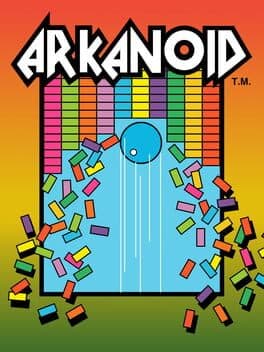
Arkanoid
Taito1986
NES port of Arkanoid. The original Breakout concept involves controlling a bat at the bottom of the screen and using it to catch and direct a ball so as to hit all the bricks which are arranged at the top of the screen. It was unpopular for over a decade, before Taito revived it with some new ideas in this arcade game. The game's plot redefines the bat as a Vaus spaceship, the ball as an energy bolt, and the bricks form a mysterious wall stopping the ship from progressing to safety. By the mid-80s, power-ups were popular in most types of arcade games, and Arkanoid features them. They are caught by positioning the bat below them as they fall (meaning that you risk missing the ball if you go for them at the wrong time). The power-ups include lasers (which are mounted to each side of the ship and allow you to shoot out the blocks), a catching device (so as to be able to fire the ball off at a different angle every time you hit it) and one that slows the bolt down.
Takeshi no Chousenjou
Taito1986
Takeshi no Chousenjou is a Japanese action-adventure video game. The packaging contains several warnings that the game should not be attempted with conventional gaming skills, and the player must complete numerous near-impossible tasks in order to finish the game.
Empire City: 1931
Seibu Kaihatsu1986
In Empire City: 1931 which is set in 1931 you are a federal agent that has to eliminate all criminal activities in New York City. You must hunt the criminals down and shoot them one by one. To locate a criminal you just have to follow the arrow on the left or right of the screen. Killing criminals is done by moving the cross hair over them. A countdown timer will start counting down if a criminal starts shooting at you. You must kill the criminal before the timer reaches zero or you'll loose a life. New bullets can be collected by shooting at the bullet boxes that regularly appear in the game as other useful objects. The criminals sometimes take hostages for protection. Rescue these hostages for additional points.
KiKi KaiKai
Taito1986
A shooter where you fight ghosts and zombies and other creatures of the afterlife.
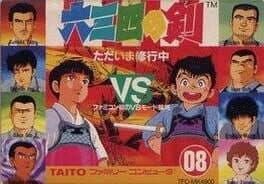
Musashi no Ken: Tadaima Shugyou-chuu
Taito1986
Musashi no Ken: Tadaima Shugyou-chuu is a 1986 video game software developed and published by Taito exclusively in Japan. It is based on a Japanese sports manga series written and illustrated by Motoka Murakami that focuses on kendo, simply titled Musashi no Ken. The gameplay and design in the one-on-one fighting parts resemble Taito's other fighting game, Great Swordsman, especially its kendo mode. The game's plot is about the son of two Kendo champions named Musashi. He strives to become as great at Kendo as his parents. The entire story centers around the world of Kendo and its up and coming competitors. The anime is broken up in to two parts. The first part follows Musashi's early years in grade school while the second part follows his high school years. In the first episode, Musashi befriends an Akita puppy who is by his side throughout the series.
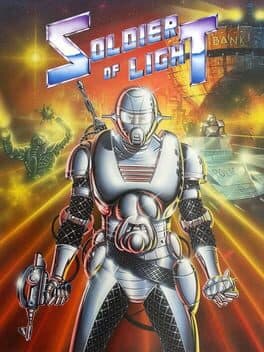
Soldier of Light
Technos Japan1986
Soldier of Light is an arcade game released in 1986 that has both side-scrolling shooter and platforming elements.
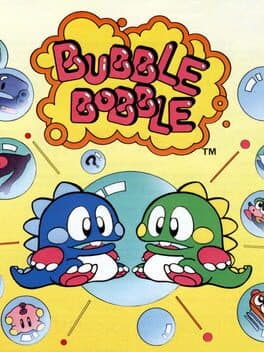
Bubble Bobble
Taito1986
In the game, each player controls one of the two Bubble Dragons, Bub and Bob. The player can move along platforms, as well as jump to those above and to the side, similar to most platform games. The player can also blow bubbles. These can trap enemies, who are defeated if the bubble is then burst by the player's spiny back. Bubbles that contain enemies can be popped at the same time resulting in different foods being projected around the level. Each enemy trapped in a bubble equates to a different food. Food is consumed and transferred to points (an increasing scale of 1000 points is awarded for each enemy burst in tandem with another meaning: one enemy burst equals one food item worth 1000 points, two enemies burst equals two food items worth 1000 and 2000 points, three enemies burst equals three food items worth 1000, 2000 and 4000 points, and so on), which results in earning lives. These same bubbles also float for a time before bursting, and can be jumped on, allowing access to otherwise inaccessible areas. Players progress to the next level once all enemies on the current level are defeated. Enemies turn "angry" — becoming pink-colored and moving faster — if they are the last enemy remaining, escape from a bubble after being left too long or a certain amount of time has been spent on the current level. A monster will also become angry if either player collects a skull (the only negative item in the game), and the monster is hit by the resulting comet crossing the screen (however, this is a rare occurrence). After a further time limit expires, an additional invincible enemy appears for each player, actively chasing them using only vertical and horizontal movements. These do not need to be defeated to complete the level, and disappear once a player's life is lost. Contact with enemies and their projectiles (rocks, lasers, fireballs, etc.) results in death.
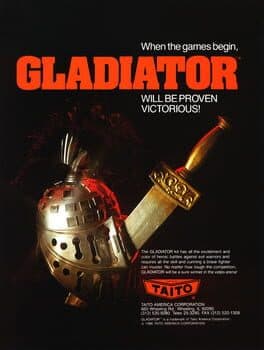
Gladiator
Allumer, Ltd.1986
AKA Ougon no Shiro (黄金の城, lit. "Golden Castle") and Great Gurianos (European PC ports) The player controls a gladiator/knight named Great Guaranos as he walks through a castle. Moving the joystick left and right moves Great Guaranos left and right, and up and down is used to position Great Guaranos's shield. The game's three buttons correspond to a high, medium, and low attack with Great Guaranos's sword. Gladiator consists of 4 Stages. The first level is the 'Underground Chamber', 2nd is the 'Brick Corridor', 3rd is the 'Roof Top' stage, and the 4th stage is called the 'Mysterious 4-D World'. Your reward for completing the game is to enter the "Treasure Place".
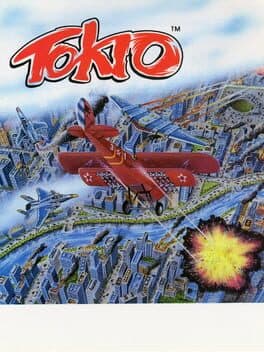
Tokio
Taito1986
Tokio is a Japanese shoot 'em up originally released in arcades and later ported to the MSX2.
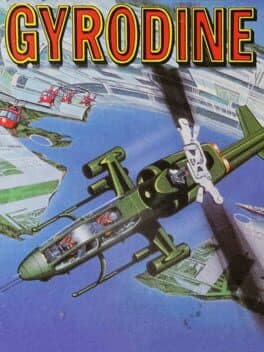
Gyrodine
Crux1986
Gyrodine is a top-down vertical helicopter scrolling shooter for the Nintendo Entertainment System/Family Computer, MSX and arcade developed by Crux and published by Taito in 1984.
Big Event Golf
Taito1986
The player is a participant on an 18-hole championship golf course. His objective is to acquire the lowest score possible. The rules used in this game are the same as in actual golf.

Battle Lane Vol. 5
Technos Japan1986
The fate of the country hangs in the balance. Break through the enemy checkpoints using your machine gun, bazooka and driving skill. Pick up more bazookas five missiles each along the road. Finally, enter the enemy base and destroy their secret weapon. The game has five checkpoints with the base coming after the fifth checkpoint. Each wall is broken with five missiles. Hint: shoot seven to ten defenders before trying for the wall.
Shanghai Kid
Taito1985
A fighting game from 1985, notable for being the first to implement a combo system. It is the first game in the Flying Dragon (Hiryuu no Ken) series.
Uchuu Senkan Yamato
Taito1985
1985 Japanese exclusive Laserdisc video game designed by Taito which was based on the television series of the same name. Game Machine listed Space Battleship Yamato on their August 1, 1985 issue as being the second most-successful upright/cockpit arcade unit of the month.
Mat Mania
Technos Japan1985
Mat mania is a professional wrestling arcade game created by Technos Japan in 1985. The player, YOU, wrestles his way to the championship in the Technos Wrestling Association, or TWA.
Return of the Invaders
UPL1985
The player must use a 2-way joystick to direct a cannon (this time, referred to as "Xerovy") across the bottom of the screen while using a single button to fire shots up at formations of descending invaders (this time, the regular invaders are referred to as "Flector", and the new "deflector" and "master" ones are referred to as "Legard" and "Zicon" respectively); the shields (or "barricades") are also referred to as "Xero-Guards", and the lights in them will change colour from blue to yellow to red, as they are hit, before blowing out and exploding. From the third stage onwards they will also occasionally move and try to block your shots - also, the UFOs that occasionally fly over the formations will also occasionally be carrying a powerup (the blue "Gazel", the yellow "Goral", and the red "Gowl"), which (if you do not shoot the UFO dead-centre) will fall down onto the Xerovy, and bestow its powers upon it, altering its appearance in the process. Also, if there are three or more "Zicon" left for the end of any stage, it will invoke a new "Challenging Stage" (as they fly up to the top of the screen, transform into one of three different "Mother Ships" and fly around above you while sending out eight types of "bonus" invaders).
Time Gal
Taito1985
The year is 4001. The evil Luna has stolen a time machine and plans to use it to take over the world. You are the Time Gal, a skillful and pretty scientist, and your mission is to chase Luna through different time periods, to get the time machine back, and to save the world.
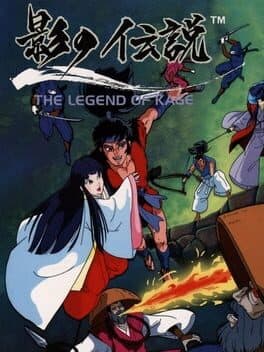
The Legend of Kage
Taito1985
The Legend of Kage is a 1985 arcade game by Taito and was released for several contemporary video game home systems in 1986. The player is armed with a kodachi shortsword and an unlimited amount of shuriken. Grabbing a crystal ball causes the player character's Kage's clothes to change to the next level in colour and thereby attain certain powers (bigger shuriken and/or faster speed); if Kage is hit while in green or orange clothes, he does not die but revert to his normal red clothes. Grabbing a scroll causes Kage to stand still and meditate for several seconds while approaching enemies drop to the ground dead (although the scrolls appear in the arcade version, the crystal balls do not). This MSX version was brought without a license to the SG-1000 in Taiwan.
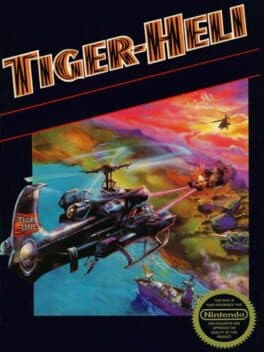
Tiger Heli
Toaplan1985
Tiger Heli was one of the first games developed by Toaplan and published by Taito Corporation in 1985. It is a predecessor to Twin Cobra. The player controls a helicopter named Tiger Heli taking out various enemies along the way.
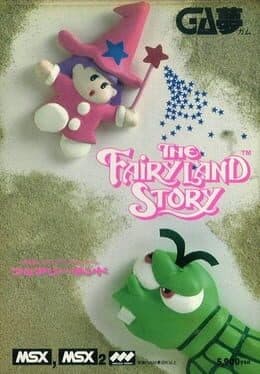
The Fairyland Story
Taito1985
The Fairyland Story is a arcade platform game released by Taito in July 1985. The game was ported to the MSX and X68000 computers, and later was included in Taito Memories and Taito Legends 2 for the PlayStation 2 for the Xbox and the PC.
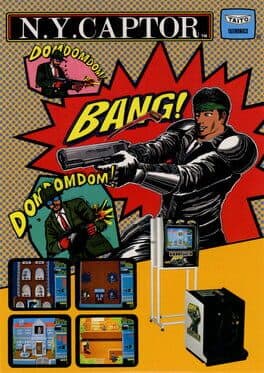
N.Y. Captor
Taito Corporation1985
You play a marksman who has to rescue hostages from terrorists. Fire upon enemies from your position, but avoid shooting the bystanders. After the last life has been lost, a sequence shows your character falling from his perch to his death.
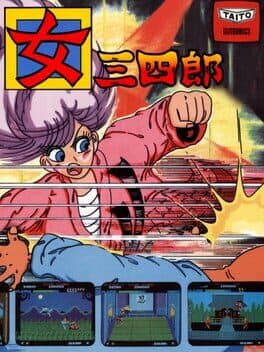
Onna Sansirou: Typhoon Gal
Taito1985
Onna Sansirou: Typhoon Gal is a fighting game released in Japan in 1985. It is the first fighting game to include throws and grapples, now staples of fighting games, as well as the fighting of multiple enemies at the same time. The game also features a regenerating health bar.
Super Speed Race Jr.
Taito1985
Super Speed Race Jr. is a racing arcade game that was released by Taito Corporation in 1985 only in Japan; it is the seventh and final title in their Speed Race series. The player must use a steering wheel to take up control of a car, with a single pedal to make it accelerate. The car in question is coloured red and you must guide it through the streets of a city while avoiding other CPU-controlled cars (one of which is a yellow Volkswagen Buggy), and trying not to go off the road; you will also have to watch out for zebra and level crossings as pedestrians and diesel-hauled trains pass over them.
Sky Destroyer
Home Data1985
Sky Destroyer is a rail shooter video game in which the player controls a WWII Japanese monoplane. The pilot is required to destroy enemies to clear stages. It was released by Taito Corporation in 1985 for video arcades as well as for the Family Computer.
Raiders5
UPL1985
Raiders5 is a top-down maze shooter with some puzzle elements. A level consists of a single maze with a vertical design. The player controls a ship that can move in four directions. To complete a level the exit needs to be opened up before time runs out. A maze consists of two types of blocks that form walls, enemies and collectibles. The tiles for movement are coloured purple. By shooting regular, grey maze walls they disappear and orange tiles appear instead.
Xyzolog
Taito1984
An action puzzle game released for the MSX in 1985, developed and published by Taito Corporation.
Cycle Maabou
1984
A man on a monocycle bounces on objects and traverses through other stages. Arcade game by Taito.
Revenge of the Ninja
Telenet Japan1984
The game tells the story of a skilled and daring teenage ninja named Hayate, infiltrating an evil castle in an attempt to rescue a princess he loves. Hayate must survive a collection of deathtraps and defeat a variety of mythological creatures and other adversaries on his quest to save the princess and destroy the castle.

Complex X
Taito1984
Complex X is a platform arcade game, released by P.G.D. (Progressive Game Distributors) in April 1985; it was the last game to run on the altered version of Taito's Qix hardware first used for Space Dungeon, The Electric Yo-Yo, Kram, and Zoo Keeper (two Motorola M6809s run at 1.25 MHz and a Motorola M6802 run at 921.6 KHz, with an added Motorola M68705 run at 1 MHz). The game was originally going to be released by Taito America, but the company never released it because they closed down their manufacturing plant in September 1984. However, the game still credits Taito America and has a 1984 copyright date on the title screen. The player must use two eight-way joysticks (one for moving and one for firing) to take control of a nuclear scientist whose objective is to escape from a flooding reactor as the water's level rises below him before running out of air (which is indicated by the "AIR LEFT" meter at the top of the screen) - and every blue-and-magenta square he collects shall add ten shots to his reserve (indicated by the number above the "AIR LEFT" meter that starts at 50 for every level), which he must use to shoot creatures that block his progress. Like Mario and Luigi in Mario Bros., the scientist may also disappear off one side of the screen and reappear on the other, but to make him jump, the player needs to push a button on top of the "firing" joystick (and good timing is essential for reaching the moving, magenta platforms); furthermore, once the scientist reaches the level's exit, he will receive a bonus of 100 points for every shot remaining in his reserve.
Outer Zone
Taito Corporation1984
The player controls the X Prowler ship as they must navigate a labyrinth of platforms to destroy the marked targets, then take down the demon in the shooting boss battle.
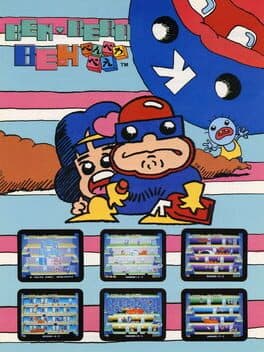
Ben Bero Beh
Taito1984
Ben Bero Beh is a platform game where you guide a small superhero through an apartment complex on fire! Armed with a fire extinguisher, you must make your way down the levels avoiding gas explosions, crumbling floors, damaged lighting fixtures, and various enemies that pop out of the doors. The goal is to extinguish the fire and rescue Ben's girlfriend.
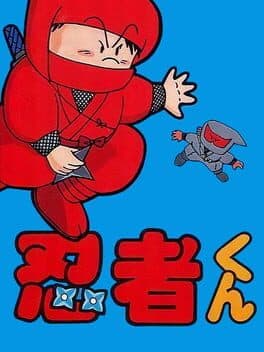
Ninja-Kid
UPL1984
An action platformer for the Arcades. It is the first of the Ninja-kun series.
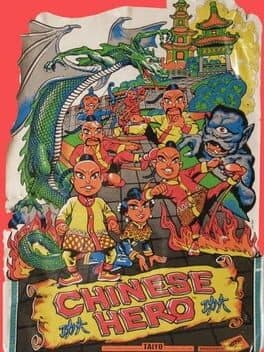
Chinese Hero
Nihon Game1984
Chinese Hero is an arcade action game developed by Nihon Game (now Culture Brain) and published by Taiyo System in October 1984. Chinese Hero is the first game in the Super Chinese series by Culture Brain. It was ported to the Nintendo Entertainment System as Kung Fu Heroes in Japan by the company Nihon Game in 1986 and was released in North America in 1989. Kung-Fu Heroes features an overhead view and up to two players may play simultaneously. It is a direct port of the earlier arcade game Chinese Hero developed by Nihon Game at the time the company was involved in the coin-up industry. Kung-Fu Heroes is an NES port of Chinese Hero, and unlike other titles in the series, it does not incorporate any role-playing video game elements in the gameplay.
Great Swordsman
Allumer, Ltd.1984
In Great Swordsman, one or two players can play while taking turns. Players control with two-way joystick and three buttons with different hit levels. Each for creating different level attacks. Like in Data East's Karate Champ, buttons must be held. If they are released, the players' characters will revert to their standing animation. Moves can be defended against by intercepting the players' opponents' weapons with the players'. The object of the game is to land a hit on the opponent or push him/her off the mat to score a point. There are fifteen levels with three different modes. The first three are fencing, the next five are kendo, and the final seven are gladiator-based. After clearing all levels in one mode, the "VICTORY SCORE" will be added to the players' scores, even if any of them was tied with their opponents at the end. After fifteen levels are completed, the players start over in a higher difficulty setting and repeat after the next fifteen levels are also cleared. There are also bonus levels where players must deflect arrows to score extra points.
Buggy Challenge
Taito1984
Buggy Challenge is a Racing game, developed and published by Taito Corporation, which was released in Japan in 1984.
The Tin Star
Taito Corporation1984
You play a sheriff and fight outlaws in saloons, barns, banks and places outside of town.
Sea Fighter Poseidon
Taito Corporation1984
Rescue hostages while defeating the enemy. The number of hostages to rescue increases with each level. When all the hostages have been rescued, the level ends.
Kick Start
Taito Corporation1984
A motorcycle racing game from Taito.
Birdie King 3
Taito1984
The 1984 third installment in Taito Corporation's Golf franchise.
Fire Battle
Wood Place Inc.1984
Fire Battle is a science fiction themed vertical scrolling shoot 'em up game in which you take control of a spacecraft. You gather points by shooting various spacecraft, static guns and robots until your ship is destroyed. The ship has separate weapons for air and ground based enemies. Air based units can be destroyed with a twin bullet gun and ground based units with a slower bomb like weapon. You can play solo or with a friend in alternating turns.
Roller Aces
Kaneko1984
Fighting Roller / Roller Aces is all about holding forward to jet down the racetrack and avoiding all the dang obstacles you can. All tracks are littered with all sorts of crap: Speed bumps, rocks, cylindrical columns, and gaping pits.
Chack'n Pop
Taito1983
Chack'n Pop is considered a predecessor of Bubble Bobble. It is a platform game where a roundish yellow creature, named Chack'n, must fight against Monstas and Mightas in order to reclaim hearts that were stolen during a romantic encounter with Miss Chack'n. The Monstas themselves hatch from eggs hanging from the ceilings and the Mightas push a rock that is used as the game's timer. The Monsta eggs have three phases: if it's blue, it's completely harmless, if it's yellow it will pop within 10 seconds and if an egg turns red it will pop almost immediately. Chack'n uses bombs to blow up the Monstas and their eggs and he also uses them to release the captured hearts from their cages. When the heart is released, it will fly up and destroy the separator block and reveal the exit to the level.
Change Lanes
Taito1983
Racing game
Laser Grand Prix
Taito1983
Laserdisc based driving game. Originally came out in arcades.
10-Yard Fight
Irem1983
The game is viewed in a top-down perspective and is vertical scrolling. The player does not select plays for either offense or defense. On offense, the player simply receives the ball upon the snap and either attempt to run with the quarterback, toss the ball to a running back, or throw the ball to the one long distance receiver - basically the option offense. On defense, the player chooses one of two players to control, and the computer manipulates the others. The ball can also be punted or a field goal can be attempted. 10-Yard Fight has five levels of difficulty; from easiest to most difficult: high school, college, professional, playoff, and Super Bowl. If the player wins both halves of an "accelerated real time" 30-minute half at an easier level, the player advanced to the next level of difficulty, like a career mode.
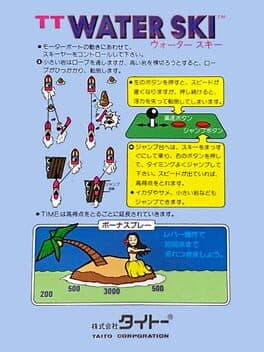
Water Ski
Taito1983
You control a water skier that attempts to make it to the end of the level without crashing into the rocks.
Super Rider
Venture Line, Inc.1983
Ride a motorcycle over bridges, jump gaps, rocks, etc.
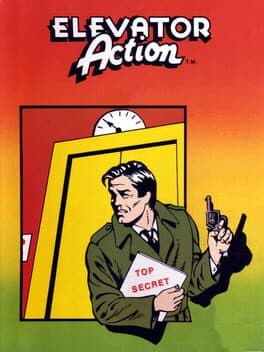
Elevator Action
Taito1983
Elevator Action is a 1983 arcade game by Taito. It debuted during the "Golden Age of Arcade Games". Innovative in gameplay, the game was very popular for many years. In the game, the player assumes the role of a spy who infiltrates a building filled with elevators. He must collect secret documents from the building and traverse the 30 floors of the building using an increasingly complex series of elevators. The player is pursued by enemy agents who appear from behind closed doors. These agents must be dealt with via force or evasion. Successful completion of a level involves collecting all the secret documents and traversing the building from top to bottom. In the lower floors of the building, the elevator systems are so complex that some puzzle-solving skills are needed. The game was available as a standard upright cabinet The controls consist of a 4-way joystick and two buttons, one for "shoot" and the other for jumping and kicking. The maximum number of players is two, alternating turns. The graphics are extremely simple, 2D color graphics and in-game music was composed by musician Yoshio Imamura. The game was followed by a sequel, Elevator Action II (also known as Elevator Action Returns).
Birdie King 2
Taito1983
The 1983 second installment to Taito Corporation's Golf franchise.

Bio Attack
Taito1983
Here, you control a ship through a human's body while shooting viruses. It was licensed by Fox Video Games, as it is based on the 20th Century Fox film, Fantastic Voyage.
Space Dungeon
Taito1982
Piloting a pie-shaped spacecraft, you must move from sector to sector collecting treasure while avoiding enemies and corner-mounted lasers. The more treasure you have with you the higher your bonus when you reach the goal. A "thief" roams the sectors collecting treasure at the same time, but shooting the thief causes him to drop all his treasure.
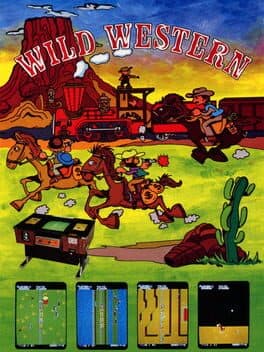
Wild Western
Taito1982
A sheriff on horseback must protect a train, located in the center of the screen, from groups of bandits. Players must avoid running into obstacles, getting shot, or allowing three bandits to board the train. A bonus game is played between rounds.
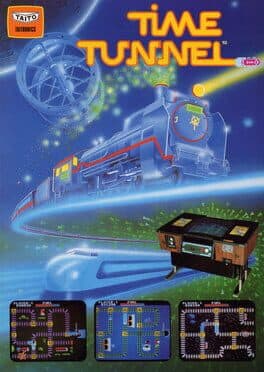
Time Tunnel
Taito Corporation1982
You play as a locomotive and have to collect all your waggons from several depots along the track.
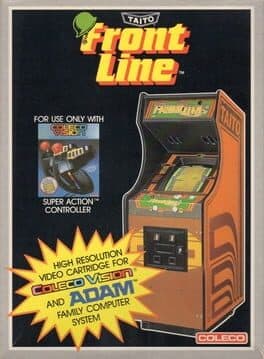
Front Line
Taito1982
Front Line is a vertically scrolling action game. Your mission is to infiltrate enemy territory and destroy their fortress. To reach the fortress, you will have to make your way through varied and dangerous terrain. Jungles, deserts, brush, and rocks all slow your progress, plus each area has numerous enemy fighters and tanks trying to stop you. To help get past these obstacles, you are armed with a machine gun and grenades; at some points in the game you may even come across an abandoned tank which you can control to increase your odds of survival. When you reach the end of the level and successfully destroy the fortress, the game will repeat at a higher level of difficulty. Gameplay is for one or two players, and four different skill levels are available.
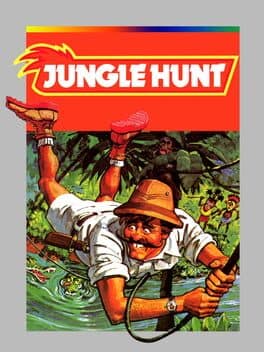
Jungle Hunt
Taito1982
Jungle Hunt is side-scrolling arcade game produced and released by Taito in 1982. It was initially released as Jungle King. Jungle Hunt is one of the first video games to use parallax scrolling. The player controls an unnamed jungle explorer sporting a pith helmet and a safari suit. The player attempts to rescue his girl from a tribe of hungry cannibals by swinging from vine to vine, swimming a crocodile-infested river, jumping over or ducking beneath rolling rocks, then releasing the girl before she is lowered into a boiling cauldron. Home versions were released for the Apple II, Atari 2600, Atari 5200, Atari 8-bit family, Commodore 64, ColecoVision, VIC-20, and IBM PC. The PC version was developed by Sierra On-Line and is incompatible with everything except an original IBM PC/XT with a CGA video card. In the Atari-ported versions the hero is named Sir Dudley, and the girl, married to Sir Dudley, is Lady Penelope.
Kram
Taito1982
Collect items while avoiding deadly skulls.
The Electric Yo-Yo
Taito Corporation1982
You play a Yo-Yo whose job is to collect all the dots on a level while avoiding enemies. Certain dots make you immune to attack from the smaller enemies, but not the main enemy.
Birdie King
Taito1982
A golf arcade game released in 1982 by Taito. It was followed by two sequels: Birdie King 2 in 1983, and Birdie King 3 in 1984.

Alpine Ski
Taito1982
Maneuver a skier through a downhill ski course, a slalom course, and a ski jumping competition.
Frog & Spiders
Taito Corporation1981
An arcade shooter from Taito in 1981 in the vein of Space Invaders.
Zarzon
1981
Zarzon is a 1981 shoot 'em up arcade video game, inspired by gameplay from Space Invaders.
Colony 7
1981
Space shooter mixing elements from Missile Command with Galaxian.
Qix
Taito1981
Draw boxes to claim as much screen as possible without getting in the path of the "Qix" and "Sparx". Draw slower for more points and hope that you have enough coins. Simple but very addicting!
Space Cruiser
Taito Corporation1981
A vertical scrolling space shooter.
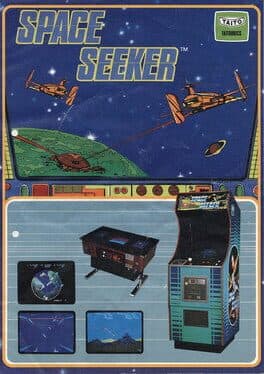
Space Seeker
Taito Corporation1981
Defend your base against enemies.
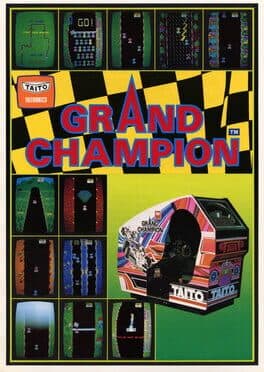
Grand Champion
Taito Corporation1981
A vertical driving game. Compete against other computer cars to win races.
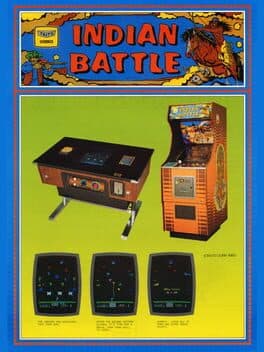
Indian Battle
Taito1980
The player takes control of a cowboy battling Native Americans. There are three types of enemies including the Indian footman, Indian on horseback and Buzzard. Arrow and tomahawk projectiles can also be shot for points. Enemies on the same plane such as scorpions cannot be shot and limit where the player can move the cowboy. Obstacles such as cacti and rocks block the cowboy's line of fire. One hit from an enemy or projectile takes a life away. The player is required to kill a set number of enemies to progress to the next level.
Polaris
Taito1980
Team up and take flight in this sci-fi co-op shooter with fully destructible environments. Soar through dynamic open levels using powerful abilities, master advanced weapons and vehicles, and lay waste to the armies of a hostile colonizing threat - defend your home worlds!
Phoenix
Tehkan1980
In this shoot 'em up the player has to fight off four assault waves consisting of different enemy types until he reaches a huge UFO. After destroying the protective plates guarding the UFO's pilot in his cockpit the player can kill the pilot. The game starts anew with harder enemies.
Missile Command
Atari1980
As a regional commander of three anti-missile batteries, the player must defend six cities in their zone from being destroyed. The player's six cities are being attacked by an endless hail of ballistic missiles, some of them even splitting like multiple independently targetable reentry vehicles (MIRVs). New weapons are introduced in later levels: smart bombs that can evade a less than perfectly targeted missile, and bomber planes and satellites that fly across the screen and launch missiles of their own.
New York! New York!
Sigma Enterprises1980
Alien spaceships from another planet attack New York City and threaten to conquer the world. You must use your laser cannon to save the city by destroying the Mother Ship and her fleet. Speech: "Come On!", "Hit Me, Hit Me!" and "I'm Here!".
Balloon Bomber
Taito1980
Shoot and destroy balloon bombs dropped from a bi-plane.
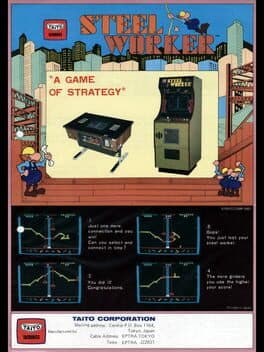
Steel Worker
1980
Steel Worker is a reflex game that combines OH&S with the Japanese practice of just in time manufacturing. Each level starts with a mindless worker moving steadily from one side of the factory to the other along an incomplete gantry. To prevent the worker from falling to his doom, the player must select another piece of the gantry to be erected by the time the worker reaches the end of the current one. The process is repeated until the worker makes it to safety at the platform at the other end of the screen, or four workers have died. Complicating matters are a pair of elevators in the centre of the screen whose touch will be fatal to the steel worker. There are five types of bridge that may be placed at any time: horizontal, slanting up, slanting down, staircase up and staircase down. A different selection needs to be made depending if the worker is moving left or right, giving a total of ten options. These are chosen using a cursor which can be moved left or right across the bottom of the screen and pressing the select button. There is also a reverse button which will turn the worker around, but this can only be performed a maximum of nine times in total. Points are awarded for adding parts of the gantry, and for the worker successfully crossing the screen.
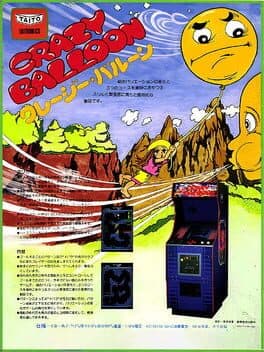
Crazy Balloon
Taito1980
The player controls a box tied to a floating balloon, which swings left and right continually, within a maze filled with spikes. Any contact with the spikes, either with the balloon or the box, destroys the balloon. Using a four-way joystick, the player moves the box through the maze and toward the goal, ensuring that the swinging balloon avoids the spikes. The player collects points as the box moves closer to the goal (backtracking earns no points). Certain areas of the maze are colored green and purple, and the player will earn more points if the balloon and box pass through the area safely. While there is no time limit, the player cannot wait for a long time; otherwise, a face will appear and blow the balloon into the spikes. As the player completes mazes, individual spikes, or even the entire maze, may begin moving or scrolling.
Warp 1
Sun Electronics1979
Warp-1 is a first-person arcade space shooter where you fire at oncoming targets from a cockpit-style view, racing through a starfield. Developed by Sun Electronics and distributed by Taito, it emphasized depth and aiming over traditional side-on patterns of the era.
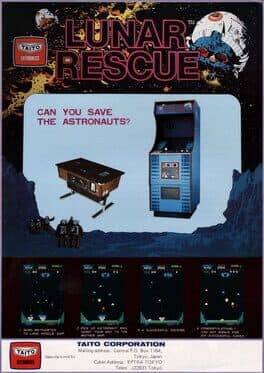
Lunar Rescue
Taito1979
The game starts with the player's spacecraft docked inside the mothership at the top of the screen. Below the mothership is an asteroid field and below that, the surface of the moon. There are three platforms which can be landed on and six stranded astronauts that need rescuing. You control a small spacecraft. The player must press the button to release their spacecraft from the mothership and manoeuvre through the asteroid field. The craft can only move left or right or use up a finite amount of fuel by engaging the thrust (the same button again) to slow its descent. If the craft is landed successfully on one of the available platforms, one of the astronauts will run towards and board the craft. The asteroid belt now changes into a swarm of flying saucers, some of which drop bombs. The player must now guide the spacecraft back up to the mothership (the craft ascends without using up fuel), avoiding the flying saucers. The thrust button is now a fire button which can be used to shoot at enemies above (as in Space Invaders). Finally, the craft must be docked with the mothership using the bay opening. If the side of the mothership or any part of the ship outside of the opening is hit, the rescued astronaut falls to the surface and dies. If the mothership is missed altogether, the craft explodes. After all six people have been rescued (or killed providing the player still has lives remaining), the game starts again at a higher level.
Space Chaser
Taito1979
Collect all the dots in the maze without colliding with (or being collided by) the missile. You can use your speed boost as long as you have fuel left. If the missile gets behind you on a long stretch it will speed up and the only way to avoid collision then is to turn a corner.
Deluxe Space Invaders
Taito1979
Originally called Space Invaders Part II in Japan, this is the first sequel to the coin-munching hit Space Invaders. This game is notable for introducing the concept of a cut-scene.
Field Goal
Taito1979
A football/Breakout-style arcade game made by Taito. Despite its name it is less of a football game and more of a Breakout variant, with the player represented by a paddle and the opposing team guarding the goal and at the top of the screen. The game is controlled with a paddle, like most Breakout variants.
Straight Flush
Taito1979
A colorful card game from Taito.
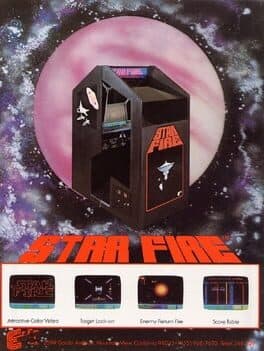
Star Fire
Technical Magic1979
Star Fire is an early color game programmed by David Rolfe with graphics designed by Ted Michon and Susan Ogg. It was released by Exidy in 1979. Star Fire is a first-person space shooter where your mission is to seek out and destroy enemy spacecraft while avoiding incoming missiles. If a number of elements of Star Fire seem similar to Star Wars, your eyes are not deceiving you. Star Fire was originally designed as a Star Wars game, with the eventual hope that either a license would be purchased or that they would change enough of the elements to avoid any legal entanglements. Originally, the authors had hoped that Midway would pick up the game for distribution, but they passed and instead Exidy purchased the game and released it. Star Fire was the first game to come in an environmental cabinet, designed by Michael Cooper-Hart. Even more importantly from a historical perspective, Star Fire was the first game to keep a high score list where the player could enter his or her initials. Prior games had tracked the concept of a high score, but Star Fire was the first to let you personalize the high score entry and display a top ten list with your initials next to your high score. An update to Star Fire, simply called "Star Fire II", was intended to go into the last run of Star Fire units. It features a more refined high score display and easier high score input.
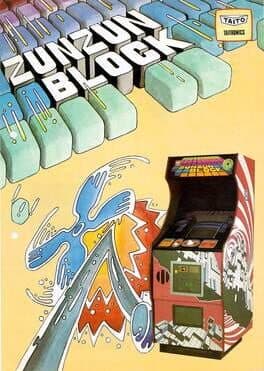
ZunZun Block
Taito1979
ZunZun Block is the third game in Taito's Block series. Again, the gameplay is similiar to Breakout's ball-and-paddle block breaking.
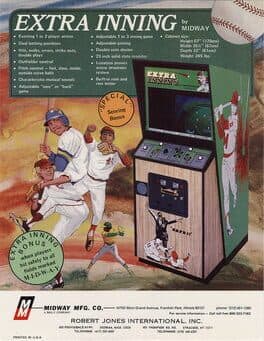
Extra Inning
Dave Nutting Associates1978
The first graphical baseball sim, released by Midway for arcades in 1978
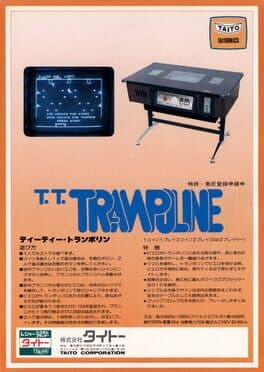
Trampoline
Exidy1978
This is Exidy's sequel to Circus. It was originally developed under the name Trapeze, but only one board of this version is known to exist and it is not thought to have been released i North America. The game did however find success in Japan and was released by Taito in several variations under the Trampoline name in upright and tabletop arcade cabinets.
Top Bowler
Taito1978
Top Bowler is an arcade bowling game released by Taito in 1978.
Space Invaders
Taito1978
Space Invaders is an arcade video game developed by Tomohiro Nishikado and released in 1978. It is one of the earliest shooting games and the aim is to defeat waves of aliens with a laser cannon to earn as many points as possible.
Sea Wolf II
Dave Nutting Associates1978
This game is a colour sequel of Sea Wolf. The Atari 2600-game "Submarine Commander" is a loose port of Sea Wolf II, and thus not to be confused with the 8-bit game of the same name.
Super Block
Taito1978
A sequel to Taito's arcade game Block. Like it's predecessor it is a ball-and-paddle game in the style of Breakout.
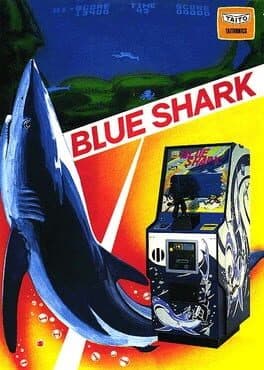
Blue Shark
Midway Manufacturing1978
An undersea shooting game where the player uses a mounted spear gun to kill sea creatures that move across the screen. Shoot the sharks, swordfish and octopuses but try not to hit any of the skindivers.
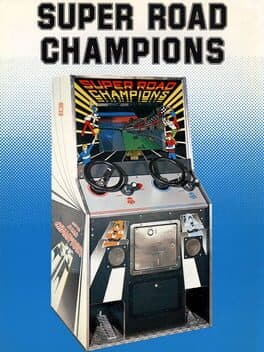
Super Road Champions
Taito1978
Road Champion was produced by Taito in 1978. Taito released 487 different machines in our database under this trade name, starting in 1967. Other machines made by Taito during the time period Road Champion was produced include Super Block, Trampoline, Acrobat, Super Speed Race V, Top Bowler, Cross Fire, Flying Fortress II, Barricade II, Fisco 400, and Cisco 400. A timed car racing game where players try to race ahead of the opposing cars and cross the finish line first to become the winner.
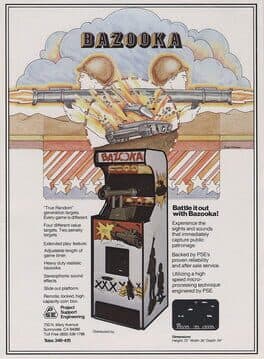
Bazooka
Project Support Engineering1977
A black and white arcade game released by Project Support Engineering in 1977. The arcade cabinet is notable for having a built-in bazooka gun that the player uses while playing the game.
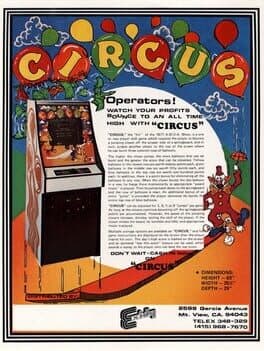
Circus
Exidy1977
Circus was one of the first games produced by Exidy that used a CPU (6502) to control the game logic instead of hand-crafted hard-coded logic circuits. It ran on a black & white monitor with a color overlay that gave each row of balloons at the top of the screen a different color. It was designed and programmed by Edward Valeau and Howell Ivey of Exidy in 1977. Circus came in an upright dedicated cabinet, and may have also been available in a cocktail configuration as well. Circus machines had white sides with red painted sideart of several balloons in flight. The front of the machine was decorated with a large ornate monitor bezel that also doubled as a marquee (or nameplate). This bezel showed several clowns in a circus scene and had the game title spelled out with multicolored balloons. The control panel was unadorned, save for an analog spinner and a start button. The whole machine was finished off in black T-molding. At least 13,000 units, possibly as many as 20,000, were produced.
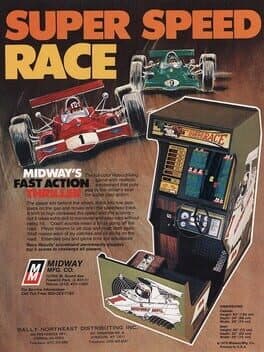
Super Speed Race
Taito1977
Super Speed Race GP V (released as "Super Speed Race" in North America, and as "Speed Race CL-5" in Europe) is an edition in Speed Race series. The primary gameplay stays identical to earlier games in the series. The player races in a top-down view and must pass other cars to score points. Compared to its predecessor Super Speed Race there are some new elements like the cars' headlights emitting light in tunnels and water slicks on the track. Also new are bridges where the player must choose between two paths and not crash against the divider.
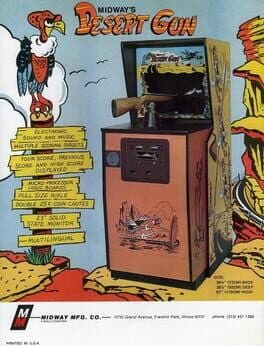
Desert Gun
Dave Nutting Associates1977
Desert Gun is a rifle-shooting arcade-cabinet by Midway.
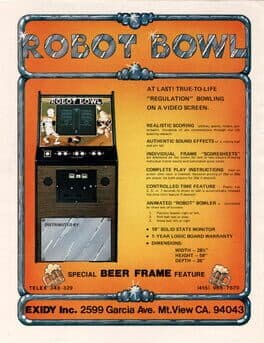
Robot Bowl
Exidy1977
Robot Bowl was a black & white bowling alley game designed and programmed by Edward Valeau and Howell Ivey of Exidy. The game featured one or two robot bowlers playing with the standard bowling rules. To control the outcome, the game had five buttons: left, right, shoot, hook left, and hook right. "Hooking" the ball was the key to getting a good score, as you could only hook the ball after it had been thrown. This made it easy to pick up a spare, but the game made up for it by making splits very common. Robot Bowl was available in two different dedicated cabinets, an upright and a cocktail, both of them used the same internal hardware. The Robot Bowl upright was of the common 1970s 'short cabinet' design, as the machine had no marquee and was only as tall as the monitor. Some machines also had a decorative 'ball return' on the front at the very bottom of the cabinet. There is an interesting story behind that. At the time the game was created, Exidy had just purchased Fun Games and had a number of cabinets left over from one of Fun's driving games. They used these cabinets to get Robot Bowl into production quickly. The only problem was that the cabinets had a hole in the front where the gas pedal had been. Michael Cooper-Hart suggested that they silk-screen the words 'Ball Return' over the hole. The Robot Bowl cocktail was a square box with a perfectly round top. The player controls were on either side of the monitor (and you actually had to look at the game sideways to play). This machine had no decoration of any kind.
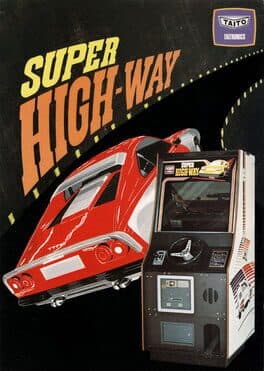
Super High-Way
Taito1977
A driving game in the style of Night Driver and 280 ZZZAP by Taito.
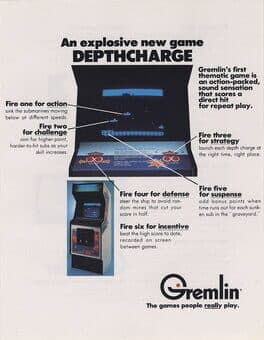
Depthcharge
Gremlin Industries1977
Depthcharge is a single-player arcade game released in 1977 by Gremlin Industries for the Sega VIC Dual system board. The game presents the player with a cut-away view of a section of ocean, on the surface of which is a destroyer with submarines passing beneath it. The player drops depth charges (up to six at a time) to destroy the submarines and moves the ship back and forth in order to avoid the submarines' mines. Up to four submarines may be present at any given time, each of which bears a score for destroying it that increases with its depth. The game was imported and released in several versions by Japanese publishers. Esco Trading released the game as Detphcharge, Taito as Sub Hunter, Sega as Depthbomb and in two versions by Data East - first as Submarine and then as Battleship in a two-in-one cabinet.
Flying Fortress II
Taito1977
A Taito arcade game and the sequel to Electra's Flying Fortress.
Boot Hill
Midway1977
Boot Hill is a shooter arcade game released by Midway in 1977. The game is a sequel to Western Gun (aka Gun Fight). It's a classic one or two-player western gunfight game. Each player uses a small joystick to move their cowboy up and down the play area, while a second, much larger joystick is used to aim the pistol and shoot - this larger stick also has a trigger button. The game's single goal is simply to shoot the other player, who is situated on the opposite side of the game area. Wagons and cacti litter the middle of the play area, providing temporary cover from the opponent's gunfire. These obstacles slowly disintegrate as they are shot.
Fisco 400
Taito1977
Fisco 400 is a top down racing arcade game for four players. Each player controls a colored car with a steering wheel and gas pedal. Each track fits on a single screen but changes slightly during play. The cars gain points for traversing parts of a lap. Whoever has the most points when time runs out wins the game.
Road Champion
Taito1977
An arcade racing game from Taito.
Hustle
Gremlin Industries1977
Hustle is a 1977 game by Gremlin on Blockade hardware that is effectively Snake except that the normal pellets are replaced with larger pieces containing various point values that you get if you touch the piece before it disappears. Multiple pieces may also appear at once. You have one life; the game ends either when you hit yourself/a boundary or run out of time (the operator is presumably able to change how much time you can play for).
Guided Missile
Taito1977
Launch missiles at targets moving horizontally across the screen.
Wall Break
Taito1977
An arcade game produced by Taito. The name, release era and cabinet design indicates it may be a Breakout-style ball-and-paddle game.
400 Miles
Model Racing1976
1 player arcade racing game.
280 Zzzap
Dave Nutting Associates1976
The game is a simple black and white monochrome driving game. You control a car through a night time scene, and the road is represented by simple posts at the edges. The top of the screen will display information about upcoming curves (like the maximum safe speed to take them at), while the bottom of the screen has a speedometer, timer, scoreboard, and may also display a few tips as well. Just drive, and don't crash. Pay attention to your speed on the corners to avoid crashing.
Blockade
Gremlin Industries1976
Blockade is a black and white arcade game developed and published by Gremlin in October 1976. Using four directional buttons, each player moves their character around leaving a solid line behind them, turning at 90 degree angles. To win, a player must last longer than the opponent before hitting something, with the first person to hit something losing. The game ends after one player gains six wins. Blockade is the first of what have become known as snake games.
Crashing Race
1976
An arcade driving game released by Taito in 1976. The game features destruction derby-style gameplay where the players score by crashing into as many computer-controlled cars as possible.
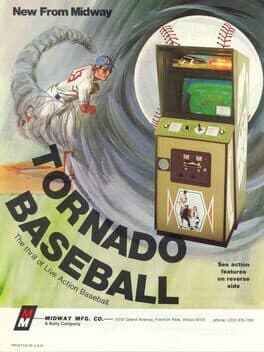
Tornado Baseball
Dave Nutting Associates1976
A black and white baseball game from Midway.
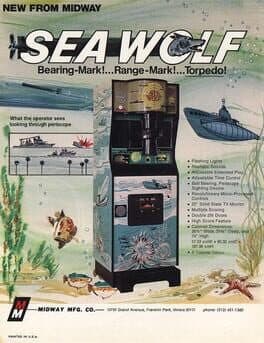
Sea Wolf
Dave Nutting Associates1976
Sea Wolf is an arcade game by Midway, originally released in 1976. The player looks through a large periscope to aim at ships moving across the virtual sea line at the top of the screen, using a thumb button on the right handle of the scope to fire torpedoes. The periscope swivels to the right and left, providing horizontal motion of a targeting cross-hair. The cabinet features a mixture of video game and older electro-mechanical technology for player feedback. Using back-lit transparencies reflected inside the scope, the number of torpedoes remaining are displayed, as well as a red "RELOAD" light which lights up momentarily when the player has launched five torpedoes. Additionally, when ships are hit on the screen, an explosion "light" is reflected inside the scope. A blue overlay is affixed to the screen to provide a "water color" to the sea. Sounds include a sonar ping and the sound of the PT Boat racing across the screen. Sea Wolf is time-limited, with the player having an opportunity to win bonus time by reaching an operator-set score. The player's score is shown on the bottom half of the screen as well as the high score, one of the first known instances of a high score in a video game. Targets include destroyers, a fast moving PT Boat, and mines floating across the screen can that serve as obstructions.
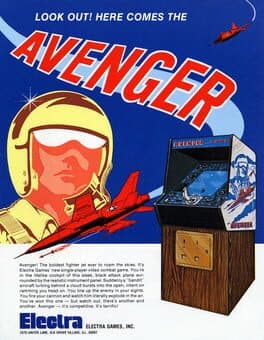
Avenger
Electra Games1975
The game has a top-down view of a aircraft scene. Your fighter is at the bottom and you control its speed and horizontal position with the joystick. The scene scrolls from top to bottom and enemy aircraft appear at top of screen, flying down towards you. The Afterburner button lets you quickly speed up.
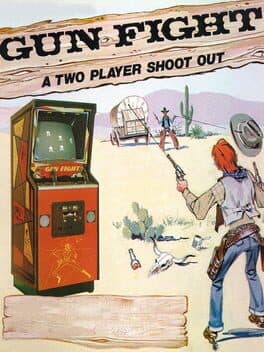
Gun Fight
Taito1975
Old west theme shoot-out. Using simple graphics, two cowboys one on the left and one on the right move up down, left and right trying to get a clear shot avoiding cactus at the other.
Western Gun
Taito1975
Western Gun, which served as an inspiration for Gun Fight in the USA (they're similar in gameplay and theme, but they're two different games), is a 1975 arcade shooter game designed by Tomohiro Nishikado, and released by Taito in Japan and Europe and by Midway Games in North America. It was the first video game to depict human-to-human combat, while the Midway version was also the first video game to use a microprocessor. Following its November 1975 release in North America, it went on to sell over 8,000 arcade cabinets in the United States. It was ported to the Bally Astrocade video game console as a built-in game in 1977 as well as several home computer platforms. The theme of the game involves two Old West cowboys armed with revolvers and squaring off in a duel. Whoever shoots the other cowboy first wins the duel. Unlike in a real-life duel, however, both cowboys get numerous opportunities to duel in order to score points (one point per successful draw).
Wheels II
Taito Corporation1975
A two-player version of Wheels from Midway
Attack UFO
Taito1974
The player controls guided missiles shot from the bottom of the screen and tries to steer them into the attacking U.F.O.s
Wheels
Taito1974
Speed Race is a 1974 arcade racing video game developed and manufactured by Taito and released under the titles "Racer" and "Wheels" in North America by distributor Midway Manufacturing in 1975. Designed by Tomohiro Nishikado, the gameplay involves the player using the attached steering wheel to maneuver a car alongside a fast vertical scrolling road. The objective is to score points by driving past other cars without colliding with them; more points are awarded for driving faster. Players must do this under a 90-second time limit, which ends the game when it runs out. The gameplay concepts were adapted from two earlier driving electro-mechanical games: Kasco's Mini Drive (1958) and Taito's Super Road 7 (1970). The original Speed Race and Wheels had an upright arcade cabinet, while Midway's Racer introduced a sit-down cabinet. Taito released an updated version of Speed Race called Speed Race DX in 1975. Two-player versions followed with Midway's Wheels II and Taito's Speed Race Twin. The game was a worldwide commercial success. Speed Race was a hit in Japan, establishing 100 yen per play as the standard for arcade games there, while Wheels and Wheels II sold 10,000 arcade cabinets in the United States to become the best-selling arcade game of 1975. The Speed Race DX and Wheels versions were also among the top three highest-grossing arcade games of 1976 in Japan and the United States, respectively, while Speed Race DX was Japan's highest-grossing arcade video game of 1977. The game spawned the Speed Race series of arcade racing games. The game's use of vertical scrolling was also influential on later games.
TV Basketball
Taito1974
Released in the arcades in april 1974, Basketball was a landmark title, notable for several firsts in video gaming. It was the first basketball video game, the first video game to use sprites, and the first to represent human characters. It is also the first known Japanese-developed game to be released in North America.
Davis Cup
Taito1973
Taito's fifth game and the second developed in house. The game is another ball-and-paddle variation, like three of Taito's previous four releases, but with the added functionality of four players being able to play doubles. This was an important innovation during the 1973-1974 Pong craze first introduced in Allied Leisure's Tennis Tourney.
Soccer
Taito1973
Soccer is Taito's third ever video game release and the first developed internally. The game was designed by the highly influential Tomohiro Nishikado, who would later go on to create Space Invaders. Soccer is a ball-and-paddle game like Pong, but with a green background to simulate a playfield, allowing each player to control both a forward and a goalkeeper. The players can adjust the size of the players, who are represented as paddles on screen. It also has a goal on each side. Soccer is likely to be Japan's first original domestically produced video game, in comparison to Japanese Pong clones released earlier, including Sega's Pong Tron and Taito's Elepong. Since it was exported to Europe in 1973 it may also be the first Japanese video game to be released on the European continent.
Astro Race
Atari1973
Taito's second ever video game. It is based on Atari's Space Race and, like Elepong, uses imported PC Boards in a Taito-constructed cabinet.
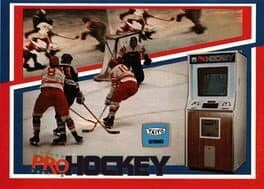
Pro Hockey
1973
Pro Hockey is an early sports arcade game from Taito.
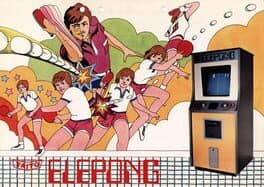
Elepong
Atari1973
Taito's attempt at the arcade ping-pong game genre, and likely their first ever arcade game release. It uses imported Pong PC Boards in a Taito-produced cabinet.