This Day In Gaming, November 20: Mass Effect
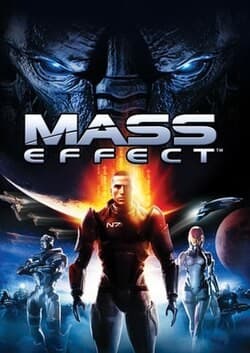
Some games sell more copies. Few have reshaped what players expect from a story. When Mass Effect touched down on North American retail shelves on November 20, 2007, BioWare did not just launch a new franchise. It made a case that a video game could be a character drama, a space opera, and a tense tactical shooter all at once, and that the player should be the author of how it ended.
A landmark release
Mass Effect arrived as an Xbox 360 exclusive, published by Microsoft Game Studios and priced at 59.99 US dollars, with a 69.99 Limited Collector's Edition. The North American launch fell on November 20, 2007. Europe followed on November 23 and Australia on November 22, though an EB Games store in Australia famously broke the street date and began selling copies as early as November 16. Microsoft's own launch-day press release captured the mood, declaring that "gamer excitement reaches galactic proportions" as the game hit shelves.
The project was led by game director Casey Hudson and built on Epic's Unreal Engine 3. It cast you as Commander Shepard, a soldier of the human Systems Alliance who, over the course of the story, becomes the first human Spectre, an elite agent answerable only to the galaxy's governing Council. The threat Shepard chases is existential: a rogue agent named Saren and the machine intelligence behind him, a plot that spirals toward the possible extinction of all organic life.
Why it mattered
Plenty of RPGs told good stories before 2007. What set Mass Effect apart was how it told them. Conversations unfolded through a dialogue wheel that let you steer tone and intent rather than pick from a static list, and the game kept the camera moving in a cinematic style borrowed from film. Choices carried weight. Who you saved, who you angered, and where you fell on the Paragon and Renegade scale all rippled outward, and crucially those decisions were designed to carry across an entire planned trilogy.
The voice cast gave the galaxy texture, with actors including Seth Green, Marina Sirtis, and Lance Henriksen lending their voices to the crew and the characters Shepard met along the way. The result felt less like a game with a plot bolted on and more like a universe you could live inside, argue with, and shape.
Not everything landed cleanly. Critics and players alike grumbled about the clumsy squad AI, the fiddly inventory system, the frame-rate hitches, the long elevator rides that masked loading, and the wayward handling of the Mako, the six-wheeled rover you bounced across alien worlds. Those rough edges became part of the game's folklore, the sort of flaws a devoted fan base recounts with affection rather than contempt.
A personal experience
I first encountered ME1 when it got a PC port, but not on its original release date. I played it and got annoyed by the inventory management (which prior to the legacy edition SUCKED). So I parked the game. Then ME2 came across my path, and I loved that. Inventory problems gone, ammo was annoying, but the final mission in that game *chef's kiss*. So I went back to ME1 knowing that I could use my save in ME2, and I wanted the full experience. What a game I had missed, what a trilogy of storytelling it set up. I love this triliogy so much, and I am so sad that at the time of writing there will be no more. Star Wars 4, 5 and 6 will always be the holy trilogy, but the Mass Effect series is a very close second for me. Screw you EA, just screw you.
Reception and legacy
The reviews were glowing. The Xbox 360 version holds a Metacritic score of 91 out of 100, landing in "universal acclaim" territory across more than seventy critic reviews. It was named Best RPG at the 2007 Spike Video Game Awards, took Role-Playing Game of the Year at the 11th Annual Interactive Achievement Awards, and was crowned Game of the Year by The New York Times.
Commercially it performed well without topping the charts outright. Mass Effect sold roughly 473,000 copies in the United States during its launch month, debuting at number six on the NPD November 2007 sales chart. Microsoft reported that it passed one million units worldwide in under three weeks, reaching around 1.6 million after six weeks.
Its reach extended far beyond that first outing. A Windows port arrived on May 28, 2008, and a PlayStation 3 version followed on December 4, 2012. Mass Effect 2 landed in 2010 and Mass Effect 3 in 2012, completing the Shepard trilogy that the original game had quietly set in motion. In 2021 the whole saga was polished and re-released as the Mass Effect Legendary Edition, introducing a new generation to Shepard's story. The dialogue wheel, the branching consequences, and the cinematic conversation style became reference points that countless later RPGs borrowed from.
Nearly two decades on, Mass Effect endures less for its combat than for a simple, radical promise it made good on: that the story was yours to tell. That is why November 20 belongs to Commander Shepard.
Also on this day
November 20 has seen other notable launches. In 2018, DICE and EA released Battlefield V worldwide, and the same busy day brought the full PlayStation VR version of the rhythm hit Beat Saber in North America, along with Farming Simulator 19. None, though, cast quite the shadow of Shepard's debut.
Sources