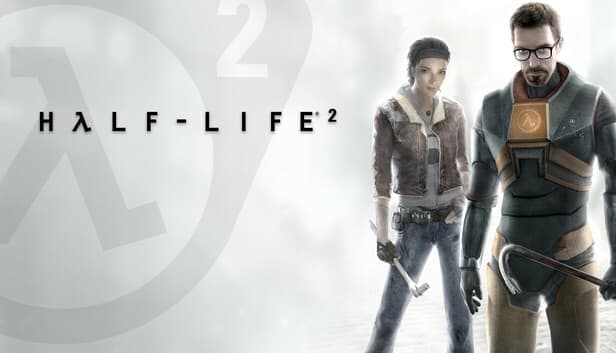
This Day In Gaming, November 16: Half-Life 2
On November 16, 2004, Valve Corporation released Half-Life 2 for Windows through its own Steam service. It arrived more than a year late, trailing a leaked build, a frustrated fanbase and a mountain of expectation. When it finally landed, it did not just meet that expectation. It reset what a first-person shooter could be.
A sequel six years in the making
Valve began work on Half-Life 2 in June 1999, roughly six months after the original Half-Life had turned a small Seattle studio into one of the most respected names in games. Gabe Newell wanted the follow-up to redefine the genre, so he gave the team something almost unheard of: no fixed deadline and what staff later described as a virtually unlimited budget. The project eventually ran five years, cost around 40 million dollars, and occupied a core team of 82 people, closer to 100 once voice actors were counted.
Much of that money and time went into technology built from scratch. The game ran on Valve's in-house Source engine, developed alongside the game itself, and integrated the Havok physics engine. That physics layer was not just window dressing. It powered the game's signature toy, the gravity gun, which let players grab, fling and stack objects in a world that behaved with a weight and consequence few games had attempted.
The leak and the long delay
Valve unveiled Half-Life 2 at E3 2003 to rapturous applause, alongside a confident release date of September 30, 2003. By the summer the team already knew it would miss it, and Valve confirmed the delay that September, to loud fan backlash.
Then things got worse. In 2003 a German hacker named Axel Gembe breached Valve's internal network and obtained the game's source code, which leaked online that October. Fans compiled a rough, playable version, which laid bare just how unfinished the game still was and bruised team morale badly. Gembe was eventually caught and, in 2006, handed a two-year suspended sentence. The episode became one of the most infamous security breaches in gaming history, and remarkably, the finished game that emerged a year later showed no scars.
A world worth living in
What players found on release was a masterclass in atmosphere and pacing. Half-Life 2 dropped the silent scientist Gordon Freeman into City 17, a crumbling Eastern European metropolis under the boot of the alien Combine. Instead of cutscenes, the story unfolded around you while you kept control, a technique the first game had pioneered and the sequel perfected.
The craft was relentless. The nightmarish town of Ravenholm turned the gravity gun into a tool of grim invention. The buggy-driven coastal stretch opened the world up. Alyx Vance, your companion for much of the game, became one of the medium's most quietly convincing characters, proof that a shooter could carry real warmth.
Critics responded in kind. The PC version holds a 96 on Metacritic. Edge awarded a perfect 10, and Maximum PC famously scored it an 11. The game collected 39 Game of the Year awards, a haul that still stands as a benchmark.
A launch that changed how we buy games
Half-Life 2 mattered for a reason beyond its design. It was the first major retail release to require Steam, forcing every buyer, even those with a boxed disc, to create an account and activate online. On launch day the servers buckled and some players found themselves locked out of a game they had just paid for. The complaints were loud and, in hindsight, quaint. Steam went on to become the dominant force in PC gaming, and Half-Life 2 was the title that dragged a skeptical audience onto it. It could be argued it set the precedent for how games media is consumed, especially given the move by Sony to get rid of physical media. Steam proved the digital only model, Sony just benefitted from it. Combine this with the notion that we don't own games any more because of Steam, just the licence, and we have to ask if Steam is a good thing long term.
Are Valve a game dev any more?
One of the consequences of the HL2 release is Steam. The impact on Valve is an interesting one. While they have released games since, Portal 1 and 2, Left for Dead 1 and 2 and others, Valve as a game developer feels like it has taken a back seat to Valve the storefront and Valve the hardware maker. It's been so long since there is been something to match the design, vision and impact of HL2 from them. Yes, Portal 1/2, TF2, their MOBA and others are very good. But where is the next HL level game? I am not sure Valve have it in them any more, and that's a shame.
Legacy
Twenty years on, Half-Life 2 is routinely named among the greatest and most influential games ever made. It spawned the free Lost Coast demo, the episodic sequels Episode One and Episode Two, and, after the long-mourned cancellation of Episode Three, the 2020 virtual-reality prequel Half-Life: Alyx. Its Source SDK seeded a vast modding community, and in 2023 Nvidia announced a ray-traced remaster, Half-Life 2 RTX.
For the game's 20th anniversary in November 2024, Valve made it temporarily free and gave it a fresh update. The result spoke for itself: a record concurrent peak of 64,085 players climbing back into City 17, two decades after the Combine first arrived.
Also on this day
November 16 is a busy date for releases. The strategy cult classic Sacrifice arrived on PC in 2000, Capcom Fighting Evolution reached the PlayStation 2 in 2004, and Mario Party 3 landed in Europe on the Nintendo 64 in 2001. But in gaming memory, this day belongs to City 17.
Sources
Half-Life 2, Wikipedia
This Day in Video Game History: November 16, AlteredGamer
Half-Life 2 at 20, Inverse