This Day In Gaming - November 9: Halo 2
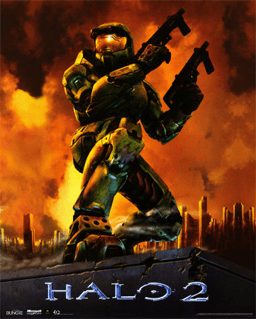
On November 9, 2004, Microsoft and Bungie released Halo 2 on the original Xbox, and for a single day the video game industry looked less like a hobby and more like Hollywood. By the time the sun set, Microsoft was reporting 125 million dollars in sales in the first 24 hours, a figure that outstripped the opening of almost any film then in theaters. Twenty years on, the sequel to Halo: Combat Evolved remains one of the most important console games ever shipped, and a useful reminder of how quickly gaming grew up.
A launch like no other
The numbers from that first day still read like a stunt. Around 2.4 million copies moved in 24 hours across the United States and Canada, built on roughly 1.5 million pre-orders placed three weeks ahead of release. GameStop alone reported more than 500,000 copies sold on day one. Microsoft had predicted the game would clear 100 million dollars; it blew past that to 125 million. Halo 2 was also the first video game ever advertised in movie theaters, and Microsoft executive Peter Moore had revealed the release date tattooed on his arm at E3 that summer. The hype was enormous, and for once the product underneath it was ready to carry the weight.
It launched on November 9 in the United States, Canada, Australia, and New Zealand, with European territories following on November 10 and 11 depending on the country. (Sources differ slightly on the European dates: Wikipedia's infobox lists November 11 for Europe, while its own text gives November 10 for France and parts of the continent and November 11 for the UK and Japan.)
The game itself
What players found on the disc was a bigger, louder, more confident shooter than the 2001 original. You still fought as Master Chief, the armored super-soldier at the center of humanity's war against the alien Covenant, but Halo 2 split its story and let you play as the Arbiter, a disgraced Covenant commander. Dual-wielding weapons, the recharging shield, and tighter vehicle combat all pushed the series forward. The writing came from Joseph Staten, and the unmistakable choral score was composed by Martin O'Donnell and Michael Salvatori. Bungie cofounder Jason Jones served as project lead.
Critics were won over. The Xbox version holds a Metacritic score of 95 out of 100, with IGN awarding 9.8, Game Informer a perfect 10, and GameSpot 9.4. It later took Console Game of the Year at the Interactive Achievement Awards.
The part everyone argued about
Not everything landed. The campaign ended on an abrupt cliffhanger, cutting to black just as the story reached a boiling point. Staten had hoped players would receive it the way audiences received the end of The Empire Strikes Back. Many did not. Reviewers at GameSpot and Edge singled the ending out as a frustration, and the campaign's brevity became one of the defining debates of the release. The reason was buried in a brutal development process. Bungie had rebuilt the game engine, scrapped much of its celebrated E3 2003 demo, and cut an entire third act. Staff later described the final stretch as "the mother of all crunches," with one designer recalling that he slept in the office and kenneled his dog for nearly two months.
Why it mattered
Halo 2's deepest legacy was not its campaign but its multiplayer. This was the game that made Xbox Live essential. It introduced automated matchmaking, playlists, and skill-based ranking, systems so central to online gaming now that it is hard to remember they once had to be invented. In the first ten weeks, players logged 91 million hours online. By June 2006, more than 500 million matches had been played. Halo 2 was the most popular game on Xbox Live from launch until Gears of War arrived nearly two years later, and a devoted community kept its servers busy long after Microsoft's official support ended in 2010.
The game went on to sell around 8.46 million copies, making it the best-selling first-generation Xbox title and the second best-selling game of 2004 in the United States, behind only Grand Theft Auto: San Andreas. It anchored what many still call the greatest month in gaming history, a November 2004 stretch that also delivered Half-Life 2 and World of Warcraft later in the month.
Few games have ever arrived with so much noise and backed it up so completely. On November 9, Halo 2 did both.
Sources
https://en.wikipedia.org/wiki/Halo_2
https://www.nbcnews.com/news/amp/wbna6456214
https://www.halopedia.org/Halo_2
https://wccftech.com/gaming-greatest-month-20-year-later-remembering-november-2004/
https://kotaku.com/15-years-later-november-2004-might-still-be-one-of-the-1839905549