Dispatch
This Day In Gaming - November 5: Call of Duty 4: Modern Warfare


game
Call of Duty 4: Modern Warfare
Dispatch
game
Call of Duty 4: Modern Warfare
Keep Reading
 Bombjack
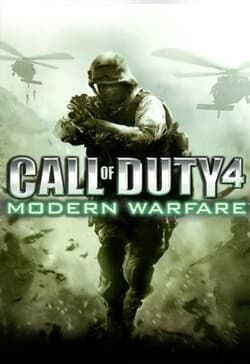
On November 5, 2007, a shooter arrived in North American stores that would quietly rewrite the rules for the whole genre. Call of Duty 4: Modern Warfare, developed by Infinity Ward and published by Activision, reached PC, PlayStation 3, and Xbox 360 in North America on that date, followed by Australia on November 7 and Europe on November 9. It did not look, on paper, like a revolution. It turned out to be one.
The three Call of Duty games before it had all been set during the Second World War, a setting the series shared with a crowded field of competitors by the mid-2000s. Infinity Ward wanted out. The studio pitched a game set in a fictional present-day conflict instead, and according to co-founders Vince Zampella and Jason West, Activision was nervous about the idea, worried that abandoning the proven WWII formula was a gamble. Infinity Ward pushed ahead anyway.
The result was built over roughly two years by a team of about 100 people, running on the studio's own IW engine (version 3.0), which delivered dynamic lighting, depth of field, and bullet penetration through surfaces while targeting a smooth 60 frames per second. To get the feel of modern combat right, the developers watched a live-fire exercise at the Marine Corps base at Twentynine Palms and consulted Marines with recent combat experience. Game director Jason West led the project, with Mark Rubin producing and Jesse Stern writing the script.
The campaign told a tense, globe-spanning thriller set in 2011, cutting between a British SAS unit and a US Marine force as they chased a Russian ultranationalist named Imran Zakhaev and a Middle Eastern coup leader, Khaled Al-Asad. Along the way it introduced characters who became series icons, chief among them the gruff Captain John Price and the player-controlled recruit John "Soap" MacTavish.
Two moments in particular lodged themselves in the memory of a generation of players. One was a flashback to 1996 in the abandoned, irradiated ruins of Pripyat, Ukraine, a slow and nerve-wracking sniper mission that critics singled out by name as "All Ghillied Up." The other was a sudden nuclear detonation that wipes out much of the Marine invasion force, including a character the player had been controlling moments earlier. Killing off a playable protagonist with no warning was almost unheard of in a blockbuster shooter, and it gave the story a weight that stayed with people long after the credits.
If the campaign earned the respect, the multiplayer earned the obsession. Call of Duty 4 introduced a persistent progression system that is now so standard it is hard to remember a time without it: players earned experience points to climb through ranks, unlocking weapons and equipment as they went. It added the create-a-class system, letting players build their own loadouts with perks, and killstreak rewards that handed out a UAV radar sweep at three kills, an airstrike at five, and an attack helicopter at seven. For those who maxed out, the Prestige system reset their rank back to the beginning in exchange for bragging rights, a loop players could repeat up to ten times on consoles. These ideas became hallmarks not just of future Call of Duty games but of countless shooters that followed.
The reviews were close to unanimous. The game holds Metacritic scores of 94 for the Xbox 360 and PS3 versions and 92 for PC, all rated as universal acclaim. Game Informer and the US Official Xbox Magazine handed out perfect 10s, IGN scored it 9.4, and GameSpot gave it a 9, with most of the criticism reserved for a campaign some found too short and linear. The awards followed: Overall Game of the Year at the Interactive Achievement Awards, multiple BAFTA wins including Story and Character, and the Golden Joystick for Ultimate Game of the Year in 2008.
Commercially it was a juggernaut. Activision reported it as the best-selling title worldwide for 2007, with more than seven million copies moved by that January. By June 2008 Infinity Ward confirmed it had passed 10 million copies, a figure that climbed past 13 million by May 2009 and reached roughly 15.7 million by late 2013.
Retrospectives have been kind, often placing Modern Warfare among the very best entries in the franchise and, by some accounts, one of the greatest games ever made. Writers have described its launch as the start of Call of Duty's "Golden Age," the point at which the series stopped playing second fiddle to anyone and began a decade-long reign at the top of the charts. Two direct sequels, Modern Warfare 2 and Modern Warfare 3, arrived in 2009 and 2011, the sub-series was rebooted in 2019, and a remaster in 2016 let a new audience play the original. Not bad for a gamble Activision almost did not want to make.
November 5 is a notable date for the franchise in general: Call of Duty: Ghosts also launched on November 5, 2013.
No comments yet. Be the first.