Dispatch
This Day In Gaming, August 18: Microsoft Flight Simulator (2020)

game
Microsoft Flight Simulator
Dispatch
game
Microsoft Flight Simulator
Keep Reading

 Bombjack
This Day In Gaming, August 18: Microsoft Flight Simulator (2020)
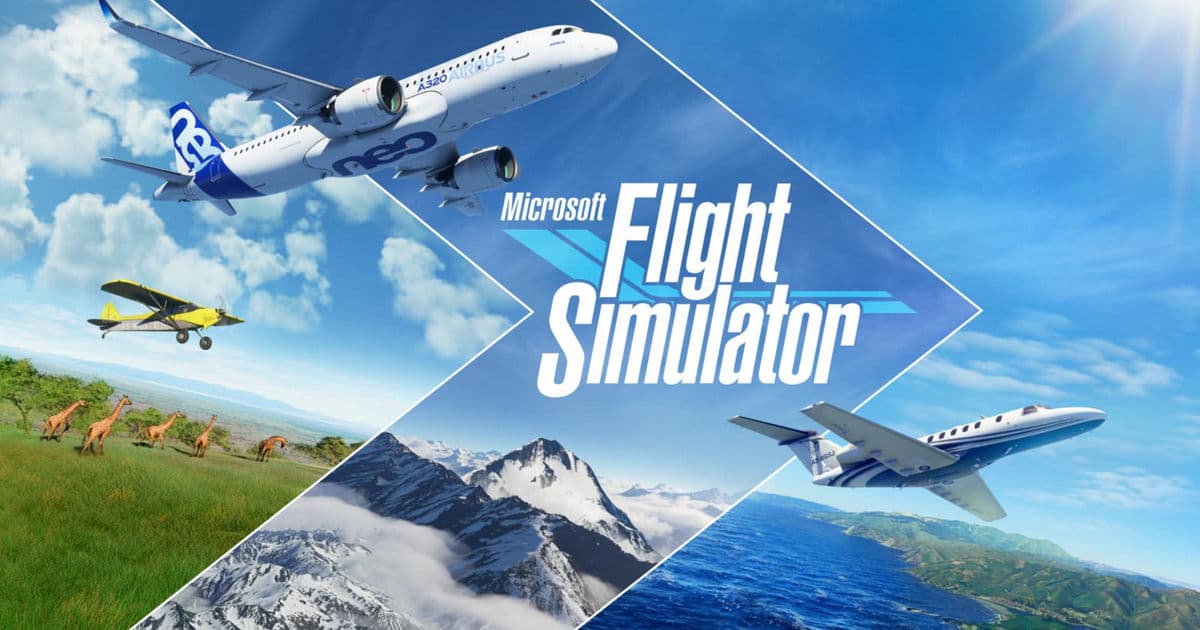
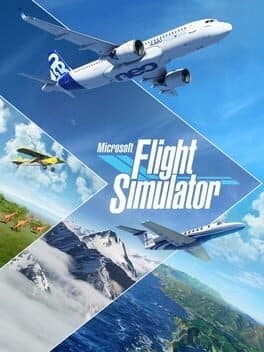
On August 18, 2020, Microsoft did something that felt almost defiant in a year defined by grounded planes and closed borders. It opened up the entire planet. Microsoft Flight Simulator, the reboot of one of the oldest software franchises in the industry, arrived on Windows PCs that day and invited players to take off from anywhere on Earth and fly to anywhere else, over a world rebuilt from real satellite and aerial data. For a lot of people stuck at home, it was the closest thing to travel they had.
A franchise older than most gamers
The Flight Simulator name stretches back to 1982, when Microsoft published the first version for the IBM PC. It became one of the company's longest running products, a fixture that shipped through the eighties, nineties, and two thousands. Then it stopped. The last major entry, Flight Simulator X, landed in 2006, and in 2009 Microsoft closed Aces Game Studio, the team behind it. For more than a decade the series sat dormant, kept alive mostly by a devoted community of hobbyists and third party add-on makers. The 2020 release was the first true successor in fourteen years, and expectations were enormous.
Rebuilding the world from data
The studio handed the project was Asobo Studio, a French developer based in Bordeaux. A team of roughly 120 people spent around six years constructing something that blurs the line between game and mapping tool. Rather than hand-model the globe, Asobo streamed it. The simulator draws on more than two petabytes of world data hosted on Microsoft's Azure cloud, using Bing Maps for topography and partnering with Blackshark.ai, whose machine learning systems analyzed aerial photography to generate photorealistic 3D buildings and terrain through photogrammetry. Weather was handled through a partnership with Meteoblue, with the atmosphere divided into roughly 250 million cells so that real-time conditions, wind, and cloud formations could be pulled live from the actual sky. Fly over your own house and, in many places, you can spot it. Chase a real storm system and it may be there waiting for you.
That ambition came with a footprint to match. The full install ran to well over a hundred gigabytes, and getting the most out of the game meant a solid internet connection so the world could stream in as you flew.
Launch and reception
The game arrived in three editions, a sixty dollar Standard tier with 20 aircraft and 30 detailed airports, a ninety dollar Deluxe, and a hundred and twenty dollar Premium Deluxe that added more planes and handcrafted airports on top. All three shared the same globe and the same base visual fidelity, so the core experience was identical no matter which box you bought. It also launched straight into Xbox Game Pass, which put it in front of a huge audience on day one.
Critics were floored. Microsoft Flight Simulator earned universal acclaim on Metacritic across its versions and finished as one of the highest rated PC games of 2020. Reviewers repeatedly reached for the same word, marvel, praising the realism, the polish, and the sheer strangeness of being able to fly anywhere on a living copy of Earth. Within its first few weeks more than a million people had played it, and the game quickly became a showcase for what cloud streaming and machine learning could do inside an interactive experience.
A quiet giant's legacy
The 2020 release did not stop at PCs. It came to Xbox Series X and S in July 2021, added free virtual reality support in December 2020, and reached Xbox One and cloud streaming in 2022, steadily widening its reach. Just as important, it re-established Flight Simulator as an ongoing platform rather than a one-off. Asobo and Microsoft kept updating it for years, adding world-detail passes for different regions and a steady stream of aircraft, and eventually followed it with a 2024 sequel that built directly on the same foundations.
Its deeper legacy may be what it proved. Here was a piece of entertainment software using satellite data, cloud computing, and AI-generated geometry to recreate the entire planet at a level of detail that would have been impossible to ship on a disc. It was less a game you win than a place you visit, and in the strange summer of 2020 it gave millions of people a window seat to a world they could not otherwise reach.
Also on this day
August 18 has one other notable launch worth a mention. In 2013, Disney Infinity, the toys-to-life game developed by Avalanche Software, released in North America on this date. It became a major franchise for Disney before the whole toys-to-life category cooled and the series was discontinued in 2016.
Sources
- https://www.google.com/url?q=https://en.wikipedia.org/wiki/Microsoft_Flight_Simulator_(2020_video_game)&source=gmail&ust=1787120277088000&sa=E
- https://www.google.com/url?q=https://www.windowscentral.com/microsoft-flight-simulator-2020-gets-august-18-release-date-preorders-live&source=gmail&ust=1787120277088000&sa=E
- https://www.google.com/url?q=https://techcrunch.com/2020/07/13/microsofts-flight-simulator-2020-will-launch-on-august-18&source=gmail&ust=1787120277088000&sa=E
- https://www.google.com/url?q=https://en.wikipedia.org/wiki/Disney_Infinity&source=gmail&ust=1787120277088000&sa=E
No comments yet. Be the first.