-
Average rating
18
Games
0
Votes cast
Heartbeat
Shipped Titles
Games (18)
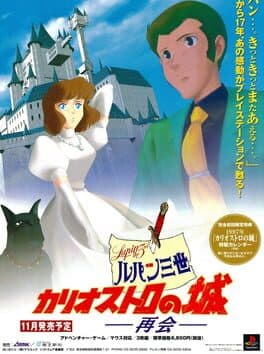
Lupin III Sansei: Cagliostro no Shiro Saikai
Asmik Corporation1997
Lupin Sansei: Chateau de Cagliostro Saikai is an Adventure game, published by Asmik Ace Entertainment, Inc, which was released in Japan in 1997.
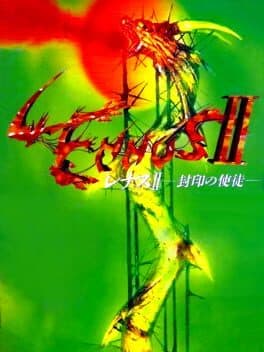
Lennus II: Fuuin no Shito
Copya System1996
The second game in the Lennus / Paladin's Quest series. The games development was very troubled and took four years instead of the planned two. Upon release it sold very poorly, even after being promoted through Nintendo Power. This caused the plans for Lennus III to be shelved. The magic system have been expanded to eight spirits representing the elements Fire, Light, Wind, Gold, Earth, Sky, Water and Void. Which can be combined or used separately for a total of 36 spells. Instead of building up a spirit skill rating by using the spells relating to the spirit, in Lennus II you power up the spirits by defeating monsters and earning spirit-specific experience points in addition to the normal experience points. A Nintendo Power version of the game was released in 1997.
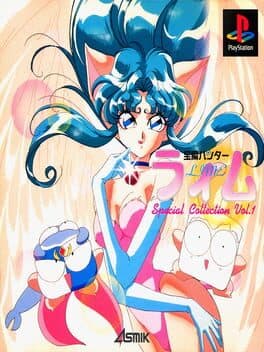
Houma Hunter Lime: Special Collection Vol. 1
Copya System1994
Houma Hunter Lime: Special Collection Vol. 1 contains the following games: - Houma Hunter Lime - Houma Hunter Lime Dai-2 Wa - Houma Hunter Lime Dai-3 Wa In addition, a new short episode ("Act 4") is included, dedicated to a particular masked type of BEM.
Trip'd
WARP1994
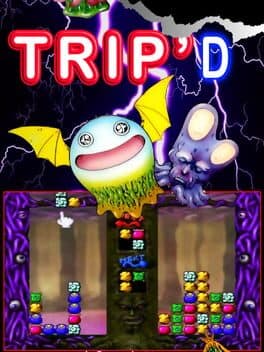
Trip'd is a falling block puzzle game similar to Puyo Puyo. Instead of blocks, alien eggs of multiple colors fall down and the player must arrange them in a line of four of the same color in order to dispose of them. However, if eggs of the same color are arranged into a square, they will hatch and form a giant alien that can instantly end the game for the player. Players must complete the stage within a certain time limit or prevent the eggs to reach the top of the screen or else their game will end. They also have the option to either play solo, against the computer or against a friend.
Kessen! Dokapon Okukoku IV: Densetsu no Yuusha-tachi
1993
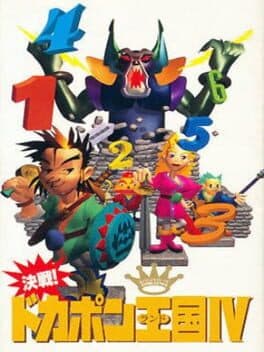
Kessen! Dokapon Okukoku IV: Densetsu no Yuusha-tachi is a Role-Playing game, published by Asmik Ace Entertainment, Inc, which was released in Japan in 1993.
Lock On
Copya System1993
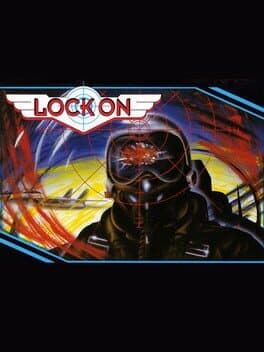
After a vicious warlord threatens the nations of the world with a massive military invasion, the United Nations have recruited an experienced pilot by the name of Jake Steel in order to bring peace back to the world. The player will participate in a variety of missions against both air and ground forces and can fly in four different aircraft (the British made Panavia Tornado ADV, the Japanese Mitsubishi F-2 fighter, the A-10 Thunderbolt II and the F-14 Tomcat). The player can use the strengths of each airplane to their advantage along with their powerful weaponry such as M61 Vulcans cannons and heat seeking missiles against enemy jet fighters, tanks and other various enemies scattered throughout each mission.

Paladin's Quest
Copya System1992
Paladin's Quest is the first game in the Lennus series. It is an Fantasy JRPG for the Super Nintendo / Super Famicom. A defining feature for the game is that there is no Magic Point system. Rather health is used to cast magic. There is also no healing magic. Rather bottles can be bought at most towns with limited uses to heal the characters and various other buffs. Each character that the player can recruit has an elemental affinity, that can be combined when casting spells.
Xardion
Jorudan1992
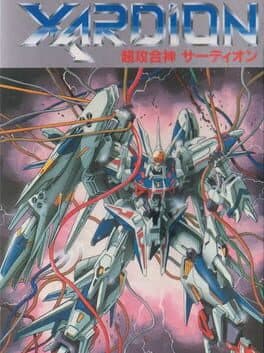
Xardion tells the tale of 3 warring planets that are home to 3 distinct alien races. Their fighting is interrupted by the threat of invasion from a much more potent alien race. The 3 planets find that they are able to set aside their differences long enough to battle their shared menace. Each planet sends a warrior to deal with the threat. There is a robot named Triton, a cat-like quadruped named Panthera, and a giant red bipedal insect alien name Alcedes. The single player of the game controls one of these characters at a time and can switch at any time. If the current character loses all of his health, the player is sent back to the start of the level and that one character receives a health refill. Each character has special attributes that help the team. For example, Panthera's relatively small size allows him to squeeze into spots where the other 2 characters can not travel. The characters can gather a number of unique powerups and weapons to help them on their mission.
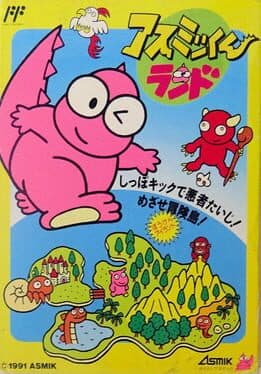
Asmik-kun Land
Graphic Research1991
Recently, monsters began to invade the peaceful country of the dragons. The only way to stop this invasion is to contact the six Dragon Gods. Unfortunately, those gods seem to be asleep. Asmik-kun must travel all over the world to find six magical splitters, that will help him to awaken the dragons and to defeat the monsters.
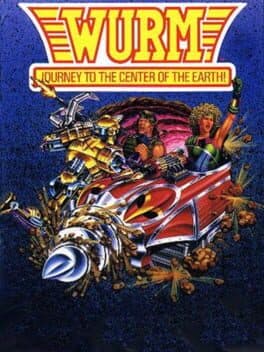
Wurm: Journey to the Center of the Earth!
Cyclone System1991
Wurm: Journey to the Center of the Earth is a game featuring multiple sequences. The player controls the VZR vehicle, and occasionally Captain Moby when she ventures out on foot in vertically and horizontally scrolling sequences as well as a first person battle against enemy monsters. Players progress through 5 levels, in which the VZR-5 investigates the fate of the other VZRs. After the completion of each level, the player gains a crystal, which will unlock additional weapons for the VZR, mentioned below.
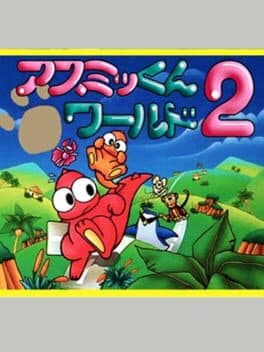
Asmik-kun World 2
Cyclone System1991
Asmik-kun World 2 (アスミッくん ワールド 2 Asumikkun Wārudo 2) is a Game Boy video game by Asmik, copyrighted in 1991.Unlike its predecessor, Boomer's Adventure in ASMIK World (Teke! Teke! Asmik-kun World), this game was never released outside Japan. Like its predecessor, the game is an excellent example of the trap-em-up genre, which also includes games like Heiankyo Alien and Space Panic. In the game, Asmik-kun has to build a "road" from the entrance to the exit in each level. An enemy has come to kidnap the children on a certain world and the "roads" are intended for the children to be rescued and escorted safely back home.
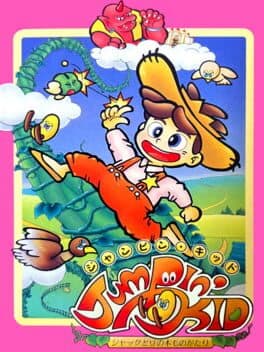
Jumpin' Kid: Jack to Mame no Ki Monogatari
NOW Production1991
The evil Giant has kidnapped Jack's girlfriend and now he must travel up the beanstalk and return to the Giant's castle in the sky to save her! Jack must use all his jumping ability and wits to climb the dangerous beanstalk without getting hurt. Many wildlife creatures and the minions of the Giant stand in his way.
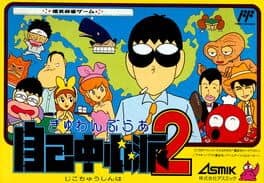
Gambler Jiko Chuushinha 2
1990
Unrelated to the titles with the same name on the Sega CD and Super Famicom, this was a direct follow-up to the original Gambler Jiko Chuushinha on the original Famicom.
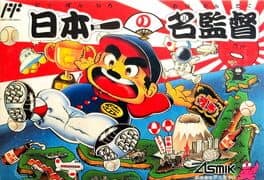
Nippon Ichi no Meikantoku
1990
Nippon Ichi no Meikantoku is a baseball management game, where you take control of a team and manage it by controlling the player training and various other aspects of the team. You can watch games being played out and make changes during the match, such as changing the pitcher, outfield player positions and batting order. You start the game by creating your manager and entering your name, then you get a randomized number of attribute points to distribute for four different categories. After that, you choose a team to manage and five other teams to play against.
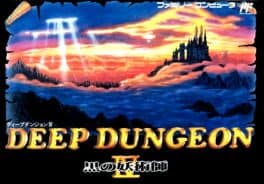
Deep Dungeon IV: Kuro no Youjutsushi
Humming Bird Soft1990
Deep Dungeon IV: Kuro no Youjutsushi is the fourth and final installment in the Deep Dungeon series. Unfortunately this game has removed the custom character feature of the previous game. Through the game, the player will meet up to two additional playable characters with predetermined class. This game also reverts to the standard practice or randomizing characters' stat growth when gaining an experience level. New to this engine is that the player can eventually learn to summon two monsters to function as a temporary additional party member for a single battle. It also removed the feature that stops random battles when the player is significantly more powerful than the enemies. This isn't as bad as it seems as the maps in this game are also much smaller (whereas the previous games used multi-floor dungeons up to 32x32 tiles, the dungeons in this game are either single floor, or multiple floors that can fit within a single 32x32 map) In this game, the player can accept "requests" from the non-player characters. These are optional tasks that will reward the player with bonus items, experience or money when finished.
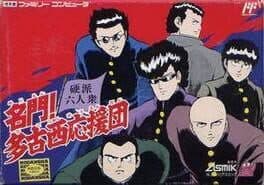
Meimon! Tako Nishi Ouendan
Graphic Research1990
Meimon! Tako Nishi Ouendan is a strategy game released exclusively in Japan for the NES (Famicom) in 1989, and is based on Juzo Tokoro's 1984 manga series of the same name (which was also adapted into a anime motion picture in 1987). Players control a gang of "ouedan" who must battle their way back to their turf after being ambushed on an island.
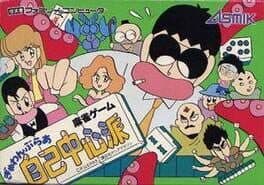
Gambler Jiko Chuushinha
1988
A Mahjong game based on a manga license, published by Asmik for the NES and MSX in Japan only.
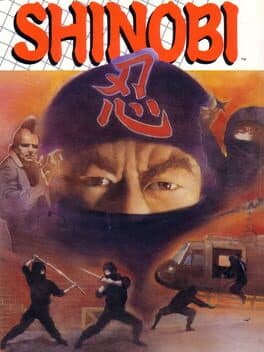
Shinobi
Team Shinobi1987
A social stealth party game for 2–4 players. Blend in with AI ninjas, find the real threats, and strike before they strike you.