Dispatch
This Day In Gaming, August 7: Dead Cells

game
Dead Cells
Dispatch
game
Dead Cells
Keep Reading
 Token
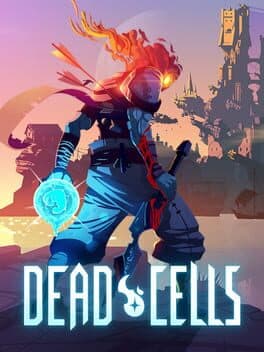
TokenOn August 7, 2018, a small French studio quietly changed what people expected from a genre mashup. That was the day Dead Cells left Steam Early Access and launched in full on Windows, macOS, Linux, Nintendo Switch, PlayStation 4, and Xbox One. What arrived was not just another indie roguelite. It was a blade-sharp, endlessly replayable action platformer that would go on to sell more than ten million copies and earn a reputation as one of the finest games of its kind.
Dead Cells was made by Motion Twin, a worker cooperative based in Bordeaux. Motion Twin is unusual even by indie standards. It operates as a flat, egalitarian studio where members share ownership and, famously, share pay. Before Dead Cells, the team was best known for browser and free-to-play titles such as the survival game Die2Nite. In fact, Dead Cells began life as a planned successor to that world, complete with cooperative tower defense style preparation phases.
That original vision did not survive contact with players. After showing an early build at the 2014 Big Indie Pitch, the team realised the parts everyone loved were the fast, physical moments of combat, not the setup and management around them. So they stripped the game back to its core. They threw out the building and the waiting, and they poured everything into movement and fighting. The developers drew inspiration from unlikely places, including the Engineer class from Team Fortress 2 and the item-driven chaos of The Binding of Isaac. The result was a design the team playfully labelled a "roguevania," a fusion of the permadeath and randomised runs of roguelikes with the interconnected, ability-gated exploration of Metroidvania games.
One of the most important decisions Motion Twin made was to release Dead Cells into Steam Early Access on May 10, 2017, more than a year before the full launch. Rather than hiding development, they built the game in the open and treated their community as collaborators. By the studio's own account, a large share of the finished game's features came directly from player feedback gathered during that period. Weapons were tuned, systems were reworked, and the difficulty curve was shaped by watching how thousands of people actually played.
By the time August 7, 2018 arrived, Dead Cells was already a hit in waiting. It had sold well over 800,000 copies before it even reached version 1.0. The full release simply confirmed what early adopters already knew.
Critics responded warmly. On Metacritic, the game reached the low nineties on Xbox One and the high eighties across PC and PlayStation 4, landing firmly in "universal acclaim" territory on some platforms. Reviewers singled out the combat again and again, describing it as fluid, precise and endlessly satisfying. Comparisons flowed to heavyweights like Dark Souls, Castlevania and Diablo, not because Dead Cells imitated them but because it captured the same sense of hard-won mastery.
The main criticism was that the story is thin. The game offers only fragments of world-building, and the plot largely amounts to pushing forward and killing everything in your path. For most players, that turned out to be the point. Death is not a failure state in Dead Cells so much as a teacher. Every run ends, every run resets your gear, and every run leaves you a little sharper than before.
The numbers tell the rest of the story. Dead Cells passed two million copies within ten months of full release, reached five million by March 2021, and crossed ten million by June 2023. Motion Twin eventually handed ongoing development to a spin-off studio, Evil Empire, which kept the game alive for years with paid expansions like Rise of the Giant, The Bad Seed, Fatal Falls and Return to Castlevania, as well as free "Everyone is Here" crossover updates featuring characters from Hollow Knight, Blasphemous and Hyper Light Drifter. The game even inspired an animated series and a Castlevania collaboration.
Creative development finally wound down in 2024, with the studios moving on to new projects. But the legacy is secure. Dead Cells proved that a tiny cooperative, working transparently with its players, could produce a genre-defining game that stands beside titles from studios many times its size.
August 7 is a busy date for fans of pick-up and play design. The same day in 2018 also saw the launch of Overcooked 2, the beloved chaotic co-op cooking game from Ghost Town Games and Team17, which turned kitchen teamwork into one of the funniest tests of a friendship in modern gaming.
Sources
https://en.wikipedia.org/wiki/Dead_Cells
https://store.steampowered.com/news/app/588650/view/4039122238476226912
No comments yet. Be the first.