Dispatch
This Day In Gaming, August 6: Braid

game
Braid
Dispatch
game
Braid
Keep Reading
 Token
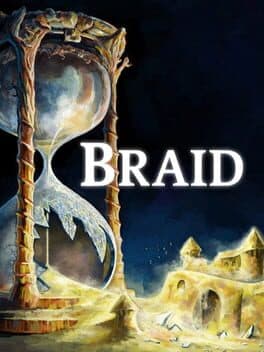
TokenOn August 6, 2008, a small side-scrolling platformer quietly appeared on Xbox Live Arcade and, without much fanfare at first, helped change the way the games industry thought about what a single independent developer could achieve. That game was Braid, the work of designer Jonathan Blow, and its arrival is now widely remembered as one of the moments when independent games stepped out of the margins and into the mainstream conversation.
Braid did not begin in a studio. Blow has said he conceived the idea in December 2004 while travelling in Thailand, and he began building it in earnest in April 2005. What followed was roughly three years of solitary, self-directed work. Rather than seek a publisher, Blow funded the project himself, spending in the region of 200,000 dollars of his own money. Much of that went toward living expenses and toward hiring the webcomic artist David Hellman, whose lush, painterly backgrounds gave the finished game its distinctive storybook look.
Interestingly, a playable version of Braid existed surprisingly early. By December 2005 Blow had a functional build with essentially the same structure as the final release, but it lacked the finished art and presentation that would later define it. The remaining years were spent refining, decorating, and polishing an idea that was already mechanically sound.
What set Braid apart was its central conceit: time itself was a toy. The player controls Tim, a man searching for a princess, across six worlds, and in each world the rules of time bend in a different way. In some places you can rewind your mistakes freely. In others, time is tied to your movement, or certain objects resist rewinding altogether. The puzzles ask you not merely to react quickly but to think carefully, layering cause and effect until a solution clicks into place. Beneath the puzzles ran an ambiguous, melancholy story about obsession, regret, and the things we tell ourselves, told through fragments of text between levels.
The mood was reinforced by its music. Rather than commission a traditional game score, Blow licensed existing recordings from artists including Shira Kammen, Jami Sieber, and Cheryl Ann Fulton, giving the game an organic, almost folk-like atmosphere that complemented its themes.
When Braid launched, the response was immediate and enthusiastic. It earned a Metacritic score of 93 out of 100 on Xbox 360, which at the time made it the highest-rated title on Xbox Live Arcade. Critics praised the elegance of its puzzles, the beauty of its presentation, and its willingness to be thoughtful and even difficult. It was, as more than one reviewer put it, a game that made you rack your brain.
Commercially it succeeded too, which mattered enormously for the point it came to represent. Braid sold more than 55,000 copies in its first week, reached around 450,000 copies by April 2012, and had generated in the region of 6 million dollars in revenue by 2015. For a game made largely by one person without a publisher, those numbers were remarkable.
Recognition followed. Braid had already won the Independent Games Festival award for Innovation in Game Design back in 2006, before release, and after launch it collected honors including GameSpot's Best Original Downloadable Console Game and Best Platformer, Official Xbox Magazine's Xbox Live Arcade Game of the Year, and a D.I.C.E. Award for Casual Game of the Year.
Braid's real legacy is bigger than its sales figures. Alongside a handful of other titles, it demonstrated that a tiny team, or even a single determined creator, could make something artistically ambitious and commercially profitable without the backing of a major publisher. That proof of concept helped fuel the indie boom that followed, and Blow himself became one of the movement's most recognizable and outspoken figures, later making the equally demanding puzzle game The Witness.
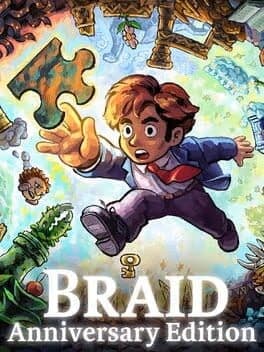
The game has continued to find new audiences. It was ported beyond Xbox to PC, Mac, and PlayStation platforms in the years after release, and in 2024 Blow's studio released Braid, Anniversary Edition, a remastered version with reworked art, extensive developer commentary, and a soundtrack featuring both the original licensed pieces and new recordings, ensuring that a game about revisiting the past could itself be revisited.
Sixteen years on from that August morning in 2008, Braid remains a touchstone: a reminder that a good idea, patiently pursued, can leave a mark far larger than its modest size would suggest.
August 6 has seen other releases over the years across various platforms, but Braid stands out as the day's most historically significant title and the one whose influence is still felt across the games industry today.
Sources
Wikipedia, Braid (video game): https://en.wikipedia.org/wiki/Braid_(video_game)
Giant Bomb, Braid: https://giantbomb.com/wiki/Games/Braid
StrategyWiki, Braid: https://strategywiki.org/wiki/Braid
Laced Records, Braid, Anniversary Edition (Original Soundtrack): https://lacedrecords.bandcamp.com/album/braid-anniversary-edition-original-soundtrack
No comments yet. Be the first.