Tirona
Say anything. Tirona is a tabletop RPG and a CRPG in one, run by an AI dungeon master. No dialogue options: type what your hero says or does, and characters with minds of their own answer in their own voices. Real 5E SRD rules, real dice and turn-based tactical combat.
N/A
VGDB Score
Be the first to review
Overview
Summary
Say anything. Tirona is a tabletop RPG and a CRPG in one, run by an AI dungeon master. No dialogue options: type what your hero says or does, and characters with minds of their own answer in their own voices. Real 5E SRD rules, real dice and turn-based tactical combat.
Description
About This Game

Tirona is a tabletop RPG and a classic computer RPG in one, with an AI dungeon master at the table. You get the freedom of a real tabletop session (any plan, any approach, any idea you can put into words) without needing a group or a game master.
- Virtual tabletop — miniatures, dice and a world that rises from the table in front of you.
- CRPG — exploration, a party of companions and turn-based tactical combat.
- Narrated by AI — a dungeon master and a cast of characters who answer whatever you say, out loud.

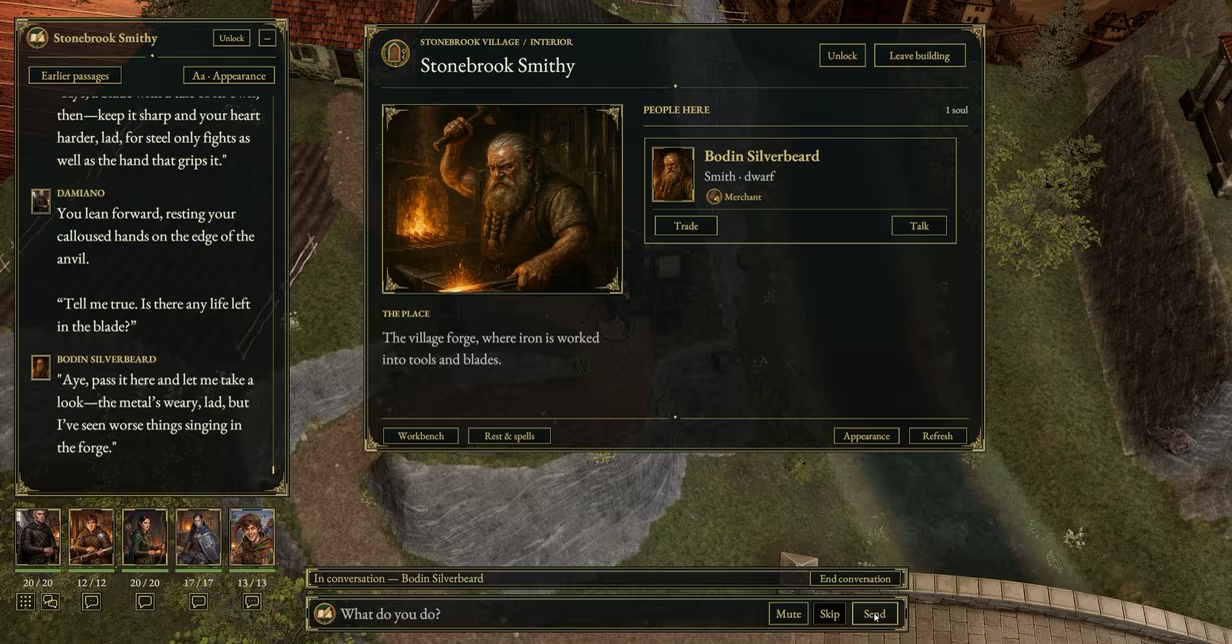
No dialogue trees. Type what your hero says or does, and the world answers. Try to buy a wizard's dragon with twelve silver and a compass that only points at cats. Hand a dwarven smith your family's commission. Talk your way past trouble, or straight into it. The dungeon master narrates what happens, and every character replies in their own words and in their own voice, generated locally on your PC.

Every villager is an AI character with a personality, a background and a memory. Bargain, flatter, threaten or recruit them, and they react like people: they hold opinions, they remember how you treated them, and they can say no. Recruiting a companion is a conversation, not a menu. Make your case, then let the dice decide.

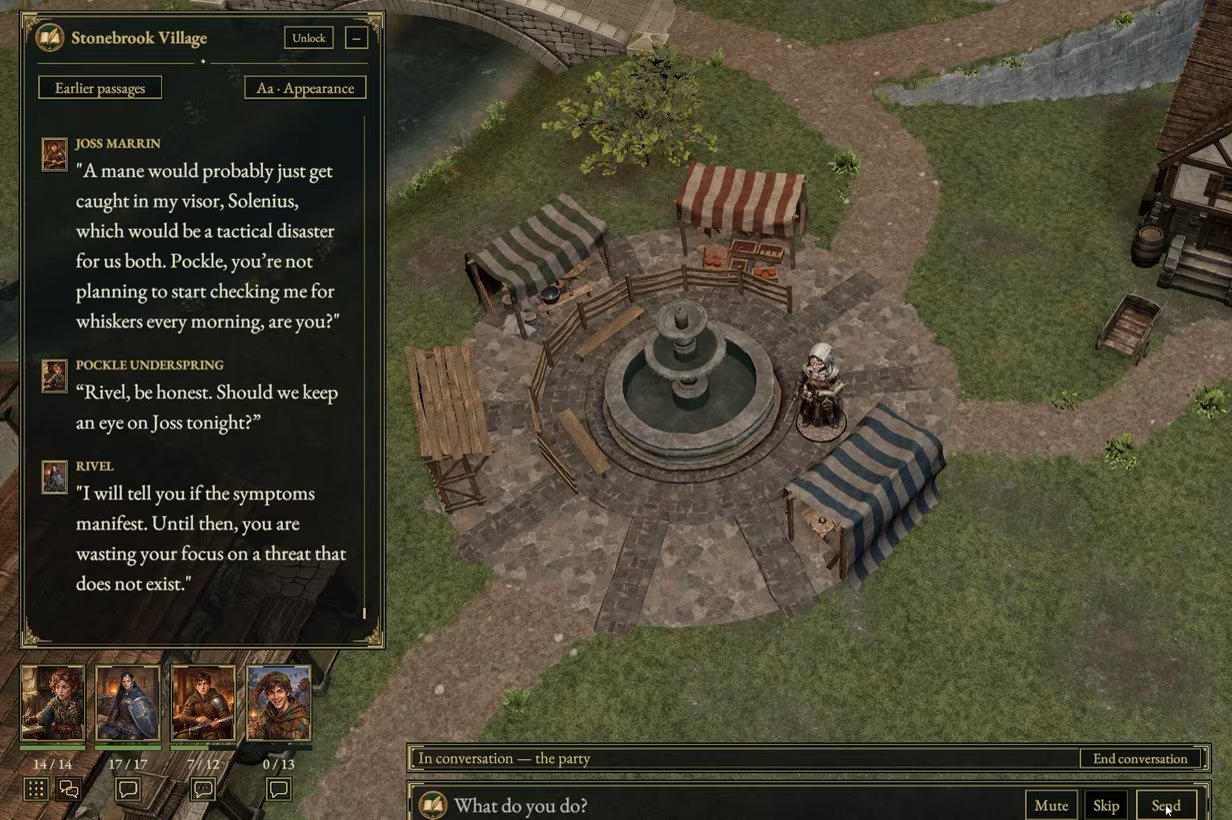
Your companions have opinions, about you and about each other. Start a party chat and they banter, tease and argue in character. Ask whether the wererat bite your fighter took is contagious, and see who laughs and who tells you off.

The story is free. The dice are real. Behind every conversation sit the fifth-edition rules from the System Reference Document: ability checks, saving throws, spells and turn-based tactical combat, with every die thrown on the table in front of you. Command your companions yourself, or let them fight on their own.

Seven races and twelve classes from the 5E SRD. Choose your race and class from painted cards, roll 4d6 for your abilities, pick your spells from an illustrated deck, then choose a miniature and a painted portrait. Your character sheet keeps up as you play.

Module one: the Stonebrook region. North of Valaria, near the Falkenberg border, in the foothills of the Ironhearth Mountains.
- Stonebrook — the village where it begins, with the Silver Anvil inn and a frontier camp full of prospectors.
- The Whispering Woods — ancient and dense. Travellers do not linger here.
- The Gnomish Hills — rolling highlands and the workshops of Tinkertown.
- Khazad-Gorrim — the dwarven halls in the face of the Ironhearth Mountains.
- The Lower Roads — the old workings beneath the dwarven city.
- The Dungeons Below — cellars, caves and the deep places under the region.
How Tirona uses AI, and how it is guarded
The narrator and every character's reply are written by an AI language model as you play, and character voices are generated locally on your PC. Much of the artwork, the music and the character voices were created with the help of AI tools during development.- The rules stay the rules. Dice, hit points, gold, items, experience, spells and quest progress only change through the game's own systems, never because the narrator or a player says so.
- A referee checks the claims. "I rolled a 20", "I have a +3 sword", "I cast Wish": a separate check compares the claim with your real character sheet, and impossible moves fail in the story.
- The world stays Tirona. Fifth-edition SRD spells only, and only the ones your character knows. No modern technology.
- Romance, up to a point. Companions can flirt, court, kiss and fall in love, opt-in and earned through play. Anything sexual fades to black. Conversations with characters are screened by an independent check before you see them; if it cannot run, the reply is replaced with a fade-to-black line.