Pocket Studio Desktop Companion
Design a game. Pick its genre, its topic, who it's for. Then go do your actual work - every keystroke you type writes another line of it. A tiny developer builds, ships, and gets reviewed for your ideas, in a little window in the corner of your screen.
N/A
VGDB Score
Be the first to review
Overview
Summary
Design a game. Pick its genre, its topic, who it's for. Then go do your actual work - every keystroke you type writes another line of it. A tiny developer builds, ships, and gets reviewed for your ideas, in a little window in the corner of your screen.
Description
About This Game
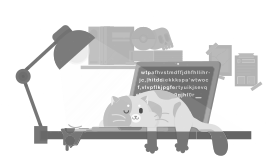
A tiny game developer has set up shop in the corner of your screen. They have ideas, ambition, an office chair, and no way to write a single line of code on their own.
That part is your job. Every key you press - in your editor, your inbox, a document you're already behind on - becomes a line of code in their current project. You do your work. They ship games.
Every game is one you designed
Before they start, you decide what they're making: a name, a genre, a topic, and the audience it's for. Cyberpunk Racing for Teens. Farming Horror. Ninja Cooking Sim, for Kids.
Nothing tells you whether it's a good idea. Some combinations click, some quietly fall apart, and a few disasters turn into cult hits. You find out at launch - with a review score, a payout, and a box on the shelf.
Bugs happen
Projects don't stay the size you agreed to. Bugs surface while they work, each one pushing the finish line a little further out, and there's exactly one way to deal with them: keep typing. Just like at your job.
The studio grows
Money from shipped games goes back into the studio, five ways:
Coding Speed - squeeze more lines out of every keystroke.
Game Quality - score better, sell more.
Scope Handling - from a weekend prototype up to the MMO they keep talking about.
Clean Code - fewer bugs in the first place.
Debugging - and cheaper ones when they show up anyway.
Earnings also buy new rooms to work in, so the studio slowly stops looking like a first job.
Read the post-mortem
Every shipped game keeps its own breakdown: how well the genre suited the topic, whether you aimed at the right audience, how tired the idea had gotten, what the bugs actually cost, and what all of that did to the money. The rules are never explained up front - you learn them one release at a time.