Overview
Summary
A sadistic Dungeon Master simulator where you build deadly encounters, exploit your party's weaknesses, bait them into danger and fudge the dice. They want to finish the campaign. You want everyone to expire.
Description
About This Game
Roadmap
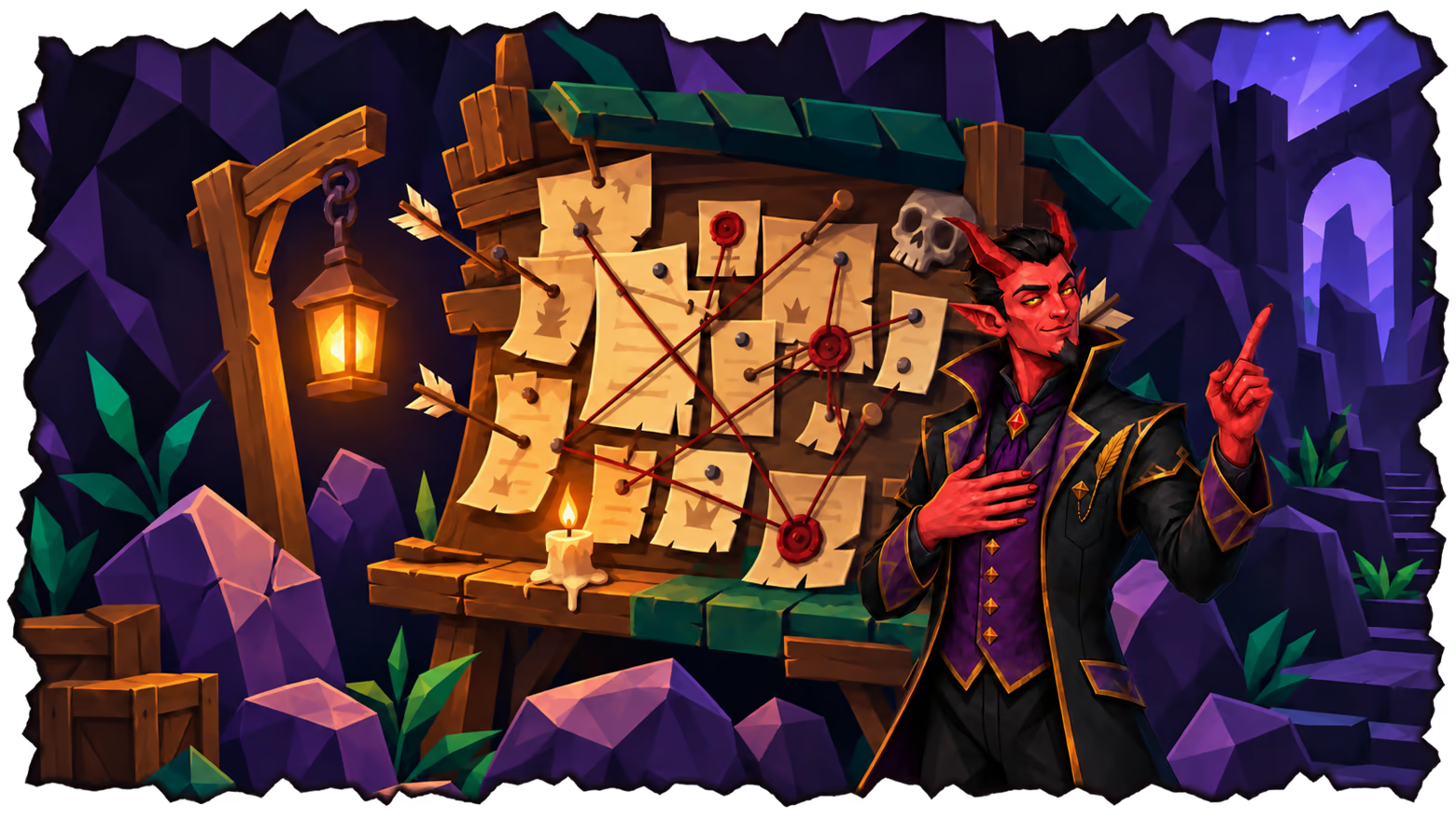
Development update - 3 October 2026
Everyone Expire is being prepared for a small private alpha. The campaign loop, scripted tutorials, party inspection, equipment rewards and encounter minigames are in the current build. Steam achievements now have their matching badges and progress statistics; Cloud settings are configured for private testing.
Now: finish Steam delivery checks, fix bugs, and polish readability and campaign balance.
Next: a small invited alpha, with feedback on tutorials, saves, encounters and pacing.
After that: iterate on the reports, then consider a wider Steam Playtest when the build is ready.
Then: release after testing. There is no release date or public testing date to announce yet.
Testing is not open yet. Alpha and beta builds may contain bugs, balance changes and changing save compatibility. Wishlist and follow for future testing news.
About the Game
Everyone Expire is a card-driven tabletop deckbuilder that flips the genre on its head: you don't play the hero, or even the party. You play the Dungeon Master, and you're not a fair one.
Each run, you lead a party of adventurers drawn from a persistent roster (real, recurring characters, each with a class, a signature flaw, and a stack of exploitable personality traits) through a route of hand-built encounters toward a final boss lair. Play enough runs and you'll start recognising your targets before they even sit down: exactly which lie gets one of them moving, precisely what excuse it takes to keep another quiet. You choose what tempts them. You choose what hurts them. When the dice don't go your way, you have a hand of cards that says the dice were wrong.
It's part deckbuilder, part push-your-luck dungeon crawl, part dark comedy about exactly how much power a screen gives the person behind it.
The loop: BAIT → FUDGE → BETRAY → EXPIRE

Lay the trap. Let them pick it.
Every encounter, you deal bait cards onto the table (a hooded stranger, a keg of free ale, a suspiciously unguarded cellar door) and the party decides what looks worth the risk. Every card carries a DC, a payoff, and a cost if it goes wrong, across six flavours: Temptation, Trap, Social, Threat, Route and Monster. You're not forcing their hand. You're just making sure the worst option looks like the best one.
300+ Bait cards with authored checks, effects and flavour text
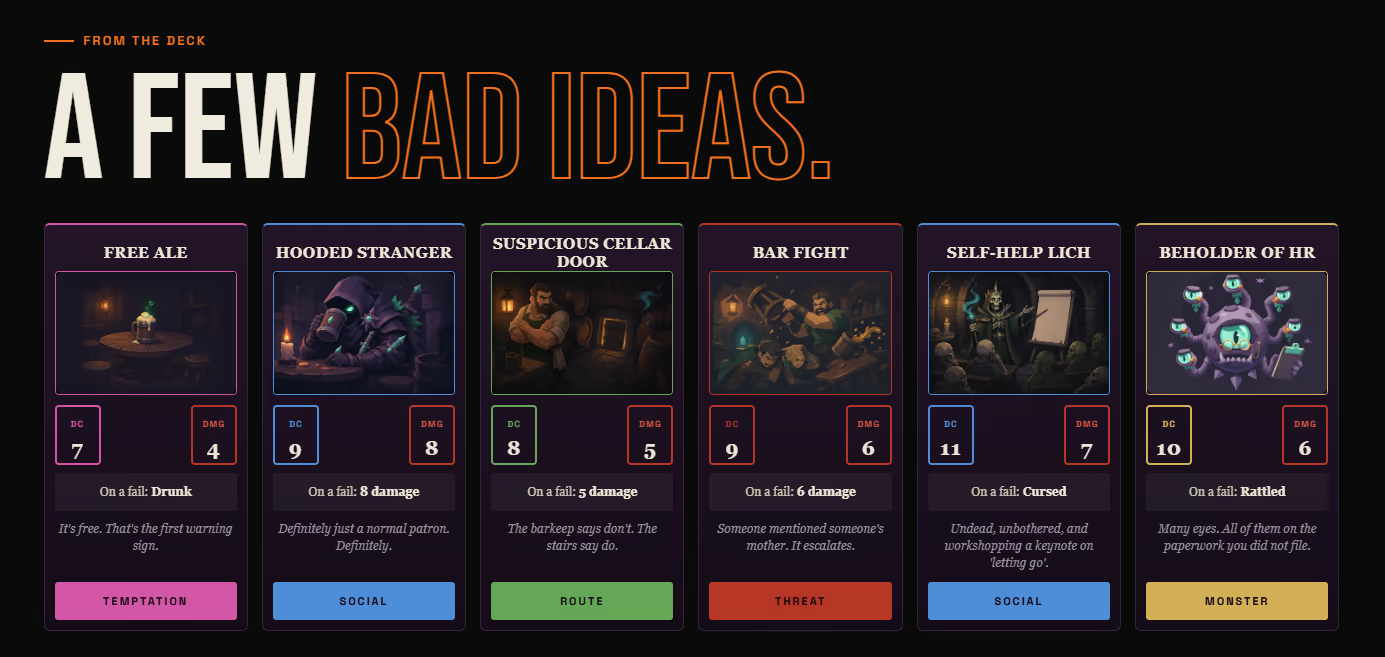
Adventurer traits change what they're drawn to: greedy, afraid of spiders, "licks things." Read the room, then build the room around it
Every card shows exactly what it costs and pays out before you commit: the DC to beat, the damage on a failure, which stat rolls against it, and the Spite it banks you either way

Every roll happens in the open. What happens after doesn't.
Dice land where they land, in full view, every die on screen. Then, if the result is inconvenient, you quietly play a card from the DM's Fudge Hand. Loaded Dice. Doppelgangers. A rounding error that was "always" three points worse than it looked. Nobody saw anything.
A growing Fudge Codex of cards like I'm Taking Notes (+1 DC, -1 to the party's roll: "the notebook comes out, everyone gets nervous") and One Moment, Please, which drops a fresh bait card or a whole new minion into a boss fight you're already losing
Fudge cards show their burn odds before use. Some may survive; others are consumed when played.
Higher DM levels unlock nastier tools: group disadvantage, forced decisions, forced natural 1s
Occasionally you draw a Cursed card that helps the party instead. You'll hate it; they won't know why you look so pleased to lose

Sway one. Sway all. Watch them push back.
The party doesn't just sit there and take it. They interrupt you. Mid-encounter, one adventurer will call out to another, and you get a choice: let it go, or sacrifice a card from your own hand to make their roll harder. Every adventurer keeps a full sheet of stats, traits, afflictions and skills, so by the time you've run a few campaigns you know exactly who wards off a hex, who panics under pressure, and who's worth the card you'll burn interrupting them.
Every recurring adventurer has a readable sheet: stat block, exploitable traits, current afflictions, and what their skills actually do in a fight
Interrupts are a real trade-off: burn a card from a five-card hand to swing someone else's roll, or save it and let the moment pass
Grouped rolls resolve together when multiple adventurers pile onto the same card, and every pass or fail gets its own dramatic reveal, dice and all
Twelve classes, each with a signature flaw and a pool of paired quirks: Afraid of Spiders and Cannot Swim happens, and it's magnificent

Lead them all the way to the lair. Then take the credit.
Bad ideas compound. Encounter by encounter, across a hand-authored route through themed Areas (tavern, forest, shrine, crypt, cavern and beyond), you steer a party that trusts you completely toward a boss with its own minions, phases, and orders you assign yourself. The scoring is blunt about what it wants from you: misery held above threshold, the party reached the final boss, a TPK at the lair. Nail all three and the game itself calls it a Perfectly Timed TPK.
A full route of Areas and Encounters ending in a multi-phase boss fight: assign minions their targets, guard objectives, and burn fudge cards mid-fight to tip it further
A run verdict that scores how it ended, not just whether it did: timing the kill matters as much as landing it
Meta-progression persists between campaigns: DM level, XP, career stats, and a loot crate to open on every level-up
Unlock new bait, new Fudge cards, new Talents (permanent upgrades bought with Infamy, "+1 to the DM's d20 on every sway," and worse), and new dungeon-building pieces for the campaign map
Meet your employer

Malice didn't apply for this job. He stole it. He spent longer than he'll admit watching adventuring parties controlled from somewhere above the clouds, before he worked out that a die could be persuaded, and longer still before he worked out that misery goes further if the party lives long enough to really feel it. Now he's hiring. You're the apprentice. He supplies the contracts, the cards, and a truly relentless amount of running commentary. You supply the suffering. Done properly. With paperwork.
The party
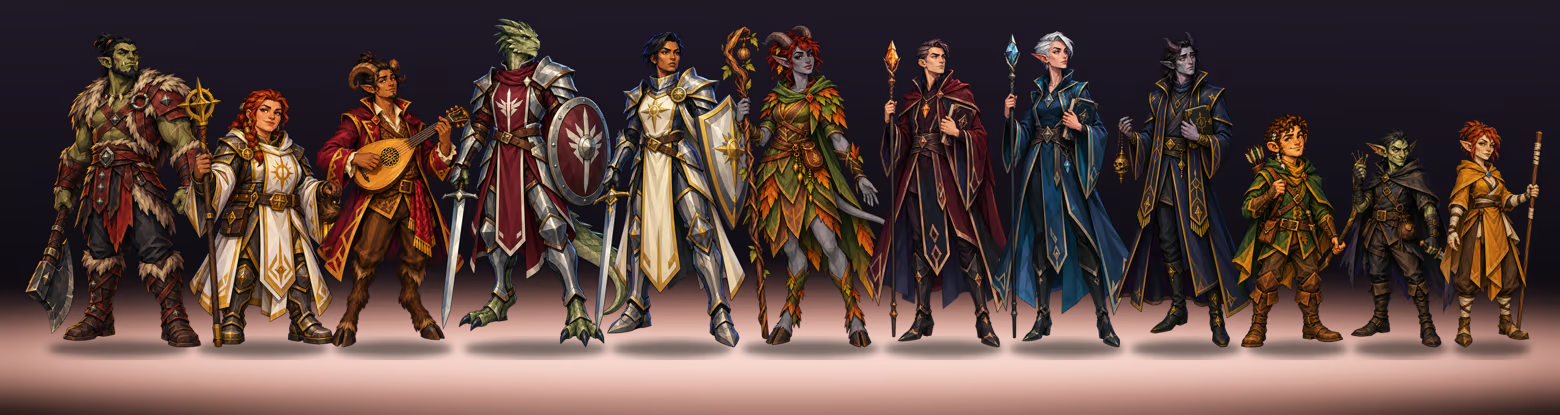
Your party comes from a roster of recurring named adventurers, each locked to one of twelve classes, a signature flaw, and a hand of quirks stacked on top. Run to run, the faces change, but the same characters resurface, so their weaknesses stop being a surprise and start being a plan. Sometimes the quirks pair up badly. That's not a bug.
Rogue: enters last, leaves with more than he brought
Cleric: great faith in providence, very little faith in bridges
Bard: treats a dungeon as an unusually hostile venue
Ranger: reads tracks more readily than expressions
...plus Fighter, Paladin, Warlock, Druid, and more, each with their own HP, signature move, and exploitable soft spot
Between runs: the Study, the Codex, and a shelf you have to earn
Your DM career lives in a Study (bookshelves, a ledger, a set of dice on the desk) that fills in as you play. The Codex catalogues every bait card, fudge card and monster you've met. Talents spend a slow-burn currency called Infamy on permanent upgrades to how you run a table. Achievements range from the straightforward (survive three runs in a row, "shameful, for a bad DM") to the secret, and level-ups and selected achievements award card rewards: reveal up to three cards and keep one. Unchosen cards remain available to discover in future rewards.
Every so often, a bait card doesn't just resolve, it opens into its own wildcard minigame. In Battle of the Bards, choose the house band's instrument each round: win the set to damage the visiting bard; lose and the party gains morale.