6.7
Average rating
1147
Games
1
Votes cast
Heartbeat
Shipped Titles
Games (1147)

Magical Hat no Buttobi Turbo! Daibouken
Vic Tokai1990
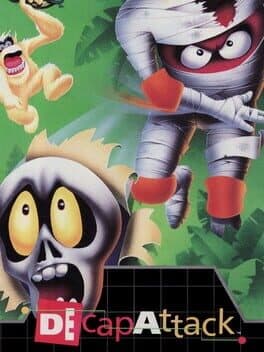
Magical Hat no Buttobi Turbo! Daibouken is a game based on the japanese Studio Pierrot anime Magical Hat. It was later ported to the West in the form of Decap Attack.
Decap Attack
Vic Tokai1990
To help “pull things together,” the brilliant doctor Frank N. Stein carefully fashioned Chuck D.head from the leftover parts of some other people that we don’t talk about. Somehow he couldn’t quite get the head right – how many heads do people need again? Head bone connects to the... what bone? Well, to cut a long story short, there’s this island which is made up of body parts (like they are sometimes), and the fearsome villain max D. Cap has separated all the parts to gain total control. It’s now up to Chuck D. Head to go over there, and sort it all out.
Shadow Dancer: The Secret of Shinobi
Sega Enterprises, Ltd.1990
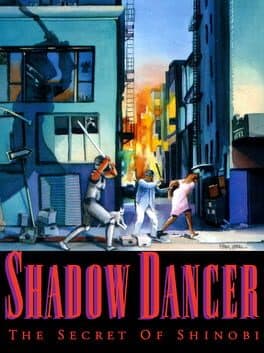
Shadow Dancer: The Secret of Shinobi, also known as just Shadow Dancer, is a side-scrolling action game produced by SEGA that was originally released for the SEGA Genesis in 1990. It has been re-released via downloading services such as the Wii's Virtual Console and Steam in 2010. It was also included in the Sega Genesis Collection for the PlayStation 2 and PlayStation Portable but it was omitted in PAL version (Sega Mega Drive Collection). It is the second game in the Shinobi series released for the Mega Drive, following The Revenge of Shinobi. However, it is not a continuation of the previous game, but rather a loose adaptation to the 1989 arcade game Shadow Dancer. Like in the original arcade game, the player controls a ninja followed by a canine companion. The Secret of Shinobi was well received by critics.

Sol-Feace
Wolf Team1990
Sol-Feace is a typical 2D shooter with weapon powerups. The game features six levels: Sirius, Enemy Arsenal, ArtifiStar, Pluto Base, Almathea, and Final Battle.
Fatal Labyrinth
Sega Europe1990
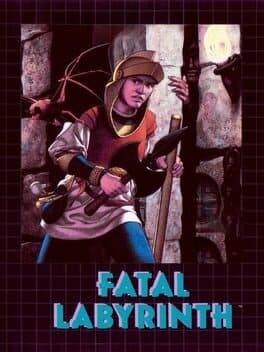
Dragonia, the castle of doom, has been resurrected! But the ghouls from the castle have stolen the Holy Goblet, the source of light. Without it, the world will be trapped in darkness forever. Don your armour and pick up your weapon.

Arrow Flash
I.T.L1990
Arrow Flash is a side-scrolling space shooter. The player controls a female spaceship pilot who is sent on a mission into deep space to save the Earth from an assault by an evil dragon from another galaxy. Moving vertically or horizontally, players must avoid or kill the enemies and make it to the end of the level alive where a boss battle awaits. During gameplay, the player can switch at any time between two modes: normal spaceship and flying robot. The two forms use different weapons and also have different special abilities, called Arrow Flash. While the spaceship can fire destructive lasers for major damage, the robot can raise a shield that will protect from enemy attacks for some time and instantly kill anything that touches it. The Arrow Flash attacks can be charged by holding a button for several seconds, or collect icons during your flight to release it quickly afterwards.
ESWAT: City Under Siege
Sega Enterprises, Ltd.1990
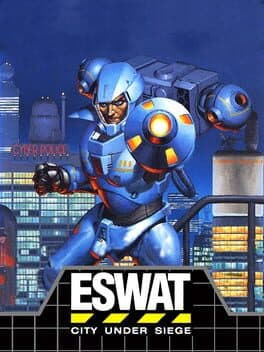
The city is besieged by wanted criminals, and as a police officer it is your duty to stop them. The first criminals in the wanted list can be stopped with your service weapon an some fast reactions, but once you're facing the toughest criminals in town you'll need to use the cyber suit, which provides additional protection and higher firepower. Unlike other versions of this game, this Genesis cartridge doesn't follow the layout of the arcade game. The levels, rather than being linear, feature some platform elements, and the enemies in the first levels are no longer bank robbers or hit-men, but soldiers and robots instead. And the setting is no longer your typical American city, but a futuristic megalopolis.

G-LOC: Air Battle
Sega1990
Vigilante forces have raided government military installations and "confiscated" tanks, planes, even warships! Pilot your G-LOC fighter to victory against the guerillas. Only you have the skills to get the job done and save the day!

Golfamania
1990
You'll need sharp eyes, a smooth swing, and perfect judgment if you're going to master Golfamania. Out on the links you'll have to consider the distance, the wind, the lie of the ball, where to hit the ball and which club to use. Then watch that power meter and swing for the pin!

Assault City
Sanritsu1990
Robots Go Berserk! Dateline: Assault City, 2092. It's a robot mutiny! Central Computer Control is in chaos. Armed KillerBots are running amok, blasting loyal Bots into metal junk and piles of whining servomotors!

Double Hawk
Opera House1990
You control the action as John and Jack, two warriors hand-picked by the United Nations, attempt to bring down a terrorist organization which is responsible for a worldwide wave of violence! The terrorists are capable of launching attacks from the sky, the sea, and by land. Are you the one person who can end this reign of terror?

Aurail
Westone1990
Aurail is a scrolling shoot 'em up arcade game developed by Westone and released by Sega in 1990. The player pilots a tank mecha and shoot enemies (fire in 8 directions), collect power-ups to increase shields and operate the remote attack drone, and defeat bosses to advance levels. Features tunnel levels with a first-person view.

Bloxeed
Sega Software R&D Dept. 11990
Bloxeed is a varient of Tetris, involving various items to assist you, The character Flicky from the Sonic the Hedgehog series cameos as an item as well.

Joe Montana Football
Electronic Arts1990
It's a snap! This is your chance to rub shoulder pads with Joe Montana, the man who led the "Team of the Eighties" to four Super Bowl Championships. You provide all the fourth quarter heroics, play-calling brilliance, and pinpoint passing as you hit the field against any of 28 pro teams. Call all your own plays! Each team has a playbook with 17 offensive and six defensive options. Pick the play that you think will work best, or take the advice of Joe Montana himself, as he recommends the play he would call in each situation. You control the action on the field by switching to the key players as the play unfolds. Your strength and speed will vary by position, just like the real sport. Knock helmets with the computer or punch holes in a friend's defense. Can you keep your head cool and your passing arm hot? Pick your team. Choose the plays. Think you have what it takes to be the next Joe Montana?

Super Volley Ball
Video System1989
Super Volley Ball is an indoor volleyball game for one or two players. The single player mode offers two game options: normal game and World League. Choosing normal game pits the player against the computer in a single game. Choosing World League pits the player against all other teams available. A password save is available in this mode.

Tough Turf
Sega1989
Tough Turf is a 1989 2D beat 'em up arcade game. According to Kurt Katala of Hardcore Gaming 101: "Considering there was very little variation amongst the Final Fight and Teenage Mutant Ninja Turtles clones that popped up in the early 90s, Tough Turf is interesting to play a game that requires a different approach, and it really is a fresh alternative to Double Dragon."

Dynamite Duke
Seibu Kaihatsu1989
Dynamite Duke is a 1989 action arcade game developed by Seibu Kaihatsu. It was later ported to the Sega Master System, Sega Mega Drive and Sharp X68000. Being a Cabal-based shooter, it can be considered a follow-up to Seibu's Empire City: 1931 and Dead Angle.

Sword of Vermilion
Sega AM21989
To take revenge against Tsarkon over his father’s death, the prince must collect the eight Rings of Good hidden throughout the land. Out-hack and out-smart Tsarkon’s minions while collecting the hidden Rings until you reach the final bastion where Tsarkon waits. Defeat Tsarkon and banish evil from the world.

Psycho Fox
Vic Tokai1989
Psycho Fox must get to the right hand side of the level. However, there are many enemies in the way. He can use a Shinto stick to change into characters/animals like a hippopotamus, a monkey or a tiger, each of which has its own special ability. The hippopotamus is slow and cannot jump very high, but can punch through special destructible blocks in the game world. The monkey can jump higher than the other creatures and the tiger can run faster. Psycho also has an ally named Birdfly, who can be used as armor or as a boomerang. If Psycho is hit while carrying Birdfly, Birdfly goes away and the player does not lose a life.
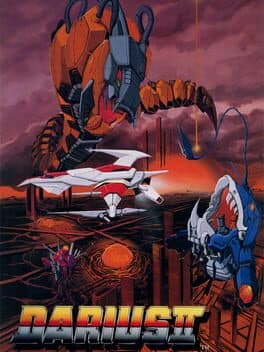
Darius II
Taito1989
Darius II is a 1989 arcade video game developed by Taito. It is the direct sequel to the 1987 Darius. It was later released as Sagaia in Japan in 1991 for the Game Boy as well as non-Japanese ports. A remake was released for the PC Engine Super CD-ROM as Super Darius II in 1993. A Mega Drive conversion was released in Japan in 1990; it was later released for the Genesis in the United States and Brazil in 1991, where it was renamed Sagaia. Changes include a boss rush mode (via a code) and various modifications to levels and mechanics, such as the boss Steel Spine being moved to another level and the boss Killer Higia being replaced with a similar creation called Nehonojia. This conversion does not support two players, so the ability to choose between Proco Jr. and Tiat Young was added; Proco plays like normal, while Tiat starts every life off with one power level to every weapon. A Master System conversion, developed by Natsume, was released in Europe and Brazil in 1992, also titled Sagaia. It is somewhat based on the Mega Drive port, and while Tiat Young and her abilities are still present (though even more limited), many zones (and thus bosses) have been completely removed. The Super CD-ROM version features an entirely new set of bosses, major changes to levels, and a fully arranged soundtrack including new songs.
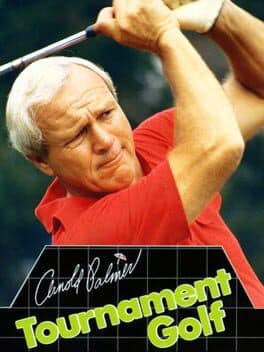
Arnold Palmer Tournament Golf
Sega Enterprises, Ltd.1989
Select your level of play, and then head for the pro shop to choose between Black Carbon, Glass Fiber, and Ceramic Clubs. Tee off by yourself or play 18 holes with a friend. Besides the One and Two Player modes there's also a practice mode, match play (head to head), and a full-blown international tournament, where you'll stroke it out against 15 competitors.

Flash Point
Sega1989
Flash Point is a variant of Tetris, with the various shapes of the tetrominos and their rotation are identical to Sega's Tetris . What makes the game different from a standard Tetris clone is its objective; each stage already contains a pattern of blocks, usually arranged as symbols, characters, or other images. Among these blocks are several bombs. The goal is to make these bombs detonate by clearing out the rows they are in. Once all the bombs have been detonated, the stage "explodes", and the player advances to the next one.

Tennis Ace
1989
On your first serve, the ball explodes off your racquet like a fiery missile. Instinctively you move toward the net. Your opponent returns your serve, but you're ready for him. With lightning speed you raise your racquet and smash the ball. He never had a chance. You're the Tennis Ace!

Zoom!
Discovery Software International1988
Zoom! is a puzzle game developed/released by Discovery Software in 1988. It features a 3D-like board the player moves around on. Up to two players may play simultaneously. Not to be confused with Zzoom.
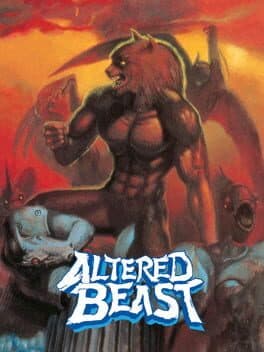
Altered Beast
Team Shinobi1988
The Sega Genesis/Mega Drive has different enemy layouts and input mechanics from the original arcade version.
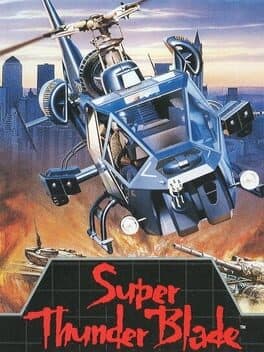
Super Thunder Blade
Sega R&D 21988
Super Thunder Blade is a shooter for the Sega Mega Drive/Genesis console, published by Sega. It was one of three launch titles for the console in Japan (the others being Space Harrier II and Altered Beast), as well as being one of the six launch titles for the console for its U.S. launch. It is a follow-up to the 1987 arcade game Thunder Blade. It was released for the Virtual Console on September 17, 2007. It was also included in the Sega Genesis Collection for PlayStation 2 and PlayStation Portable in 2007 and in Sonic's Ultimate Genesis Collection for Xbox 360 and PlayStation 3.
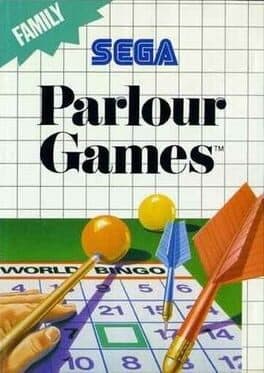
Parlour Games
Compile1988
Choose from the exciting challenges and action of Billiards, Darts or World Bingo! In Billiards, choose nine-ball or rotation. Play the Dart games 301 or 501. Or test your luck in a high-stakes game of World Bingo.

Angel Kids
1988
Players control two flying children holding a rope. Pulling the two joysticks outwards, tightens the rope, and throws a third child into the air. The bouncing child can hit balloons, which reveal items when popped. She then falls, and the players must move the angelic children with the rope beneath the falling child to allow her to bounce again.
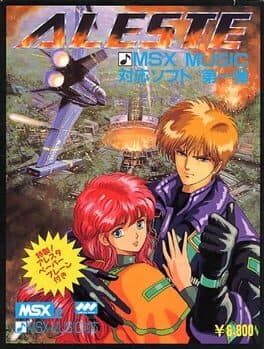
Aleste
Compile1988
Your planet has been overrun by the meanest mutant vegetation ever created in a genetics laboratory. It's taken over buildings, labs, fighter craft... even people! And it's getting bigger... and meaner... with each passing second. But it hasn't taken over you. Now, you're going in on a mission to deliver a POWER STRIKE! You have a special attack ship with the ability to use weapons you free from the ground. The action is hot and heavy. The enemy is coming faster than you could ever believe! So fight hard and fast. If you don't turn the mutated vegetation into a giant tossed salad, they'll turn you into toast!
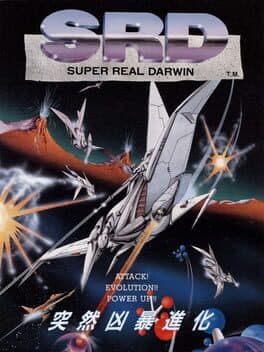
SRD: Super Real Darwin
Data East1987
SRD: Super Real Darwin is a 1987 vertical scrolling shooter arcade game developed and published by Data East. It is the sequel to Data East's 1986 arcade game, Darwin 4078. The player takes control of a small fighter ship capable of mutating into different shapes. The ship's appearance will change with upgraded weapons as the player obtain more power-ups.

Game de Check! Koutsuu Anzen
Sega1987
Game de Check! Koutsuu Anzen is an educational game that was commisionned by a Japanese insurance company, and was never actually on sale. They made a couple of hundred copies, and would lend the game, along with a Master System, to primary schools that requested it.

Global Defense
1987
Players control a satellite and must destroy enemies by moving a crosshair over them and firing the satellite's weapons.

Sports Pad Football
Sega1987
Sports Pad Football is an American football game developed for the Sega Master System. It requires the Sports Pad. Otherwise, the game is exactly the same as Great Football.

After Burner II
Sega AM21987
After Burner II is an arcade-style flight game released by Sega in 1987. It is the second game in the After Burner series. In the game, players fly a F-14 Tomcat jet fighter, gunning down enemies while avoiding incoming fire. Like OutRun, another Sega arcade game, After Burner II came in several versions, the most famous being a large, servo actuated, sit-down cabinet which resembled a cockpit and moved according to the motion of the plane onscreen. The cockpit would bank in the same direction the on-screen aircraft was banking. There was also a more basic upright cabinet version.

The Pro Yakyuu: Pennant race
Whiteboard1987
The Pro Yakyuu: Pennant Race (ザ・プロ野球 ペナントレース) is a Sega Master System baseball game developed by Whiteboard and published by Sega. Exclusively released in Japan in 1987, the game is an evolution of the developer's earlier title Great Baseball, and is now played from a bird's-eye perspective.

Wonder Boy: Monster Land
Escape1987
Wonder Boy: Monster Land is an action role-playing platform video game developed by Westone. It was released by Sega for the arcades in 1987 and for the Sega Master System in 1988 as a sequel to the 1986 game Wonder Boy, taking place eleven years after the events in the previous game.

Block Gal
Vic Tokai1987
An Arkanoid-like game. After blocks are broken, a cute girl's picture is behind.

Legend
Kyugo1986
The player controls a young commander which uses a green armour and helmet and must defending the kingdom lands from invading enemies, following the orders and instructions given by the old king, for it you'll have to use money to making defect the enemy and recruit under your commands to form a legion of soldiers and make uses of different arms collected on the way, like bombs and arrows to defeat other enemies while you jump and dodges his attacks, always avoiding contact with any enemy for not to die and continue his legendary journey.

Marksman Shooting & Trap Shooting
Sega of America1986
These two games allow you to use the Sega's Light Phaser to your advantage. In Marksman Shooting, you shoot red spots on a several number of targets in order to score points before they disappear. Try to shoot at least ten targets, otherwise your qualification score may be low. If you beat the qualification score, you proceed to the next round. Otherwise, the game ends. In Trap Shooting, shoot discuses that are thrown into the air. If you miss, then they will fall into the distance. Your gun is reloaded after each go.

Astro Warrior/Pit Pot
Sega1986
A collection of the games Astro Warrior and Pit Pot, included in one "combo cartridge"

Brain
Coreland1986
It is a game that must survive as long as possible by matching the color of the player with the bullets flying from all directions.
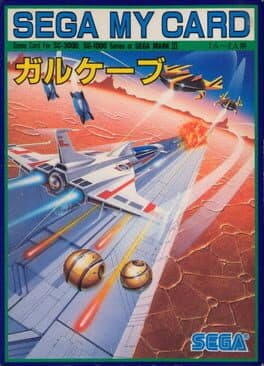
Gulkave
Compile1986
A horizontal shoot 'em up game developed by Compile and published by Pony Canyon on the MSX and Sega on SG-1000 in 1986.

Silpheed
Game Arts1986
In Silpheed, the player pilots a spaceship through levels of increasing difficulty, in a pseudo-3D vertically scrolling field, shooting everything in his path. New weapons will become available as he gathers points, and power-ups are sprinkled throughout the levels. The game is one of the first-ever that used music as a selling point.

Snail Maze
Sega1986
Snail Maze is a 1986 video game by Sega, part of the Sega Master System. Instead of being released on a cartridge, it was built into the system's BIOS and could be played by starting the system without a game cartridge inserted and holding Up and buttons 1 and 2 simultaneously. The later "Master System II" model did not include Snail Maze, it instead included a built in Alex Kidd in Miracle World. Snail Maze was never released in cartridge or card format.
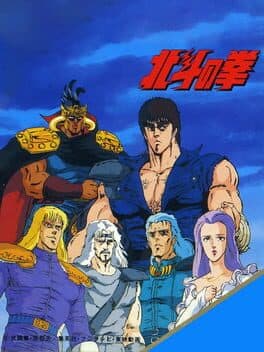
Hokuto no Ken
Sega Enterprises, Ltd.1986
Hokuto no Ken is a video game released in Japan on July 20, 1986 by Sega for the Sega Mark III gaming platform. It is a side-scrolling action game that follows the events depicted in the first television series from Kenshiro's battle against Shin and his gang to his final showdown with Raoh. The game consists of side-scrolling levels where the player must reach the goal while defeating numerous enemy grunts and sub-bosses along the way, each leading to a one-on-one battle with the stage's boss. Despite featuring similar gameplay, this game is unrelated to Toei's video game version of Hokuto no Ken for the Family Computer released a few months later. The game's lead programmer was Yuji Naka, who would later be known for his work on the Sonic the Hedgehog game franchise. Despite appearing on the cover artwork, Rei does not actually appear in this game. The original Mark III version game is included along with an enhanced remake in Sega Ages 2500 Hokuto no Ken for the PlayStation 2 in 2004. The game was later re-released for the Wii Virtual Console in Japan on February 26, 2008. An overseas version of the game was produced for the western Master System titled Black Belt, which lacked the Hokuto no Ken license of the Japanese version and featured altered graphics as a result.

Bodyslam
Esco Trading1986
Bodyslam is a Sega System 16 arcade wrestling game developed by Esco Boueki and manufactured by Sega. It was later ported to the C64.

Robo Wrestle 2001
Sanritsu1986
As the name implies, Robo Wres 2001 is a game about robots that wrestle in (what then was) the future. Six robots from six countries fight in a tournament that, apart from the robot element, is closer to American, Mexican or Japanese wrestling than the classic kind of wrestling. Each player uses three keys or buttons to execute various attacks in the classic "button masher" beat'em'up manner, with different button combinations triggering different techniques according to the proximity between the combatants. Each robot has its own arsenal of special moves. The ring is viewed from an elevated position and allows movement in two dimensions. The losing robot is turned into scrap ready for recycling, with the winner going on the next round.

Pitfall II: Lost Caverns
Activision1985
Pitfall Harry travels through the jungle and caverns to find all kinds of treasures including gold bars, silver bars, money bags and diamond rings. Pitfall Harry must avoid or jump over dangers such as logs, snakes, scorpions, fires, etc. He must also swing on vines to get across mud bogs, tar pits, crocodile-infested ponds, etc. As for some crocodile-infested ponds which have no vines at all, Pitfall Harry must carefully jump on their heads but not their mouths with careful timing to get across. He can also climb up and down ladders and jump over open holes. He can also even swim across underground streams while avoiding electric eels. Pitfall Harry must also sometimes avoid falling rocks and other plummeting projectiles. The caverns have different floors connected by ladders and are like a maze. Points are scored by collecting treasures.