Dispatch
This Day In Gaming - September 16: Star Wars: The Force Unleashed

This Day In Gaming - September 16: Star Wars: The Force Unleashed
On September 16, 2008, LucasArts released Star Wars: The Force Unleashed in North America. It was billed as the story that would finally let players feel what it meant to wield the Force without restraint, and for a while it was the fastest-selling Star Wars game ever made. More than fifteen years later it remains one of the most fondly remembered swings LucasArts ever took at its own galaxy.
A story that filled in the gap
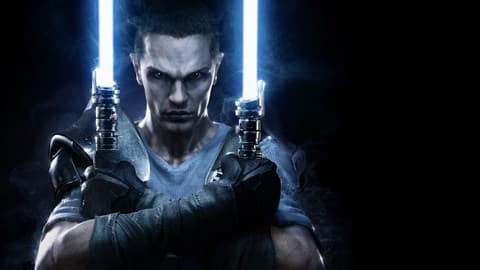
The game was built around a simple but irresistible pitch. What happened between Revenge of the Sith and A New Hope, in that long dark stretch when the Empire was hunting the last of the Jedi? The answer was Starkiller, real name Galen Marek, a Force-sensitive child discovered and secretly trained by Darth Vader as his personal apprentice. Players spent the game hunting surviving Jedi on Vader's orders before Starkiller began to question everything he had been raised to believe, eventually setting in motion events that helped spark the Rebel Alliance.
That premise was not a marketing afterthought. According to LucasArts, planning began back in the summer of 2004, when a small team brainstormed more than a hundred concepts and gradually narrowed them to around twenty. George Lucas himself encouraged the secret-apprentice direction after watching a short preview video, and roughly six months of story development followed before full production began in early 2007. Sam Witwer, who voiced Starkiller and performed his likeness, would go on to become a fixture of Star Wars storytelling. In a nice piece of trivia, Witwer also voiced Emperor Palpatine in the same game.
Technology doing the heavy lifting
What set The Force Unleashed apart in 2008 was not just the fantasy of throwing Stormtroopers around like rag dolls. It was the fact that the game genuinely tried to simulate it. LucasArts combined three cutting-edge middleware systems: Havok for rigid body physics, Digital Molecular Matter for materials that splintered and buckled realistically, and Euphoria for procedural character behaviour, so enemies reacted and flailed in the moment rather than playing canned animations. Getting these separate systems to cooperate was a serious technical undertaking, and the effort was reportedly demanding enough that it drew resources away from another LucasArts project, Indiana Jones and the Staff of Kings.
The showpiece of all this ambition was the notorious sequence in which Starkiller drags a Star Destroyer out of the sky using the Force alone. It became the game's signature image, and by LucasArts' own account the idea grew out of an offhand comment during development rather than a grand master plan.
Reception: ambition meets its limits
Critics landed somewhere in the middle. The console versions gathered Metacritic averages in the low seventies, with the Xbox 360 edition at 73, the PlayStation 3 and Wii versions around 71, and the Nintendo DS release trailing at 61. Reviewers consistently praised the story, the voice acting, Mark Griskey's soundtrack, and the sheer spectacle of the physics. The criticism was just as consistent: linear level design, camera trouble, and technical rough edges that undercut the power fantasy. GameSpot called the tale more intimate and more powerful than the prequel films, while Entertainment Weekly went the other way and listed it among the worst games of the year.
A commercial phenomenon
Whatever the reviewers thought, players showed up in force. The game sold roughly 1.74 million copies in the third quarter of 2008 alone, making it one of the best-selling titles of that quarter, and by February 2010 it had passed seven million copies across its many platforms. That made it the fastest-selling Star Wars game of its era, a remarkable result for an original character and an original story rather than a movie tie-in. Sean Williams' novelization rode the same wave, debuting at number one on both the New York Times and Publishers Weekly bestseller lists.
Legacy
The Force Unleashed spawned a direct sequel, The Force Unleashed II, in October 2010, though it landed to a cooler response. The bigger twist in its story came in 2014, when Disney's acquisition of Lucasfilm swept Starkiller and the entire tale into the non-canonical "Legends" bucket. Officially, none of it happened. Unofficially, Starkiller endured. He has appeared in later Star Wars games and remains a favourite among fans who still talk about the day they yanked a capital ship out of the sky.
The game was also notable as the first collaboration between LucasArts and Industrial Light & Magic after both moved into San Francisco's Letterman Digital Arts Center, and it shipped across an almost comical range of hardware, from the PS3 and Xbox 360 down to the PSP, DS, and even the ill-fated N-Gage. A Nintendo Switch port arrived as late as 2022, proof that the appetite to unleash the Force never quite went away.
Also on this day
September 16 is a busy date in gaming, so if the Force is not your thing there are other anniversaries worth noting nearby. Rockstar's Grand Theft Auto V, for instance, arrived on September 17, 2013, one day after this feature's date. Good thing no one ever played that game eh?
Sources
https://en.wikipedia.org/wiki/Star_Wars:_The_Force_Unleashed
https://www.engadget.com/2010-02-23-star-wars-the-force-unleashed-has-sold-seven-million-copies.html
https://www.gamespot.com/articles/the-force-unleashed-on-57-million/1100-6204601/