Dispatch
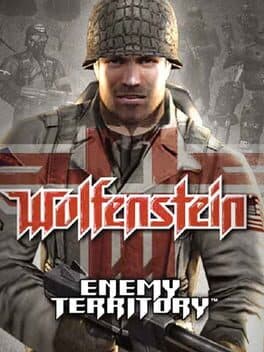
On This Day, 29 May 2003: Wolfenstein: Enemy Territory

game
Wolfenstein: Enemy Territory
Dispatch
game
Wolfenstein: Enemy Territory
Keep Reading
 Bombjack
Here is a thing that almost never happens in video games. A publisher cancels your project. The single-player campaign is a mess, the money’s gone, and the whole thing is written off as a loss. And then, instead of vanishing into the archives like a thousand other cancelled games, the multiplayer portion gets released anyway. Completely free. No catch. And it goes on to become one of the most influential and enduring multiplayer shooters of its era.
That is the story of Wolfenstein: Enemy Territory, released 23 years ago today.
Splash Damage was a young studio. Founded in 2001 by Paul Wedgwood, Richard Jolly, and Arnout van Meer, the London-based team had cut their teeth making maps and mods for Quake III Arena. Their work on the mod scene caught the attention of id Software and Activision, and they were handed a proper contract: build the multiplayer side of an expansion for 2001’s Return to Castle Wolfenstein. It was meant to be a commercial product, a box on a shelf, with a brand new single-player campaign bundled alongside that multiplayer component. The catch, and it is a detail that gets lost in most retellings, is that the single-player wasn’t Splash Damage’s job at all. That part was being handled by a separate studio, Mad Doc Software.
The multiplayer side came together beautifully. Splash Damage built something genuinely novel: an objective-based class shooter where teams of Allies and Axis fought not just for kills, but to complete linked mission objectives. Engineers blew up walls with dynamite. Medics revived fallen teammates. Field Ops called in airstrikes and distributed ammunition. Covert Ops stole enemy uniforms and sniped from rooftops. Soldiers hauled the heavy weapons that turned a defended chokepoint into a meat grinder. Five classes, every one with a job, and every job mattered. Maps like Gold Rush and Siwa Oasis weren’t just arenas, they were miniature narratives with escalating objectives that pushed teams forward through beaches, bunkers, and city streets.
The single-player campaign, however, did not come together. Not at all. Mad Doc’s half struggled to find its footing, the wider project was bleeding money, and with no clear path to shipping the full package, id Software and Activision pulled the plug on the commercial release together. But rather than binning the whole thing, they made a decision that still sounds faintly absurd two decades later: they let Splash Damage release the finished multiplayer portion as a free standalone game. The half that worked got to live. The half that didn’t quietly disappeared.
On 29 May 2003, Wolfenstein: Enemy Territory went live. No price tag. No subscription. No microtransactions. Just a download link and a promise of good games. In an industry that was already perfecting the art of extracting money from players, this was practically an act of charity.
The game exploded. Within months, Enemy Territory had built one of the most dedicated communities in PC gaming. The XP and ranking system, which rewarded players with new abilities as they levelled up skills like Battle Sense and Light Weapons, predated the modern battle pass and progression obsession by a solid decade. The competitive scene, driven by the ETPro mod, became legendary. And because Splash Damage released the game’s source code in January 2004 (and later, the full engine code under GPL in 2010), the modding community went absolutely feral in the best possible way. TrueCombat: Elite turned it into a tactical realism shooter. Countless custom maps kept servers fresh for years.
Bill Brown, who had scored Return to Castle Wolfenstein, provided the soundtrack. That thunderous orchestral main theme, all brass and percussion and wartime urgency, became inseparable from the experience of frantically defending the Fuel Dump or making a last-ditch push on the Rail Gun.
Enemy Territory never really died. People kept playing it through the 2000s and 2010s, long after most of its contemporaries had emptied out. When it launched on Steam in April 2022, 19 years after its original release, it arrived without fanfare and without a price tag: still free, still brilliant, still the same game. Splash Damage went on to bigger things: Enemy Territory: Quake Wars, Brink, Dirty Bomb, and later, co-development work on the Gears of War games. But ET remains their foundational moment. The game that should have been cancelled, wasn’t, and refused to go away.
Not every game gets to fail upwards quite so spectacularly. Most cancelled projects disappear without a trace, remembered only by the developers who poured years of their lives into something that never shipped. Enemy Territory got lucky. But it also got good, and that is the bit that actually matters. You can give a game away for nothing, but people will only stick around for two decades if it is worth their time.
Twenty-three years on, you can still find active servers. You can still hear that main theme kick in. You can still watch an Engineer plant dynamite on the seawall while a Medic revives the entire team behind him. Some things don’t need to change.
No comments yet. Be the first.