Dispatch
Hitman: Blood Money Turns 20: The Accidental Masterpiece That Redefined Stealth

game
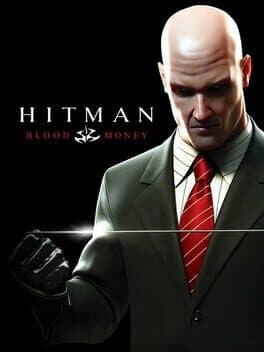
Hitman: Blood Money
Dispatch
game
Hitman: Blood Money
Keep Reading

 Bombjack
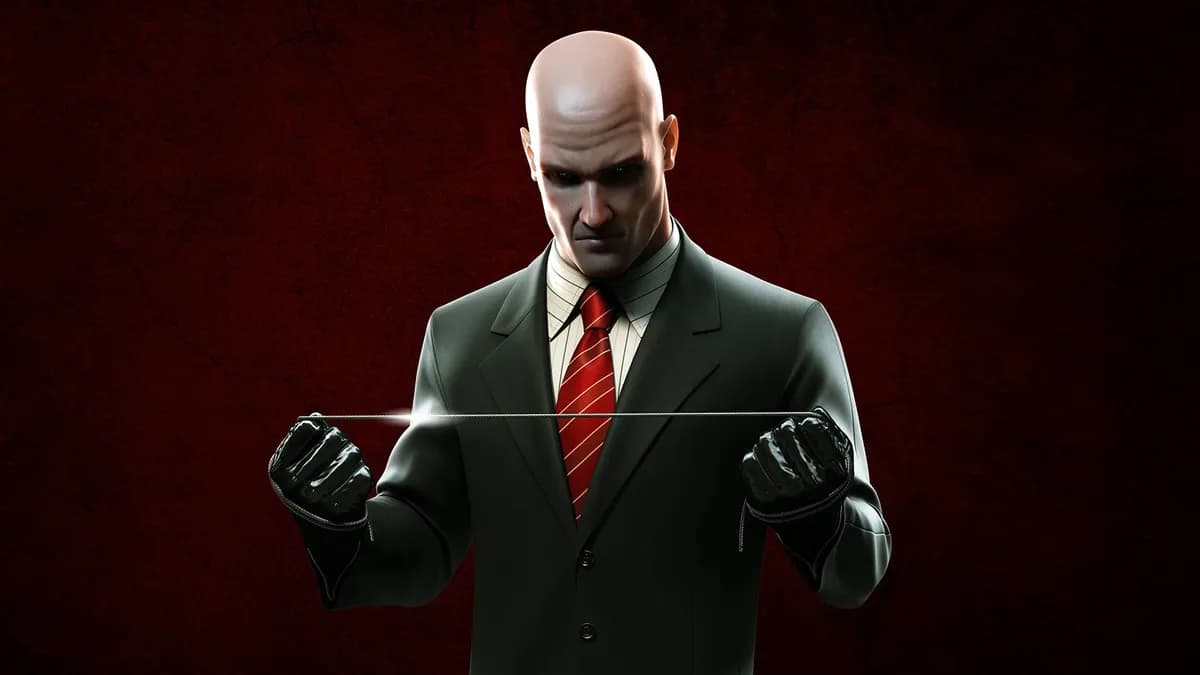
Twenty years ago today (May 26th, 2026), a cloned assassin in a sharp suit walked into a Paris opera house, swapped a prop gun for a real one, and changed stealth gaming forever.
Tomorrow, IO Interactive launches 007 First Light, the studio’s first original IP as an independent developer. The timing might be coincidence, but it’s fitting. Hitman: Blood Money is the reason IO ever earned the right to make a Bond game in the first place.
Hitman: Blood Money launched in Europe on 26 May 2006, and two decades later it is still the game the series is measured against. It is the one most fans point to when they want to show a sceptic what stealth is supposed to feel like. It is the one IO themselves quietly returned to when they rebooted the franchise in 2016. And it is the one that, twenty years on, still gets re-released for whatever shiny new platform we are pretending to be excited about this year.
So let’s talk about why.
This was IO Interactive’s fourth crack at the formula, and the one where everything clicked. Coming off Hitman: Contracts in 2004, the Copenhagen studio announced Blood Money in November that year with a Spring 2005 target. It slipped. And slipped again. By the time it finally landed in May 2006, it had been pushed back by more than a year and quietly added the Xbox 360 to its platform list, making it the first Hitman game on a seventh-generation console.
Delays are usually a bad sign. In this case, they were the difference between another solid sequel and the one fans still talk about. Every extra month went into the things that made Blood Money feel different from its predecessors: a new engine, smarter AI, denser levels, and one mechanic that quietly rewrote how stealth games handle long-term consequences.
Before Blood Money, stealth games treated each mission like a reset button. Finish a level, the world forgot everything, and the next briefing started from zero. It was tidy, it was clean, and it was completely at odds with what made the fantasy interesting.
Blood Money introduced the notoriety system, a reputation tracker that rose when 47 was sloppy and fell when he was a ghost. Get caught on a security camera? Your face shows up in the next mission’s newspaper, and NPCs recognise you faster. Leave bodies lying around? The sketch on the front page gets more accurate. Kill a witness in front of three more witnesses? The next mission gets a lot harder, and you brought it on yourself.
The genius was that it made clean play actually matter. You could bribe authorities between missions to lower your notoriety, using the very money you earned from the hits. Spend too much on bribes, and you couldn’t afford that silenced pistol upgrade. Every decision rippled forward.
And then there was the newspaper itself. After each mission, a front-page article detailed your work: how many guards you killed, what weapon you favoured, whether anyone saw you. If you were truly invisible, the paper ran a photo of the victim instead of your face. A tiny touch, but it made the game feel like it was paying attention. Nineteen years later, most stealth games still aren’t.
Blood Money turned assassination into a dark art. Sure, you could shoot your target in the head. But you could also wait for a politician to walk under a chandelier and snip the right wire, swap a prop firearm for a real one mid-rehearsal, dose a buffet with the wrong kind of seasoning, or give a man on a balcony the gentlest of nudges. Every single level had at least one method for making the hit look like an accident, and the game rewarded you handsomely for using them.
These “accident kills” became the series’ signature, and they shifted the entire calculus of stealth design. The genre had always been about avoiding detection. Blood Money made it about engineering circumstance. You weren’t sneaking past guards anymore. You were rearranging the furniture of someone’s life until their death became the most logical outcome in the room.
It was stealth gaming that rewarded creativity over patience. Every level had multiple routes, and the best ones made you feel clever rather than just quiet. The series never looked back.
If you ask any Hitman fan for the most iconic mission in the series, four out of five will say “Curtains Down”. The fifth is lying.
The third mission of Blood Money sends 47 to the Paris Opera House, where the tenor Alvaro D’Alvade is rehearsing Puccini’s Tosca. D’Alvade is also, as it turns out, running a child trafficking ring with the American Ambassador to the Vatican, Richard Delahunt. Two targets, one location, and a script that already contains a staged execution scene. The game does not so much hand you the solution as point at it with both hands and clear its throat.
You can sneak backstage, find the prop Mauser C96 the tenor uses in the third act, and replace it with an identical, fully loaded version. When the execution scene comes around, D’Alvade gets shot for real, in front of a full crew of opera professionals who applaud politely because they assume it is part of the rehearsal. By the time anyone realises what has happened, you are halfway across Paris.
You can also rig the chandelier above the auditorium, sit on a beam in the rafters, and wait for Delahunt to run grief-stricken to his lover’s body. The crowd gasps. The orchestra stops. You leave through a side door.
This is the mission every “Hitman-like” game since has been trying to recreate. Hitman 2016‘s Sapienza, World of Assassination’s Paris, even Dishonored‘s Lady Boyle’s party. All of them are descendants of Curtains Down. It is, more than anything else in the game, the proof that stealth could be theatre.
Jesper Kyd’s soundtrack for Blood Money was his fourth and final Hitman score. After this one, he moved on to soundtrack the first wave of Assassin’s Creed games, and he never returned. The score was performed jointly by the Budapest Symphony Orchestra and the Hungarian Radio Choir, and it traded Kyd’s earlier electronic work for something grander: brooding Latin chorals, sweeping strings, the kind of score that makes a man in a suit feel like a force of nature.
The soundtrack earned a nomination for Best Video Game Score at the 2006 MTV Video Music Awards. It lost to Jeremy Soule’s work on The Elder Scrolls IV: Oblivion. Fair play to Oblivion, but Kyd’s Blood Money score is the one people still hum. IGN named it Xbox Game of the Year for Best Original Score, and “Apocalypse” remains a top-tier piece of video game music.
Special mention goes to the haunting rendition of Schubert’s “Ave Maria” that plays over the main titles. It is not actually a Kyd composition, it is sung by Daniel Perret of the Zurich Boys’ Choir, but it has become so synonymous with the Hitman franchise that most fans assume it was. There are worse legacies for a piece of classical music than being adopted as the unofficial theme tune of cinema’s most polite mass murderer.
You cannot talk about Blood Money’s release without mentioning the marketing. Eidos ran a print campaign in 2006 that pictured stylised, glamour-shot murder victims with captions like “Beautifully Executed”, “Coldly Executed”, and “Shockingly Executed”. One image showed a woman in lingerie on a hotel bed with a bullet wound in her forehead. Another showed a body folded into a chest freezer.
It generated exactly the kind of moral panic that mid-2000s gaming was practically engineered to produce. Politicians weighed in. Newspapers ran outraged editorials. The game sold like a sandwich at a stag do. Whether you think the ads were a knowing piece of art-direction satire or a tasteless misfire is, twenty years later, mostly a matter of how you felt about gaming in 2006. Either way, it is impossible to imagine a publisher running them today.
Blood Money sold 1.5 million copies within two months and cleared 2.1 million by 2011. Those are not blockbuster numbers by modern standards, but they were respectable for a mid-budget stealth game in 2006. What matters more is the tail.
The game has been re-released three times:
- 2013: The Hitman HD Trilogy on PS3 and Xbox 360
- 2019: The Hitman HD Enhanced Collection in 4K on PS4 and Xbox One
- 2023 to 2024: Hitman: Blood Money - Reprisal on iOS, Android, and Nintendo Switch
The Reprisal version, developed by Feral Interactive, is particularly worth a mention. It backports the modern Instinct Mode and a minimap from the World of Assassination trilogy, fully reworks the controls for touch and gamepad, and somehow makes Blood Money playable on a phone you keep in your pocket. Anyone who lived through the original PS2 release will find this slightly hard to process.
It is one of those rare games that publications still list among the greatest of all time, two decades after launch. GamesRadar, Polygon, IGN, Slant, and roughly every other outlet with a “best games ever” feature has Blood Money sitting somewhere on the list.
IO Interactive went through some rough years after Blood Money. Absolution (2012) tried to make 47 more cinematic and story-driven, and it split the fanbase down the middle. Some praised the production values. Others felt the game had forgotten what made Hitman, well, Hitman. Square Enix did not love the sales numbers either, and by 2017 the studio was on the chopping block.
What happened next is the kind of story that does not usually have a happy ending. Rather than wait to be sold to whoever bid highest, IO negotiated a management buyout in June 2017, became fully independent for the first time in their history, and kept the Hitman IP. The risk was significant. According to CEO Hakan Abrak, the studio had about three months of cash flow before bankruptcy when the deal closed.
Then they went back to the Blood Money blueprint for the World of Assassination trilogy, and the results spoke for themselves. Hitman (2016), Hitman 2, and Hitman 3 together pulled in over 40 million players. The bald assassin had a second life, and IO had a future.
Now, tomorrow, that future expands. 007 First Light, the studio’s standalone James Bond origin story, launches on 27 May 2026 for PlayStation 5, Xbox Series X|S, and PC, with a Switch 2 version following later. It is IO’s first new IP since Kane & Lynch 2 in 2010, and the first time anyone has made a proper Bond game since Blood Stone in the same year.
You could argue Blood Money was always already a Bond game in all but name. The globe-trotting, the tailored suits, the elaborate kills, the gadgets, the cold professionalism with a sense of humour buried somewhere underneath. The studio that spent two decades teaching us how to be Agent 47 turns its hand to Agent 007 the day after Blood Money’s twentieth birthday.
The circle is closing. Or, more accurately, IO is finally getting to make the game they have been quietly making for twenty years anyway.
If all this has put you in the mood to find out what the fuss is about, the easiest way in is Hitman: Blood Money - Reprisal on Switch or mobile. The PC version is still on Steam if you prefer keyboard and mouse, and the HD Enhanced Collection is available on PS4 and Xbox One if you want the 4K version on a TV.
Avoid the original PS2 release unless you’re feeling nostalgic. The Reprisal version is the same game with all the rough edges smoothed off.
Twenty years on, it is still teaching the genre how to be clever.
- Developer: IO Interactive
- Publisher: Eidos Interactive
- Original release: 26 May 2006 (Europe), 30 May 2006 (North America)
- Original platforms: PlayStation 2, Xbox, Xbox 360, Microsoft Windows
- Composer: Jesper Kyd (his fourth and final Hitman score)
- Total sales: Over 2.1 million copies
- Re-releases: Hitman HD Trilogy (2013), HD Enhanced Collection (2019), Reprisal (2023-2024)
- Director: Rasmus Højengaard
- Engine: Glacier (updated)
Is Hitman: Blood Money still worth playing in 2026?
Yes. The Reprisal version on Switch and mobile brings the game in line with modern conventions while preserving everything that made the original special. The mission design holds up remarkably well, and the notoriety system still feels ahead of its time.
What is the best mission in Hitman: Blood Money?
“A New Life” (the suburban garden party) and “Curtains Down” (the Paris Opera House) are the two most fans gravitate toward. “A Dance With the Devil” and “You Better Watch Out” also have strong followings.
How does Blood Money compare to the World of Assassination trilogy?
The World of Assassination games have larger sandboxes, more replay value per level, and substantially better visuals. Blood Money has more missions, tighter pacing, a stronger overall narrative, and a soundtrack that the new games never quite match. They complement each other rather than compete.
Did Jesper Kyd compose all the Hitman soundtracks?
He composed the first four: Codename 47, Hitman 2: Silent Assassin, Hitman: Contracts, and Blood Money. He did not return for Absolution or the World of Assassination trilogy.
What is 007 First Light?
007 First Light is IO Interactive’s standalone James Bond origin story, launching on 27 May 2026. It is the studio’s first original IP as an independent developer and the first major James Bond video game in over a decade.
No comments yet. Be the first.