Biker Mice From Mars8/103mo ago
Let’s Rock and Ride! with Konami
Biker Mice from Mars was a 90s animated series that had three seasons and about 64 episodes. The first one premiered in 1993 and the last one in 1996. Like many cartoons of the time, it was more focused on selling toys than anything else and followed a formula very similar to Teenage Mutant Ninja Turtles: anthropomorphic animals who fought crime and lived in a hideout, but in this case they were mice who rode motorcycles. As a kid I remember watching an episode or two on TV but I never paid much attention to it, nor did it manage to hook me, even though I loved cartoons.
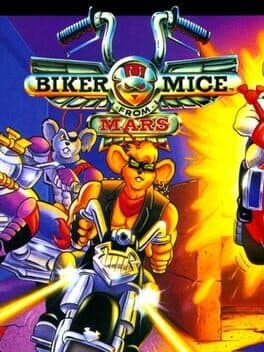
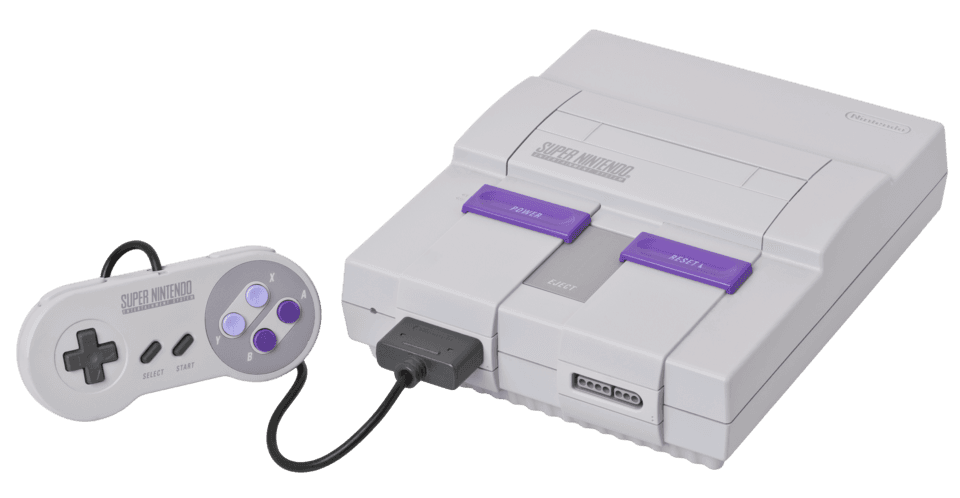
Outside of my personal experience, the truth is that the series was well received by the public, especially when it came to selling toys, and obviously, being the 90s, if there was an animated series making money, a video game couldn’t be missing to squeeze even more money out of parents’ pockets. That’s why Konami got to work and in 1994 developed and published an adaptation of the series in cartridge format for Super Nintendo.
Luckily, the Japanese were clever and instead of making an action-platformer or a beat’em up, as usually happened in these cases, they opted for a racing game, which makes perfect sense considering the source material. Specifically, they went for the combat racer genre, a kind of racing game with vehicular combat mechanics, in this case from an isometric perspective. Very similar to the classic Rock N’Roll Racing but set in the Biker Mice from Mars universe.
The game in question was released in 1994 in the United States and Europe, and although there are no official sales figures to know how it performed, it was very well received by the press; most reviews of the time gave it very high scores.
For example, the Italian magazine Consolemania in issue nº 37 gave it 91 points, Superjuegos in issue 33 gave it 88 points, and the American magazine Video Games in issue nº 72 gave it 8 out of 10. All these reviews were published in January 1995.
Port for SEGA Mega Drive (Cancelled)
Some media outlets of the time announced a future port for Mega Drive, at least in the European market, but it never materialized. Specifically, Computer and Videogames in issue 146 from January 1994 and Mega Power in issue 16 from November 1994, both from the United Kingdom. This cancelled port is also referenced in the LinkedIn profile of John “Turbo” Brandstetter, who worked at SEGA for several years.
In the end, SEGA users were not able to enjoy this title on their consoles.
Mechanics
This game can be defined within the combat racer genre, which as its name indicates is a combination of racing with vehicular combat, something popularized by Mario Kart, but in this case more similar to Rock’n Roll Racing both for its isometric perspective and for its progression elements through purchasing upgrades between races.
Basic Controls
We accelerate with B, activate items with A, use our ability with X, brake with Y, and with L and R we can slide to the sides or jump depending on our character, and if we hold them during a turn we perform a power slide; not all characters execute it the same way. Obviously, with the D-pad we control the bike’s direction left and right, and we can also lift or lower the bike like in Excitebike.
Although these controls are the same for the 6 available characters, each one has their own variations. For example, the 3 mice and one of the villains can do a wheelie and the other two cannot. Not all of them move sideways with L or R; the scientist, for example, is the only one who throws a hook to grab onto surfaces. Vinnie doesn’t slide but instead spins his bike doing a wheelie; Modo jumps instead of sliding.
Additionally, each one has their own abilities:
Throttle fires a projectile that stops rivals, and if we hold back while firing, he leaves it on the ground as a trap.
Vinnie doesn’t shoot projectiles; instead, he performs a big jump that can be used to overtake or land on enemies to damage them. He can also leave a trap by holding back.
Modo activates a turbo and lifts the bike, hitting anything in his path and clearing ground traps; he can also leave traps like the others.
Grease Pit fires a grease projectile that temporarily melts targets and also leaves it on the ground as a trap.
Limburger is the only pilot who can shoot both forward and backward, since pressing down makes him turn around instead of doing a wheelie, making his attacks impossible to dodge if aimed well.
Dr. Karbunkle fires an energy ball that temporarily turns enemies into a small mutant that can still move but much slower.
If during the race we hit an enemy trap on the ground, we can avoid it by doing a wheelie. Projectiles, however, cannot be deflected; we either dodge them or get hit. In the upper-right corner of the screen we have a counter with red circles representing our armor; if it reaches zero, our bike is destroyed and we lose several seconds before returning to the race.
Items
Each time we complete a lap, we automatically obtain an item. The manual says the item type is random, but there is surely a hidden system based on our race position, since if we are in first place we never get the most powerful ones. There are only 5 items in the entire game: the classic nitro, a star that makes us faster and invulnerable for a short time, an earthquake that slows all rival racers (especially useful on uphill sections), a clock that stops time for everyone except the user, and finally a money bag that gives extra cash to spend between races. If we are in first place, we almost always get this or, with luck, a nitro.
Shop / Upgrades
After finishing a race and before starting the next one, we can enter the shop and invest our money in upgrades for our vehicles. We can improve our engine (increasing top speed and acceleration), armor (increasing our health counter), tires (improving grip), and increase our ammo capacity. Each upgrade can be leveled up to 5 times and becomes more expensive each time.
Game Modes
Biker Mice from Mars features two very different game modes plus a training mode, offering good variety in gameplay.
Main Race
The first game mode, and according to the title the “main” one, is the typical tournament divided into races, each with 5 circuits. We earn points depending on our position, and at the end of the last circuit we must finish in the top 3 to advance to the next level. On normal difficulty, circuits have 5 laps and there are 5 levels total; on hard difficulty, races have 6 laps and there is an extra level with the hardest circuits in the game.
Battle Race
This mode focuses more on combat than driving. All participants start with max ammo, and if our bike is destroyed, we are eliminated directly with no respawn. The main objective is to survive; if we are the last one standing or finish in the top 3, we advance to the next phase. If we are eliminated or fail to reach the podium, we get the continue screen. According to the manual, we can continue from the race where we left off keeping our upgrades, but this is not true; if we lose, even if we press continue, we must start from scratch.
Practice
As expected, this mode is for testing the different circuits; all are unlocked from the beginning. It is the only game mode that does not allow multiplayer. Since we are the only racer on the track, abilities and lap items are disabled, and traps do not affect us. It is good for learning the tracks, but it would have been nice to include an option to enable traps and scenario modifiers.
Versus
Finally, we have the option to compete against a friend in a one-on-one split-screen match. It works similarly to a normal race but only two players compete and there are no lap items. At the end of the race, the loser can choose to retry or change characters or track.
Dynamics
Regardless of the mode we play, at the start of the race none of the racers have ammo or items; these always unlock after completing the first lap. Another similarity is being able to buy upgrades in the shop between races; here the only difference is that in battle mode we start with max ammo. Other than that, upgrades and their prices are the same in both modes.
The main difference between game modes is the gameplay focus: the main mode centers on driving regardless of how much we use our weapons; whoever completes all laps first wins. The higher our position, the more points and money we earn for upgrades. Although this remains true in battle mode, there it is much more important to manage our armor and ammo well than to be the fastest.
In this mode, if our bike is destroyed, we not only lose the race but must start from scratch with no upgrades, making it a much greater challenge. Additionally, there are no passwords in this mode, so it is a total game over. In fact, driving is so secondary here that if we are in first place, it is better to stop on the side of the road, let rivals pass, and shoot them from behind to weaken them. If we manage our projectiles well, we can eliminate all rivals before they finish all laps and ensure we stay alive, since if we are in front we are an easy target for enemy projectiles.
Gameplay
One of the game’s strongest points is the variety in driving styles of its characters. Although a roster of only 6 racers may sound limited, each one plays differently and it shows. And I don’t just mean differences in stats: speed, acceleration, and grip. Between this and the different types of sliding, drifting, and more, each racer plays differently from the rest.
For example, in the good guys’ team, each one has their strategies: Throttle and Modo handle similarly, relying heavily on drifting, but the former is a bit safer since he has projectiles to knock down rivals in front of him, while Modo must be close to run them over with his turbo. Vinnie, for example, is the slowest in the entire game and his drifts are very hard to control, but his jumping ability gives him a huge advantage that compensates for his drawbacks.
The villains’ team is even more diverse. For example: Grease Pit is the racer with the highest top speed but the worst acceleration, and his grip is terrible, making him extremely difficult to control and in certain situations especially vulnerable to circuit obstacles, especially water currents in sewer sections. Additionally, his trap is the hardest to execute in the entire game; you must hold back and maintain the wheelie, but it is quite difficult to predict the exact moment it will come out, and many times we end up shooting forward by accident.
Then there is Limburger, who has more acceleration than anyone but less grip than anyone, although in practice he is much easier to control than Grease Pit. He cannot do a wheelie, which prevents him from avoiding traps, but instead he turns around, making him the only character in the game who can shoot backward. And this is not like leaving a trap, because those can be nullified by lifting the bike, but projectiles cannot. Additionally, since his vehicle floats, he is not slowed down when driving over water like the rest of the racers.
Finally, we have Doctor Karbunkle, who has the best grip, good acceleration but low top speed. He is very easy to maneuver, and instead of sliding with L or R, he throws a robotic arm in the selected direction that can both hit rivals and grab onto surfaces to launch himself in that direction. This makes it much easier to dodge projectiles, and since he can also lift the vehicle to repel traps, he is a fairly safe option, although overtaking rivals becomes more difficult.
Racing Circuits
There are 30 different tracks in the entire game (the last 6 only available if we play on hard). These are grouped into 5 types of circuits, which become more complex as we progress and begin to include particular traps and obstacles. We always start in city circuits, then beach circuits, sewers, off-road style tracks, and finally space fortresses.
Each type of circuit differs not only in appearance but also in the obstacles they contain. City circuits, for example, have potholes in the asphalt that slow us down when passing over them, and then add other obstacles like hydrants, signs that make us bounce if we hit them, and even ventilation ducts that lift the bike. Beach circuits have water sections that slow us down (except Limburger), and if we go too far and fall into deep water, we sink and must wait for a hook to lower from the sky to put us back on the track. These are the levels I hate the most by far.
Sewer levels, on the other hand, are my favorites. They have parts where there are flamethrowers on the ground that can damage us, sections where water currents make us much faster or slower depending on the direction of the flow, and even make us fall into the void or crash into spike walls. Off-road circuits are full of jumps and tight curves like real-life motocross tracks; personally, I find them quite difficult to interpret, but they are entertaining and offer a lot of gameplay since they are very long and give time to recover. Finally, there are the space fortresses, which start on the Moon and end on Mars. Here almost all curves are straight or U-shaped, and they usually have electric traps, jumps, fans that push us, and sections without edges where we can fall into the void.
Aesthetics
Graphics
One of the most important aspects of a video game based on a cartoon series is undoubtedly its graphics and how similar it is to the source material. And in this regard, I think Konami did an excellent job. Although the sprites are not very large, each character and even the vehicles they drive are perfectly recognizable. Everything is drawn very well, including the circuits, and it gives the impression of watching an episode of the series in pixel art. The environments are very well done, and the color palette helps effectively represent different times of day in the city circuits, which are the only ones that vary chromatically. Additionally, details like signage, destroyed track sections, and other decorative elements make the environments feel alive, which is quite remarkable in a racing game.
Outside of gameplay, both the racers’ portraits and the interface in general are of very good quality, and the opening cinematic, while nothing extraordinary, is attractive enough to encourage us to try the game.
Differences Between Versions
When publishing the game in the European market, Konami sought collaborators and found one of the most interesting (and unexpected): Snickers, the famous chocolate bar brand partnered with the Japanese company to place advertisements inside the game. Thus, when starting the game in the PAL version of the cartridge, after the Konami intro, a screen appears telling us that the game is brought to us in association with Snickers. Additionally, advertising signs with the brand’s logo appear in all circuits except city and beach ones, also on the podium floor in the end-of-round cinematic and in the character selection screen.
Along with the appearances in the environments, now all racers hold a Snickers bar in their respective portraits, which were modified from the original version, and to further emphasize it, at the end of each race an image appears of the winner holding a Snickers and saying: “Even winners need something to satisfy their appetite.” Another detail is that when going to the shop to buy upgrades, armor is replaced with “food” and, of course, the protective plates with the sponsor’s logo.
But the most notable change was undoubtedly the replacement of the star that makes us invulnerable with, obviously, a Snickers. At first, everything seems normal; it is what one would expect. The truly bizarre thing is that when using the item, in addition to becoming invincible for a moment, the Snickers logo appears in the middle of the screen flashing for a few seconds, which besides being ridiculous can be annoying in certain situations.
Music and Sound
Talking about Konami is talking about good music, and this is no exception. Although the game does not have a long list of songs, all the ones it includes are very well composed, with a rock vibe and aggressive riffs that add their dose of adrenaline to each race. Each circuit has its own track of just over a minute, and although we will hear the same tracks over and over again, instead of getting tired of them (which would be the most likely), they end up stuck in our heads. Full of high-quality sampled instruments for the time and with very well-crafted compositions, they perfectly capture the essence of the game: frantic races full of action and very cool characters.
The sound effects, for their part, are fine; they fulfill their function and I haven’t found any particularly bad ones. I find it very remarkable how well they configured the balance of the effects, especially being a racing game, since at that time engine noise would usually end up frying our brains after a while. But not here; everything is well balanced in that regard. We can hear the sound of our engine, the rivals’ tires drifting, someone activating an earthquake, or someone shooting at us, all together with the music playing and without anything overlapping or cutting out. This attention to the levels of each type of effect is something to appreciate, especially considering that as an unwritten rule of that era, games usually did not have the option to increase or decrease the volume of music and effects independently, much less each type of effect.
Conclusion
Although the vast majority of licensed videogames from the 90s tended to be bad or mediocre, Konami did know how to mark the exception to the rule, and this is one of the cases that proves it. Biker Mice from Mars for Super Nintendo not only plays well and is entertaining, but also leaves aside the Beat’em Up genre, which used to be the standard for licensed games, and adopts the combat racer genre, doing justice to it’s base material.
With a very good level in the graphic and gameplay department, a well‑adjusted difficulty that takes some time to master and that at its highest level becomes truly demanding but with a well‑adjusted difficulty curve. It is an entertaining and highly recommended game, both for fans of the animated series and for those who have not seen even one episode in their life.