
Comments

No comments yet. Be the first.
No comments yet. Be the first.
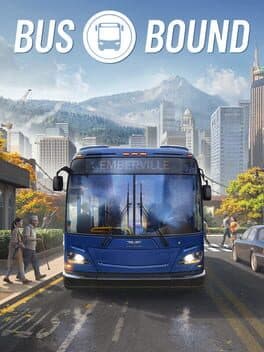
Bus Bound: I Finally Understand Why People Love Bus Sims (Early Access Review)
[Note: Saber interactive sent me the Game and I worked with them on compatibility issues for the Moza Truck Wheel setup issues i had.]
I previously played their Bus sim 18 and 21 and unexpectantly got hooked but this game is not quite that nor the same. I would call it a more simplified release for co-op or casual solo gameplay.
I got early access to Bus Bound before launch, and I have to admit—I didn't expect to be drawn in. Bus simulators aren't everyone's cup of tea. You drive a bus. You follow routes. You're done. What's the hook?
After spending considerable time with Emberville, the game's fictional American city, I finally get it. Bus Bound isn't just about driving—it's about building something with other people.
Bus Bound is made by stillalive studios, the team behind Bus Simulator 21, and published by Saber Interactive. It launched on April 30, 2026, on PC (Steam/Epic), PlayStation 5, and Xbox Series X|S. The premise is straightforward: you run bus routes through Emberville, generate goodwill with passengers, and use that to unlock new buses, upgrades, and routes. The city gradually transforms based on your efforts.
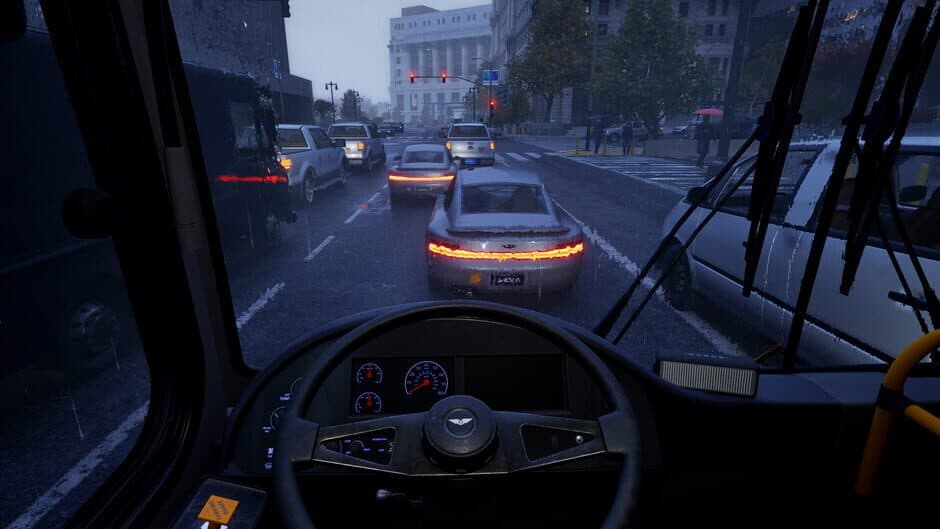
Officially licensed buses from real manufacturers (New Flyer, Blue Bird, Horizon)—there are 17 at launch. Detailed graphics. Traffic systems. Day/night cycles. Weather. It's all there.
But here's what elevates it beyond the last game: progression with multiplayer intent.
I tested both modes. Solo, Bus Bound is a relaxing, methodical experience. You pick a route, drive carefully, nail your stops, and watch numbers tick up toward your next unlock. There's something meditative about it, especially if you enjoy optimization—timing routes efficiently, understanding traffic patterns, choosing the right bus for the job.
The progression loop is satisfying enough alone. Not revolutionary, but solid.
In co-op, one player is the "host"—it's their city that develops. The other three are helping them build it. You split routes, coordinate stops, and work together toward their goals. This completely changes the dynamic. You're not just grinding for yourself; you're contributing to someone else's vision of Emberville. The shared progress, the coordination required to avoid overlap, the group chatter about "next we should unlock the Xcelsior"—that's where Bus Bound finds its identity.
If you've got a friend group that enjoys chill, cooperative games (think Spiritfarer energy, but busses), this is genuinely good stuff.
The Bus Variety Actually Matters
I was skeptical about 17 different buses. Doesn't matter, right? But different routes have different requirements. Tight neighborhood streets? Smaller bus. Interstate corridor? Bigger rig. The longer routes reward smart vehicle choices, which means the roster isn't just cosmetics—it's strategic.
The City Feels Alive
Emberville isn't static. As you complete routes and improve stops, the city visibly evolves. More pedestrians in revitalized districts. Better infrastructure. Busier intersections. It's subtle enough that you don't notice immediately, but when you revisit an old route after 10 hours, the world has changed. That matters for engagement.
Customization Depth
The garage and customization options are extensive. You're not just unlocking buses; you're unlocking skins, liveries, visual upgrades. If you're into personalizing your fleet (and apparently, a lot of people are), there's real content here.
I need to be straight with you because the Steam reviews are flagging real issues, and I noticed them too.
Missing Simulation Details
There's no payment system. Passengers just... board. No cash register. No revenue tracking. For a bus sim, that feels incomplete. You also can't exit the bus, can't manually shift (auto transmission only), can't kneel the bus at stops. No visible damage to vehicles.
These aren't dealbreakers, but they're the kind of details that make hardcore sim players feel like the game is "bare-bones" compared to deeper sims. It's more arcade-sim than true simulation.
Performance and Polish Issues
Some players are reporting performance problems, especially on recommended specs (16GB RAM). I didn't hit serious stutters, but the game does feel demanding for what it is. There are also occasional bugs—invisible collisions triggering crashes when nothing's there. Nothing game-breaking, but enough to remind you this is a launch version.
Content Scope
There's only one city map (Emberville). One campaign. No sandbox mode where you can customize starting conditions. For a $29.99 game, the scope is... modest. If you burn through it solo, you're done. The co-op angle extends longevity if you've got people to play with.
The Co-Op Friction Point
Early on, I ran into a traffic spawning issue in multiplayer where cars would appear unexpectedly, causing unavoidable "crashes." It's been patched, but it's an example of how multiplayer-focused changes sometimes introduce new problems. Communication with your co-op group is essential—overlapping routes, conflicting timing, or poor coordination makes it feel like work instead of fun.
Great fit:
People who want a chill, cooperative game with friends—Bus Bound is built around that co-op loop
Bus sim enthusiasts who want modern gameplay structure beyond "just drive"
Relaxation-focused players who like optimization without combat
Communities or friend groups looking for a long-term shared project
Maybe not for you:
Hardcore sim fans expecting deep vehicle economics and realistic bus mechanics
Solo-only players (it works, but it's not optimized for that)
Players who need content variety—one map, limited endgame
Anyone with tight system specs (this game is demanding)
Here's what surprised me most: the co-op mentality actually makes Bus Bound feel like something more. The co-op structure emphasizes cooperation rather than competition, with players splitting routes and coordinating to contribute to the host's city progression goals.
That's the opposite of what most games do. Most multiplayer experiences are competitive. Here, you're literally helping someone else win. There's something genuinely special about that.
If Saber Interactive keeps updating this with new routes, more districts (post-launch expansions are planned), and community features, Bus Bound could build real staying power. Right now, it's a solid foundation with real potential.
Bus Bound launched at a good time—right when people are craving cooperative experiences that don't demand constant attention or intensity. The game launched on April 30, 2026, and currently sits at "Mostly Positive" with 74% positive Steam reviews, which is honest: it's a good game with clear limitations.
Buy it if you're playing with friends. Buy it if you love chill bus sims and don't mind missing some simulation depth. Skip it if you're a solo-only player or a hardcore sim perfectionist.
As for me? I'll be running Emberville routes for a while. Especially once my crew hops into a co-op session together.
Bus Bound
Developer: stillalive studios
Publisher: Saber Interactive
Release: April 30, 2026 (PC, PS5, Xbox Series X|S)
Standard Edition: $29.99
Deluxe Edition (Bus Pass + cosmetics): $39.99
Best For: Co-op players, relaxation gamers, bus sim fans
Playtime: 20–50+ hours (solo); 100+ hours (with active co-op group)
Got early access from Saber Interactive. All impressions are my own.