-
Average rating
12
Games
0
Votes cast
Heartbeat
Shipped Titles
Games (12)
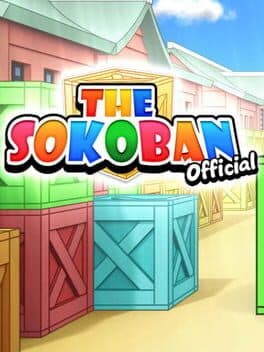
The Sokoban
UNBALANCE2021
The sense of accomplishment you can feel by solving Sokoban puzzles is like the satisfaction after unravelling a tangled thread. The rules are simple, just push the boxes and place them in the goals. However, the difficult stages are not as easy as they look! Try to solve each puzzle with the fewest steps possible.

最強の囲碁 ~名人への道~ / Igo Meijin
UNBALANCE Corporation2017
最高棋力は「八段」!!

Crazy Stone Deep Learning -The First Edition-
UNBALANCE Corporation2016
Crazy Stone has made a huge step forward by combining Deep Neural Networks with Monte Carlo Tree Search.
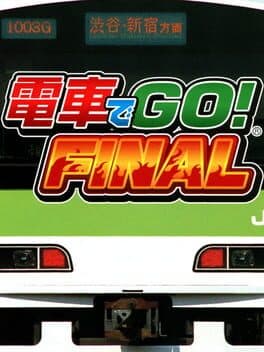
Densha de Go! Final
Taito GM R&D Sect. #22004
Densha de Go! Final (loosely translated to "Go by Train! Final") is an electric train driving simulation game developed and published by Taito for the PlayStation 2 in Japan on May 27, 2004. It was later ported to the PC by Unbalance on December 17, 2004. Part of the Densha de Go! series, Final features a significantly upgraded graphics and audio, a revamped penalty system (using a point-based system from Densha de Go! Ryojou-hen and Densha de Go! Shinkansen), a combo-based scoring system, an improved Navigation System display, and unlockable route extensions. In addition to standard play, the game includes an alternate play-style where players can instead (or alongside the driver player for two-player multiplayer) act as the train's conductor. Train Conductors must open and close the train doors at the correct time, choose the next correct station to stop at, and make in-car announcements. The game includes four routes: the Yamanote Line, the Chūō Main Line, the Osaka Loop Line, and the Tōkaidō Main Line. Playable in both directions, it features the entirety of the Yamanote Line and Osaka Loop Lines, the Rapid section of the Chūō Main Line between Tokyo and Takao, and the section of the Tōkaidō Main Line between Kyoto and Kobe. This version of the game was later ported to the PlayStation Portable in piecemeal, all part of the "Densha de Go! Pocket" line of releases: - Densha de Go! Pocket: Yamanotesen-hen (loosely translated to "Go by Train! Pocket: Yamanote Line Edition") was released on September 29, 2005, including only the Yamanote Line. - Densha de Go! Pocket: Chuuousen-hen (loosely translated to "Go by Train! Pocket: Chūō Line Edition") was released on January 19, 2006, including only the Chūō Main Line. - Densha de Go! Pocket: Osakakanjousen-hen (loosely translated to "Go by Train! Pocket: Osaka Loop Line Edition") was released on March 30, 2006, including only the Osaka Loop Line. - Densha de Go! Pocket: Toukaidousen-hen (loosely translated to "Go by Train! Pocket: Tōkaidō Line Edition") was released on July 27, 2006, including only the Tōkaidō Main Line. To celebrate the series' 20th anniversary, the game was later released as a standalone plug-and-play unit on February 8, 2018 as Densha de Go! Plug & Play.
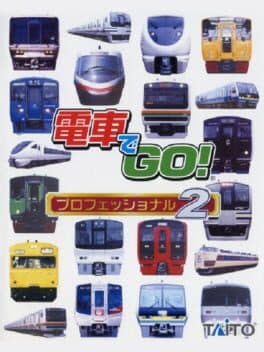
Densha de GO! Professional 2
Taito GM R&D Sect. #22002
Densha de Go! Professional-shiyou 2 (loosely translated to "Go by Train! Professional Specification 2") is an electric train driving simulation game developed and published by Taito for the PlayStation 2 in Japan on October 25, 2002. It was later ported to the PC by Unbalance on April 30, 2003. The sequel to the 1999 home console entry in the Densha De Go! series, Densha de Go! Professional-shiyou, Professional-shiyou 2 features a graphical upgrade and a new set of real-life train routes: the Shōnan-Shinjuku Line, the Tsurumi Line, the Kosei Line, the Seto-Ōhashi Line, and the Nagasaki Main Line to Sasebo Line. One new feature added to the series is the ability to save and resume route progress, and to start progress from a designated station.
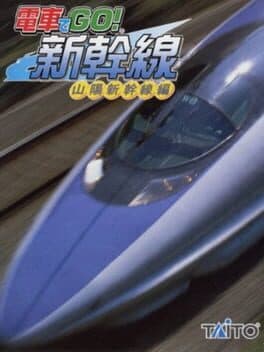
Densha de GO! Shinkansen: Sanyou Shinkansen-hen
Taito GM R&D Sect. #22001
Densha de Go! Shinkansen: Sanyoushinkansen-hen (loosely translated to "Go by Train! Shinkansen: Sanyou Shinkansen Edition") is an electric train driving simulation game developed and published by Taito for the PlayStation 2 in Japan on September 20, 2001. It was later ported to the PC by Unbalance on December 13, 2002. A spin-off of the Densha de Go! series, Shinkansen focuses on the titular high-speed rail line San'yō Shinkansen (through the entire route both ways, between Shin-Ōsaka and Hakata). The game was later ported to the Wii as Densha de Go! Shinkansen EX: Sanyoushinkansen-hen (loosely translated to "Go by Train! Shinkansen EX: Sanyou Shinkansen Edition") on March 1, 2007. This version features a new "Kids Mode" utilizing the Wii Remote's motion control.
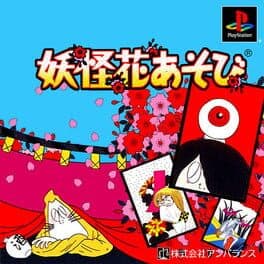
Youkai Hana Asobi
Unbalance Corporation2001
Youkai Hana Asobi is a hanafuda game with multiple modes to play through.
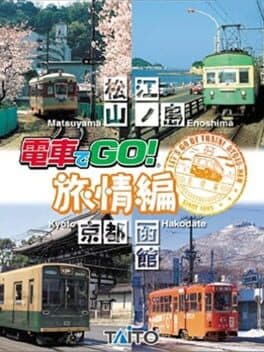
Densha de GO! Ryojou-hen
Taito GM R&D Sect. #22000
Taito's 13th entry in its train simulation series, this one focused on electric trams and light rails. Ganbare Unten-shi!! (loosely translated to "Good Luck, Driver!!") is an electric train driving simulation game developed and released by Taito for arcades in Japan on October 2000. A spin-off of the Densha de Go! series (and using the same engine as Densha de Go! 3 Tsuukin-hen), Ganbare Unten-shi!! focuses on light rail transit with two routes: the Enoshima Electric Railway and the Iyo Railway. While much of the game is the same as the main series, it modifies the braking and throttling controls for added precision and adds controls for operating the vehicle's doors. Due to street traffic, maintaining a timetable is not as strict as previous entries and the time-based penalty system is replaced with a "lives"-based one. The game was later ported to both the PlayStation 2 (on July 25, 2002) and PC (by Unbalance on June 5, 2003) as Densha de Go! Ryojou-hen (loosely translated to "Go by Train! Emotional Travel Edition"). This version features features an updated graphics engine (based on Densha de Go! Shinkansen) and adds four additional routes: two from the Keifuku Electric Railroad and two from the Hakodate Transportation Bureau.

Densha de Go! Nagoya Tetsudou-hen
Taito GM R&D Sect. #22000
A release not seen in arcades, this Densha de Go! entry focuses on Meitetsu's railroad lines in Nagoya, including the series' only monorail. You play as a train engineer which serve the Meitetsu Nagoya line in Japan. There are many kinds of trains that you can drive, from express trains to monorails. Some trains are locked until you finish a mission, for example you can only drive monorails until you've finished the commuter and express train missions. All of the game parts, except the menu and station names, are in Japanese. In addition or the Meitetsu Nagoya Line, coverage includes Meitetsu Inuyama Line, Meitetsu Minomachi Line and Meitetsu Monkey Park Monorail Line. This was the first version to feature a monorail, and also featured a Meitetsu hybrid light rail route which ran both on regular train lines and as a sort of urban tram on special lanes in city streets. Part of the gameplay of this required the user to stop for regular traffic signals and avoid car traffic. This was the Densha de Go player's first opportunity to drive a vehicle much lighter (and thus shorter stopping distance) than standard trains. In this version, the driver must sound the horn before beginning to accelerate out of a station. This is unique to this title. The gameplay, physics, and strictness of this version were all somewhat relaxed compared to previous versions. The game was published by Taito for the Sony PlayStation in Japan on January 27, 2000. It was later ported to the PC by Unbalance on December 1, 2000. The PS1 version later received a re-release as part of D3Publisher's Simple 1500 series of budget games, as Simple 1500 Series Vol. 102: The Densha Untenshi - Densha de Go! Nagoya Tetsudou-hen, on August 29, 2002.
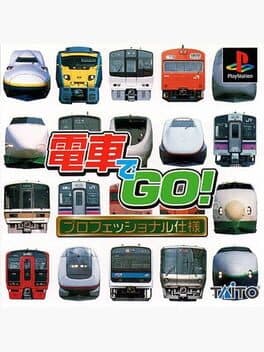
Densha de GO! Professional
Taito GM R&D Sect. #21999
A train simulation game by Taito featuring the lines from Densha de Go! 1 and 2, as well as some Kantou area portions of the Toukaidou Line. Some of the strictness of the previous games was reduced through a number of features, including the addition of a panel at left which allowed the user to see a map of the upcoming track segment, including showing speed limits, which greatly reduced the required amount of track memorization, and allowed the player more time to react. The overall reduction of strictness in the game reflected Taito's shift in emphasis from arcade to home-play versions as time went on.
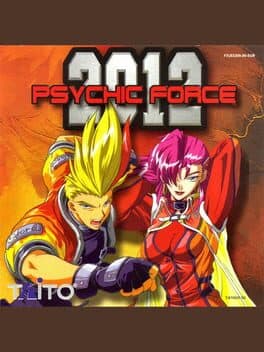
Psychic Force 2012
Taito1998
Psychic Force 2012, the sequel to Psychic Force, is a one-on-one fighting game with a twist. The matches take place inside a giant floating cube. You are able to fly, using your psychic abilities, around a 3D arena with six walls. Each of the ten available characters, Might, Regina, Wendy, Emilio, Setsuna, Patty, Gudeath, Genshin, Carlo, and Gates, are controlled with three buttons: guard, weak attack and strong attack. The effect varies with the distance. Next to the regular life meter, there is also a power meter. By using special moves, the meter is drained and your moves are limited. It is possible to recharge, and the capacity of the power meter expands when you lose a lot of health. Additionally, each fighter has its own unique moves, energy attacks and a weapon, which they use, mid-flight, to pummel their opponent. There are three main game modes: training, versus and a story mode using static anime-inspired images and in-engine cut scenes to tell the story. The story centers around two groups of psychics with differing ideals about co-existence with humans. In the middle of this are several neutral psychics with ties to members in either group.
Densha de GO!
Taito GM R&D Sect. #21997
Densha de GO! is a 1997 train simulator arcade game developed and published by Taito in Japan. Players are tasked with driving a train, adhering to the schedule and obeying signals and speed restrictions. It features real-world train lines from Japan, including the Yamanote Line and Keihin-Tohoku Line. The game was ported to the PC, Sega Saturn, and PlayStation. The concept for Densha de Go! was inspired by designer Akira Saito's personal fascination with Japanese train lines and railroads. He wanted to create a game that allowed players to familiarize themselves with driving a train. The controls were his primary focus as he wanted them to be accurate and responsive, and to mimic the controls of a real train—his father worked for the Kyoto City Transportation Bureau Facilities Division, which made this easier to accomplish. Saito included real-world railroads and trains to appeal towards other railroad enthusiasts, thinking that it could also attract more "ordinary" players for its realistic, familiar theme. As arcades at the time were dominated primarily by racing and fighting games, he believed its unique concept could make it stand out. Densha de Go! is among Taito's most successful games, preceded only by Space Invaders. The PlayStation version sold over one million copies. The game was well-received by critics for its controls, attention to detail, and unique concept. Some felt that its home releases lacked enough content and had poor visuals. It was followed by a long series of sequels, spin-offs, and reimaginings, beginning with Densha de Go! 2 in 1999.