-
Average rating
13
Games
0
Votes cast
Heartbeat
Shipped Titles
Games (13)
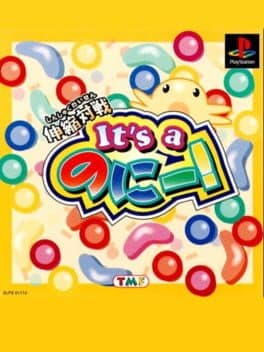
Shinshuku Taisen: It's a Noni!
1997
Shinshuku Taisen It's a Nonii! is a puzzle game. The game features four differents playable characters that the player can choose at the beginning of the game which one he will use during the game.
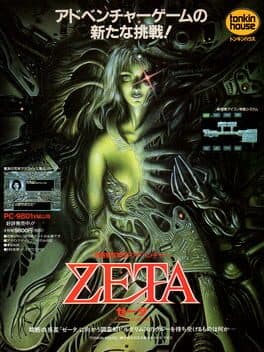
Zeta
Will1991
Zeta is an adventure game with light dungeon crawling elements. The star ship Pilgrims is sent to investigate an accident on the planet Z (or Zeta-3) in the Zeta star system, and find out what happened to the first investigation team sent earlier, and to search for the lost transport ship Sanctuary.
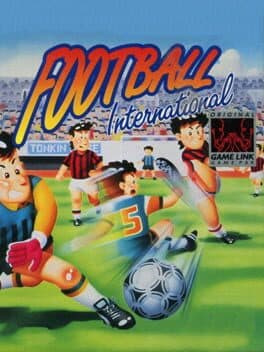
Football International
TOSE Co., Ltd.1991
Football International is a top-down soccer game with eight national teams to choose from. The player can either participate in an exhibition match or in a knockout championship. Other options which can be set is the time a half-time lasts and if the own team uses a more defensive or offensive lineup. The game itself consists of the usual dribbling, passing and shooting. Normally the camera closely follows the ball carrier, but when a wide shot is performed it zooms out and shows the whole playfield.
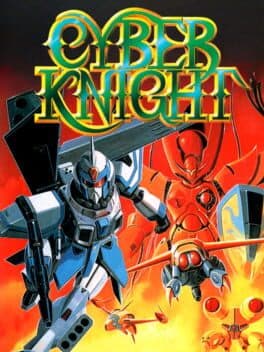
Cyber Knight
Compile1990
Cyber Knight is an RPG with a science-fiction theme of being lost in an alien galaxy. The game takes place in a top-down view for movement on planets and areas, a side-view for combat sequences and a first person menu system when aboard the Swordfish starship. The Swordfish can travel between stars, scanning worlds for information. If the ship is able to land on a planet, three crew members piloting three Modules (giant robots) can be selected to debark and explore the planet. Many planets will have towns or people living on them which can be talked to in order to uncover information. Different quests are assigned in order to find the items necessary to progress. There is no system of currency or buying items. Instead, many defeated Berserkers leave behind "NeoParts", which can be brought back to the Swordfish's lab. Analysis of these Neo parts unlocks enhances statistics (endurance, agility, accuracy, etc) for the Modules and new weapons for them to carry. The six modules are unique in statistics, and also the six pilots each carry different skills. Combat takes place in turn-based combat on a 6x6 squares field. Seen from the side view, the three modules can be positioned in relation to enemies in order to attack, using a variety of melee and long-ranged weaponry. Ammunition is unlimited, but each module also carries a number of "options" that are consumable attacks. Each Module has two sets of hitpoints: one for the pilot and one for the module itself. If either one of these reaches zero, the module is destroyed. In order to heal, the party carries 10 each of repair kits and first aid kits, which must when not in combat. These kits, as well as options and defeated pilots or modules can be restored by returning to the Swordfish.
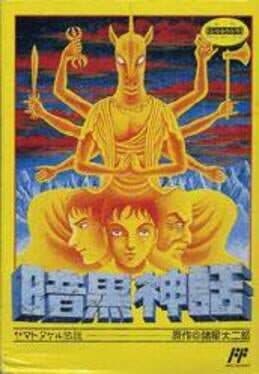
Ankoku Shinwa: Yamato Takeru Densetsu
ZAP Corporation1989
The game is based on old Japanese legends about Yamato Takeru, a legendary hero of ancient Japan. The game starts when Yamato Takeru is a thirteen-year-old boy. His father was killed under mysterious circumstances. Searching his things, the boy found a postcard that gave him his first clue for the investigation. From that moment, his adventure begins.
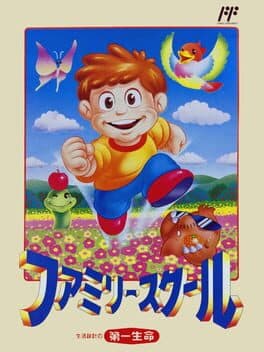
Family School
Compile1987
Family School is an action transport puzzle game, where your task is to water plants in some kind of garden so that fruit grows. Once the fruit has grown, you have to push the right fruit into the right basket at the edge of the playing field. Watch out for animals which will try to harm you. The game can be played with at least two players simultaneously. The game was apparently given as a free gift by 第一生命 (Dai-ichi life), an insurance company, to people who purchased policies from them.
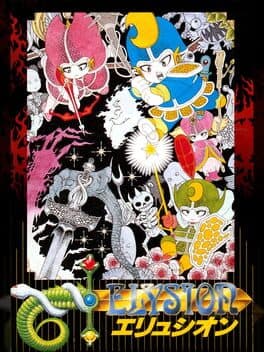
Elysion
SystemSoft1986
Elysion is a traditional 8-bit JRPG that incorporates elements from various RPG games. While it starts with the player talking to the local King for exposition, similar to other traditional JRPGs, it takes inspiration from different games within the RPG genre. It shares similarities with the first Dragon Quest in appearance, offers the choice of multiple protagonists like in Final Fantasy, features real-time combat without screen transitions like Hydlide or Ys, and adopts the strategy of enemies only moving when the player does, as seen in strategic Roguelike dungeon crawlers like the Mystery Dungeon series. The main objective of the game is to defeat the evil demon Baal. However, before facing this final challenge, the player character is tested by the King. They are tasked with entering the dungeon beneath the castle and retrieving important quest items. Once they successfully complete this extensive dungeon, the protagonist is recognized as the Hero of God and can embark on a journey to defeat Baal. This entails exploring the continent to find magical scrolls and eventually acquiring special God-like equipment. The term "Elysion" refers to the Elysian Fields, an ancient Roman underworld reserved for honorable souls who died in battle.
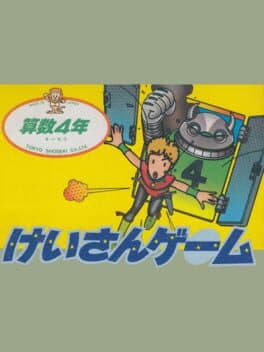
Keisan Game: Sansuu 4-nen
1986
An educational math game for Japanese students. The fourth in a series of five games released in 1986 by magazine giant Tokyo Shoseki.
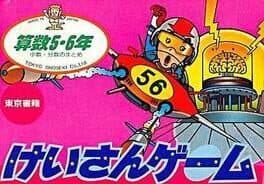
Keisan Game: Sansuu 5+6-nen
1986
An educational math game for older Japanese students. The last in a series of five games released in 1986 by magazine giant Tokyo Shoseki.
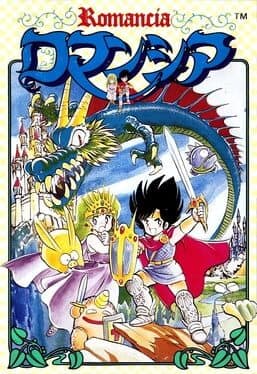
Romancia: Dragon Slayer Jr.
Nihon Falcom1986
This game exists in two editions, one for the MSX1 and one for the MSX2 with better graphics. In Romancia: Dragon Slayer Jr., you are a young warrior whom the king sends on a mission to rescue a lost princess. You must leave the town and enter the dreadful monster-infested catacombs in order to complete your quest. The game is a departure from Dragon Slayer RPG-oriented gameplay style. It tends more towards medieval-themed platformer action. The hero has hit points, can buy items and weapons, use magic, and stay in inns to recover health. However, instead of receiving experience points and becoming stronger, you simply must attack quicker (by bumping into your opponent on platform levels) and jump higher.
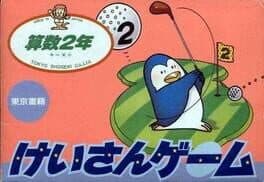
Keisan Game: Sansuu 2-nen
1986
An educational math game for young Japanese students. The second in a series of five games released in 1986 by magazine giant Tokyo Shoseki.
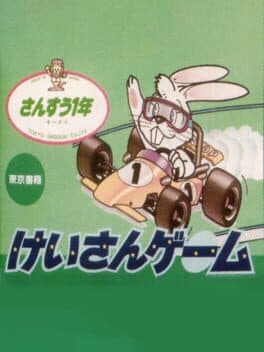
Keisan Game: Sansuu 1-nen
Tokyo Shoseki Co., Ltd.1986
An educational math game for young Japanese students. The first in a series of five games released in 1986 by magazine giant Tokyo Shoseki.
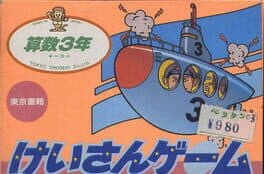
Keisan Game: Sansuu 3-nen
1986
An educational math game for young Japanese students. The third in a series of five games released in 1986 by magazine giant Tokyo Shoseki.