-
Average rating
10
Games
0
Votes cast
Heartbeat
Shipped Titles
Games (10)
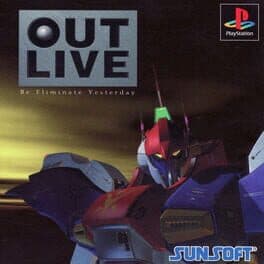
Out Live: Be Eliminate Yesterday
SUNSOFT1997
Out Live: Be Eliminate Yesterday takes place in a far future after a war of 100 years that finally finished and some ancient ruins had been discovered. The game begins when the player's character is being arrested by members of the imperial army and receive the mission of helping Alice, the daughter of the general of the Imperial Army, since she is a member of the archeologic team that is studying the ruins. They will begin to try to find clues from the past that will help them to discover the mystery that happens in the present. The gameplay of the game is a first person robot action game, similar to other first person shooters, a lot repetitive special with the lack of different enemies and backgrounds.
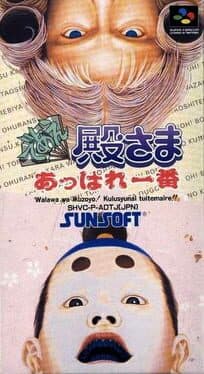
Deae Tonosama: Appare Ichiban
Tokyo Design Center1995
The Earth is in danger, the Tokugawa shogunate has been overrun by an extra-terrestrial evil force, and only two morons have the power to save the day. Play as either a daft French nobleman or an idiot Japanese lord and crush your foes with style. East meets west in this quirky but entertaining action game that unfolds across the world — and beyond!
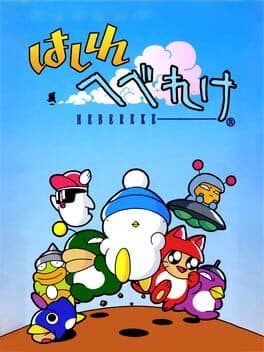
Hashire Hebereke
SUNSOFT1994
An isometric on-foot racing game featuring SunSoft's Hebereke/Ufouria characters.
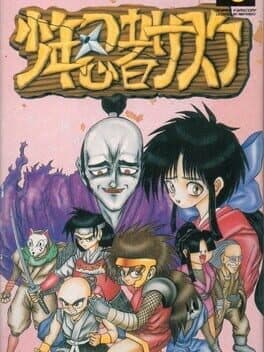
Shounen Ninja Sasuke
Tokyo Design Center1994
The young ninja Sasuke and his monk friend Chin-nan embark on a quest to rescue a daughter of a local lord by fighting his way through hordes of masked bandits led by a mysterious warlord.
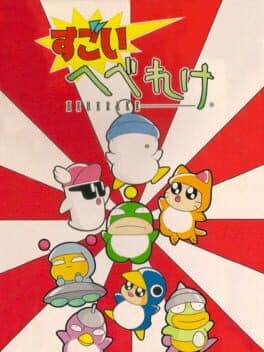
Amazing Hebereke
SUNSOFT1994
Sugoi Hebereke is a 1994 fighting game developed and published by Sunsoft exclusively in Japan for the Super Famicom on March 11, 1994. It is a spin-off of the Hebereke series, as well as Sunsoft's first attempt in the genre before they became better known for the 1995 Galaxy Fight: Universal Warriors, the 1996 Waku Waku 7, and the 1998 Astra Super Stars. Sugoi Hebereke is Bird's Eye-viewed like Vectorbeam's 1979 arcade game Warrior, but with brawling elements similar to the ones found in Atari Games' 1990 Pit-Fighter arcade, Technōs Japan's 1992 Nekketsu Kakutō Densetsu, Namco's 1994 The Outfoxies, and Nintendo's 1999 Super Smash Bros. There are two play modes in the game: story mode and VS. mode. In VS. mode, up to four players can play as the cast of the Hebereke series simultaneously when using an SNES Multitap. The object of the game is to knock out (KO) the other three opponents. Each stage is square shaped and has its own environmental hazards and moving objects.
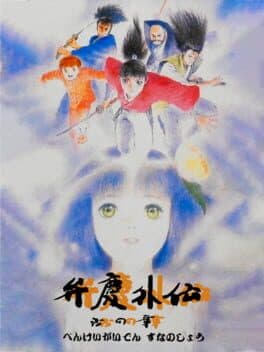
Benkei Gaiden: Suna no Shou
Tokyo Design Center1992
Benkei Gaiden: Suna no Shou is a Japanese RPG set in a version of Ancient Japan filled with monsters and youkai. The game is a traditional top-down turn-based RPG in the vein of Dragon Quest. The player is able to choose between a male or a female avatar and name them, recruiting other characters as the game progresses.
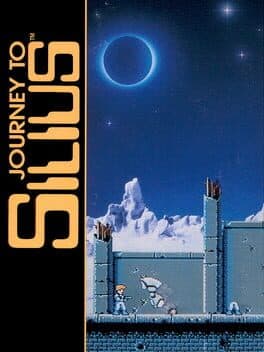
Journey to Silius
Tokyo Design Center1990
Journey to Silius, known in Japan as RAF World, is a side-scrolling run and gun video game developed by Tokai Engineering and published by Sunsoft for the Nintendo Entertainment System in 1990. Journey to Silius was originally based on the 1984 film The Terminator, but the licensing rights to the film were lost during development. As a result, the graphics and storyline were altered to accommodate this change, but remnants of the earlier version still remain in the game. For example, the final boss has a striking resemblance to the titular terminator in the film.
Benkei Gaiden
Tokyo Design Center1989
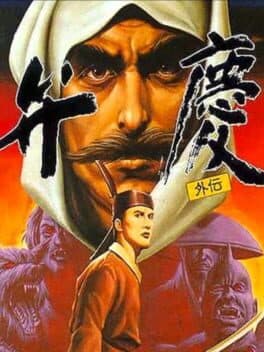
Set in a sort of old Japan with fantasy overtones, Benkei Gaiden is a standard overhead RPG. Battle scenes are random and turn based (with quite a nice bit of music), and the game relies very heavily on Japanese text based menu systems.
Nankin no Adventure
Tokyo Design Center1988
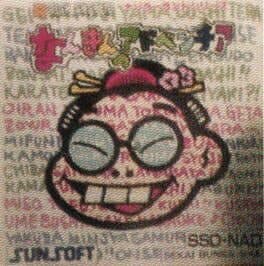
A Famicom Disk System adventure game developed by Sunsoft in 1988. Nankin no Adventure is a Famicom Disk System adventure game from SunSoft that plays much like every other Famicom adventure game of the era. The player selects commands from a menu in order to talk to NPCs and solve puzzles which will eventually allow them to progress. As with many of these Famicom text adventures there is a linear critical path that the player must follow in order to move to new areas and reach the next point of the story. Nankin refers to a semi-obscure manga artist of the same name who was behind much of the art design of the game. Though the game doesn't include any of his pre-existing licenses, his distinctive art style is present throughout. This approach might be equated to Akira Toriyama's artistic involvement with the Dragon Quest and Chrono games.
Nazoler Land Special!! Quiz-Ou wo Ikuse
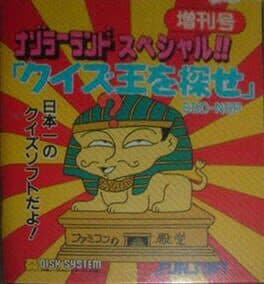
Tokyo Design Center1988
A spin-off of Sunsoft's Nazoler Land mini-game collections for the Famicom Disk System, this special version is a trivia game. Like the other Nazoler Land games, it was never released outside of Japan. Nazoler Land Special: Quiz-ou wo Ikuse (or "Search for the Quiz Masters") is a trivia game in which the player must answer trivia questions from eight different opponents across Japan in order to win the game. Because the game was never released outside of Japan, it needs a considerable amount of Japanese knowledge to play, both to understand the questions and to be able to answer them. It is not part of the core Nazoler Land series of games, which are all mini-game compilations.