-
Average rating
13
Games
0
Votes cast
Heartbeat
Shipped Titles
Games (13)
Minakata Hakudou Toujou
Thinking Rabbit1997
Minakata Hakudou Toujou is an Adventure game, developed by Thinking Rabbit and published by Atlus, which was released in Japan in 1997.
Kyuukyoku no Sokoban
Thinking Rabbit1996
Kyuukyoku no Soukoban - 3D Puzzle & Cinema is the first Playstation game of the classic puzzler based on the gaffer in charge of a warehouse needing to get the stock correctly stashed. Unfortunately the stock can only be pushed around requiring a bit of lateral thinking to get the warehouse in order.
Record of Lodoss War
Thinking Rabbit1995
This game is a prequel to the popular anime series, which draw heavily from the look and feel of Dungeons & Dragons. Choose from one of four adventures to play through in this strategy RPG!
Maten Densetsu: Senritsu no Ooparts
Thinking Rabbit1995
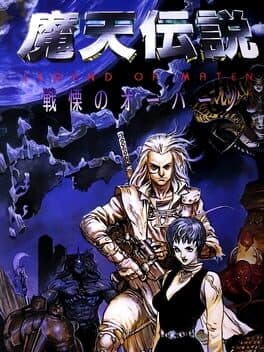
Maten Densetsu: Senritsu no Ooparts is a role-playing video game for the Super Famicom. The game takes place in a floating post-apocalyptic Japan. The player emerges in the middle of Tokyo's Akihabara district where the buildings have turned into ruins. Countless demons have managed to destroy cities everywhere and the people are all hiding underground. Getting home to the Shinjuku district will allow the player to uncover more of the plot. Mysterious artificats called ooparts (out-of-place artifacts) help to play a role in this invasion by a mysterious civilization. Players must choose between five characters; each one having different strengths and limitations. The game is played from the first-person perspective and the battles are extremely random. The dungeons in the game are claustrophobic and should remind some games of Shin Megami Tensei. Players do not gain levels after earning so many experience points. Instead, they gain energy points to boost their statistics.
Super Sokoban
Thinking Rabbit1993
Super Sokoban (or Soukoban) is a puzzle game in which the player must push crates around a maze to their designated storage area, ensuring they do not accidentally push a crate into a position where it cannot be recovered. Thinking Rabbit created the original game in 1982 on home computers, and Super Sokoban is the first Super Famicom game to follow the same blueprint. The intro establishes that the eponymous Sokoban, or warehouse worker, must perform enough box-pushing puzzles to earn enough cash for a flashy new car so that he might finally impress the girl of his dreams. An added wrinkle is that each stage has a fixed move limit, and so the player must not only push the boxes in the right order but do so with maximum efficiency. The game was not released outside of Japan.
Boxy Boy
Thinking Rabbit1990
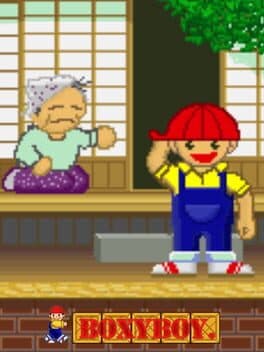
The player controls the character "Rabi-Kun", and must push various crates over the yellow dots in order to complete the game's fifty-five stages (divided into five "worlds") in that stage's time limit. Rabi-Kun can only push the crates, and he cannot pull them; and should one of the crates reach an unmoveable position, the player may simply push the "reverse" button to undo one of the player's moves. Should Rabi-Kun be trapped in an area and cannot get out, the player must push the "reset" button on the control panel, however this will not reset the timer; and should that timer reach zero, the game will be immediately be over.
Boxyboy
Thinking Rabbit1990
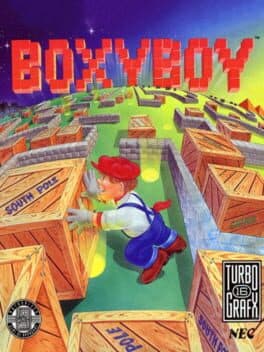
The player controls a worker in a warehouse. Gameplay is simple: the goal of each level is to push the crates onto specific squares marked with a yellow dot. It's very easy to get boxes trapped, so the player must carefully consider the route. Boxyboy also features a level editor for players to create and play their own levels. In Japan, Boxyboy is known as Sokoban World and is an official part of the Sokoban series.
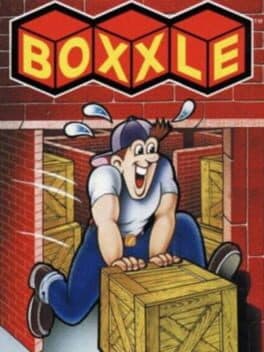
Boxxle
Thinking Rabbit1989
The player must maneuver boxes in a warehouse in order to make enough money to woo his desired girlfriend.
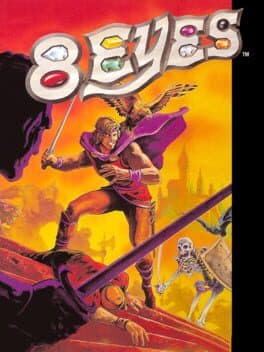
8 Eyes
Thinking Rabbit1988
After eons of chaos, mankind has finally emerged from the ruin brought on by nuclear war. The world has flourished once again under the guidance of the Great King, who has harnessed the power of the 8 Eyes to rebuild the planet.
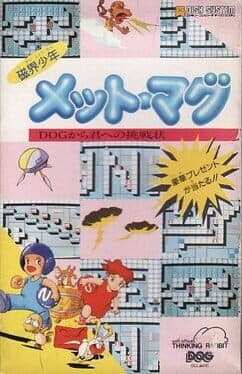
Jikai Shounen Mettomag
Thinking Rabbit1987
The player must solve 100 puzzles in the form of rooms that contain magnetized squares. The player assumes either a North or South magnet polarity as he or she collects all of the polarity orbs in each room before attempting to reach the exit. The polarity of the player affects how he or she interacts with the magnetized squares which can enable or hinder the player in his or her progress through the level.

Casablanca ni Ai wo: Satsujinsha wa Jikuu o Koete
Thinking Rabbit1986
In spite of its title, the game has little to do with the famous movie Casablanca beyond a few loose references. It is a text adventure with graphics, in which the player types text commands to interact with the environment. Several useful commands (including Look, Search, Take and Knock) can be accessed directly through function keys. Limited navigation between screens can be performed with directional arrows.
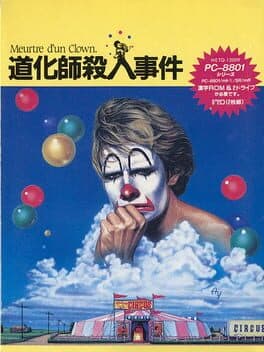
Doukeshi Satsujin Jiken
Thinking Rabbit1985
Doukeshi Satsujin Jiken is a graphic text adventure game in which you take the role of a skilled detective from Scotland Yard who must explore the circus and nearby town searching for evidence and questioning suspects to solve this case. The commands can be entered in both English and Japanese.
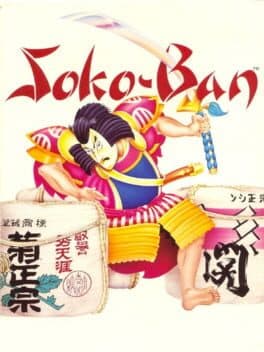
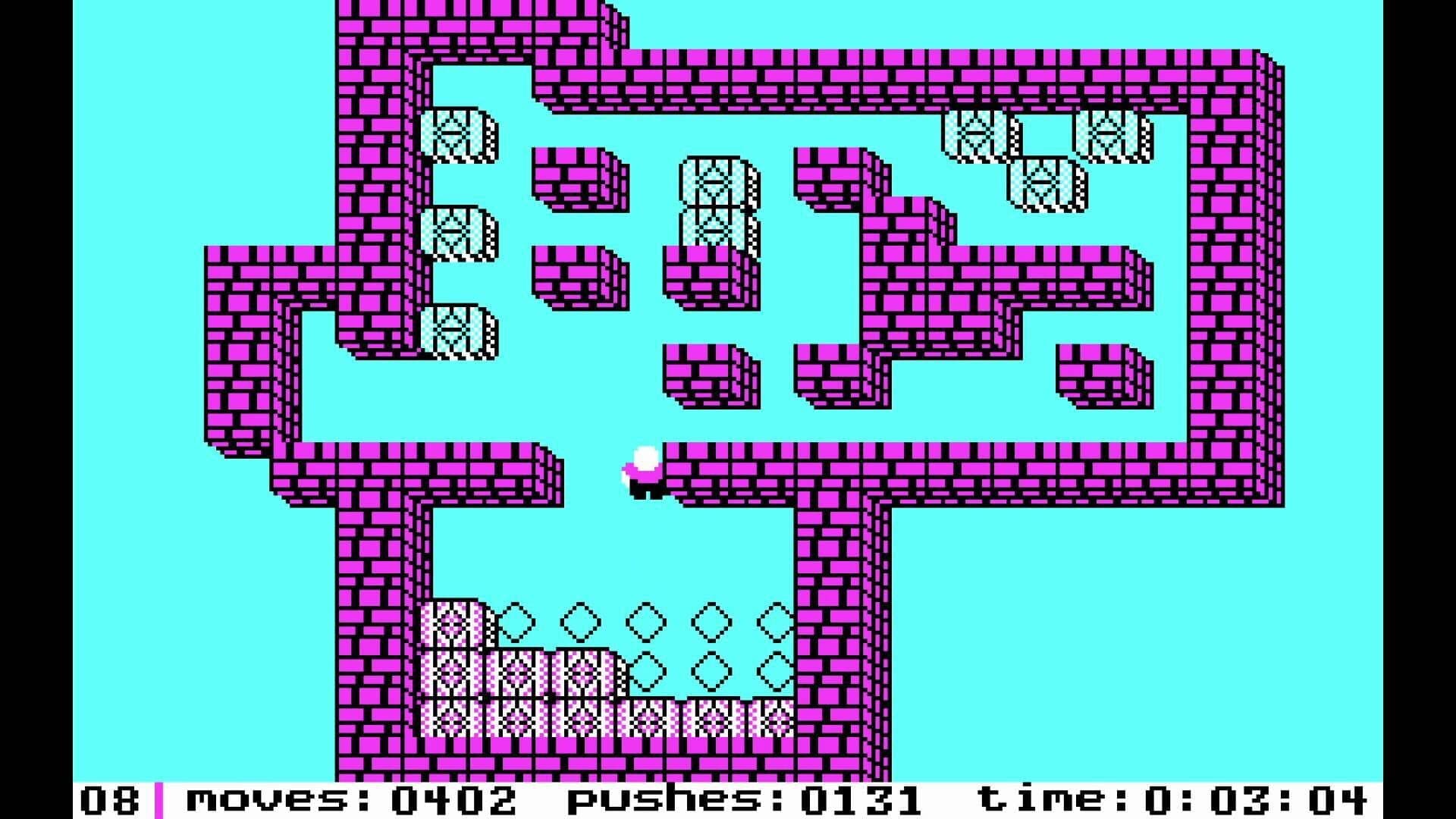
Soko-Ban
Thinking Rabbit1982
Sokoban ("warehouse keeper") is a is a classic puzzle game created in 1981 by Hiroyuki Imabayashi, and published in 1982 by Thinking Rabbit, a software house based in Takarazuka, Japan. In 1984 the ASCII Corporation published a version produced by Khaled Bentebal. It was the basis of numerous clones in the later years. It is set in a warehouse. On each level, the player must push crates (from square to square) to get them onto designated spots; once each crate is on a marked spot, the level is complete. Crates can only be pushed one at a time (so two crates next to each other cannot be pushed together), and cannot be pulled--so it's possible to get a crate stuck in a corner, where it cannot be retrieved! By the last levels, you must plan 40 steps in advance.