-
Average rating
18
Games
0
Votes cast
Heartbeat
Shipped Titles
Games (18)
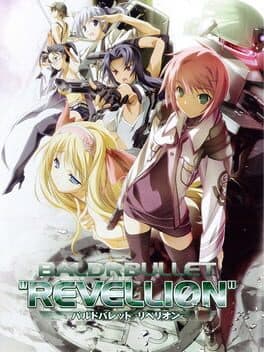
Baldr Bullet
GIGA Team Baldrhead2000
A Action / VN game by Giga's Team Baldrhead, prequel to Baldrhead and Baldr Fist.
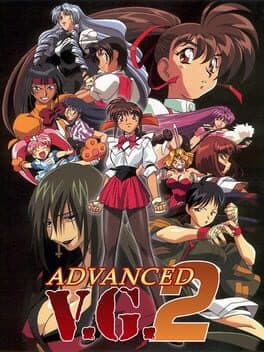
Advanced V.G. 2
Technical Group Laboratory, Inc.1998
Advanced Variable Geo 2 is one of several titles in the long-running all-girl fighting game series. Using one of 12 characters, including nine returning from the previous title, the player can choose from a variety mode, including a standard arcade mode, a story mode, a 2-player versus mode, and a time attack mode. There is also a practice mode, a wide variety of game options, and play statistics tracking.
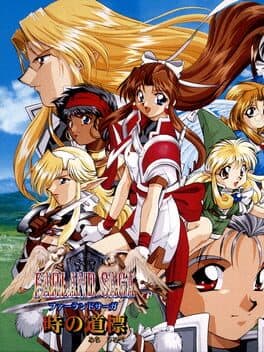
Farland Saga: Toki no Michishirube
Technical Group Laboratory, Inc.1997
Toki no Michishirube is a direct sequel to the first Farland Saga game. It is an anime-style strategy RPG which consists mainly of large strategic battles, taking place on isometric battle fields.
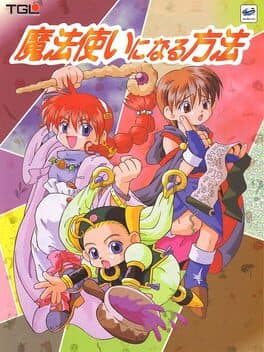
Mahoutsukai ni Naru Houhou
Technical Group Laboratory, Inc.1997
Mahoutsukai ni Naru Houhou is a Simulation/Action Role-playing game taking place on an island. Players take the role of a wizard's apprentice who's aspiring to become a mage and players are given 3 girls to choose from (Lime, Berry or Nut). To become a mage, players must study how they can make scrolls and collect the ingredients necessary to make them. The game features a first person perspective while players are at home and switches to a top-down 2D view when they go outside (The Saturn and Playstation releases render areas in 3D). There are 102 days in a year in this game and 5 seasons during which different materials can be found on the island. The game has 70 kinds of scrolls and around 150 kinds of materials to collect.
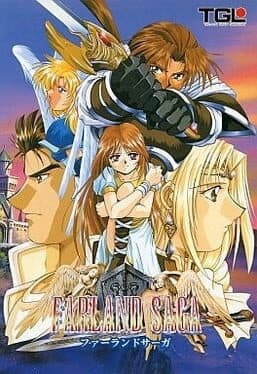
Farland Saga
Technical Group Laboratory, Inc.1996
An alternative retelling of the original story on PC98. Though instead of an Isometric SRPG it uses a "top down" view.
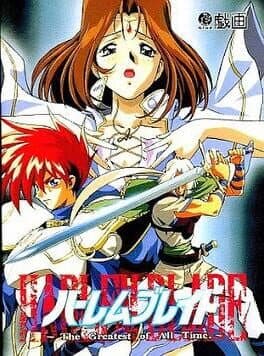
Harlem Blade: The Greatest of All Time
Giga1996
Cain is a perverted young boy who is supposed to be a warrior. His ancestors killed an evil demon called Gargantuan. Cain's brother, Abel, wants him to take his role as a warrior seriously, but Cain is more interested in ogling the village ladies. Things take a different turn when Abel disappears and Cain is visited in his dreams by The Goddess of Time. She tells Cain that Gargantuan has come back and that it's up to him to stop it. What follows as a very long journey for Cain to save the world from Gargantuan and develop a harem of beautiful women, though not necessarily in that order.
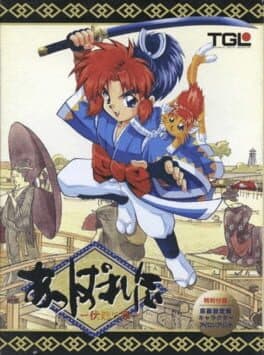
Appare-den: Fukuryuu no Shou
Technical Group Laboratory, Inc.1995
Appare-den: Fukuryuu no Shou plays like a traditional top-down Japanese RPG, with world map traveling, random enemies, and turn-based combat. The attacks in combat are animated; after the player has assigned command to all the characters, the animation shows the entire party attack at once. There are also special techniques the heroes can learn and execute in battles.
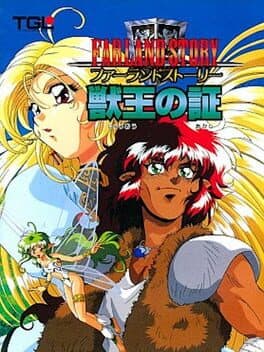
Farland Story: Juuou no Akashi
Technical Group Laboratory, Inc.1995
The seventh entry in the Farland Story series.
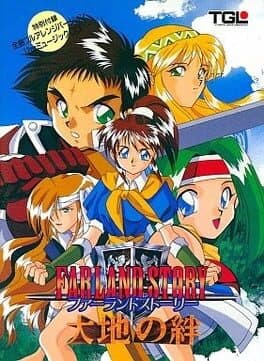
Farland Story: Daichi no Kizuna
Technical Group Laboratory, Inc.1995
This Farland Story game (chronologically the fifth in the main series) tells a story which is not directly connected to the adventures of Arc and his friends (told in the first three games). In this game, you control Kushna, the 17-year-old princess of Sardis. Two important people wish to marry her: the young Shacliff, prince of the neighbor kingdom Rulphan, and the count Geruda. However, the princess feels she is too young to marry anybody, and escapes the castle, dreaming to find a quiet place where she could practice martial arts. The situation changes somewhat when she accidentally meets prince Shacliff himself and discovers he is in fact quite a nice fellow. And meanwhile, horde of monsters invaded the castle, and there are rumors about a rebellion... Although it has a completely different story line, this Farland Story game plays and feels exactly like its predecessors. Once again, you control a party which you can freely move on the battle terrain in turn-based mode. You first assign commands to all your party members, and then wait while the enemies execute their turns. Both you and the enemy automatically counter-attack whenever the attacker is also within the weapon's range. You gain experience points needed for leveling up directly after each attack.
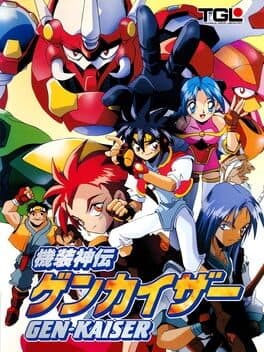
Kisou Shinden: Gen-Kaiser
Technical Group Laboratory, Inc.1995
A scientist named Zen Shiratori was investigating the ruins of an ancient Mayan temple, convinced that the proof of the existence of a parallel world lies there. He found a strange glowing orb, which was later accidentally discover by his fourteen-year-old son Gen, who was rummaging through Dad's collection. As a result, Gen was indeed teleported into a parallel world. There, he meets a young girl named Rinna, who tells him that he is, in fact, "Gen-Kaiser", the much-expected savior of their world. Piloting giant combat robots, the two must protect the innocents of that world and defeat evil. Kisō Shinden: Gen-Kaiser is a turn-based strategy/RPG hybrid (what is commonly called in Japan a "tactical RPG"). There is overworld navigation, and the player can also visit and explore cities; however, these features are rather rudimentary, and hostile areas cannot be explored in real time and are presented as large-scale strategic battles. The characters move in turns over the top-down battlefield and attack when enemies are in range. Animations are displayed for each attack, and experience points are awarded for successful elimination of an enemy.
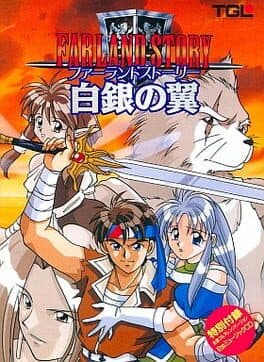
Farland Story: Shirogane no Tsubasa
Technical Group Laboratory, Inc.1994
Chronologically the fourth Farland Story game, "Shirogane no Tsubasa" makes a fresh start story-wise, bring the first Farland Story not to deal with the hero Arc and his friends. In this game, you follow the destiny of a rebel group, who had to flee from the evil despot Pepper. Led by the cat-man Darland and the fugitive Phir, the rebels must overcome all possible obstacles in order to put an end to the evil reign and to restore peace in the land. Although the game has a different story, it still looks and plays more or less the same way as the first three Farland Story games. The game consists of strategic battles, during which you navigate your party members in turn-based mode over the map, attacking enemies when they are in range, and casting spells. Various type of terrain influences your attacks. For example, if you position your character on a square with a castle, his/her HP will be healed.
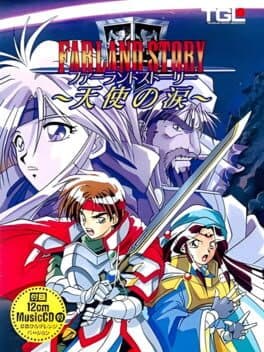
Farland Story: Tenshi no Namida
TGL1994
Farland Story: Tenshi no Namida is a sequel to Farland Story II, released in mid 1994. The third in the row of Farland Story games, this title looks and plays very similarly to the first two games. You navigate your party over the world map in turn-based fashion. After you have assigned commands to your party members, it is the enemies' turn. You can attack physically when enemies are in range of your weapon, or cast spells - each character in your party belongs to a certain class and specializes in different type of combat. You gain experience points directly from hitting an enemy, even while counter-attacking, and can therefore level up in the middle of a battle.
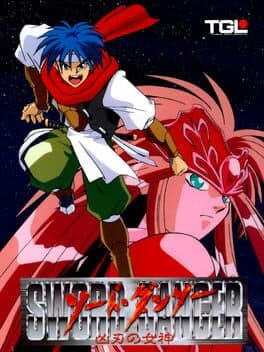
Sword Dancer: Kyoujin no Megami
Technical Group Laboratory, Inc.1994
Goddess of the Evil Blade is a direct sequel to the first Sword Dancer. The story continues to chronicle the adventures of the "sword dancer" Hien and his mentor, the warrior Tetsuta. They have succeeded in rescuing the "white dragon sorceress" Setsuna from the clutches of the demons. However, greater challenges await the three. Setsuna's life might be in danger, and the watchful eye of the evil Black Dragon continues to follow the heroes. The adherents of the benevolent White Dragon have to prepare for the decisive battle against the forces of evil... The game plays very similarly to its predecessor. The overall structure corresponds to that of a traditional Japanese RPG: the player navigates the heroes through top-down environments, buying supplies in town, advancing the narrative in a linear way, and fighting enemies to gain experience and level up automatically. Like in the first game, the battles are action sequences that take place in small side-scrolling areas, similarly to fighting games. However, unlike in the predecessor, the enemies are visibly walking on the screen. The fighting game element is more developed in the second game; two additional modes (beside the main story mode) are accessible from the main menu: "monster attack" and "vs. mode". Monster attack mode allows the player to select one of the game's heroes and fight increasingly stronger monsters; "vs. mode" features two-player competition.
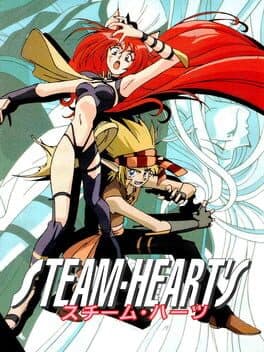
Steam-Heart's
Giga1994
Steam Heart's is a 2D sci-fi vertically scrolling shoot-em-up with erotic content. The game takes place in the far future, on an alien planet dominated by seven elf-like or catgirl princesses that have fallen under the spell of a unique virus that has driven them mad and threatens to destroy the planet if all the rulers declare all-out war. Only Blondia Varady (nicknamed "Blow") and his sister Fallandia have been spared from the disease and must pilot their fighter ships in order to penetrate deep into the domain of each princess, destroy their war machines, and administer the antidote. Fortunately for Blow, the antidote has been synthesized into his reproductive organ, so that means there is only one way to inoculate the girls.... The player controls the fighter ship through vertically scrolling stages, trying to destroy every ship that crosses its path and reach the end boss. The ship has a primary weapon that can be constantly upgraded by collecting power-ups, and a secondary slot for all sorts of collectible weapons that can be picked up in mid-air. The game features 2P-cooperative gameplay and cutscenes made of still images that explain the plot and depict the protagonist's encounters with each princess.
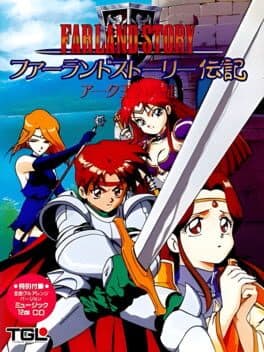
Farland Story Denki: Arc Ou no Ensei
TGL1994
This is a sequel to the first Farland Story game, released in early 1994. The game looks very similarly to its predecessor. The entire gameplay is dedicated to strategic battles, during which you navigate your large party in turn-based mode over the world map. Once you have issued commands to all your party members, it's the enemies' turn to act. You can attack enemies when they are in range of your weapon, or cast healing and offensive area spells. Your characters level up, can use items, and equip a variety of weapons and armor pieces.
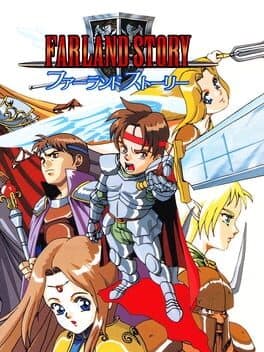
Farland Story
TGL1993
Farland Story is the first in the row of successful Japanese strategy RPG games released in 1993. Farland Story consists entirely of battles (save cut scenes and the ability to shop if you are near a town after a battle). During battles, you move Arc and his party over the terrain, and attack when there are enemies in range. The party consists of different classes - knights attack with swords, archers specialize in long-ranged combat, priestesses heal, etc. Every attack leads to a counter-attack, from the enemy's side as well as from yours. You gain experience points for every attack, and can level up in the middle of a battle.
Edge
Technical Group Laboratory, Inc.1993
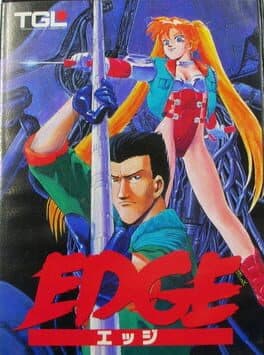
In the 22nd century, a powerful magnetic wave obliterated half of Eurasia. Anarchy ensued, the traditional system of government was abolished, and the continent soon turned into a no-man's-land. The power shifted towards huge corporations, which controlled the construction of space stations and ensured living conditions on the Earth. Two oligarchs were the most powerful ones: Phatty in Hong-Kong, and Tenkai in Tokyo. One fine day, the expert martial artist Kikumaru Sakakibara is visited by Rim, a cute-looking, yet deadly fighter. She tells him that Tenkai has stolen something very valuable from Phatty, and introduces Kikumaru to a group of fighters who intend to bring the oligarchs down. The heroes must now discover the secrets of the powerful corporations and ultimately succeed in their mission... Edge is a side-scrolling brawler. In the beginning, the player can control either Edge or Rim; later, other characters can become protagonists. The characters have various strength and weaknesses and use different weapon (mostly melee) to attack. Most of the game consists of walking in one direction, punching and kicking the enemies who try to stop the hero. It is possible to execute different attacks by combining directional keys, jump, and block enemy attacks. The level typically culminates in a boss fight. The game frequently interrupts the action with dialogue and cutscenes, which drive the story forward.
Sword Dancer Zoukangou
Technical Group Laboratory, Inc.1992
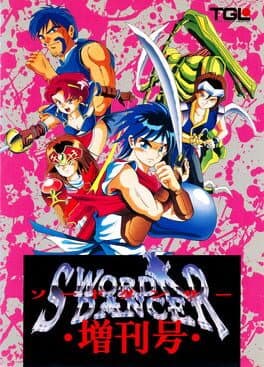
It is said that the country of Suzaku is protected by the spirit of the legendary White Dragon, a mythical benevolent being. A young maiden known as "dragon sorceress" always resides in the temple. Her protectors are young men which are called "sword dancers". One night, the current dragon sorceress, a girl named Setsuna, was attacked by a horrifying monster. Her sword dancer, Hien, tried to save her; but the monster was stronger and flew away with the girl. The young hero swears to bring her back, restoring his honor and the peace in his country.