-
Average rating
17
Games
0
Votes cast
Heartbeat
Shipped Titles
Games (17)
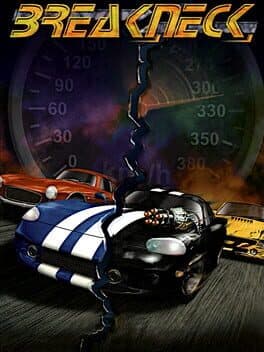
Breakneck
Synetic1998
Breakneck is one part racing simulation, one part car combat game. It was released for the PC in 1998 in Germany, and 2000 in North America. The game features so-called "spine-crushing speed". Your racing opponents are already waiting for you. Take up the challenge, equip your car with weapons and tools and win the races.
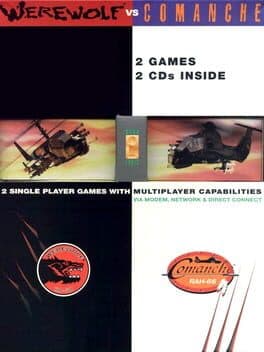
Werewolf vs. Comanche 2.0
NovaLogic1995
The sequel to NovaLogic's Comanche is actually two games in one: Werewolf and Comanche 2.0. Both are action-based helicopter sims very similar to the original Comanche. A notable difference is that in some missions you are allowed to land and refill your helicopter with fuel and ammo. The only real difference between the two games is the helicopter you fly: either the RAH-66 Comanche or the Ka-50 Hokum. There's an option to link both games to play over a network.
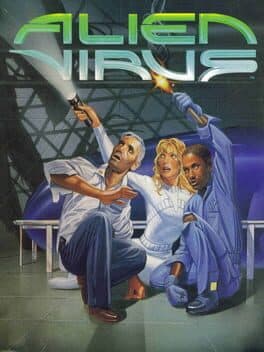
Alien Virus
Trecision S.p.A.1995
The player character, a pilot named Joshua Stone, lands on Station Zeus after a month in hyper space, but finds the space station empty of life.
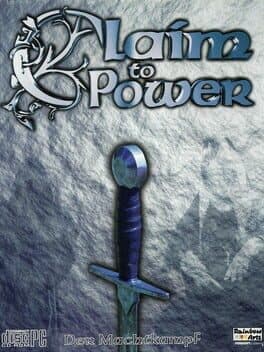
Claim to Power: Der Machtkampf
Rainbow Arts1995
A strategy game, taking place in the Middle Ages, that similar to the classic board game Risk.
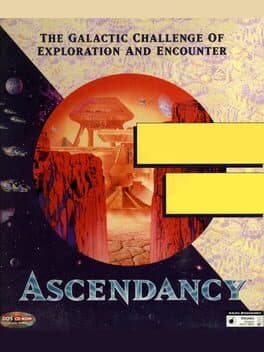
Ascendancy
The Logic Factory1995
Ascendancy is similar to, but nevertheless very different from, Master of Orion. You play one of many races, each with a special ability and special character traits, who set off to explore space, erect colonies (which can each have individual purposes, depending on their raw materials) and engage in battles when you clash with others who have the same goals. Weapons on the ships use power, which has to be supplied somehow. This game introduces many original concepts, such as the Research Tree - a special scientific display in which discoveries are depicted as icons connected by lines to the "parent" technological breakthroughs and "child" ones, similar to the technology advances in Civilization, but presented in a much more visual way.
Hammer of the Gods
Holistic Design1994
Hammer of the Gods is a strategy / tactical combat hybrid released in 1994
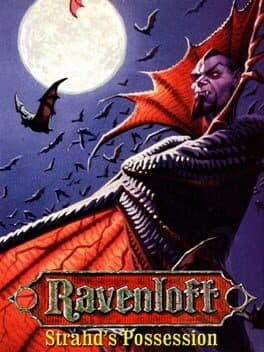
Ravenloft: Strahd's Possession
DreamForge Intertainment1994
Lord Dhelt of Elturel was attacked in his own castle. The mysterious assassin stole the Hole Symbol of Helm, a precious amulet with magical powers. Lord Dhelt asks you to bring the amulet back. But when you kill the assassin and retrieve the amulet, you are suddenly teleported into an unknown area. The way back is blocked by poisonous mist, and there is nothing you can do but explore the hostile surroundings and to solve the mystery of the amulet. Ravenloft: Strahd's Possession is a party-based RPG that utilizes AD&D rules. In the beginning you have a party of two people, using either pre-determined characters, or creating your own ones, picking from traditional AD&D races (human, elf, dwarf, etc.) and classes (fighter, cleric, etc.). Some characters will join your party during the course of the game, allowing maximum of four characters. Combat is done in real time. The 3D environment allows you to move smoothly through the game world, either with arrow keys, or by simply moving the mouse.
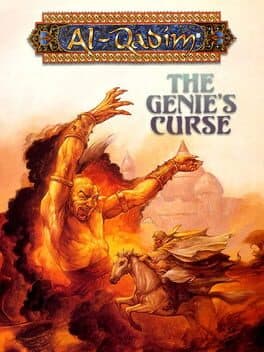
Al-Qadim: The Genie's Curse
Cyberlore Studios1994
Experience the mysterious Al-Qadim game world and prepare for arcade-style combat and role-playing genre - all in the style of Arabian Nights! Diverging from the Gold Box formula, Al-Qadim allows you to experience the immersion and thrill of an AD&D adventure with a condensed role-playing system.

Lollypop
Brain Bug1994
Explore new worlds in Lollypop, the colorful classic action platformer! In this adventure, you’ll play as Lolly, a windup doll that mysteriously comes to life with one goal – to free the world from the evil clutches of Sugarbaby, who is tormenting the land with hordes of quirky enemies.
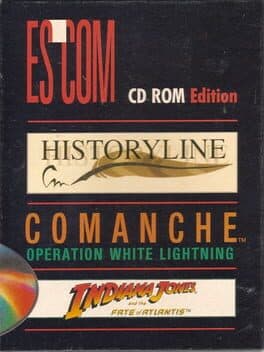
Escom CD ROM Edition
1993
This compilation contains the following 3 games : Comanche: Operation White Lightning Historyline 1914-1918 Indiana Jones and the Fate of Atlantis
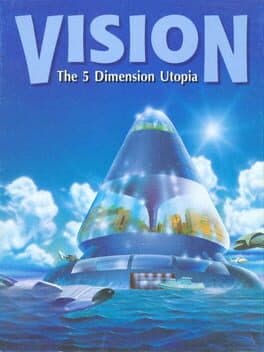
Vision: The 5 Dimension Utopia
Rainbow Arts1992
Vision: The 5th Dimension Utopia is an advertising game for the German building society LBS, who sold it rather cheaply in its branches for 20 DM. The setting is an archaeology floating on the sea. You are a new citizen in this city and you've got to work in order to make money for food and the rent of your suite while staying healthy through sleeping and eating enough. The common way to earn money is playing mostly action-oriented mini-games or doing smaller quest (or rather tasks), which also are part of the plot of the game. The game is played in an ego perspective but without a real 3d engine. The game is rendered in still frames which give the illusion of movement trough the city.
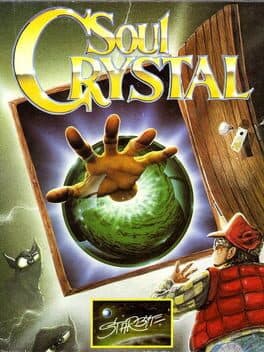
Soul Crystal
Avantgardistic Arts1992
The game is a mixture of a graphical- and text adventure. All actions can be performed by typing or by clicking on the icons.
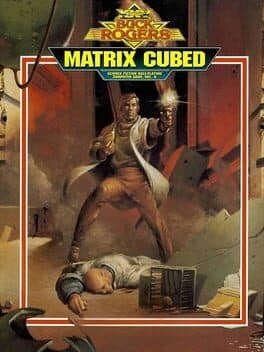
Buck Rogers: Matrix Cubed
Strategic Simulations1992
A great futuristic RPG game from the Strategic Simulations. Under the leadership of the famous Buck Rogers, you team must now embark on a mission of salvation. This adventure takes your team to the furthest reaches of civilized space and far beyond. To save the Earth, you will face many dangers, fight countless enemies or overcome the distrust of mysterious alien cultures. The help can come from the unexpected directions and in unexpected forms, but never stop trust yourself. In the ultimate end, you must outwit to survive this perilous mission.
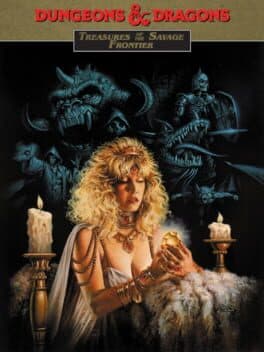
Treasures of the Savage Frontier
Beyond Software1992
As the game starts, your party of adventurers has just won a great victory over evil Zhentarium forces at the ancient city of Ascore. But there is still trouble in the land. Far to the southeast, the dwarfs of Llorkh are fighting for their lives as they launched a rebellion against their Zhentarim masters. The black-cloaked forces of evil are counterattacking fiercely as they strive to hold the last Zhentarim base in the Savage Frontier.

Baby Jo In ''Going Home''
Loriciels1991
Baby Jo in "Going Home" is a side-scrolling platform game. Jo can pick up rattles, which can be tossed at enemies (such as bees, lawnmowers or spiders). Apart from watching out for the baby's declining health (as indicated by an increasingly tearful face), the baby's diaper gets wetter over time, and the baby's thirst increases, too. If the diaper becomes too wet or the baby becomes too thirsty, the player immediately loses a life, so collecting fresh bottles and diapers is important.
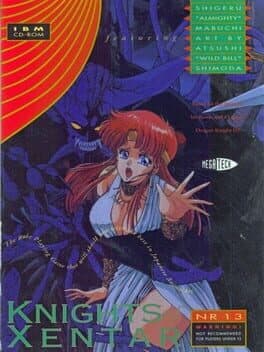
Knights of Xentar
ELF Corporation1991
Dragon Knight III is an eroge role-playing video game released on many Japanese PCs in 1991. It is part of the Dragon Knight series of games created by Japanese game developer ELF, who originally released the game for the NEC PC-9801 computer in 1991, followed by ports for the Sharp X68000 and PC Engine CD platforms. The game is a sequel of Dragon Knight and Dragon Knight II. Its gameplay system is different from that of previous installments of the Dragon Knight series, resembling this of the early Final Fantasy (even more in the PC version) series instead of first-person-view dungeon crawler, and enabling the player to explore the entire world of the game. Some of the characters were renamed in the English and German localized Knights of Xentar release, including the protagonist Takeru's name changed to Desmond.
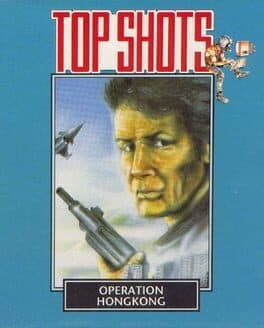
Operation Hongkong
1986
A text adventure game.