-
Average rating
19
Games
0
Votes cast
Heartbeat
Shipped Titles
Games (19)
Let's Make a Soccer Team!
Smilebit2006
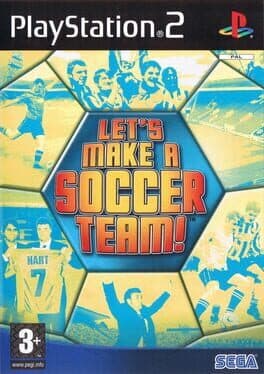
A football/soccer management RPG where you own and operate a European club while trying to become the best club in the world, all the while competing against your local rival, a nasty billionaire businessman who demeans you and your club at every opportunity.
Virtua Striker 4
Smilebit2004
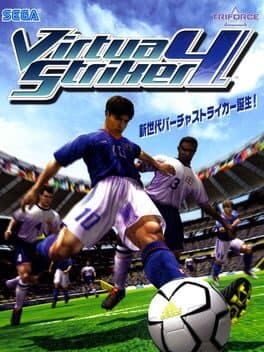
Virtua Striker 4 is a football game released for Triforce hardware and the direct sequel to Virtua Striker 3.
Derby Tsuku 3: Derby-ba wo Tsukurou!
Land Ho!2003
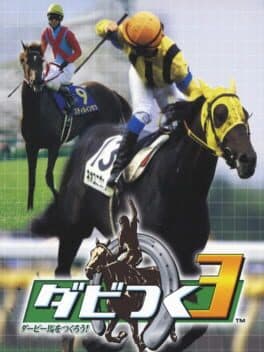
Derby Tsuku 3: Derby-ba wo Tsukurou! is an entry in Sega's Let's Make series for the PlayStation 2 and GameCube. It's a horse racing simulation game.
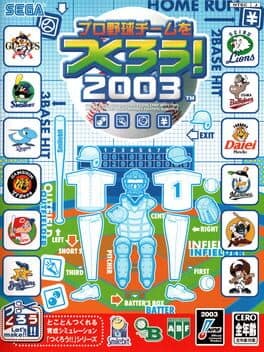
Pro Yakyuu Team wo Tsukurou! 2003
Smilebit2003
A baseball team creation and management/simulation game set in Japan's pro league.
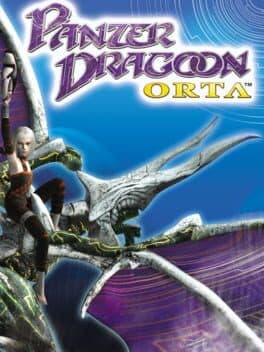
Panzer Dragoon Orta
Smilebit2002
The fourth installment of the Panzer Dragoon series has you playing Orta, a young girl who has been imprisoned by the Empire. Under a wave of attack, the prison camp is broken through by a mysterious dragon, and Orta takes it upon herself to ride the dragon, and destroy the Empire once and for all. Along the way, she will also discover her own destiny, and the mystery surrounding her new friend. Simply put, you have limited control of the dragon for most of the game, as your trigger finger will be shooting non-stop at the enemies that fly around the area. Orta will be your main source of fire-power when you simply press the fire button, but by pressing and holding, the aim cursor will change, allowing you to fire a burst of power from the dragon at whatever the cursor aims at. The dragon itself can change into three forms at a press of a button. Each form has a different style of attack and power ability. A port of the original Panzer Dragoon is included.
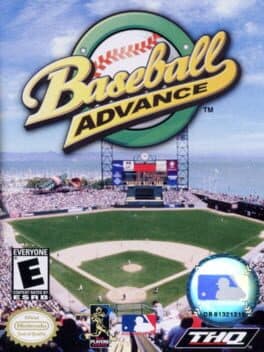
Baseball Advance
Smilebit2002
Baseball Advance is a baseball game produced by Sega, developed by Smilebit and published by THQ for the Game Boy Advance. It was later released in Japan as Greatest Nine with different licenses.
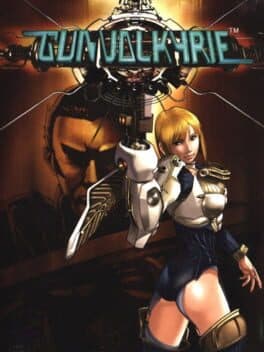
Gunvalkyrie
Smilebit2002
Gunvalkyrie is an alternate history/science fiction video game developed by Smilebit and published by Sega for the Microsoft Xbox. Originally developed for the Sega Dreamcast, its visual style was very similar to the final Xbox version. The Dreamcast version's distinguishing feature was that during the game's development, GunValkyrie utilized a unique control scheme using both a light gun and a controller. This control scheme was dropped when development shifted to the Xbox version. The gameplay is very different from most third-person shooters, due to a unique dual analog control scheme, which is the main contributor to the steep learning curve of the game. Players travel to various worlds investigating the disappearance of several colonies, with only giant mutated insect creatures left behind. These insects comprise the bulk of the enemies you face along the way. Players control Kelly or Saburouta with both analog sticks, the left controlling forward/backward movement and turning, while the right aims their weapons, and when clicked, allows quick-turns. Clicking in the left stick while pointing in a direction causes the character to boost. The left trigger is a boost/jump, and when combined with the left analog boost, can be strung together into combos to keep the player off the ground entirely, which is a necessity for some levels. Face buttons are used to select weapons, and the right trigger fires the selected weapon. The game comprises ten levels, the story unfolding via text between levels, or the occasional in-game cutscene. At the beginning of most levels, excluding boss battles, you have the choice of picking either Kelly or Saburouta. Kelly's primary weapon is fast but weaker, and she's overall faster and more maneuverable. Saburouta is slower, has more limited maneuverability in the air, and carries a stronger primary weapon, the Matchlock Cannon. Basically the two characters make up the two difficulty settings, with Kelly being the "Normal", and Saburouta being the "Advanced" setting. The real difference being that Kelly's style allowed several lock-on targets, while Saburouta's weapon splashed and was aimed at specific targets. Because of this, Kelly's gameplay is more frantic and requires less direct focus, while Saburota required specific aiming and direct attacks to be effective. Kelly is also the only character to upgrade her gearskin. The artistic style of the game is similar to the steampunk subgenre of fiction, but the game's designers prefer to call it "elec-punk," described as a step even further, with the harnessing of electricity for imaginative new uses. The game's stages are divided into indoor mechanical looking levels, with lots of gears and ornate metalwork, and outdoor stages, set in very organic looking valley's, craters, and other fantastic otherworldly locations.
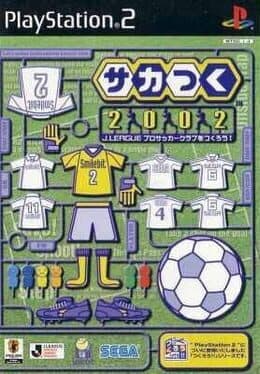
Soccer Tsuku 2002
Smilebit2002
Soccer Tsuku 2002 is a soccer management simulation coded by SEGA's Smilebit team. Based on the Japanese Saturn hit, Soccer Tsuku puts you in control of your very own football club. Utilizing full J-League licensing, you can pick your favorite players from both J1 and J2, as well as a select number of famous world soccer players. Assemble your dream team, train it, and take it through the story mode -- or pit it against a friend's team. Soccer Tsuku was only released in Japan.
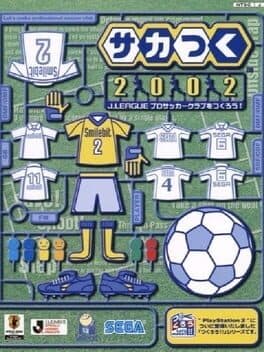
Sakatsuku2002: J.League Pro Soccer Club wo Tsukurou!
Smilebit2002
The "Sakatsuku" series is a soccer club management simulation game released by Sega. At SakaTsuku 2002, we will become the all-powerful representative of a new J2 team, aiming to build a team that can compete with the J League and club teams around the world.
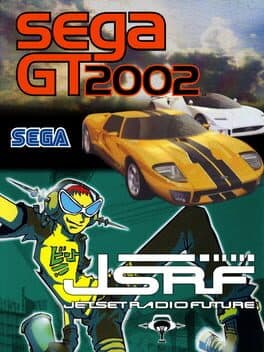
Sega GT 2002 / Jet Set Radio Future
WOW Entertainment2002
Special edition game bundled with specially marked Xbox consoles. Both games are in a single disc.
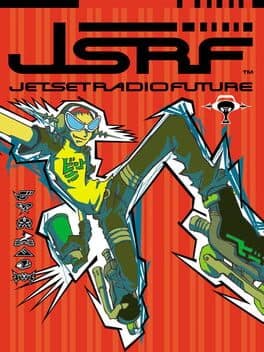
Jet Set Radio Future
Smilebit2002
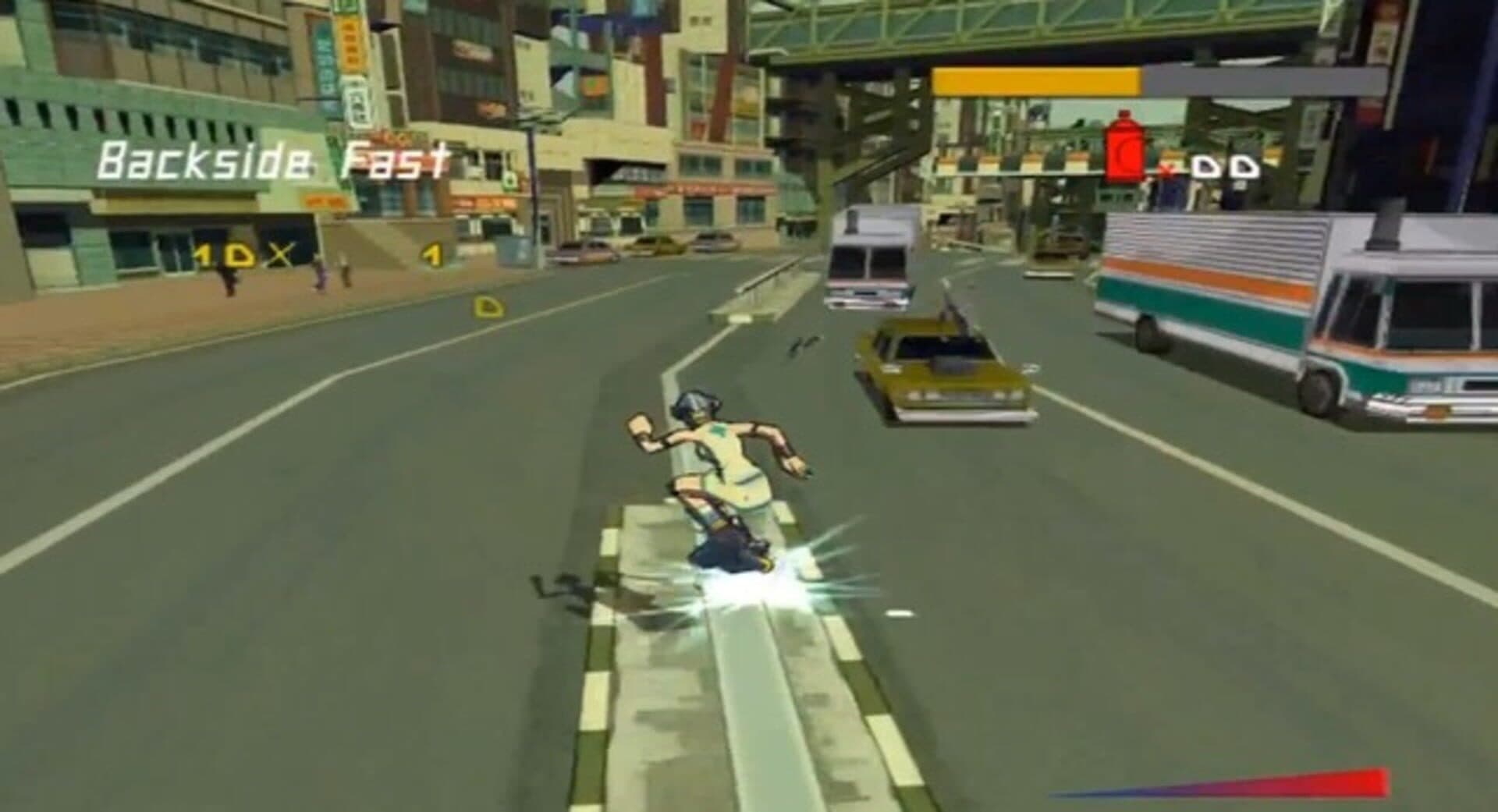
Jet Set Radio Future is a video game developed by Smilebit and is the sequel to Jet Set Radio. Similar to the original, it depicts a future Tokyo where freedom of expression is outlawed. The user plays a character in the GG's, a gang of in-line skating graffiti artists who skate around Tokyo covering up rival gangs' graffiti, knocking over Rokkaku police, and dancing to the electric soundtrack. The game uses a cel-shaded style of animation, and has been widely acclaimed for its unique music style, detailed art, and gameplay. Though the game is set in the future, its style and content incorporates many aspects of 1980's old school hip hop culture, as well as 1990's J-pop culture.
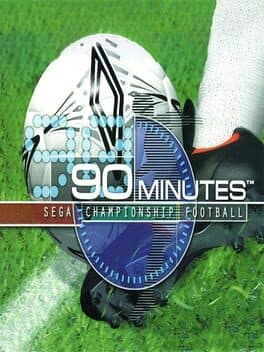
90 Minutes: Sega Championship Football
Smilebit2001
Gameplay follows the norms of the genre - A to pass, B to throw a high lob, X to shoot, Y to change players, with the triggers to perform modifiers (though passes and lob shots) and sprint, although these can all be changed in the options. The player can also assign special tactics to each direction on the d-pad to adapt quickly according to the flow of the game.
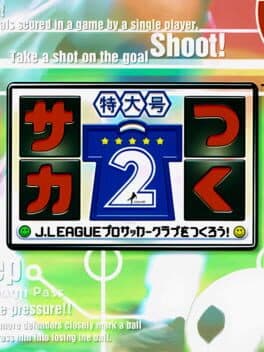
SakaTsuku Tokudaigou 2: J. League Pro Soccer Club wo Tsukurou!
Smilebit2001
SakaTsuku Tokudaigou 2: J. League Pro Soccer Club o Tsukurou! is a sports management simulation game with RPG elements released for the Sega Dreamcast on December 13, 2001. It is part of the long-running SEGA "Let's Make a Pro Soccer Club!" series (also known as "Pro Soccer Club o Tsukurō!" or simply "SakaTsuku"). It serves as a direct sequel to J.League Pro Soccer Club o Tsukurou! (1999) and SakaTsuku Tokudaigou (2000). The 2001 Dreamcast version of "SakaTsuku" delivered fully updated 2001 J.League experience. Both the real-world J.League clubs and the tournament structures reflect the 2001 season. All uniform designs have been accurately updated to match real-world kits. Thanks to the addition of Yokohama FC, J.League Division 2 now features 12 real-world clubs. Beyond the league, you'll also have to manage your squad through the "J.League Cup," a home-and-away tournament, and the year-end "Winter Cup," a high-stakes single-elimination bracket. Depending on how deep your cup runs go, your team could play over 60 matches in a single year. Expect an intense and challenging campaign right from the opening whistle!
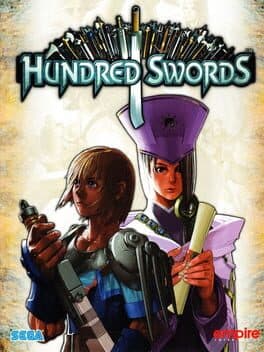
Hundred Swords
Smilebit2001
A Hundred Swords is a fantasy based strategy game with a medieval tone, developed by Smilebit initially for the Sega Dreamcast, and later released for the PC.
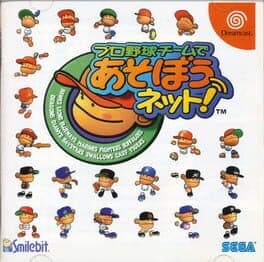
Pro Yakyuu Team de Asobou Net!
Smilebit2000
Pro Yakyuu Team de Asobou Net! is a Sports game, published by Sega, which was released in Japan in 2000.
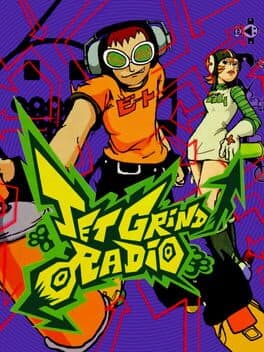
Jet Grind Radio
Smilebit2000
The government is attempting to silence the kids of Tokyo, but with their Overdrive Magnetic-Motor Skating Shoes, the cops will have to catch 'em first. The Jet Grind Radio program keeps the kids unified and inspired to fight for their rights of expression, which includes graffiti art. Grab your spray cans and design your own piece on one of the immense walls in the 3D, interactive city. You might be forced to protect your territory from adversaries that want to take over your neighborhood. Join up with like-minded hip individuals that will help you keep your area the way you want it. The cops will be after you too, so you'll have to be quick. The 10 cartoon-style characters are pumped up with polygons so they come alive in 3D on Dreamcast. Uniqueness is key to these kids and each character stands apart with exclusive abilities and style. They like to show off too, and with 18 missions, there's plenty of time to impress. It's fast, it's fun, and it's definitely funky.
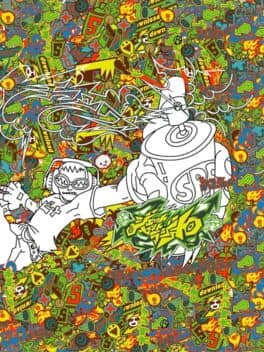
Jet Set Radio
Smilebit2000
The government is attempting to silence the kids of Tokyo, but with their Overdrive Magnetic-Motor Skating Shoes, the cops will have to catch 'em first. The Jet Grind Radio program keeps the kids unified and inspired to fight for their rights of expression, which includes graffiti art. Grab your spray cans and design your own piece on one of the immense walls in the 3D, interactive city. You might be forced to protect your territory from adversaries that want to take over your neighborhood. Join up with like-minded hip individuals that will help you keep your area the way you want it. The cops will be after you too, so you'll have to be quick. The 10 cartoon-style characters are pumped up with polygons so they come alive in 3D on Dreamcast. Uniqueness is key to these kids and each character stands apart with exclusive abilities and style. They like to show off too, and with 18 missions, there's plenty of time to impress. It's fast, it's fun, and it's definitely funky.
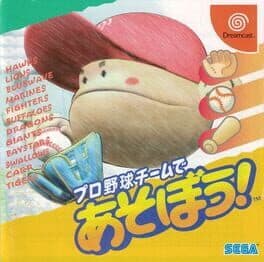
Pro Yakyuu Team de Asobou!
Smilebit1999
Pro Yakyuu Team de Asobou! (プロ野球チームであそぼう!) is a big-head baseball game made by SEGA.
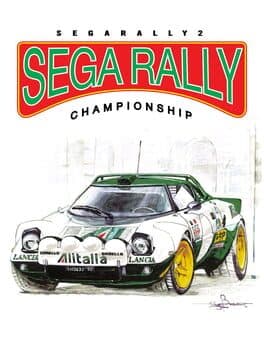
Sega Rally 2
Smilebit1998
Sega Rally 2 is the sequel to Sega Rally Championship. It was released in 1998 in the arcades and was later ported to the Dreamcast and PC.