-
Average rating
22
Games
0
Votes cast
Heartbeat
Shipped Titles
Games (22)
Chibi-Robo!: Photo Finder
Skip Ltd.2013
Become one of the world's best tiny robot helpers by doing your part to open a new museum in Chibi-Robo!: Photo Finder, an action-adventure game. Collect Happy Points by vaccuming, picking up trash, and helping a cast of colorful characters, and then use those Happy Points to purchase special film that lets you photograph real-world objects and transport them into the game for the museum's displays!
Snowpack Park
Skip Ltd.2010
Welcome to Snowpack Park!
Art Style: Rotozoa
Skip Ltd.2010
Take an unusual journey into a microscopic world in this unique action game from the genre-redefining Art Style series.
Okaeri! Chibi-Robo! Happy Richie Oosouji
Skip Ltd.2009
Okaeri! Chibi-Robo! Happy Richie Oosouji is an Action Adventure game, developed by Skip Ltd. and published by Nintendo, which was released in Japan in 2009.
Art Style: Precipice
Skip Ltd.2009
A 3D box puzzle game for DSiWare. The player must navigate an ever growing tower of falling blocks without getting squashed.
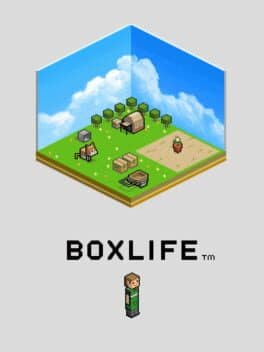
Art Style: Boxlife
2009
Cut paper into various shapes and create as many boxes as possible within the time limit to earn rewards! Climb the corporate ladder in the world of BOXLIFE using your wits and… paper? Use the Nintendo DSi Stylus to cut and then manipulate the paper into a box shape. Be careful though: if you’re not efficient with your cuts, you’ll waste paper and be penalized. R&D mode teaches you new patterns and then challenges you to complete various ranks, while FACTORY mode gives you the chance to earn money by making as many boxes as possible from an endless sheet of paper. Success in each mode brings its own reward: clear ranks to be promoted and change your character’s appearance and use your earnings to acquire new items for your character’s miniature garden. With its stylish graphics and catchy sound, you may just find that thinking inside the box isn’t such a bad thing sometimes!Games in the Art Style series feature elegant design, polished graphics, and pick-up-and-play controls, creating an experience focused purely on fun and engaging game play.
Art Style: Zengage
Skip Ltd.2009
A relaxing logic puzzle where the objective is to match coloured panels with spheres of the same colour. Use your stylus to slide the panels horizontally and vertically as you chill out to the soothing sounds of the games's peaceful music.
Art Style: Pictobits
Skip Ltd.2009
The objective of Picopict is to move coloured blocks from the bottom of the touch screen under falling blocks of corresponding colors. If a shape is made using the added block, the blocks add to an image on the top screen. For example, if players form a red block sequence, the image will gain as many red blocks as has been cleared, assuming that the any blocks of that colour remain to be added. If blocks fall as a result of clearing blocks that were attached to it, they are added to the blocks at the bottom and can be used, though a special variety of block exists that cannot be picked up, forcing players to either clear them before they land or wait for the right blocks to fall on them. As players clear more blocks, they will eventually form an image. These images are of 8-bit renditions of characters from NES games, such as Mario, Link, and Bowser.
Art Style: Base 10
Skip Ltd.2008
Art Style: Base 10 is a puzzle game developed by Skip Ltd. and released for the Nintendo DSi in 2010 as part of the *Art Style* series. Players guide falling blocks into a grid where values combine according to a base-10 system. When numbers add up to ten, they disappear from the board and award points. The game focuses on simple mechanics, gradual difficulty, and a minimalist visual presentation
Art Style: Aquia
Skip Ltd.2008
A DSiWare launch title
Art Style: Cubello
Skip Ltd.2008
In CUBELLO, using the pointer function of the Wii Remote players aim and launch colored cubes at a three-dimensional object called a Cubello, itself consisting of many colored cubes, that floats and rotates in empty space. The object of the game is to strip the Cubello of cubes by matching four or more of the same color in order to reveal the Cubello's inner core. The player is initially given only a limited number of cubes in a "magazine" to complete the objective in each stage, but more cubes are added in the magazine to the player the more cubes they take away from the Cubello. However, unlike many other games, such as Puzzle Bobble, where the goal is to eliminate objects of certain colors or shapes, Cubello continues to provide the player with cubes colors that are either still in the magazine or on the stage, so the player has to calculate to have the color disappear from the magazine and the stage at the same time to win. There is also a "Bonus Mode" on the slot machine device that gives the player unlimited cubes to shoot of one color, or "Super Bonus Mode" which gives cubes of different colors depending on where they are launched at. You also lose cubes in the magazine if the Cubello bumps into the screen towards you. The game features an endless play mode in addition to players progressing through increasingly more difficult stages.
Captain Rainbow
Skip Ltd.2008
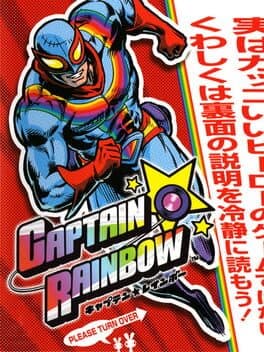
Nick comes from Mameruca, "The Land of the Free". His alter-ego Captain Rainbow is a yo-yo-wielding superhero who stars in his own TV show. However, the show isn't popular anymore, because another superhero attracts the interest of the audience. In order to restore his lost popularity, Nick decides to venture to Mimin Island, an island where wishes are said to come true. In a dark night, Nick ventures to the island by raft. During his journey, he notices a bunny-like creature desperately paddling in the water. In order to save this being, Nick transforms into Captain Rainbow and jumps into the water. However, his try fails and he sinks. The superhero loses his belt, which is needed for the transformation, and so Captain Rainbow turns back to the ordinary Nick. When Nick regains consciousness, he has been washed up at the beach of Mimin Island. After a short moment of confusion, Nick spots that his belt is missing. Then he sees the belt being carried away by bunny-like creatures who have obtained it. Since this special item is essential for him, Nick starts exploring the island. It doesn't take much time to get the belt back. On Mimin Island, Nick meets various Nintendo characters who also came there because of their own dreams and wishes. During their conversations, he learns that no one's wish has actually been granted so far. Only with the help of a chosen hero, Nick, or rather Captain Rainbow in this case, the wishes can be granted. Nick decides to help the islanders. The hero gets support from bunny-like beings called Mimin, the dominant species of Mimin Island. This game was only released in Japan
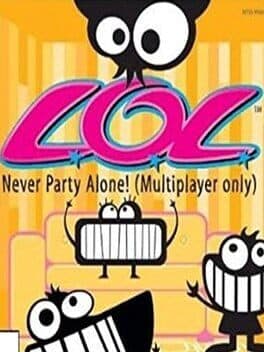
LOL
Route 242007
A multiplayer game in which a host player asks a question, requiring others to write or draw their answers on the DS touchscreen.
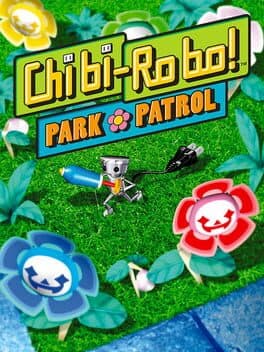
Chibi-Robo!: Park Patrol
Skip Ltd.2007
A pollution epidemic is killing off flowers and ravaging parks worldwide. To combat this threat, Citrusoft Robotics has developed an eco-friendly model of Chibi-Robo and sent it to parks everywhere. As Chibi-Robo, players restore their local park to its former glory by raising flowers and plants, building park equipment and defeating toxic enemies called Smoglings.
Bit Generations: Dialhex
Skip Ltd.2006
bit Generations: Dialhex is a Game Boy Advance video game released in 2006 by Nintendo and skip, Ltd. The game was part of the initial batch of bit Generations games.
Bit Generations: Coloris
Skip Ltd.2006
Coloris is a Game Boy Advance video game that is simply just a basic puzzle video game. In the game, you'll be required to place three similarly colored tiles next to each other in order to rid of them. However, unlike most games like this, you don't swap the tiles but rather start to change the color of the tile by pressing on them with the cursor.
Bit Generations: Soundvoyager
Skip Ltd.2006
Bit Generations: Soundvoyager is a Game Boy Advance video game released in July of 2006. It was developed by skip Ltd. and published by Nintendo. The game was unfortunately never released outside of Japan. The game can be played entirely without looking at the screen, as the point is to listen to the sounds that are emitted from the Game Boy Advance's speaker. It should be noted, however, that it is quite a challenge to listen to the noises coming from the speaker, and that it's a lot easier to hook up ear phones or hook the GBA up to a stereo. It will also be very helpful to be in a quiet space.

Bit Generations: Orbital
Skip Ltd.2006
Bit Generations: Orbital is a Game Boy Advance video game released exclusively in Japan as part of the second series of bit Generations titles. It is an innovative title that has the player consolidating a multitude of planets together in each stage to create on large rock. It was remade on WiiWare under the title of Art Style: ORBIENT, and was the first of at least three titles to be released in the Art Style series. Gameplay Before starting a stage the player will have to choose which galaxy he or she wishes to play within and then the stage. Following this your small star will shoot towards a large body with a varying amount of small stars orbiting it. The goal is to come in possession of those other stars in order to increase the size of the primary one. When ready, the player will shoot out of the orbit of a star and then be pulled into another one when he enters its range. If the player touches the star that the smaller ones are revolving around, then your star will blow up. With this said, it's suggested you constantly adjust the speed of your stara as not to rush into an orbit, ultimately causing it to crash. When one wishes to enter the orbit of a star, he'll have to press the A button, which is will "attract" your star towards it. If you don't want to enter it, then you'll have to press B, which will repel it. If the player wishes to change the position of the camera, then they can use the d-pad. When not in orbit around a star, you'll simply be floating. This is when you have to use a combination of the attract and repel buttons in order to change your direction. If you're going near a large star, then its orbit will effect the player more than a smaller one would, and you have more of a chance to start revolving around it. There are multiple obstacles in the game that are represented by the color red. Basically if it's red, you want to stay away from it. unfortunately using the repel or attract button will have no effect when you're next to an obstacle, though if a star is nearby and you're heading straight towards an obstacle, it's suggested that you get out of its way. Sometimes these hazards will even revolve around stars.

Bit Generations: Boundish
Skip Ltd.2006
Boundish is a Game Boy Advance video game that can be easily compared to the game Pong, though it features many gameplay differences, graphical enhancements (despite the graphics themselves being deliberately primitive), and sounds.
Bit Generations: Dotstream
Skip Ltd.2006
Racing game where you control a tiny line and guide it through various shapes and swerves at super-high speeds. Surprisingly fast and challenging for those that attempt it. You will find yourself with quickening reflexes on extended play.
Chibi-Robo!
Skip Ltd.2005
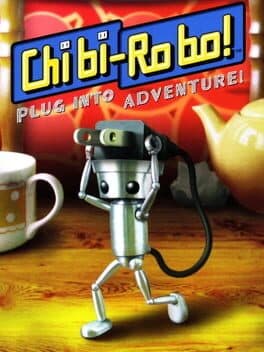
Like most families, the Sandersons bicker about money and cleaning. Unlike most families, though, they also have robotic spiders, aliens, and talking toys to worry about. Enter Chibi-Robo, a tiny robot programmed to spread happiness. Join him on his quest to restore order to the Sanderson house and SAVE THE WORLD!
Giftpia
Skip Ltd.2003
Having slept too long and missed his coming of age ceremony, Pockle gets thrown in jail and told that he must repay the 5 million Mane that the ceremony cost. This is so that another can be held, which is required in order for Pockle to reach adulthood.