-
Average rating
3
Games
0
Votes cast
Heartbeat
Shipped Titles
Games (3)
Rock n' Roll Racing
Silicon & Synapse1993
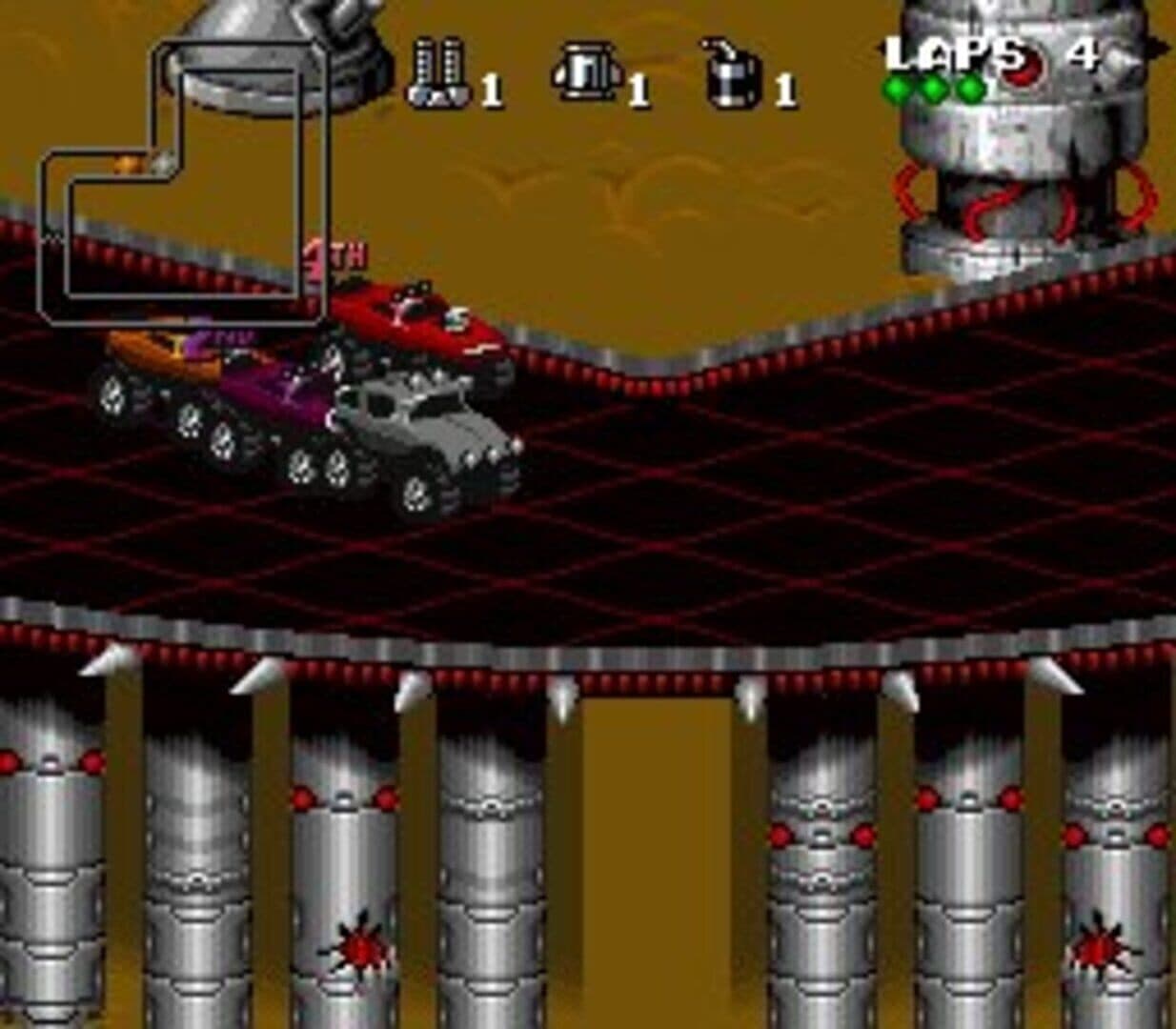
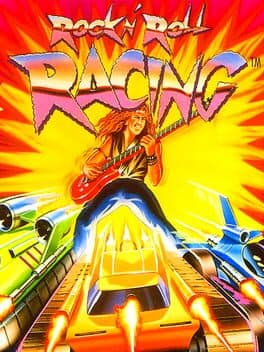
The game pits four racers against each other, with up to two of them being player-controlled and the rest being AI opponents. Each race consists of four laps around tracks viewed from an isometric perspective, which enables players to discern the presence of frequent sloping sections spread throughout the game's various tracks. In addition to navigating the turns, racers must also maneuver hills and dips without falling or jumping over the guard rail at the track's edge.
The Lost Vikings
Silicon & Synapse1993
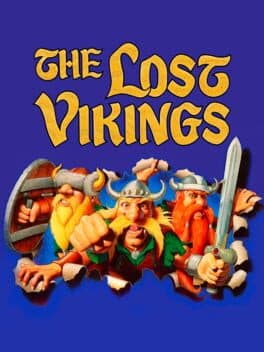
The Lost Vikings is a puzzle-platform video game developed by Silicon & Synapse (now Blizzard Entertainment) and published by Interplay. The game features infinite opportunities of retries in case the player loses one of the Vikings. In 2015, The Lost Vikings were added as a playable hero in Heroes of the Storm, allowing players to control the three Vikings as individual units, making a unique departure from the typical heroes available. Character abilities: All three Vikings (Erik, Baleog and Olaf) have three health points which they can lose by getting hurt by enemies or by falling from great heights, and the ability to carry and use items, mainly keys, bombs, and food (which restore health points). Each of the Vikings has a unique set of abilities: Erik can run faster than the other two, can jump, and can bash through some walls (and enemies) with his helmet. Baleog can kill enemies with his sword, or from a distance with his bow (and a "life-time supply of arrows"). The bow can also be used to hit switches from a distance. Olaf can block enemies and their projectiles with his shield, and use his shield as a hang glider. Olaf's shield can also be used as a stepping stone for Erik to enable him to reach higher ground, which would not be possible without the shield.
RPM Racing
Silicon & Synapse1991
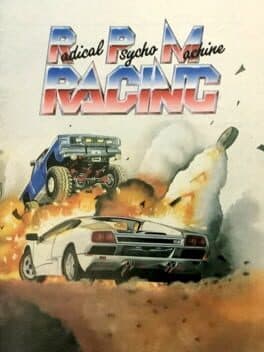
RPM Racing was preceded by Rareware's R.C. Pro-Am in 1988 and Electronic Art's Racing Destruction Set in 1985, with the latter being the larger influence. It is a precursor to Rock 'n Roll Racing, which was done by the same developer. Combat, obstacles and traction on the non-flat tracks play a significant role. There are 3 vehicle types to choose from that perform differently on pavement, dirt, ice, flat or bumpy tracks. Cars can be armed with oil, nitro and mines. Additionally, there are 3 levels of tires, engines, shocks and armor. There are full race season, single race and custom track modes. In 1 player games, the 2nd player is replaced with one of 8 AI opponents who are each associated with their own vehicle. In season mode, each track has an entrance fee and cash prize for placing 1st; often lesser cash prizes for lesser placements are also awarded. For an additional fee, racers can opt to move to a higher racing class (levels) where fees and prizes are bigger. Each class has its own set of tracks that the player may choose from. No track is mandatory or unavailable within a class. The player also has the option of going back to a lower class for free, which may become necessary if funds are eaten up be fees without winning prizes. However, going up always incurs a fee, even if the player has been there before. Custom track designing is not intuitive but fairly easy to learn. Players can set the track's laps, gravity and starting line type. Each track section can be pavement, dirt, or ice. Track sections are laid out like puzzle pieces on a 2D non-isometric grid (Pipe-Mania style). Sections include horizontal and vertical straights, four standard 90° turns, eight T-sections for diverging and converging multiple paths in any direction and a criss-cross. Either a horizontal or vertical special straight section is used as the starting grid. The starting grid can be oriented forward, reversed, face-off with player 1 forward, or face-off with player 1 reversed. 7 points are used to adjust the 6 slopes in straight sections to 5 different heights. Slopes can be flat (0:1), inclined (1:1), or steep (2:1). Non-straight sections can only be adjusted for height for the entire section at once. An isometric view of individual sections is provided to help to orient the section's design to the adjacent sections. If the edge of a section does not match the height of the adjacent section(s), the player is warned immediately but may proceed without correcting the error immediately. But such error must be eliminated before the track can be saved. Also required for a track to be saved is no dead ends, and a starting grid section. The track verification is surprisingly liberal, even allowing diverging and converging paths that are against the flow of traffic (like turning around and going the wrong way up a freeway merging lane). The AI opponents are generally not able to discern the fastest or shortest route and can even be diverted into a path with no natural exit, or with very clever path designs, valid lap paths can be entirely different for player 1, player 2 and AI players; which can lead to interesting traffic patterns.