-
Average rating
15
Games
0
Votes cast
Heartbeat
Shipped Titles
Games (15)
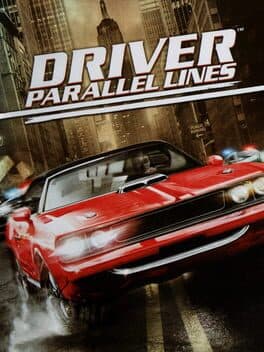
Driver: Parallel Lines
Reflections Interactive2006
You were the fastest wheelman on the street. You were a legend. You were money. Until they set you up and sent you down. Twenty-eight years inside for someone else's crime. Now you're getting out. Guess what? You got a new job, it's called getting revenge.
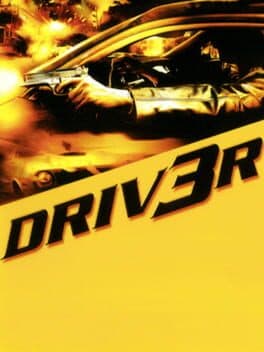
Driv3r
Reflections Interactive2004
Undercover cop Tanner chases an international car theft ring through Miami and Nice and Istanbul in this cinematic driving game.
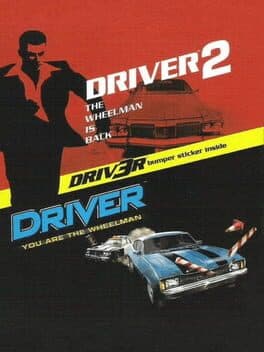
Driver / Driver 2 Twin Pack
Reflections Interactive2004
The Driver 1 and 2 Twin Pack for the Sony PlayStation 1 bundles two classic action-driving games.
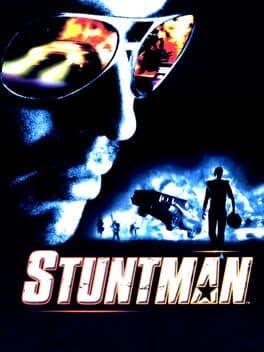
Stuntman
Reflections Interactive2002
In the world of stunt driving, all it takes is one slip to end your Hollywood dreams. As a stunt driver, you can't afford to fail when performing dangerous stunts. In six famous movie locations, you'll smash up vehicles ranging from TukTuks and snowmobiles to Jeeps and high-performance sports cars. Begin a career in the stuntman industry or practice your skills in the stunt arena. After another hard day of risky work, replay the action as a polished movie trailer.
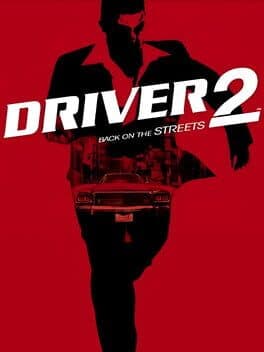
Driver 2: Back on the Streets
Reflections Interactive2000
Driver 2: Back on the Streets is an open-world driving and action game developed by Reflections Interactive and published by Infogrames in 2000 for the PlayStation. It is the sequel to Driver and follows undercover cop Tanner and his partner Jones as they investigate a crime syndicate. The game introduces the ability for players to exit vehicles and explore environments on foot. Missions take place across four cities: Chicago, Havana, Las Vegas, and Rio de Janeiro. Gameplay combines story-driven objectives with free-roaming exploration.
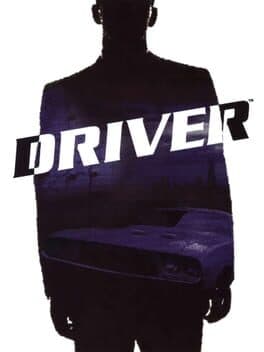
Driver
Reflections Interactive1999
The player is John Tanner, an undercover cop who try to take advantage of his own excellent driving skill in order to infiltrate a criminal organization. In the storyline, the player has the chance to drive several cars in four american cities (Miami, San Francisco, Los Angeles, and New York), facing many different missions and tasks such as delivering a vehicle without damaging it, eliminating competitors or being the getaway driver in a bank robbery.
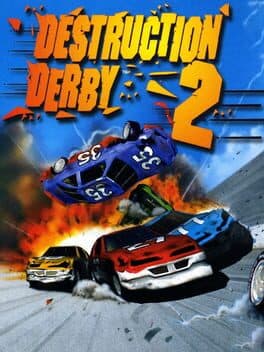
Destruction Derby 2
Reflections Interactive1996
Destruction Derby 2 is the sequel to the MS-DOS, PlayStation, Sega Saturn and Nintendo 64 title Destruction Derby. Here, the player must race on up to seven different circuits, in a range of modes, similar to its predecessor. The modes are Wrecking Racing (where the player must destroy or spin the other competitors), Stock Car (a typical race where it's first to the flag) and Destruction Derby, which is based around the crash arenas. Commentator Paul Page performed as the announcer. This Racing game is widely known for its destruction and chaotic themes that are followed by loud, gritty and dark metal songs.
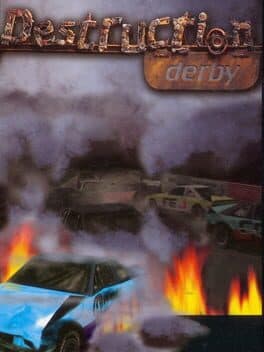
Destruction Derby
Reflections Interactive1995
With no rules, no limits and no pit stopping, anything goes in this collision course of crumple zones, hit & run mayhem, and street level slamming where wrecking your opponent's motor in ultra-realistic smashes and crashes is the name of the game. Take on the rigors of a full Championship season and pit your wits against a motley crew of psycho-waster racers such as the Suicide Squaddies, Skum and The Optician as you storm up the rankings from Rookie to Pro. Reckon you can handle it? Destruction Derby works with a serial link cable for two player head-to-head action.
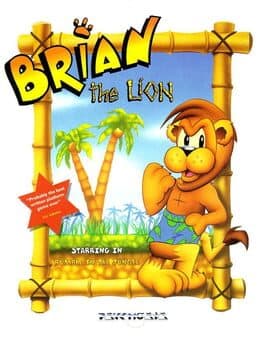
Brian the Lion
Reflections Interactive1994
If you can't stand the heat, stay out of the jungle... Meet the funkiest feline on two legs, Brian the Lion, starring in the wildest adventure ever to hit the Amiga! Brian's rumble in the jungle boasts hundreds of frames of character animation, megabytes of infectious music and a magnificent menagerie of console-style effects including zooming, sprite scaling, de-resolution and rotation. The scariest sight in Bermuda shorts this side of Baywatch, Brian the Lion pounces into action in a roaring romp that's so hot it's positively tropical.
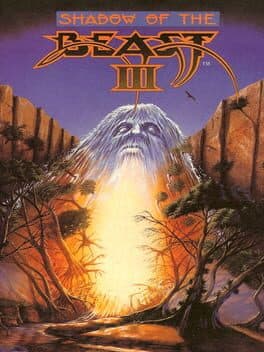
Shadow of the Beast III
Reflections Interactive1992
Shadow of the Beast III is a platform game developed by Reflections and published by Psygnosis in 1992, exclusively for the Amiga. It is the sequel to Shadow of the Beast and Shadow of the Beast II. The gameplay combines action and puzzle solving, with an emphasis on the latter. Typical puzzles involve levers and chains moving hooks, bridges, and doors.
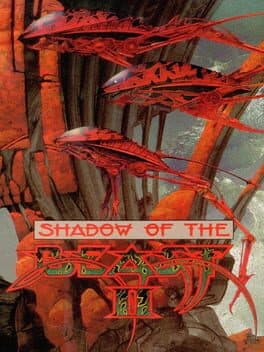
Shadow of the Beast II
Reflections Interactive1990
Shadow of the Beast II is an action game developed by Reflections and published by Psygnosis in 1990. It is the sequel to the earlier Shadow of the Beast.
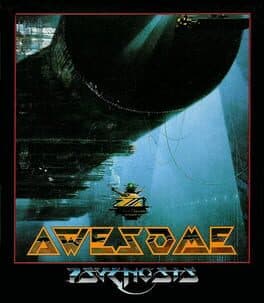
Awesome
Reflections Interactive1990
Awesome is a science fiction action video game released by Psygnosis for the Amiga and Atari ST in 1990. It features a variety of gameplay styles, from overhead shooting to Asteroids-esque sequences, and a pre-rendered ray-traced intro sequence. The antagonist of the game is John Winner. Scenes and music from the game were featured in Psygnosis's later game Lemmings as in-jokes, in a Taxing rated level called "What an AWESOME level". The theme music for Awesome was composed by Tim Wright. The box art for Awesome was painted by science fiction artist John Harris.
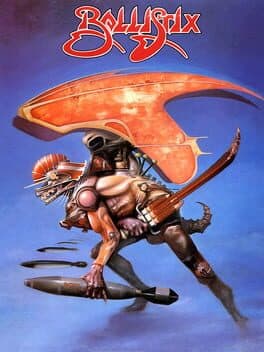
Ballistix
Reflections Interactive1989
Ballistix is a video game created by Martin Edmondson for the Amiga and Atari ST and published by Psyclapse in 1989. It was also converted to a number of other home computers in the same year and the PC Engine/TurboGrafx-16 console in 1991. It is a fictional futuristic sport involving directing a puck to a goal by shooting small balls at it.
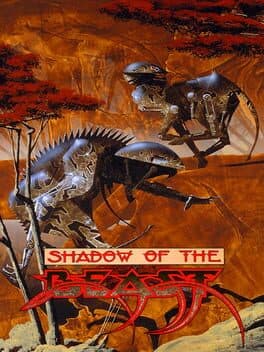
Shadow of the Beast
Reflections Interactive1989
Shadow of the Beast is a platform game developed by Reflections and published by Psygnosis in 1989. The original version was released for the Amiga and later ported to many other systems. The game was known for its graphics, with many colours on screen and up to twelve levels of parallax scrolling backdrops, and its atmospheric score composed by David Whittaker, which used high-quality instrument samples.
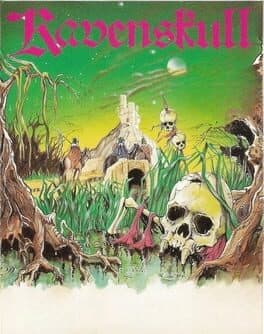
Ravenskull
Reflections Interactive1986
Ravenskull is a top-down action puzzle game where the player must collect treasure pieces from the Castle Ravenskull in order to defend their village. The game was originally conceived after the authors created a new routine for hardware scrolling; when the player uses a speed scroll, the routine can be seen at full speed. Due to lower hardware specifications, the Acorn Electron version used a much smaller playing window and the speed scrolls were omitted.