-
Average rating
42
Games
0
Votes cast
Heartbeat
Shipped Titles
Games (42)
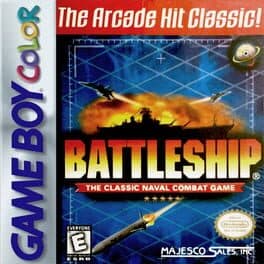
Battleship
Pack-In-Video1999
Now it's your turn to sink your opponent's battleship in this Game Boy Color rendition of the classic strategic board game. Players deploy all four of their ships to different areas on a grid, and take turns firing shots at various parts of their opponent's grid. Hit each ship the required number of times, and the ship is removed from play. In a unique twist on the classic game, each ship has new weapons. For the solo player, there are 48 missions to complete with animated full-color cutscenes to inspire you to victory! The real challenge however, is taking on a human opponent via a link cable. Forget setting up the board and looking for missing pieces, this is the real way to play Battleship!
Umi no Nushi Tsuri: Takara-jima ni Mukatte
Pack-In-Video1999
Umi no Nushi Tsuri: Takara-jima ni Mukatte is the sole PlayStation family entry in the Umi no Nushi Tsuri series.
Nushi Tsuri 64
Pack-In-Video1998
Fishing

Fune Tarou
Victor Interactive Software1997
Fune Tarou is a Sports game, published by Pack-In-Video, which was released in Japan in 1997.
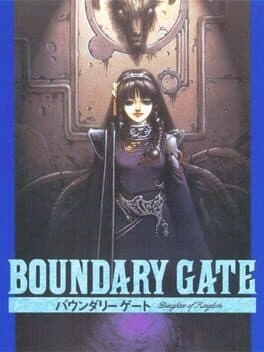
Boundary Gate: Daughter of Kingdom
Pack-In-Video1997
Long time ago, the First Mother created the world and blessed it with five magical symbols that would keep it in balance. The symbols were hidden deep in a sacred temple, to protect everything and everyone around them. Many years later, an adventurer named Finn was looking for work in the city of Ambrose. There was indeed much work to do: monsters roamed the country, the threat of war was more real than ever. One night Finn was strolling through the city when he suddenly spotted a young girl attacked by a monster. Naturally, he defeated the monster and saved the girl, who turned out to be a princess hoping to restore her father's kingdom. The two decide to work together and venture to the nearby city, that lies in ruins, overrun by monsters...
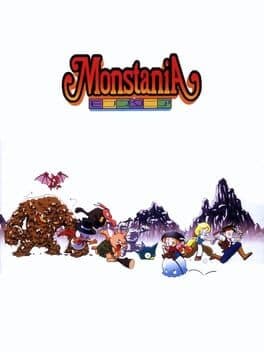
Monstania
Bits Laboratory1996
The hero of the game is Fron, a sixteen-year old boy who lives on the island of Monstania. One day, strolling in the forest, he notices a strange light. The light lead him to a clearing, and then suddenly disappeared. But Fron realized what was the meaning of that light - it was a fairy! Of course, everybody knew that fairies had been long extinct, but Fron never believed in that. All his life he wanted to meet a real fairy, and now, when the opportunity has come, he firmly decides to find her. His girlfriend Tia helps him on the dangerous journey, during which they meet a mysterious little girl named Chitta, and get involved in a grand adventure, that will ultimately lead them to the battle against the dark force that threatens the whole Monstania! "Monstania" has a somewhat unusual gameplay within the frames of console RPGs. You don't explore the world in the game: it is entirely linear and takes you to the next destination by itself (only at a few points you can choose where to go next by selecting an appropriate answer). Once within the location, you cannot leave it until you complete all your objectives there, which then take you to the next location. The objective is usually a large strategic battle. You navigate your party members on the battle field, attack with melee and long-ranged weapons, and use special technique which require action points. Unlike most other turn-based strategy games, an enemy makes a move immediately after you did the same with one of your characters, without waiting for the "enemy turn". The RPG element is not very significant: your characters level up automatically after each battle. There are also some puzzles to solve in certain locations.
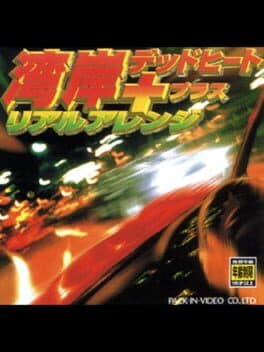
Wangan Dead Heat + Real Arrange
Genki1996
Wangan Dead Heat is a spin-off of Genki's Shutokou Battle (aka Tokyo Xtreme Racer) series. This Saturn game combines the typical arcade racing of the time with a career mode consisting of the player attempting to woo women by driving fast and safe. FMV's would play depending on how the player did, and being successful eventually leads to (supposedly) the women stripping their clothes, hence the 18 age rating. This Version includes a bonus disk jammed with more FMV's lewd enough to warrant a yellow label warning. Unfortunately, the quality of the FMV footage on the bonus disk is poor without the Saturn MPEG card being installed, but it still runs without one.

Umi no Nushi Tsuri
Yuu Yuu1996
Umi no Nushi Tsuri is a Sports game, published by Pack-In-Video, which was released in Japan in 1996.
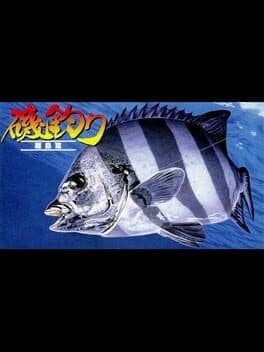
Isozuri: Ritou-hen
Yuu Yuu1996
Isozuri: Ritou-hen is a Sports game, published by Pack-In-Video, which was released in Japan in 1996.
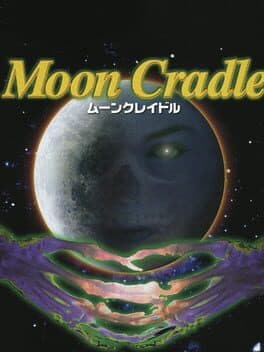
Moon Cradle
Tose1995
Moon Cradle is a mystery adventure game which uses live-action video for cut-scenes and fixed isometric perspective during actual gameplay. The player controls the character directly while actions such as "search", "talk" or "use" are presented in a menu-selected manner.

Wangan Dead Heat
Genki1995
Never dreamed having an expansive sportscar and an amazing babe at your side? If so this game is for you. Get the car and maybe the babe will come if you are good enough. And maybe she will let you see a little more of her... Depending on you... Wangan Dead Heat is a spin-off of Genki's Shutokou Battle (aka Tokyo Xtreme Racer) series. This Saturn game combines the typical arcade racing of the time with a career mode consisting of the player attempting to woo women by driving fast and safe. FMV's would play depending on how the player did, and being successful eventually leads to (supposedly) the women stripping their clothes, hence the 18 age rating. The Worldwide release, named Highway 2000, strips everything related to wooing women from the career.

Battle Submarine
Office Koukan1995
Battle Submarine is a Strategy game, developed by Office Koukan and published by Pack-In-Video, which was released in Japan in 1995.
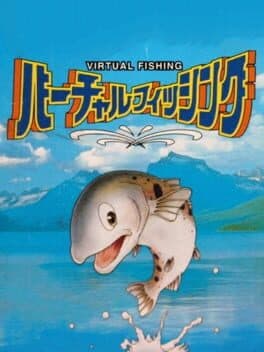
Virtual Fishing
Locomotive Corporation1995
Virtual Fishing is a Sports game, developed by Locomotive Corporation and published by Pack-In-Video, which was released in Japan in 1995.
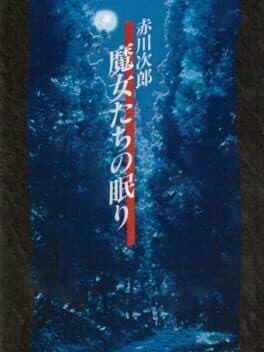
Akagawa Jirou: Majo-tachi no Nemuri
Minato Giken1995
Akagawa Jirou: Majo-tachi no Nemuri ("Jirou Akagawa's The Sleep of Witches") is a visual novel adventure game with a supernatural murder mystery theme. As with Chunsoft's Sound Novel series, it features a series of static photographs with Japanese text overlaid on top. The narrative is supported by background ambient music and sound effects. The story was written by Japanese thriller author Jirou Akagawa, based on his novels Majo-tachi no Tasogare and Majo-tachi no Nagai Nemuri. It concerns an office worker who is prompted to look into the apparent suicide of a girl from his childhood after receiving a weird phone call asking for help and a vivid dream about her. He returns to the mysterious mountain shrine where she was reported to have burned to death. The game was originally released for the Super Famicom in 1995 and later saw enhanced ports for the Sony PlayStation in 1999 (with the subtitle Fukkatsusai, or "Easter") and Windows PCs in 2001 (with the subtitle Kanzenban, or "Perfect Edition").
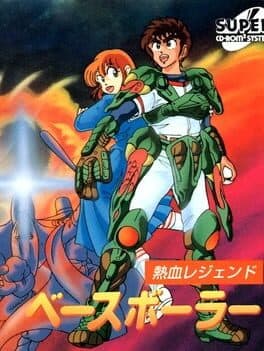
Nekketsu Legend Baseballer
1995
In a world where baseball plays a pivotal role in people's lives, teams compete against each for supremacy, using spiritual and magical moves, as well as robots. Recently, a powerful demon took control of the land, and some humans began using the art of baseball for evil purposes. The malevolent Dark Baseballer has been terrorizing innocents, and it is up to a group of young people to restore justice. Nekketsu Legend Baseballer is a role-playing game dedicated to baseball. There is no actual baseball simulation in the game: much of it plays like a traditional Japanese RPG, with top-down overworld, town and dungeon explorations, party management, leveling up, equipment, items, etc. However, all the usual RPG paraphernalia is completely baseball-themed. Random turn-based battles occur less frequently than in other comparable games, but last a considerable amount of time due to their mechanics: each party member is in control of a group of "baseball robots", and defensive and offensive actions are named after real baseball moves.
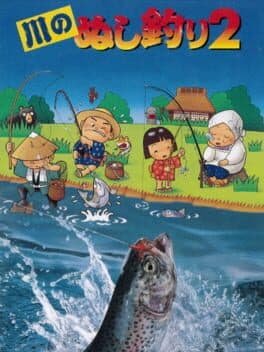
Kawa no Nushi Tsuri 2
Yuu Yuu1995
Kawa no Nushi Tsuri 2 is a Fishing game, published by Pack-In-Video. It is the second numbered game in the "Legend of the River King" series and was only released in Japan. The game features RPG style combat against local wildlife as you try to fish and improve your skill to catch the legendary fish known as the River Master. The game was ported to Windows 98 in 1999 by Electronic Arts
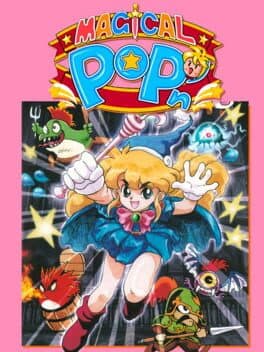
Magical Pop'n
Polestar1995
The game is a side-scroller which is divided into six stages. The player starts with a three-heart life gauge and one spell attack. The player can increase Princess's lives by collecting golden tokens (which look like the Princess's face), gaining one life for every three coins collected. The player can also increase health by finding heart containers in treasure chests. Spells can be obtained throughout the game and are important for advancing further.
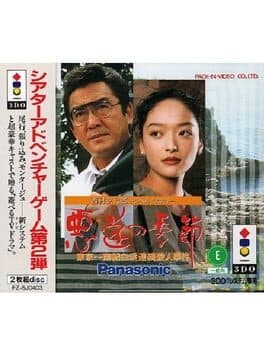
Nishimura Kyoutarou Travel Mystery: Akugyaku no Kisetsu
Matsushita Electric Industrial1994
A travel mystery adventure game based on and supervised by Japanese mystery writer Kyotaro Nishimura.
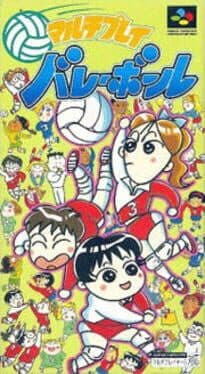
Multi Play Volleyball
Mebio Software1994
The player controls a national volleyball squad (i.e., Cuba, USA, Canada, Brazil) as the play controls the entire team using an overhead view. Since indoor volleyball is simulated instead of beach volleyball, all matches take place on hardwood.

Tsuri Tarou
Pack-In-Video1994
Tsuri Tarou is a Sports game, published by Pack-In-Video, which was released in Japan in 1994.

Tommy Moe's Winter Extreme: Skiing & Snowboarding
Loriciel1994
In Winter Extreme, the player can partake in a series of skiing and snowboarding events including the Downhill where the player speeds down a course in order to finish the course as fast as possible in an allotted time by speeding through checkpoints. The Slalom has the same set-up where the player has to finish the course in an allotted time by passing through gates, but also has to contend with twists, turns and various other obstacles in the players path. The Giant Slalom is similar except for more obstacles and a longer path.
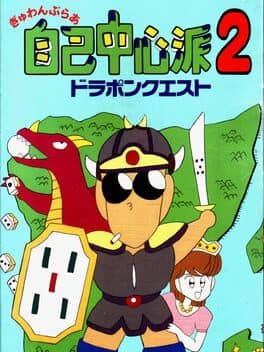
Gambler Jiko Chuushin-ha 2: Dorapon Quest
Bits Laboratory1994
Gambler Jiko Chuushinha 2: Dorapon Quest is a Miscellaneous game, developed by Bits Laboratory and published by Pack-In-Video, which was released in Japan in 1994.

Boxing Legends of the Ring
Sculptured Software1993
Boxing Legends of the Ring is a boxing game, developed by Sculptured Software and published by Electro Brain. During fights, it is possible to keep track of the participating boxers' wellbeing by observing the small portraits of the fighters' faces at the top of the screen. As the fighters receive punishment, these portraits show injuries such as cuts and bruises, the severity of which indicate the fighter's health (or lack of). There is also a boxing glove shaped meter at the top of the screen, that indicates how much power a boxer has left in his punches (as in a real fight, the more punches boxers throw, the more tired they become, resulting in weaker punches). The fighters movement about the ring is limited to side-stepping left or right; it is impossible to step back or forward. A variety of punches can be thrown; left jabs, crosses to the head, hooks to the body, and uppercuts to the head (all punches except jabs can be thrown with either hand). It is also possible to throw a limited number of so-called 'super punches', that are essentially either a right cross or a right uppercut, but with extra power. At the start of each round, each boxer is capable of throwing one super-punch at any time, although it becomes possible to throw one more with each knockdown they score against their opponent. Defensive techniques consist of blocking, dodging, and clinching. Each boxer has three attributes: 'power', 'stamina', and 'chin'. A special version was released in Mexico and the American Southwest called Chavez II; the game exchanged the English language words for Spanish and omitted some vocals.
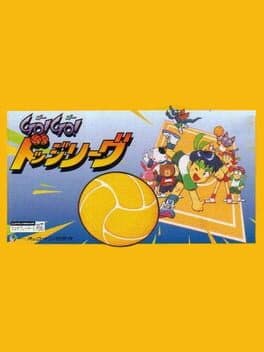
Go! Go! Dodge League
Mebio Software1993
Go! Go! Dodge League is a dodgeball game for the Super Famicom put out by obscure Japanese developer Mebio Software and published by Pack-In-Video. The player can choose between several different teams, all with their own distinctive look, stage and special dodgeball attacks. There are exhibition and tournament modes, including an elimination challenge. The game can also support up to four players with a MultiTap peripheral, with many different variations for teams (2 Humans vs 2 Humans, 3 Humans vs CPU, 3 Humans vs 1 Human, 4 Humans vs CPU, etc.).
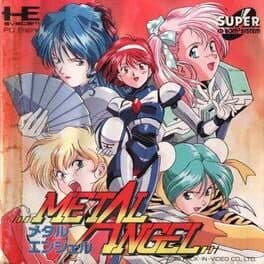
Metal Angel
1993
Life-sim based around girls and power suits. Set the girls daily activities and try to juggle their stats.
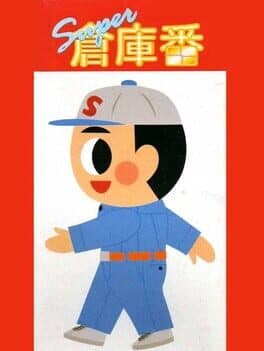
Super Sokoban
Thinking Rabbit1993
Super Sokoban (or Soukoban) is a puzzle game in which the player must push crates around a maze to their designated storage area, ensuring they do not accidentally push a crate into a position where it cannot be recovered. Thinking Rabbit created the original game in 1982 on home computers, and Super Sokoban is the first Super Famicom game to follow the same blueprint. The intro establishes that the eponymous Sokoban, or warehouse worker, must perform enough box-pushing puzzles to earn enough cash for a flashy new car so that he might finally impress the girl of his dreams. An added wrinkle is that each stage has a fixed move limit, and so the player must not only push the boxes in the right order but do so with maximum efficiency. The game was not released outside of Japan.

Ultimate Air Combat
Activision1992
Ultimate Air Combat has 36 different missions, then one last final mission. Each mission is grouped into two parts. The first part uses a cockpit view where the player must shoot down three planes before either running out of fuel or getting shot down by enemy planes. After that, the second half of the mission uses an isometric view where the player must destroy enemy forces and installations.

Hawk F-123
Make Software1992
Horizontal shoot 'em up similar in style to Power Gate, although technically more advanced.
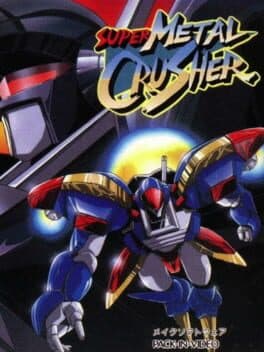
Super Metal Crusher
Make Software1991
Strategy game where you design a robot by allocating points to various stats, then let it scrap it out with an opponent while you watch. (From The PC Engine Software Bible)

Road Spirits
Arc Co., Ltd.1991
A racing game in which you race in various locations across the world.
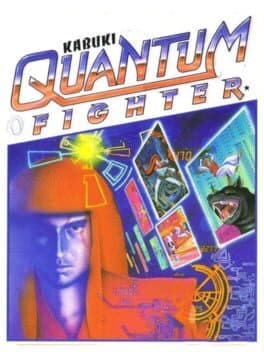
Kabuki: Quantum Fighter
Human Entertainment1990
Kabuki: Quantum Fighter is a 2D action platformer released exclusively for the Nintendo Entertainment System.
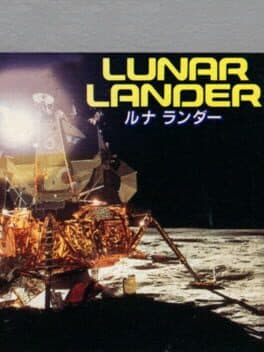
Lunar Lander
Pack-In-Video1990
Lunar Lander is a space exploration game based around Lift-off, Landing and Exploration After you have landed and explored all eight areas, your mission is completed and you proceed to the next one, which is more of the same.
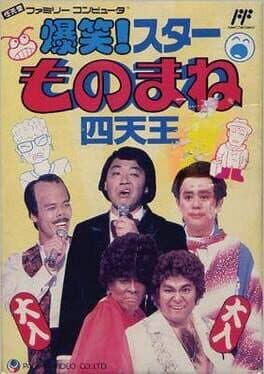
Bakushou! Star Monomane Shiten-ou
1990
Bakushō! Star Monomane Shiten-ou is a Nintendo Family Computer life simulation video game that portrays the life of either a musician or a famous performer of the monomane style of Japanese theatre. The object is to earn popularity while performing concert tours through the fictional city. Celebrity challenges are included in the game; they are considered to be miniature games like swimming and kicking a giant ball into a goal in a manner similar to soccer. While these games are fun to play, losing results in a loss of popularity points similar to performing terribly at a concert. Appeasing senior citizens by performing gigs at the nursing home is another way to gain popularity. Otherwise, they will criticize the player's music or theatre styles without an end. After gaining the respect of the elderly, the mad faces eventually turn into frowns (and eventually smiles). Television appearances come in the form of talent shows, televised concerts, and several other surprises. The eventual goal is to convert all stadiums and concert venues to the player's colors. In addition to popularity meters for the players, music styles have their own popularity meters. Smiles with the player's colors determine which music styles are best liked by the player's fans. This determine what music or theatre styles to play and which ones to avoid in certain concert venues. In the talent contest, the show is like a tournament where four people compete in a semi-final format. After the judges give their score, the two players with the lowest score are eliminated. The players with the highest score end up competing in a final round where the highest scoring player is the winner and receives popularity points. During the actual performance, the player must choose his or her musical style(s) and must improvise the lyrics. During a televised concert, the game proceeds like in a normal concert. The only difference is that an increased number of popularity points are rewarded for a successful concert. When the player draws a certain combination on the dice, he or she must go to a nursing home and impress a grandmother with his or her musical or theatre styles. If the player can impress the grandmother with his or her music, then the player is accepted more by the elderly people. However, the elderly people can get grumpy again if the player manages to make the grandmother angry each time that the player has to perform at the nursing home again. All the text in the game is in Japanese. Other combinations of the letter and number dice can create or ruin a player's popularity along with other side effects. The dice combination "A-1" is the best combination and it causes a rapid rise in popularity, which means more fans show up to the lucky person's concerts. Getting an "F-5" is the worst combination and will result in a loss of popularity. However, all other combinations can have either negative, neutral, or positive results for the player. Guessing about the result of the dice throw is all the fun of trying to get popularity for the band and greater appreciation from different age groups.
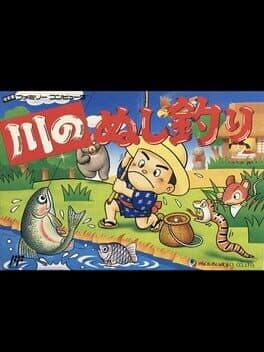
Kawa no Nushi Tsuri
Yuu Yuu1990
Kawa no Nushi Tsuri is a fishing role playing game, developed by Yuu Yuu and published by Pack-In-Video. It is the first game in the "Legend of the River King" series. But it was never released outside of Japan. The game is unique in that it combines fishing with traditional JRPG elements with those of Fishing games.
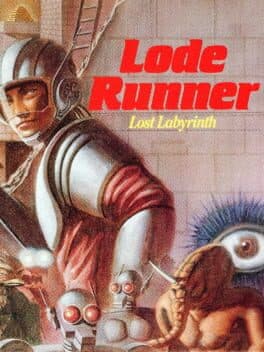
Lode Runner: Lost Labyrinth
Pack-In-Video1990
This TurboGrafx-16 release of Lode Runner allows users to create and save levels, much like the original computer-based releases. A very straightforward conversion of a popular puzzle platform game. You must collect the piles of gold on each level, while avoiding the robots on patrol. To defend yourself, you are able to shoot holes in the platforms to your left or right, and these will capture the robots for a short time before they climb out again. Once you have collected all the gold, make your way to the top of the screen for the next level. The game also includes a level editor.
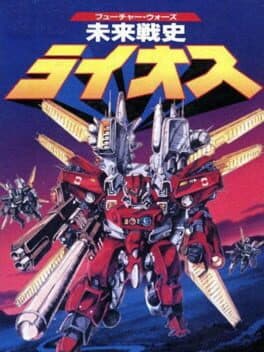
Mirai Senshi: Lios
Pack-In-Video1989
Future Wars: Lios is a turn-based strategy game developed and published by Pack-In-Video, the same developers who brought us Die Hard (NES). In this game, you play as Cecilia and her army of robots. You must make it to Goinkia's castle and stop him from taking over. To do this, you must travel the overworld and select a location. Once you do, you must take out the enemy's commander robot and then the enemy's base. Then you will win and will be allowed to progress. Sometimes defeating enemies unlocks new weapons.
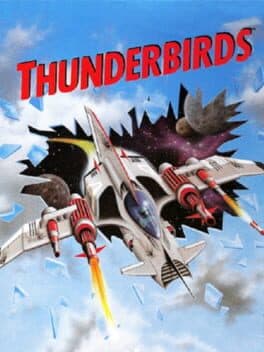
Thunderbirds
Pack-In-Video1989
A NES version of "Thunderbirds" was released by Activision in 1990.
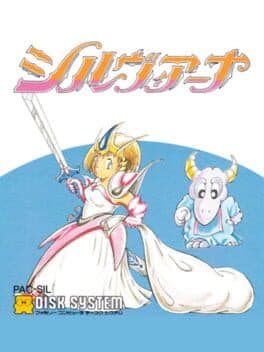
Sylviana: Ai Ippai no Boukensha
Pack-In-Video1988
Sylviana: Ai Ippai no Boukensha is a Japanese role-playing game set in a fantasy world. It follows the adventures of the protagonist Sylviana as she travels across different regions, encountering characters and completing quests. Gameplay involves exploration, character interaction, and turn-based combat. The game was released exclusively in Japan.

Rambo
Pack-In-Video1988
Rambo is a side scrolling platform game where the player controls Rambo with his mission to Vietnam. The game starts at the military base before getting sent to Vietnam. In Vietnam, Rambo has to fight animals in the jungles, swamps, and caves like wasps, snakes, fish, tigers, bats, spiders, birds, apes and flamingos. Before making his way to the POW camp he has to fight guards and mercenaries that can kick and shoot him, all wearing different color shirts depending on how powerful they are. The game also requires the player to navigate a complex map requiring the player to find North and South points on the ground to go up and down levels as well as East and West by moving Rambo to the edge of the screen. There are 6 different weapons that Rambo can pick up that are knife, throwing knife, bow and arrow, bow and exploring arrow, gun, and hand grenade. All the weapons but the knife has limited ammo which is collected from killed enemies. There is also health vile that restores health as well as mission specific items that Rambo must find to complete some missions. The game uses password save that can be retrieved when talking to any person.

Predator
Klon Co., Ltd.1988
Predator for the NES, MSX2 and TRS-80 Color Computer (also known as "Predator: Soon The Hunt Will Begin") is a 2D action game. There are 30 stages in the game, and each one is split up into two modes: Jungle Mode, and Big Mode. In Jungle Mode, the object of the game is to survive the dangers of the jungle while you shoot down guerillas and wildlife using a variety of weapons including machine guns, laser rays, and grenades (all with unlimited ammo). You exit the stage by entering a cave to proceed to the next level. Sometimes there is more than one cave, and you will be warped to another stage other than the next one, depending on what cave you enter. After three or so stages, you enter the game's Big Mode. The object here is to blast blue and purple spheres before they have a chance to hurt you. Some spheres have power-ups that will increase your firepower. When you have made some distance, you have to defeat the Predator before you can continue on to the next stage. Big Mode is the same throughout the game, but the only difference here is the Predator's attack pattern.
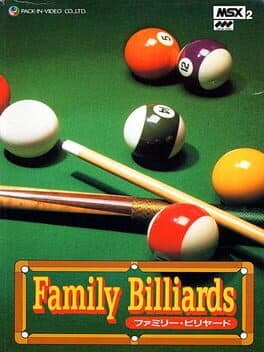
Family Billiards
Klon Co., Ltd.1987
Family Billiards is a billiards simulator with four different game types: Nine Ball, Rotation, Yotsudama, and Snooker.
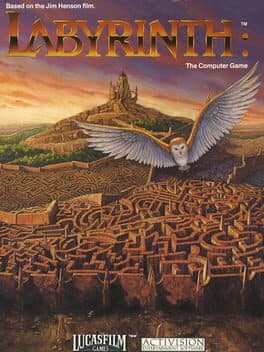
Labyrinth: The Computer Game
Lucasfilm Games1986
Labyrinth: The Computer Game is a 1986 graphic adventure game developed by Lucasfilm Games and published by Activision. Based on the fantasy film Labyrinth, it tasks the player with navigating a maze while solving puzzles and evading dangers. The player's goal is to find and defeat the main antagonist, Jareth, within 13 real-time hours. Unlike other adventure games of the period, Labyrinth does not feature a command-line interface. Instead, the player uses two scrolling "word wheel" menus on the screen to construct basic sentences.