-
Average rating
16
Games
0
Votes cast
Heartbeat
Shipped Titles
Games (16)
Daigasso! Band Brothers
Nintendo SPD2004
Daigasso! Band Brothers is a music video game published and developed by Nintendo as a launch game for the Nintendo DS. It features multiple songs, which include classical music, television themes, and video game music. The game is controlled using both the buttons on the DS as well as its touch screen in certain portions. It uses a variety of different instruments, which are combined selectively in order to compose a song. Besides the primary mode, players may play together, each one playing a different instrument in the song. Players may also compose their own songs.
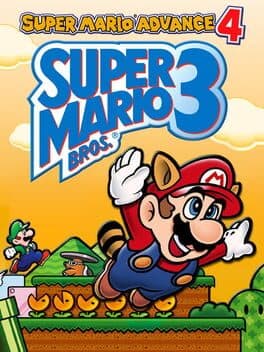
Super Mario Advance 4: Super Mario Bros. 3
Nintendo R&D22003
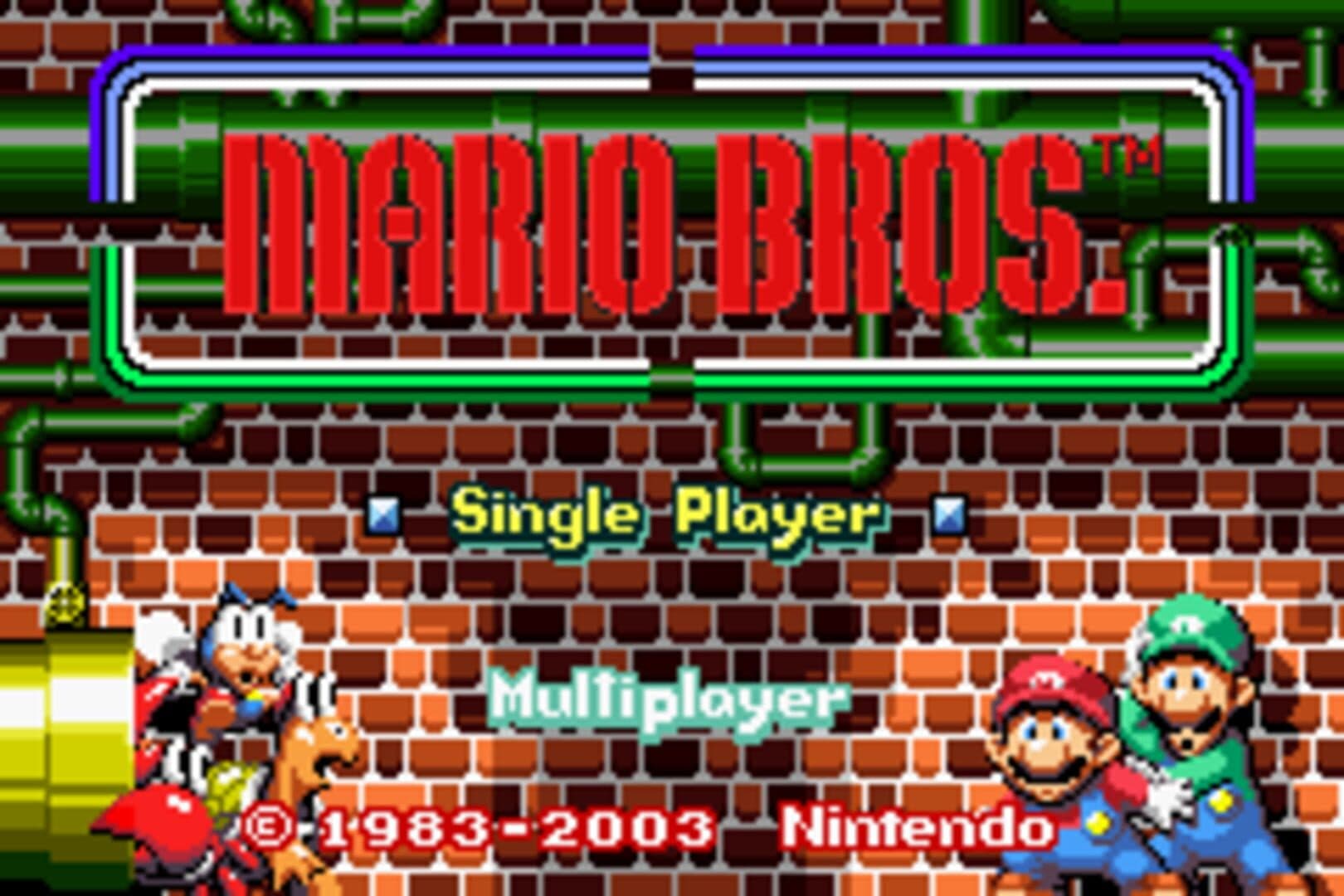
Super Mario Advance 4 is a GBA remake of Super Mario Bros. 3 for the NES. Super Mario Advance is a four-part series for the GBA with Super Mario games of the NES and SNES era. The remakes came with adjusted graphics, sound and additional content. Each game of the series includes additionally the arcade-classic "Mario Bros" which can be played in multiplayer via link cable.
The Legend of Zelda: A Link to the Past & Four Swords
Capcom Production Studio 12002
The Legend of Zelda: A Link to the Past & Four Swords features two games, a port of the SNES game The Legend of Zelda: A Link to the Past and a new multiplayer adventure called Four Swords.
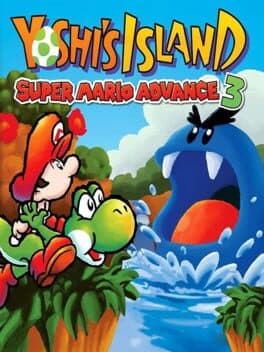
Yoshi's Island: Super Mario Advance 3
Nintendo R&D22002
Super Mario Advance 3 is a GBA remake for the SNES with the dinosaur Yoshi and his friends as main characters carrying Baby Mario and Luigi on their back. Super Mario Advance is a four-part series for the GBA with Super Mario games of the NES and SNES era. The remakes came with adjusted graphics, sound and additional content. Each game of the series includes additionally the arcade-classic "Mario Bros" which can be played in multiplayer via link cable.
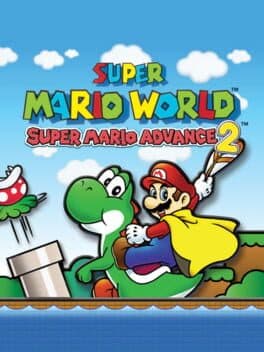
Super Mario World: Super Mario Advance 2
Nintendo R&D22001
Super Mario Advance 2: Super Mario World is a remake of Super Mario World for the Game Boy Advance starring Mario's dinosaur friend Yoshi for the first time. Super Mario Advance is a four-part series for the GBA with Super Mario games of the NES and SNES era. The remakes came with adjusted graphics, sound and additional content. Each game of the series includes additionally the arcade-classic "Mario Bros" which can be played in multiplayer via link cable.
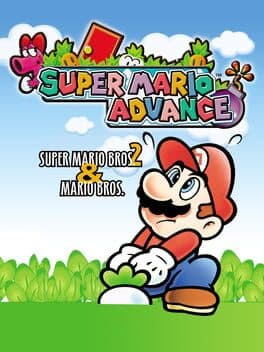
Super Mario Advance
Nintendo R&D22001
An updated re-release of Super Mario Bros. 2 (the American reskin of "Yume Kōjō: Doki Doki Panic," later re-released in Japan as "Super Mario USA") as a Game Boy Advance launch title. Based heavily on the Super Mario All-Stars version of the game, it also features an updated version of the original Mario Bros. arcade game, which can be played with up to three other players via link cable.
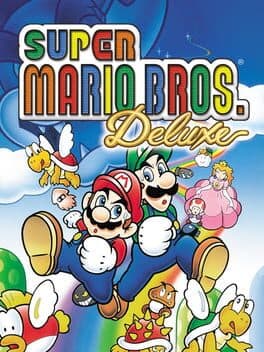
Super Mario Bros. Deluxe
Nintendo1999
Bowser has once again taken over the Mushroom Kingdom, and it's up to Mario to put an end to his sinister reign. Battle Bowser's vile henchmen through 32 different levels - all taken directly from the 1985 classic! Then move on to collect special Red Coins and Yoshi Eggs in the Challenge Mode. Or face off against a friend and race through 8 competition courses in the all-new VS Mode! This time there's a lot more to do than just save a Princess, so get ready for a brick-smashin', pipe-warpin', turtle-stompin' good time!
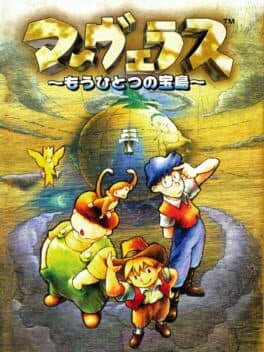
Marvelous: Mouhitotsu no Takarajima
Nintendo R&D21996
The great Captain Maverick was a pirate of legend who kept his treasure called "Marvelous" hidden that could only be found by those who were willing to solve puzzles that many deemed unsolvable. A group of children, however, will use their wits to prove them wrong when they go to the island where the treasure is said to be held. A group of pirates, however, have similar intentions. The game was referred as a spirit in Super Smash Bros. Ultimate, with the official romanization of "Marvelous: Mouhitotsu no Takarajima".
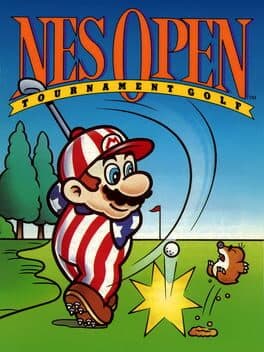
NES Open Tournament Golf
Nintendo R&D21991
NES Open Tournament Golf is an NES game featuring Mario characters. As the name of the game implies, it is a golf game and was one of the first golfing games in the Mario series. You can play a round of golf on one of three different courses. One or two players can play in the U.S., Japan, or the U.K. and choose a stroke or match play game. Gameplay is from two point of views, starting with an overhead view allowing you to set up the shot and choose a club, then switching to a 3-D point of view. Hitting the ball uses the common power meter where tapping the button starts the meter, tap the button a second time to select the amount of power in the shot, then tap the button a third time to select the amount of slice or hook.
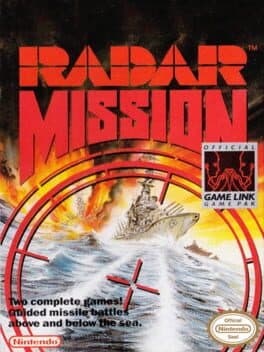
Radar Mission
Nintendo R&D21990
Radar Mission is a Nintendo Game Boy title developed and released in 1990 in Japan and North America by Nintendo. It was one of the earliest Game Boy titles, and was the first military-based game released for the Game Boy. On June 6, 2011, the game was re-released as a launch title for the Nintendo 3DS Virtual Console system via online distribution.
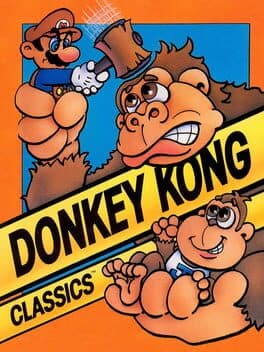
Donkey Kong Classics
Nintendo R&D21988
What's more fun than a barrel of monkeys? A Donkey Kong double feature! In DONKEY KONG you'll duck barrel bombs and flaming fireballs as you help Mario save his girlfriend Pauline from the clutches of Donkey Kong. In DONKEY KONG JR., you'll join forces with these madcap monkeys to help Donkey Kong Jr. rescue his father from Mario's prison. Are you ready for laughter? You'd better be. Because this double dose of monkey business will have you rolling in the aisles!
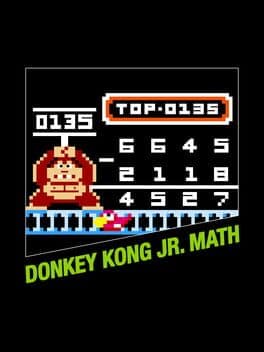
Donkey Kong Jr. Math
Nintendo R&D21983
The game features one and two player modes, both of which are single screen. In the first mode, the objective is to enter math answers in order to receive points. These questions include addition, subtraction, multiplication, and division. In the two player mode, two players control two characters as they race to create a math formula to reach the number shown by Donkey Kong, incorporating platform gameplay. The mechanics are similar to Donkey Kong Junior; players climb vines to reach higher areas in order to collect numbers scattered around the area. In order to complete mathematics problems, players must collect at least three things: the first number, the symbol necessary to reach the number shown by Donkey Kong, and the second number. When the game features a high number, such as 66, players must collect multiple numbers and mathematics symbols in order to reach this. For example, players could choose a nine, a multiplication symbol, and a seven, followed by an addition symbol and a three to reach the number 66. The two player game have two different levels, Calculate A and Calculate B. Calculate B is more challanging, not only the goal is a negative number, but giving players the set number.
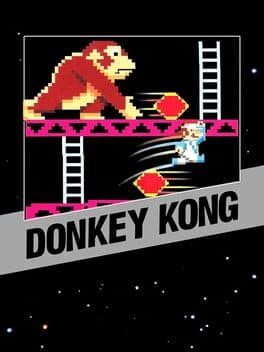
Donkey Kong
Nintendo R&D21983
Donkey Kong has kidnapped Pauline, and it is up to Mario, the fearless carpenter, to come to her rescue. Throwing fate to the wind, Mario tries desperately to climb the labyrinth of structural beams from the top of which Donkey Kong taunts him. Help our hero ascend the metal structure by dodging an assortment of fireballs, steel beams, and exploding barrels the angry ape hurls at him. Prepare yourself for a never-ending adventure as Donkey Kong takes Pauline away to the next level every time Mario gets to the top. Based on the arcade game of the same name, this classic will keep hardcore and casual gamers entertained for hours. This Donkey Kong port differs from the arcade game, having only three stages instead of four.
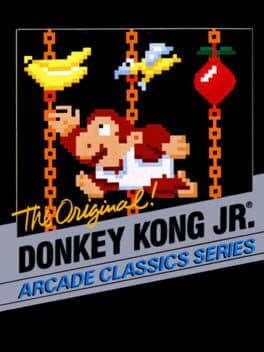
Donkey Kong Jr.
Nintendo R&D21983
Donkey Kong Jr. for the Nintendo Entertainment System is one of the most recognizable ports of the original arcade game, being re-released and ported many times.
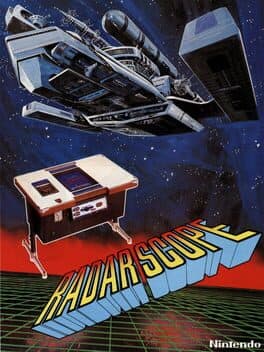
Radar Scope
Nintendo R&D21980
Radar Scope is a 1980 fixed shooter arcade game developed by Nintendo R&D2 and published by Nintendo. The player assumes the role of the Sonic Spaceport starship and must wipe out formations of an enemy race known as the Gamma Raiders before they destroy the player's space station. Gameplay is similar to Space Invaders and Galaxian, but set in a forced perspective angle. Radar Scope was a commercial failure and created a financial crisis for the subsidiary Nintendo of America. Its president, Minoru Arakawa, pleaded for his father-in-law, Nintendo president Hiroshi Yamauchi, to send him a new game that could convert and salvage thousands of unsold Radar Scope machines. This prompted the creation of Donkey Kong. Radar Scope is one of the first video game projects for artist Shigeru Miyamoto and for composer Hirokazu Tanaka. Retrospectively, critics have praised Radar Scope for its gameplay and design being a unique iteration upon the Space Invaders template. One critic labeled it one of Nintendo's most important games because its commercial failure inadvertently led to the creation of Nintendo's mascot character and helped pave the way for the company's entry into the console video game market.
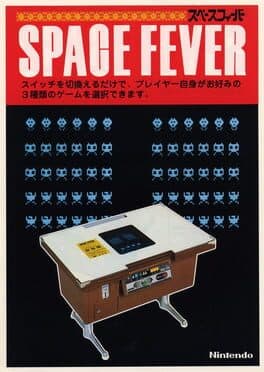
Space Fever
Nintendo R&D21979
Shoot aliens as they move across the screen. Shoot the spaceship for extra points. Choose one of three games. Space Fever is a 1979 arcade game by Nintendo R&D2. Some sources claim that Ikegami Tsushinki also did design work on Space Fever. It was released in both monochrome and color versions. The gameplay is similar to Space Invaders, which had been released by Taito in 1978. It was distributed by Far East Video. The gameplay of Space Fever is reminiscent of Space Invaders (1978), where the player controls a laser cannon situated at the bottom of the screen and must defeat waves of enemy aliens. The aliens are arranged in rows and slowly move to the edge of the screen, before descending and continuing in the opposite direction. As more aliens are defeated, they increase in speed. A UFO will occasionally appear towards the top of the screen, which can be shot down for bonus points. There are three game modes that change the way the aliens move; the first presents two formations of enemies that move in opposite directions, the second continuously adds additional rows of aliens, and the third is functionally identical to Space Invaders.