-
Average rating
69
Games
0
Votes cast
Heartbeat
Shipped Titles
Games (69)
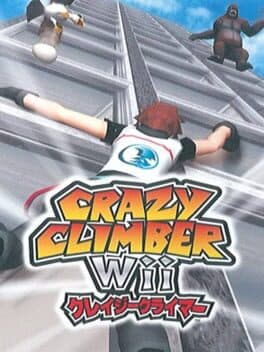
Crazy Climber Wii
Nichibutsu2010
Crazy Climber Wii brings motion control climbing to the arcade classic franchise.
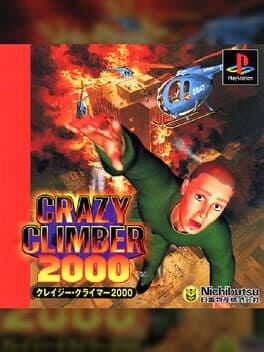
Crazy Climber 2000
Nichibutsu2000
In 1980, Nichibutsu released Crazy Climber, in which players control a man attempting to scale a series of buildings using only his hands and feet, while avoiding a series of falling objects, mostly thrown by the building's tenants. Crazy Climber 2000 takes the game play of the original and gives it a sweeping graphical makeover. The object is again to scale buildings while avoiding the falling objects thrown at you by its tenants, as well as windows that close on your fingers. The buildings themselves are laid out differently In the first stages, for example, the buildings start out as square skyscrapers. Later levels, however, require you to scale round ones. As well as this, new threats are introduced, such as: - Circling vultures that throw eggs at you. - Gorillas reaching out to grab you on both sides of the building. - Window cleaners that go from left to right, making you fall if you get in their way - Boulders thrown from elevators CC2000 also allows you to move from one face of the building to another. Also included is the original game, in all its early 80s glory.
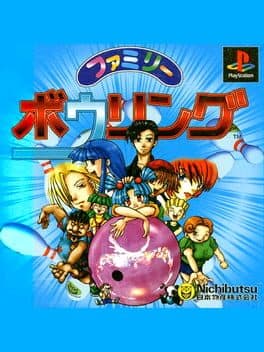
Family Bowling
Nichibutsu1998
Family Bowling (also known as Wai Wai Bowling in a later release) is a bowling game that features 2 courts at the beginning of the game (Prism Town & Liberty Planet), 12 characters (only 4 are available at the beginning of the game) & 2 game modes: - Free or Tournament mode: In this mode there are 4 possible playable characters to choose (Maki, Kazuhiko, Shota & Ichika). The player can select also the number of opponents and if he wants that they will be computer or player opponents. - Challenge Mode: In this mode the characters are the same as in free mode but here the gameplay is about different bowling challenges that the player has to try to clear. The gameplay as usual in the bowling games begins with an overview of the court where the player has to select the direction of the shot, after that the character direction and finally select the power and effect of the shot. At the beginning the player can change the name of the bowler and also select if he want a right-hand or lefty player. The game allows up to four human players (using the same controller, not a multitap) to play at the same game.
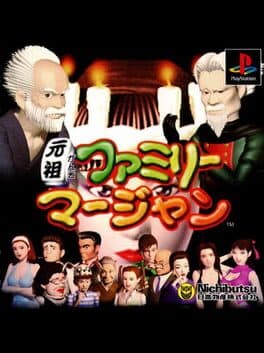
Ganso Family Mahjong
Nichibutsu1998
Ganso Family Mahjong is a mahjong game is which the player is a gambler (male or female one, since the game allows the player to choose a name, genre, blood type, etc) that in the new story mode he goes through some kind of board in which he advance playing mahjong matches againts computer opponents. The game also features a tournament mode, a free game mode and also a complete tutorial.
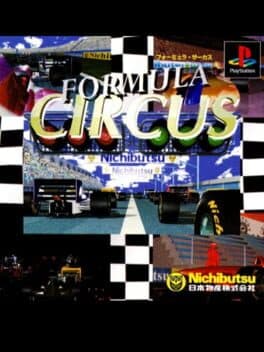
Formula Circus
Nichibutsu1997
Join Formula Circus! Shape a dynamic racing career, manage your team, and customize everything in this immersive simcade. Your decisions on and off the track define your legacy.
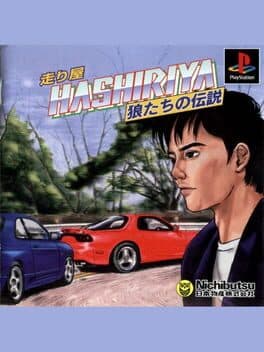
Hashiriya: Ookami-tachi no Densetsu
Nichibutsu1997
A neat drift-racing game ala Initial D that lets you choose among 15 cars and 5 courses. You can race against up to 5 cars in the arcade mode and there's also a story, time trial and practice mode (where you can train tricky parts of courses). Graphics and sound are passable but unremarkable (you can listen the 12 redbook tracks on your stereo) and the handling is a bit hard to get into at first as it feels a bit stiff with a digital pad. I'd recommened using the Negcon, which helps quite a bit. An obscure racing wheel, the "Cockpit Wheel" (SLHP-00024) is also supported. Sadly no multiplayer option, but all in all I'd say it's a nice little racer, albeit not quite up on par with the greats (Side by Side Special, Touge MAX G).
Nichibutsu Collection 2
1996
Nichibutsu Collection 2 is a Miscellaneous game, published by Nichibutsu, which was released in Japan in 1996.
Nichibutsu Collection 1
1996
Nichibutsu Collection 1 is a Miscellaneous game, published by Nichibutsu, which was released in Japan in 1996.
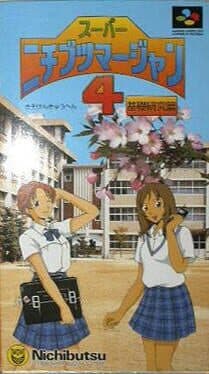
Super Nichibutsu Mahjong 4: Kiso Kenkyu-hen
1996
Super Nichibutsu Mahjong 4: Kiso Kenkyu Hen is a Miscellaneous game, published by Nichibutsu, which was released in Japan in 1996.
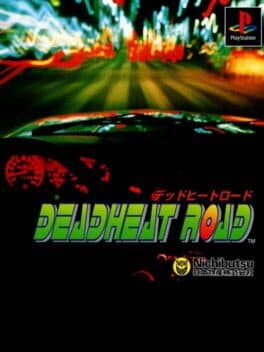
Deadheat Road
Nichibutsu1996
Deadheat Road is a classic racing game in which the player compete in a racing againts a computer player car. The races usually starts in the night and ends with the daylight. The game features different cars for the player to choose and different circuits (west and east ones). The cars can also be customized.
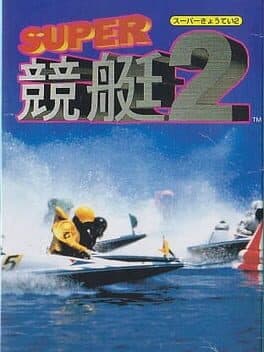
Super Kyoutei 2
1996
Super Kyoutei 2 is a Racing game, published by Nichibutsu, which was released in Japan in 1996.
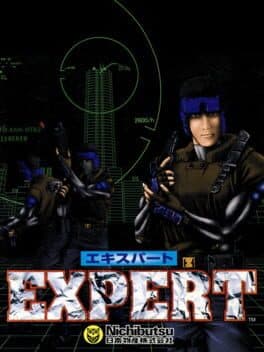
Expert
Nichibutsu1996
Uncover the truth of the incident that struck the intelligent building that has been occupied by the terrorists as a member of the "Expert" Special Forces! 3D gun shooting game that captures the action in a first person perspective. Explore the building freely, but be careful and take out the enemy before they take you out!
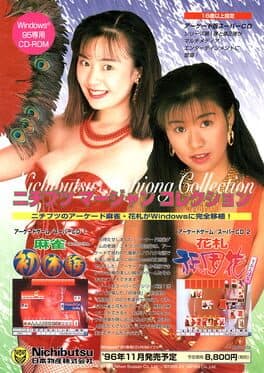
Nichibutsu Mahjong Collection
Nichibutsu1995
Strip mahjong game featuring FMV scenes and photographs of models.
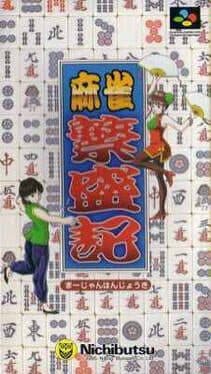
Mahjong Hanjouki
1995
Mahjong Hanjouki is a Miscellaneous game, published by Nichibutsu, which was released in Japan in 1995.
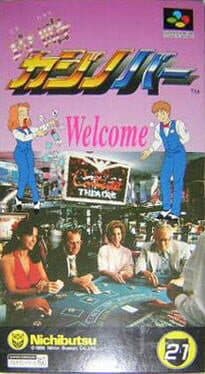
Kouryaku Casino Bar
Nichibutsu1995
Kouryaku Casino Bar is a Miscellaneous game, published by Nichibutsu, which was released in Japan in 1995.
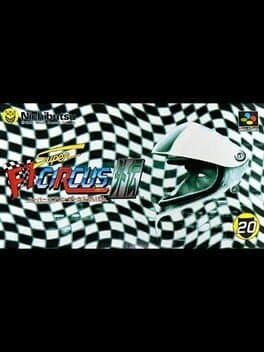
Super F1 Circus Gaiden
Cream1995
Super F1 Circus Gaiden is a "behind the exhaust" car racing game from Cream and Nichibutsu and the fifth and final Super Famicom game in the F1 Circus series, as well as the final game in that franchise overall. The player competes for a chance to enter Formula 1 tournaments, but in the single-player mode must first graduate from GT (Group B) racing and Group C racing by completing races in those cars. In the multiplayer and time trial modes the player can choose any car category. The game has the standard assortment of customization options for their vehicles before starting a race, as well a number of different international tracks and race car drivers. Players have to be wary of taking too damage from collisions while racing, otherwise they will have to retire from the race early.
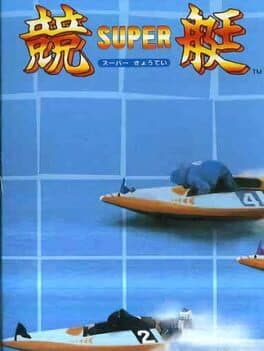
Super Kyoutei
1995
Super Kyoutei is a Racing game, published by Nichibutsu, which was released in Japan in 1995.
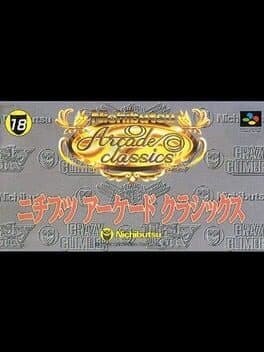
Nichibutsu Arcade Classics
Nichibutsu1995
Nichibutsu Arcade Classics is a compilation for the Super Famicom and Sony PlayStation released in 1995. It features three of Nichibutsu's (or Nihon Bussan) Arcade games from the early 80s, adapted for consoles but otherwise left as-is. Contract developers Syscom were brought in to make the adaptations. It was followed up by Nichibutsu Arcade Classics 2, which contained the original 1979 Arcade version of Heiankyo Alien and a graphically enhanced remake. The games included are Crazy Climber (An action game where the protagonist scales a building. Best known for its complex controls that independently control each hand), Frisky Tom (An action game where the protagonist has to maintain a plumbing system and protect it from rogue rats), and Moon Cresta (A single-screen shoot 'em up similar to Galaxian in which the player's ship can dock with larger ships between stages to become more powerful).

Puzzle'n Desu!
Nichibutsu1995
A puzzle game for the Super Famicom where the hero has to push blocks across a grid to complete lines of the same color.
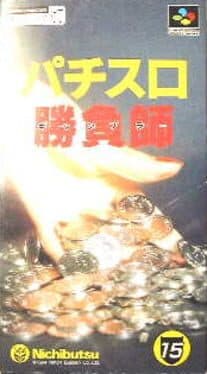
Pachi-Slot Shoubushi
Nichibutsu1994
Pachi-slot game developed by Nihon Bussan in 1994. Also features two- and four-player mahjong.
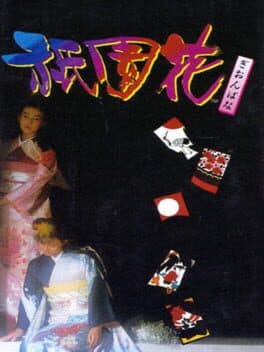
Gionbana
Nichibutsu1994
A simulation of the card game Hanafuda for the Arcade and Super Famicom.
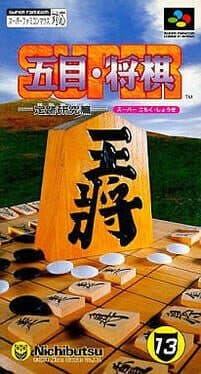
Super Gomoku Shogi
1994
Super Gomoku Shogi is a Miscellaneous game, published by Nichibutsu, which was released in Japan in 1994.
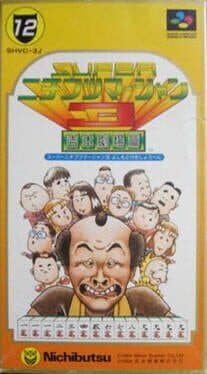
Super Nichibutsu Mahjong 3: Yoshimoto Gekijou-hen
1994
Super Nichibutsu Mahjong 3: Yoshimoto Gekijou-hen is a Miscellaneous game, published by Nichibutsu, which was released in Japan in 1994.
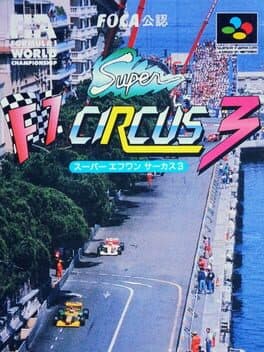
Super F1 Circus 3
Cream1994
Super F1 Circus 3 is a 1994 Formula One racing game and the third of Cream/Nichibutsu's F1 Circus games for the Super Famicom. It focuses on the 1993/94 season and recreates circuits from sixteen different countries. The game offers a "quick race" mode that randomly picks a track and avoids the majority of the simulation elements. The game sits between Super F1 Circus 2 and Super F1 Circus Gaiden in the series. As with its predecessors, it has licenses from FOCA (the Formula One Constructors Association) and Fuji TV (the TV station that covers F1 in Japan) that allow it to depict actual teams/drivers from the Formula One World Championship. It was never released outside of Japan.
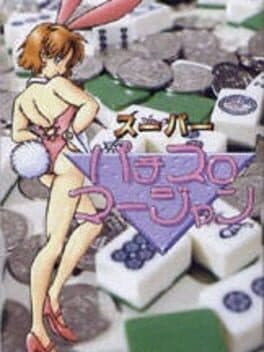
Super Pachi-Slot Mahjong
Syscom Entertainment1994
Super Pachi-Slot Mahjong is a Miscellaneous game, developed by Syscom and published by Nichibutsu, which was released in Japan in 1994.
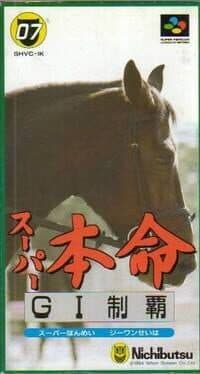
Super Honmei: G1 Seiha
1994
Super Honmei: G1 Seiha is a Sports game, published by Nichibutsu, which was released in Japan in 1994.
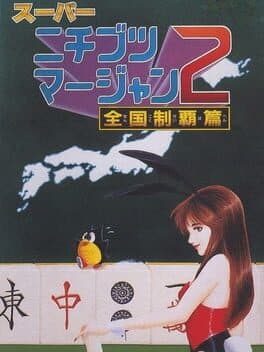
Super Nichibutsu Mahjong 2: Zenkoku Seiha-hen
Nichibutsu1993
Super Nichibutsu Mahjong 2: Zenkoku Seiha-hen is a Miscellaneous game, developed and published by Nichibutsu, which was released in Japan in 1993.
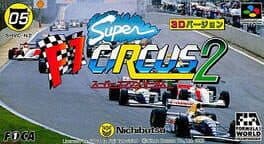
Super F1 Circus 2
Cream1993
Super F1 Circus 2 is a Formula One racing game that allows the player to join any team in the 1993 Formula One season and take part on sixteen different circuits all over the world. They can also configure the load-out for the F1 vehicle. It is the second official F1 Circus game for the system, though technically the third due to 1992's Super F1 Circus Limited. Overall it is the eighth F1 Circus game.
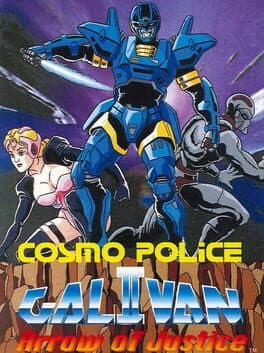
Cosmo Police Galivan II: Arrow of Justice
Cream1993
The evil syndicate Mado was defeated and couldn't seize control over the universe. The dark lord Madius has rebuilt his forces, and again Earth comes threatened by evil. Cosmo Police Galivan strikes back to save the universe once again from the clutches of evil.
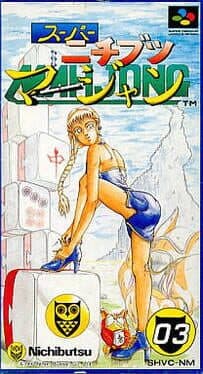
Super Nichibutsu Mahjong
1992
Super Nichibutsu Mahjong is a Miscellaneous game, published by Nichibutsu, which was released in Japan in 1992.
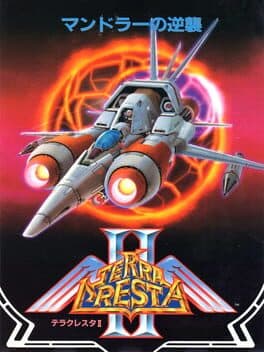
Terra Cresta II: Mandler no Gyakushuu
Make Software1992
Terra Cresta II, or Terra Cresta II: Mandler no Gyakushuu, is a vertical-scrolling shoot 'em up and the sequel to Nichibutsu's earlier Terra Cresta, which in turn was a sequel to Moon Cresta. Unlike the original, Terra Cresta II skipped the Arcade and was released on the PC Engine. The game uses a distinct power-up system where the player is acquiring additional modules for their spaceship. These modules can be configured in two ways: one configuration has them connected directly to the ship, increasing its firepower, where the second has them separate from the central ship to increase their coverage. Before starting, the player can choose which direction the ship modules will fire in and the positions they take around the central ship when separated. Through this system, the player can fine-tune the amount of coverage their bullets will reach.
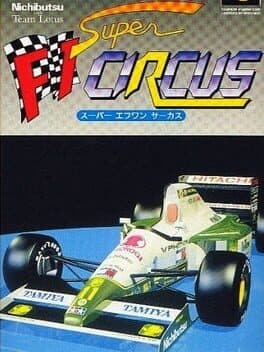
Super F1 Circus
Cream1992
Super F1 Circus is a F1 racing game from Cream and Nichibutsu (Nihon Bussan) and the first Super Famicom entry in the F1 Circus entry, which originated on the PC Engine (Turbografx-16) and Famicom. It is sponsored by Team Lotus, a former racing company associated with Formula 1 as well as many other racing leagues that has recently come back into being. The game is a traditional top-down racing game that emphasizes sim elements, such as selecting the car's various parts and ensuring that the rules of the race are followed. If the player causes too many infractions, or too much damage is caused to six vital instruments on the car, they will be forced out of the race. As well as the other games in the F1 Circus series, Super F1 Circus would receive numerous direct sequels of its own. Super F1 Circus Limited came out later the same year.
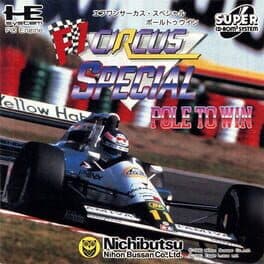
F1 Circus Special: Pole to Win
Nichibutsu1992
F1 Circus Special is a Formula 1 racing game. Players can choose between a world championship mode, which follows the path of one driver through the game's available courses in a linear fashion; a test drive mode, which allows players to choose any course as well as change rules and conditions (e.g. the amount of damage inflicted); and a time attack mode for competing against each other.
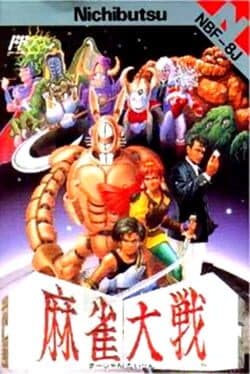
Mahjong Taisen
Nichibutsu1992
Mahjong Taisen is a Miscellaneous game, developed by Nihon Bussan and published by Nichibutsu, which was released in Japan in 1992.
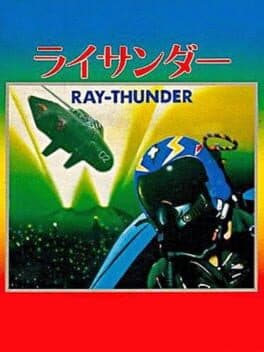
Ray-Thunder
1991
Japan-exclusive game. Released in 1991 for the Game Boy.
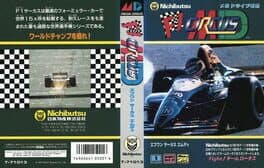
F1 Circus MD
Nichibutsu1991
F1 Circus MD (F1サーカスMD) is a 1991 racing game by Nihon Bussan for the Sega Mega Drive in their F1 Circus series.
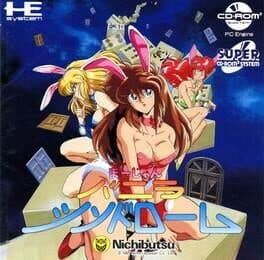
Mahjong Vanilla Syndrome
Nichibutsu1991
In Mahjong Vanilla Syndrome, the player takes the role of a young man who finds a mysteriously-looking little house, opens the door - and falls through a portal into another dimension! There, he is greeted by a cute bunny-eared girl named Vanilla (perhaps it should have been Bunnyla, but we'll never know), who says she is the guardian of the portal, and if he wants to return home, he'll have to defeat her and the other guardians in the game of mahjong!
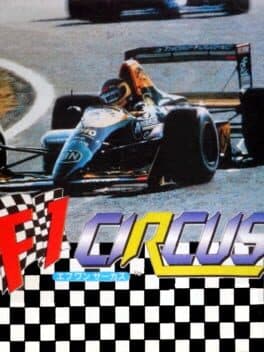
F1 Circus
Nichibutsu1990
The first game in Nichibutsu's Formula One top-down racing series. F1 Circus is a top-down Formula 1 racing game and the first game in Nihon Bussan's F1 Circus series. It was first released on the PC Engine in 1990, but a modified version - also partially based on this game's sequel, F1 Circus '91 - would later be released on the Famicom in 1992. As with every other game in the series, the game was never localized in North America or Europe. The game uses the real life names of drivers and teams from Formula 1, like Nigel Mansell and Ferrari. The series would continue to acquire the various licenses needed to use real names from Formula 1.
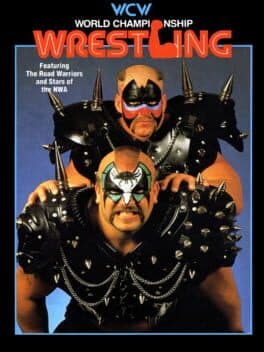
WCW: World Championship Wrestling
Nichibutsu1990
Challenge the world's greatest wrestlers in the grappling action game that puts you in the toughest competition of all! Choose which wrestler you want to be or make up your own tag team from top NWA stars including: "Nature Boy" Ric Flair, Sting, "Total Package" Lex Luger, Ricky "The Dragon" Steamboat, Road Warriors "Hawk" and "Animal," and "Dogface Gremlin" Rick Steiner. Become your favorite wrestler as you battle it out in the ring!
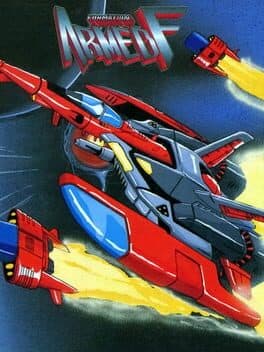
Formation Armed F
Nichibutsu1988
Formation Armed F is a vertically scrolling shooter. The basic gameplay principle offers no surprises: shooting a lot of aliens without getting hit by their attacks. Additionally there are environmental obstacles like poisonous gas or walls. Of course the player can collect power ups to upgrade the ship, e.g. speed-ups or a large variation of weaponry. Each of the seven levels has its own set of weaponry which suits the enemies. The big exception are smaller ships which stay near to the main ship. By pressing a second fire button, the formation can be changed. There are no continues.
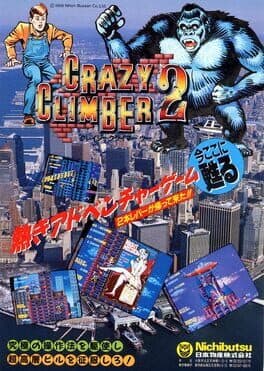
Crazy Climber 2
Nichibutsu1988
Crazy Climber 2 (クレイジークライマー2?) is a 1988 arcade game developed and published by Nichibutsu. It is the sequel to the 1980 arcade game Crazy Climber. The gameplay is mostly identical to that of its predecessor, but there some significant differences. Unlike its predecessor, Crazy Climber 2 was only released in Japan.
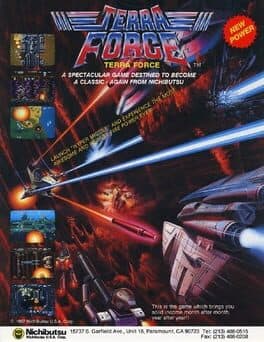
Terra Force
Nichibutsu1987
A shooter from the same company who brought you Terra Cresta.
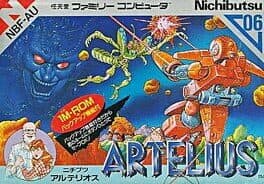
Artelius
Nichibutsu1987
A sci-fi themed RPG from Nihon Bussan for the Famicom, released in late 1987. It was never released outside of Japan.
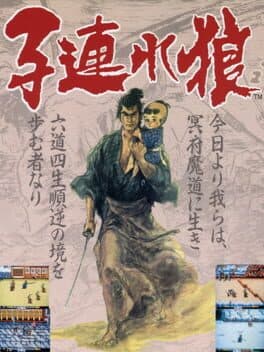
Kozure Ookami
1987
Game based on Lone Wolf and Cub. After Ogami Ittō's wife Azami gives birth to their son, Daigorō, Ogami Ittō returns to find her and all of their household brutally murdered, with only the newborn Daigorō surviving. The supposed culprits are three former retainers of an abolished clan, avenging the execution of their lord by Ogami Ittō. However, the entire matter was planned by Ura-Yagyū (Shadow Yagyu) Yagyū Retsudō, leader of the Ura-Yagyū clan, in order to seize Ogami's post as part of a masterplan to control the three key positions of power: the spy system, the official assassins and the Shogunate Decapitator. During the initial incursion, an ihai (funeral tablet) with the shōgun's crest on it was placed inside the Ogami family shrine, signifying a supposed wish for the shogun's death. When the tablet is "discovered" during the murder investigation, its presence condemns Ittō as a traitor and thus he is forced to forfeit his post.
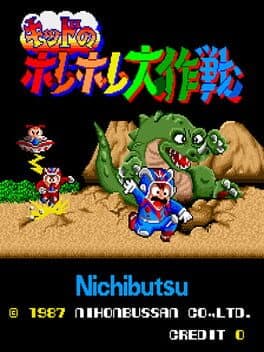
Kid no Hore Hore Daisakusen
Nichibutsu1987
Before the SNES adaptation, Nichibitsu had actually licensed the Heiankyo Alien game in order to create its Kid no Hore Hore Daisakusen series. Although it features hole digging/enemy trapping mechanic, it's hardly the trap-'em-up that Heiankyo Alien is. The real goal of each level is to collect all the items available to exit the level through a door. With the use of other items such as flame throwers and bombs, you could play through the entire game without once trapping an enemy. The game had several sequels, including Booby Kids for the Famicom and Doraemon Meikyū Daisakusen for the PC Engine. The latter was localized and released on the TurboGrafx-16 under the title Cratermaze, with the Doraemon character removed.
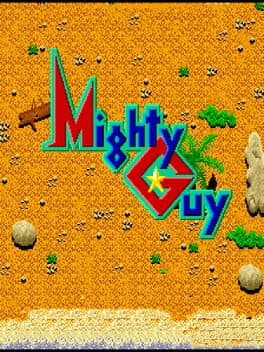
Mighty Guy
Nichibutsu1986
Mighty Guy combines the overhead perspective of a run and gun with the gameplay of a beat 'em up. Your character has to fight their way through a desert, town, and mechanical area filled with machines, humans, and bugs to fight. You use punches or a jump kick to defeat enemies as you advance upward. Some enemies will drop guns that you can pick up to use for yourself, making the game play more like a conventional run and gun. Once you defeat the boss at the end, the game will loop back to the beginning and repeat until you run out of lives.
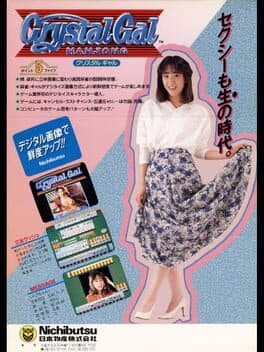
Crystal Gal Mahjong
Nichibutsu1986
Adult-themed Japanese arcade mahjong by Nichibutsu. Released in the mid-1980s; known via arcade flyer/listings and preserved in arcade databases. A direct sequel, Crystal Gal II Mahjong, followed in 1986
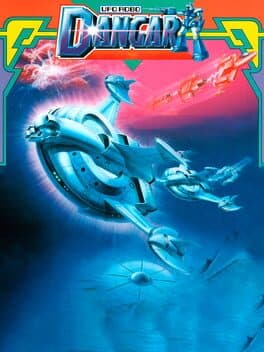
UFO Robo Dangar
Nichibutsu1986
UFO Robo Dangar is a 1986 arcade game released by Nichibutsu. It is a game in the Moon Cresta series, which includes Terra Cresta and Terra Force. The game is inspired by the anime series UFO Robo Grendizer and Danguard Ace.
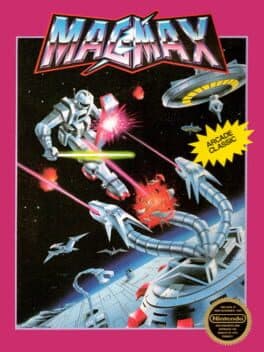
MagMax
Nichibutsu1986
A horizontal scrolling shooter, players control the title hover ship in an attempt to completely construct the ship into a giant robot and to destroy any enemies attempting to stop it. The three-headed mechanical dragon found as a boss character in the game, known as Babylon, strongly resembles Mecha-King Ghidorah from the Godzilla franchise.
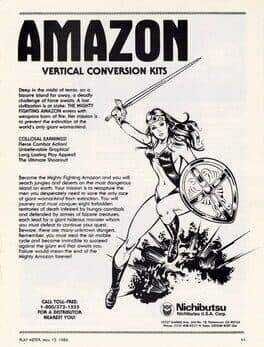
Soldier Girl Amazon
Nichibutsu1986
Soldier Girl Amazon is a shooter released by Nichibutsu in 1986. The soldier girl Amazon fights on a completely different Earth, dominated by strange beasts and crazy cyborgs.
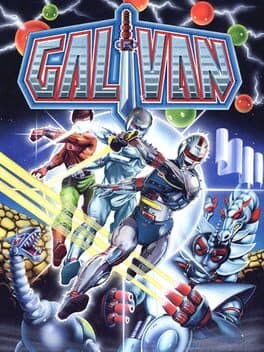
Cosmo Police Galivan
Nichibutsu1985
Cosmo Police Galivan puts the player in control of a human being armed with a beam blade, which is only able to attack monsters in close proximity. As the game continues, the player character can use different powers - some ranged - to take out enemies and progress further. Eventually, the player will have the option of becoming a metal-armored officer with considerably more fire-power, though this power-up state will vanish if too much damage is taken. The player character will also level-up after destroying so many enemies, improving their health and "cosmo points" - a stat similar to mana that is used to power the player character's special attacks. The game's world is a network of caves that the player can explore for necessary items and bonus areas. The NES version expands this aspect, providing some Metroidvania-esque exploration. Some impediments are in place to restrict further exploration until the right item is found, as well.
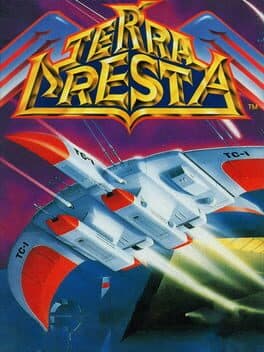
Terra Cresta
Nichibutsu1985
Terra Cresta is a vertically scrolling shoot 'em up. The player controls a ship, initially with limited firepower. Numbered pods appear containing further parts of the ship that will increase firepower. These additional parts combine with the player's ship to increase its firepower, and the final module transforms it into a fiery phoenix which is invulnerable for a certain period of time. Once the ship has multiple sections, the player may also split it, allowing it to fire in multiple directions. The player begins with three lives and it is possible to play with either one or two players.
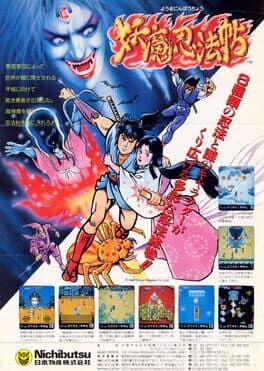
Ninja Emaki
Nichibutsu1985
Ninja Emaki was produced by Nichibutsu in 1985. Nichibutsu released 80 different machines in our database under this trade name, starting in 1979. Other machines made by Nichibutsu during the time period Ninja Emaki was produced include Cop 01, Pastel Gal, MagMax, Dangar Ufo Robo, Youma Ninpou Chou, Roller Jammer, Tube Panic, Dacholer, Rug Rats, and Nichibutsu Hustler. Game Play A lot like Commando, but the game has a much more interesting landscape. Pick up scrolls that will give you a variety of high-powered weapons to fight your opponents. Boss stages are fairly challenging.
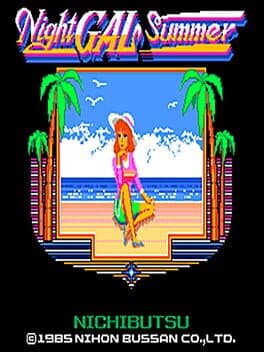
Night Gal Summer
1985
Evening Girl is a mahjong game from the arcade platform. It combines interesting elements with adventurous gameplay. It has given us a lot of fun after it was released. If you are also a loyal fan of this game, you must not miss it .
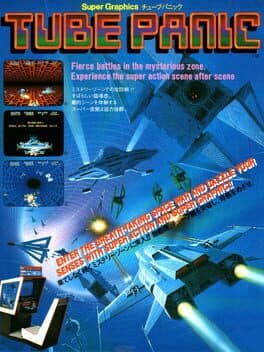
Tube Panic
Nichibutsu1984
Tube Panic was produced by Nichibutsu in 1984. Nichibutsu released 80 different machines in our database under this trade name, starting in 1979. Other machines made by Nichibutsu during the time period Tube Panic was produced include Roller Jammer, Pastel Gal, Ninja Emaki, Dangar Ufo Robo, Cop 01, Dacholer, Skelagon, Nichibutsu Hustler, Rug Rats, and Constella.
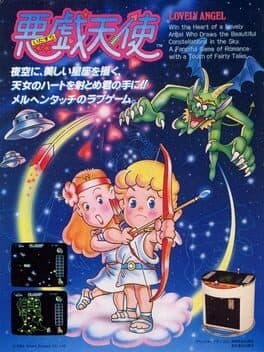
Itazura Tenshi
Nichibutsu1984
Control an angel and connect the stars to complete the constellation. Various enemies that get in the way can be defeated using the bow. When all the constellations are completed, RAN and LUM will appear. Make them hug well to get a bonus.
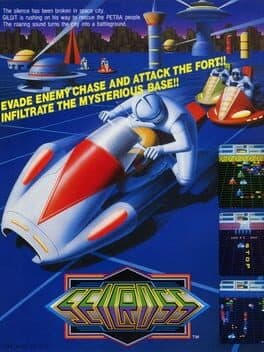
Seicross
Nichibutsu1984
The player rides a motorcycle-like craft, bumping other riders, collecting 'power' modules and shooting blue coins.
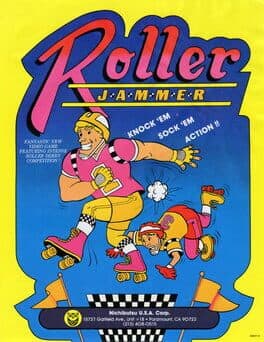
Roller Jammer
Nihon Bussan1984
A roller derby/fighting game from Nichibutsu.
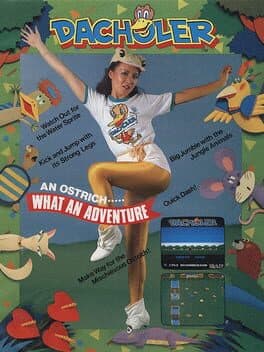
Dacholer
Nichibutsu1983
A game where the player controls an ostrich and must kick soccer ball shaped tortoises into enemies to complete levels.
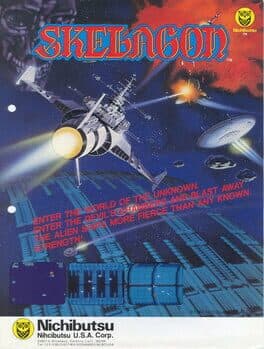
Skelagon
Nichibutsu1983
A horizontal space shooter from Nichibutsu.
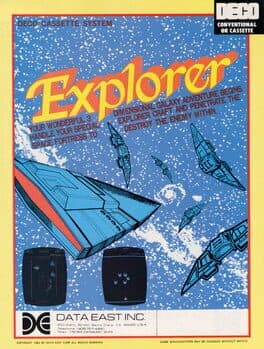
Explorer
Nichibutsu1982
Horizontal space shooter
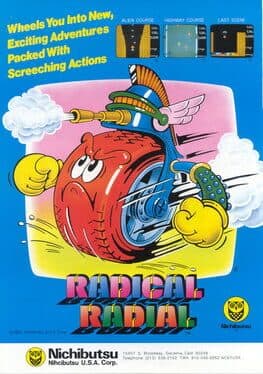
Radical Radial
Nichibutsu1982
A Racing/Driving/Vertical Shooting game.
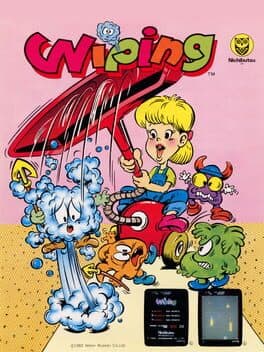
Wiping
Jorudan1982
In Wiping the player controls a vacuuming robot to scour and clean up. Each scene has the robot vacuuming dust off the floor while tackling the dust bunnies Baddon, Bilbola and Bigimba. Although some dust bunnies can easily be sucked up or repeatedly shot with cleaning projectiles, the more aggressive ones like Bigimba have ranged attacks. Cleaning dust off the floor limits the capabilities of the dust bunnies. Rolling carpets can be strategically used to eliminate one or more dust bunnies. One hit from a dust bunny loses a life. When all dust bunnies are cleared, the player proceeds to the next scene. Items can also be collected for bonus points. The scenes become progressively harder with faster and more numerous dust bunnies. There is no ending to the game, just attempts to get the highest score possible.
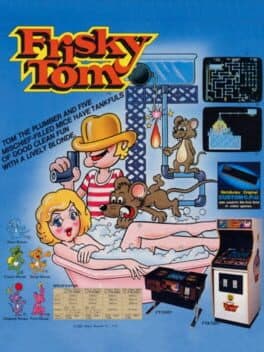
Frisky Tom
Jorudan1981
Frisky Tom is a 1981 arcade game by Nichibutsu. The object of the game is to provide enough water for a shower by crawling along a network of plumbing pipes and picking up/replacing loose pieces. Various types of mice are the game's antagonists, trying to thwart Tom in different ways: knocking pipes loose to disrupt the water flow, jumping down to fall on him, or setting a bomb to blow up the entire plumbing arrangement.
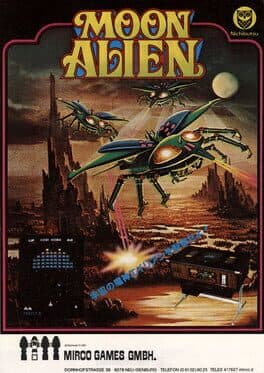
Moon Alien
Nichibutsu1980
Galaxian clone
Crazy Climber
Nichibutsu1980
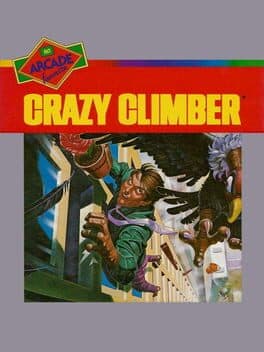
Crazy Climber is a coin-operated arcade game produced by Nichibutsu in 1980. It was also released in North America by Taito America Corporation by UA Ltd. in 1982 for the Emerson Arcadia 2001 and other video game consoles. It is one of Nichibutsu's most highly-acclaimed video games in its library. A precursor to the platform game genre, Crazy Climber was the first game revolving around climbing, specifically climbing buildings, before Nintendo's 1981 release Donkey Kong.
Moon Raker
Nichibutsu1980
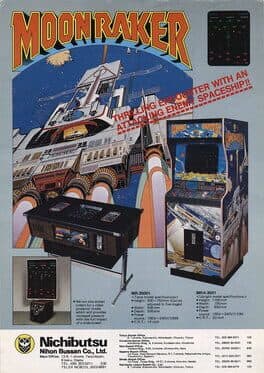
Galaxian clone
Moon Cresta
Nichibutsu1980
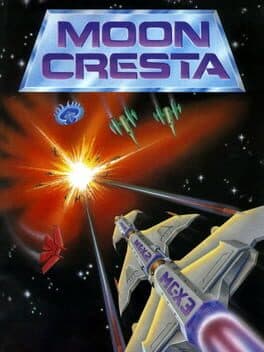
Moon Cresta is an arcade game released in 1980 by Nichibutsu. A moving starfield gives the impression of vertical scrolling, but the game is a fixed shooter in the vein of Namco's Galaxian. Incentive Software published a version of this arcade game for many 8-bit home computers of the time. Dempa also released a port of both Moon Cresta and Terra Cresta for the X68000. It was also released on the Wii Virtual Console in Japan on March 9, 2010 and PlayStation 4 (Arcade Archives) in 2014.
Rolling Crash
Nichibutsu1979
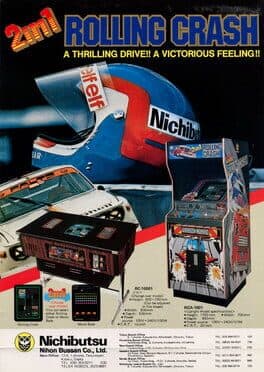
Top down racing game in which the player collects dots Pac Man-style on several lanes while avoiding collisions with the other car.