-
Average rating
37
Games
0
Votes cast
Heartbeat
Shipped Titles
Games (37)
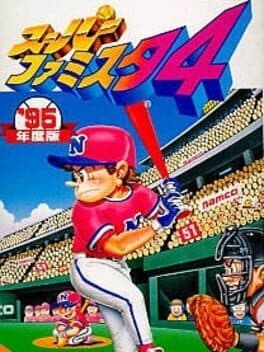
Super Famista 4
Namcot1995
Super Famista 4 is a Sports game, published by Namco, which was released in Japan in 1995.
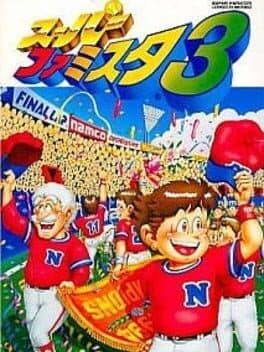
Super Famista 3
Namcot1994
Super Famista 3 is a Sports game, published by Namco, which was released in Japan in 1994.
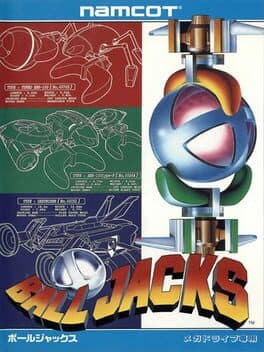
Ball Jacks
1993
Ball Jacks is a 1993 game for the Sega Mega Drive by Namco released exclusively in Japan and Europe. The game is a "sports game" with a unique sport involving grabbing balls from a conveyor belt on end end of the screen and dropping them into another. Whether or not this is a renamed port of another game is presently unknown.
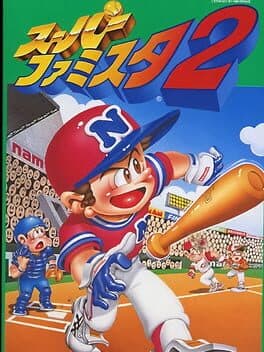
Super Famista 2
Namcot1993
Super Famista 2 is a Sports game, published by Namco, which was released in Japan in 1993.
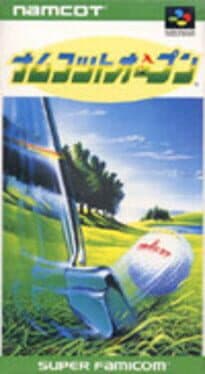
Namcot Open
Tose1993
Namco Open is a Sports game, developed by TOSE and published by Namco, which was released in Japan in 1993.
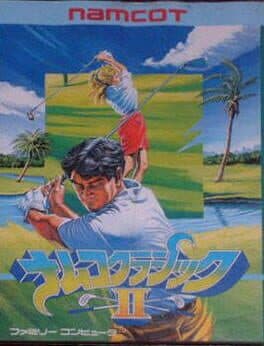
Namco Classic II
Tose1992
Namcot Classic II is a Sports game, developed by TOSE and published by Namcot, which was released in Japan in 1992.
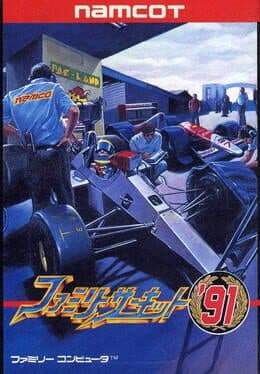
Family Circuit '91
Game Studio1991
Family Circuit '91 is a Racing game, developed by Game Studio and published by Namco, which was released in Japan in 1991.
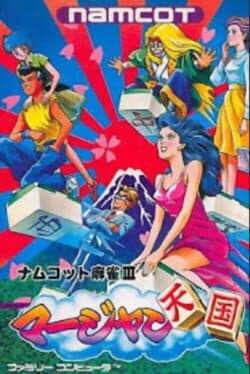
Namcot Mahjong III: Mahjong Tengoku
Namcot1991
Namcot Mahjong III: Mahjong Tengoku is a Miscellaneous game, developed and published by Namco, which was released in Japan in 1991.
Batter Up
Namco1991
Batter Up is a rogue-lite arena battler with a baseball twist! Kill waves of zombies by swinging your bat and sending your ball flying. Build up insane deck combinations and mow through enemies with synergistic upgrade combinations!
Fushigi no Umi no Nadia
Namcot1991
Fushigi no Umi no Nadia is a 1991 adventure game for the Sega Mega Drive by Namco released exclusively in Japan to tie into the Fushigi no Umi no Nadia anime series. An English-language fan translation was released in July 2011.
Final Blaster
1990
A vertical-scrolling shoot 'em up that configures its difficulty to match the skill of the player. Final Blaster is a vertical scrolling shoot 'em up for the PC Engine. The player is part of squadron of fighters sent to save the world from an alien invasion. Final Blaster hosts a number of features that are distinct to the game: the first is a charge shot that resembles a phoenix and is the only form of projectile that can destroy certain larger enemies. The second is that the game configures its difficulty depending on how many power-ups the player has when finishing a level, or how often they've been destroyed. The game was unique to the PC Engine and did not see an international release outside of Japan. It came out on the same day as W Ring: The Double Rings, another shoot 'em up exclusive to the Japanese PC Engine.
Disk NG 2
1990
Includes Galaxian, Pac-Man, Rally-X, Dig Dug, Mappy and SHM, the last of which is exclusive to this compilation
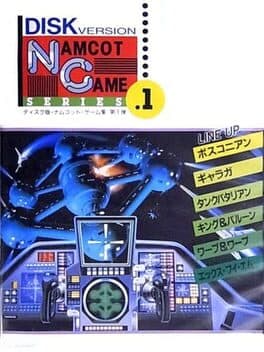
Disk NG 1
Namcot1990
Includes King & Balloon, Tank Battalion, Warp & Warp, Galaga, Bosconian and XVM the last of which is exclusive to this compilation.
XVM
Namcot1990
A game released exclusively inside the Disk NG 1 bundle.
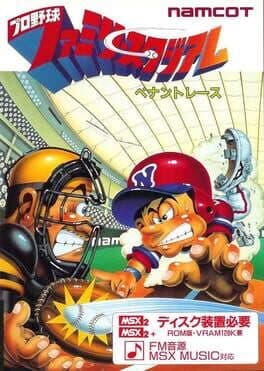
Pro Yakyuu Family Stadium: Pennant Race
Compile1989
A version of Famista with a Pennant Race mode.
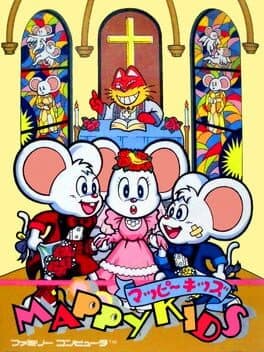
Mappy Kids
Namcot1989
The player controls the son of Mappy in a platformer game. He wants to find a wife but she won't marry him until Mappy can become a provider for his family. At the end of each level, there is a slot machine. Pulling the lever to the slot machine may allow the player to earn extra lives. After the mini-games, players access a shop, where they can buy various things with the money that they find during the game. This game was released for the Nintendo Famicom in Japan only.
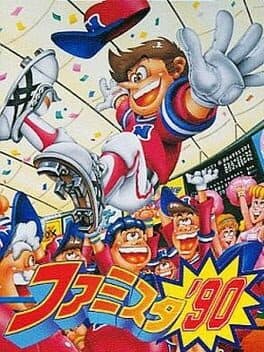
Famista '90
Namcot1989
Namco's baseball simulator for 1990.
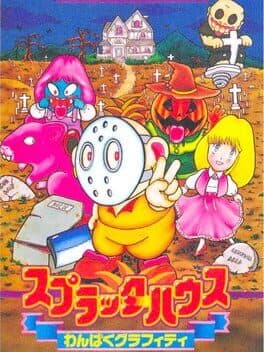
Splatterhouse: Wanpaku Graffiti
NOW Production1989
Revived by his girlfriend's grief and a flash of lightning, Rick must chase down the Pumpkin king and save his beloved Jennifer once and for all! A parody of the bloody horror beat-'em-up Splatterhouse, Wanpaku Graffiti assumes a much cuter appearance but retains the same fast-paced action of the original.
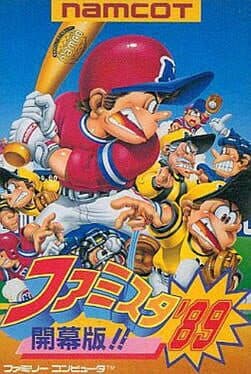
Famista '89: Kaimaku Ban!!
Namcot1989
Famista '89: Kaimaku Ban!! is a Sports game, developed and published by Namco, which was released in Japan in 1989.
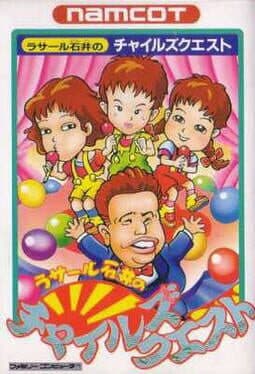
LaSalle Ishii no Child's Quest
Namcot1989
LaSalle Ishii no Child's Quest is a Role-Playing game, developed and published by Namco, which was released in Japan in 1989.
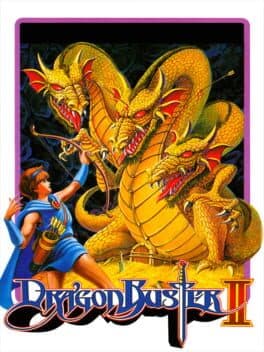
Dragon Buster II: Yami no Fuuin
Namcot1989
Centuries ago, Dragons and Demons roamed the country and brought terror into the lives of all people. However, a local legend states that the Sword of Thruth can restore peace to the land. It turns out that the almighty weapon is kept by the most ferocious dragon who ever lived but this doesn't stop the young Carl from willing to take on the challenge. He is small but the best archer the land has ever seen!
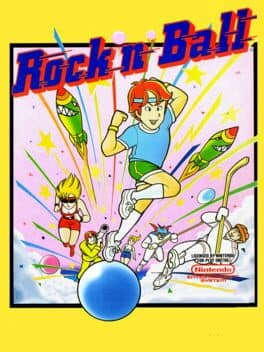
Rock'n' Ball
Namcot1989
Nostalgic pinball is back with some very modern concepts! Enjoy seven different games with six different characters such as Twister Tom for Pinball, Rock'n' Roller Billy for Sports Pinball, and more! Team up with your favorite Rock'n' Ball character and reach for higher and higher scores! Pinball is famous in video game history. Challenge your skills against Rock'n' Ball's brand new twists on this popular game!
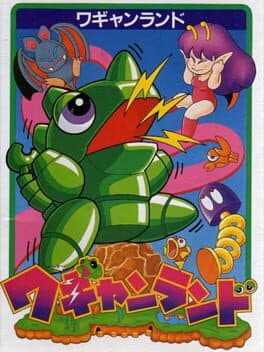
Wagyan Land
NOW Production1989
Wagyan Land is an Action game, developed by Now Production and published by Namco, which was released in Japan in 1989.
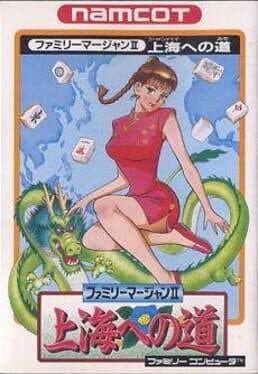
Family Mahjong II: Shanghai he no Michi
1988
Family Mahjong II: Shanghai e no Michi is a Mahjong game released only in Japan for the Nintendo Famicom. Family Mahjong II: Shanghai e no Michi is a Mahjong game and the direct sequel to Family Mahjong. In addition to the standard Mahjong mode, there is a tournament mode with a slight RPG aspect to it, in that the player can enhance certain stats after winning games in order to increase their odds in future rounds of the tournament. The game is a one-on-one version of the game, less common in real-life Mahjong games but the standard for computer adaptations due to the reduced complexity of having only a single AI opponent. Nihon Bussan was responsible for Family Mahjong II's development and was at the time fairly well known for their Mahjong Arcade games.
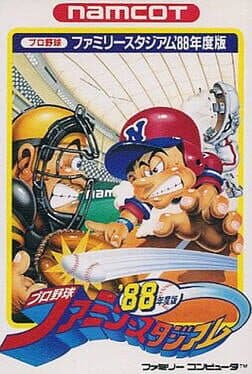
Pro Yakyuu Family Stadium '88: Nendo-ban
Namcot1988
Pro Yakyuu Family Stadium '88 is the third in Namco's Pro Yakyuu Family Stadium series. As with its immediate predecessor, Pro Yakyuu Family Stadium '87, it is a slightly revamped version of the original with updated rosters. As with EA Sports's present-day practice, Namco released these games annually with little to distinguish each new iteration. Most notable of the smattering of minor new additions is allowing the player to choose their venue from four options, ranging from a fully-packed stadium to a park. Though this is the second sequel to Pro Yakyuu Family Stadium, which was released in the US by Tengen as R.B.I. Baseball, Pro Yakyuu Family Stadium '88 is not to be confused with R.B.I. Baseball 3. Though the first R.B.I. Baseball was a direct localization, subsequent R.B.I. Baseball games were created in the US and are entirely independent from Namco's series.
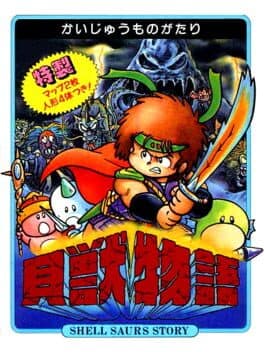
Kaijuu Monogatari
Birthday1988
Kaijū Monogatari is a role-playing video game developed by Birthday and published by Namco for Famicom, in November 1988 in Japan.
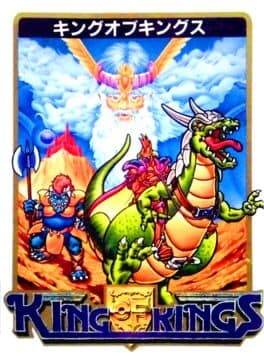
King of Kings
Atlus1988
A NES strategy game developed by Atlus and published by Namco. It was only released in Japan. The goal is to quickly conquer locations by producing a lot of units each turn and sending them against enemy forces. As with those games, there is also a little close-up graphic of the two units whenever they meet for battle, which shows how the two sides are faring in the conflict.
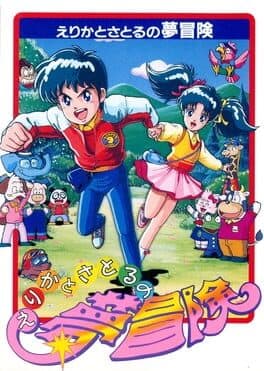
Erika to Satoru no Yume Bouken
Atlus1988
Erika to Satoru no Yume Bouken is a 1988 Japan-exclusive adventure video game for the Famicom. It is a fairytale-inspired menu-driven adventure game. Players use the menu commands to interact with the world: moving around, looking around, picking up objects, talking to people, etc. The setting of this game is 20th century Japan. In a novel twist, the two characters of Erika and Satoru (who are depicted as twin schoolchildren) are independently playable - either a single player switches between the two, or a second player takes over the second twin. Both characters need to be in the same region to converse with NPCs, but are otherwise free to explore the map autonomously. Two-player adventure games are very rare; even in Japan. However, only one person can partake in the animal quiz portion. Failing the quiz will force the player(s) to start from the beginning. An odd bit of infamy related to this game is a secret developer's message that can be found if the player inputs a list of button presses after waiting some time after the game ends. Inside of which is a litany of compliments and complaints to other co-workers, including some sexual insults which are deeply at odds with the child-friendly nature of the game. It also refers to, among other things, the work Atlus did for LJN including The Karate Kid.
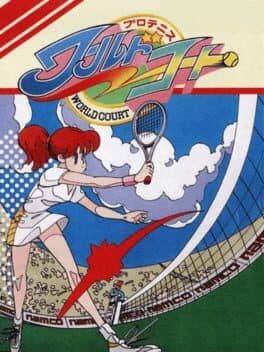
World Court Tennis
Namcot1988
It's your serve. WHOP! The ball clears the net at 100 MPH and raises a little dust just inside the chalkline. An ace? no. WHOP! Your opponent returns with a powerful backhand that kills your plan of charging the net. No matter how you play - with up to 3 friends, singles, doubles, or against the computer - World Court Tennis will tax your endurance and test your skill with action that's fast and furious. Just don't scream at the line judge. He's never wrong.
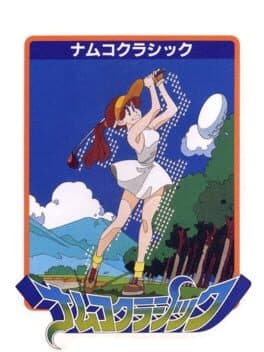
Namco Classic
Namcot1988
Namco Classic is a golf game developed by Namcot and published for the Famicom in 1988. The game features Round Play, which you can use to practice the course in the game or compete with friends, or Tournament mode, where you play against a computer opponent in an effort to win a large amount of prize money. The game was also released for the Game Boy in 1991. The Game Boy version features a different course but is very similar in many respects. In 1996, that version was also included in the compilation title, Namco Gallery Vol. 1.
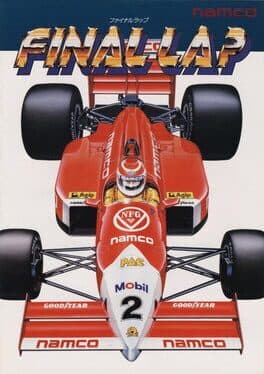
Final Lap
Namcot1987
Final Lap is a racing video game produced by Namco,[2] and released by Atari Games for the United States in 1987. It was the first game to run on Namco's then new System 2 hardware, and is a direct successor to Namco's two earlier Pole Position games (1982-1983). Final Lap was the first racing game to allow up to eight players to simultaneously race on the Suzuka Circuit, in a Formula One race. This was, at the time, considered a revolutionary feature and was implemented by linking together up to four two-player sitdown-style arcade cabinets.[2][3] It was also arguably the first racing game to implement "rubber banding" to ensure that less talented players were never too far behind the leader, a concept that would be taken much further by the Mario Kart series.[3] There was also a single player mode, in which the player's score was based on how far the car travelled until time ran out or if the player completed four laps (on default settings; the arcade operator can set the lap number to be as low as three or as high as six).
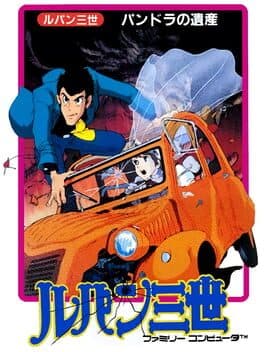
Lupin III: Pandora no Isan
Namcot1987
A Lupin III action game for the Famicom. It is based somewhat on the movie Castle of Cagliostro. The game was never released outside Japan.
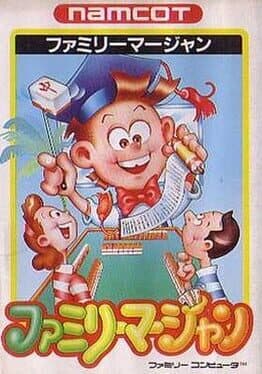
Family Mahjong
Nihon Bussan1987
A mahjong game by Nihon Bussan and published by Namco for the Famicom. Family Mahjong is another in a long line of mahjong games for the Famicom. Uniquely, at least for the time, it does include a full tutorial mode that will teach the player how to actually play mahjong. It also includes rules for mahjong gambling, which is another feature included in the game. After the player has learned how to play, they can compete against a series of CPU opponents in one-on-one matches, most of whom are attractive blonde women for whatever reason.
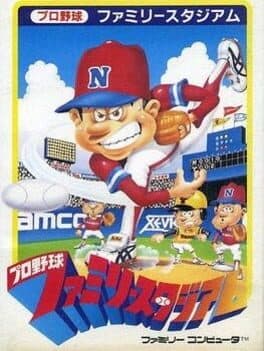
Pro Yakyuu Family Stadium
Namcot1986
The first of the Pro Yakyuu Family baseball series. The game became the first console game of its kind to be licensed by the Major League Baseball Players Association (MLBPA) and used actual MLB player names, unlike other baseball video games of the late 1980s.
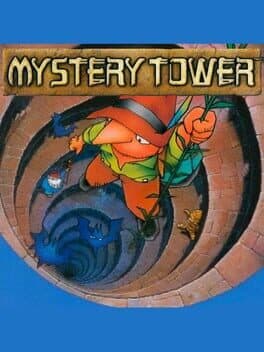
Mystery Tower
Namcot1986
Mystery Tower, previously known as The Tower of Babel (Babel no Tou) or just Babel, is an action puzzle game. The game consists of 64 "floors" or puzzles that involve the positioning of many L-shaped blocks. You must manipulate them to create stairs so you can reach the exit of each floor. Some floors are sealed, and you must collect crystal balls to escape. There are items to collect for bonus points, and a small number of enemies to avoid. The game was a Japan-exclusive title up until its release on the Nintendo Switch Online service, finally receiving its current overseas title.
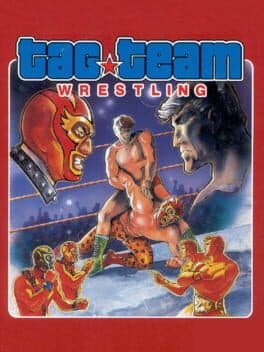
Tag Team Wrestling
Quicksilver Software1983
You are challenged to match the awesome skills of your opponents...to gain the Title in the World Super Championships of TAG TEAM WRESTLING Teamwork and stamina are the keys, as you and your partner battle your way through the Title Matches on your quest for the Belt. Attack your opponents with Body Slams, Drop Kicks, Backbreakers, Flying Head Butts, or even throwing them out of the ring! To win, its a pin for a count of three. Nothing can match the super excitement as the crowd cheers over this mania on the mat. Prepare yourself for Tag Team Wrestling!
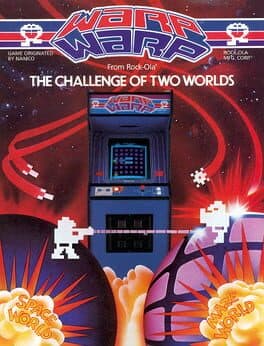
Warp & Warp
Namco1981
You control a monster fighter. A warp zone is set in the middle of the screen. Warp to the next level when flashing