-
Average rating
423
Games
0
Votes cast
Heartbeat
Shipped Titles
Games (423)
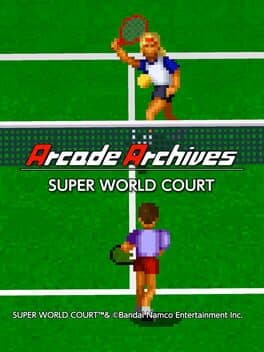
Arcade Archives: Super World Court
Namco2025
"SUPER WORLD COURT" is a sports game released by NAMCO (Bandai Namco Entertainment) in 1993. It is the sequence to "PRO TENNIS WORLD COURT" and adds support for 4-player simultaneous games. Featuring a roster of numerous distinctive players with their own specialties, this is your chance to pick your favorite and win your way through tournaments!
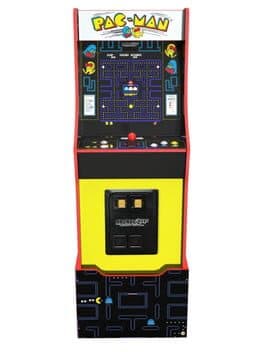
Pac-Man 12-in-1 Legacy Series
Namco2021
Pac-Man 12-in-1 Legacy Series is an arcade machine bundle by Arcade1Up that features various arcade games from Namco.
Tekken 7: Originals Edition
Namco2021
This versions contains the full game with the 12 Tekken series original character packs, as well as the new frame data feature.
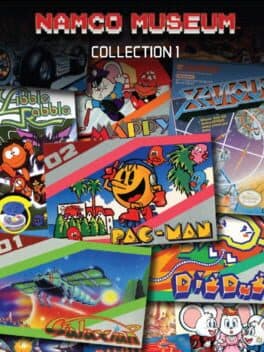
Namco Museum Collection 1
Namco2020
The Namco Collection 1 is a compilation cartridge for the Evercade which contains 11 classic Namco games. Games included: - Pac-Man - Galaxian - Dig Dug - Xevious - Star Luster - Libble Rabble - Mappy - Battle Cars - Metal Marines - Quad Challenge - Mappy Kids
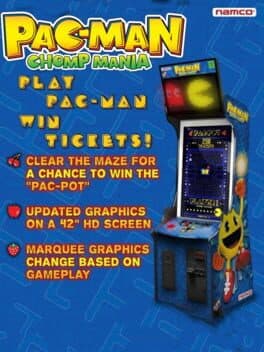
Pac-Man Chomp Mania
2016
A modern rerelease of the original Pac-Man
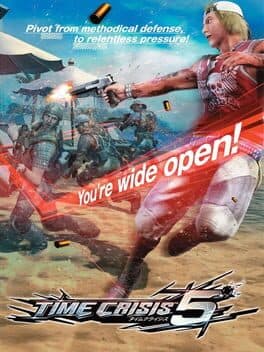
Time Crisis 5
Namco2015
Namco's long-running light gun series returns to arcades with Time Crisis 5.
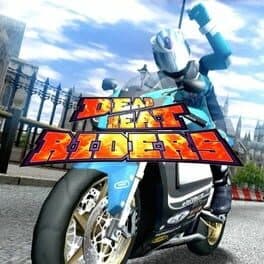
Dead Heat Riders
Polygon Magic2013
Based on Bandai Namco’s popular Dead Heat Street Racing arcade game, Dead Heat Riders takes that same exciting, neck-and-neck racing premise and applies it to motorcycle racing. Hop on your bike to race through 4 incredibly detailed cities, which were personally surveyed by the development team. Just like the Dead Heat street racing game, zoom through the streets of New York, Chicago, London and San Francisco but now on different courses through each city. Select from 5 different superbikes as you ride on a recreated motorcycle swivel seat. Another great feature is found with Namco’s patented software technology that analyses and stores registered players driving styles, later mimicking registered players as “ghost drivers”. This allows current players to race against previous drives, even when they are not around. This title also features a completely revamped soundtrack, designed to match the white knuckle intensity of each race. Enjoy more social racing with the Integrated Camera! This takes a picture of the players and uses that photo to identify your car and other players you are racing against in real-time during the race.
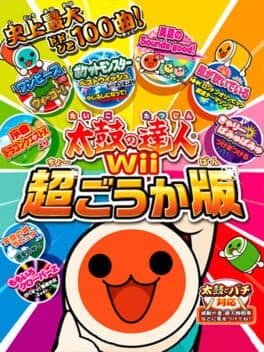
Taiko no Tatsujin: Chougoukaban
Namco2012
Taiko no Tatsujin Wii: Chogouka-ban is the fifth and final Taiko game released for the Wii console.
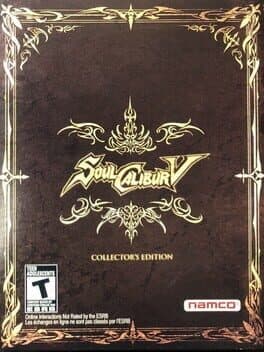
SoulCalibur V: Collectors Edition
Project Soul2012
BOXED COLLECTOR’S LIMITED EDITION includes: - Box Outer / Carded Display Sleeve - Box Inner (Collector’s Ancient Styled Book Shaped Box) - Special Hardcover Collector’s Book with stunning visuals (refer images) - Game case, cover, manual / booklet, carded insert, and game disc - Parchment-Styled Collector’s Letter - BONUS Soundtrack Disc - EXTRA BONUS Making of DVD Disc
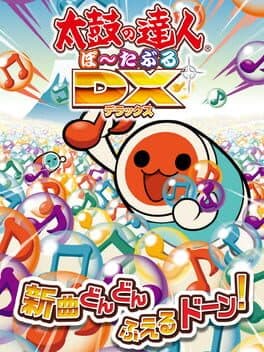
Taiko no Tatsujin Portable DX
Taiko Team2011
Portable DX (Deluxe) comes 5 whole years and 6 Nintendo console releases after the release of the last PSP Taiko, Portable 2. The total number of initial songs is 70, and with the additional downloadable songs thereafter (like every Taiko PSP has done), it matches the massive songlists introduced on the Wii. Like the other recent games, the songlist has become a lot more geared towards Namco Originals. Portable DX is also the first console Taiko to show the total number of drumrolls made in the song, and the second console Taiko game to introduce the all new Ura Oni difficulties. Other new mechanics in the game include organizing almost all unlockables in the game into an Achievement list, and a mode called Medley Mode, in which three, five, or eight different songs are put together and played all at once. Two new gameplay modifiers were also added into the game, which randomize the notes to different degrees. The Bell note has been removed from this release and the vestigial function of the analog stick is to produce sounds for fun. ()
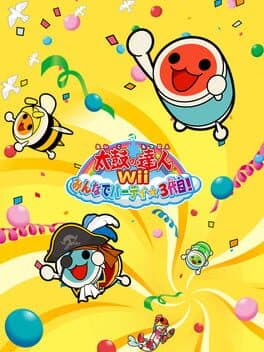
Taiko no Tatsujin Wii: Minna de Party Sandaime
Namco2010
Third Taiko no Tatsujin game released on Wii, featuring ability to support up to four players and seven minigames.
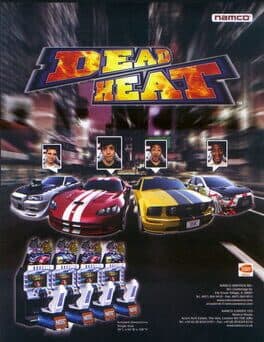
Dead Heat
Polygon Magic2010
Thirty years after the end of a zombie apocalypse, humanity is left with a new species to contend with. NYPD detectives Sonja Vargas and Lilith Troy risk everything to keep the peace and bring justice to a world set on a knife's edge between life and death.
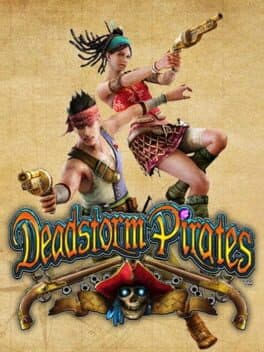
Deadstorm Pirates
Namco2010
Following its arcade release earlier in 2010, Deadstorm Pirates has assembled a hearty crew of fans around the world.
Taiko no Tatsujin 13
2009
The 13th Taiko no Tatsujin, released on December 2009 just five months after the wildly successful Taiko 12.5. Taiko 13 takes the game to new heights, being the first version to be used in a nationwide (Japan, of course) official Taiko no Tatsujin tournament in April 2010. In terms of new features, again it doesn't introduce many new things, except a slight change in the Children/Folk genre name from Kanji to hiragana.
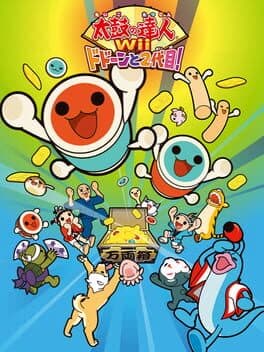
Taiko no Tatsujin Wii: Do Don to Nidaime
Namco2009
Taiko no Tatsujin Wii: Do-Don to Nidaime! is the second Taiko no Tatsujin game on the Nintendo Wii. It was released on November 19, 2009.
Taiko no Tatsujin 12 Don-! to Zoryoban
2009
Taiko no Tatsujin 12.5 (the widely accepted short form of the 12 Zoryoban machine) was released in July 2009, a month after Asia 12. It's not a fully new version, instead 12.5 succeeds at what the original Taiko 12 failed to do- provide compelling reason to come back to the arcade to play compelling new songs. 'Zoryoban' means 'expanded version' which is very true, as it included a whopping 145 songs on debut and 155 after all the secret codes were revealed, a far cry from the minimalist approach by the original. 12.5 is almost completely different from 12 in terms of fun.
Bokura no Terebi Game Kentei
Namco2008
Namco's take on the WarioWare or Retro Game Challenge formula, with quick, bite-sized challenges based on their classic Famicom and Arcade titles.
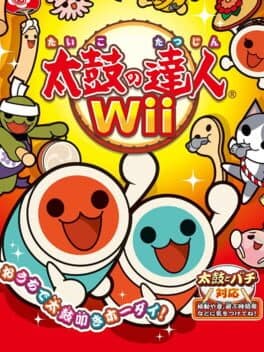
Taiko no Tatsujin Wii
Namco2008
Taiko no Tatsujin Wii is the first Taiko no Tatsujin game released for Nintendo Wii. The game come in two favors: A bundle with the TaTaCon made for Wii console, or only the game itself.
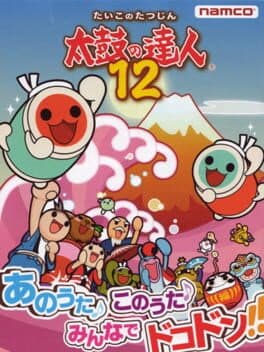
Taiko no Tatsujin 12
2008
The 12th Taiko arcade machine, released in December 2008. Taiko 12 marked a plateau as far as development of the series was concerned- the game mechanics and graphics have been perfected over so many different versions. No major fixes or upgrades were made on this version, except for one small thing- instead of 'Taiko no Tatsujin Twelve' being announced on the title screen, it was replaced with the Japanese equivalent 'Jyuu-ni' (which also means twelve).
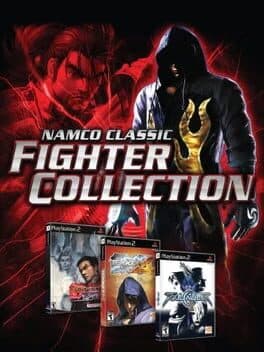
Namco Classic Fighter Collection
Namco2008
Namco Classic Fighter Collection is an exclusive box set collection of three of the best fighting games. TEKKEN TAG is a critical chapter in the premier fighting game of all time. Tekken TAG features a cast of unforgettable favorites, teaming-up for the first time, and unleashing hundreds upon hundreds of moves. SOUL CALIBUR II is one of the most critically-acclaimed, highest-rated titles of all time. A retrospective journey of unparalleled depth, Soul Calibur II features an all-star cast of warriors, ground-breaking weaponry, and an artistic back story that transcends time. TEKKEN 4 is a reprise of the legendary Iron Fist Tournament. It features jaw-dropping graphics, enhanced game play mechanics and fearsome fighting. With eager newcomers pitted against familiar favorites, Tekken 4's multi-level, interactive arena features amazing bone-snapping strategies and challenging game modes.
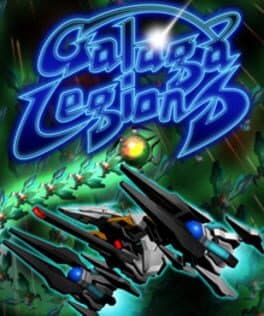
Galaga Legions
Namco2008
Galaga Legions is an Xbox Live Arcade exclusive video game created by Namco Bandai Games. The title was developed by the same team who created Pac-Man Championship Edition. This game is also included in the Namco Museum Virtual Arcade collection, and in Pac-Man & Galaga Dimensions for Nintendo 3DS. A DX version of the game was released on Xbox Live Arcade as part of the Namco Generations series on June 29, 2011, with the PlayStation Network version released in August 2, 2011.
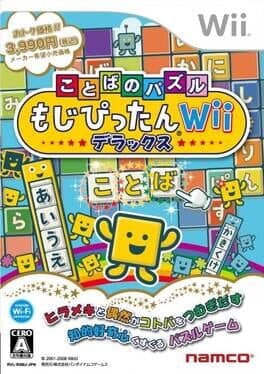
Kotoba no Puzzle Mojipittan Wii
Namco2008
Kotoba no Puzzle Mojipittan Wii
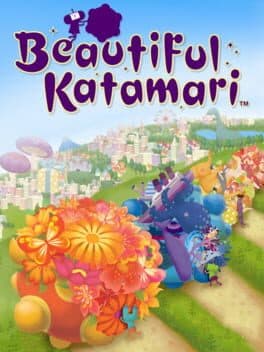
Beautiful Katamari
Namco2007
Experience the new high-definition, next generation sights and sounds of Beautiful Katamari as the Prince takes on a new high-rolling adventure, with his famous cousins in tow, to save the Katamari universe once again after the King of All Cosmos has a very un-royal and unfortunate accident. As usual, the King of All Cosmos demands the service of his son, the Prince, to roll anything and everything up into massive clumps and set things right, bringing harmony once again to the Katamari Cosmos. To keep his son inspired, the King of All Cosmos will provide another fresh and memorable soundtrack that will have players moving and grooving to the beat as they roll through the absurd, yet wonderful world of Beautiful Katamari.
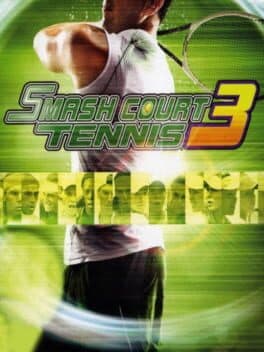
Smash Court Tennis 3
Namco2007
The first entry in the series for PSP, Smash Court Tennis 3 arms players with twice as many customizable items than its predecessor including racquets, sportswear and more as they compete to be #1 in the world. Perfect a devastating array of strokes from a selection of top ranked and promising professional tennis stars, each of whom are modeled after their real-life counterparts. Own the court by developing and acquiring new skills such as increasing your hit speed or serve accuracy. Mental elements also play into how characters act and look, so stay focused on your game! Test your skills in various gameplay modes including Arcade, Exhibition, and Pro Tour Mode. Want a quick hiatus from the circuit? Try one of the imaginative and addicting mini games!
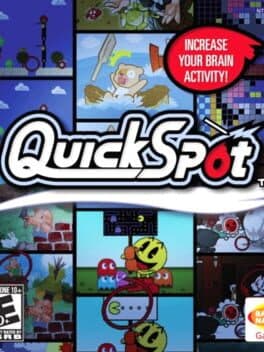
QuickSpot
2007
QuickSpot uses simple brain teaser to exercise reflexes and brain function.
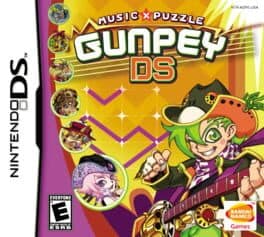
Gunpey DS
2006
Gunpey (グンペイ?), often written as "Gun Pey" or "GunPey", is a series of handheld puzzle games released by Bandai. It was originally released for the WonderSwan, and has been ported to WonderSwan Color, Playstation, Nintendo DS and PlayStation Portable. The game was named as a tribute to the developer of the game, Gunpei Yokoi.[1] He is known for developing several handheld consoles such as Nintendo's Game Boy, Virtual Boy, and Bandai's Wonderswan system. In the series, players move line fragments vertically in a grid in order to make a single branching line connect horizontally from one end to the other. The objective of the game differs by what game mode players choose.
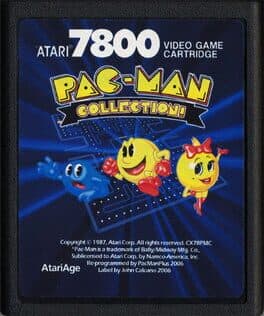
Pac-Man Collection
Namco2006
Pac-Man Collection (Atari 7800) is a 2006 homebrew compilation by Bob “PacManPlus” DeCrescenzo, published through AtariAge. It includes multiple Pac-Man and Ms. Pac-Man arcade variants—such as Puck Man, Hangly Man, Ultra Pac-Man, and Random Mazes—each can also be played in Plus mode, with selectable Fast, Slow, or Button-activated speed settings. It includes these games: Pac-Man Puck Man Hangly Man Ultra Pac-Man Random Mazes (Pac-Man style) Ms. Pac-Man Ms. Pac-Attack Ms. Random Mazes
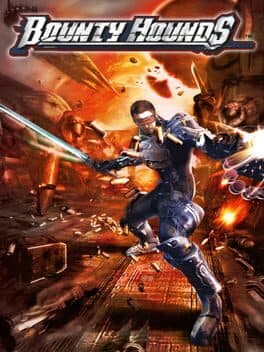
Bounty Hounds
XPEC Entertainment Inc.2006
Is a third-person shooter-RPG published by Namco and developed by XPEC Entertainment for the PlayStation Portable system. It was released September 12, 2006 in North America and September 21, 2006 in Japan. The plot revolves around a group of intergalactic mercenaries, known as the Bounty Hounds, on a mission to eradicate the indigenous lifeforms of alien planets, so the human race may colonize them.
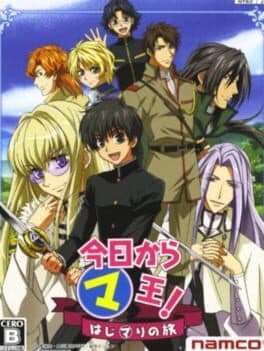
Kyou Kara Maou!: Hajimari no Tabi
Namco2006
Kyo Kara Maoh! Hajimari no Tabi is an Action game, developed by Namco and published by Bandai Namco Games, which was released in Japan in 2006.
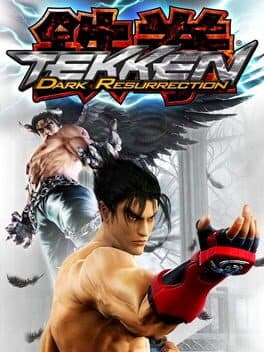
Tekken: Dark Resurrection
Eighting2006
Tekken: Dark Resurrection on PSP is a portable version of the arcade update of Tekken 5, released in 2006. It includes the full roster, additional characters, and customization options from the arcade version. The game features multiple modes, including Arcade, Story, Practice, and Ghost Battle. It also supports local multiplayer and character data sharing via wireless connectivity.
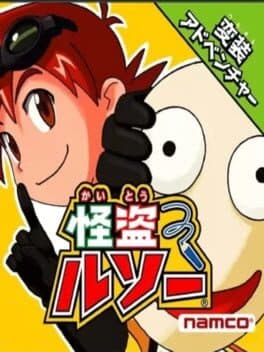
Kaitou Rousseau
Namco2006
In Kaitou Rousseau (aka. Rousseau the Thief), you take the role as a thief who is trying to hide from the police. Rousseau has one very tricky ability, which is to change the shape and look of his face. By drawing images on the Nintendo DS touch screen, you can adapt Rousseau to the current surroundings and thereby evade his chasers. For example, you can draw a picture of a girl to throw off the cops when in a crowd or quickly sketch what's on a nearby wall to blend in with the background.
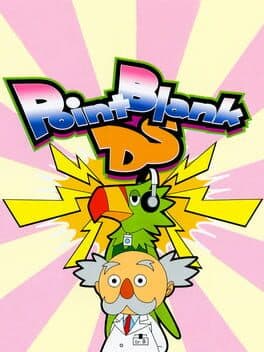
Point Blank DS
2006
Point Blank DS turns your stylus into a light gun in this port of classic arcade game
Xenosaga I & II
Monolith Soft2006
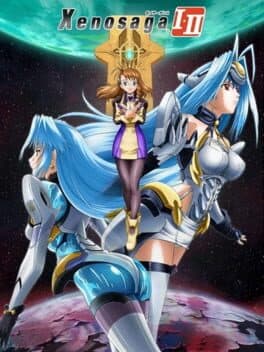
Xenosaga I & II is a combined remake and retelling of Xenosaga Episode 1 and 2 redesigned for the Nintendo DS. The story changes were handled by the creator of the series. The game changes large parts of the storyline in Episode 1 while following the elements established in the original game. This includes adding new characters and changing how some scenarios play out. Changes in Episode 2 were much larger as the main character perspective of the game was switched from Jr. to Shion to match up with Episode 1 and 3. Some characters are removed from the story or have their fates changed or revealed. Some dungeons are removed, edited, or replaced. It also answers some questions that the original did not as you follow a different path through the same overall story. It also changes the combat mechanics of Episode 2 to match Episode 1.
Namco Museum Vol. 2
Tose2006
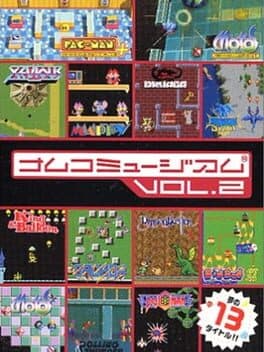
Includes King & Balloon, Bosconian, Xevious, Mappy, The Tower of Druaga, Grobda, Dragon Buster, Dig Dug II, Motos, Rolling Thunder and Dragon Spirit Two new "arrangement" games are included, Pac-Man Arrangement Plus and Motos Arrangement
Chuugen no Hasha: Sangoku Shouseiden
Namco2006
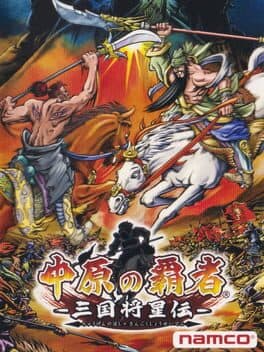
Namco has tapped into its library and resurrected two classic Famicom titles for this PSP remake. Taking control of 400 different generals during the Sengoku era, your goal is to unite China as one by expanding your land through negotiations and war.

Curious George
Monkey Bar Games2006
Curious George is a colorful action adventure that is based on the Curious George animated movie. In the game you can help George explore a variety of areas, collect items such as bananas, and unlock minigames. The game features a variety of different objectives set in areas from the movie. You can also unlock scenes from the movie, extra costumes, and production art.
Namco Museum Vol. 1
Tose2005
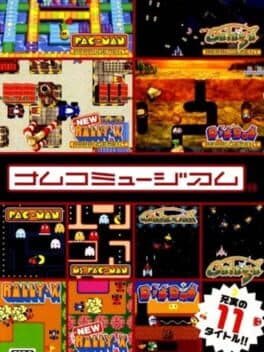
The original Japanese versions of Namco Museum Battle Collection were released in two volumes.
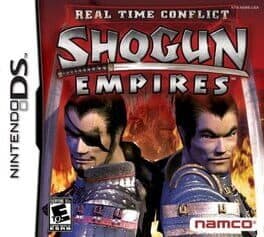
Real Time Conflict: Shogun Empires
2005
In Shogun Empires, players assume the role of one of two brothers who are locked in bloody combat in feudal Japan. Conquering neighboring territories and amassing formidable armies, only one warrior is able to survive the deadly endgame to realize his ambitions and claim the title of Shogun. In their quest to become Shogun, players utilize the Nintendo DS's touch screen to plot complex battle plans while watching the action play out through detailed 3D graphics on the top screen. Touch screen mini-games such as duels, castle sieges and sea battles enhance the battle experience and give Shogun Warrior impressive gameplay variety and replay value. In between encounters, gamers are able to use diplomacy and military strategy to manage their forces. For the ultimate in feudal warfare, up to 8 players can engage in enormous clashes through the wireless multiplayer capabilities of the Nintendo DS.
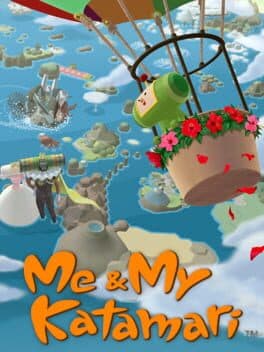
Me & My Katamari
Namco2005
The King of All Cosmos and the Royal Family decide to take some time off from their celestial construction and travel to Earth for a well-earned (for the Prince at least) tropical summer vacation on their own sunny island. Unfortunately, the King's over-exuberance creates a tsunami that strikes and devastates nearby Paradise Commonwealth Island. One of the residents, a turtle, washes ashore next to the Royal Family and tells them his tale. The King then decides to make new islands for the animals of the Commonwealth with several katamari. Similar to the previous Katamari titles, the King sends the Prince to the Sunflower Continent, which is full of the paraphernalia used to create new landmasses.
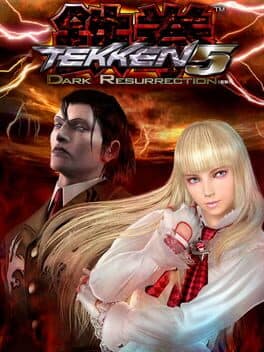
Tekken 5: Dark Resurrection
Namco2005
Tekken: Dark Resurrection is an updated version of Tekken 5 developed by Namco and released in arcades in 2005. It adds new characters, balance adjustments, and expanded customization options. The game retains the series’ 3D fighting mechanics, where players compete in one-on-one battles using a variety of moves and combos. It was later released on the PlayStation Portable and PlayStation 3 with additional content and online features.
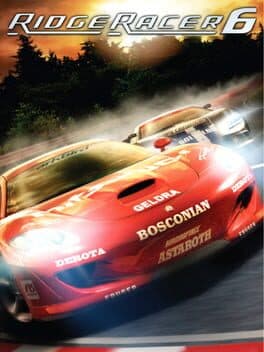
Ridge Racer 6
Namco2005
Ridge Racer 6 is the sixth installment in the Ridge Racer series of racing games. Like previous Ridge Racer titles, the focus of gameplay is on placing first out of 14 in numerous 3-lap races across several tracks and numerous cars.
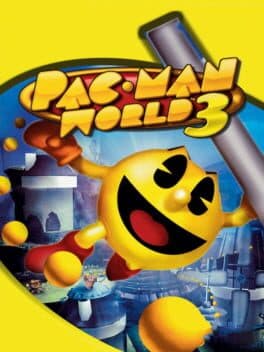
Pac-Man World 3
Blitz Games2005
The classic gaming character Pac-Man is back for the third iteration of the Pac-Man World series. The game features the classic Pac-Man powers and adds a few new abilities--such as superstomp and electric shock--to assist the yellow-ball-like hero against his ghost foes.
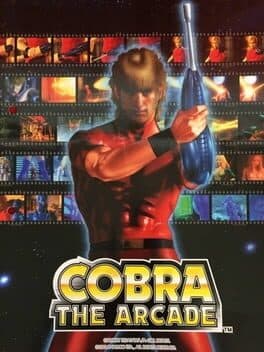
Cobra The Arcade
Nex2005
"Cobra The Arcade" is a gun shooting game released by Namco (later Bandai Namco Games) in November 2005. It is based on Buichi Terasawa's manga "Cobra" and the TV series "Space Cobra." The gameplay is enhanced by a controller that resembles the Psycho Gun, and cards that allow data saving and strengthening the Psycho Gun. It uses the system from Time Crisis 3, but a unique feature is the Psycho Shot, which locks on to enemies and takes down multiple enemies at once.
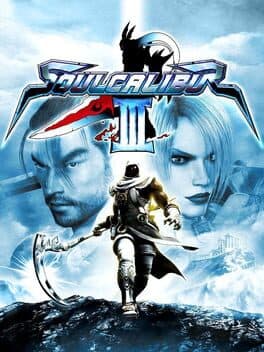
SoulCalibur III
Project Soul2005
Soulcalibur III is a fighting game produced by Namco as a sequel to Soulcalibur II and the fourth installment in the Soul series. The game includes three new modes and a larger character roster with 24 characters playable in Tales of Souls mode and an additional 18 playable in all other modes.
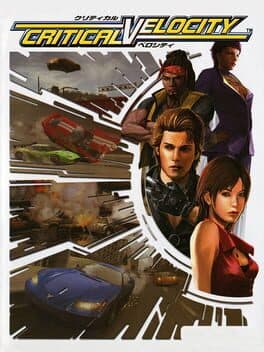
Critical Velocity
Namco2005
Critical Velocity is a Driving game, developed and published by Namco, which was released in Japan in 2005.
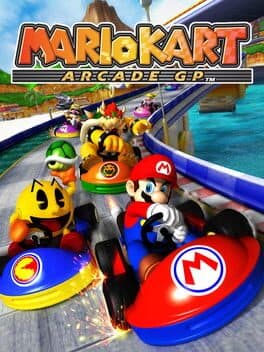
Mario Kart Arcade GP
Namco2005
Mario Kart Arcade GP is an arcade-only iteration of Nintendo's Mario Kart series, developed by Namco. Designed for the Triforce arcade board (also used for F-Zero AX), players can race as one of eleven characters on twenty-four tracks. On certain machines, for an additional fee, a player's data can be saved on a magnetic card which can be inserted into the machine again later to retain unlocked items and records. Nintendo's limited role of development was mainly isolated to ensuring that it was a worthy title for the established franchise. This game's arcade cabinet houses a camera that will take a photograph of the player's face. The photo can be customized and then will be displayed above the player's character during multiplayer races. The game is noted for being the first Mario Kart to feature playable crossover characters: Namco's Pac-Man, Ms. Pac-Man and Blinky. The game's sequel also featured Mametchi, a character from the Tamagotchi games. The third installment included Don from the Taiko no Tatsujin franchise.
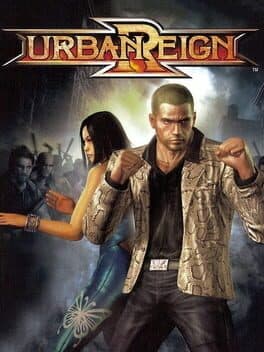
Urban Reign
Namco2005
Urban Reign is a Namco-produced 3D brawler, done in the tradition of Double Dragon and Final Fight.
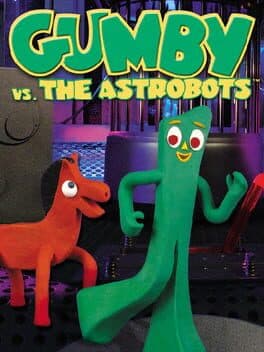
Gumby vs. The Astrobots
Torus Games2005
Join the heroic Gumby as he embarks on a perilous journey to rescue his friends in Gumby vs. The Astrobots. Search for his friends as you meet a huge cast of bendable friends from the Gumby TV show, including Pokey, Prickle, and Goo. Use Gumby's unique ability to morph, stretch and twist to foil the Astrobots. Traverse the classic Old West or the icy North Pole, even the mysterious Planet Astrobot!
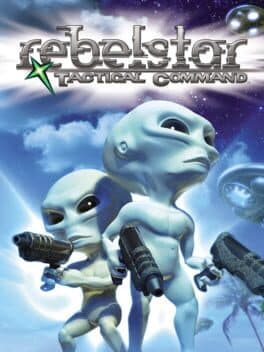
Rebelstar: Tactical Command
Codo Technologies2005
You can play as the leader of a revolt in the turn-based strategy game Rebelstar: Tactical Command. The Arelian Empire seized control of Earth 70 years ago and has since become an oppressive regime, controlling the world with fear and marauding shock troops. You can fight back by equipping a team of rebels and controlling them in battle. Rebelstar: Tactical Command includes campaign, skirmish, multiplayer hotseat, and multiplayer link mode.
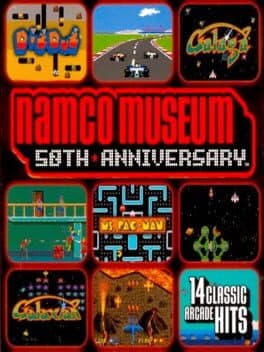
Namco Museum 50th Anniversary
Digital Eclipse2005
Includes 14 Classic Arcade Hits - Pac-Man - Ms. Pac-Man - Galaga - Galaxian - Rally-X - Pole Position - Pole Position 2 - Xevious - Dragon Spirit - Bosconian - Rolling Thunder - Mappy - Sky Kid - Dig Dug
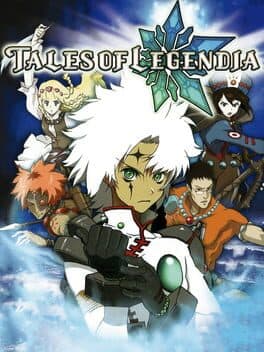
Tales of Legendia
Namco2005
Tales of Legendia is a fantasy role-playing game that continues the Tales series of games. You can play as Senel Coolidge, who encounters a giant, mysterious ship while adrift in a small boat with his sister. As you explore the history of the ship, you will encounter epic enemies and engage them using the "X-LiMBS" battle system, which lets you fight in real time like in a fighting game. The story is beset with unique characters designed by the animator featured in Kill Bill Vol. One.
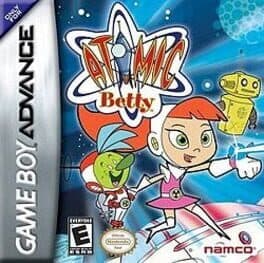
Atomic Betty
Big Blue Bubble2005
Betty has a lot more to handle than most little girls. To her friends and family, she is your average, girl-next-door, but when the galaxy beckons, she becomes Atomic Betty, Galactic Guardian and Defender of the Cosmos. With the help of her trusty sidekicks, Sparky and X-5, Betty must save the galaxy from the evil Maximus I.Q., while at the same time saving her reputation on Earth from the scheming of her archrival, Penelope. "Atomic Betty's" five playable characters, rocket ship travel, selectable gadgets and weapons, and fast-paced story bring the cartoon hit to life.
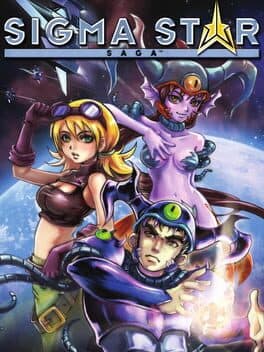
Sigma Star Saga
WayForward Technologies2005
When a double-agent's allegiance begins to waver, the galaxy finds itself in a precarious position. Humanity is struggling to survive against the Krill onslaught. Ian Recker, a decorated pilot, goes undercover to investigate the Krill's secrets, but finds himself trapped in a moral dilemma. The first RPG on Game Boy Advance to combine a deep storyline and well-developed characters with a space-shooter battle engine. Customizable weapons including over 15,000 Gun Data combinations. Branching storyline with four ending and 20+ hours of gameplay.
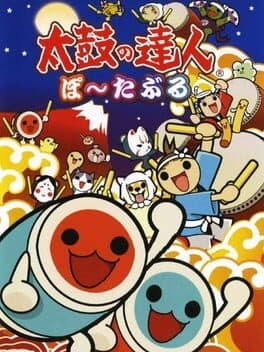
Taiko no Tatsujin Portable
Taiko Team2005
The Taiko Drum Master rhythm game series makes its portable debut.
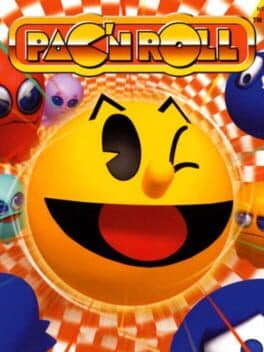
Pac 'n Roll
Namco2005
In Pac'N Roll, the inhabitants of Pac-World have been turned into spheres by the evil monster Golvis' Ghost Light. Pac-Man must roll his way through Ghost-Land, collecting pellets and confronting Ghosts to save his family and restore peace to Pac-Land. Introducing an innovative new control scheme, Pac'N Roll lets players control Pac-Man with the Nintendo DS stylus. Players can roll and dash around the environment as well as execute maneuvers such as hairpin turns, immediate stops and precision rolling with effortless strokes of the stylus. In his quest to save Pac-Land, Pac-Man will venture through stages such as Castle Pac, Gyro-Jungle and the Ghost House, while facing perilous hazards like moving floors, dash panels, jump zones and wind zones. Along the way, Pac-Man will find power-ups like the Winged Chocolate, allowing him to fly through the worlds and jump over Ghosts, or the "Knight Chocolate," providing him with armor which grants him the power to crash through walls and withstand more damage. Pac'N Roll also includes the original Pac-Man arcade game, allowing up to two players to munch on pellets and claim the highest score.
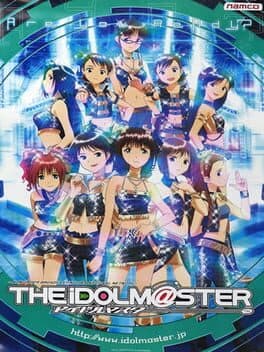
The Idolmaster
Namco2005
The Idolmaster is a popular Japanese rhythm and simulation game that focuses on the management and training of virtual pop idols. Developed by Namco (later Bandai Namco Entertainment), the game places players in the role of a producer working with a talent agency to nurture and guide aspiring idols towards stardom, and the first title in the 1st Vision era. It was released as the second installment of the "Rewritable Stage" touchscreen cabinet.
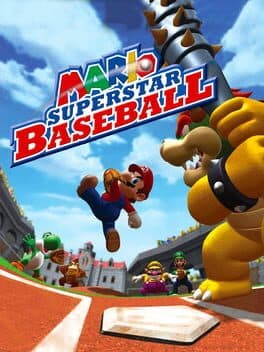
Mario Superstar Baseball
Namco2005
The superstars of the Mushroom Kingdom have gathered on the diamond to power up America's game! Pick a captain, fill your team with your favorite characters from the Mario universe, then hit the field. Each captain has a special Star Skill for pitching and batting, so whether you're hurling fireballs as Mario or blasting curving banana-ball dingers as DK, you've never played ball like this!
namCollection
Namco2005
Namco celebrates their fiftieth anniversary with a release of this compilation of the following games: - Ace Combat 2 - Klonoa: Door to Phantomile - Mr. Driller - Ridge Racer - Tekken
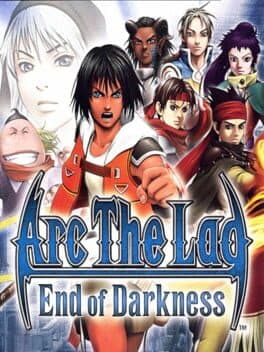
Arc the Lad: End of Darkness
Cattle Call2005
SCE takes the Arc the Lad series away from its roots and into an Online-playable action-adventure game. Players become a hunter who must travel the world and take on jobs, usually revolving around taking out enemies in real time using magic and special abilities. Collect cards from battle and events and equip them to gain new skills, all the while following an RPG-like storyline. You view the action from overhead, with a camera zooming in and out depending on the intensity of the action and occasionally switching to other angles for dramatic effect. You attack enemies in real time, tapping X once for a simple attack and repeatedly for a combo. You can also guard against attack, dash at an enemy, and press a button to run about the play field faster. The game places heavy emphasis on magic use, with the magic meter recovering automatically and quickly following each spell.
We Love Katamari
NOW Production2005
We Love Katamari, is a third-person puzzle-action video game where the player controls the Prince, the 5-centimeter-tall son of the god-like entity the King of All Cosmos, who rolls around a "katamari", a magical ball that causes objects smaller than it to attach to it. Throughout each level, the play must collect objects in order to fulfill objectives set by the prince's father.

Dead to Rights: Reckoning
Namco2005
Fearless cop Jack Slate is back in the first installment of the Dead to Rights series on a handheld system. As Jack, you must navigate the corrupt underworld of Grant City to rescue the lost informant before it's too late. Dead to Rights: Reckoning features a new storyline, as well as new moves and weapons.
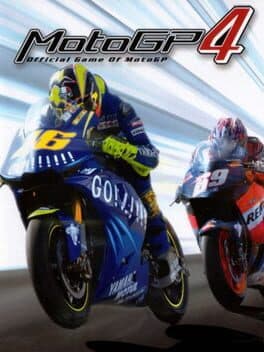
MotoGP4
Namco2005
Namco's street bike franchise goes online with 16 tracks and real riders exclusively for PS2.
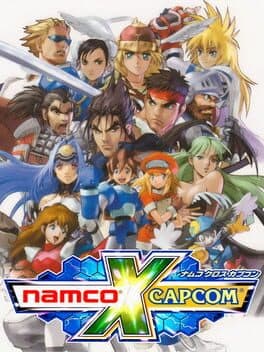
Namco X Capcom
Monolith Soft2005
Namco X Capcom is an action tactical role-playing video game developed by and featuring characters from games produced by companies Namco and Capcom. The game centers around two original characters created for the game named Reiji Arisu and Xiaomu. The two of them work for a special unit called Shinra and they are tasked with investigating spirit and otherworldly disturbances. The game is a hybrid of an action role-playing and a tactical role-playing. Movement is done on a square grid with turns being determined by figuring out which character has the highest AP. On the player's turn, he or she can move his character into position and choose to attack an enemy.

Roland Garros Paris 2005: Powered by Smash Court Tennis
Sony Computer Entertainment2005
By combining a Roland Garros license with their tried and tested tennis engine, Namco brings a third Smash Court Tennis title for the PlayStation 2. It was released exclusively in Europe, and was based on Smash Court Tennis Pro Tournament 2. In gameplay, the game isn't much different from other tennis games in the market, but it differs from games such as Virtua Tennis by having some emphasis on stamina (some players get tired faster than others, and not only run slower but also lose power to return the ball on longer matches) and by forcing the player to hit the ball as well-timed as possible - a "nice" ball (with a yellow visual cue near the racquet) will be much harder to return, as it will bounce away faster from the player. Featuring 15 real players from both ATP and WTA, the game features several game modes: Roland Garros allows the player to compete in the namesake, exhibition, and spectator, where the player can just sit back and see a game played by the computer, choosing one of the many cameras available, including the classic TV presentation or from the main stand. The beefier mode is the ProTour, where the player creates and customizes his own player, from appearance to playing style, and start a career, taking part in tournaments and completing training sessions in order to improve the player, so he or she can break into the elite. Challenge mode includes the training session mini-games of ProTour, as well as Bomb Tennis, a special mode where the court is filled with bombs, and as a player wins points, the opponent's side is flooded with even more. The goal is to detonate the bombs by pushing them into the flames, and forcing the opponent to get caught in one explosion. Also included is a complete training mode, which explains in detail the differences between shots and allows newcomers to adapt themselves to the gameplay style of this title. By completing certain goals, the player unlocks additional items, such as clothing, music tracks, trivia cards, player information and even secret players.
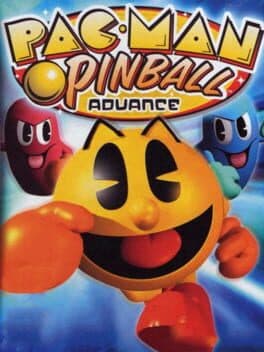
Pac-Man Pinball Advance
Humansoft2005
Pac-Man takes on the role of the pinball, and his foes Blinky, Inky, Pinky and Clyde are going to do their best to stop him from rescuing the kidnapped residents of Pac-World. Pac-Man Pinball offers multi-ball play with the aid of Ms. Pac-Man, and challenges players to mini-games to keep the action fresh. True to Pac-Man tradition, players can also collect dots and power pellets for points and upgrades.
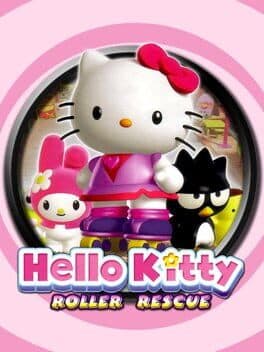
Hello Kitty: Roller Rescue
XPEC2005
The lovable Sanrio character Hello Kitty has made her way onto the GameCube in a new adventure game. In Hello Kitty: Roller Rescue, you'll explore Hello Kitty's 3D world and encounter a variety of characters, villains, and puzzles. You'll interact with more than 20 Sanrio characters that can help you battle enemies.
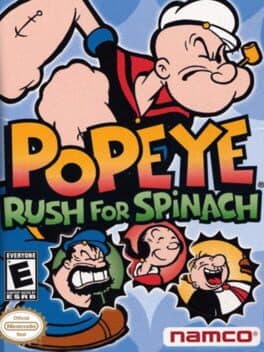
Popeye: Rush for Spinach
Magic Pockets2005
Popeye: Rush for Spinach has Popeye throwing the gauntlet in a series of races on different vehicles, trying to defeat the fierce opposition presented by other popular characters, such as Olive Oyl, Wimpy and Brutus. The Magic Pockets-developed game features four fully playable characters, 12 races in richly detailed and interactive landscapes, 13 locomotion types for each character, and a four-player link mode with confrontation and cooperation.
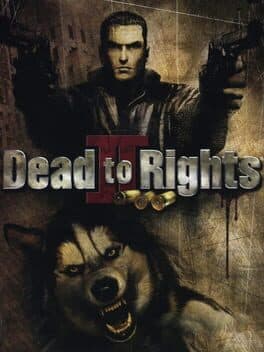
Dead to Rights II
Widescreen Games2005
Dead to Rights II is a third-person action video game developed by Widescreen Games, published by Namco, and released in 2005. It is a prequel to Dead to Rights. A prequel to Dead to Rights II for the PlayStation Portable, titled Dead to Rights: Reckoning, was released in June 2005.
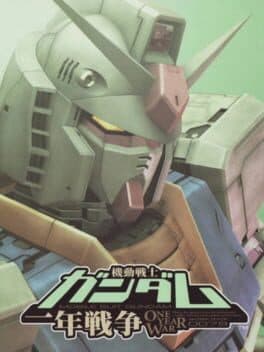
Mobile Suit Gundam: One Year War
Namco2005
One Year War is a third-person action shooting game based on the original Mobile Suit Gundam television series from 1979. Following the events of the "One Year War", the player takes the role of young pilot Amuro Ray through 28 missions that recreate key events from the original series. The game includes both ground and space battle stages, and there are a wide variety of different weapons and machines to use. One notable feature is the so-called "Memorial Actions" system, where completing special requirements that match events in the series will unlock additional bonus content.
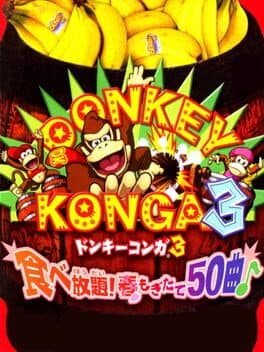
Donkey Konga 3: Tabehoudai! Haru Mogitate 50 Kyoku
Namco2005
Donkey Konga 3: Tabe-houdai! Haru Mogitate 50 Kyoku is a music video game in the Donkey Kong series developed by Namco and published by Nintendo. Before the second installment was released in North America, Nintendo and Namco had already started plans for the third game in the series, which, unlike the first two Donkey Konga games, was eventually released only in Japan in early 2005. Donkey Konga 3 features a total of 57 track (includes the all new track), over 20 track more than the first two games. 35 of these tunes are the usual classical, pop, and game selections, but an extra 21 tunes from Nintendo Famicom games are included. It also features features all new minigames. The title of "Donkey Konga 3 JP" was given in Super Smash Bros. Brawl.
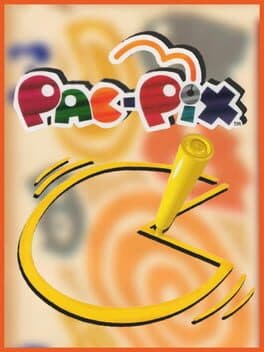
Pac-Pix
Namco2005
A mischievous magician, known for playing pranks on poor unsuspecting folks, created something known as "Ghost Ink," a fluid that pretty much turns any drawing into evil and vicious ghost monsters. Any ghost created with the ink ends up just as mischievous as the magician. Ink ghosts have invaded books and paintings, causing trouble within those realms, and now it's up to Pac-Man to wipe out the ghost problem by using the "Ghost Pen," a device that allows him to enter the infested books and paintings to clear out the bad guys. Pac-Pix is a game tailored specifically for the Nintendo DS' system capabilities. By drawing Pac-Man characters in a specific fashion (the mouth first, then the circle, all in one swoop), the drawing will come to life and munch anything in his path. Players can maneuver Pac-Man drawings in different directions by plotting pathways on the screen for the scribble to follow.
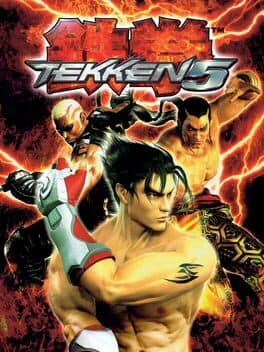
Tekken 5
Namco2005
The home version of Tekken 5 came with new character customization options and a beat 'em up mode called Devil Within.
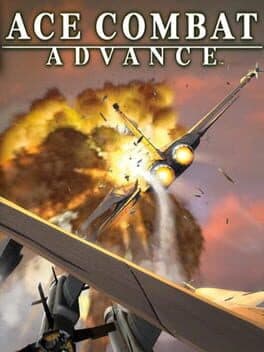
Ace Combat Advance
Humansoft2005
The Ace Combat series makes its debut on the Game Boy Advance with challenging missions, unlockable planes, and free-roaming environments. As the newest pilot in an elite fighter squadron, you must help destroy the Air Strike Force--the military arm of an evil multinational corporation. If you destroy enough enemy planes during your missions, you'll unlock new planes. Fly in air-to-air and air-to-ground missions over arctic, forest, and desert environments. Each environment features destructible buildings and objects.
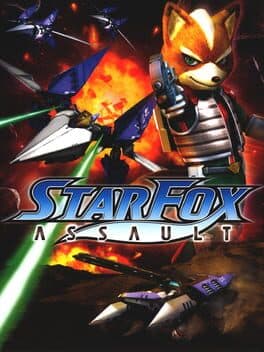
Star Fox: Assault
Namco2005
Step into the guise of furry flyboy Fox McCloud as he returns to take on his deadliest enemy; wingmen Slippy Toad, Peppy Hare and Falco Lombardi are covering your back, as you take on hordes of intergalactic hostiles on land and in air. Hop into Arwings for aerial skirmishes and Landmaster Tanks for ground-based confrontations, or simply run around on foot dispensing laser justice; the searing single player adventure is a total blast, while the glorious four-way split-screen mode is sure to keep you and your friends coming back for more. With sniper rifles and rocket launchers, this is one Fox you don't want to mess with!
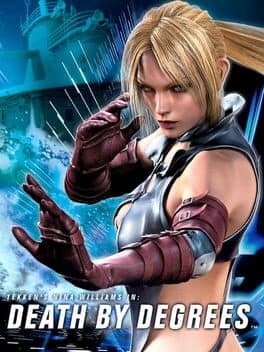
Death by Degrees
Namco2005
As a covert operative of the CIA, Nina Williams enters an underground fighting tournament to crack Kometa, a shadowy underworld organization. Functioning as the "sweeper" of her cell, Nina finds herself tracking a stolen high-tech weapon through a variety of locales to reveal a conspiracy on a global scale. Nina must now face a multitude of deadly enemies, as well as her own past, in order to save the world. -Control Nina with an intuitive 360 degree combat system -Wield a variety of weapons including handguns, sniper rifles, swords and tonfas -Burst organs and shatter bones with Nina's Critical Strike -Deliver Nina's signature moves outside of the fighting ring
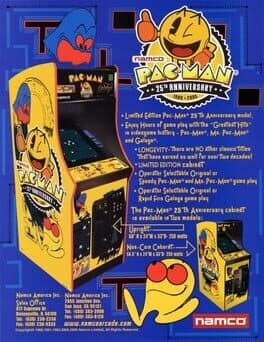
Pac-Man 25th Anniversary
Namco2004
Released in 2004 by Namco. Nearly identical to Ms. Pac-Man/Galaga, except Pac-Man is unlocked by default.
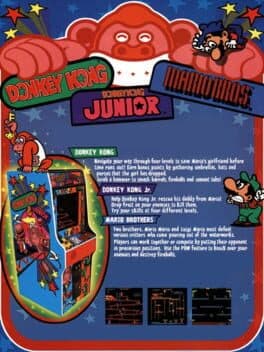
Donkey Kong/Donkey Kong Jr./Mario Bros.
Namco2004
Donkey Kong/Donkey Kong Jr./Mario Bros. is an arcade system for North America in which players could choose which of the three games they wanted to play. There are two controls, one for Donkey Kong/Donkey Kong Jr. and one for Mario Bros.
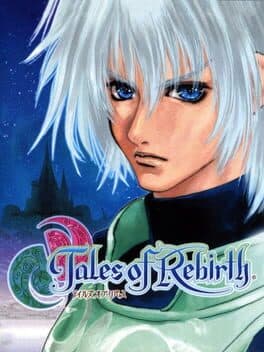
Tales of Rebirth
Namco Tales Studio2004
Tales of Rebirth is set in a world where humans (called Huma) and beast people (Gajuma) coexist in relative peace. The world's magical power is called Force, which manifests in various people as control over an element or aspect of the physical laws. In ancient times, after a war sparked when Huma attempted to enslave Gajuma, both races joined forces to found the kingdom of Karegia. An unspecified time before the events of the game, Geyorkias, the ruler of a spirit race called the Sacred Beasts, sought to destroy the Huma as their dark emotions were fueling a primordial destructive force known as Yuris: the other Sacred Beasts put a stop to Geyorkias' plan by sealing him away, then acting to nullify Yuris' threat. The story opens with the death of Karegia's king, Ladras Lindblum, poisoned by the royal adviser Zilva Madigan: during his final moments, he releases his power into the world, causing many humans to become possessed by Force, including Veigue, Annie and Tytree. As the king has failed to name a successor, Karegia enters an interregnum at his death.
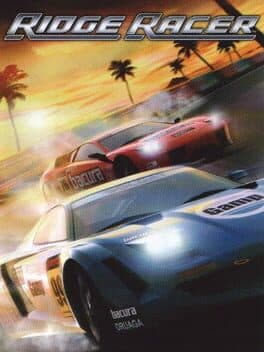
Ridge Racer
Namco2004
Ridge Racer is an arcade racing video game named after the eponymous Ridge Racer video game series to which it belongs. Ridge Racer has been described as a 'compilation' of the series, featuring tracks, cars and remixed soundtrack from previous titles in the 1990s.
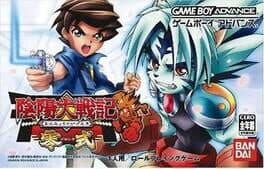
Onmyou Taisenki: Zeroshiki
Bandai2004
Onmyou Taisenki: Zeroshiki is a Role-Playing game, developed by Kamui and published by Bandai, which was released in Japan in 2004.
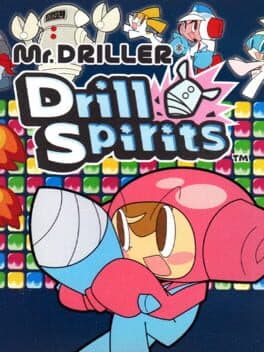
Mr. Driller: Drill Spirits
Namco2004
Mr. Driller, experienced with the drill, much use his abilities to dig beneath the Earth's crust in a race to the finish in order to save the day. Dangerous traps await as you dig through the puzzle layout to the goal, and be careful of Mr. Driller's air supply which can run out quickly. Find the right powerups to increase abilities and air supply while fighting the time clock.
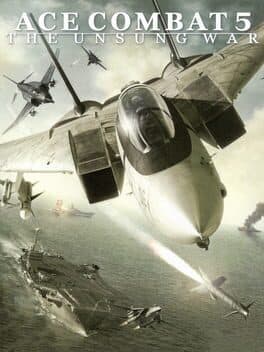
Ace Combat 5: The Unsung War
Project Aces2004
Ace Combat 5: The Unsung War is a first person air combat and flight simulator. Like other Ace Combat games, each mission is determined by a level briefing and objectives. There are 32 missions in the main campaign mode, while an additional "arcade" mode puts the player in the role of Mobius One (from Ace Combat 04: Shattered Skies) as he faces endless waves of enemy attacks. Regardless of the mode chosen, once in the air the player will have control over speed, direction, altitude, gun cannon, missiles and special weapon of their aircraft. A new feature from previous Ace Combat games, is the concept of Wingmen and being able to issue simple orders to them in the air. This allows the player to better coordinated group attacks as well as giving each wingman a personality of their own. Additionally, the player as squadron leader will be asked to make decisions ("Yes/No") while flying in the air. Between missions, the story is progressed through a series of cutscenes.
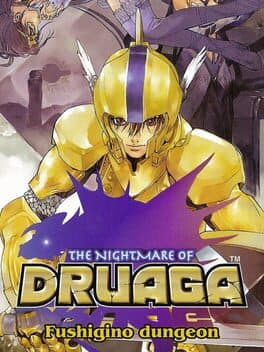
The Nightmare of Druaga: Fushigino Dungeon
Arika2004
In this turn-based dungeon crawler you play as Gil, whose beloved fiancee has been kidnapped by a sorceress and taken to the Tower of Druaga. Gil puts on a suit of armor that radiates light, and proceeds into the dungeon to save his beloved Ki. The combat system and exploration might be the best part of the game. The map is set up in a grid, and you do everything in turns, like moving, battling, or recovering. The timing of moves is also critical, and the game feels like a real-time game because you aren't waiting like you typically would for turn-based games. The Nightmare of Druaga: Fushigino dungeon is a collaboration between the Mysterious Dungeon series and the arcade classic The Tower of Druaga.
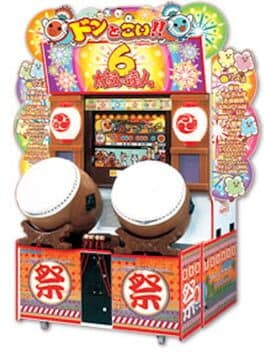
Taiko no Tatsujin 6
Namco2004
A sequel to Taiko no Tatsujin 5, featuring 32 new songs and no other notable change from its predecessor.
Donkey Konga 2: Hit Song Parade!
Namco2004
A rhythm and beat game like the popular Dance Dance Revolution game series, but instead of matching the beats with your feet you use your hands to play the bongos. Starring the characters from the Donkey Kong series of games. There are more than 30 tunes to drum beats to, from every genre of music - pop favorites to classical remixes. The more on-time your beats are with the music the higher score you get to earn more coins to unlock different beat sounds.
Xenosaga Episode II: Jenseits von Gut und Böse
Monolith Soft2004
Xenosaga Episode II: Jenseits von Gut und Böse is a direct sequel to the first episode of the science-fiction RPG Xenosaga series.

Football Kingdom: Trial Edition
Namco2004
Football Kingdom: Trial Edition is a soccer game developed by Namco, released in Japan for the Playstation 2 in 2004. The game features advanced ball physics allowing you to perform a wide number of passes, manual off-the-ball movement for fellow players and is widely known for its superb net physics.
Xenosaga Freaks
Monolith Soft2004
Xenosaga Freaks was only released in Japan and it contains 2 games, an Encyclopedia of terms used in Xenosaga Episode 1, and a demo for Xenosaga Episode 2. The main game is XenoComi, an illustrated and voice acted text adventure. It has 6 scenarios to go through involving the main characters from Episode 1 and a 7th is unlocked when the other 6 have been played. It takes place at some point during Episode 1 and is much more light hearted. It focuses on the events caused by a rampaging cat-eared KOS-MOS and the event that led to the situation. The other game is Kotoba no Puzzle: Xenopittan, a Xenosaga themed word puzzle game. Based off the game Kotoba no Puzzle: Mojipittan.
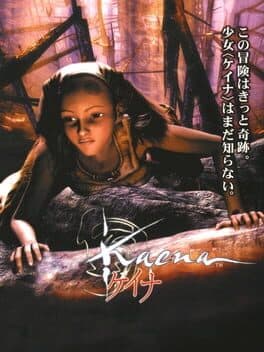
Kaena
Xilam2004
Based on the 2003 French-Canadian CGI-animated film, 'Kaena: The Prophecy', by Xilam.
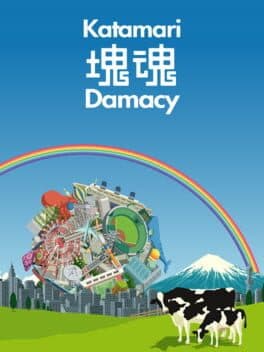
Katamari Damacy
Keita Takahashi2004
The King of All Cosmos accidentally destroyed the stars and—having recovered—wants the prince to rebuild them. Unfortunately the prince stands a little less than half a foot tall, so recreating the stars will require some effort. Enter the Katamari, a sphere the prince can push around our world to “roll up” items increasing the Katamari’s size until it’s suitable for the King. Taking place in stylized versions of Japanese houses, cities, and environs, the prince pushes the Katamari around collecting items which adhere to it. At first, the prince can only pick up smaller items, but as the Katamari grows, the more it can collect. Push pins and paper clips cling to the Katamari increasing its size so it can roll over obstacles and pick up bigger items. Over many levels, the Katamari can eventually pick up people, cars, and other bigger items. Players steer the Katamari from a third-person perspective using the analog sticks on the PS2. A tutorial stage takes the player through the controls and sets up the story as well as introducing a side story about a Japanese girl who can feel the cosmos. Wanting to challenge the prince, the King sets requirements on the Katamari’s size and sets time limits on the level. Bonus missions restore constellations and have their own restrictions. The world of Katamari Damacy is brought to life with off-beat animation and a catchy soundtrack. Players can find presents hidden in the levels that contain accessories for the prince. Two players can also battle head-to-head in a Katamari competition.
Breakdown
Namco2004
This is a minimalistic arcade game where you control a bouncing ball. Your task is to punch the blocks down until there are no blocks left and the ball reaches the bottom.
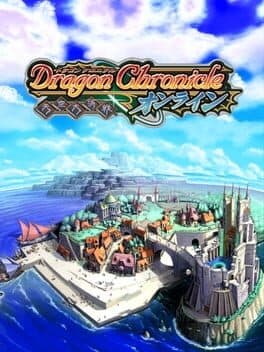
Dragon Chronicle
Namco2003
"Dragon Chronicles" is an arcade game released by Namco (now Bandai Namco Games) in 2003. It was the first game to feature a "Rewritable Stage" cabinet with a touch panel. Players raise dragons and battle other players. Information is recorded on magnetic cards, allowing for continued play. The game has undergone two major updates: "Densetsu no Master Ark"(Legendary Master Ark), which added new elements, in 2004, and the final version, "Tenku dai-kessen"(Sky Decisive Battle), which supported nationwide online battles, was released at the end of the same year. Online service ended on January 7, 2008. After the online service ended, only local battles were possible in-store, although some stores still allowed battles until 2020.
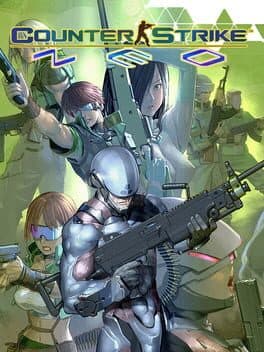
Counter-Strike Neo
Namco2003
Counter-Strike Neo is a Japanese arcade adaptation of Counter-Strike, the original Half-Life multiplayer modification. It was published by Namco and runs on a Linux system. The game features unique maps, factions, and settings, though the gameplay and the weapon lineups remain the same as other Counter-Strike games, only with a huge difference in visuals.
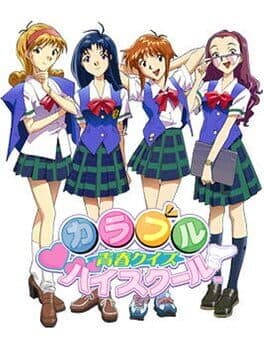
Seishun Quiz Colorful High School
8ing2003
"Seishun Quiz Colorful High School" is a quiz game released by Namco in March 2003. As a game, it has a large aspect of a love game, and adopts a system that increases the favorability of characters related to the content when the quiz is answered correctly. Ultimately, the purpose is to confess to the opponent and become a lover.
Donkey Konga
Namco2003
Donkey Konga is a GameCube rhythm video game starring the ape Donkey Kong, developed by Namco and published by Nintendo. Instead of the standard GameCube controllers, the game is intended to be played with a special controller called the DK Bongos that resemble two small bongo drums. Donkey Konga was developed by the same team of people who made the Taiko: Drum Master series for the PlayStation 2. The tracks include hits such as "Louie Louie", "We Will Rock You", "Shining Star", "Rock Lobster" and "Losing My Religion". There are tracks from the Mario series, the The Legend of Zelda series and other Nintendo related music. All regional variants of the game have differing track listings, and in the North American version of both games, almost all of the licensed non-Nintendo/traditional songs are shortened covers.
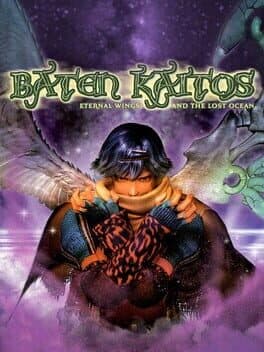
Baten Kaitos: Eternal Wings and the Lost Ocean
tri-Crescendo2003
An original roleplaying game for Nintendo GameCube from the team behind Xenosaga. The game makes heavy use of cards for everything from fighting battles to purchasing items. Cards are actually a central part of the story as well, as they are holders for "Magnus" which is short for "Magna Essence." Magnus is the true nature of all things throughout the world, including swords, magic spells and even apples that are gathered in the town in which your adventures start out. A real item can be turned into Magnus form and stored in a blank card. It can then be taken out from the card and will turn back into real form. Features detailed CG cutscenes to tell the story and turn-based battle sequences.
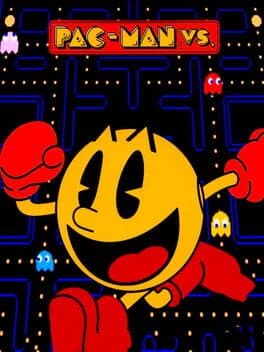
Pac-Man Vs.
Nintendo Entertainment Analysis & Development2003
Pac-Man Vs. is a Pac-Man video game originally designed exclusively for the Nintendo GameCube that was included as an extra bonus disc with the Player's Choice edition of Pac-Man World 2.
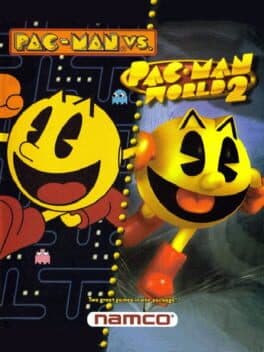
Pac-Man vs. & Pac-Man World 2
Nintendo Entertainment Analysis & Development2003
Pac-Man vs & Pac-Man World 2 is a bundle release containing both the video games Pac-Man vs and Pac-Man World 2.
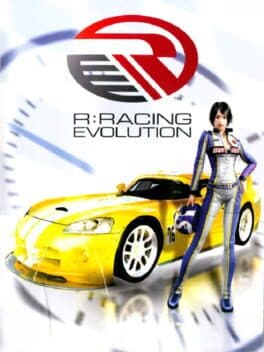
R: Racing Evolution
Namco2003
You play the part of Rena Hayami who begins the story as an ambulance driver. After successfully racing the vehicle to the hospital, you're offered a chance to drive a racecar.
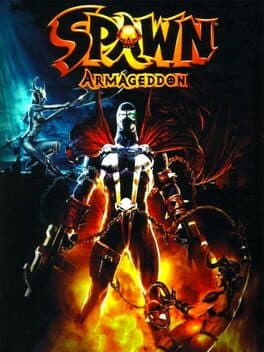
Spawn: Armageddon
Point of View2003
Spawn: Armageddon is a 3D action/adventure game based on the comic by Todd McFarlane, who also contributed the storyline for the game. Spawn struggles between the forces of Heaven and Hell in order to save the world, equipped with his Hell-sent living symbiotic suit and its chains. A multitude of weapons and Hell Powers are also available. Agony, the axe that Spawn uses in SoulCalibur II is also available as a melee attack weapon.
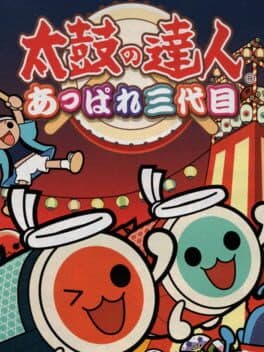
Taiko no Tatsujin: Appare Sandaime
Namco Limited2003
The third home version of the long running drum game Taiko no Tatsujin (A series known as Drum Master in the west). It was the last game in the home series to feature Arcade, Battle and Survival Modes. Three new minigames were added as a bonus. The game is played by hitting the red and blue circle that move from right to left as they overlap with the target market. The red circle signals that you should hit the centre of the drum while the blue means you should hit the rim. The game features 39 songs, 5 of which are secret and needs to be unlocked by playing.
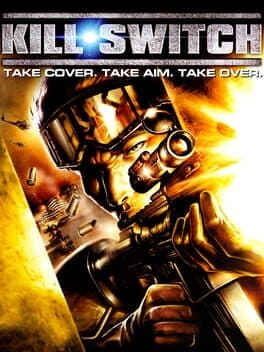
Kill.Switch
Namco2003
Aiming and moving in cover and blind-fire modes is tricky, though. To gain the 3-D effect, some detail gets sacrificed. Usually this is no problem, but occasionally you'll have a tough time recognizing an object. You move from area to area to engage a new group of enemies. You'll conveniently find crates for cover and barrels to help you pull off big explosions. Locking the enemy in your crosshairs, signified by your crosshairs turning red, doesn't guarantee a direct hit? The accuracy depends on the weapon of choice. A shotgun will normally provide a kill on the first shot. If you have an automatic rifle, your shots are relatively inaccurate even if your aim is true.
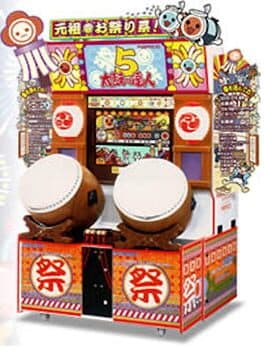
Taiko no Tatsujin 5
Namco2003
A sequel to Taiko no Tatsujin 4, featuring 34 new songs, selecting songs before the difficulty mode, but can't choose the Donderful difficulty in this mode; The Futsuu difficulty added for all Namco Originals, and the ability to choose the same song more than once per play.
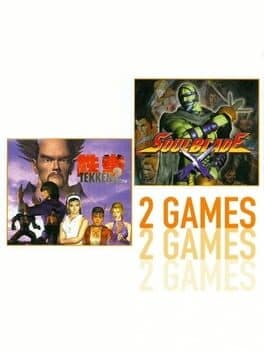
Tekken 2 / Soul Blade
Namco2003
This twin pack contains Tekken 2 and Soul Blade.
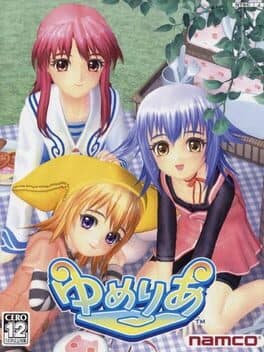
Yumeria
Namco2003
A visual novel for the PlayStation 2. It went on to spawn an anime series.
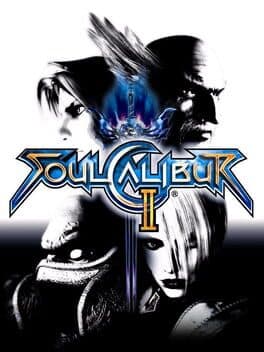
SoulCalibur II
Project Soul2003
SoulCalibur II for the PlayStation 2 is an expanded port of the Arcade game, including Heihachi as a playable character and new game modes.
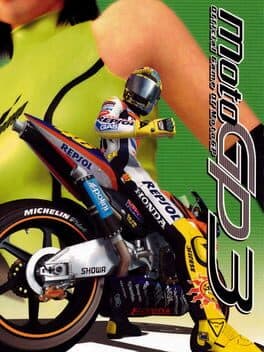
MotoGP 3
Namco2003
The gameplay is very similar to past games by Namco, like MotoGP (PS2) and MotoGP 2 (PS2). MotoGP 3 is based off the 2002 Grand Prix motorcycle racing season, but with the introduction of four stroke bikes, the gameplay has some slight differences. The new 990cc 4-stroke bikes are faster, but tend to be a bit of a handful while the 500cc 2-strokes are less faster but slightly better to handle.
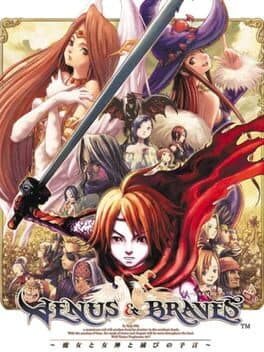
Venus & Braves: Majo to Megami to Horobi no Yogen
Namco2003
Venus & Braves: Majo to Megami to Horobi no Yogen is a tactical role-playing game developed by Namco for the PlayStation 2. A pseudo-sequel to the 2-dimensional RPG Seven: Cavalry Troop of Molmorth, it takes place in the same fantasy world.
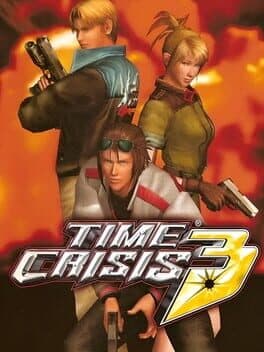
Time Crisis 3
Nextech2002
The third installment in Namco's light gun shooting franchise, Time Crisis 3 offers exciting, fast-paced shooting action by the world renowned VSSE agents as they fight to save an innocent nation from total annihilation. Choose from four weapons--machine gun, handgun, shotgun, and grenade-- to blast your way past enemies. Practice your sharpshooting skills in Sniper Combat and multiple gameplay modes. The game also includes multiple gameplay modes, a new playable character, and the original Time Crisis. It's time to warm up that trigger finger and step into the action.
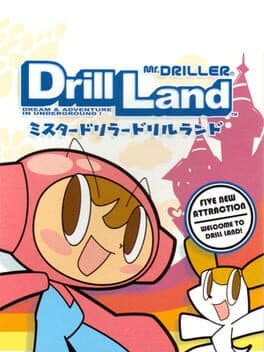
Mr. Driller: Drill Land
Namco2002
A Japanese exclusive released in 2002 for GameCube. The game could be connected to the Game Boy Advance game Mr. Driller Ace, another Japanese exclusive, to transfer pets to the GameCube and unlock power-ups for purchase. A remastered version of the game was released worldwide in 2020 on Nintendo Switch and PC. Mr. Driller: Drill Land is a sequel to Mr. Driller. The basic goal is like the original - players must dig through from top to bottom, aiming to reach the goal depth in meters. As they dig, they gradually lose air, so they must also collect air capsules to replenish their air and prevent losing a life.
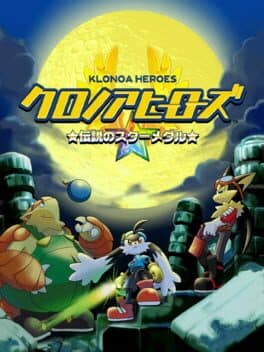
Klonoa Heroes: Densetsu no Star Medal
Namco2002
This entry in the Klonoa series sees the floppy-eared hero training to become a true hero in a new RPG system. Klonoa Heroes: Densetsu no Star Medal is a spin-off of the Klonoa franchise, released only in Japan on December 13, 2002. Klonoa Heroes was developed by Namco and published by Namco for the Game Boy Advance. Klonoa Heroes is a twist on the traditional Klonoa games, putting Klonoa in a more action role playing game along the lines of Legend of Zelda or Beyond Oasis. The game does have voice acting, as well. Kumiko Watanabe plays Klonoa, Takahiro Sakurai plays Guntz, Shouzou Iizuke plays Pango, and Yutaka Shimaka plays Garlen. Klonoa Heroes' gameplay is very similar to the gameplay of The Legend of Zelda. Players can control one of three characters (Klonoa, Guntz, and Pango) in a top-down perspective, hitting enemies with various attacks (Klonoa with the Wind Ring seen in the platforming games, albeit with a few differences). Guntz uses a handgun, while Pango throws bombs. In addition, these characters can collect more weapons as the game progresses. Every enemy in the game is given a color (either blue or red), and the player must attack that enemy with the corresponding attack (as each weapon has a blue and red attack). Klonoa Heroes also has role playing aspects. Experience points are gathered by picking up Dream Shards after defeating enemies (failure to pick them up results in no experience). Enemies also drop coins, which can be spent on items and weapons. These items can be found in chests scattered throughout the levels, as well. Most items can be used to restore health, but there are various other uses (such as stat benefits). Leveling up also allows the player to distribute points in several different areas (traditional role playing game stats, such as attack, defense, and agility). These changes are not permanent, and can be changed at any time (when not in the middle of a level).
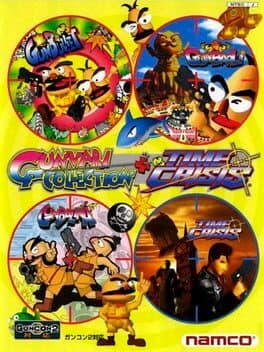
Gunvari Collection + Time Crisis
Namco2002
"Gunvari Collection + Time Crisis" is a compilation game released for the PlayStation 2 on December 12, 2002. Developed and published by Namco, this collection includes four arcade shooting titles: GunBullet, GunBarl, GunBalina, and the original Time Crisis. It is designed specifically for the Japanese market (NTSC-J) and is compatible with the GunCon2 light gun, enhancing the shooting game experience. The game package offers a mix of classic arcade shooters, converting them for home console play at an attractive price. The GunCon2 compatibility allows players to use a more precise and responsive light gun for these games, providing a nostalgic and immersive gameplay experience akin to the arcade versions.
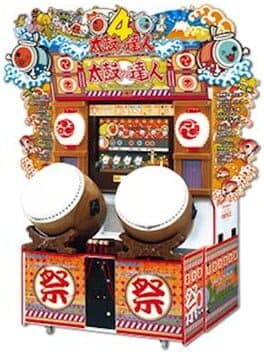
Taiko no Tatsujin 4
Namco2002
A sequel to Taiko no Tatsujin 3, featuring 33 new songs and voice samples for combos like '50 combo!' '100 combo!' etc.
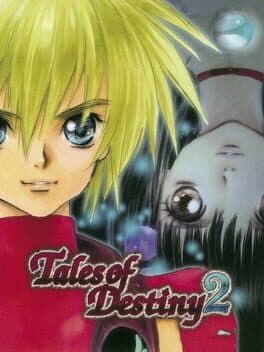
Tales of Destiny 2
Alfa System2002
Tales of Destiny 2 is a direct sequel to the Playstation's Tales of Destiny. The game's battle system retains the same fluid, fast-paced action combat of its predecessor Tales of Eternia, but adds a range of experimental features including a stamina gauge and a fairly high level of character, equipment, and skill customisation.
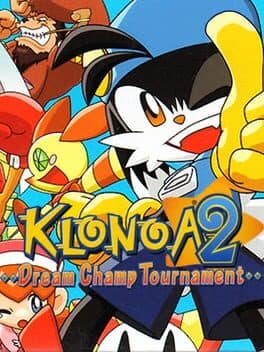
Klonoa 2: Dream Champ Tournament
NOW Production2002
Floppy-eared hero Klonoa returns in another fast-paced, colorful side-scrolling adventure for the Game Boy Advance. In his latest challenge, Klonoa must race against time and other dream travelers in the Dream Champ Tournament to collect stars, sun and moon stones to become the ultimate Dream Champion. Combining platform, puzzle and adventure elements, Klonoa 2: Dream Champ Tournament is just the adventure fans of the series have been anticipating. Explore the intricate and puzzle-packed worlds where you’ll meet a wide variety of interesting creatures! Solve Fiendishly-Designed Puzzles - Use Boxes, Bomb Boxes, Switches, Pressure Switches, Goomis, Springs and Scales in your quest for glory. Hoverboard Races - Each world contains a fast-paced thrill ride of gem collecting fun! Master your Skills to Win - Klonoa must prove his skills against other dream travelers in the Dream Champ Tournament.
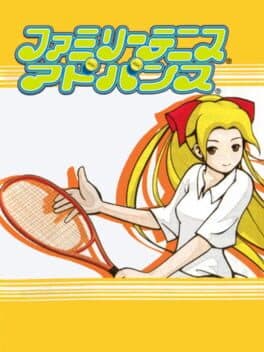
Family Tennis Advance
2002
The latest installment in the Family Tennis series.
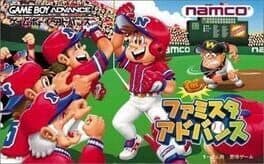
Famista Advance
Namco2002
Famista Advance is a Sports game, published by Namco, which was released in Japan in 2002.
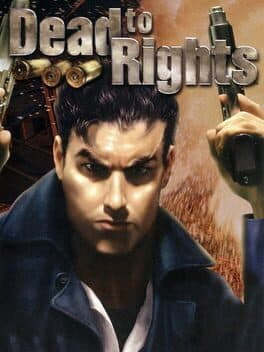
Dead to Rights
Namco2002
Meet Jack Slate, a cop framed for murder and facing execution. Slate escapes from Iron Point Maximum-Security Penitentiary to bring down the criminals that framed. In Dead to Rights, you play the role of Slate, as he fights through the hard streets and corrupt enemies of Grant City. There are plenty of ways go about bringing the conspirators to justice--Jack can perform disarm moves, shoot different weapons, pick locks, fight hand-to-hand, and play minigames such as arm wrestling, bench press, and dancing. In this gritty, crime-noir inspired epic, you're always on the run.
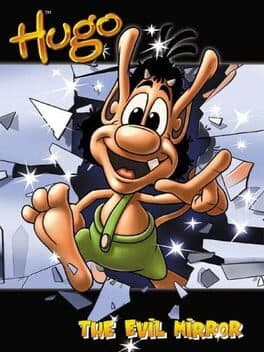
Hugo: The Evil Mirror
ITE Media2002
The evil witch Scylla has trapped Hugo in a mirror, and now it's up to you to rescue him. In Hugo and the Evil Mirror, you must save Hugo in three different worlds, each guarded by dangerous monsters. Use the freeze gun to turn enemies into ice cubes, and then push them over the edge of the levels or combine them with other frozen monsters to gain power-ups.
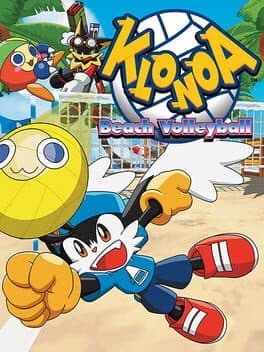
Klonoa Beach Volleyball
Namco2002
Klonoa Beach Volleyball is a spin-off of the Klonoa game series. Its release was limited to Japan and Europe only with the characters speaking in English in the latter.
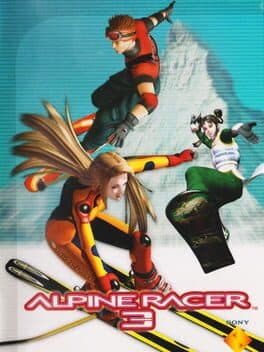
Alpine Racer 3
Namco2002
Alpine Racer 3 is a Skiing game by Namco.
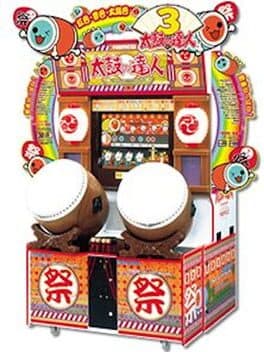
Taiko no Tatsujin 3
Namco2002
A sequel to Taiko no Tatsujin 2, featuring 19 new songs, the iconic Balloon notes, and a Battle Mode.
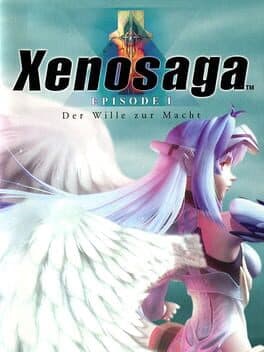
Xenosaga Episode I: Der Wille zur Macht
Monolith Soft2002
Xenosaga: Episode I - Der Wille zur Macht, the first chapter of a trilogy, is a Japanese-style sci-fi role-playing game, sharing many common themes and gameplay elements with Xenogears. The battle system is not unlike the one used in Xenogears (combo attacks, AP and EP gauges, etc.), but random encounters are eliminated. Instead, the enemies are now visible and battles can be avoided. During combat the few upcoming ally and enemy turns are shown onscreen, allowing the player to make strategic decisions based on who will act next. A rolling slot moves with each turn as well, conferring a bonus such as added damage or bonus XP for any action on that turn. If the enemy would be in position to take an advantage then the player can expend a character's "boost" gauge to cut in and act next, although enemies can boost as well, and enemy boosts always over-ride player boosts. Each character has a unique tree of Ether spells they can learn by spending Ether points earned in battle, with lower spells requiring spells above them to be purchased first. After a spell is purchased, so long is it does not require a unique talent of that character, the spell can also be purchased and learned by any other character that can afford double its normal cost. The Anti-Gnosis Weapon Systems can be equipped with different weapons and accessories and can be used in combat provided that a character has enough AP on that turn to board their AGWS.
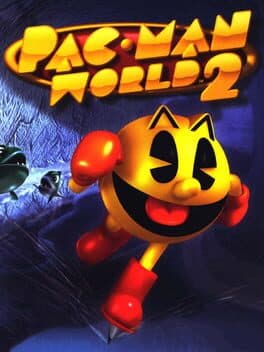
Pac-Man World 2
Namco Hometek2002
Long ago, back in medieval times, an evil spirit known as Spooky had terrorized all of Pac-Land. In response to this, the great Wizard Pac created a potion that turned 5 ordinary fruit into the "Golden Fruit." A young knight called Sir Pac-alot fought and sealed Spooky underneath a large tree using the Golden Fruit, which were attached to the branches of the tree. In the present time late at night, Inky, Pinky, Blinky and Clyde sneak into the village and, in their mischief, pick the Golden Fruit off the tree in the center of town. Unfortunately, this has released Spooky from his prison. Spooky tells the ghosts to take the Golden Fruit and follow him if they wish to rid the land of the Pac-people forever. When Pac-Man awakes, he hears the news from Professor Pac about the Golden Fruit and Spooky, and sets off to defeat the ghosts and Spooky.
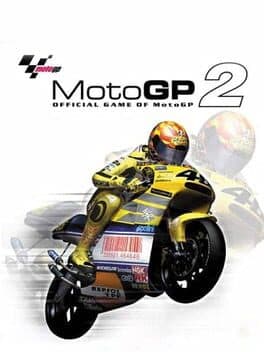
MotoGP 2
Namco2002
Namco, the genius company behind Tekken and Ridge Racer, has also proved itself a dab-hand at the motorcycle racing game. Early 2001, the arcade giant released Moto GP for PlayStation 2, and its runaway success quickly led to the research of a sequel. After considerable development time, Namco return with the second instalment. Moto GP 2 players can expect a glut of updates. New season statistics have naturally been included, and there are now 10 circuits to race on, all of which are genuine true-to-life tracks, bustling with interactivity. The graphics are noticeably better, cleaner, with improved textures and far fewer aliasing troubles. The gameplay is as polished as ever, with easy-to-learn controls, a steady learning curve, and AI that doesn’t make you want to tear your hair out... at least until you reach the later stages of the game. Moto GP 2 also offers the usual Championship and Time Trial mode of play. But, in typical Namco fashion, multiplayer mode is where the majority of the fun is to be had. In the entire history of video games, the ability to play the same game with one or more friends is still one of the most welcome features in a game. Moto GP 2 doesn’t disappoint in this regard. It’s frantic, it gets personal, and that’s what makes it interesting. A grand sequel, all in all. Well worth a look, even if you own the original.
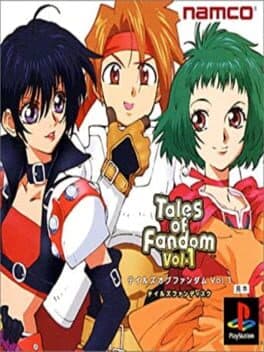
Tales of Fandom Vol. 1: Cress Version
Namco2002
Tales of Fandom Vol. 1 is a compilation game for the Sony PlayStation. It includes gameplay that features characters and elements from Tales of Phantasia, Tales of Destiny, and Tales of Eternia. The game is set up as an adventure game with actual gameplay elements to explore and unlock extra bits. Some elements in the game include exploring, playing a puzzle game like the Craymel Lab, a scene maker where characters can play out a created scenario, and an extensive gallery. It was released on January 31, 2002 and only sold in Japan.
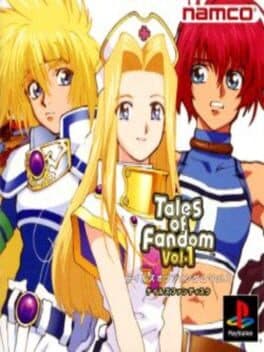
Tales of Fandom Vol. 1: Mint Version
Namco2002
Tales of Fandom Vol. 1 is a compilation game for the Sony PlayStation. It includes gameplay that features characters and elements from Tales of Phantasia, Tales of Destiny, and Tales of Eternia. The game is set up as an adventure game with actual gameplay elements to explore and unlock extra bits. Some elements in the game include exploring, playing a puzzle game like the Craymel Lab, a scene maker where characters can play out a created scenario, and an extensive gallery. It was released on January 31, 2002 and only sold in Japan.
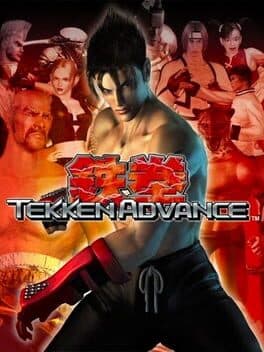
Tekken Advance
Namco2001
Tekken Advance is a fighting game released for the Game Boy Advance. It is non-canonical to the Tekken storyline, but follows the events of Tekken 3. It uses sprites based on Tekken 3's 3D models for its characters and was the first Tekken game to be released on a Nintendo platform.
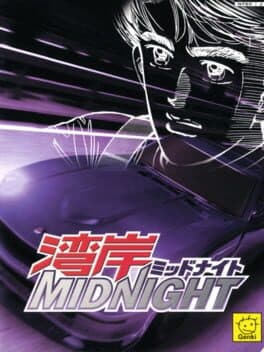
Wangan Midnight: R
Genki2001
Wangan Midnight: R is a racing game based on the Wangan Midnight manga. For Arcade it is a revised and updated version of Wangan Midnight while for the PS2 it is the first version and the first home console release in the series as well. The PS2 release has an AC Scenario mode (original Arcade Scenario mode), Mission mode, Time Attack mode and an i.Link Battle mode (local multiplayer) similar to the Versus mode used for the two units of the arcade cabinet. There is also a Replay Theater where replays of races can be viewed. The mission mode has a number of challenges against one or more opponents divided over eleven series (series one to ten and then Tune as the final one). The game contains licensed cars from the manufacturers Mazda, Mitsubishi, Nissan, RUF, Subaru and Toyota.
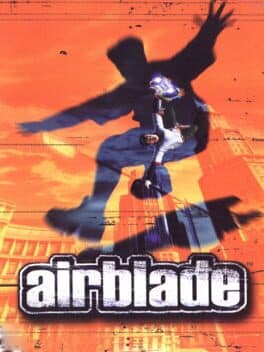
AirBlade
Criterion Games2001
AirBlade takes place in the near future as a man named Oscar has developed a perpetual energy source that will revolutionize the world, however, the GCP Corporation has discovered it as well and fears that it will hurt the company which is heavily invested in the oil companies. Desperate, they kidnap Oscar in an attempt to silence him, but before he is captured, he gives his friend Ethan a prototype hoverboard called the AirBlade.
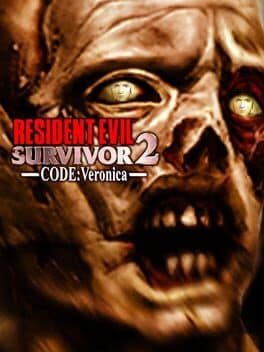
Resident Evil Survivor 2 Code: Veronica
Nextech2001
Resident Evil Survivor 2 Code: Veronica is a first-person shooter video game and the second installment in the Gun Survivor series. As in most lightgun games, the objective is to make it through an environment while shooting enemies. It is somewhat less typical in that you have full roaming control over your character rather than being stuck on rails. More unusually, a timer begins as you enter each area. If the timer runs out before you leave, Nemesis will appear and chase you.
Ms. Pac-Man: Quest for the Golden Maze
Creature Labs2001
A polygonal Ms. Pac-Man game for PC.
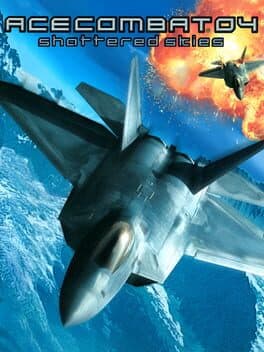
Ace Combat 04: Shattered Skies
Namco2001
Ace Combat 04: Shattered Skies is an aerial combat simulation. It allows the player to participate in semi-realistic dog-fighting with a collection of fighter jets, including the F-22 Raptor, F-16 Fighting Falcon, F-117 Nighthawk, U-2 Dragon Lady, C-130 Hercules and SR-71 Blackbird. Eighteen missions will take the player from search-and-destroy buildings to one-on-one and all-on-all dog-fighting. Along the way it becomes possible to upgrade the fighter with defense systems, deadly weapons, and other accessories.
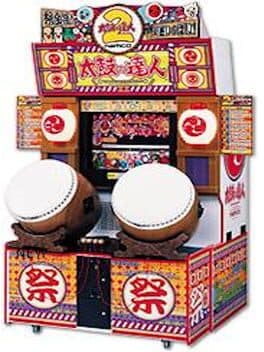
Taiko no Tatsujin 2
Namco2001
A sequel to the original Taiko no Tatsujin Arcade game, featuring 13 new songs and new difficulty settings.
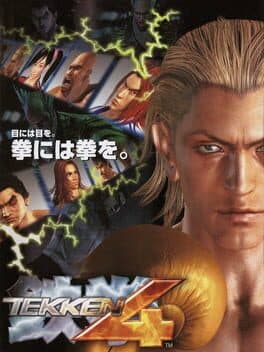
Tekken 4
Namco2001
Tekken 4 marks the return of Namco's premier fighting franchise, Tekken. This version features enhanced graphics, gameplay mechanics, and fearsome fighters. Newcomers engage old favorites in interactive, multileveled arenas. The addition of walls, terrain effects, position changes, and enhanced sidestepping will force you to adjust your fighting strategy. Expanded game modes such as Training, Team Battle and the new Tekken Force provide the player with a deeper gameplay experience.
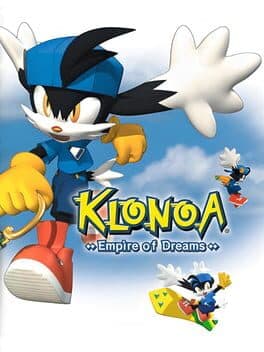
Klonoa: Empire of Dreams
Namco2001
A colorful and fun puzzle game with inventive level design, filled with great ideas that bring joy and delight to any gamer that enjoys a challenge.
Pac-Man Collection
Mass Media Inc2001
One of the first video games ever created, PAC-MAN still happens to be one of the best, as well. This comprehensive collection includes three unique Pac-Man titles in one complete package. Inside you'll find the original Pac-Man which has you traversing mazes, avoiding deadly ghosts, and chomping down nutritious dots; Pac-Mania is a 3D take on the first version, in which you can actually jump over the ghosts; and Pac-Attack is a Tetris-like experience that'll have you lining up blocks in a fast-paced environment.
Golgo-13 3 - Juusei no Chinkonka
Eighting/Raizing2001
The third installment to the arcade lightgun adaptation series of Golgo 13 Eighting/Raizing and published by Namco. Players take on the role of Duke Togo codenamed Golgo 13 in a series of assignments based on the first two installments alongside completely new ones exclusive to the third game.
Klonoa 2: Lunatea's Veil
Namco2001
Klonoa 2 puts players in the role of Klonoa, who, along with a new cast of friends, has stumbled into another adventure, this time to save the world of Lunatea and help unveil the mysteries of the enchanted world. The game features gameplay inspired by the original Klonoa with 2D side-scrolling in a 3D-rendered environment. Klonoa's equipped weapon is a crystal ring which contains the life of Lolo inside helping him. Klonoa, a long-eared creature, has stumbled on yet another mystical adventure. In Klonoa 2, a dark kingdom threatens the enchanted realm of Lunatea. Now it's up to Klonoa and his friends, Lolo and Popka, to prevent evil forces from bringing monsters and sickness into their world. Help Klonoa through 24 magical stages featuring hover-board gliding, perceptual changes, and new treacherous foes. On your adventure, you'll drop off waterfalls, get shot into the air by cannon, and gain special abilities from your defeated enemies.
Mr. Driller G
2001
Mr. Driller G is a another entry in Namco's series of arcade puzzle games. As in the previous titles, the main objective is to control a miner character and dig through layers of multi-colored blocks to reach the deeper levels of a shaft and score points. As sections are removed, the whole structure becomes unstable and dangerous. When large pieces of the same color fall on top of each other, they automatically disappear. The miner can be squished by the crumbling stones, or suffocate by lack of oxygen. Air pills and power-ups are found scattered throughout the level, and must be collected to refill the supply, shown as a meter at the right side of the screen. Special brown blocks act as a barrier and have to be drilled several times to break, removing a portion of the remaining air after being destroyed. The single player game has three modes. In mission mode, the objective is to reach a specific depth and make as many points as possible, with several levels available to play right from the beginning. In scenario mode, cutscenes play between a linear succession of levels, where each shaft has to be completed to move the plot forwards. In time attack mode, the air pills are replaced with clocks that add a few seconds to the time remaining to reach the bottom of the mine. The normal arcade mode has multiplayer variations that can be played locally with two controllers, where the screen is split vertically in the middle showing two separate mine shafts for each player. In Driller Race, the objective is to reach the deep end of a randomly generated shaft as fast as possible, while in Driller Survival the players try to outlast each other in bottomless mines. There is an option called Net Driller, that generates passwords to be used on the official site for competitions and global rankings. Support for it was discontinued on January 30th, 2003.
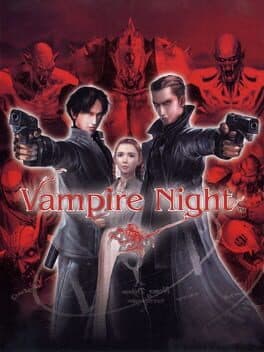
Vampire Night
Sega WOW2001
Vampire Night is a light gun game produced by Sega's Wow Entertainment, distributed through Namco and released in 2000 for video game arcades. It was later ported to PlayStation 2 in November 2001. Two players can team up to take down on screen enemies.
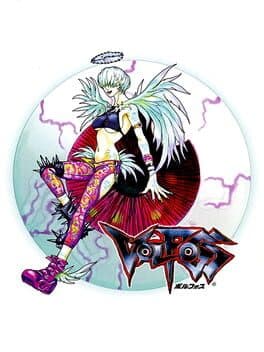
Volfoss
Namco2001
Volfoss is a tactical role-playing game developed by Namco for the original PlayStation. It was released in Japan in 2001
Taiko no Tatsujin Arcade
Namco2001
Taiko no Tatsujin Arcade is a rhythm game created by Namco. The first of the Taiko no Tatsujin series, gameplay involves beating a taiko drum in time with music.
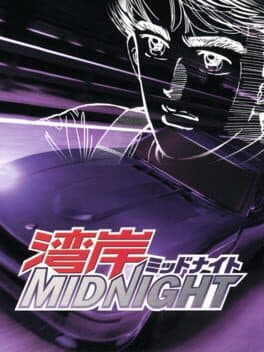
Wangan Midnight
Genki2001
Wangan Midnight is the first video game adaptation based on the Wangan Midnight manga. The cabinet consists of two racing units with a chair and steering wheel. Similar to the concept of the Tokyo Xtreme Racer \ Shutokō Battle series, players roam the Metropolitan Expressway in Tokyo that has been divided into eight tracks. The Story mode adapts parts of the manga as the player's character seeks out and defeats increasingly challenging opponents. The player can freely roam the expressway with a traffic density that shifts according to the time of day. When an opponent is encountered the game enters a battle mode and the cars start to race each other. Each car has a life gauge, shown as an SP meter, that is drained for the trailing car. The race is over when time runs out or when one of the cars loses all SP. The other game modes are the Time Attack mode and a Versus mode played against another player locally. The available cars are licensed from manufacturers such as Mitsubishi, Nissan and Subaru.
Ms. Pac-Man/Galaga: Class of 1981
Namco2000
Released in 2000 by Namco. This machine features both Ms. Pac-Man and Galaga, both of which were developed in 1981 (although Ms. Pac-Man was actually released in 1982). The original Pac-Man is also an unlockable game, playable by entering a joystick combination. To date, this is one of the most commonly found arcade machines in all of North America.

Kart Duel
2000
To increase the competition levels in 2 player mode, Namco has introduced the new "continue system" where the losing driver has to pay for the next continuing play. In addition, 1 free game is given per 4 continuous rounds of 2 player play. The competition is also increased with players competing each lap time. When a player marks his or her best lap, their position in the top 100 rankings will be displayed on screen during the race. When a player finishes the race within the regulation position, they can go on to the next circuit. When all the circuits are cleared, the player can challenge the best racer from Namco's R&D staff. There are a choice of 4 circuits (3 of the circuits are based on actual tracks) to suit the individual's skill level and players can select their kart to suit each circuit, strategy and driving style. The DX cabinet has a motion base which moves from side to side responding quickly to handling and road service conditions.
7: Molmorth no Kiheitai
Namco Limited2000
Trouble is in the land of Acralind. Thousand years ago, seven legendary heroes have sealed the powers of evil with seven sacred stones. But now, the stones have been weakened, and the ancient evil raises its head again. Monsters attack villages and towns. It is your task to retrieve the seven stones and to restore peace in the land. In this strategy RPG, the emphasis is on preparation for the battles rather than on the battles themselves. Before each battle, you are able to see the stats of the monsters and even the tactics they are going to use. You must then select seven units of various classes (knights, archers, mages, etc.) and place them on a battle field, which is a grid composed of four columns and three rows. Front row can attack, middle row support or attack with bows, and back row heals. The battle itself is controlled by computer AI, but you can change formation at any time.
Seme COM Dungeon: Drururuaga
Kuusou Kagaku2000
A Game Boy Color release in the Babylonian Castle Saga.
Smashing Drive
Gaelco2000
Smashing Drive puts you in the driver's seat of an insane, outrageous taxi on the busy streets of New York City. Your job is to simply race from point to point in the fastest time possible. The key to success in Smashing Drive lies in two features: crazy power-ups and hidden shortcuts. Almost all of the power-ups transform your taxi in some way that allows you to smash your way through traffic with ease. And the shortcuts usually involve crashing through the insides of buildings, like movie theaters and sports arenas.
Fun Cube
Namco2000
Fun Cube is an arcade medal game machine released by Namco from December 2000 to December 2002. Three mini-games were recorded in one machine, and since 1 to 5 were in operation, there were 15 kinds of mini-games in total.
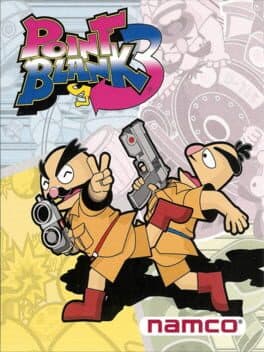
Point Blank 3
Namco2000
The escapades of Namco's Dr. Dan and Dr. Don continue in Point Blank 3, the third edition of the irreverent, mini-game based light-gun series. A selection of 80 events are offered, many of which thrust the hapless duo into situations that require timely intervention by the player on their behalf, testing your reflexes and shooting accuracy at the same time. The myriad of events present the player with basic tasks that range in both scope and difficulty. A plethora of mini-game formats are provided that include shooting color-coded targets to protecting the two numbskulls from threatening objects, to those that require the player to perform rudimentary mathematics calculations before shooting the correct answer. Cameo appearances by Tekken characters, classic Namco franchises and other such in-jokes abound in the many scenarios players will find themselves embroiled.
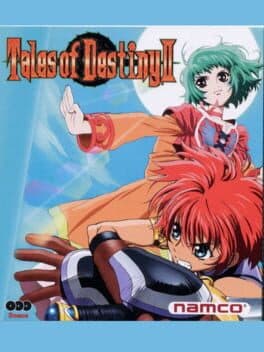
Tales of Destiny II
Wolf Team2000
Tales of Eternia is an action japanese role playing game, with real time battle scenes (combos and spells can be assigned to the face buttons). The game is set in the fantasy world of Inferia, follows the story of a young hunter named Reid Hershel and his friends, Farah and Keele, as they meet a mysterious girl who speaks an unknown language. Their subsequent quest to discover her origins leads them across a dimensional boundary to an entirely different realm known as Celestia, where they become involved in an age-old conflict between the two worlds. It would later inspire a 13-episode anime co-produced by Production I.G loosely based on the game's plot.
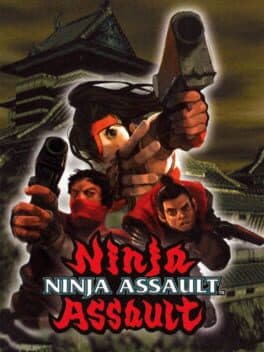
Ninja Assault
NOW Production2000
Ninja Assault is an arcade game developed and released by Namco in 2000. Two years later it was also published as a PlayStation 2 exclusive title with GunCon 2 compatibility. Ninja Assault was developed by Namco, who also created the Time Crisis series. However, this game has more in common with Lethal Enforcers, Virtua Cop, and The House of the Dead series, whereby the movement is completely "on-rails" (i.e., with no hiding pedal), and the player must shoot away from the screen to reload. Both versions of this game support up to two players in cooperative gameplay.
Tales of Phantasia: Narikiri Dungeon
2000
Tales of Phantasia: Narikiri Dungeon is a Dungeon RPG. It is the first sequel in the Tales series, which normally does not have connected storylines. The story begins 205 years after the beginning of Tales of Phantasia.
MotoGP
Namco2000
Developed by Namco, this racing simulator brings the excitement of MotoGP to the consoles.
Khamrai
Tamtam2000
In Khamrai, you're thrown into a realm where gods and men live among each other; where six nations float through the sky in an uneasy truce; where full-scale war is almost an inevitability. A bit of a taller order than usual.
Golgo-13 2 - Kiseki no Dandou
Eighting/Raizing2000
A sequel to the 1999 Golgo-13 arcade lightgun game developed by Eighting/Raizing and published by Namco. The player once again plays as the titular assassin Duke Togo codenamed Golgo 13. The game takes the player on a series of assignments with different targets that need to be dispatched with a scoped rifle. The sequel adds a new set of assignments alongside a remix of various assignments from the previous game, all based on the manga series.
Ms. Pac-Man: Maze Madness
Namco2000
Professor Pac learns that the witch, Mesmerelda, has seized control of the Enchanted Castle using black magic and from there is planning on stealing all four Gems of Virtue (Generosity; Truth; Wisdom; Courage) to control the "four wonders" (areas of Pac-Land). He creates a device called a Pactrometer which allows Ms. Pac-Man to go to these areas to recover the gems before Mesmerelda can get them first.
Liberogrande International
Namco2000
Liberogrande International (or Liberogrande 2 in Japan) is the sequel to Libero Grande. Like its predecessor, it is an unconventional soccer game where instead of a complete team, only a single player is directly controlled, with the other 10 players being controlled by the AI, although with the option to influence their choice in plays. However, unlike the original title, Liberogrande International is a home console title, and along featuring a more realistic visual presentation, it's now possible to choose formation and pick any player (including goalkeeper and the title-mentioned libero) to control, instead of being limited to play as either right-wing or playmaker, depending on the predefined team formation.
Mr. Driller 2
Namco2000
Test your drill skills in Mr. Driller 2, a colorful puzzle game for the Game Boy Advance. In an effort to save the world from being buried under colored blocks, you must drill your way through a variety of intricate puzzles while avoiding enemies and obstacles. Based on the arcade version, the sequel to Mr. Driller features Mission Driller, Endless Driller, and Time Attack Driller modes, plus a two-player mode that lets you play against a friend via link cable.
Truck Kyousoukyoku
Metro2000
A Japan-exclusive arcade game featuring comedic truck driving. The Dekotora or Decotora, an abbreviation for "decoration truck", is a type of extravagantly decorated truck in Japan. Commonly displaying neon or ultraviolet lights, extravagant paints and stainless or golden exterior parts, on both on the exterior and the interior. Dekotora may be created by workers out of their work trucks for fun, or they may be designed by hobbyists for special events. They are sometimes also referred to as Art Trucks. Truck Kyousoukyoku - Ai to Kanashimi no Rodeo: Taking inspiration from the hugely popular decotora truck games. As a truck maneuvering maniac, your goal is to race against competing truckers any which way but loose. Drive on sidewalks, search for shortcuts, discover secret roads and plunge headlong into traffic with no reservation. You are, after all, a maniac. Upon winning races, the player gets a can of aerosol to paint designs and emblems on the body of the truck. The sides, top, back, and head of the vehicle are open canvases for you to drop paint and swirl a menacing symbol or a nature panorama. Preset designs may be chosen or you can create your own doodles which help you help your truck emote. The action is hot and the paint jobs add to the ambience.
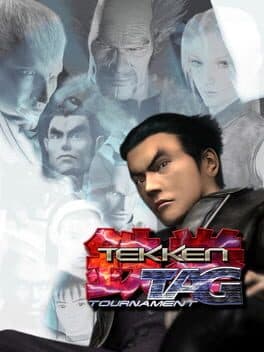
Tekken Tag Tournament
Namco2000
Has a huge upgrade to the graphics, and even adds in stages and music that weren’t in the original.
World Stadium 4
Namco2000
A PlayStation baseball game by Namco with real Japanese teams and players and a cartoon art style.
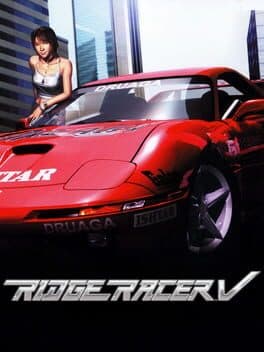
Ridge Racer V
Namco2000
Ridge Racer V is all about excited drivers pursuing the sheer frantic fun of unrestricted racing. Players will be able to drive super-cars with supreme power, speed and style that just can't be bought in a showroom. Features include four different modes – Grand Prix Mode, Versus Battle, Time Attack, and Free Run. Enhanced graphics, sound, and gameplay elements round out a package that also supports several steering wheel peripherals.
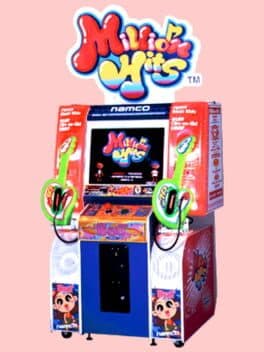
Million Hits
1999
'Million Hits' contains a whopping 100 songs, widely ranging from J-Pop to Enka! With iconic hits, you can play all your favorite songs. This game also adds the latest hits and popular songs every month, so even the heaviest music nerd can enjoy these songs with ease. Player requests can be added to the game, and the most requested songs at the end of the week and month respectively will be added to the game! You can also jam with another player, alternating or harmonizing for a karaoke-like experience!
Pacapaca Passion 2
Produce!1999
A Japan only PlayStation rhythm game in the Pacapaca Passion series
Guitar Jam
1999
Namco arcade cabinet released in 1999, only in Japan. Distinctive for its guitar-centric gameplay and controller, Namco was sued by Konami over its striking similarities to GuitarFreaks and most cabinets were converted. It is considered extremely rare to find an unaltered Guitar Jam cabinet in the modern-day, much less a working one.
Dragon Valor
Namco1999
Dragon Valor is an action role-playing game containing platform and hack and slash elements.
Ms. Pac-Man: Special Color Edition
1999
All of the action and fun of the Ms. Pac-Man arcade game can be put in the palm of your hand with MS. PAC-MAN: Special Color Edition. You take control of the yellow disk adorned with lipstick and a pink bow, better known as the lovely Ms. Pac-Man. The goal is to guide her around the maze and eat all of the dots, avoiding the four ghosts that chase you. There are power pellets located in each corner of the maze which, when eaten, turn the ghosts blue. Once this happens, the ghosts can be eaten. Occasionally, fruit will float into the maze, which can be munched for extra points. If your friends want to play along, there is an alternating Two-Player mode. As an additional bonus, a complete version of SUPER PAC-MAN is included on the cartridge. Play as the first female arcade hero in MS. PAC-MAN: Special Color Edition.
Paca Paca Passion Special
Produce!1999
The third title in Japan-only rhythm game series Pacapaca Passion. Paca Paca Passion Special is the third and last game in the Paca Paca Passion series of music games made by Namco and that are conversion of Arcade Machines made too by Namco. The game features different melodies and game modes, and also a vs mode against a computer or another human player. Since this is the latest one in the series the game features the best graphics in the series with good cartoon 3d graphics.
Golgo-13
Eighting/Raizing1999
An arcade lightgun game adaptation of the Japanese manga series Golgo 13 developed by Eighting/Raizing and published by Namco. The player takes on the role of the titular character Duke Togo, aka Golgo 13, a professional assassin. The game takes the player on a series of assignments with different targets that need to be dispatched with a scoped rifle. At the end of each assignment the player is treated to on screen display of their performance. For each assignment successfully completed a large sum of cash is added to the player’s total, plus an extra sum is awarded for hitting the target zone. If however the player fails to complete the objective or the timer reaches zero, the player’s accuracy rating is reduced and the player is then moved on to choose the next assignment. The game is over when the player’s accuracy rating reaches zero. At the start of the player’s career, 5 different assignments are available to choose from and can be completed in any order. Once all 5 assignments have been undertaken a new round of assignments becomes available. In total there are 4 rounds each consisting of 5 assignments, with each round becoming progressively harder. The last round includes a special stage which can only be selected after all the assignments have been completed. Upon completion of the special stage the credits roll and the game ends. The player is then once again returned to the start of the game.
Wonder Stadium '99
Namco1999
Released a mere five months after the original Wonder Stadium, Wonder Stadium '99 does not add much in the way of gameplay. This update adds information about the 1999 Japanese baseball season to the game. The game gives you a selection of 14 fictional and professional teams as well as three different stadiums, just as the original did.
Mr. Driller
Namco1999
Mr. Driller is an arcade puzzle game developed by Namco and first released in 1999. Players control a driller who descends through layers of colored blocks, clearing paths while managing a limited air supply. Blocks disappear when four or more of the same color are connected, creating strategic challenges as the screen scrolls upward. The game emphasizes quick decision-making and careful planning under time pressure. It became known for its simple mechanics, increasing difficulty, and bright visual style.
Aqua Rush
Namco1999
An upside down Tetris-style game, where you can elongate any of the 3 xxx points separately on a block to connect that certain block without any gaps. The game is quite addictive but gets very tough after the first few levels.
Pac-Man: Special Color Edition
Namco1999
One of the most popular and influential games of the 1980's, Pac-Man stars a little, yellow dot-muncher who works his way around to clear a maze of the various dots and fruit which inhabit the board. Pac-Man's goal is continually challenged by four ghosts: The shy blue ghost Bashful (Inky), the trailing red ghost Shadow (Blinky), the fast pink ghost Speedy (Pinky), and the forgetful orange ghost Pokey (Clyde). One touch from any of these ghosts means a loss of life for Pac-Man. Pac-Man can turn the tables on his pursuers by eating of the four Energizers located within the maze. During this time, the ghosts turn blue, and Pac-Man can eat them for bonus points. This only lasts for a limited amount of time, as the ghost's eyes float back to their center box, and regenerate to chase after Pac-Man again. Survive a few rounds of gameplay, and be treated to humorous intermissions between Pac-Man and the ghosts.
Ghoul Panic
Raizing1999
Ghoul Panic is a comedy action-adventure game developed by Raizing and published by Namco, set in a haunted mansion. The original arcade cabinet was released in July 1999, and ported to the Playstation in April 2000 with additional exclusive game modes including Survival, Adventure and Remix.. Using a light gun, take on the might of vampires, monsters, mummies, skeletons and spooks to open the locked doors and uncover hidden bonuses.
Tekken Card Challenge
Namco1999
Tekken Card Challenge is a turn-based fighting game released only in Japan for the WonderSwan. It uses the characters from Tekken 3 plus an exclusive character to the game named Crow.
Ace Combat 3: Electrosphere
Namco1999
Ace Combat 3: Electrosphere is a combat flight simulation video game developed and published by Namco for the PlayStation. The third game in the Ace Combat franchise, it was released in Japan in 1999. Players control an aircraft and must complete various mission objectives, such as destroying squadrons of enemies or protecting a base from enemy fire. Electrosphere carries a more futuristic science fiction-inspired landscape and world compared to the modern-day theme of its predecessors. The japanese version of Ace Combat 3 differs significantly from the international release: its campaign features 52 missions split among different paths depending on in-mission decisions. The story centers around the "Intercorporate War" in 2040 between Neucom Incorporated and the General Group.
Kaze no Klonoa: Moonlight Museum
Namco1999
Klonoa and his friend Huepow come across a young crying girl who tells them that the moon has been divided into fragments and stolen by a mysterious group of artists that reside in the nearby Moonlight Museum. Determined to help, the duo rush off to the Museum's entrance, and once they come inside, they are greeted by a painter named Picoo who traps them inside a piece of artwork. Klonoa and Huepow must fight their way through five worlds within the Museum itself before finding the source of all their troubles and restoring the moon to the sky.
Kosodate Quiz Dokodemo: My Angel
Namco Limited1999
Kosodate Quiz Dokodemo: My Angel is a Miscellaneous game, developed by Namco and published by Bandai, which was released in Japan in 1999.
Bust A Groove 2
Metro Graphics1999
Bust a Groove 2 is a hybrid music/fighting game released in 2000 for the Sony PlayStation and is the sequel to Bust a Groove. The game was originally released in Japan as Bust a Move 2: Dance Tengoku Mix, and was never released in Europe.
World Stadium 3
Namco1999
World Stadium baseball returns to the PlayStation.
Crisis Zone
Namco1999
Crisis Zone is a light gun arcade game released by Namco in 1999, a spin-off of the Time Crisis series. As a feature, it handles a large machine gun type controller instead of a handgun like the conventional work. In 2004, the Playstation2 version was released with Guncon2 support.
Kosodate Quiz: Motto My Angel
MiCROViSion1999
Kosodate Quiz: Motto My Angel is a quiz simulation game where players guide a young girl through different stages of her life by answering trivia questions and making important personal decisions. Choices influence her development, career path, and the ending reached. The game also includes a “First Love” mode focused on a child experiencing a summer romance, combining quiz gameplay with relationship and mood-management elements.
Angler King
Namco Limited1999
Angling fishing game released by Namco in 1999.
Tenkomori Shooting
Namco1998
A minigame-centric arcade release from Namco, which focuses on many aspects of the vertically-scrolling shoot-em-up genre.
Final Furlong 2
Namco1998
Final Furlong 2 is a horseracing arcade game which was released by Namco in 1998; it runs on their System 23 hardware, and as the name suggests, it is the sequel to Final Furlong, which was released in the previous year. Players sit in a "saddle" and must rock the cabinet's horses back and forth, to urge their horses forward, pressing the "Whip" button to speed them up and pulling on "reins" to keep the horse from colliding with the fences or other horses.
Techno Drive
Namco1998
Techno Drive is an arcade driving game that focuses on technical driving skills rather than speed. Players are tasked with completing a series of driving challenges designed to test precision, control, and reaction time. The game is notable for its futuristic, minimalist visual style with flat-shaded polygons and a techno soundtrack that complements its high-tech theme.
R4: Ridge Racer Type 4
Namco1998
R4: Ridge Racer Type 4 is the fourth game in the Ridge Racer series. It includes eight tracks (with reverse variants, for a total of 16 layouts) and 321 vehicles, all of which are fictional. This iteration was one of the first PlayStation titles to feature Gouraud shading on polygons, giving the game a visual depth that was previously missing. It was also the first Ridge Racer game on the system to feature two-player split-screen mode and offered two different driving models.
Attack Pla Rail
Namco1998
Toy Train simulator developed and released by Namco in 1998.
Fighting Layer
Arika1998
The gameplay system is similar to that of the Street Fighter EX series (also developed by Arika), such as canceling supers into other supers, and universal guard-break attack

Anna Kournikova's Smash Court Tennis
Namco1998
Anna Kournikova's Smash Court Tennis is a tennis video game featuring the likeness of professional tennis player Anna Kournikova. The game features two practice modes, tournaments and exhibition matches. Winning in tournaments rewards world ranking points which unlock new characters to use, each with different attributes and skills and extra items to use.
Namco Anthology Vol.2
Namco1998
This is the second volume of one of the series of Namco game compilations, released only in Japan. This anthology is similar to the "Namco Museum" series except that this collection include games that have been released on consoles originally. Each disc includes 4 games and, along with each of the games, there were also updated versions of those. This volume includes: - Pac-Attack (The updated version of this game was also included as an unlockable extra game in "Pac-Man World 2") - Valkyrie no Bouken: Toki no Kagi Densetsu - Namco Classic II (Golf) - King of Kings
SoulCalibur
Project Soul1998
SoulCalibur is a weapon-based 3D fighting game developed by Project Soul and produced by Namco. It is the second game in the Soul series, preceded by Soul Edge (1996). Originally released in arcades in 1998, it ran on the Namco System 12 hardware. In 1999 it was ported to the Dreamcast with improved graphics and new features. The North American version was released in September 1999 as a launch title for the Dreamcast and was part of the successful launch of the new console. It became available as a downloadable title on Xbox 360's Xbox Live Marketplace in 2008. The title brought many innovations to the fighting game genre that include a heavy emphasis on weapons and a unique eight-way movement system. Soulcalibur is widely regarded as one of the best Dreamcast titles and is one of the most critically acclaimed fighting games of all time.
Namco Anthology Vol.1
Namco1998
This is the first volume of one of the series of Namco game compilations, released only in Japan. This anthology is similar to the "Namco Museum" series except that this collection include games that have been released on consoles originally. Each disc includes 4 games and, along with each of the games, there were also updated versions of those. This volume includes: - Star Luster - Tower of Babel - Wrestleball (aka. "Powerball" in America) - Haou no Tairiku
World Stadium 2
Namco1998
The second entry in the World Stadium series (after World Stadium EX), a PlayStation spin-off from Namco's Family Stadium series of baseball games. A handful of fictional teams compete alongside real Japanese league teams and players with cartoon graphics and simple gameplay.
Hammer Champ
Namco1998
Hammer Champ is a 1998 arcade mechanical game developed and produced by Namco. The player is tasked with completing a score of assorted mini-games using a plush mallet to hit four different buttons on the cabinet.
Tekken 3
Namco1998
The console version of Tekken 3, which adds more content to the original arcade game, such as new characters and additional game modes.
Kosodate Quiz My Angel 3
Namco1998
A Japanese quiz game featuring cute little children. The title of this game translates from Japanese as 'Raising Children Quiz My Angel 3'.
Ehrgeiz
DreamFactory1998
Ehrgeiz is a 3D fighting game that features some characters from Final Fantasy VII. Cloud Strife and Tifa Lockhart are playable in the arcade and the PlayStation versions, and Sephiroth, Yuffie Kisaragi, Vincent Valentine and Zack Fair were added to the PlayStation version's roster. Ehrgeiz differs from most 3D fighting games by drawing heavily from the concepts of wrestling games and Dream Factory's own Tobal series, which allow for full 360-degree movement and do not require fighters to be facing each other at all times.
Super Family Gelände
1998
Super Family Gelände (aka Super Family Gerende) is a Japan-exclusive Skiing video game that was scheduled to sell as a Super Famicom game in 1995; however, it was sold instead as part of the Japanese Nintendo Power download game service, in 1998. The game is the spiritual 2D ancestor to Namco’s We Ski, released in 2008. There are time trials and eight slopes available from all over Japan. The story begins with a fox (or rabbit if the player chooses the female character) wanting to become human so he/she can ski. During the story mode, the player has different tasks in each chapter.
Final Furlong
Namco1997
Final Furlong is a horse racing game for the Namco Gorgon developed by Namco.
Xevious 3D/G+
Namco1997
Xevious 3D/G+ is a compilation of four titles: Xevious 3D/G (main game), Xevious (Arcade version), Super Xevious (Arcade version) and Xevious Arrangement. Xevious 3D/G+ puts the classic arcade vertical shoot 'm up Xevious game in a third-person 3D perspective. The game brings some new weapon systems to the player-controlled fighter jet and contains many new enemies, some of which are quite large and pose new challenges to the player. During the game the player can collect three types of power-ups: bullets, lasers and plasma beams.
LiberoGrande
Namco1997
A typical arcade football game in its nature, LiberoGrande introduced a novelty factor previously found in Namco's Top Striker for the Nintendo Entertainment System: the ability to play as just one player, instead of controlling the whole team, always swapping for players nearer the ball.
Star Sweep
Axela1997
Starsweep is a puzzle game for Japanese Arcades by Japanese developer Axela, published in 1997. The gameplay is similar to that of the Puzzle League series, but with a more traditional Tetris-like gameplay where pieces fall from the top of the screen. Pieces come in three colors: red, yellow, and blue. Pieces commonly have a star on one end, or occasionally, a star on two ends. The aim of the game is to clear blocks from the playing field, by matching stars from same-coloured blocks. Players are rewarded for creating combos (which are called 'links') of piece clearances. The game ends when someone's piece level reaches the top of the playfield and is not cleared after three seconds. The one player 'story' mode revolves around moving around an island and playing against opponents who gradually become harder, and consists of playing against 9 opponents (although this can be adjusted). There are also activities that involve the player concentrating on a specific task within a time limit. These include getting a high score, a high number of links, surviving for as long as possible, and clearing a field in a short time.
Tales of Destiny
Wolf Team1997
Tales of Destiny is a follow-up to Tales of Phantasia. Like its predecessor, it has the structure of traditional Japanese role-playing games, but substitutes turn-based combat for action-oriented one. Battles take place on separate side-scrolling screens and resemble those of a fighting game. The player controls the main hero, navigating him on the battle screen and performing various attacks and combos. Other party members are controlled by the game's AI, but it is possible to pause the battle at any time and assign new combat style to any one of them.
Klonoa: Door to Phantomile
Namco1997
Klonoa: Door to Phantomile is a side-scrolling platform game viewed from a "2.5D" perspective. The player moves the protagonist, Klonoa, along a path in a two-dimensional fashion, but the game is rendered in three dimensions. This allows the path followed to curve and for the player to interact with objects outside of the path.
Time Crisis II
Namco1997
Time Crisis II is a light gun arcade game and the second installment in the Time Crisis series. It introduces co-operative multiplayer to the franchise. The game was first released in arcades in April 1998, with an enhanced port released on the PlayStation 2 in October 2001, bundled with the GunCon 2 controller.
Famista 64
Namco1997
The Family Stadium series' sole entry on the Nintendo 64.
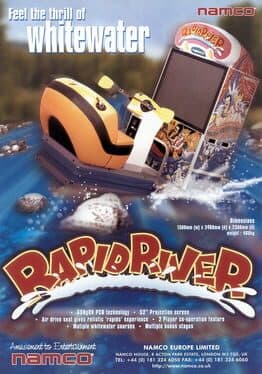
Rapid River
Namco1997
Rapid River is a rafting arcade cabinet.
Namco Gallery Vol. 3
Namco1997
The final release in the Namco Gallery series.
Motocross Go!
Namco1997
Motocross Go! was a motocross racing game produced by Namco in 1998. Choose any motocross track to race on and race a set amount of laps before time runs out.
Ace Combat 2
Namco1997
Ace Combat 2 serves as the follow-up to Namco's Air Combat, a combat flight simulator for the PlayStation. In this sequel, the player steps into the shoes of a mercenary pilot, determined to thwart a global terrorist conspiracy. With 30 challenging missions ahead, your triumphs will enable you to acquire weapon upgrades, parts, and various enhancements, mirroring the mechanics of the original game. Enhanced with crisper visuals and more immersive audio, Ace Combat 2 also boasts an expanded array of planes and customisable options. Additionally, it introduces dual shock support, along with the inclusion of analogue joystick support, enriching the overall gaming experience.
Armadillo Racing
Namco1997
A racing game where the player controls their character with a trackball around a racetrack.
Tekken 3
Namco1997
Tekken 3 is the third installment in the Tekken series. It maintains the same core fighting system as its predecessors but brings many improvements, such as significantly more detailed graphics and animations, fifteen new characters added to the game's roster, more modern music and faster gameplay.
Kosodate Quiz My Angel 2
Namco1997
KOSODATE QUIZ : MY ANGEL 2 is the second sequel of unique quiz simulation games in where players can enjoy assuming the role of a couple of newly parents who must raise their newborn daughter from the age of 0 until the age of 25.
Micro Machines V3
Codemasters1997
Micro Machines V3 takes the immensely popular miniature-scale racing series to a new level by adding weapons and power-ups to the fray. Now you can grab turbo charges for bursts of speed or blast away opponents with grenades and force-fields. For the first time on a portable system you can still drive all of your favorite Micro Machines vehicles on all the classic tracks such as the pool tale and sand-box, but now you can do it with an attitude! Features 48 courses - breakfast table, school desk, science lab, beach, restaurant, garden, pool table, etc. Power-ups to blitz the opposition include: hammer, mines, force-field, etc. Collect, test and gamble special prize cars for up to 32 vehicles -- including monster trucks, transmutable cars, futuristic cars which are all faster than before.
Namco Museum Vol. 5
Tose1997
Volume 5 for the PlayStation features: Metro-Cross (1985) Baraduke (1985) Dragon Spirit (1987) Pac-Mania (1987) Valkyrie no Densetsu (1989) – renamed Legend of the Valkyrie outside of Japan.
Gynotai
Namco1996
First arcade game of the Almighty Human Project series. This is a simple game where you push 3 balls.
Namco Gallery Vol. 2
Namco1996
The second in a line of Game Boy compilations.
Point Blank 2
Namco Limited1996
Point Blank 2 is the sequel to the now classic arcade game Point Blank, which was converted to the PlayStation in 1998. Using the Namco built GunCon (an arcade-like light gun), it offers 70 new shooting galleries, different party modes and a new single-player game.
Pocket Racer
Namco1996
Pocket Racer is a spin-off arcade game released exclusively in Japan in 1996. Gameplay is near identical to the original Ridge Racer, but all the cars have instead been replaced with "super-deformed" Choro-Q-esque vehicles. A similar concept was included with Ridge Racer Revolution, titled Buggy Mode, which served as the inspiration for Pocket Racer.
Soul Blade
Project Soul1996
"Soul Blade" is a 2D platform action game with classic hand-drawn 2D animations that provide a smooth and immersive visual experience. The combat system is built around the "swordplay" mechanism, delivering intense and exhilarating battles.
Alpine Racer 2
Namco1996
A checkpoint-style racing game, featuring realistic physics, unique controls and an unusual genre for a racing game. It features three separate courses and your choice of speed or gate racing. There is a cool replay feature for finishing in first place.
Rage Racer
Namco1996
Rage Racer is the third title in the Ridge Racer series of racing games. For the first time in series, Rage Racer introduces a brand new advanced single player career system which uses credits that player can get after winning races, then it can be used to buy or upgrade cars.
Namco Museum Vol. 4
Namco1996
Volume 4 for the PlayStation features: Pac-Land (1984) The Return of Ishtar (1986) Genpei Touma-den (1986) – renamed The Genji and the Heike Clans outside of Japan. Assault (1988) Assault Plus (1988) – as a hidden game. Ordyne (1988)
Namco Tennis Smash Court
Namco Limited1996
Namco Tennis Smash Court is the first game in the Smash Court series for the Playstation One consoles made by Namco. In the game the player controls a tennis player and can compete in different competitions like tournament, single or double games, etc. The game features different game modes and a good selection of characters to choose, 2D cartoon graphics and a fast and easy gameplay since the game is easy to control but takes time to master. Up to 4 players to play at the same time with the Multitap feature.
Aqua Jet
Namco1996
Aqua Jet is a 3-D water scooter simulator with racing elements, developed and published by Namco, which was released in 1996.
Dancing Eyes
Namco1996
Dancing Eyes is a puzzle arcade video game released in 1996 by Namco.
World Stadium EX
Namco1996
The first in a series of cartoon-style graphics baseball video games by Namco for PlayStation.
Namco Gallery Vol. 1
Namco1996
Namco collection for Game Boy.
Namco Museum Vol. 3
NOW Production1996
The third PlayStation volume contains: Galaxian (1979) Ms. Pac-Man (1981) Dig Dug (1982) Phozon (1983) Pole Position II (1983) The Tower of Druaga (1984) The majority of the included games were well-known worldwide but Phozon and The Tower of Druaga were relatively unknown. Two unique versions of The Tower of Druaga were also hidden in this volume: one called "Another Tower", and the other called "Darkness Tower". Both are harder than the original and require different methods to beat the game.
Prop Cycle
Namco1996
You pilot a winged bicycle and try to earn points by popping the hot-air balloons you see ahead of you. You have to reach the minimum quota of points in order to advance.
Xevious 3D/G
Namco1996
Xevious 3D/G is a shoot 'em up arcade game that was released by Namco in April 1996 only in Japan. It was later ported to the PlayStation in 1997 as Xevious 3D/G+.
Tekken 2
Namco1996
The console version of Tekken 2, which adds more content to the original arcade game, such as new characters and additional game modes.
Namco Classic Collection Vol. 2
Namco1996
An arcade-exclusive compilation featuring four classic Namco games: Pac-Man, Rally-X, New Rally-X and Dig Dug. It also adds brand-new "Arrangement" versions with updated graphics, audio and gameplay.
Kosodate Quiz My Angel
MOSS Co., Ltd.1996
Kosodate Quiz My Angel is the first entry in a series of unique quiz simulation games in where players can enjoy assuming the role of a couple of newly parents who must raise their newborn daughter from the age of 0 until the age of 25. The Kosodate Quiz series are notable, among other things, for their accessible gameplay mechanics, top-notch presentation and high replay value.
Super Famista 5
Namco1996
Super Famista 5 is a Sports game, published by Namco, which was released in Japan in 1996.
Alpine Surfer
Namco1996
Players can freeboard or gate race while performing numerous air tricks and listening to rock and alternative music. 2 downhill courses and 2 levels of difficulty provide the player with 4 challenging options.
Soul Edge
Project Soul1996
Soul Edge is a 3D arcade fighting game and the first in the Soul series, it is one of the first 3D fighting game in history that place a particular emphasis on the story of the fighters. Each character have their own weapon, allowing for a wide range of play styles. The slower, longer ranged characters try to deliver their heavy blows from a distance whereas the quicker, faster characters try to get in as close as possible and deliver quick-hitting attacks.
Namco Museum Vol. 2
Namco1996
The second in Namco's Museum series brings together the following games: Super Pac-Man, Xevious, Mappy, Grobda, Dragon Buster, Gaplus There are also some extras in the museum section, including never before seen pictures and text of the development of each title.
Arcade Classics
Reza Mirzaei1995
Collection of a few arcade classics, remade with a fresh and friendly looking art style and a beautiful soundtrack.
Tales of Phantasia
Wolf Team1995
Tales of Phantasia is the first installment of the Tales series, and was released by Namco in 1995 for the Super Famicom. Released at the end of 1995, Tales of Phantasia is considered one of the crowning achievements for its time. It has graphics that push the console to its limits, an original never-before-seen battle system, and the addition of actual voices and voice actors. It is also the first and only Super Famicom game to feature an entirely original, vocalized theme song featured directly in the game.
Ridge Racer Revolution
Namco1995
Ridge Racer Revolution is the PlayStation sequel of Ridge Racer. Like the original Ridge Racer, the player races against eleven other computer-controlled cars. The game adds two hidden cars for the player to unlock, and 2-player support.
Time Crisis
Namco1995
Time Crisis is a light gun shooter arcade game released by Namco in December 1995. It was later ported for the PlayStation in 1997, bundled with the Guncon light gun controller. Time Crisis is a three-dimensional first person rail shooter similar to Virtua Cop and The House of the Dead installments, in which the player holds a light gun and goes through the motions of firing at on-screen enemies. Time Crisis is best known for its cover system, in which players can duck behind cover to avoid enemy fire and reload his weapon. There are three stages, each consisting of three areas and a boss battle. Unique features are described here in: A foot pedal which performs multiple functions: when the pedal is released, the player takes cover to conserve hit points while reloading the gun. While the pedal is released, the player cannot attack. In console conversions, a button command replicates the foot pedal's functions. The player loses a life if he/she is hit by a direct bullet or obstacle whilst not taking cover, with the game ending if he/she loses all lives. A light gun (introduced in Point Blank) which utilized a special memory chip to synchronize areas of the screen's image as the player rotates the gun around. The light gun also features a blowback function which simulates real-life gun recoil. A countdown timer, recharged by clearing an area of enemies. As running down the clock causes an instant game over, the player must take risks, shooting enemies rapidly and hiding only when necessary. A time extension is rewarded when an area is passed and there are also time bonuses awarded for shooting certain enemies quickly. The PlayStation port features an exclusive side-story mode, in which the player's performance, such as how quickly he can clear an area, affects the path he takes through the game, resulting in multiple possibilities.
Namco Museum Vol. 1
Namco1995
Bosconian, Galaga, New Rally-X, Pac-Man, Pole Position, Rally-X, Toy Pop Not only can you play these games, but you can also learn about them in the virtual museum mode included on the disc, including their history, art and the original arcade cabinets.
Namco Classic Collection Vol. 1
Namco1995
An arcade-exclusive compilation featuring four classic Namco games: Galaga, Xevious, Super Xevious and Mappy. It also adds brand-new "Arrangement" versions with updated graphics, audio and gameplay.
Namco Soccer Prime Goal
Namco1995
J-League Prime Goal EX is one of the first football games in Sony's console, following previous appearances in the SNES, Prime Goal is a straightforward action game with simple arcade controls. While the Japanese version features all 14 J-League teams and fully licensed players, the European version features the same number of national teams with fictional players, all from Europe. Game modes include friendly match, league and cup knockout modes, as well as an all-star game where the player chooses his stars from the best in the selected zone. Graphically, the game uses a polygonal playing field, while players are represented using sprites, and gameplay features a combination of the face buttons to perform actions (passing, lobbing, shooting, tackling and so on) with shoulder buttons to add swerve to the ball, change team tactics on the fly or pushing the camera backwards to find an open team mate. While gameplay is fast and simple, it has three quirks: first, unlike most modern offerings, the AI does not set up the target players for passes and crosses, making the player control the target player as soon as the ball is released in order to place them in the best position to complete the play, and also unlike most other games, the players are able to run freely off-bounds, allowing the player to capture a free ball close to the touchlines without risking touching it for a throw-in. The final main gameplay feature can be seen when the ball carrier faces a defender, as the camera quickly changes to behind the forward, as he tries to trick the defender into going the wrong way as the defender tries to steal the ball by predicting where will the forward move, with the winner of the challenge being able to run a few meters unopposed. League.
Ace Driver: Victory Lap
Namco1995
Ace Driver Victory Lap is a sequel of is a 3D racing arcade game released by Namco in 1995, featuring more tracks and Formula One cars (which all, again, carry advertisements for older Namco games) than its predecessor, as well as a new championship mode, all in a modern futuristic setting.
Rave Racer
Namco1995
Rave Racer is an arcade racing game that can be played by two people per cabinet for up to eight players total when up to four of them were linked together. It is the third arcade title in the Ridge Racer series and the follow-up to Ridge Racer and Ridge Racer 2 - and it added three new tracks to the original one, twelve new songs to the original five, force feedback steering and improved car and racetrack graphics.
Arcade Classic No. 3: Galaga / Galaxian
Namco1995
A compilation of two classic arcade titles, Galaga and Galaxian ported over to the Game Boy and features original gameplay features. It is also Super Game Boy compatible complete with background borders that replicate their original arcade machine casings.
Air Combat
Namco1995
The first game of the Ace Combat series. Combat flight simulator in which you play a mercenary pilot who hires his combat skills to several corporations, governments, etc. in order to get cash for weapons & upgrades. The game progresses through a series of linear missions, and has a 2 player split-screen deathmatch mode plus a series of extras like hidden planes, mini-games, etc.
Tekken
Namco1995
The console version of Tekken adds more content to the original arcade game such as new characters and additional game modes.
StarBlade Alpha
Namco1995
A port of Starblade that features an additional mode that utilizes fully textured models.
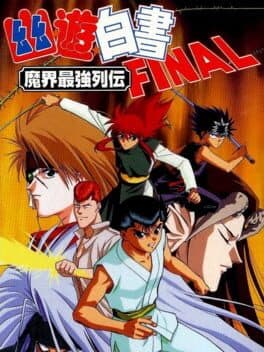
YuYu Hakusho Final: Makai Saikyou Retsuden
Tose1995
Yū Yū Hakusho Final: Makai Saikyō Retsuden is a 2D fighting game based on the Yu Yu Hakusho anime. The game features storyline & characters from season 3 & 4 of the anime. 13 Characters are available (Yusuke, Kurama, Kuwabara, Hiei, Sensui, Super Sensui, Shigure, Shura, Demon Yusuke, Demon Fox Kurama, Raizen, Yomi, Mukuro) and one extra hidden character Yakumo (The main antagonist in "Yu Yu Hakusho the Movie: Poltergeist Report") can be unlocked by entering a secret code. The player can choose among the various game modes (Story Mode, Demon world tournament, Elimination Match, Team Battle, 2 Player Battle) and a training mode in which player can train for unlimited or limited energy and can also select the location for the fight. Each character has 2 styles of punches and kicks (Light and Hard) and can perform special moves upon a specific input which can also be viewed before the starting of a fight.
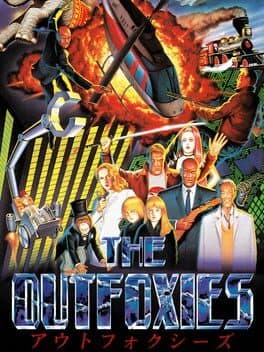
The Outfoxies
Namco1995
The gameplay has you thrown into a particular hitman's home turf and you must use every weapon imaginable as well as anything you can find in the environment (including the environment itself) to try to kill your competitor. Weapons can be typical like a rocket launcher or machine gun or absurd like a clown cannon or a bowl of hot soup. Despite dealing with a competition about murder, the game has a levity to it in all aspects. The levels are also a star part of this game as they are varied and, in many cases, will begin to collapse as time goes on. This means that if the player doesn't kill his competition in a set amount of time the level will literally start crumbling around you. The levels take place in various interactive locations, involving inside a plane, a moving train, an office building or even at the circus.
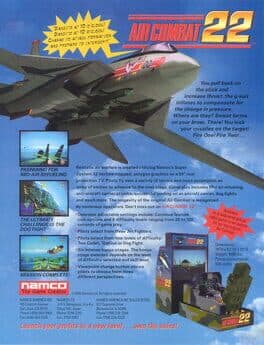
Air Combat 22
Namco1995
Air Combat 22 is a flight simulator arcade game, released by Namco in 1995. It is the sequel to the 1992 arcade game Air Combat, both of which led to Namco's Ace Combat series. The "22" in the title refers to the game running on Namco's Super System 22 hardware.
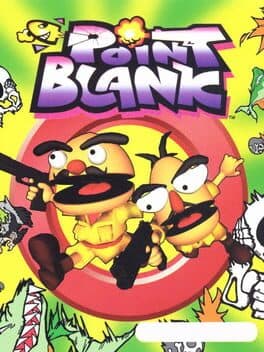
Point Blank
Namco1994
Point Blank is a first-person arcade shooter developed by Namco. Players use two attached light guns to hit targets onscreen; missions require speed, quick judgment or pinpoint accuracy. The game consists of non-violent, all-ages, shooting contests like shooting targets, shooting cardboard targets, etc.
YuYu Hakusho: Tokubetsu-hen
Namco1994
Yu Yu Hakusho: Tokubetsu Hen ("Yu Yu Hakusho: Special Edition") is a fighter game. Rather than controlling the character directly with the D-pad and buttons, the players charge attacks and unleash them at the right amount of power. Combat is depicted as a series of dramatic cutaways as each fighter launches their attacks and the other tries to defend or evade them.
Wagyan Paradise
Namco1994
Wagyan Paradise is the third Wagyan Land game for the Super Famicom and the sixth game in the series overall. It features two new "Wagyan" dinosaur protagonists who alternate between stages: Takuto (a green male Wagyan) and Karin (a pink female Wagyan). Wagyan Paradise introduces a brand new array of post-level mini-games, a staple of the series, and adds more story cutscenes which help explain what's going on with the various incidents happening to Takuto's and Karin's island home. It also has a new art style.
Alpine Racer
Namco1994
Alpine Racer is a 3D Alpine skiing arcade game released by Namco in 1995. It features downhill and gate with three courses and two play modes - Race and Time Attack. The player stands on a set of ski-like foot stands while holding onto two bars for stability to play.
Super Family Circuit
Game Studio1994
Super Family Circuit is a Racing game, developed by Game Studio and published by Namco, which was released in Japan in 1994.
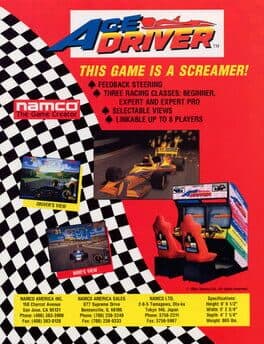
Ace Driver
Namco1994
Ace Driver made extensive use of the CPU Assist technique whereby a trailing player would be given a significant speed boost to allow them to catch the leading player. However, the speed boost continued for a short while after the losing player had overtaken the leader - leading to a tactic known as boosting where a player would deliberately allow themselves to lose the lead, then during the last half of the last game lap would easily take back the lead with no hope of the opposing player catching them. Boosting also meant that straight skill races were difficult to have as CPU assist would be continually changing the losing players speed and position.
Pac-Man 2: The New Adventures
Namco1994
Pac-Man 2: The New Adventures, known in Japan as Hello! Pac-Man, is a side-scrolling adventure game "sequel" to Pac-Man. Instead of being a maze game like the majority of its predecessors, Pac-Man 2 incorporates light point-and-click adventure game elements. It was produced and published by Namco for the Super Nintendo Entertainment System (SNES) and Sega Mega Drive/Genesis systems, and was released on April 6, 1994 by Namco. The game borrows its structure and certain elements from Pac-Land, and also appears to contain certain elements from the animated series, such as Pac-Man's family and a main villain commanding the ghosts. The Genesis version was not released in Japan or Europe.
J.League Soccer: Prime Goal 2
1994
J.League Soccer: Prime Goal 2 is a Sports game, published by Namco, which was released in Japan in 1994.
YuYu Hakusho 2: Kakutou no Sho
Tose1994
The second of four Namco Super Famicom adaptations of the YuYu Hakusho manga and anime, featuring the delinquent student Yusuke who becomes a spirit world investigator after he passes away. While its predecessor, YuYu Hakusho, featured a combat system that was turn-based and tactical, Kakutou no Sho is instead a standard example of the four-button fighter game model that became popular after the success of Capcom's Street Fighter II.
Ridge Racer 2
Namco1994
Ridge Racer 2 is an arcade racing game that was released by Namco in 1994 for their System 22 hardware. Despite its name, Ridge Racer 2 is more of an updated version of Ridge Racer (which had been released in the previous year) than an actual sequel.
J.League Soccer V-Shoot
Namco1994
A japanese soccer game.
Great Sluggers '94
Namco1994
Baseball arcade game that had been released by Namco in June 1994; it runs on the company's NB-1 hardware, and as the name suggests, it is the sequel to Great Sluggers (which was released exclusively in Japan the year before). However, instead of the twelve teams of Japan's Central and Pacific Leagues, the players must take control of two of the twenty-eight teams of the American League and National League - and there are two teams for both Chicago and New York.
The Blue Crystal Rod
Game Studio1994
The Blue Crystal Rod is an Adventure game, developed by Game Studio and published by Namco, which was released in Japan in 1994.
Tinkle Pit
Namco1994
As amusing to play as it is to say, Tinkle Pit is a maze arcade game featuring characters from multiple Namco franchises.
Mach Breakers
Namco1994
Mach Breakers: Numan Athletics 2 is a sports arcade game that was released by Namco in 1994 only in Japan; it runs on Namco NB-2 hardware and is the sequel to Numan Athletics, which was released in the previous year.
Metal Marines
Namco1994
Metal Marines is an isometric strategy game. Controlling one side of a conflict, the player must wage a campaign across several islands to defeat Zorgeuf and his lieutenants. The player controls logistics of the base to ensure that there are the necessary assets to wage war. On each map, the player places three underground command bases, if all of these are destroyed the battle is lost. The player must manage the resources of their money to construct new buildings or upgrade existing facilities on the map. Different buildings include Energy Plants, Factories, Economic Centers, Radar systems, Anti-Aircraft missiles, fake buildings and fake HQ bases, mine fields, gun pods, missile launchers, metal marine hangers and even ICBMs. At any time, the player may order an attack and choose which assets to fire at the opponent. Missiles, Metal Marines carriers and ICBMs all use different levels of fuel. Metal Marines once deployed in an area will automatically fire rifles at nearby targets or engage even closer targets in melee attacks. Gunpods, while stationary, will also fire on nearby enemies. Metal Marines are largely autonomous but can be manually controlled to a minor degree (directional) by the player.
Pac-Attack
Namco1993
Based on Namco's Japanese-only arcade puzzler Cosmo Gang the Puzzle, Pac-Attack is similar to many block-dropping puzzle games from the time, such as Puyo Puyo. The objective of the game is to place ghosts and blocks that are arranged in a three part L-shaped piece, so that Pac-Man, after three or more pieces (who replaces one of the parts), can eat as many ghosts as possible to try and clear up the game area. Pac-Man's directions are chosen at random between left or right, but as he goes moving on in the game area (after you place him, of course), if he bumps against a block or the "walls" of the game area, he will change his direction. As Pac-Man eats ghosts and clear rows of blocks, the level increases, which affects the speed and gravity of the pieces one places, as well as the amount of pieces placed before Pac-Man will appear. If one is unable to fit the bottom two parts of a piece into a legal zone of the playing area, the game ends. However, by filling up a meter on the left of the screen via eating ghosts, a fairy will be summoned in place of Pac-Man. She can fit into any empty space, and can clear up to 7 rows of ghosts; all blocks that were on top of cleared ghosts will drop down accordingly. The game also includes a Puzzle mode. It features 100 levels, in which you have to eat all ghosts with no more than 4 Pac-Men at least (the number reduces in certain levels), and, unlike the other modes, you can change Pac-Man's direction with the press of a button.
Kattobi Road
1993
Kattobi Road is a racing game that tunes up a car using a barcode boy. There is a wide variety of cars, from light cars to F1 cars, and there are even more types with barcodes.
Ridge Racer
Namco1993
Ridge Racer was initially released on the Namco System 22 arcade system board and was later ported to the PlayStation console. It is the first title in the long-running Ridge Racer series of games released for arcades and home consoles. The game's objective is to finish in first place in a series of races. Ridge Racer was among the first racing games to utilise polygon graphics to its full potential.
Battle Cars
Malibu Interactive1993
Racing game for the SNES developed by Malibu. Can be played by 1 or 2 players. The game is set in a post-apocalyptic world in which the sport of choice is a violent auto race called "Battle Cars." The player can select from three vehicles at the start of the game in a variety of colors, to be played for the duration of the game. The choices are a spiked vehicle, a hot rod, and a formula one-style race car.
Numan Athletics
Namco1993
Numan Athletics is sports game - or more more precisely a bunch of several futuristic sports minigames. The player controls 'numan' - a superhuman. Four numans (numen?) compete in eight bizarre competitions, such as throwing a rocket, running (faster than a dragster), and shooting targets (with fireballs or missiles). The game supports multi-player for up to four players.
J.League Soccer: Prime Goal
Namco1993
J.League Soccer: Prime Goal is a Sports game, developed and published by Namco, which was released in Japan in 1993.
Emeraldia
Namco1993
Emeraldia is a puzzle arcade game released by Namco in 1993 only in Japan.
Smash Tennis
Namco1993
Smash Tennis is a tennis game that was created by Namcot for the Super Nintendo in 1993. It was released in Europe as Smash Tennis by Virgin Interactive. A North American release of the game wouldn’t be seen until February 2020 where it would be part of the Nintendo Switch Online lineup. The controls of Smash Tennis work similar to other tennis games and especially Namco's previous tennis game World Court Tennis: the player moves the athlete over the court and presses buttons with the correct timing in order to win the match. This time there is no story mode, but a tournament mode instead. Here the goal is to win the Grand Slam by playing various tournament matches. However. a match only has a single set. There are 20 athletes (both male and female) to choose from which have different advantages and drawbacks.
Rock n' Roll Racing
Silicon & Synapse1993
The game pits four racers against each other, with up to two of them being player-controlled and the rest being AI opponents. Each race consists of four laps around tracks viewed from an isometric perspective, which enables players to discern the presence of frequent sloping sections spread throughout the game's various tracks. In addition to navigating the turns, racers must also maneuver hills and dips without falling or jumping over the guard rail at the track's edge.
Great Greed
1993
This RPG breaks from the normal formula in a few respects. The battle system does not use any menus, switching all commands to simple button pushes. A being attack, B for dodge, Start will run and the D-Pad is shortcuts to certain spells. The combat is also live, in the sense that if you take too long to complete your turn, your opponent will attack again.
Cyber Sled
Namco1993
High-tech tanks meet full blown, first person firepower. Cyber Sled cataplults you to a future where tank warfare resembles forumla one racing on an arena football field. Eleven armored battlesleds play hide-and-seek, then seek-and-destroy; each with enough weaponry to take out the former Soviet Union. Their sole purpose? Blow you to scrap. Blink, and you're Cyber-Dead.
Super Wagyan Land 2
Nova Games1993
Super Wagyan Land 2 is an Action game, developed by Nova Games Ltd. and published by Namco, which was released in Japan in 1993.
Splatterhouse 3
NOW Production1993
Splatterhouse 3 is a video game released by Namco for the Mega Drive/Genesis in 1993. It is the sequel to Splatterhouse 2 and was one of the first games to be given a rating by Sega's own Videogame Rating Council.
Top Striker
Namco1992
Anime-based soccer video game released in 1992 for the Family Computer.
Samurai-Ghost
Namco1992
This action platformer features a samurai ghost from the depths of the underworld. In a past war, Kagekiyo managed to defeat the shogun Yoritomo and his clan. However, their evil spirits were not completely destroyed, and now, in the world known as Dark Side, they seek the time of their rebirth. In order to shatter those ambitions, Kagekiyo must make his way across seven zones and head for "The Heart of the Darkside" where Yoritomo lies in wait. Use spirit weapons to power up your sword, or other items, such as candles to recover health, and defeat the endless hordes of enemies. Each zone is not only protected by a boss but also includes demons as well as real samurai from 12th-century Japan. Get ready for some intense one-on-one combat action.
Super Oozumou Netsusen Dai-Ichiban
1992
Super Oozumou Netsusen Dai-Ichiban is a Sports game, published by Namco, which was released in Japan in 1992.
Wagyan Land 3
Namco1992
Wagyan Land 3 is an Action game, developed and published by Namco, which was released in Japan in 1992.
Lucky & Wild
Namco1992
The object of the game is to stop a bunch of criminals led by the main antagonist Big Cigar from breaking laws. The plot of the game is to stop a bunch of drug dealers. The game stars 2 men. "Wild" (based on "Hutch" and "Cash"), a surfer with long blonde hair. who is the shooter. And "Lucky" (modeled after "Starsky" and "Tango"), is the driver and wields a gun.
Knuckle Heads
Namco1992
Up to four players must choose control for six different characters from: the United States, the game's home country of Japan, Greece, China, Norway, and Brazil in what is described as "America's hottest new game show" on the flyer; they all have different special weapons, moves, and catchphrases, and the show will move to each of the characters' respective home towns (Honolulu, Kyoto, Athens, Hong Kong, Lillehammer and Sao Paulo) for each successive round.
Cosmo Gang the Puzzle
Namco1992
Cosmo Gang the Puzzle, a puzzle game which is similar to Tetris, and became the basis for Pac-Attack.
Fighter & Attacker
Namco1992
Fighter & Attacker, originally titled F/A in Japan, is a vertical scrolling shooter arcade game, which was released by Namco in 1992. The game runs on Namco NA-1 hardware, was the first game on this hardware to be released outside Japan (Bakuretsu Quiz Ma-Q Dai Bōken was the first overall) and is the only game from the company that showed the Federal Bureau of Investigation's "Winners Don't Use Drugs" screen in its attract sequence with vertical orientation (the two titles that displayed it previously, Tank Force and Steel Gunner 2, both displayed it with horizontal orientation).
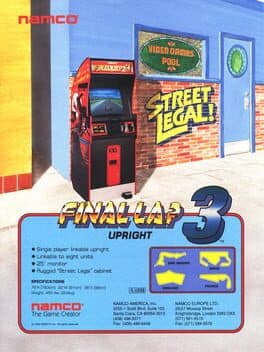
Final Lap 3
Namco1992
Final Lap 3 is the next sequel of the Final Lap racing game series. It is similar to the previous game, once again offering four tracks, though they're all new: the Silverstone Circuit, the Paul Ricard Circuit, the Barcelona-Catelunya Circuit, and the Enzo Ferrari Circuit. Like the previous game, it was an arcade exclusive and runs on Namco System 2 hardware. Up to eight players can play simultaneously when four two-player cabinets are linked together.
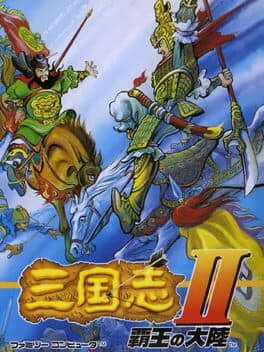
Sangokushi II: Haou no Tairiku
Tose1992
Sangokushi II: Haou no Tairiku is a Strategy game, developed by TOSE and published by Namco, which was released in Japan in 1992.
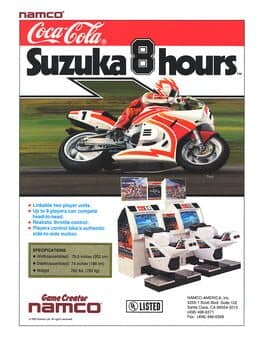
Suzuka 8 Hours
Arc System Works1992
A motorcycle game from Namco.
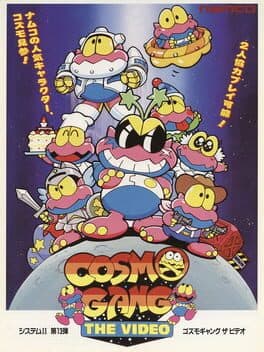
Cosmo Gang the Video
Namco1992
Cosmo Gang the Video is a fixed shooter arcade game based on the redemption game Cosmo Gang.
Whirlo
Nova Co, Ltd.1992
A platformer title starring Valkyrie's lizard friend Xandra. In the game, which plays as a prequel of the Valkyrie games, you control Xandra as he leaves his enchanted forest in order to get help for his family. This will eventually lead him to meet up with our beloved Valkyrie and mark the beginning of their adventures. Xandra has all the abilities of a standard platformer character, which allow him to jump around and navigate the many obstacles found in the game. Additionally he's armed with a pitchfork which he can use to impale his enemies and stick to some surfaces. Collecting coins allow him to purchase extra lives, but there are no added weapons or spells as in the Valkyrie games.
Jantaku Boy
1992
Jantaku Boy is a mahjong game from Namco.
Chibi Maruko-chan: Quiz de Piihyara
Namco Limited1992
Chibi Maruko-chan: Quiz de Piihyara is a mix between a quiz game and a platformer, based on Chibi Maruko-chan of Japanese manga and TV fame.
Tank Force
Namco1991
Tank Force is a multi-directional shooter arcade game that was released by Namco in 1991; it was the last game to run on their System 1 hardware (which had been in use for four years), is the sequel to Battle City, which was released six years earlier and is a sequel to Tank Battalion, which had been released five years before it (and eleven years before this title). The US version of the game was also the first of seven games from the company to display the Federal Bureau of Investigation's "Winners Don't Use Drugs" screen during its attract mode - the others are Steel Gunner 2, F/A, Cosmo Gang the Puzzle, Knuckle Heads, Lucky & Wild, and Numan Athletics. Exvania and Super World Court, which were Japan-exclusive, may also feature the screen in their attract mode if the "Display FBI Screen" setting in the games' options menus has been set to "Yes".
Dragon Saber
NOW Production1991
Dragon Saber is a vertical scrolling shooter arcade game, released by Namco in 1990; it runs on Namco System 2 hardware, and as its complete title suggests, it is the sequel to Dragon Spirit which had been released three years earlier. The sequel to Dragon Spirit follows much in the same vein, with your flying dragon defeating prehistoric monsters over various landscapes. This time round there is a two player mode thrown in for extra appeal.
Super Wagyan Land
Nova Games1991
Super Wagyan Land is an Action game, developed by Nova Games Ltd. and published by Namco, which was released in Japan in 1991.
Heisei Tensai Bakabon
Namco1991
A former genius has now become very eccentric and senile. His family deals with all the crazy problems he and his old friends cause around the neighborhood.
Solvalou
Namco1991
Solvalou is a 1991 first-person rail shooter arcade game developed and published in Japan by Namco. The sixth entry in the Xevious series, the player takes control of the Solvalou starship from a first-person perspective as it must destroy the Xevious forces before they take control of Earth. The Solvalou has two weapon types: an air zapper to destroy air-based enemies, and a blaster bomb to destroy ground-stationed enemies. It runs on the Namco System 21 arcade board.
Rolling Thunder 2
Namco1991
A terrorist group has taken out the world information flow and, as either a guy named Albert Ross or a woman named Leila, you must stop them. You can also get cool weapons that pack more of a punch than your ordinary hand gun. Also RT2 is a password supported game, so in other words you get a password at the end of each round so if you loss all your lives, you can continue from the end of that round, very handy.
Chibi Maruko-chan: Uki Uki Shopping
Namco1991
Chibi Maruko-chan: Uki Uki Shopping is a Miscellaneous game, developed and published by Namco, which was released in Japan in 1991.
TumblePop
Data East1991
Tumblepop is a 1991 platform arcade video game developed by Data East first published in Japan by Namco, then in North America by Leprechaun Inc. and later in Europe by Mitchell Corporation. Starring two ghosthunters, players are tasked with travelling across different countries, capturing enemies and throwing them as bouncing ball, jumping on and off platforms to navigate level obstacles while dodging and defeating monsters in order to save the world.
StarBlade
Panasonic1991
Sitting in the gunner position of a "GeoSword" fightercraft, you must shoot your way through the enemy armada and bring the fight to their base planet, Redeye. Altogether you'll have around 10 missions to get through before the galaxy is safe and your wingmen will help you along the way. And during those missions, you'll be expected to shoot out the sides of huge enemy battlecruisers, travel inside of enemy carriers and travel through the canyons of Redeye to deliver your payload. The PlayStation and the 3DO versions offer the choice between an arcade mode and an enhanced mode. In the enhanced modes that flat polygons are remade in fully textured polygons and the black bars on the sides have been removed to turn the image into a fullscreen view.
Golly! Ghost!
Namco1991
Use your guns to shoot a specific amount of ghosts before time runs out. This is a video ticket/redemption game.
Batter Up
Namco1991
Batter Up is a rogue-lite arena battler with a baseball twist! Kill waves of zombies by swinging your bat and sending your ball flying. Build up insane deck combinations and mow through enemies with synergistic upgrade combinations!
Juvei Quest
Birthday1991
Juvei Quest is a Role-Playing game, developed by Birthday and published by Namco, which was released in Japan in 1991.
Driver's Eyes
Namco1991
Driver's Eyes is a 1991 3D driving simulation arcade game developed and published in Japan by Namco.
Powerball
Namco1991
In this game you take on the role of 1 out of 8 teams who represent various nations vying to become the Powerball champions. Powerball is a game consisting of a hybrid of sports such as American football, soccer and rugby. You play on an 100 yard field trying to score on the opposing team. Scoring consists of either running into your opponent's end zone holding the powerball for a touchdown or kicking the ball into your opponent's net to score a goal. Goals are worth 1 point, and touchdowns are worth 3 points. The game modes are 1 or 2 player exhibition play, and 1 or 2 player league play. League play allows you to use bonus points, and distribute them to your teammates to improve their statistics.
Boxy Boy
Thinking Rabbit1990
The player controls the character "Rabi-Kun", and must push various crates over the yellow dots in order to complete the game's fifty-five stages (divided into five "worlds") in that stage's time limit. Rabi-Kun can only push the crates, and he cannot pull them; and should one of the crates reach an unmoveable position, the player may simply push the "reverse" button to undo one of the player's moves. Should Rabi-Kun be trapped in an area and cannot get out, the player must push the "reset" button on the control panel, however this will not reset the timer; and should that timer reach zero, the game will be immediately be over.
Wagyan Land 2
NOW Production1990
Wagyan Land 2 is an Action game, developed by Now Production and published by Namco, which was released in Japan in 1990.
Battle Fleet
Atlus1990
Battle Fleet is a Strategy game, developed by Atlus and published by Namco, which was released in Japan in 1990.
Barunba
ZAP Corporation1990
The Engine is hardly lacking in shooters, so to be successful, you have to stand out from the crowd. Barunba tries to add a hint of originality in its own subtle way. You control what is basically a floating globe (complete with little man inside) that has a weapons ring around it - this ring can be rotated right around the ship giving a fully controllable direction of fire, something obviously useful for those pesky critters approaching from behind. From the start, you are equipped with several different types of weapon, each of which can be temporarily boosted by collecting items that are dropped by exploding enemies. The levels are auto-scroll, moving around in all directions and contain mid-level as well as end-of-level bosses. Your ship has an energy bar, located at the bottom left of the screen, and once it is depleted it's 'Game Over'.
Kyuukai Douchuuki
Namco1990
Kyuukai Douchuuki is a 1990 arcade baseball game by Namco which they ported to the Sega Mega Drive in 1991. Neither version left Japan. The game is a generic baseball game where you are only in control of the pitcher and batter; once the batter hits the ball, you can only watch what your team does. When batting, the D-pad moves around and C swings. When pitching, Left and Right move around and some amount of time holding the C button appears to pitch. It is a spin-off of Shadowland (Youkai Douchuki).
Digital Devil Story: Megami Tensei II
Atlus1990
Digital Devil Story: Megami Tensei II is the sequel to Digital Devil Story: Megami Tensei. It was published by Namco in 1990 for the Family Computer and is the second video game in the Megami Tensei series. This is the first game in the series to not be based on the original novels by Aya Nishitani, but it retains much of the gameplay aspects of its predecessor. The music in the game is enhanced by an eight-channel Namco 163 WSG sound chip on the cartridge.
Galaxian3: Project Dragoon
Namco1990
Galaxian3: Project Dragoon is a 3D rail shooter video game developed and published by Namco. It was originally a theme park attraction designed for the International Garden and Greenery Exposition (Expo '90) in Japan, and was later released as an arcade game in 1992. The game involves players controlling a starship named the Dragoon in its mission to destroy Cannon Seed, a superweapon set to destroy what is left of the human race.
Psychosis
Naxat Soft1990
This is a side-scrolling shooter played in a world created from the mind of a twisted demon. Your soul has suddenly wandered into that evil world that exists in every person's heart. The only way out is to blast your way past the grotesque creatures that block your path in five "causes" (stages). You must face the dangers of this psychedelic world by making full use of three shot types and the satellite option. With power-ups, you can change your shots to a wide-coverage beam, a satellite-generated laser and more. Each shot type can be powered up to three levels. You can also block enemy fire by rotating the satellites to a desired position. How you use these features will be the key to successfully escaping this strange and surreal world
Pistol Daimyo no Bouken
Namco1990
The player must take control of Pistol Daimyo, a small Japanese lord, who has a pistol strapped to his head and two fans strapped to his feet; he faces the right side of the screen and is always moving forward with the backgrounds scrolling to the left, bringing enemies into view (which are reminiscent of Monty Python's Flying Circus). Similar to Kissy, Takky, and Hommy from Baraduke and Bakutotsu Kijuutei, he will float down to the ground if you stop holding the joystick up while he is in mid-air - and pressing that Firing Button will make his pistol fire a small cannonball. However, holding down the button will charge the pistol (much like Alice's bubble blower in Märchen Maze and Apollo's sword in Phelios), and upon releasing the button the pistol will fire a medium or large cannonball; but even the smallest enemies take multiple hits to kill, so the small cannonballs are of little use. There is also blue (and yellow) vases which can be broken open with a medium (or large) cannonball, and will leave Hanafuda cards behind, for Pistol Daimyo to collect - and once he has collected three of them, it will cause a Kusudama ball to come down into view from the top of the screen (which can also be broken open with a medium or large cannonball). If he manages to do that before it goes back up off the top of the screen again, it will leave a suit of wooden (or metal if you already have the wooden one) armour behind; once he has put it on, it will prevent him from being killed in a single hit.
Dangerous Seed
Namco1989
The player assumes control of three separate ships operated by three separate pilots: Alpha Ship is piloted by Yugo Tyrone, Beta Ship is piloted by Belle Vogato, and Gamma Ship is piloted by Kenny Crawford (although none of the pilots' names is mentioned in the game). Each ship has a different firing pattern, and all three of them combined together when the ships are formed together as the Moon Diver; their mission is to quell an alien invasion which is spanning all of the Milky Way, and destroy the aliens' headquarters: the Danger-Seed.[citation needed] The player starts the game with three separate fighters and has to make it through four tubes using the fighters separately; if one gets destroyed, then the next, more powerful ship makes an attempt to get through. If the player makes it to the fifth stage, the three ships combine into a singular composite ship called the "Moon Diver", which has a massive amount of firepower - and each ship has shields, but the stages must be completed with one ship
Burning Force
Namco1989
Burning Force is a 1989 third-person shooter arcade game developed and published by Namco. The game is notable for its extensive use of line scrolling to create the illusion of a three-dimensional playfield and for its lighthearted tone and synth-rock soundtrack.
Finest Hour
Namco1989
Finest Hour is a 1989 run and gun arcade game developed and published in Japan by Namco. It was later re-released on the Wii Virtual Console on August 25, 2009.
Mendel Palace
Game Freak1989
Candy needs your help! She's fallen fast asleep and may never wake up--because she's trapped in her own dream! All her harmless dolls are suddenly out to get her! So who will rescue Candy? Someone must brave her wild nightmare world. With 20 areas and 200 levels!
Dirt Fox
Namco1989
Dirt Fox is a racing arcade video game by Namco. Up to four linked cabinets let players race simultaneously across six timed track sections, alongside CPU-controlled rivals. Falling behind the time limit eliminates a player, while others continue until the finish. It was released only in Japan.
Big TV Mary Bar
1989
Big TV Mary Bar is a Famicom game based on the Taiwanese "Xiao Ma Li" gambling machines in 1989. It is well-known for featuring Fortran (who is based strongly on Mario) and the phrase "Push Start To Rich". The objective of the game is to gain as many credits as possible, mainly through betting on the numerous icons you'd find on a slot machine.
Marvel Land
Namco1989
King Mole has taken over Marvel Land and imprisoned its guardian fairies! Not Princess Wonora, too? Is there no hero left in Marvel Land to save its citizens from the evil King Mole and his henchmen? Prince Talmit, save us!
Devilman
ISCO1989
Devilman is a side scrolling platform action/adventure game based on Go Nagai's Devilman.
Mindseeker
Namco1989
Mindseeker is an Adventure game, developed and published by Namco, which was released in Japan in 1989.
Valkyrie no Densetsu
Namco1989
Valkyrie no Densetsu is an action game released by Namco in 1989. It is a follow-up to the Family Computer game Valkyrie no Bouken: Toki no Kagi Densetsu. When the seeds of gold are watered by the northern spring, a miracle will spring forth in the doomed land. The game was localized in Namco Museum Vol. 5, under the translated title.
Blast Off
Namco1989
As in many other vertical scrolling shooters (including Namco's own Xevious), the player controls a ship, facing the top of the screen, that can move freely while the background scrolls down, bringing enemies in to view; the player may destroy enemies for points. The game uses two buttons - one is used to make the ship fire circular lasers, while the other is used to cycle through its four firing patterns. The red pattern is two lasers in a spiral pattern, while the blue one is one laser straight ahead and one behind, the yellow one is one laser straight ahead, one left, and one right and the green one is two lasers diagonally forward (one to the left and one to the right), and one straight behind; by holding down the button, the ship fires more powerful, spherical lasers. Even though the game is the sequel to Bosconian (which used a synthesized, DAC-generated voice saying "Blast off!" at the beginning of every round), Blast Off had more in common gameplay-wise with Namco's own Dragon Spirit than with Bosconian; this is especially noticeable in the third area of every world, where the player's ship undergoes an increase in size, and must destroy a boss. Despite several gameplay differences, the connection with Bosconian was emphasized in the marketing of the game, with the hexagonal space stations from Bosconian appearing in Namco's press literature, and on the game's title screen, and also making appearances in the game itself - and the game is also worth noting for its usages of various Engrish phrases, such as "To push start only 1 player button" (on title screen), "Go next" (at end of world), "Congraturations" (at end of game) and "Entry your name" (on high score table). There are a total of six worlds in this game, and each one has three areas (so there are a total of eighteen "stages" to play through).
Final Lap Twin
Namco1989
Final Lap Twin is a hybrid racing/role-playing game released for the PC Engine in 1989 and the TurboGrafx-16 in 1990, as a spin-off to the 1987 arcade game Final Lap. The protagonist is on a quest to live up to the reputation of his racing-champion dad. He travels over the map, meeting small-time racers, and must race his car to earn money that he spends on upgrading his car, eventually facing the local racing champion. After beating the rest of the local racing champions in the various cities, the protagonist must go through a maze to find the final upgrades of the different parts of his car, and then face the world racing champion.
Winning Run
Namco Limited1988
Released by Namco in 1988, this was the first arcade driving game to use fully 3D polygon graphics. It was the inaugural title for the Namco System 21 "Polygonizer" arcade hardware, the first dedicated 3D gaming system.
Xevious: Fardraut Saga
Compile1988
A vertically-scrolling shoot 'em up in the Xevious franchise. Adds bosses, power-ups and a story to the Xevious model.
Face Off
Namco1988
This game features eight hockey teams from the Soviet Union, Canada, Sweden, the Czech Republic, the United States, Finland, France, and its home country of Japan; one (or two) player(s) can face four CPU-controlled teams in succession for the Tournament mode, and up to three or four players can face off against each other (two on each side) in the Versus mode. At the start of the game, the players can choose how many players their team has (three or five) - and in both modes, they will have to insert another coin at the end of each period to continue. This was also the first Namco game to feature Greek text; on the continuing screen, one of the players on the losing team says "ODCH" (ΟΔΧ) as the ten-second timer counts down for another coin.
Phelios
Namco1988
Phelios is a vertical scrolling shooter video game released for the Namco System 2 arcade platform in Japan by Namco.
Splatterhouse
Namco1988
Splatterhouse is a sidescrolling beat 'em up video game in which the player controls Rick, a parapsychology student who is trapped inside West Mansion. After his resurrection by the Terror Mask, Rick makes his way through the mansion, fighting off hordes of creatures in a vain attempt to save his girlfriend Jennifer from a grisly fate. Players of this game will also recognize a number of western horror film influences, such as Friday the 13th and Evil Dead 2. Similar to many sidescrolling beat 'em up games, Rick can only move in a two-dimensional environment. The playing field does not feature a three-dimensional area, a feature that was added later in the series with Splatterhouse 3. He has the ability to jump and can punch and kick. Rick also has a Special Attack, where he will perform a drop kick that sends him skidding along the ground, damaging any enemies he hits. Rick can also perform a low kick, low punch, and jumping attacks, as well as pick up and use various weapons placed in the levels. All of the levels consist of walking left to right, with occasional auto-scrolling segments. However, alternative pathways through sections of the house are possible by falling down through holes or jumping up onto ladders. In this way, branching gameplay is possible, if only prevalent in the middle levels. Levels culminate in boss fights that take place in a single room. Unlike traditional side-scrolling fighters, boss fights have varying objectives and styles. Unlike most arcade games in the genre, Splatterhouse sends players back to checkpoints after losing lives or reaching game over, discouraging "credit feeding" as a method of overcoming the various challenges.
Mirai Ninja
Namco1988
Mirai Ninja, is a side scrolling beat 'em up arcade video game, released by Namco in 1988 exclusively in Japan. Mirai Ninja was adapted into the Japanese live-action film of the same name, which was also produced by Namco. The game runs on Namco System 2 hardware, and is the first Namco game to be adapted into a film.
Bakutotsu Kijuutei
Namco1988
Bakutotsu Kijuutei, also known by its longer title as Bakutotsu Kijuutei: Baraduke II, is a scrolling shooter arcade game that was released by Namco in 1988 only in Japan. As in the original game, the players again take control of Takky (Player 1) and Hommy (Player 2) while fighting the strange-looking Octy and saving the one-eyed Paccets.
Ordyne
Namco1988
Ordyne is a horizontal shooter arcade, officially described as a "comical action shooter". Controlling the genius scientist Yuichiro Tomari and his assistant Sunday Chin, the players will attempt to rescue Tomari's fiancée from the evil Dr. Kubota.
The Quest of Ki
Game Studio1988
The Quest of Ki is a 1988 video game developed by Game Studio and published by Namco for the Family Computer. It is the third game in Babylonian Castle Saga series which started with the 1984 arcade game, The Tower of Druaga. The story of The Quest of Ki is actually a prequel to the original Tower of Druaga. It occurs shortly after the demon Druaga has stolen the Blue Crystal Rod and taken it to his tower. The goddess Ishtar sends the priestess Ki to the tower in order to retrieve it. The game then follows her doomed quest to the top of the tower, and leads directly into the story of the original game. The game is a side-scrolling platformer with one hundred levels. In each level, the player's goal is to pick up a key and open the door leading to the next area. Various enemies, including slimes, ghosts, and wizards, appear on each floor, and any contact with them results in death. Ki has no weapons, and thus can not damage or defeat any of the enemies. Her only abilities are to dash and jump. As long as the player holds the jump button down, Ki can rise indefinitely into the air. However, contact with the ceiling will cause her to drop to the ground and become stunned for several seconds. Many of the levels consist of puzzles in which the player must carefully regulate the height and direction of Ki's jumps. Each stage in the game contains one or more treasure chest, which hold various items. Although many of the items bestow helpful abilities, the effects only last for the floor on which they were found. After completing the game, players can gain access to forty bonus stages. These stages contain cameos from the Pac-Man ghosts and the enemies from Dig Dug.
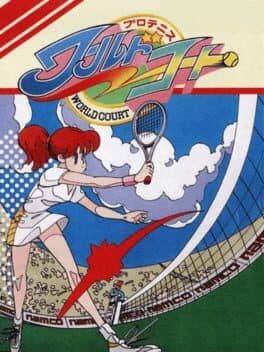
World Court Tennis
Namcot1988
It's your serve. WHOP! The ball clears the net at 100 MPH and raises a little dust just inside the chalkline. An ace? no. WHOP! Your opponent returns with a powerful backhand that kills your plan of charging the net. No matter how you play - with up to 3 friends, singles, doubles, or against the computer - World Court Tennis will tax your endurance and test your skill with action that's fast and furious. Just don't scream at the line judge. He's never wrong.
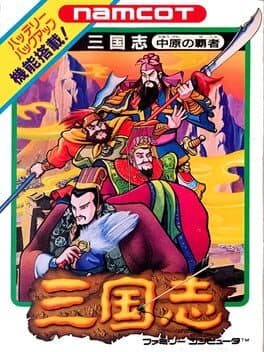
Sangokushi: Chuugen no Hasha
Tose1988
A war strategy game that focuses on the Ancient Chinese Three Kingdoms conflict. It was developed by TOSE and published by Namco for the NES.
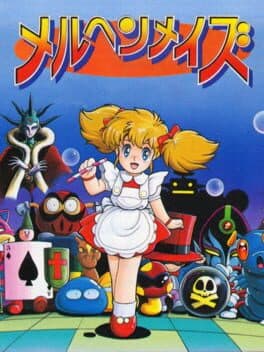
Märchen Maze
N.H. System1988
In Märchen Maze ("Märchen" is German for "fairytale"), the player takes control of a little girl named Alice who has been pulled in to a magical world by a white rabbit. It was originally released to the Arcade before being ported to the PC Engine and Sharp X68000. It would also be added to the Japanese Wii's Virtual Console in 2009. The Arcade and Sharp X68000 versions use an isometric view while the PC Engine uses a standard overhead view. The game's platforms are all suspended over a bottomless void. Alice can shoot bubbles, technically termed "shabon balls", at the enemy in an effort to knock them off of the floating terrain or destroy them. Holding down the attack button will charge the bubble and make it larger, resulting in greater knockback strength or simply more damage, depending on the enemy. The enemies are also trying to knock Alice off, too. In fact, Alice does not take damage in a conventional sense: the only way to lose a life is to fall in to the void. Alice comes equipped with several balloons which can rescue her from a fall should one occur. Alice is capable of jumping to avoid obstacles or shots from enemies, or to jump over gaps in the terrain. At the end of each stage is a boss; Alice has a 180 second time limit to get to the end and defeat the boss or else "time over" monsters will appear and attack her. The PC Engine version of the game lacks a time limit.
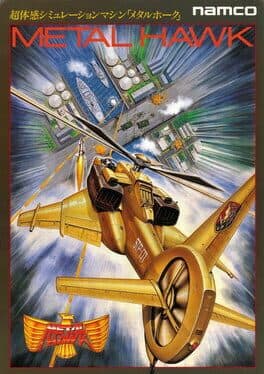
Metal Hawk
1988
An excellent helicopter shooter.
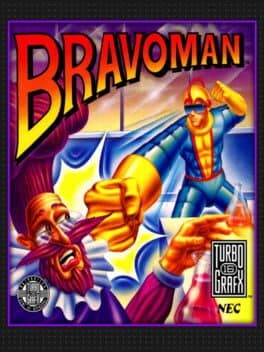
Bravoman
Namco1988
The village of Nitta has been invaded by the army of Dr. Bomb, an evil scientist who is plotting to take over the world. Facing this crisis is Bravoman, who received his powers from Alpha Man to stand up against Dr. Bomb in the name of justice. The village of Nitta consists of 22 stages -- action stages that take place on the ground and shooting stages that take place underwater. Action stages use a unique control system in which the height of a jump and the distance of an attack changes depending on how long players hold down the button. Players collect the Luck Symbols that appear when they defeat enemies and give them to Lottery Man to get recovery and power-up items. Stop Dr. Bomb and bring peace to the village of Nitta and the rest of the world.
Assault
Namco1988
Assault is a top-down shooter from Namco, released in the arcades in 1988.
Pro Yakyuu World Stadium
1988
World Stadium is a version of Family Stadium for non-Nintendo platforms, appearing on the PC Engine and in arcades.
Family Circuit
Game Studio1988
Family Circuit is a Racing game, developed by Game Studio and published by Namco, which was released in Japan in 1988.
Final Lap
Namcot1987
Final Lap is a racing video game produced by Namco,[2] and released by Atari Games for the United States in 1987. It was the first game to run on Namco's then new System 2 hardware, and is a direct successor to Namco's two earlier Pole Position games (1982-1983). Final Lap was the first racing game to allow up to eight players to simultaneously race on the Suzuka Circuit, in a Formula One race. This was, at the time, considered a revolutionary feature and was implemented by linking together up to four two-player sitdown-style arcade cabinets.[2][3] It was also arguably the first racing game to implement "rubber banding" to ensure that less talented players were never too far behind the leader, a concept that would be taken much further by the Mario Kart series.[3] There was also a single player mode, in which the player's score was based on how far the car travelled until time ran out or if the player completed four laps (on default settings; the arcade operator can set the lap number to be as low as three or as high as six).
Bosconian '87
Namco1987
Bosconian '87 is a port of the arcade game Bosconian.
Family Tennis
Namco Limited1987
Family Tennis is Namco's first tennis game, it features a roster of sixteen players (twelve male and four female) all based on real-life professional tennis players at the time, such as Ivan Lendl, Boris Becker, Mats Wilander, Martina Navratilova and Steffi Graf. The game includes six tournaments, including the Australian Open, Wimbledon and the U.S. Open, and offers play on grass, clay, and hardcourts, as well as a unique "cosmo" surface that takes place in outer space with astronaut ballboys. There are three modes of play to choose from: exhibition, tournament and world tour. Exhibition mode consists of a single exhibition match for one or two players, while Tournament mode allows up to eight players to face off in a singles tourney. Both of these modes also include a "Watch" option, in which all players are controlled by the computer. World Tour mode takes the player through an entire year on tour playing against computer-controlled opponents, using a password save system. Doubles matches aren't available in any mode though.
Galaga '88
Namco1987
The gameplay in Galaga '88 is built on the same premise as that of the original Galaga game, but is in many ways more complex and more difficult. The game is divided into a series of 29 Stages distributed through eight Worlds. The starship Galaga accelerates between Stages and Worlds and even to higher dimensions (go to the section on Dimensional Travel below to find out more). With the exception of the third and eighth, each World culminates in a Challenging Stage. There are six such stages to engage in any full game, and each begins with the on-screen announcement "That's Galactic Dancin'!" and has its own YM2151-generated song to which the enemy formations dance. In any given Challenging Stage, both the design of the enemies and their dancing formations shall vary according to the player's current Dimension. As in Galaga, the objective is to destroy all forty enemies before they fly away off the screen. However, refraining completely from touching any controls for the duration of a Challenging Stage awards a "secret bonus" ranging in value from 10000 to 25000 points, and equal to the "special bonus" which would have been awarded for destroying all forty enemy aliens instead. Galaga '88 introduces a variety of new enemies and behaviors. Most of these special enemies are worth varying amounts of bonus points when destroyed. Some enemies can combine into larger enemies which take multiple hits to destroy, while others arrive in eggs, explode in a shower of fireworks, grow with multiple hits, or sport armor which makes them invincible while in formation. Certain enemies drop small formations of tiny creatures that wiggle their way down the screen, and still others can act as escorts to incoming groups of enemies and then quickly dive at the player before leaving the game. Most stages also include various obstacles which appear once the enemy formation has been assembled. These can be destroyed with either one or several shots, and the first one on each stage will leave a "Warp Capsule". At the start of the game, the player can select how many Galaga starships to start with (one or two), affecting their number of remaining lives. The game ends after the final boss is defeated (or when the player's last ship is destroyed or captured) - in the latter case, the player can continue the game for an additional credit. The Game Over screen shows the player's hit-miss ratio and a visual representation of their progress. If the player reaches Stage 27, the game also shows a picture of the final boss (damaged if defeated, but silhouetted if not). If the arcade operator has set the "continue" option to "on", the player also cannot continue if he is defeated on Stages 27-29.
Pac-Mania
Namco1987
Pac-Mania is a variation on the game Pac-Man. You need to guide Pac-Man around a maze and eat all of the dots on the board in order to proceed on to the next round. Numerous, multi-colored ghosts also roam the maze trying to stop you. If you eat one of the power pellets in the maze, the ghosts will temporarily turn blue and run from you. Pac-man can earn bonus points by eating the ghosts when they are in this state. The maze is now in 3-D and is larger than screen which will scroll to follow the action. To help get out of tight spots, Pac-Man now has the ability to jump. But be careful, because some of the ghosts have learned this trick as well and you could end up in a mid air collision!
Jikuu Yuuden: Debias
NOW Production1987
Jikuu Yuuden: Debias is a Role-Playing game, developed by Now Production and published by Namco, which was released in Japan in 1987.
Blazer
Namco1987
The player must alternate between a tank named "Vanguard" and a helicopter named "Maiheriko" (and for the tenth and final mission, a boat named "Maiboto"), to kill enemies both on land and in the air. Some air-based enemies will leave behind powerups for Vanguard to collect, when hit by its anti-aircraft missiles; they can restore its fuel, increase its fuel capacity, make it invulnerable for a short period of time, and even grant it an extra life if it manages to collect enough of them (which is initially thirteen, but it can go up to sixteen).
Dragon Spirit
Namco1987
Dragon Spirit is a vertical scrolling shooter arcade game that was released by Namco in 1987 and licensed to Atari Games for its American manufacture and distribution. In the kingdom of Mitgult, a serpent demon named Zawell escapes imprisonment after a thousand years, and kidnaps Princess Alicia. A soldier named Amul is chosen to rescue her and destroy Zawell. He points his sword skyward and transforms into a powerful blue dragon. He can breathe fire and drop bombs, as well as collect up to thirteen additional powers during his journey. Amul must fight nine of Zawell's mightiest beasts, one at the end of each stage, before facing Zawell himself.
Sanma no Meitantei
Namco1987
Sanma no Meitantei is a murder mystery detective adventure game developed and published by Namco for the Famicom in 1987. In the vein of Portopia Renzoku Satsujin Jiken, the player must visit several locations associated with the murder victim, to discover clues which will open up more locations in order to find more clues until ultimately, the identity of the murderer can be confirmed. The game is played entirely in Japanese and was never translated into English. The summary of the story is that while the president Yoshimoto held a party at his villa, Katsura Buntin was found to have been killed in the vault. On top of that, the "Star of Africa" diamond that was stolen from the vault. As detective Sanma Akashiya's assistant, you must help him determine the perpetrators of the incident. The game features a mini game which is a parody of Galaxian, and contains sound effects from other Namco hits such as Dig Dug and Xevious
Family Jockey
Namco1987
A horse racing simulator for the Famicom developed and published by Namco.
Wonder Momo
Namco1987
Wonder Momo is a loose parody of a typical Ultraman-style superhero series, and utilizing a then-rare female protagonist. When the game is first started, players are treated to a parody of the MGM logo featuring Momo instead of a lion and a "Modoki" instead of a mask. The game then cuts to a scene of a theater stage, where a play begins starring Momo, a young woman who gets super-powers. At this point the game puts the player in command of Momo. Rather than playing a hero who needs to save the world, the setting is that of a live stage show (set at the "Namco Theater"), and the player is actually controlling an actress who is merely playing the role of Momo/Wonder Momo. The game also features voice samples in Japanese. As Momo, she can only attack using kicks, and in doing so builds up her "Wonder" meter. When she touches a tornado icon, or spins around by herself, she can turn into Wonder Momo and can also attack using the Wonder Hoop, which can be reused as long as she is Wonder Momo. After the Wonder Hoop is thrown, she won't be able to throw anymore, while she'll have to wait for it to bounce back to her. She can also shoot small waves of energy in whichever direction she faces (while she is crouching), which is based on the similar move by the Ultraman characters. Her most powerful attack is the Wonder Typhoon - a more powerful version of her small energy wave attack which shoots numerous amounts of small energy waves towards the left and right sides of the screen simultaneously, while she is spinning. The game is notable for featuring some slightly risqué content for the time, in the form of fanservice (at Momo's expense). When Momo jumps, the player can visibly see her underwear. Momo also needs to be wary of photographers in the theatre audience, who are determined to get a peek under her miniskirt. If one is successful, Momo will get "embarrassed" (stunned) for a short period of time. Additionally, one of the images that appears on the theater curtain (at the beginning and end of some acts) is Momo wearing only a towel.
Toy Pop
Namco1986
Toy Pop is a top-down multi-directional shooter that can be played both single-player or with two players simultaneously. The players venture through 44 floors (the game uses the toy-themed term "Box" as opposed to "Floor", to fit with the game's setting) collecting four gold hearts contained in jars on each floor in order to advance. Along the way, the players must open gift-wrapped containers concealing either weapons or score-increasing bonus items; these various weapons are used to defeat several different varieties of enemies (Heitai, Cars, Tanks, Domdoms, Trumps, Osaru, Robots and occasionally the evil wizard Mahou), with many typically vulnerable to only one type of weapon.
Thunder Ceptor
Namco1986
Namco's most powerful 8-bit game at the time also the first game to use a 360-degree analog joystick.
3D Thunder Ceptor II
Namco1986
A sequel to Thunder Ceptor. The game is very much like the original; the player controls the Thunder Ceptor (now colored light blue), and must shoot the incoming crafts (now colored from gray to green) as normal. There are now multiple obstacles, including large rods, and flying panels (like the Bacura from Xevious), and the obstacles can now be destroyed with the bombs, now no longer having to avoid them. As the name suggests, the game is playable in 3D, and is the only Namco arcade game to do so. The player would put their head up to the attached goggles on the machine for the 3D effect.
Rolling Thunder
Namco1986
Rolling Thunder is a run and gun/action arcade game that was released by Namco in 1986 and licensed to Atari Games for US manufacture and distribution. It runs upon Namco System 86 hardware, and was later converted for the Sinclair ZX Spectrum, the Commodore 64, the Amstrad CPC, the Atari ST, the Commodore 64, and the Nintendo Family Computer. It was also featured in Namco Museum Encore. The player takes control of "Albatross", a member of the WCPO's (World Crime Police Organization) "Rolling Thunder" espionage unit. Albatross's mission is to save a missing female agent named Leila Blitz from a secret society named Geldra located in New York City. Albatross must travel through two different segments or "stories", both comprised of five stages, for a total of ten game stages. On each stage, Albatross can enter doors, to hide and take cover from enemies, as well jump over to higher or lower floors with rails, including stairs. Albatross begins this game armed with a standard-issue pistol, which can be substituted with a fully automatic assault rifle that allows for continuous firing by holding down the firing button. Albatross can gain ammunition for either weapon, by entering doors which are marked "bullets" or "arms". Despite the presence of a life meter, Albatross can only take two physical hits from the enemy: a single hit drains half of the meter, and he will be killed instantly when struck by a projectile attack such as enemy bullets or lasers. (However, all bullets can be blocked by your own).
Mappy-Land
Tose1986
Mappy, who is a policeman, prepared all kinds of wonderful birthday presents for his girlfriend, Mapico. But, Nyamco and his child Mukies have hidden them in the eight towns of Mappyland. What a pity! Mappy must hurry to get the presents back before Mapico's birthday party. The problem is that there are so many mysterious towns where Mappy must search, while fighting off his enemies. Can you accept the challenge and help Mappy to succeed?
The Genji and the Heike Clans
Namco1986
The Genji and the Heike Clans (Genpei Touma-den) is a side-scrolling hack and slash platform game. The player controls Taira no Kagekiyo, a samurai who was killed in the Battle of Dan-no-ura during the Genpei War. Kagekiyo was resurrected to defeat his enemy Minamoto no Yoritomo and the heads of his clan, Minamoto no Yoshitsune and Saito Musashibo Benkei. The game offers three types of action: Small Mode (standard), Big Mode (standard, but with large characters and usually boss fights) and Plain Mode (viewed from an overhead perspective). The game received a localization when released in Namco Museum.
Super Xevious: Gamp no Nazo
Namco Limited1986
In Super Xevious: Gamp no Nazo the player controls a spaceship named the Solvalou in its mission to destroy a powerful supercomputer named GAMP, which took over Earth during an ice age. Gamp no Nazo features a heavy focus on puzzle-solving, with each of the game's 21 levels posing a puzzle that must be solved to progress.
Valkyrie no Bouken: Toki no Kagi Densetsu
Namco1986
Once upon a time, in the world of Marvel Land, people and nature lived together in a peaceful and harmonic coexistence. All the animals were docile. Humans, Sandras, Quarkmen, Tattas, and other races mingled with one another and worked to make Marvel Land into an increasingly beautiful place to live. A large clock tower resembling a stone grandfather clock stood watch over the countryside of Marvel Land. Long ago, an ancient evil had been sealed within the clock tower. The people needn't fret, however. For those days had long since passed, or so they had thought. The key of time that rested in the center of the face of the clock tower had long since been used to seal away the ancient evil that lies within. Until one day, the clock tower mysteriously stopped working. In an effort to rewind the clock, a villager takes it upon himself to do just that. Fumbling with the key, the villager drops the key of time, foolishly. In a frantic manner, the villager picks up the key and tries to reset it back into place before a catastrophe befalls Marvel Land. But then, it was too late for the villager to accomplish the task. The ancient evil of legend. Zouna, the Dark Wizard who manipulates time itself was unleashed upon the world once more. And to prevent anyone else from sealing him away once again, Zouna takes the key of time for himself. Finally freed after many years, Zouna wastes no time in wreaking havoc and chaos over Marvel Land. Zouna unleashes his manifested darkness over the land, and lays waste to the countryside. Feeling confident in his reign, Zouna constructs his castle in which to preside over Marvel Land from. The peaceful inhabitants of Marvel Land cried out in terror as Zouna's manifested darkness came after them one by one. Zouna's darkness corrupted the hearts of anyone it came across, and possessed them against their wills. Once thriving towns and villages fell into ruination. Family members were parted from their loved ones. Only a few scattered towns remained standing; forming a last bastion in resistance to Zouna's dark invasion. A futile effort. Even Krino Sandra (known as Whirlo in Europe) would come to meet his heroic demise, subdued by Zouna's power. Marvel Land is in dire need of a savior. The desperate call has been answered by the heavens. Valkyrie, a fledgling shield maiden descends to Marvel Land from heaven. Her first adventure, she wields a simple shield and a mace of light. Vowing to save Marvel Land from the darkness that has consumed it. Then her adventure begins.
The Return of Ishtar
Namco1986
The Return of Ishtar, also known as Ishtar no Fukkatsu, is a two-player action-RPG that follows directly after Namco's Tower of Druaga. Ki and Gilgamesh must escape the Tower of Druaga, fighting through the legions of Druaga that are trying to avenge their fallen master. One player controls Ki and the other controls Gilgamesh. Ki will instantly die if an enemy touches her but she has a ranged attack to keep opponents at bay, while Gilgamesh defeats any enemy he touches. However, Gilgamesh will die if he is forced to take on too many enemies on his own. The aim is to combine efforts to fight through enemies and explore each of the tower's rooms for valuable items.
Hopping Mappy
Namco1986
The game brings back the characters from Mappy but it is not as effective; the reason for this is most likely because the player does not get any new weapons after each bonus round. The rounds do not get any more confusing because the cats move in preset patterns - and the main strategy that is used to get past them, is comprised of a difficult way to more or less stand still. There are a total of thirty-one distinct rounds that the player can continue through even if he runs out of lives
Sky Kid Deluxe
Namco1986
You play a bi-plane pilot on missions to bomb enemy targets. The game has a left-to-right scrolling screen where you shoot at enemy planes and trucks. Fly down and pick up the bomb as you go along.
Dragon Buster
Namco1985
A 1984 arcade platformer with action RPG elements, Dragon Buster is notable as the first game to feature a double jump. It was also one of the first games to include a life meter (along with Flash Boy and Punch-Out), known as vitality in this game. The game featured side-scrolling platform gameplay and a hub "world view" map similar to the later Super Mario Bros. series. It also featured hack & slash combat, like the later Tritorn and Legend of Zelda series. Dragon Buster was developed and published by Namco. The game is a side-scrolling dungeon crawler, where the goal of the game is for the hero, Clovis, to rescue Princess Celia. Dragon Buster was later ported to a variety of home consoles, notably the Nintendo Entertainment System and the MSX. It runs on Namco Pac-Land hardware, modified to support vertical scrolling
Metro-Cross
Namco Limited1985
Metro-Cross is a platform arcade game that was released by Namco in 1985. It runs upon Namco Pac-Land hardware (but with a video system like that used in Dragon Buster, modified to support a 2048-color palette). It uses a Motorola M6809 microprocessor, with a Hitachi HD63701 sub-microprocessor (both running at 1.536 MHz) and Namco 8-channel waveform PSG for audio. The player must take control of a man known only as Runner, who is given a time limit to run through each of the game's thirty-two rounds while avoiding obstacles and collecting drink cans. The actual running happens automatically: the job of the player is to avoid the obstacles and collect the cans by moving the Runner with the stick and adjusting his speed accordingly. If the Runner finishes the round within the time limit, the remaining time will be awarded to him as bonus points and he will proceed to the next round. Every fourth round is special, using the remaining time from the three previous ones as additional time. However, if the Runner has not finished the round by the time the time limit runs out, he will be electrocuted and the game will immediately be over.
Choujikuu Yousai Macross
Namco1985
The game is based on the popular anime TV series of the same name. The player controls a transformable VF-1 Valkyrie variable fighter in an unending battle against an invading race of giant humanoid aliens known as the Zentradi.
Sky Kid
Namco1985
You are the legendary Red Baron, flying a plane through a horizontal side-scrolling scenery set during World War I. To complete a mission, you simply need to get to the landing spot on the other side without being shot down, but you can gain extra points by destroying enemy vehicles and planes. For huge points, pick up a bomb hidden in the level (you will be warned by a sound when approaching it) and drop it on a large structure. If you fail to land on the landing strip, you run out of fuel and crash. You can only shoot horizontally and diagonally by tilting the plane's nose. When in trouble, perform an aerial loop with the secondary button, this often destroys other planes and avoids bullets. There is a co-op mode with the character Max as well.
Gauntlet
Atari Games1985
Working as a common grunt for CannoSec, you have been chosen by the owner to be a candidate as a distinguished Elite. A position thousands in CannoSec work hard to attain. However, you have to show CannoSec that you are a worthy candidate through the Certification Run. Are you meant for this?
Battle City
Namco1985
Battle City, also known as Tank 1990 or Tank in some pirate multicart releases, is a multi-directional shooter video game for the Family Computer produced and published in 1985 by Namco. The game was later released for the Game Boy and was included in the Japanese version of Star Fox: Assault. It is a port of the arcade game Tank Battalion with additional features (including two player simultaneous play and a level edit feature). There was also a rendition for Nintendo's Vs. System arcade cabinets. The player, controlling a tank, must destroy enemy tanks in each level, which enter the playfield from the top of the screen. The enemy tanks attempt to destroy the player's base (represented on the map as a bird, eagle or Phoenix), as well as the human tank itself. A level is completed when the player destroys all 20 enemy tanks, but the game ends if the player's base is destroyed or the player loses all available lives.
Star Luster
Namco1985
A first-person 3-D space shooter from Namco.
Baraduke
Namco1985
Baraduke is an action game released by Namco (Bandai Namco Entertainment) in 1985. The peaceful, friendly world of Paccet has been attacked by the evil Octy! Make your way through Baraduke, the underground Octy citadel beneath Paccet, and use your Wave Gun and Shield to take out the Octy!
Dig Dug II: Trouble in Paradise
Namco1985
DIG DUG has decided to chill out from the pressures of the real world by taking a long overdue vacation on a beautiful Caribbean island. "At last," he thinks to himself, "sun, sand, surf, and no more hassles from those miserable pests Pooka and Fygar!" Lying in a hammock between the graceful palm trees, he drifts off into a blissful dream of beautiful bikini clad native girls catering to his every wish. But just when he thinks he's got it made in the shade, along come his troublesome enemies to turn his peaceful paradise into a tropical nightmare. Help DIG DUG rid the island of these irritating intruders and bring tranquility back to his vacation by the sea!
Galaga: Demons of Death
Namco1985
Classic arcade shoot ‘em up Galaga was faithfully recreated for the home in this acclaimed NES version.
Super Xevious
Namco Limited1984
The gameplay is very much like that of the original Xevious except this time it is a little more difficult. Several new enemies have also been introduced (including a silver Galaxian flagship, a rare silver Galaga "scorpion" ship, two jet planes, a helicopter, and a dark yellow Tank Battalion tank). Some of these enemies will reset the player's score back to 0 if they are destroyed - and the hidden "Sol Citadel" towers and Rally-X Special Flags are also located in different places.
Pac-Man
Namco Hometek1984
The NES port of the arcade classic.
Grobda
Namco1984
The player must take control of Grobda, a tank trapped in an arena filled with numerous indestructible obstacles and several enemy tanks. When an enemy tank is killed, it will cause an explosion, and any other enemies that happen to be in the blast radius at the time will also suffer the same fate. But if Grobda is too close to the explosion, it will also be killed. Grobda has a shield that offers very temporary protection from enemy fire, but this will soon disappear if it is constantly under attack or shot. Each round is called a "battling", and there are a total of ninety-nine in the game.
Pac-Land
Namco1984
Pac-Land itself is split into trips. In each of these trips the objective is to get the fairy (that is kept under Pac-man's hat) to Fairyland and also to return home to Pac-Man's house. The majority of the trip involves moving from left to right avoiding various obstacles such as the enemy ghosts, water spurts and quicksand traps. Each trip is divided into a number of rounds, the end of which provides Pac-Man with bonus points depending on how much time he has left and also his position in jumping at the end of each round. If the player runs out of time before finishing the round, Sue, the purple ghost, will speed up rapidly. The penultimate round of a trip ends with Pac-Man entering Fairyland and returning the fairy under his hat to the Fairy Queen. In return the Fairy Queen gives Pac-Man magic boots. For the final round of the trip, Pac-Man has to travel from right to left back home. For assistance he uses the magic boots, which allow him to jump repeatedly while in mid-air. Once Pac-Man completes the trip, he is greeted by Ms. Pac-Man and Baby Pac-Man. In the US release of the game, Pac-Man's cat and dog in the cartoon series, Sour Puss and Chomp-Chomp, are also there to welcome Pac-Man home. Pac-Man then begins his next trip following the same objectives as before, although the difficulty increases. As in the original Pac-Man, there are fruit which appear to eat for bonus points and power pellets to turn the ghosts blue and vulnerable. A hidden item (sometimes accidentally dropped by the ghosts) is a Flagship from Galaxian, which rewards 7650 points when collected (a reference to Namco's goroawase number of 765). The Galaxian Flagship is a long running cameo that appears in the Namco-made Pac-Man games. There are also hidden bonuses in the game, eating ghosts in a certain order will give extra time and pushing an obstacle in the opposite direction can give extra lives, invincibility, and balloons to collect for points and warps.
The Tower of Druaga
Namco1984
The story still's the same: Ishtar sends Gilgamesh up the 60 maze levels of the Druaga's tower to rescue Ki and retrieve the Blue Crystal Rod. He must find each level's key to proceed to the next one.
Gaplus
Namco Limited1984
Gaplus is a fixed shooter arcade game that was released by Namco in 1984. It was the only other game to run on Namco Phozon hardware, and in the US, a modification kit was later released to change the name to Galaga 3, possibly to increase recognition among fans of the games even though there was no "Galaga 2". Since Gaplus is a sequel to Galaga, it has similar gameplay. The player controls a spaceship, that can now move vertically (limited to halfway up the screen, much like Atari's Centipede) as well as horizontally, and shoots at swarms of incoming insect-like aliens which fly in formation above it and swoop down to attack it in akamikaze-like dive. In this sequel, the level starts over if the player gets killed before all the enemies have come in. When all enemies are killed, the player moves on to the next level. By obtaining certain powerups, it is possible to shoot sixty bullets per screen, the most any Galaxian-related game has.
Pole Position II
Namco1983
Just like the first game, but with improved graphics and 4 different tracks to choose.
Phozon
Namco1983
The player must take control of the Chemic, a small black atom with red spikes which must adhere itself to passing Moleks (which come in four different colours: cyan, green, pink and yellow) in order to duplicate the patterns shown in the centre of the screen; if a Molek adheres itself to the Chemic incorrectly, the player must press the reject button to throw it away. The singular enemy in the game is the Atomic, a malevolent clump of balls which moves randomly around the screen, and will kill the Chemic if it merely touches it - however, the Chemic can counter-attack by adhering itself to a Power Molek (which are slightly larger than the regular Moleks, and first appear in the game's second world: once the Chemic has adhered itself to one, the adhered Moleks will spin around rapidly, and their speed will decrease to denote the nearing of the Power Molek's ending time limit). But the Atomic has a nasty habit of splitting up and reforming in order to cover more ground, and even the Power Moleks cannot match up to the Atomic's deadly Alpha- and Beta-Rays which can instantly cause them to float away (along with the regular Moleks) on contact; there are total of eighteen unique patterns which must be duplicated in the game, and every fourth stage is a "challenging stage" where the Chemic can fire yellow Moleks in four directions at the Atomic.
Libble Rabble
Namco1983
Libble Rabble is an arcade game that was released by Namco in October 1983. It was designed by Toru Iwatani, who had also designed the Gee Bee series, Pac-Man, and Pole Position. It is a curious but challenging game, where the player tries to harvest little mushrooms (Mushlins) while avoiding various enemies, and was the first game from Namco to use a Motorola 68000 processor (which ran at 6.144 MHz). At first glance, the gameplay resembles Taito's Qix. The player controls two "arrows", one red (Libble) and one blue (Rabble) with a line strung between them. The object is to wrap the line around poles and surround Mushlins and enemies with it. The player can either close the loops themselves (worth more points for the Mushlins) or move both arrows to the same edge of the screen. The player clears a "season" when he or she harvests all the Mushlins. Along the way, various enemies will appear and try to stop the player. The most common are four little hooded critters (Hobblins), which start each season in the corners. If the player catches them in a loop, they will be sent to the top of the screen for a short period of time. Other critters such as fireballs (Killers), sparks (Changers), and Demons will also appear. These can be killed by closing a loop around them. Sometimes, scissors-like enemies (Shears) appear, and if they cross the player's line, they cut it. If the player's line is ever cut by Shears or Demons, a new one is instantly made: directly between the two arrows. Every so often when the player closes a line, a detector goes off indicating that the area he or she has closed off has a treasure chest somewhere. To actually uncover the chest, the player must surround a small enough area which covers just the chest, and no other possible hiding places. The game guides the player along that step, first by challenging him or her to uncover a chest at the start of the game (and then by revealing the locations of the chests for the first two seasons). When the player actually uncovers a chest, six bonus creatures (Topcups) will pop out, then make for the edges. The player must corral them with his or her line and then close the loop to score the bonus for them: they mean bonus letters. If the player manages to complete a bonus word, the season is automatically cleared out and the player moves to a bonus stage where he or she must try to uncover and collect chests (to collect a chest, the player needs to close a loop around an opened chest) within a time limit. The player loses a life if any of the assorted critters touch one of the arrows or if he or she runs out of time (the border is the player's timer, and he or she can boost the time by looping Mushlins and plants), and the player gains an extra life at 40,000, 120,000, 200,000, 400,000, 600,000 and 1,000,000 points by default. After the 100th season, the season counter will stop at 99, similar to how Galaxian and King & Balloon's round indicators would stop after 48 rounds.
Jr. Pac-Man
Atari1983
The gameplay of Jr. Pac-Man is similar to that of its predecessors: The player controls the titular Jr. Pac-Man and scores points by eating all of the dots in the maze. Four ghosts roam the maze and attempt to capture him. The player can eat an energizer to turn the ghosts blue, making them vulnerable for a short time and allowing the player to eat them, sending their eyes back to their home base. When all the dots are cleared, a new maze is presented and gameplay resumes.
Pac & Pal
Namco1983
Pac & Pal is an arcade game that was released by Namco on July 30, 1983 exclusively in Japan. It runs on Namco Super Pac-Man hardware, and the object of the game is for Pac-Man to eat all the items before he is caught by the ghosts. Most of the items are fruits from the original Pac-Man game, with a few new additions. Their value varies, starting with cherries at 50 points, and ending with keys from 700 to 5000 points. The items had to first be unlocked by turning over cards distributed around the maze (instead of eating keys like in Super Pac-Man). Very few cabinets still exist today, and this is possibly one of the rarest Pac-Man titles to find in playable format outside Japan.
Mappy
Namco Limited1983
The player guides Mappy the police mouse through the mansion of the cats called Mewkies (Meowky in the U.S. version) to retrieve stolen goods. The player uses a left-right joystick to move Mappy and a single button to operate doors. The mansion has six floors of hallways in which the stolen items are stashed.
Xevious
Namco1982
It's a nightmare, but it's true! Research shows that we are the actual aliens on Earth, and the ruthless Xevions are the original inhabitants. Now the Xevions want Earth back -- minus humans! Their invasion forces are fierce -- the land is crawling with deadly Domogram Rovers; the sky is black with Toroid Patrol Fleets and Zoshi Death Squads. Our puny weapons offer no defense. Earth's only hope is our powerful new Solvalou Fighter Plane. Its pilot will have a single mission: Penetrate the enemy ranks and destroy the Xevious Mother Ship. The mission is dangerous. We can't guarantee success. But at this point, it's do or die! One small problem. We still need a pilot. Any volunteers?
Super Pac-Man
Beam Software1982
Super Pac-Man is a game in Namco's Pac-Man family, but instead of gobbling up dots, Pac is required to eat fruit and prizes, such as apples, bunches of bananas, doughnuts, hamburgers, fried eggs, ears of corn, sneakers, pieces of cakes, raspberries, limes, cups of coffee, mushrooms, Galaxians, bells, and shamrocks. Most of these items are hidden in passages that have locked doors at either entrance, and in order to unlock the doors, Pac needs to eat the key that is closest to the passage that he wishes to unlock. As usual, ghosts will keep chasing Pac around the maze until he has lost all his lives. However, Pac can enter the warp tunnels at either side of the maze to lose the ghosts quickly. There are two types of power pellets in the maze: green and yellow. Yellow power pellets cause ghosts to turn blue, allowing Pac to eat them for points, whereas green ones cause Pac to enlarge and will also cause the ghosts to become much thinner and wider, allowing him to fly over them. He can also break open the doors without the need of keys. The effects of the pellets, unfortunately, only last for a number of seconds. During the time that he is enlarged, a flashing star will appear besides two boxes that are located in the middle of the maze. The first box will display the current fruit or prize, and the other will display a rotating selection of them. If Pac manages to eat the star when they match there will be a large bonus score. Occasionally, after three or more stages, there will be a bonus stage where Pac automatically gets enlarged. The object of these stages is to eat everything in the maze before the time runs out and, during these stages, there will be no ghosts to pursue him.
Pole Position
Namco1982
The very first racing game with the rear perspective camera and track based on real life.
Pac-Man
Namco1982
Atari 2600 Port of Pac-Man The player controls Pac-Man through a maze, eating pac-dots (also called pellets). When all pac-dots are eaten, Pac-Man is taken to the next stage. Between some stages one of three intermission animations plays. Four enemies (Blinky, Pinky, Inky and Clyde) roam the maze, trying to catch Pac-Man. If an enemy touches Pac-Man, a life is lost and the Pac-Man itself withers and dies. When all lives have been lost, the game ends. Pac-Man is awarded a single bonus life at 10,000 points by default. Near the corners of the maze are four larger, flashing dots known as power pellets that provide Pac-Man with the temporary ability to eat the enemies. The enemies turn deep blue, reverse direction and usually move more slowly. When an enemy is eaten, its eyes remain and return to the center box where it is regenerated in its normal color. Blue enemies flash white to signal that they are about to become dangerous again and the length of time for which the enemies remain vulnerable varies from one stage to the next, generally becoming shorter as the game progresses. In later stages, the enemies go straight to flashing, bypassing blue, which means that they can only be eaten for a short amount of time, although they still reverse direction when a power pellet is eaten; in even later stages, the ghosts do not become edible (i.e., they do not change color and still make Pacman lose a life on contact), but they still reverse direction.
Dig Dug
Namco1982
Dig Dug is a 1-2 player arcade game in which you have to use your shovel to dig your way through the earth. Stopping you from doing this are two monsters, called Pooka and Fygar, who will continually chase you around. The only weapon that you carry is an air pump, which you can use to inflate the monsters to the point where they explode. (if you start to inflate them but stop doing so, the monsters will get turned back to their normal selves). Furthermore, rocks are scattered throughout the earth, and you can use these rocks to squash them. If the monsters do not find you for several seconds, they will eventually get turned into ghosts, which are able to walk through the earth. They are invincible and cannot be killed. From time to time, vegetables will appear in the center, and you can get these for points.
Tank Battalion
Namco Limited1981
A maze game where the player controls a tank and battles enemy tanks that pursue and attack.
Bosconian
Namco1981
The object of Bosconian is to score as many points as possible by destroying enemy bases and ships. The player controls a small fighter ship that can move in eight directions and can fire both forward and backward. Each level consists of a number of green space stations that must all be destroyed to advance to the next level (a semi-transparent mini-map helps identify their location). Each station consists of six cannons arranged in a hexagon, surrounding a central core. The player must either destroy all six cannons or shoot the core to destroy a station, and in later levels the core is capable of defending itself. Additionally, the player must avoid or destroy asteroids, mines, and a variety of enemy missiles and ships that attempt to collide with the player's ship. Enemies occasionally launch formation attacks — destroying the leader causes all remaining enemies to disperse, but destroying all enemies in a formation scores extra bonus points. A spy ship (worth a random bonus value) also appears occasionally, which must be destroyed or the enemies will go berserk.
Warp & Warp
Namco1981
You control a monster fighter. A warp zone is set in the middle of the screen. Warp to the next level when flashing
Galaga
Namco Limited1981
The objective of Galaga is to score as many points as possible by destroying insect-like enemies. The player controls a starfighter that can move left and right along the bottom of the playfield. Enemies swarm in groups in a formation near the top of the screen, and then begin flying down toward the player, firing bombs at the fighter. The game ends when the player's last fighter is lost, either by colliding with an enemy or one of its bullets, or by being captured. Galaga introduces a number of new features over its predecessor, Galaxian. Among these is the ability to fire more than one bullet at a time, a count of the player's "hit/miss ratio" at the end of the game, and a bonus "Challenging Stage" that occurs every few levels, in which a series of enemies fly onto and out of the screen in set patterns without firing at the player's ship or trying to crash into it. These stages award a large point bonus if the player manages to destroy every enemy. Another gameplay feature new to Galaga is the ability for enemies to capture the player's fighter. While the player is in control of just one fighter, a "boss Galaga" (which takes two shots to kill) periodically attempts to capture the fighter using a tractor beam. If successful, the fighter joins the enemy formation. If the player has more lives remaining, play resumes with a new fighter. The captured fighter flies down with the enemy that captured it, firing upon the player just like normal enemies, and can be shot and destroyed. The player can free the fighter by destroying the boss Galaga while in flight, causing the captured fighter to link up with the player's current fighter, doubling his or her firepower but also making a target twice as large. Galaga has an exploitable bug that can cause the attackers to stop firing bullets at the player, due to a coding error. In addition, similar to the famous "Split-Screen bug" in Pac-Man, a bug exists in Galaga in which the game "rolls over" from Level 255 to Level 0. Depending on the difficulty setting of the machine, this can cause the game to stall, requiring that the machine be reset or power-cycled in order to start a new game.
New Rally-X
Namco1981
New Rally-X is a maze and driving arcade game that was released by Namco in 1981. It runs on similar hardware to that of its predecessor, and as its name suggests, it is a revised version of that title, which was released in the previous year. The only differences are that it has slightly enhanced graphics, easier gameplay, a new soundtrack, and a "Lucky Flag" (with the letter "L") that gives the player extra points for remaining fuel when collected, after which the round will continue if there are still flags remaining. The mazes are mostly identical, with some of the blocks from Rally-X changed into roads to reduce dead ends, and some different flag (and rock) locations. This title was manufactured in greater numbers and was much more popular in Japan than its predecessor.
Rally-X
Namco Limited1980
Rally-X is a maze & driving arcade game, that was released by Namco in 1980 and licensed to Midway Games for US manufacture and distribution in 1981. It was ported to the SG-1000 in Taiwan.
King & Balloon
Namco1980
Released by Namco in the summer of 1980, King & Balloon is a shoot em up in the vein of Galaxian, but trades the outer space theme for pseudo-medieval setting. In the game, the player controls two green men who carry a cannon, as they defend the king below them from getting abducted by the balloons above, which keep invading the lower part of the screen while also shooting projectiles. Once all the balloons are shot down, the game moves on to the next level. One thing that makes King & Balloon unique is that you don't lose a life when hit. Rather, you respawn and keep on playing. The only way to lose a life is letting the king get abducted. Another interesting mechanic of note is that the balloons stop attacking and descending when one grabs ahold of the king, and they will keep still until the king is back on the ground. This creates a risk versus reward mechanic and entices you to let the balloon carry the king high enough so you can take out more balloons, then rescuing the king just in time. King & Balloon was also one of the first games to have speech, and it still holds up better than most contemporary or even later examples. The king says "Help!" when abducted, "Thank You!" when rescued, and "Bye bye!" when he leaves the screen. There are actually different voices for the game in Japan and the US version, with the Japan version having a slight Japanese accent.
Pac-Man
Namco1980
Pac-Man is a 1980 maze action video game developed and released by Namco for arcades. It is considered one of the classics of the medium, virtually synonymous with video games, and an icon of 1980s popular culture. Players control Pac-Man, who must eat all the dots inside an enclosed maze while avoiding four colored ghosts. Eating large flashing dots called Power Pellets causes the ghosts to temporarily turn blue, allowing Pac-Man to eat them for bonus points.
Kaitei Takara Sagashi
K. K. Toki1980
Use the 2-way joystick to direct the boat across the surface of the ocean, then press the button to lower the diver down to the bottom of the ocean while watching out for the sharks swimming across the screen. During this time, you can hold the button to pause the diver's descent and push the joystick in either direction to fire a harpoon at the sharks for 30-300 points apiece. Once the diver has reached the bottom of the ocean, push the joystick in either direction to make him walk towards either of the two treasure caches that are closest to him (the boat will automatically follow his movements at this point). When the diver is directly over a treasure cache, the boat will lower him into it. The amount of points you will receive when you make it back onto the surface of the ocean, which can range from 50-250, will then appear on the screen, and the boat will raise the diver back up to the surface of the ocean. Once again, you can hold the button to pause the diver's ascent, and push the joystick in either direction to fire a harpoon at the sharks. Once you have made it back up to the surface of the ocean, you will have to repeat the entire process for each of the four remaining treasure caches before the game proceeds to the next round.
Cutie Q
Namco1979
Cutie Q is is the third and final game in the Gee Bee trilogy. The player controls a set of paddles with a rotary knob, the objective being to score as many points possible by deflecting a ball against blocks, ghosts, spinners and other objects on the playfield. Cutie Q is described as Namco's first "character game", thanks to its use of colorful and cute character designs, a choice that would be a major influence on Toru Iwatani's next project, Pac-Man.
Galaxian
Namco1979
Galaxian is a shooter arcade game developed by Namco in 1979. It was released by Namco in Japan and a few months later by Midway Games in North America. The game was developed to compete with Taito Corporation's Space Invaders, released a year earlier, and featured a similar space theme. The player controls a space ship in the bottom part of the screen and shoots at enemies descending from the top of the screen. The game was received very well by the public and has continued to be a game with a competitive community to this day. It was followed by a successful sequel called Galaga in 1981 and two less known sequels called Gaplus in 1984 and Galaga '88 in 1987. Galaxian was one of the most popular games in the golden age of arcade video games.
Bomb Bee
Namco1979
It is the sequel to Gee Bee, which was released in the previous year. The objective of the game is to use two paddles to bounce a ball which flies around and hit the colored bricks above it with the ball. When the bricks are cleared out of the side sections, it will turn that same side's pop-bumper into 100 points instead of 10.
Gee Bee
Namco1978
Namco's first independently designed video arcade game, Gee Bee combines gameplay elements of pinball and Breakout. There are two paddles, one at the bottom and one in the middle, that stay aligned when moving, so players must pay attention to both when bouncing the ball. There are blocks at the top, sides. and in two tiny compartments on the sides near the bottom. There is also a third, stationary, vertically-oriented paddle in the middle, as well as bumpers to give it a pinball feel. Scoring depends on what objects you hit. This was the first of three similar games designed and developed by Toru Iwatani, the creator of Pac-Man.
Shoot Away
Namco1977
Shoot Away is a 1977 electro-mechanical (EM) light gun shooter arcade game developed and published by Namco. Players use the rifle-shaped light guns to fire at clay pigeons, represented as flying white dots on a projector screen. There are two that must be shot down in each round, and players only get two bullets to hit them. Bonus points are awarded for shooting the pigeons as soon as they appear, or by destroying both of them with a single bullet. The game was a critical and commercial success, maintaining a presence in arcades into the 1980s.
Sprint 2
Kee Games1976
Despite its name, Sprint 2 is the first game in the Sprint series.
F-1
Namco1976
F-1 is a 1976 electro-mechanical arcade racing game developed and published by Nakamura Manufacturing Company (Namco), and distributed in North America by Atari, Inc. The player uses a steering wheel to control a Formula One racer, which must avoid collision with other vehicles. The game uses a miniature diorama with small, plastic cars to represent the player's car and opponents on a physical, rotating track, while also featuring a projector system and lighting tricks to create the illusion of racing.
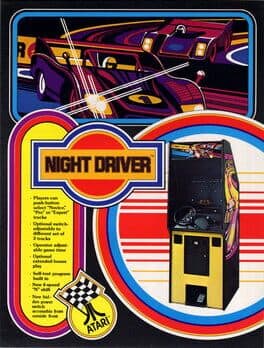
Night Driver
Atari1976
Night Driver - 3D car game in which you will drive at night through dark alleys!
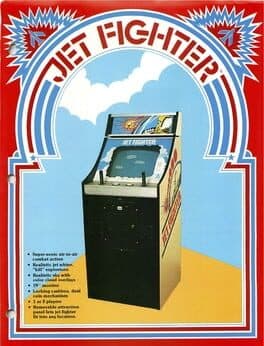
Jet Fighter
Atari1975
The game is housed in a custom cabinet that includes two 8-way joysticks (one per player) meant to look like older style flight sticks. Each stick has a fire button mounted on the top. The players fly in simulated jets around the screen, engaging in a dogfight and attempting to score hits on their opponent within a limited amount of time. When a player is hit, their plane spins around and an explosion is heard. After a few seconds, the plane recovers, pointing at a random direction.
Gran Trak 10
Atari1974
Gran Trak 10 was a single-player racing arcade game released by Atari in 1974. The player raced against the clock, accumulating as many points as possible. Primitive diode-based ROM was used to store the sprites for the car, score and game timer, and the race track. The game's controls — steering wheel, four-position gear shifter, and accelerator and brake foot pedals — were also all firsts for arcade games.
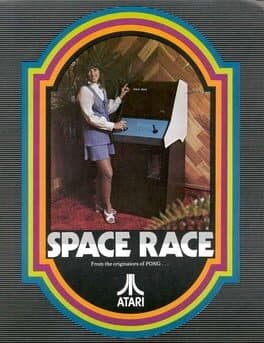
Space Race
Atari1973
Space Race is the second arcade game created by Atari and was released in July, 1973. The two players each control a rocket ship; the object of the game is to make it from the bottom of the screen to the top, while avoiding obstacles such as asteroids. Score is kept electronically and the background consists of a simple starfield.