-
Average rating
4
Games
0
Votes cast
Heartbeat
Shipped Titles
Games (4)

Kuma Uta
MuuMuu2003
In Kuma Uta (literally "Bear Song"), a polar bear from outer space lands on earth, and the player must write music for him to sing. The bear asks the player multiple questions, and comes up with lyrics based on the answers. The song that he composed can then be edited by choosing the lyrics among a selection of phrases. The bear then sings the song in enka, a traditional Japanese type of singing. Songs may be downloaded from the net, or composed by the player in kana, kanji, and romaji. The composed songs can be shared with friends over the PlayStation 2 Network.
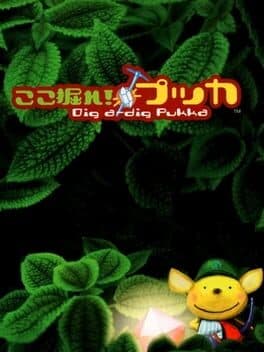
Kokohore! Pukka: Dig-a-Dig Pukka
MuuMuu2000
A digital pet (also known as a virtual pet or artificial pet is a type of artificial human companion. They are usually kept for companionship or enjoyment. People may keep a digital pet in lieu of a real pet. Digital pets can be "simulations of real animals, as in the Petz series" or "fantasy ones like the Tamagotchi". Unlike biological simulations, the pet does not usually reproduce. They generally do not die. In Dig a-Dig Pukka (Kokohore! Pukka: Dig a-Dig Pukka) the player controls a miner robotic pet that will explore the lands searching for rare minerals and gems. In his jobs he will be rewarded by his founds with money that the player can use to buy new objects and tools.
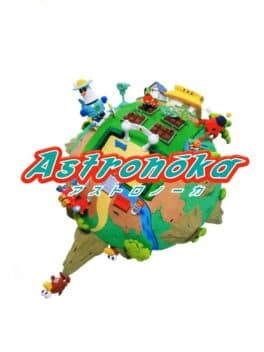
Astronoka
MuuMuu1998
Astronoka is officially described as a "space vegetable production and pest control game". The game revolves around the player cultivating vegetables on a fictional, futuristic star system. The objective is to win vegetable contests and eventually the All-Universe Vegetable Competition, while setting traps and defense to protect the farm against a species of pest called Baboo.
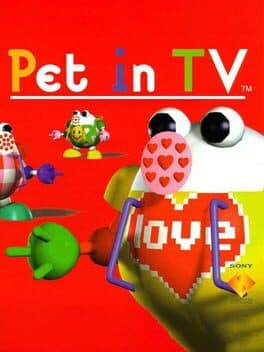
Pet in TV
MuuMuu1997
In Pet in TV the player takes control of a virtual pet, which resembles a more complex version of the Tamagotchi. The player can choose from a selection of PiTs and name it. It is then up to the player to nurture their PiT and allow it to explore the 3D world, learning from its encounters with scenery and objects through trial-and-error. Once these behaviours are learn, the PiT will know how to respond to those objects in the future (such as a Flower, or a Spike). Whenever the PiT becomes injured, or tired, returning it to its home will allow Dr. Y to fix it. The objective then becomes for your PiT to solve puzzles on its own - for which it will be rewarded with AI upgrade chips.