-
Average rating
11
Games
0
Votes cast
Heartbeat
Shipped Titles
Games (11)
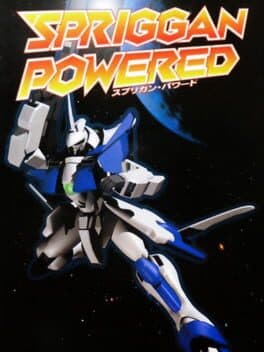
Spriggan Powered
Micronics1996
Many years ago, an ancient civilization ruled Earth. They had a very advanced technology, but were destroyed in the end due to the misuse of their creations. These people left messages for later generations in the form of indestructible message plates written in an ancient language. Several armed organizations began to secretly search for these artifacts to use them for their own good and against their enemies. The ARCAM Corporation is trying to stop these forces from destroying themselves with these "advanced" machines.
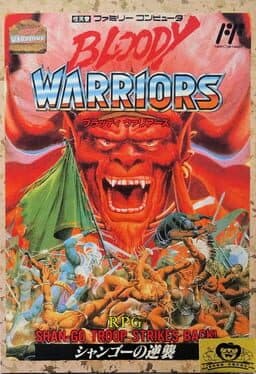
Bloody Warriors: Shan-Go Troop Strikes Back!
Micronics1990
You are a young man from an ancient village, which suffers from attacks by a vicious monster. You are assigned to find the monster's lair and to defeat it. However, upon your return to the village you find out some people were abducted by the imperial troops. Now you have to find out the Empries's true motives and to solve a grand mystery.
Mottomo Abunai Deka
Micronics1990
Mottomo Abunai Deka is an Action game, developed by Micronics and published by Toei Animation, which was released in Japan in 1990. It is based on a Japanese movie released in 1989 with the same name. This game and the movie are both related to the late 1980s detective TV show, Abunai Deka.
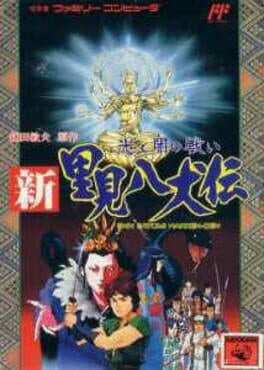
Shin Satomi Hakkenden: Hikari to Yami no Tatakai
Micronics1990
Shin Satomi Hakkenden: Hikari to Yami no Tatakai is a Role-Playing game, developed by Micronics and published by Toei Animation, which was released in Japan in 1989.

'89 Dennou Kyuusei Uranai
Micronics1988
'89 Dennou Kyuusei Uranai is one of those horoscope sims that used to be very popular in Japan in the early days of home consoles. They still exist today, but they tend to be extended to more interactive dating sims rather than just walls of text to read. This game being released in December 1988 and namely so, it was designed to predict your fortune for the upcoming year 1989. This makes attempting to play it already kind of useless once the year had passed. Therefore one can only look back at what the computer predicted for you back in 1989.
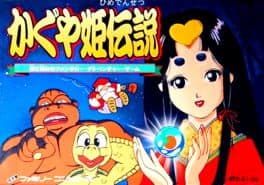
Kaguya-hime Densetsu
Micronics1988
Kaguya-hime Densetsu is an Adventure game, developed by Micronics and published by Victor Interactive Software, which was released in Japan in 1988.
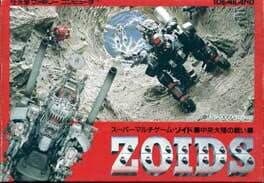
Zoids: Chuuou Tairiku no Tatakai
Micronics1987
Based on the popular Tomy/Hasbro toy license, Zoids: Chuuou Tairiku no Tatakai is an RPG/Shooter hybrid developed for the Famicom by the notorious Micronics.
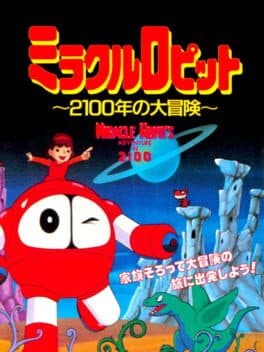
Miracle Ropit's Adventure in 2100
Micronics1987
Miracle Ropit's Adventure in 2100 is an action platformer featuring the titular robot, piloted by a young girl. When the robot is hit, it will break down and dump the girl out. The girl cannot shoot enemies, and will die after 30 seconds if she cannot restore the robot, which requires special items. The game often requires shooting at or jumping on certain unmarked spots repeatedly, either to uncover secrets or even to make progress in a stage at all. In order to reach the true ending, two loops of the game must be beaten.
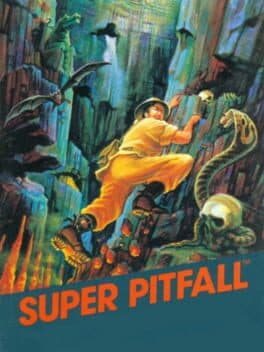
Super Pitfall
Micronics1986
Pitfall Harry returns to adventuring in this "Super" sequel to Pitfall! and Pitfall II: Lost Caverns. Harry’s mission: to recover the famed Raj Diamond, and also to rescue his niece Rhonda and loyal lion sidekick, Quickclaw. Now armed with a gun, Harry must navigate some 270 screens of 8-bit action-platforming. Valuable items will be collected along the way to aid your quest, but beware: dangers also abound, from snakes and spiders to falling rocks and boiling lava!
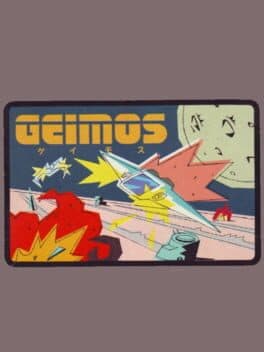
Geimos
Micronics1985
An early pseudo-3D shoot-em-up for the Nintendo Famicom developed by Micronics and published by ASCII.
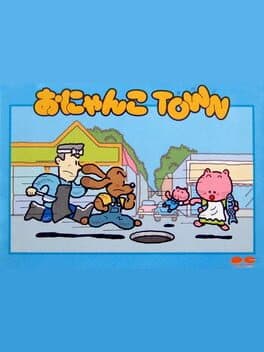
Onyanko Town
Micronics1985
Players must play the role of a mother cat called Milky who lives in a dangerous metropolis full of dogs. The dogs want to kill Milky before she can rescue her son Michael who wandered out into the city on his own (and became lost). Players must catch the fish for temporary invincibility. However, the other enemies can still kill the mother cat like the fish merchant (who is the only humanoid bad guy in the game), the automobiles on the road, along with the manholes and the pylons. The city is divided into roads for automobile traffic and sidewalks for roaming pedestrian dogs in overalls. The fish merchants completely replace the dogs after the 30th level; causing the invincibility icon (fish) to become redundant. Unlike the Teenage Mutant Ninja Turtles series of video games (especially the first NES release which would come out four years later in 1989), open manholes kill the player instead of helping her evade the roaming dogs. Sewer snakes also come out to kill the player with its poisonous venom. Triangle cones can momentarily block progress for the player. The game was targeted to a much younger audience than was considered to be "average" in the Nintendo Entertainment System community during that era. Using the classical music song Ballet des poussins dans leurs coques (composed by Modest Mussorgsky) as the background music, there is a common theme throughout the game of "dog catches cat; cat catches fish" - emulating the food chain.