-
Average rating
31
Games
0
Votes cast
Heartbeat
Shipped Titles
Games (31)
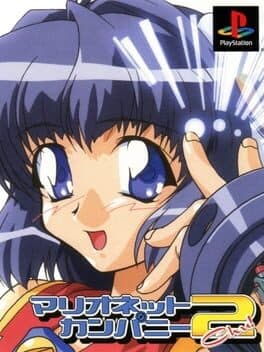
Marionette Company 2 Chu!
Micro Cabin2000
Marionette Company 2 is an adventure game for the Sega Dreamcast and sequel to Marionette Company.
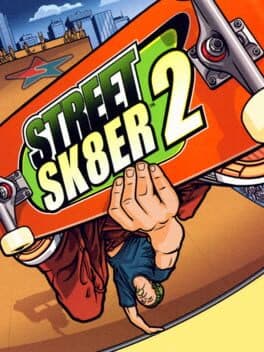
Street Sk8er 2
Atelier Double2000
This is a skateboarding game very similar in gameplay to Tony Hawk's Pro Skater. You pick a skater and go through different skate parks, selecting either pro or amateur settings. You can also create your own skate park. Multiplayer competition is also provded, including 4 player serial play. Street Sk8er 2's sound track contains music from many well known bands such as Deftones, Ministry, and Static X.
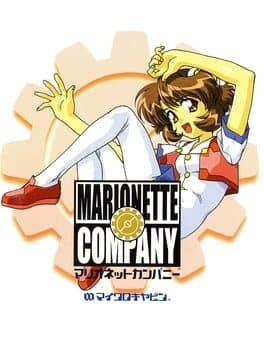
Marionette Company
Micro Cabin1999
A visual novel released in 1999.
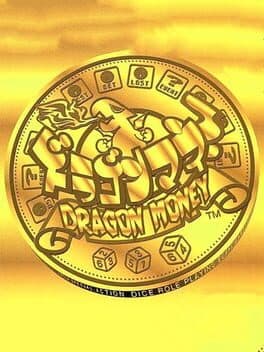
Dragon Money
E.O. Imagination1999
Dragon Money is a board game up to 4 players in which the player can choose 1 of 6 different characters and play the board.
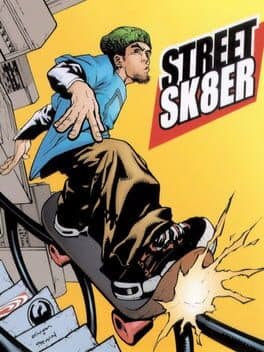
Street Sk8er
Atelier Double1998
Take to the streets on one of ten stylin' boards in the first skateboarding game for the PlayStation, courtesy of Electronic Arts and Micro Cabin. Two variations of play include the Street Tour Mode, where you skate through three 3D courses trying to pull off as many tricks as you can within a time limit, and Free Skate Mode, where you either play for points or practice your moves without worrying about the clock.
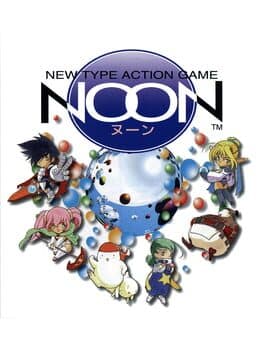
Noon
Micro Cabin1998
Noon is a Action-Puzzle game, published by Micro Cabin, which was released in Japan in 1998.
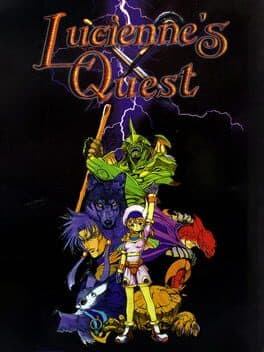
Lucienne's Quest
Micro Cabin1995
A legendary story from unknown worlds beyond our time. The adventures of little sorceress Lucienne is a tale in the making...your own making. Work with Lucienne and her friends to defeat Death Shadow. Their fate is in your hands...Let the adventure begin...
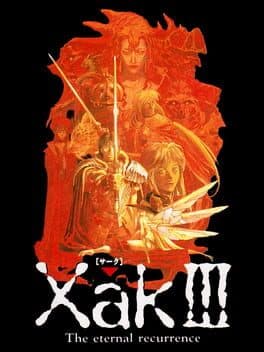
Xak III: The Eternal Recurrence
Micro Cabin1994
Ratok, a descendant of the Duel bloodline, receives a distress message from Farland Castle... For the longest time, the world has been split into three, fairy, demon, and human, mainly for the purposes of having the demons sealed off... Yet somehow, the demons have found a way to enter the human world to launch an invasion. One by one, the human world's kingdoms fall to an unforgiving reign of terror. Ratok is informed of the situation by a dying man's last breath after Farland Kingdom fell, its king slaughtered mercilessly. Thus begins Ratok's journey to prevent the demons from realizing their dreams of conquest... Journey with Ratok, as he quests with his legendary Xak Sword to repel the demon invasion, make plenty of interesting and humorous allies/friends along the way, and discover his true identity as well as that of his father's (whose gone missing for quite some time)...
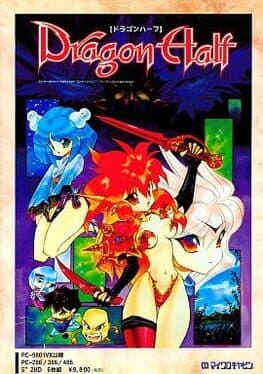
Dragon Half
Micro Cabin1993
Based on the crazy manga/anime, Dragon Half is a board game style of affair, similar to 21 Emon or some of the Peachboy titles. You progress around a board by rolling a dice, competing against other human or computer controlled players. Landing on different coloured squares has different effects. Some of these cause special events, others trigger animated battle sequences that require precisely timed button pushes for maximum impact.
Xak I + II
Micro Cabin1992
Xak I & II is a re-release of Xak and Xak II, a fantasy role-playing video game series Xak developed and published by the Japanese software developer MicroCabin and Telenet Japan's development team Riot. This set contains both the first two Xak series games back-to-back on one complete Super Cd-Rom^2 with enhanced graphics and sound. In a similar style to Ys Books I & II, also for the PC-Engine system, Xak II, the second game in the series picks up immediately as the first game concludes.
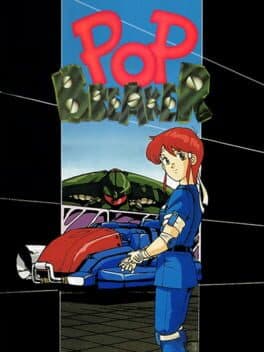
Pop Breaker
Micro Cabin1991
Pop Breaker is a puzzle shooter game for the Sega Game Gear. It was only released in Japan. Piloting a hovertank named Diana, Yuki Takeshita is a high school student who is taking the entry exam for FSWAT - a newly formed defense force. There are 50 levels that the player must complete, controlling Yuki's hovercraft from an overhead perspective and navigating through a board-like environment.
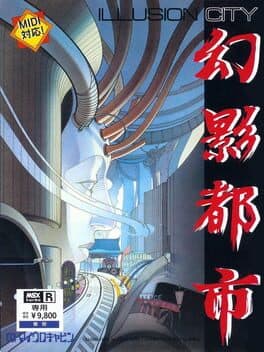
Illusion City
Micro Cabin1991
Illusion City is a Japanese-style role-playing game with several distinguishing characteristics. Unlike most games of the genre, it has no overworld, and takes place entirely in a vast city divided into several districts. The player advances the story by exploring the city, talking to non-playable characters, gathering information, receiving missions, and eventually heading into large, complex hostile areas. There are no random battles in the game; all enemies are visibly moving on the field, and many of them can be avoided. Combat is turn-based, utilizing an "over-the-shoulder" perspective similar to that of Phantasy Star II. Characters join the party as dictated by the plot; an active party includes three combatants. A wide variety of weapon and armor types can be purchased or found in dungeons. Each character has his or her own weapon proficiencies, which can be increased by repeatedly using the same weapon type. Firearms require specific ammunition (e.g. bullets, shotgun cartridges, etc.), which is expended in combat and must be re-stocked. In addition, certain characters can use offensive, supportive, and healing techniques. The game's visual style aims for realistic presentation of locations and characters, and shares more common traits with contemporary Western visual aesthetics than the traditional Japanese anime art.
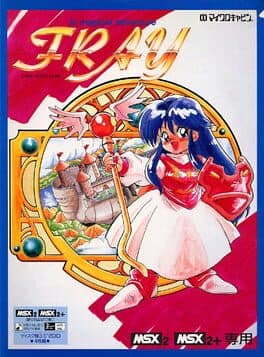
Fray in Magical Adventure
Micro Cabin1990
Fray in Magical Adventure, also known as just Fray (フレイ) and Fray-Xak Epilogue (Gai-den), is a 1990 spin-off "gaiden" (sidestory) game in a role-playing video game series Xak developed and published by the Japanese software developer MicroCabin. Even though it is directly connected to the more serious Xak storyline, Fray has a less serious tone and light-hearted comedic approach to telling the story. It was originally released for the MSX2 and was later ported to several different systems, among them MSX turbo R, PC-9801, PC Engine (as Fray CD), and Game Gear. Fray is a simple action RPG. The game proceeds by the player's character Fray fighting through a preset overhead view map shooting opposing monsters, jumping over obstacles, and locating powerups and Gold, the game's currency, along the way. At the end of each stage the player will fight a boss and enter a town or safe haven where the player can purchase new equipment, hit points and the option to save their progress. Fray advances in power through the items that she can equip such as different rods and shields. Battles are in real-time as Fray walks around on automatic vertically scrolling game map as well as the monster characters. She has an attack and defense rating, and can switch between different projectile weapon styles as well as use special attacks and healing items

Hatris
Alexey Pajitnov1990
Hatris is a puzzle video game developed by Alexey Pajitnov, creator of famous video game Tetris. In Hatris, the falling blocks of Tetris are replaced by falling hats which are top hats, cowboy hats, baseball caps, derbys, party hats and crowns. The setting is a hat factory, where hats are dropped down from a conveyor belt two at a time and must be stacked on one of six mannequin heads. Once five hats of the same kind have been stacked on top of each other, they fall down onto another conveyor belt below and are shipped out of the factory, rewarding the player with a cash bonus (the game keeps track of score as money, not simply points). Once you ship out enough hats out of the shop, you go up a level to the next shop. The higher shop number you get to, the more types of hats start appearing to make it more difficult for you to accomplish your task. The game ends when one of your stacks of hats reaches the top of the screen.
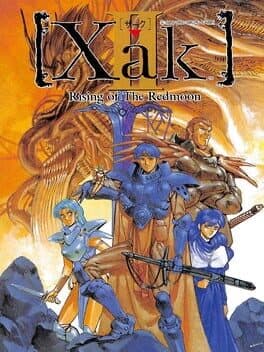
Xak II: Rising of the Redmoon
Micro Cabin1990
Xak II: Rising of the Redmoon is a Role-Playing game, developed and published by Micro Cabin, which was released in Japan in 1991.

Daisenryaku II: Campaign Version
SystemSoft1989
Daisenryaku II: Campaign Version is a turn-based war strategy game that relies on the gameplay template introduced in Daisenryaku II: up to four players engage in battles against each other or computer AI, represented by differently colored armies (blue, red, green, and yellow); the belligerents produce units and vehicles and navigate them on a hex-based grid, trying to occupy the enemy's major cities and harbors. The game includes a main campaign with introduction and background information about the fictional countries involved in the conflict. In addition, at least a dozen playable maps are included, some representing real geographical areas. The MSX and PC Engine (TurboGrafx) CD versions feature enhanced graphics, full-screen battle sequences with backgrounds, and many additional maps.
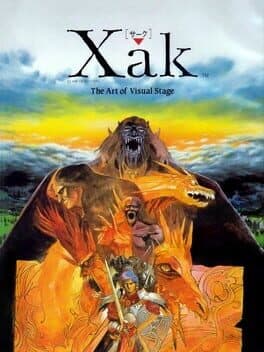
Xak: The Art of Visual Stage
Micro Cabin1989
Xak: The Art of Visual Stage is the first game in the fantasy role-playing video game series Xak. It was originally released for the NEC PC-8801 computer system, with subsequent versions being developed for the NEC PC-9801, Sharp X68000, MSX2, PC-Engine, Super Famicom, and mobile phones.
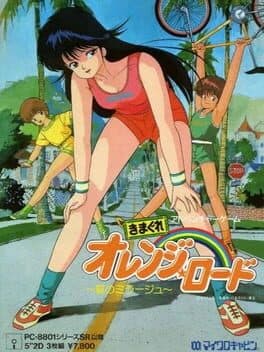
Kimagure Orange Road: Natsu no Mirage
Micro Cabin1988
Based on the manga and anime series Kimagure Orange Road.
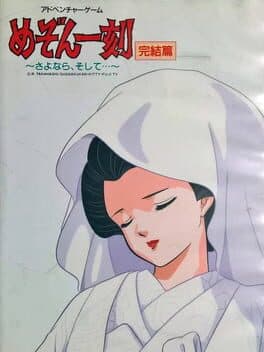
Maison Ikkoku Kanketsu Hen: Sayonara, Soshite...
Micro Cabin1988
The game is based on the manga Maison Ikkoku by Rumiko Takahashi. The game is a "puzzle-less" adventure, the gameplay mostly focusing on simply depleting all the verb commands at every given screen and moving between locations. The commands include the usual "Look", "Talk", and Move" typical for Japanese adventures (no "Think" command), but also context-sensitive commands "Eat", "Drink", etc., as well as the possibility to use certain inventory items.
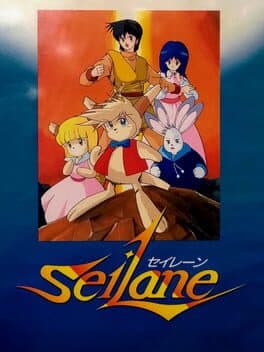
Seilane
Micro Cabin1987
Seilane can be considered a classic adventure game that follows a command selection system. Players choose commands such as "talk," "call," "listen," "examine," and "eat" depending on the scene, advancing the scenario accordingly. . Players take on the role of a field mouse named Prill and embark on an adventure to rescue the animals of a village turned to stone by the Demon King Pazul, as well as his kidnapped sister.
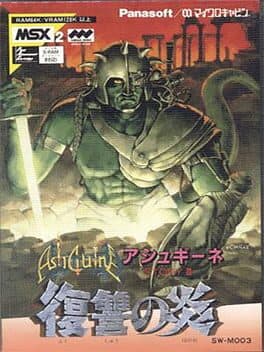
AshGuine Story III: Fukushuu no Honoo
Micro Cabin1987
Seven years ago, the father and mother of the Reptile-Human ASHGUINE were killed by the Ghouls. But now, changing his appearance with the help of an old machine, Ashguine is the only one to launch a counter-attack on the enemy armies. It's time for revenge.
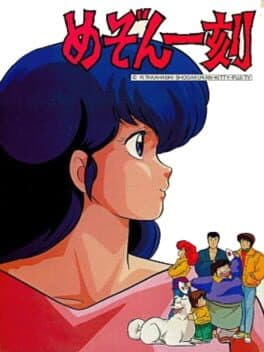
Maison Ikkoku: Omoide no Photograph
Micro Cabin1986
Maison Ikkoku: Omoide no Photograph is a Japanese menu-based graphical adventure game based on the anime and manga series. Players control Yusaku Godai and will need to help him find a secret photograph that's been hidden away by the manager. Godai will need to bribe the inhabitants, which constantly move around the house in order to get access to Kyoko's room. But even if Godai makes it into the manager's room and tries to look at the framed photo, something will always happen which will force Godai to leave the room. The game has the player move between locations in the boarding house and the town, constantly running out of money, and meeting all the cast from the original comic book, including Nikaido who did not appear in the anime.

Murder Club
Riverhillsoft1986
The mystery begins with a stream of blood runninng down Bil Robbins' back. Now its up to you, J.B., to track down the culprit whose hand twisted the knife. Enemies? The victim had so many, they must have been standing in line to bump him off. But the murderer will never get away because the amazing technology of the Nintendo Entertainment System will make all suspects answer to you as you grill them and dig up clues. Unravel a dark world of chilling secrets, hidden mysteries, sultry dames and deceit to crack the case. Yeah, J.B., everyone has something to hide. Don't let them hide it from you!

Harry Fox: Yuki no Maou-hen
Micro Cabin1985
Harry Fox: Yuki no Maou-hen (“Chapter of the Demonic Snow Lord”) is a direct sequel of Harry Fox. Winter has come and dumped a ton of snow on the land. Unfortunately the mama fox perished while out hunting, but her child was nursed back to health thanks to a local girl named Mari. Once the snow cleared, they sought her out again, before learning that she was actually kidnapped by an evil demon (!!), so it’s up to the little fox to save her.
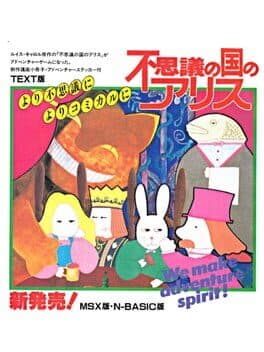
Fushigi no Kuni no Alice
Micro Cabin1984
Adventure game developed by Microcabin in 1984.
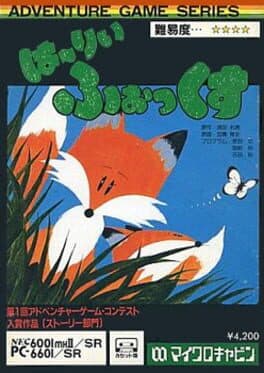
Harry Fox
Micro Cabin1984
One day, a fox kit living in the Romus Forest contracts the apparently uncurable "Romus disease", leaving his mother distraught. She remembers her grandmother's story of a cure hidden deep within the forest, a piece of fried tofu found at a shrine. Both mother and son now set off to find the legendary remedy, braving predators and other hazards to save the kit's life. Harry Fox won the Story Class prize in Micro Cabin's 1st Adventure Game Contest, and was marketed as a graphic text adventure for all audiences. It is separate from the later MSX remake, Harry Fox Special, forgoing RPG elements to focus on puzzles.
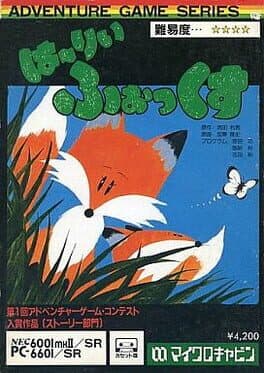
Hurry Fox
Arrow Soft1984
When a mother fox's kit becomes sick with a deadly disease, she sets out on a quest for the magic fried tofu that's said to be able to cure it. Hurry Fox is a traditional text adventure game, tasking players with meeting characters and solving problems on their way to saving the young kit. Unlike many other text adventure games, movement in this game is controlled via the arrow keys instead of typing in directions and the available exits are always printed onscreen.
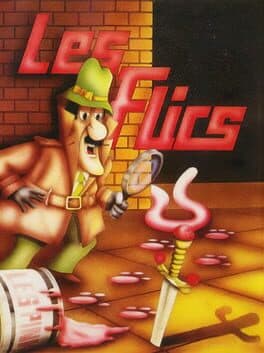
Les Flics
1984
In Les Flics, players steal the Purple Puma gem while pursued by Unspecteur Cleudeau and Gend'armerie Kaolin. Drive through a city with interconnected buildings, avoiding police cars. Inside, navigate platform stages with five levels, collect objects for the heist, and evade guards. Les Flics is inspired by the Pink Panther.
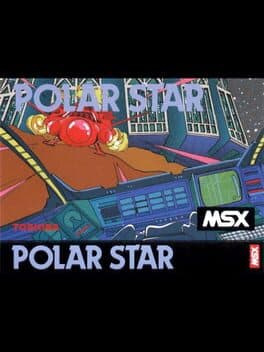
Polar Star
Hyo-Kin Soft1983
A sink of shear hatred, violence and deadly weapons is the blazing hell you find yourself in under the Polar Star. A frosty scenery, for action that couldn't be hotter!
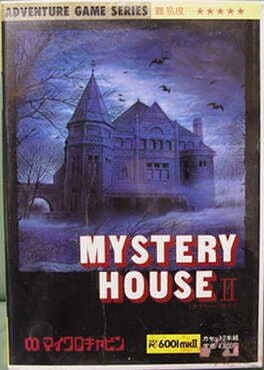
Mystery House II
Micro Cabin1982
Mystery House II is an adventure game in Japanese and the sequel to the 1982 title Mystery House, which is in turn inspired by the 1980 title Hi-Res Adventure #1: Mystery House. Just like in the first game the goal is to explore a mysterious house and discover the treasure hidden inside by gathering four notes that provide clues. Exploration is similar to the first game, using N/S/E/W to move through the environments shown using a first-person perspective and drawn with outlines. At the bottom commands are entered, such as TAKE, READ or SEARCH. Items can be picked up and used elsewhere to solve puzzles. Compared to the first game the environment is now much larger as the house consists of three floors and the environment can be explored as well.
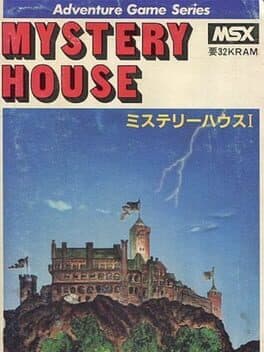
Mystery House
Micro Cabin1982
The first Japanese developed graphical adventure game created by Micro Cabin in 1982. Although it features the same name, it is otherwise unrelated to On-Line Systems' game. Mystery House, or Mystery House I (ミステリーハウスI) as it is written in Japanese on the box, is an adventure game developed by Micro Cabin in June 1982 for the Sharp MZ-80B followed by various ports for other computers. While Micro Cabin's Mystery House is clearly inspired by the seminal Mystery House created by On-Line Systems in 1980, sharing the same name and similar gameplay, it bares no connection to that title nor its official Japanese port created by StarCraft in 1983. A direct sequel to Micro Cabin's Mystery House was released later in the same year called Mystery House II.