-
Average rating
26
Games
0
Votes cast
Heartbeat
Shipped Titles
Games (26)
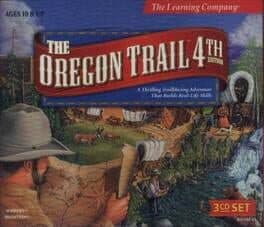
The Oregon Trail: 4th Edition
MECC1999
The Oregon Trail: 4th Edition is a resource management simulation where you lead a wagon party westward across America in 1848, starting from Independence, Missouri. Make tough decisions to manage supplies and overcome obstacles as you journey toward the frontier. Select two companions to travel with you—if both abandon the journey, the game ends. At towns and landmarks, explore locations using full-motion video or 3D graphics to interact with the environment and gather information for your expedition.
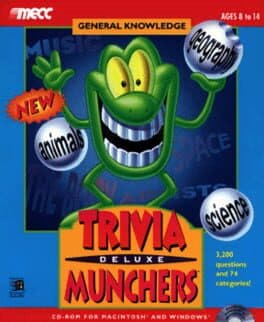
Trivia Munchers Deluxe
ImageBuilder Software Inc.1996
The protagonist of this game is the Muncher, thus named for his insatiable appetite for knowledge. Muncher is presented with a trivia category and a board with 20 possible answers. To win at the particular board, the player must steer Muncher to the correct answers and devour them.
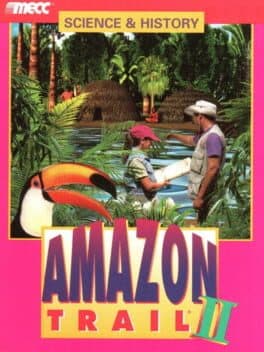
Amazon Trail II
MECC1996
Amazon Trail II is an educational game and the sequel to The Amazon Trail. In this game you have to canoe up the Amazon River. Before starting, it is obligatory to choose yourself a guide - each of the four available candidates has a special skill that may help you on your journey. In the course of the game, you need to manage the supplies; meet, talk, and trade with different people presented by live actors in FMV; read maps; and decide how much to eat, when to rest, and how fast to paddle. The game also contains a huge amount of information about the science and history of the Amazon rainforest. It is possible to explore the rainforest along the route spotting one of 100 different species and taking pictures or picking up fruits for the supply. There is a fishing mini-game as well, and six more learning games where kids learn the origins of commodities like coffee, rice, and chocolate, locate the major rivers of the world etc.
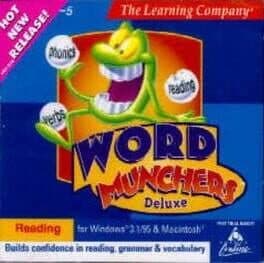
Word Munchers Deluxe
MECC1996
Educational game published by The Learning Company. You play as a green creature and avoided enemies known as "troggles" while eating (munching) words that fit an established grammatical criteria.
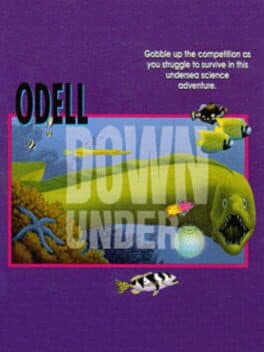
Odell Down Under
MECC1995
Edutainment game that transports players into a thriving coral reef ecosystem. Odell Down Under features several game modes which invite the player to learn about the myriad creatures of the coral reef.
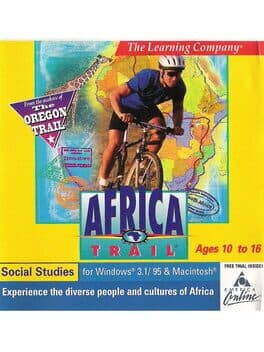
Africa Trail
MECC1995
Africa Trail is an educational computer game developed by MECC and published by The Learning Company. The gameplay resembles that of MECC's other "Trail" games, in which players must prepare for a long journey, choose their traveling companions, and make it safely to their destination. In Africa Trail, players must travel across Africa via bicycle. The game includes a Multimedia Resource Tool to allow players to make their own journal and presentation of the journey.
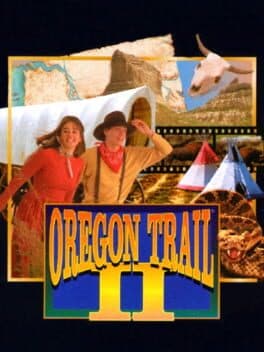
Oregon Trail II
MECC1995
Oregon Trail II is an educational video game and a revised version of the original 'The Oregon Trail'. It was redesigned with the help of American Studies PhD Wayne Studer. In contrast to the original version of the game, Oregon Trail II made an effort to include greater roles for women and racial minorities.
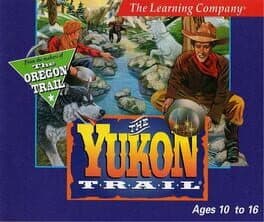
The Yukon Trail
MECC1994
Partner up and set sail, Dawson City awaits in the hunt for gold on The Yukon Trail.
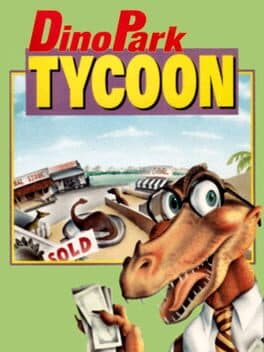
DinoPark Tycoon
Manley and Associates Inc1993
DynoPark tycoon is a Sim Park style game except it contains live dinosaurs. Through the advanced cloning technology, you are able to bring the real dinosaurs back to life, and what is more important, make a lots of money on tourism. The game is pretty similar to other Park management games with an impressive economy model, except it is a little more funny. You must buy an area of land in your park to house a dinosaur, you put fencing around it, so your dinosaur does not escape and then finally, you choose your own dinosaur to place in it. But be really sure not to place two enemies next to each other or even T-Rex next to something tasty, thing can turn up pretty nasty for you or your visitors.
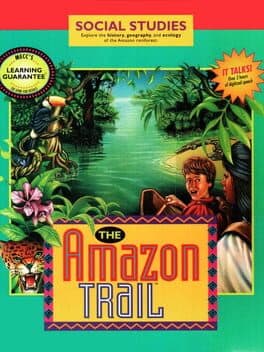
The Amazon Trail
MECC1993
Amazon trail is an educational adventure game. You venture back through time to meet the Inca king and deliver him the cinchona plant together with many valuable gifts. The knowledge of the rain forest is the key to successes. Your main goal is to survive the journey and, if possible, bring as many additional gifts to the Inca king.
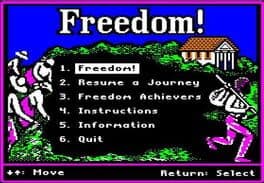
Freedom!
MECC1992
Taking the role of an enslaved African American (either male or female) in the southern United States during 1830, the player must try escaping a plantation and get to one of the free northern states.
The Geometric Golfer
1992
The Geometric Golfer is an educational game about geometry that is loosely based on the sport of golf.
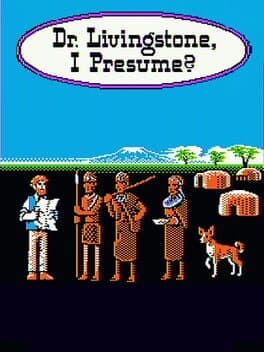
Dr. Livingstone, I Presume?
MECC1992
In this educational game from MECC the player travels through Africa in the place of an ill Henry Morton Stanley in search of Dr. Livingstone. The player runs into several native African tribes and learns of their cultures, their trade preferences, and how to manage a team of porters that aid in the search. There are also many geographical aspects to the game, such as learning about Africa's major rivers, lakes, swamps, mountain ranges, etc.
Grammar Monsters
1991
An educational game from MECC.
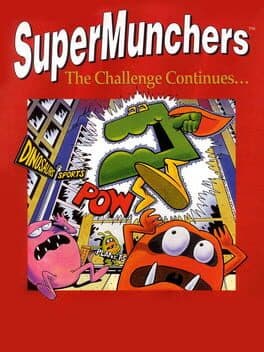
Super Munchers: The Challenge Continues...
MECC1991
Super Munchers is the follow-up to the original Number Munchers.
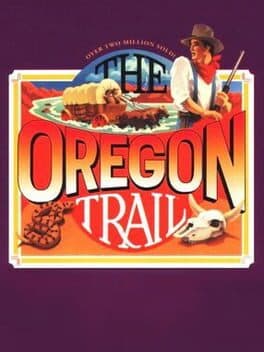
The Oregon Trail: Classic Edition
MECC1990
As a covered wagon party of pioneers, you head out west from Independence, Missouri to the Willamette River and valley in Oregon. You first must stock up on provisions, and then, while traveling, make decisions such as when to rest, how much food to eat, etc. The Oregon Trail incorporates simulation elements and planning ahead, along with discovery and adventure, as well as mini-game-like activities (hunting and floating down the Dalles River).
Murphy's Minerals
MECC1990
Murphy's Minerals is a menu-driven, logic based educational game designed to teach players where to find and how to identify different types of minerals.
Fossil Hunter
Bouchard Creations1990
Fossil Hunter is an educational game for the Apple II. The player takes on the role of a fossil hunter, and has the opportunity to dig in a variety of rock layers to identify the contained fossilized animals. The player can learn more about the animal groups with a small encyclopedia included with the game.
Storybook Weaver
MECC1990
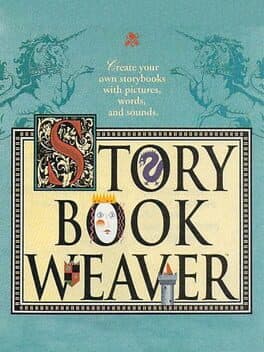
"Storybook Weaver" is a 1990 educational program for the Apple IIGS developed by Charolyn Kapplinger, Patricia Korn, John J. Krenz, Brian S. Nesse, Jean Sharp, and Steve Zehm, and distributed by MECC. The program allowed children to create their own stories using provided images, sound effects, and music. It was later released in 1992 for DOS with some graphical upgrades, and for Windows in 1995 as "Storybook Weaver: Classic Edition". It was followed by an enhanced version, called Storybook Weaver Deluxe, released in 1994.
Conquering Percents
1989
Conquering Percents is an educational game for the Apple II. Contains 3 mini-games to help students with learning percentages: - Everything's on Sale: Help the store owner put items on sale. The player must calculate percent off, original prices, and sale price. - Percent Chompers: The player controls a set of teeth which must chomp the correct percent or fraction on a 4 x 4 grid. - Percent Factory: Try to guess what percentage of a shape is painted, or try to correctly paint the amount of a shape specified.
Time Navigator
1989
Time Navigator is an educational American history game. You have been selected to be part of an elite group to try out a new time-traveling vehicle. As your test, you will be sent back into the past. Your task is to navigate forwards by selecting the most recent event or item from groups of three.
Mystery Objects
1988
Mystery Objects is a logic game for the Apple II. The player is presented with 6 objects, and must determine which object is hiding within the mystery box. To do this, the player can use tools to measure the color, weight, size, texture, smell, and shape of the object. The player must try to guess the object with the fewest tools as possible. There are 3 levels of difficulty.
Fraction Munchers
MECC1987
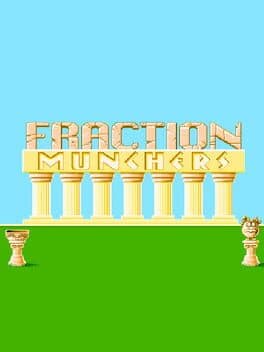
Fraction Munchers is the second math based game in the Munchers series of educational games. Aside from the subject matter, the basic concept is the same as other games in the series. It is played on a grid where the player controls a creature called the Fraction Muncher who has to eat the numbers or fractional expressions that correspond to the statement that is written above the grid. Other creatures known as troggles roam the grid and try to get to the muncher. There are five different ones and they all have their own behaviour and movement patterns. Eating wrong answers or getting caught by a troggle leads to a life being lost. There are four different game modes which decide what kind of statements should appear: fraction types, equivalents, comparing and expression. Additionally there is a combined mode that mixes all.
Number Munchers
MECC1986
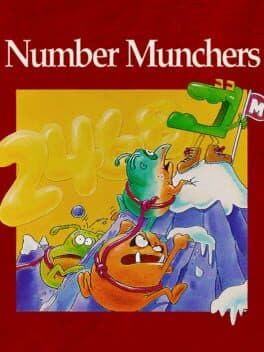
Learn basic math skills with Number Munchers. Keep your Muncher away from the Troggles by munching on multiples, factors, prime numbers, equalities, and inequalities. If you can stay away from the Troggles and earn enough points, you'll be part of the Muncher Hall of Fame.
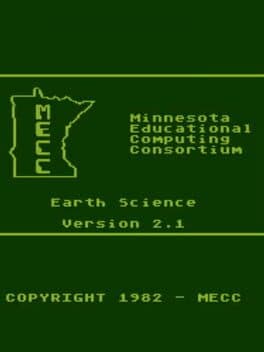
Earth Science
MECC1982
It's an educational game about earthquakes, minerals, URSA Constellation and solar distance.
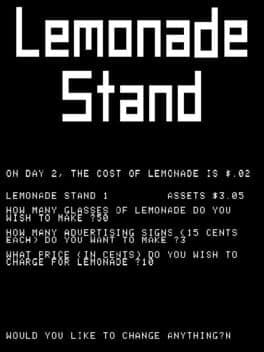
Lemonade Stand
MECC1973
Lemonade Stand is a business simulation game created in 1973 by Bob Jamison of the Minnesota Educational Computing Consortium. Charlie Kellner ported the game to the Apple II platform in February 1979. Throughout the 1980s Apple Computer included Lemonade Stand (along with other software) with the purchase of their systems. The game simulates a child's lemonade stand, where choices made by the player regarding prices, advertising, etc. will determine the success or failure of the enterprise. The game owed its success to offering just enough variables to make a complex challenge for users, but still providing a simply-grasped addictive introduction to the offsetting priorities facing a business. The choice of the right prices and quantities on the day of a heat-wave could instill the satisfaction unique to a greatly profitable private enterprise. The player is first given a weather report for the day (sunny, cloudy or hot and dry, each accompanied by a color drawing) and is prompted for three values: the number of glasses of lemonade to make, the number of advertising signs, and the cost of lemonade per glass. The program then gives a report of the earnings for that day. A thunderstorm, sometimes occurring on cloudy days and accompanied by a color animation, will void any profits and cause the player to lose any investment for the day. The game can be played either single-player or with up to 30 players (each player is independent and the sales of one do not affect another). The Apple II version included music, with bars from "Morning Mood," "Singin' in the Rain," "Raindrops Keep Fallin' on My Head," and "Summertime" played at appropriate moments.