-
Average rating
125
Games
0
Votes cast
Heartbeat
Shipped Titles
Games (125)
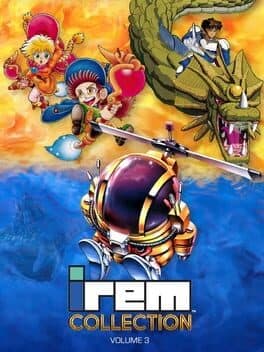
Irem Collection: Volume 3
Irem2025
Release Date: 2025 * Limited to a maximum of 4,000 copies worldwide * Manual included * Mr. Heli/Battle Chopper (Arcade, PC Engine). Guide a cute heli through winding levels and buy upgrades in a shop along the way. Mr. Heli features fresh gameplay and beautiful graphics. * Mystic Riders (Arcade). A quirky horizontal Shooter in a bright fantasy setting with wizards as protagonists. * Dragon Breed (Arcade). Featuring impressive graphics and gameplay reminiscent of R-Type, ride your invincible dragon through a dark fantasy world.
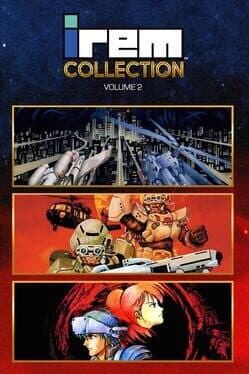
Irem Collection: Volume 2
Irem2024
A retro port collection of classic Irem titles. Air Duel GunForce GunForce 2 Published by ININ
Hammerin' Harry: Concrete Collection
Irem2024
The Hammerin’ Harry Concrete Collection brings the first two titles together which stars one of Irem’s most recognizable characters - Harry! Our heroic carpenter stars in Hammerin’ Harry and Hammerin’ Harry 2: Dan the Red Strikes Back
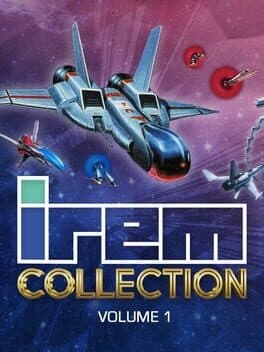
Irem Collection: Volume 1
Irem2023
Irem Collection Volume 1 is a collection of classic legendary arcade shoot 'em up games including Image Fight, Image Fight 2, and X-Multiply brought to modern platforms.
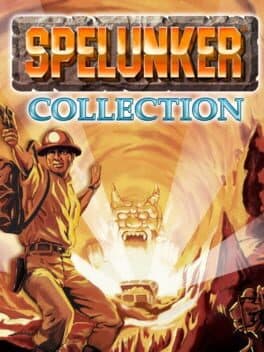
Spelunker: Collection
MicroGraphicImage2013
Japan PSN
Irem Arcade Hits
Irem2011
18 classic Irem arcade games for PC and Mac.
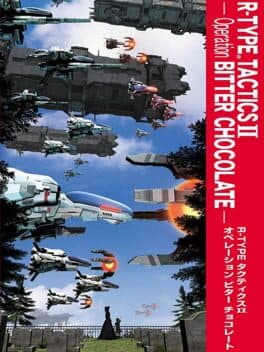
R-Type Tactics II: Operation Bitter Chocolate
Irem2009
R-Type Tactics II is a turn-based strategy game/tactical role-playing game released in 2009 in Japan for the PlayStation Portable game console. It is the sequel to 2007's R-Type Tactics, known as R-Type Command in North America. The main part of the game consists of three campaigns, set nine years after the events of Tactics, in which the player controls two human factions, then the Bydo Empire.

Zettai Zetsumei Toshi 3: Kowareyuku Machi to Kanojo no Uta
Irem2009
Zettai Zetsumei Toshi 3: Kowareyuku Machi to Kanojo no Uta is the third game in the Zettai Zetsumei Toshi series. Players can choose to play as a boy (Naoki Kosaka) or a girl (Rina Makimura), both of whom start the game trapped in a bus an underground tunnel after a large earthquake. The two player characters have slightly different attributes, which affect gameplay: Naoki is physically strong and self-confident, but becomes stressed more easily, while Rina is physically weak but has a calmer personality, which causes her stress levels to rise more slowly. The thirst and body temperature meter has been replaced by a stress meter. The meter rises after engaging in angry conversations and witnessing/experiencing various traumatic incidents. The player can choose from several responses during conversations, allowing them to choose how to behave towards fellow survivors. These responses allow the player to control the character's personality, and also have occasional effects on the character, such as lowering or raising their stress levels. High stress will affect the character's movements, causing them to have trouble walking. 2-4 players can play cooperatively via ad hoc connection, unlike the first two games, which were only single player.
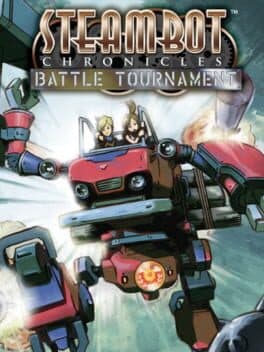
Steambot Chronicles: Battle Tournament
Irem Software Engineering Co.2008
A young Trot driver comes to Orion City with one dream in mind: to win the prestigious Orion City Trotmobile gladiator tournament. However, you'll quickly learn that it takes more than pluck and optimism to earn victory in the coliseum. With the help of a spirited mechanic named Venus, you'll have to take on a series of jobs to earn the money and fame required to make a name for yourself about town as a skilled Trotmobile operator. When a series of bandit attacks begins to affect the city's economy and distress the citizens, who will have the mettle and the metal to put a stop to it?
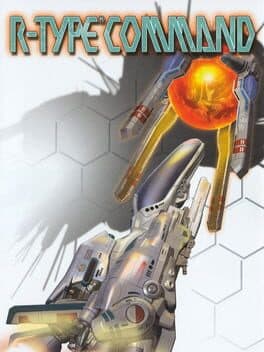
R-Type Command
Irem2007
R-Type is reborn! As the war between humans and Bydo rages, the fate of two races will depend upon you. R-Type returns with bold, turn-based strategy gameplay! Build and command a fleet of warships and test your tactical skills against the most dangerous powers in the universe.
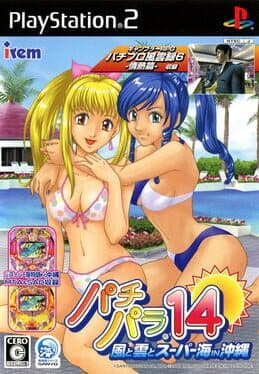
PachiPara 14: Kaze to Kumo to Super Umi in Okinawa
Irem2007
PachiPara 14: Kaze to Kumo to Super Umi in Okinawa is a pachinko simulator developed and published by Irem solely for Japan on the PS2. The final game in the series released for that platform, PachiPara 14 once again simulates a handful of Sanyo's Umi Monogatari line of pachislot machines, specifically the CR Super Umi Monogatari in Okinawa MTA and SAD models. It is also the last game to feature the long-running PachiPro Fūunroku subseries as an open world RPG; while the name went on to reappear in the series 3DS' installments starting with the first release of PachiPara 3D: Taikai Monogatari 2, it transitioned into a predominantly visual novel genre in the wake of series producer and longtime Irem developer Kazuma Kujo leaving the company in March 2011 to form Granzella.
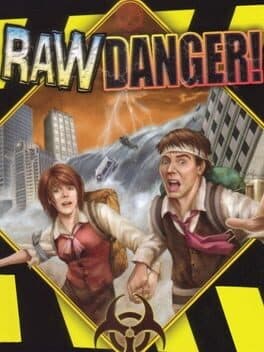
Raw Danger!
Irem2006
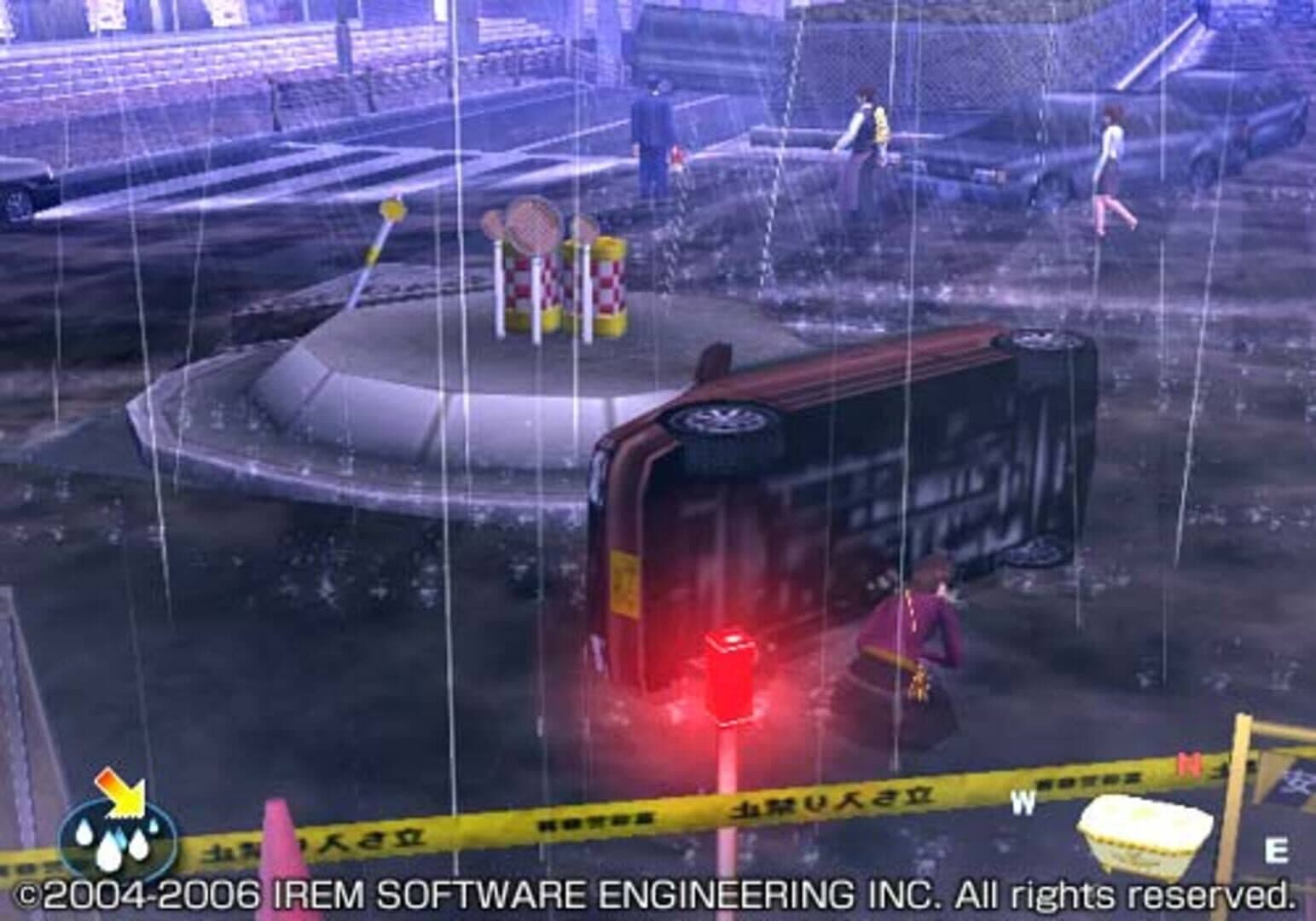
Zettai Zetsumei Toshi 2: Itetsuita Kiokutachi is an action adventure survival game and is the sequel to Zettai Zetsumei Toshi. The game follows six characters as they try to escape a city that is being flooded by torrential rains. Players must think on their feet and utilize creative survival skills to have any hope of seeing their family again. Body temperature and health decrease when players are wet or in cold weather too long. They must find places to warm themselves and gather food, and find dry clothes or make them. In the end, players must run, climb, jump, and crawl their way out of this devastated city, while constantly trying to piece together information from emergency broadcasts and other victims of the disaster. The choices that the players make within the game affects the main storyline and dialog, and ultimately the ending of the game.

PachiPara12: Daikai to Natsu no Omoide
Irem2005
The 12th installment of the pachinko simulator series by Sanyo Bussan, a pachinko manufacturer in partnership with Irem Software Engineering. The series features pachinko machines produced by Sanyo Bussan and is known by the abbreviated title "Pachipara," starting from this installment, transitioning from its previous title, "Sanyo Pachinko Paradise." The featured pachinko machine in this installment is "Daikai Monogatari" (The Tale of the Great Sea). Additionally, the familiar story mode, "Pachipro Fūunroku" (Pachinko Professional Chronicles), is included as the fourth installment titled "Pachipro Fūunroku 4: The Silver Ball Murder Case." The Pachipro Fūunroku series has been included since "Pachipara 8" and is characterized by elements of gal games and oddly serious storytelling (with some absurd game elements) despite being a pachinko game. While the previous three installments had a top-down view, this installment showcases an expanded potential for the game as it adopts the same game engine as "Ponkotsu Roman Daikatsugeki Bumpy Trot," a game developed and released by the same company.
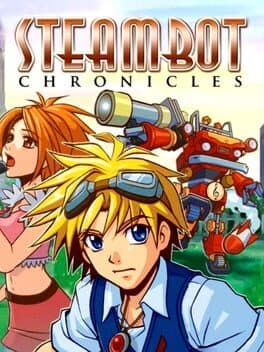
Steambot Chronicles
Irem2005
Steambot Chronicles is a 2005 action-adventure role-playing game developed and published by Irem Software Engineering in Japan for the PlayStation 2. It was later published by Atlus in North America and 505 Games in PAL regions. The game features a sandbox-style of steam-powered, mech-based gameplay.
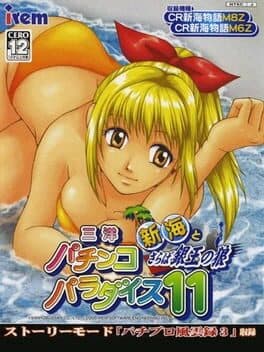
Sanyou Pachinko Paradise 11: Shin Umi to Saraba Gintama no Ookami
Sanyo2005
Pachinko Paradise 11 is one of the many titles in Irem's long-running pachinko simulation series. It features faithful 3D recreations of two pachinko machines made by Sanyo Bussan: CR Shin Umi Monogatari M8Z and CR Shin Umi Monogatari M6Z. There are two modes available: Tsūjō (Normal) mode allows the player to modify a wide range of settings for each machine, while Jissen (Battle) mode challenges the player to win as many balls as possible on the default settings with a limited starting pool and time limit. There is also a View mode where the various animations that play on the in-game display can be freely viewed. Pachi-Pro Fūunroku returns again with Pachi-Pro Fūunroku 3: Saraba Gindama no Ōkami, concluding the storyline introduced in the first title. The game returns to the adventure style of the first two titles, but adds a much greater degree of freedom to affect the outcome of the story. There are a large number of locations to visit apart from the pachinko parlors, and there are several very different endings that can be reached depending on the player's choice. The relationship system has also returned with several new girls to pursue, for a total of eleven.
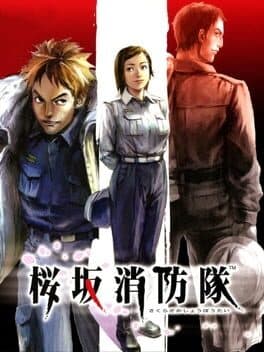
Sakurazaka Shouboutai
2004
A squad-based firefighting game. Play as a firefighter who, besides directly battling blazes on foot, can command fellow firefighters and support vehicles. Coordinate the entire team's efforts in order to rescue the survivors before it's too late.
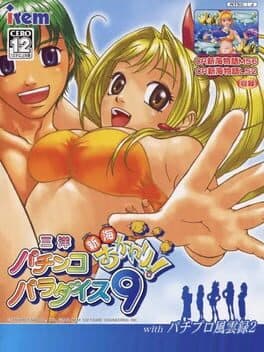
Sanyou Pachinko Paradise 9: Shin Umi Okawari!
Sanyo2003
Pachinko Paradise 9 is one of the many titles in Irem's long-running pachinko simulation series. It features faithful 3D recreations of two pachinko machines made by Sanyo Bussan: CR Shin Umi Monogatari M56 and CR Shin Umi Monogatari L52. There are two modes available: Tsūjō (Normal) mode allows the player to modify a wide range of settings for each machine, while Jissen (Battle) mode challenges the player to win as many balls as possible on the default settings with a limited starting pool and time limit. There is also a View mode where the various animations that play on the in-game display can be freely viewed. The popular Pachi-Pro Fūunroku story mode returns with Pachi-Pro Fūunroku 2: Senjukannon no Nazo, a direct sequel to the first installment which picks up the story right where it left off before. The protagonist has just arrived at Shinkai Town, following a lead to find his father's killer. The game proceeds much the same as before, with the player moving between different locations speaking to other characters and playing pachinko. In addition to the three pachinko halls and the player's apartment, there are also now a restaurant and a shrine, where different story events may occur. It is also now possible to learn and use special moves for use in the pachinko battles. As before, it is possible to pursue a relationship with one of five different girls, with the game's ending changing accordingly.
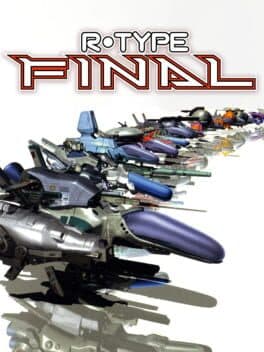
R-Type Final
Irem2003
Like other games in the R-Type Series, the game is a scrolling shooter where you need to guide a spaceship through various stages and destroy the many enemies (including very large end of level bosses). The game features a large variety of spaceships (over 100!) to choose from, each with varying capabilities. Regardless of which ship you choose, you begin the game with limited firepower; you can fire a basic weapon, or hold down a button to charge up and fire a more powerful burst. Occasionally power ups will appear on the screen; collect these to equip your ship with additional weapons, including a variety of lasers, missiles, and other useful items. In addition to the normal game, an AI VS mode is also included. In this mode, you can set up one of your available fighters to be controlled by the computer and then fight it to see who wins in various battles.
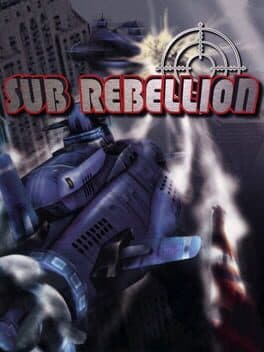
Sub Rebellion
Racjin2002
An action game with arcade-style submarine combat and exploration. Collect and choose from a selection of weaponry before setting out to destroy the enemy. This is the spiritual sequel to Irem's submarine shooter classic, In the Hunt (Kaitei Daisensou).
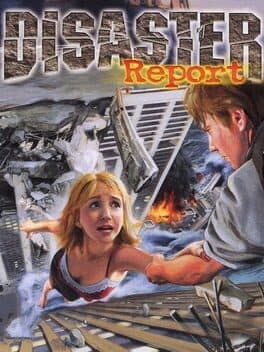
Disaster Report
Irem2002
Zettai Zetsumei Toshi is a survival action-adventure video game created by Irem. It is the first game in the Zettai Zetsumei Toshi series. The game deals with the characters' survival and escape from the slow collapse of an artificial island. While dodging falling buildings and debris from periodic earthquakes, the player must find a way off the island. In addition, the main character, a reporter, must investigate the reasons for the disaster.
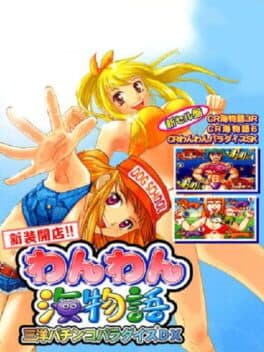
Shinsou Kaiten!! Wan-wan Umi Monogatari: Sanyo Pachinko Paradise DX
Irem2001
Pachinko Paradise DX is the final PS1 release in Irem's long-running pachinko simulation series. It features reproductions of three pachinko machines made by Sanyo Bussan, all of which are returning from previous releases: CR Umi Monogatari 3R and CR Umi Monogatari 6 from Pachinko Paradise 2, and CR Wan Wan Paradise SK from Pachinko Paradise 3. Each machine features new background graphics not found in the original versions. There are two modes available: Tsūjō (Normal) mode allows the player to modify a wide range of settings for each machine, while Jissen (Battle) mode challenges the player to win as many balls as possible on the default settings with a limited starting pool and time limit. There is also a View mode where the various animations that play on the in-game display can be freely viewed. There is no story mode.
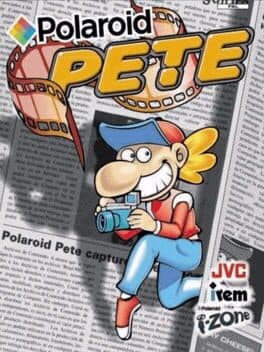
Polaroid Pete
Irem2001
The sequel to the cult classic PC Engine action game about photography!
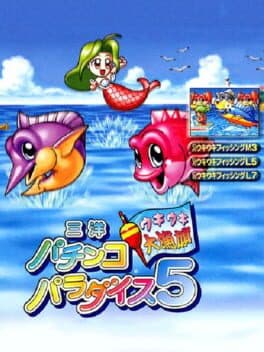
Sanyou Pachinko Paradise 5: Ukiuki Tairyouki
Irem2001
Pachinko Paradise 5 is one of the many titles in Irem's long-running pachinko simulation series. It features reproductions of three pachinko machines made by Sanyo Bussan: CR Ukiuki Fishing M3, CR Ukiuki Fishing L5, CR Ukiuki Fishing L7. There are two modes available: Tsūjō (Normal) mode allows the player to modify a wide range of settings for each machine, while Jissen (Battle) mode challenges the player to win as many balls as possible on the default settings with a limited starting pool and time limit. There is also a View mode where the various animations that play on the in-game display can be freely viewed. There is no story mode.
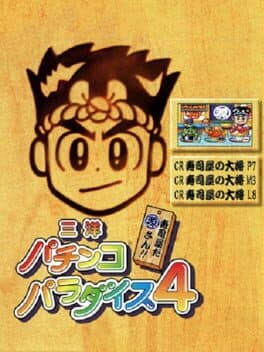
Sanyo Pachinko Paradise 4
Irem2000
Sanyo Pachinko Paradise 4 - Sushiya da Gen-san!! is the fourth game in the longest pachinko gambling series (they continue the series in the Playstation 2 console) made by Irem. It features reproductions of three pachinko machines made by Sanyo Bussan based on the Gen-San character: CR . There are two modes available: Tsujo (Normal) mode allows the player to modify a wide range of settings for each machine, while Jissen (Battle) mode challenges the player to win as many balls as possible on the default settings with a limited starting pool and time limit. There is also a View mode where the various animations that play on the in-game display can be freely viewed. There is also a story mode in which Harry can go around the town.
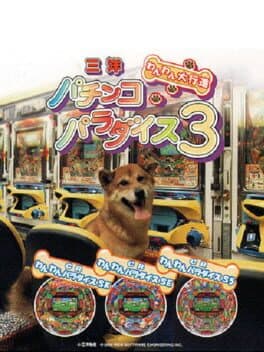
Sanyo Pachinko Paradise 3
Irem2000
Pachinko Paradise 3 is the third title in Irem's long-running pachinko simulation series. It features reproductions of three pachinko machines made by Sanyo Bussan: CR Wan Wan Paradise SK, CR Wan Wan Paradise SE, and CR Wan Wan Paradise S5. There are two modes available: Tsūjō (Normal) mode allows the player to modify a wide range of settings for each machine, while Jissen (Battle) mode challenges the player to win as many balls as possible on the default settings with a limited starting pool and time limit. There is also a View mode where the various animations that play on the in-game display can be freely viewed. There is no story mode.
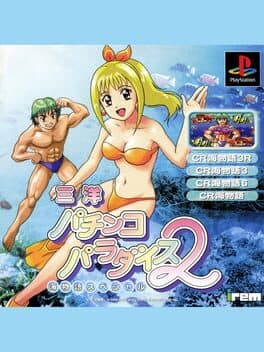
Sanyo Pachinko Paradise 2: Umi Monogatari Special
Irem1999
Pachinko Paradise 2 is the second title in Irem's long-running pachinko simulation series. It features reproductions of four pachinko machines made by Sanyo Bussan: CR Umi Monogatari 3R, CR Umi Monogatari 3, CR Umi Monogatari 6, and CR Umi Monogatari. There are two modes available: Tsūjō (Normal) mode allows the player to modify a wide range of settings for each machine, while Jissen (Battle) mode challenges the player to win as many balls as possible on the default settings with a limited starting pool and time limit. There is also a View mode where the various animations that play on the in-game display can be freely viewed. Unlike the previous title, there is no story mode.
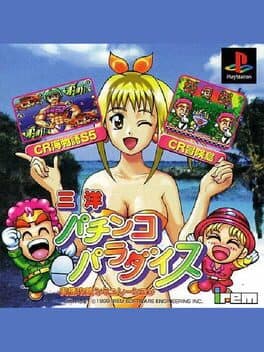
Sanyo Pachinko Paradise
Irem1999
The first installment of the pachinko series lovingly referred to as "PachiPara", Sanyo Pachinko Paradise is the first game in the longest pachinko gambling series made by Irem, the game features a library, 2 pachinko machines and also a story mode in which the player is a young pachinko gambler that wants to become millionaire playing pachinko machines and impress beautiful girls with his pachinko skills.
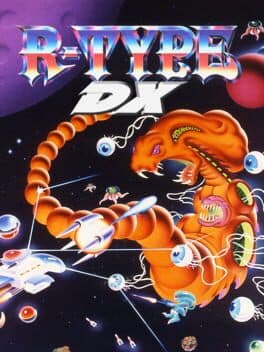
R-Type DX
Bits Studios1999
It's five games in one! R-Type I and II for Game Boy pocket, R-Type I and II color-enhanced for Game Boy Color, and the all-new R-Type DX for the Game Boy Color. Tear through Bydo defenses as you blast enemies with your Fire Chain, Super Laser and Bubble Beam. Take the fight to a fevered pitch with two pulse-pounding rapid-fire modes on your Game Boy Color system.
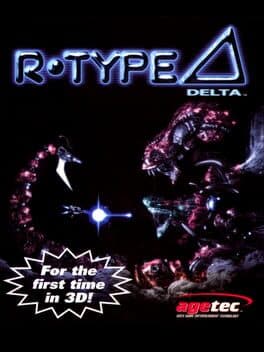
R-Type Delta
Irem1998
R-Type Delta is a horizontally scrolling shooter video game released only on the PlayStation. It is the fourth game in the R-Type series (hence Delta, the fourth letter of the Greek alphabet) and also the first game in the R-Type series rendered in full 3D graphics.
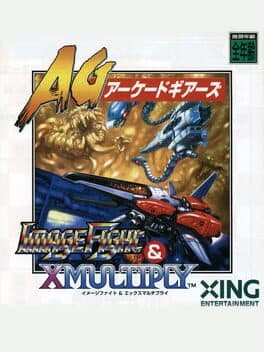
Arcade Gears: Image Fight & X Multiply
Irem1998
XMultiply is a side-scrolling shooter published by Irem, and similar in style to their earlier R-Type. In 1998, the game was released with Image Fight as a one-disc doublebill on PlayStation and Sega Saturn. The game centers around an unusual alien invasion against a colony planet in the year 2249—the aliens themselves are microscopic creatures that invade, infect, and kill the colonists. Scientists have deployed the microscopic fighter X-002 into the body of the hapless woman whose body has been invaded by the alien queen. Image Fight is a 1988 vertically scrolling shoot 'em up arcade game developed and published by Irem. The arcade game was also ported for the Nintendo Entertainment System, PC Engine (Japan-only), Sharp X68000 (Japan-only), and FM Towns (Japan-only) in 1990. The player flies a futuristic red ship. R-Type Final identifies this ship as the OF-1 Daedalus, but it is not known if that was the ship's original name. However, the term OF-1 does appear in the NES version's instruction manual, as well as in the official artwork for the sequel, Image Fight II. The game appears to be set inside a holographic simulator, like the holodeck on Star Trek: The Next Generation. In the NES version of the game, the first 5 missions are called "Combat Simulation Stages" and the last 3 missions are called "Real Combat Stages". Two separate titles on one very collectable compilation for the shooter fan. X Multiply is similar to Gradius with claustrophobic confines and organic add ons to the ship giving it floaty, stamen like guards. Image Fight is more a chunky R Type tribute with nice multi directional shots and an old school feel. The rarest of the Arcade Gears series.
R-Types
Irem1998
R-Types is a compilation of R-Type and R-Type II ported pixel-for-pixel from the coin-op to the PlayStation. A couple of handy features have been added to lower the original difficulty level. First, your progress through the game is saved at the start of each level, so you don't have to start from scratch every time. Second, you now have unlimited continues. R-Types also contains a small library section which describes some of the story behind the R-Type universe, and lets you browse some of the in-game graphics. Other bonuses include an FMV intro movie and ending movies.
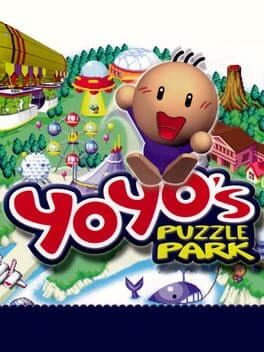
Yoyo's Puzzle Park
Irem1996
YoYo's Puzzle Park (released as "Gussun Paradise" in Japan) is a puzzle platform game featuring some sixty platform-filled levels similar to Bubble Bobble. The player (as Guss or Yodie) can hop around on them, while avoiding the enemies that crowd the platforms. ... In the multi-player mode, you can fight against your friends in a two-player deathmatch game.
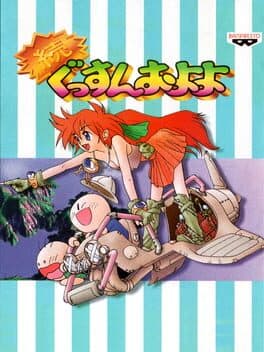
Zoku Gussun Oyoyo
NOW Production1996
Zoku Gussun Oyoyo is an action puzzle game and a sequel to Risky Challenge. The game plays essentially the same as its predecessor — position falling blocks in a well, Tetris-style, to guide the characters to the exit of each stage — but includes 100 all-new puzzles and several new game modes. Normal and Versus modes are the single-player story and two-player versus modes returning from the previous game; Tsume mode is a dedicated puzzle mode; Climbing mode is an endless climb mode where the goal is to climb upward as far as possible; and Ranking Certification mode is a trial mode where the player must complete a selection of stages to earn higher rankings. The PlayStation and Saturn versions feature slightly different puzzle layouts but are otherwise identical.
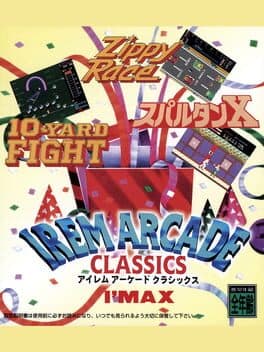
Irem Arcade Classics
Irem1996
Irem Arcade Classics is a compilation of three arcade games by Irem, released exclusively in Japan for the Sega Saturn and Sony PlayStation. The game consist of 10-Yard Fight, Spartan-X (Kung-Fu Master) and Zippy Race (Motorace USA)
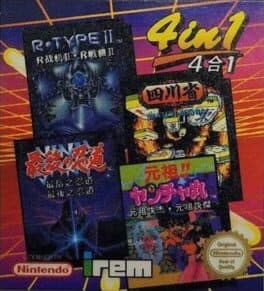
4 in 1: Irem
Irem Corporation1995
Four Irem games on a single cartridge.
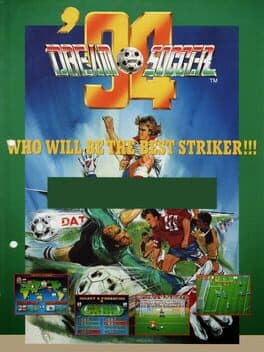
Dream Soccer '94
Irem1994
A soccer game from Irem, Japan. (Data East Corporation license for the rest of the world) Fast arcade football game released during the 1994 World Cup fever, with exaggerated physics, special shots and simplified controls for immediate handling.
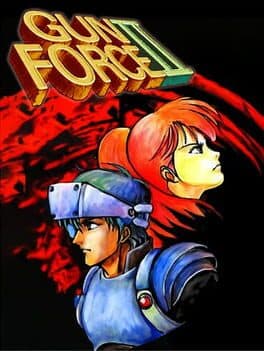
Gun Force II
Irem1994
Gun Force II is a run and gun arcade video game developed and originally published by Irem on September 1994. It is the sequel to the original GunForce and one of the last arcade games released by the company.
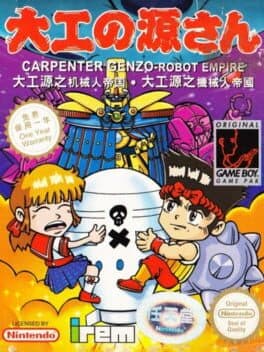
Carpenter Genzo: Robot Empire
1994
The second Hammerin' Harry platformer for Game Boy sees Harry blast off into space and fight robots.
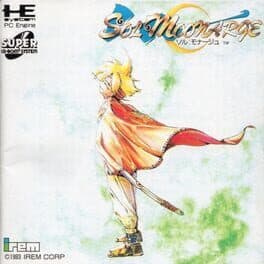
Sol Moonarge
Irem1994
As earthquakes occurred in the kingdom of Itchy, and demons began roaming freely through the wilderness, the king realized that an ancient prophecy is about to be fulfilled, and the entire world is in danger. The valiant swordsman Soleil lives in the capital city, and the king entrusts him with the task of protecting the two Moon goddesses, and retrieving the Sun Sword, which are necessarily to prevent a magician known as Silver to use the Gears of Fate for his evil purposes... Sol Moonarge is a traditional Japanese-style RPG. As in most games of this genre, the player navigates the main hero and his companions on the top-down "world map", entering towns to buy weapons, armor, and items, as well as hostile locations which are necessary to complete to advance the plot in a linear fashion. Enemy encounters are random; combat is turn-based and viewed from first-person perspective. As in most Japanese RPGs, the characters level up automatically, after having accumulated a set amount of experience points; specific weapon and magic proficiencies, however, grow depending on the amount of times player-controlled characters use that particular type of weapon or spell. There is a day-night cycle (on the world map only), which influences people's schedules: at night the shops are closed, but certain characters might appear only during that time.
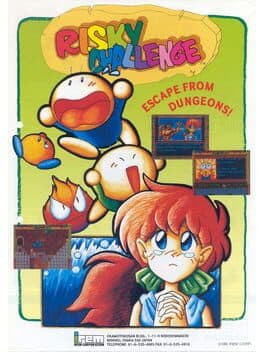
Risky Challenge
Irem1993
Risky Challenge is a story-based puzzle game running on Irem's M-90 arcade system. Vic and Vinnie are professional treasure hunters, who, one day went down deep into the dungeon in search of treasure belonging to an ancient kingdom. While they were exploring, an earthquake causes the dungeon to collapse, trapping them inside. Now they must reach the top by making use of falling blocks. Like Tetris, these blocks can be rotated left or right and dropped down, and a life is lost when a stack of blocks reach beyond the top of each screen. Using these blocks, guide the protagonists through each stage, being careful not to trap them. Occasionally, a bomb will fall, and this can be used to destroy unwanted blocks or any monsters on screen. The two protagonists will always be on the move, so watch where they are going. Spend too much time in each of the stages, and water will rise up from the bottom of the screen. Lives are also lost when Vic or Vinnie get crushed by a falling block, they come into contact with a monster, fall to their deaths, or get drowned by the rising water
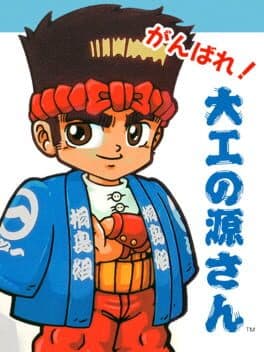
Ganbare! Daiku no Gensan
Irem1993
Hammerin' Harry and his friends have brought themselves a new house. They stand outside its front gate, watching it shine. They also watch a bomb fly past the house and destroy it. His friends are left devastated, and Harry seeks revenge on those responsible for the bombing. In Ganbare Daiku no Gensan, you must go through five stages (with two areas each), destroying workers that get in your way using your mallet. You can use it to perform two special attacks. One that sends fireballs going in all directions, and a more powerful one that sends shockwaves, destroying everything on screen. At the end of each area, a boss needs to be defeated in order to proceed to the next one.
Undercover Cops Gaiden: Hakaishin Garumaa
Japan System House1993
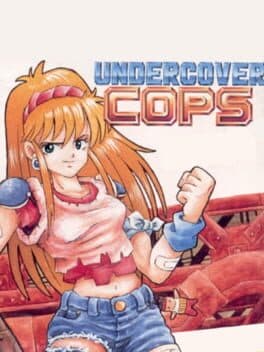
Undercover Cops: Hakaishin Garumaa), sometimes referred to with or without subtitle as Undercover Cops Gaiden, is a 1993 turn-based traditional game developed and published by Irem exclusively in Japan for the Nintendo Game Boy on December 10, 1993. It is a spin-off of Irem's 1992 beat 'em up arcade game simply titled Undercover Cops. It is also the second-to-last game Irem released for the Game Boy, with Daiku no Gen-san - Robot Teikoku no Yabō being the last.
Superior Soldiers
Irem1993
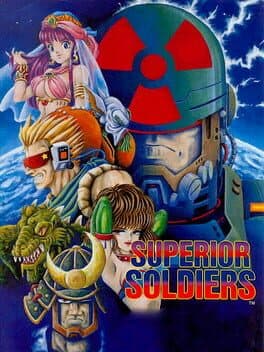
August 199990 of humanity has died due to a strange energy falling on Earth. The remaining humans have named this energy Force. To protect themselves against the Force they have remodeled their bodies and created a new generation of man.
Daiku no Gen-san 2: Akage no Dan no Gyakushuu
Khaos1993
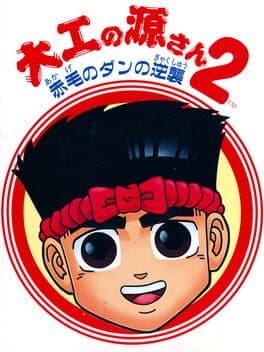
Daiku no Gen-San 2: Akage no Dan no Gyakushuu is an Action game, developed by Micronics and published by Irem, which was released in Japan in 1993.
Ninja Baseball Bat Man
Irem Corporation1993
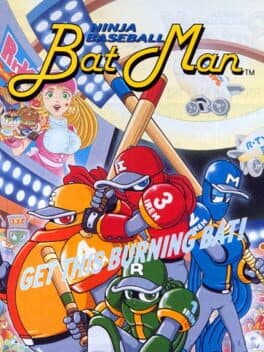
Ninja Baseball Bat Man is a 1993 beat 'em up developed and published by Irem Corporation in association with its North American division Irem America exclusively as an arcade game. It is the fourth arcade game by IREM to use a belt scroll perspective, following Blade Master, Hook and Undercover Cops.
Rocky Rodent
Irem1993
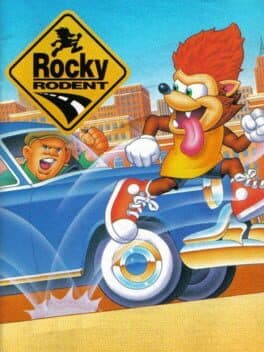
Mafia member Don Garcia has kidnapped Melody, the daughter of the owner of the Rose Restaurant. Rocky Rodent agrees to rescue her in exchange for an all-you-can-eat meal. In order to find Melody, Rocky Rodent has to complete a number of fast-paced, side-scrolling platformer levels. While he can also defeat enemies by jumping on them, his most important weapons are four different hairstyles: His first hairstyle allows him to skewer and throw his enemies, destroy porous blocks as well as cling to and jump up certain ledges. A mohawk can be thrown at enemies like a boomerang or thrown into certain walls, from where it serves as a trampoline. Braids can be used as a grappling hook and a corkscrew-like haircut lets him bounce on his head to jump higher than normal. When Rocky is attacked by an enemy, he looses his current haircut. If he is attacked while not wearing any special haircut, he looses a live.
Shuyaku Sentai Irem Fighter
Irem1993
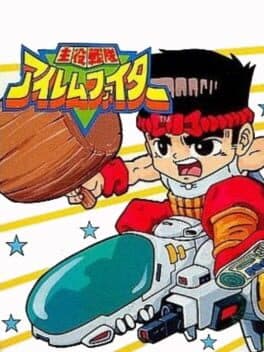
Shuyaku Sentai Irem Fighter is a 1993 strategy video game developed and published by Irem exclusively in Japan for the Nintendo Game Boy on July 30, 1993. It features characters from four of Irem's franchises: R-Type, Mr. Heli, Ninja Spirit, and Hammerin' Harry.

Air Assault
Irem1993
Air Assault is a 2D up-scrolling shoot 'em up game where you take control of fighter. The game is similar to Air Duel. You have to tward the evil plans of an organization called the Fourth empire over the span of eight stages. As you make progress and fight of various tanks, flying crafts, ships, static guns and bosses power-ups come available. Power-ups can be collected from capsules. Four types of guns are available: Balkan gun (broad strait shooting gun), Wing gun (broad arc shooting gun), graviton laser (strait narrow beam) and grenade (all direction gun). Missiles include the strait megaton missile and a homing missile. There is also a bomb that clears the entire screen. The game can be played solo or with a friend.
In the Hunt
Irem Corporation1993
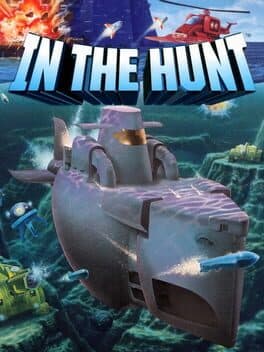
In the Hunt is a horizontal scrolling shooter arcade game by Irem. It was released in 1993 and later ported to the Sega Saturn, the PlayStation and Windows 95 for the PC by Kokopeli.
Ai Sensei no Oshiete: Watashi no Hoshi
Irem1993
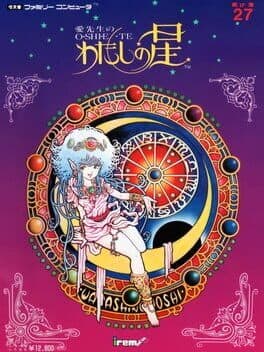
Ai Sensei no Oshiete: Watashi no Hoshi is a horoscope simulation game that heavily revolves around the love thematics of fortune-telling. The title roughly translates as Love Teacher Oshiete: My Star, which suggests the game focuses on the astrological aspects of fortune-telling and horoscopes.
R-Type Leo
Irem1992
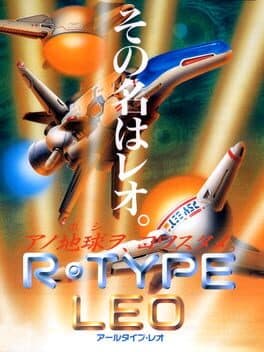
R-Type Leo is a horizontally scrolling shooter arcade game. It is a spin-off of the R-Type series and the last entry to be released in Arcades. R-Type Leo was initially an original shoot 'em up game in development by Nanao before Irem retooled it into an R-Type project instead. It is also the first R-Type game to feature simultaneous two player gameplay.
Quiz F1 1,2 Finish
Irem1992
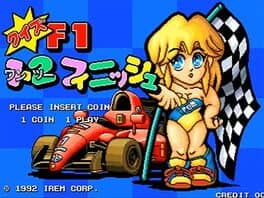
A quiz game with an F1 racing theme.
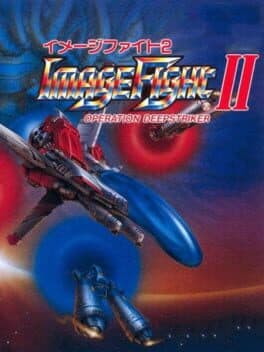
Image Fight II: Operation Deepstriker
Irem1992
Image Fight II Operation Deepstriker is a vertical shooter by Irem and sequel of the arcade game Image Fight originally released in 1988 (and ported to the PC Engine in 1990). Humanity tries to rebuild itself from the aftermath of the first Image Fight - the computer on the moon was destroyed and peace had finally returned. But three years after the attack, a space probe detects unknown objects hurtling towards planet Earth. The signs are clear - a massive alien invasion is underway. After a first encounter around Saturn, Image Fight requires the player to progress through four "simulation stages" - the last six "real stages" can only be accessed if the "simulation" achievement rating is greater enough. Failing this requirements leads to a short but intense Penalty Area. All the primary weapons from the original game are also here for the taking. Up to three colored orbs can be attached to the ship and either fire forwards (blue) or in the opposite way the ship is moving (Red). Secondary devices are also available and can be equipped at the front of the ship - they include all kind of lasers and missiles. However the only way to switch to a different device is to receive a direct hit.

Noobow
Irem1992
Noobow is a puzzle platformer featuring a Japanese chocolate mascot. The aim of the game is to pick up objects and use them wherever they're needed in order to stop the sun and rain from fighting each other. After using the objects in the right places they disappear to confirm that players have made the right choice. There are 7 levels in the game and Noobow will always refuse to put his life in danger. Completing each level is done by reaching the goal and assisting the characters that are waiting there.
Gekibo: Gekisha Boy
Tomcat System1992
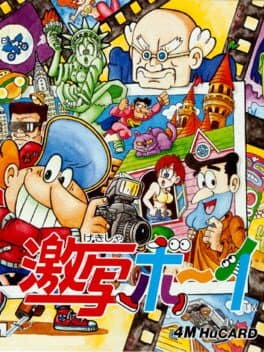
Gekisha Boy is a 2D side-scrolling game in which you play the part as a camera man who is out to snap some high paying photos to please their contractor. You control the movement of the shutter aim and you have slight control over the character as well (using the same style of control as such games as Cabal). You walk along a side-scrolling street and you have to snap unusual/tragic/funny or simply weird photos to rack up the points. It can be anything from crashing airplanes to Marilyn Monroe lookalikes and UFOs abducting cars. Every stage has a set score you need to reach to progress to the next one or you have to start it over again.

The Irem Skins Game
Irem1992
A golf game featuring four different game modes. The four game modes are Skins game, Match play, Stroke play, and Tournament. The Skins game has players compete for prize money on each individual hole. Match play involves 2 golfers competing to see who can win the most holes out of 9 or 18 holes. Stroke play counts the total number of strokes over a course of a golf game. The golfer with the least amount of strokes wins. Tournament mode has golfers competing in either one day (18 holes) or two days (36 holes) of golf. Scoring is figured out by how many strokes over or under par a golfer made to finish a hole. Gameplay consists of first choosing a golfer type of either a power hitter, all-around, technician, or magician. Each type has its own proficiencies in the drive, power, accuracy, hook, slice, and back spin categories. When on the golf course the player can choose a club, their stance, direction of where to hit the ball, and the power of the swing. Once that is decided, the swing is determined by a meter which measures the accuracy of the shot and determines whether the ball gets hit straight, hooks, or slices.
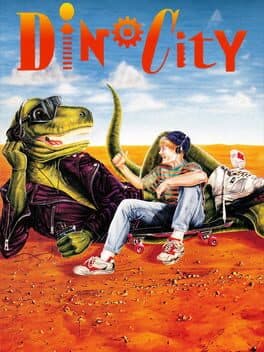
Dino City
Irem Corporation1992
Timmy and his friend, Jaime go into Timmy's father's lab to watch a movie on the big screen. Little do they know that the big screen is actually a time machine. When Timmy touches the remote they are both sucked into prehistoric times. Now in order to return home they must reclaim a time machine fuse that was stolen by some Neanderthals who go by the name of "The Rockies". The Rockies are also looking to destroy DinoCity, so two dinosaurs named Rex and Tops decide to help out the two human children in their fight against the Neanderthals.
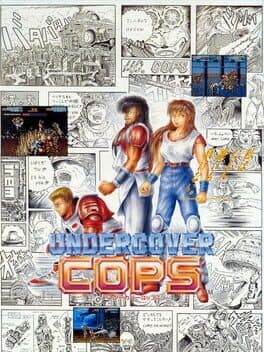
Undercover Cops
Irem1992
Undercover Cops is an arcade-style beat 'em up video game developed and published by Irem, originally for the arcades in 1992. It is Irem's first attempt in the modern beat 'em up genre that was founded by Data East’s Kung-Fu Master. Players control "city sweepers", a police agent-like group who fight crime by taking down thugs in New York City in the year 2043.
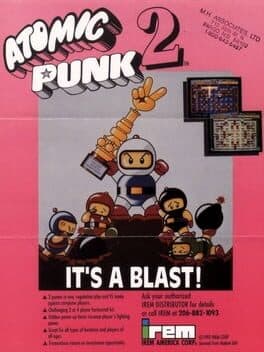
New Atomic Punk: Global Quest
Irem1992
New Atomic Punk: Global Quest is a 1992 video game released by Irem under license from Hudson Soft for arcades. It is part of the Bomberman series. It was the second Bomberman game to be released for arcades, preceded by Bomberman (1991), which was also released by Irem.
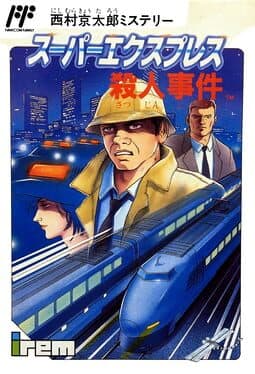
Nishimura Kyoutarou Mystery: Super Express Satsujin Jiken
Tose1992
Nishimura Kyoutarou Mystery: Super Express Satsujin Jiken is an Adventure game, developed by TOSE and published by Irem, which was released in Japan in 1990. Sequel to the previous Nishimura Kyoutarou Mystery game, Blue Train Satsujin Jiken.
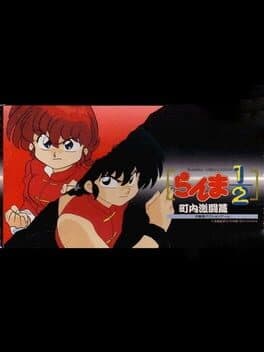
Ranma ½: Chounai Gekitou-hen
Irem1992
This game is a 2D fighting game and was the first ever Ranma ½ game released.
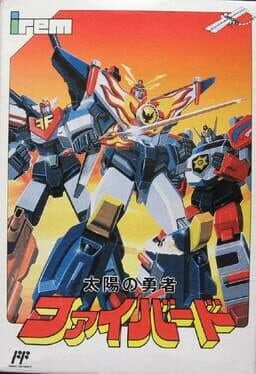
Taiyou no Yuusha Fighbird
Tamtex1992
Taiyou no Yuusha Fighbird is an Action game, developed by Tamtex and published by Irem, which was released in Japan in 1992.
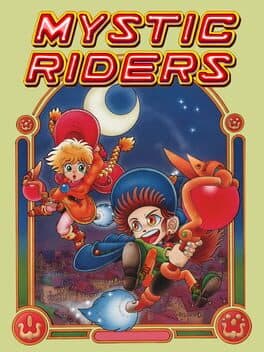
Mystic Riders
Irem1992
Mystic Riders is a 2D side-scrolling shoot'em up game set in a fantasy world, similar in style to Cotton. The player controls a child witch riding on a broomstick. Gameplay is very typical - the player flies right, shoots enemies like ghosts, grim reapers, bats, dragons, gargoyles etc., and collects bonuses and power-ups. The witch can charge shoot to deal more damage. The game has six levels and a multiplayer mode for 2 players.
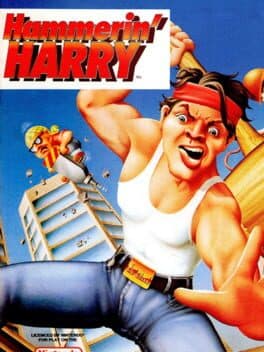
Hammerin' Harry: Ghost Building Company
1992
Harry and his spouse were walking down the street, while all of a sudden, ghosts start to appear and the city gets demolished. A dark city, with a haunted mansion in the middle, rises from the rumble and four ghost fuse to become a large ghost and kidnaps Harry's spouse. You must save your spouse and stop the evil Ghost Building Company.
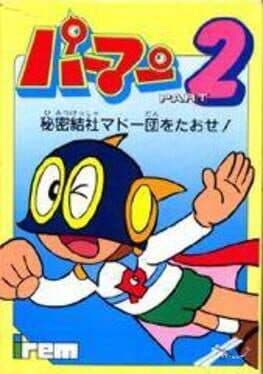
Perman Part 2: Himitsu Kessha Madoodan wo Taose!
Japan System House1992
"Paaman (or quite possibly Parman) is a comic in Japan which is done by the same guy who did Doraemon. Like that wasn’t already obvious just by looking at ‘em. All of the four characters that you have the choice of controlling have the amazing ability to fly in an amazingly awkward fashion. I don’t think there’s any difference in who you want to pick though. What’s awkward about flying is, if you’re flying Up and want to go Left, you don’t just automatically go Left when you hit the control pad… you go diagonally, then you go left. And you don’t sit still if you let go of the control pad, you have to hit A to stop. And then you have to hit A again to fall to the ground and walk around like normal. Which is all very weird. But you can jump REALLY high, so that’s cool. There’s a side view, where you can fly, like what I was just talking about, and there’s a top view, where you walk around inside of buildings and stuff. You can’t fly though, but you can jump, which is pretty useless. What’s cool about this game is the sheer amount of fun crazy bonus rooms you can go into. I’ve found the “fly-around-and-break-crates-for-a-while” fun bonus room, and the “jump-around-on-these-tiles-but-they-break-after-you-jump-off-so-you-can-only-jump-on-each-tile-once” fun bonus room. And sometimes at the end of these rooms you can earn neat stuff, like new weapons or weapon upgrades. Sure beats your crappy punch."
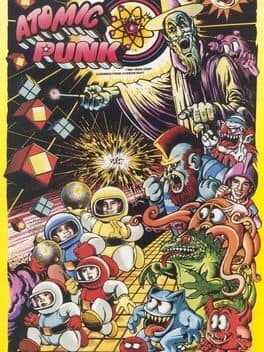
Atomic Punk
Irem1991
Atomic Punk (alternatively known as Dynablaster or Bomberman) is an arcade game featuring a single and multiplayer mode. In the year 2091, robot contests have gained popularity. Only the strongest robot can survive.
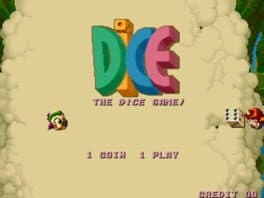
Dice: The Dice Game!
Irem1991
An bootleg of Irem's unreleased game "Dice Dice Dice," in which you push and roll dice while contending with enemies.
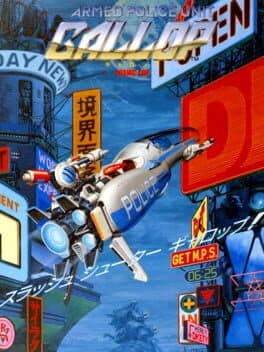
Cosmic Cop
Irem1991
Cosmic Cop, known in Japan as Armed Police Unit Gallop, is a shooter arcade game developed and released by Irem in 1991, running upon the Irem M-84 arcade board. While not directly based on the R-Type series, it is considered a spin-off of such, with many features being adapted into later games, notably R-Type Final.
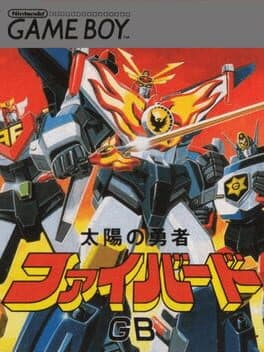
Taiyou no Yuusha Fighbird GB
Japan System House1991
Taiyou no Yusha Fighbird is technically a vertically scrolling shoot'em'up game by design, though the in-game representation differs a bit from normal as you take control of a mech that can fire off energy blades. It is based off a TV show, and is one of two Fighbird games ever released, the other being another shmup game for the Famicom.
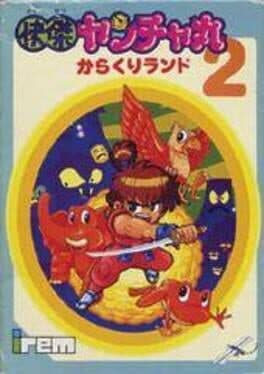
Kaiketsu Yanchamaru 2: Karakuri Land
Japan System House1991
Kaiketsu Yanchamaru 2: Karakuri Land is an Action game, developed and published by Irem, which was released in Japan in 1991.
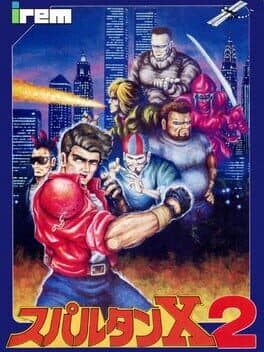
Spartan X 2
Irem1991
Slums, subways and a smugglers' ship lead Johnny to microchips and the evil Satine The police are corrupt. The gangs are vicious. And an evil microdiip has turned a decent father into a mindless beast. Young Johnny Thomas seardies alone for the distributors of the mind-bending microchips. From slum to subway to smugglers’ ship he follows a torturous path that leads to the ultimate battle with the evil Satine.
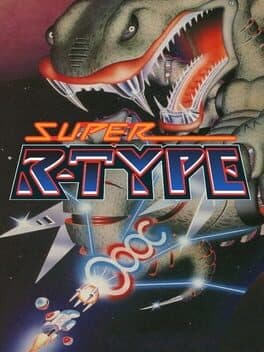
Super R-Type
Irem1991
In this SNES sequel to the arcade R-Type shooters, you are the R-9, Earth's most advanced form of defense against the evil BYDO Empire. There are seven stages you must go through, picking up power-up items to defeat the stage bosses which have returned from the arcade versions of R-Type and R-Type II. Your R-9 ship can also be united with FORCE, which are invincible units that surround your ship to protect you and can also power up and attack.
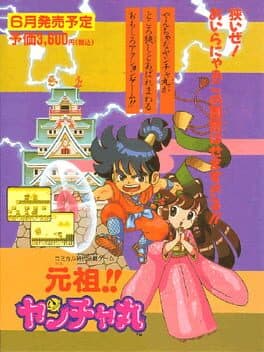
Ganso!! Yancha-maru
Irem1991
Ganso!! Yancha-maru is an Action game, published by Irem, which was released in Japan in 1991.
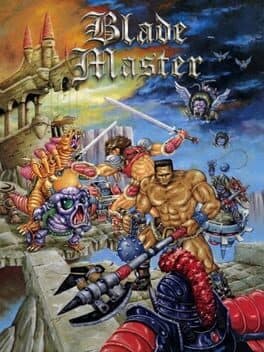
Blade Master
Irem1991
Blade Master is a scrolling hack and slash arcade game released by Irem in 1991. Two selectable heroes, Roy and Arnold, try to save their land from hordes of monsters. There are items to break and power-ups to collect, typical of this genre in the 1990s.
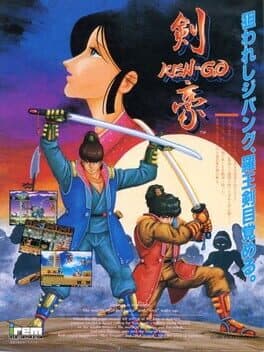
Lightning Swords
Irem1991
Lightning swords, known as Ken-Go in Japan, is an arcade 2D side-scrolling beat-em up - the game is set in a time when Ninjas and Samurai were active. The player is a samurai, armed with a sharp katana. He needs to go to the right, through locations in traditional Japan, and cut all the enemies that appear on his way. Holding down the attack button gives a special blow. At the end of each level a boss awaits - usually big, strong and durable.
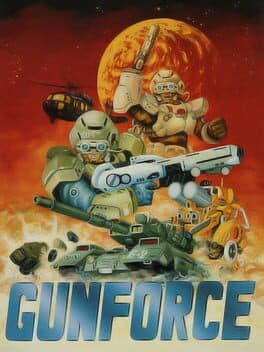
Gunforce
Irem1991
GunForce: Battle Fire Engulfed Terror Island or simply titled as GunForce, is a side-scrolling action shooting game produced by Irem for the arcades in 1991. The game was later ported by Bits Studios and published by Irem to the Super Famicom exclusively in Japan in 1992. Outside of Japan, it later received a sequel titled GunForce II, originally known in Japan as Geo Storm. The player is armed with a gun that fires rapid-fire bullets. Each direction it shoots can be fixed toward it so the player doesn't have to hold the joystick toward it. Players may find motorcycles to speed across enemy territory faster in addition to helicopters and cable cars. After scoring over any high score, whether they win or lose, players can enter their name into the high score list after the game over screen is "achieved". A strict time limit keeps the game going at a steady pace throughout; the consequence involves losing a life.
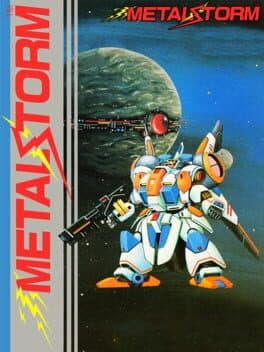
Metal Storm
Irem1991
Battle station cyberg's massive computer that keeps peace throughout the solar system is no longer user friendly. It's gone wildly out of control. The LaserGun it operates has already destroyed Neptune. Earth is its next target. As a high-tech hot shot, you must enter Cyber's core and activate the system's self-destruct mechanism. Mankind is reyling on your know-how and toughness to see this thing through. But time is running out...
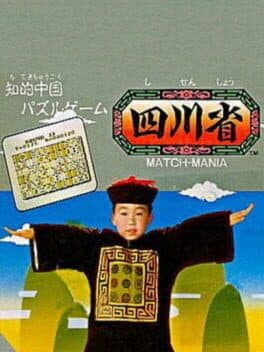
Shisen-shou: Match-Mania
Irem Corporation1990
A handheld adaptation of the 1989 Tamtex arcade mahjong solitaire eroge Shisen-shou, removing all eroge elements while adding a new series of pre-made puzzles ("Challenge Mode").

Hammerin' Harry
Irem1990
A platform game where you control a worker with a big hammer who smashes his way through obstacles and a variety of enemies.
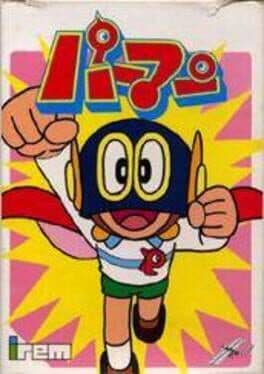
Perman: Enban wo Torikaese
1990
Perman: Enban wo Torikaese is a 1990 platformer from Irem based on the popular manga character.
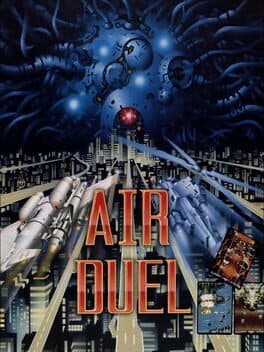
Air Duel
Irem1990
The player selects from a jet fighter or helicopter, shoot enemies in the air and ground, collect power-ups, and defeat bosses to advance levels. The game differs from most others in the genre in that you can change the aircraft you use at the start of each level. The jet fighter always shoots straight forward; power-ups increase the width and strength of its shots. The helicopter fires thinner and weaker shots, but turns in the direction it moves (similar to the later Zero Gunner), giving it great range; powerups increase the strength of shots, as well as the number of bullets per shot (adding a small "spread" effect to the shot while moving around). Both the fighter and the helicopter also start with three bombs which wipe out everything in their path, including enemy shots. These bombs are also unique compared to similar games, in that they produce a line of small horizontal blasts that can be "directed" at the line travels across the ground, by pressing left and right (similar to the helicopter's shots). Additional bombs can be picked up during the course of the game. Losing a life resets your power and bomb count to the amount you start with. "Air Duel" is a challenging game, and later levels can become nearly unplayable if a single life is lost.
Kickle Cubicle
Irem1990
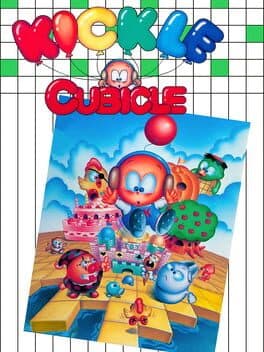
It once was a peaceful kingdom of friendly, kind people. Unfortunately, this land didn't stay so serene as a wicked wizard king wanted everything for himself. Using his magic powers the wizard quickly overpowered the helpless people, put everybody including Princess Mira, into "dream bags", and turned the entire kingdom into a frozen wasteland. It is your job as Kickle to progress through all of the areas within each of the four lands in the country and eliminate all of the Wizard's henchmen and rescue your friends who are held captive in a dreamless sleep. Kickle Cubicle is a captivating puzzle game much on the lines of the old coin-op game Pengo. More recently though, it contains similar concepts seen in the Lolo series of NES carts where planning and strategy is more important than quick moves. Your main weapon is your 'chilling' ice breath. Breathe on the enemy and they instantly freeze! Give them a kick and they're out of your way! Clear a couple dozen mazes and you come to the end of the land you're in where you must then beat one of the Boss creatures. Throw in springs, hammers, bonus stages and secret traps and the game quickly turns into a puzzle game with levels which start easy but increase in difficulty as you get better!
Dragon Breed
Irem1989
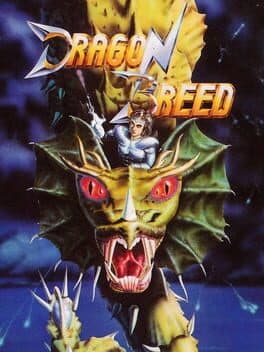
The player's character is a human who rides a large, green, flying Chinese-style dragon. The dragon is invincible, capable of blocking most enemy projectiles and damaging enemies on contact; the human, however, is not, but is armed with a forward-firing crossbow. The dragon's body is flexible and responds to the player's movement, enabling the player to use the dragon as a mobile shield or as a whip-like weapon. You can also circle the tail around a group of enemies to kill them. The tail of the yellow or blue dragon can be coiled around the player to offer almost complete invulnerability for a limited time. The dragon can also spit fireballs. By holding the fire button down, the dragon will build up fire in its mouth; the longer the button is held down, the more powerful the fireball will be. There are four levels of fireball power; at its strongest, the fireball resembles a dragon's head. The game also contains some platforming elements - the human is able to dismount on horizontal platforms. Power-ups can be acquired by shooting small green dragons that appear intermittently throughout the levels, or they can be collected from the ground on foot. There are four different power-ups, each of which provides a different weapon to the dragon. Collecting multiple power-ups of the same colour makes that weapon more powerful. The dragon changes colour depending upon which power-up has been collected. Red enables the dragon to breathe a flame. The flame gets longer if more power-ups are collected. Yellow enables the dragon's body to fire crescents in all directions. White enables the dragon to produce up to four miniature dragons, which home in on enemies. Blue enables the dragon to fire downward bolts of electricity from its underside.
R-Type II
Irem1989
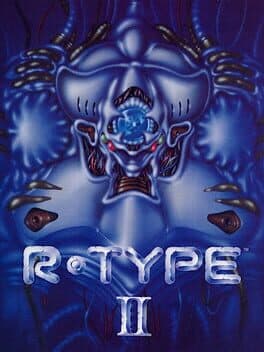
The game is the sequel to R-Type, which was first released as an arcade game in 1987 and profoundly influenced later shooting games with its charge shots, unique weaponry, and grotesque enemies. Hudson Soft ported the later 4 levels of the original R-Type to the PC Engine with the title R-Type II, but the Hudson release is unrelated to the game described in this article. The player controls a ship called the R-9C (or R-9 Custom), which is an improved version of its predecessor game's ship; the R-9. The ship's design was changed slightly, and the wave cannon was given homing capabilities. Two new types of weapons (the Search Laser and Shotgun Laser) were added, bringing the total number of weapon types up to five. A new anti-ground unit bomb was also added to the missile inventory. Though the number of levels was decreased from the prequel, the number of enemies, their durability, and the number of bullets they shoot were greatly increased. Enemy movements and terrain were also made trickier, bringing the game's difficulty up considerably. The same revival system is used as in the prequel, where the player is brought back to a checkpoint whenever their ship is destroyed. The controls are mostly unchanged from R-Type, where the 8-way joystick controls the ship's movement, and the shot button fires the ship's main beam. The other button is used to equip or unequip Force; the series' most unusual innovation. Pressing down the shot button causes the blue beam gauge to fill up, and releasing the button causes a wave beam to travel a certain distance depending on the length of time the button was pressed down. If the button is pressed down until the blue gauge is fully charged, a red gauge appears and fills up quickly. Filling up the red gauge causes it to flash blue and red, releasing the shot button at this point shoots an even more powerful beam. Unlike the normal beam that only travels in a straight line, the newly added Shotgun Laser beam explodes in multiple directions after traveling a short distance. This shot causes heavy damage if the player can target a single enemy with it. However, holding the button down after the gauge is flashing causes the beam to return to the normal transverse beam (the gauge alternates between flashing and returning to the normal state while the button is held down), so the player must release the button at the right timing in order to successfully target enemies. The other newly added beam, the Search Laser, is semi-homing, and can bend at angles up to 45°.
Legend of Hero Tonma
Irem Corporation1989
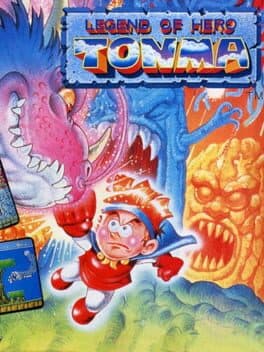
Legend of Hero Tonma is a side scrolling platform game released by Irem to arcades in 1989.
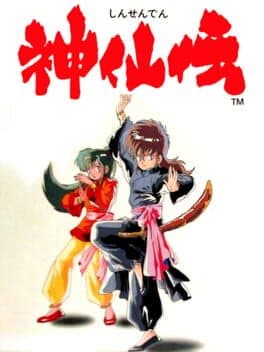
Shinsen-den
Tamtex1989
A turn-based RPG based on Japanese folklore. A pair of monks complete their training only to find themselves embroiled with the fate of the country.
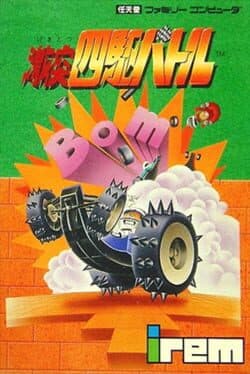
Gekitotsu Yonku Battle
1989
Gekitotsu Shiku Battle is a Japan-exclusive video game of the vehicular combat game genre released in 1989 by Irem for the Family Computer.
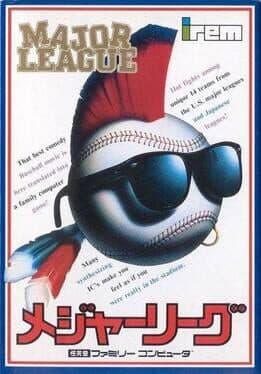
Major League
1989
This standard baseball game from Irem has the movie license for Major League, but doesn't actually use it much in-game.
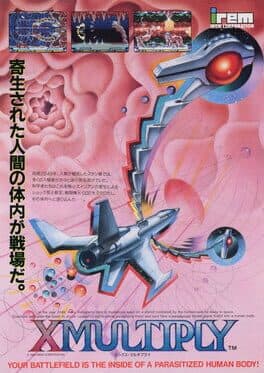
X Multiply
Irem1989
Is a side-scrolling shooter published by Irem, and similar in style to their earlier R-Type. The game centers around an unusual alien invasion against a colony planet in the year 2249 where the aliens themselves are microscopic creatures that invade, infect, and kill the colonists. Scientists have deployed the microscopic fighter X-002 into the body of the hapless woman whose body has been invaded by the alien queen.
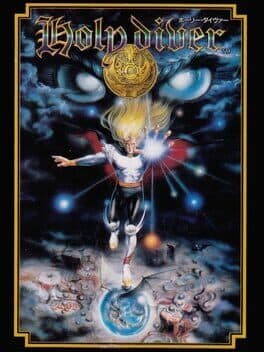
Holy Diver
Irem1989
Based on the music of Ronnie James Dio and named after his debut album.
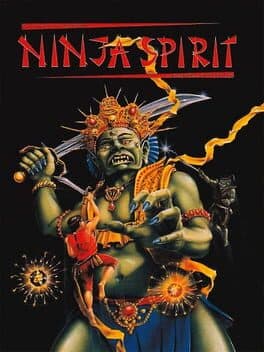
Ninja Spirit
Irem Corporation1988
There are a total of seven stages varying from woodlands, wastelands, swamps, temples and cliffs. Each stage begins with the player slashing his way to the end, until he confronts a level boss. The ninja is always armed with the sword Righteous Cloud which can be fluidly used to attack in all directions. Extra weapons include the Swirling Leaf (shurikens), the Bamboo Thunder (bombs), and the Rising Dragon (kusarigama). There are also several powerup items, such as one unleashing multiple ninja ghosts to assist the player.
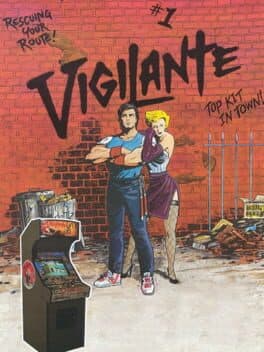
Vigilante
Irem Corporation1988
On the baddest streets of the city they know your name. You are lean and mean... the karate master they call the Vigilante! Your turf was left alone. Your friends and neighbors lived in peace. Until the Rogue gang got too big for their britches. You chilled, hoping things wouldn't get too rough. No such luck. They've taken your girlfriend Maria, and there's only one thing you can do... get her back... anyway you can! You have fists of steel! Legs like pistons! And courage that just won't quit! You will need all three because the Rogues are waiting with knives, guns and a whole bunch of nasty punks. And you'll have to fight fast. If the Rogues make it back to their headquarters before you rescue Maria, all hope will be lost. But catch them first and you'll fight the leader of the Rogues. Win Maria... and your turf... will remain safe. Feel any pressure? No way. You're the Vigilante!
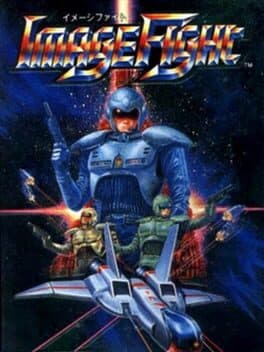
Image Fight
Irem1988
On a fateful day in 20XX, the Earth's moon exploded into four large fragments and a multitude of meteors. Aliens from afar had succeeded in destroying the West's moon base. One after another, mankind's other military industrial space complexes were being lost. What mankind dreaded had come to pass. Scores of unidentified fighters were in the area. In addition, the moon's main computer, still intact after the explosion, had a strange vegetation coiled around it. Their trademark evil exploits being a dead giveaway, invaders from the Boondoggle Galaxy had arrived to take over the Earth. To counter these evil forces, leading scientists from all over the globe created the "OF-1" Fightership. Combat pilots depart the Earth to fend off the invaders and earn everlasting glory.
The Guardian Legend
Compile1988
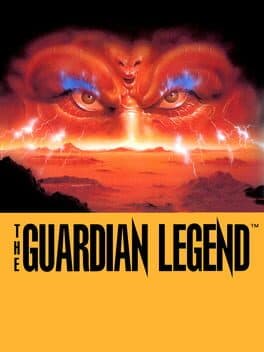
In The Guardian Legend, the player controls the female guardian of Earth, a "highly sophisticated aerobot transformer". The player's mission is to infiltrate Naju, a large planet-like object which aliens sent hurtling towards the Earth. While inside, the player must activate ten safety devices in order to initialize Naju's self-destruct mechanism and destroy the alien world before it reaches Earth. Five hostile tribes of alien lifeforms are vie for control of territories within Naju,and the player needs to fight through them to successfully activate the switches and escape.
Battle Chopper
Irem1987
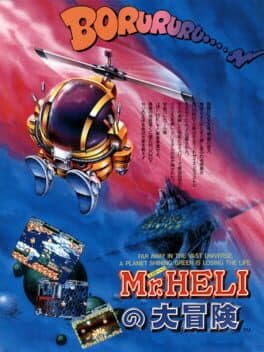
Players control a wacky fighter chopper name Mr. Heli, while shooting enemies, collecting power-ups, and defeating bosses to advance levels.
Mr. Heli
Irem1987
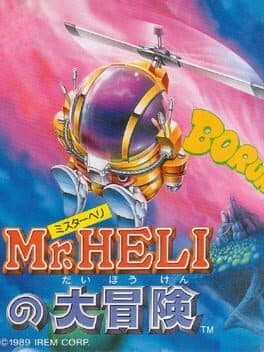
It is your mission, 'Mr. Heli' our hero, to unmask 'The Muddy' who is hiding deep underground and rescue the planet. Clear all the zones including floating green islands, moving rock beds, mysterious underground temples, and much more! The exhilarating air battle and stunning graphics capture the true character of the arcade machine. Play sharp, steer right, keep up with the fight!
Super Lode Runner II
Irem1987
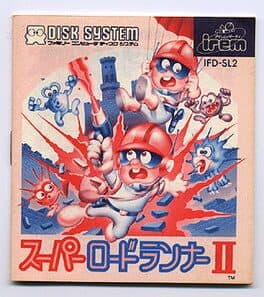
The second compilation of levels from Irem's Lode Runner Arcade series. Developed for the Famicom Disk System, it was never released outside of Japan. Gameplay consists of collecting all the gold of a level and then exiting. Be sure to avoid enemies while doing so, and team up with a friend to experience the co-op levels
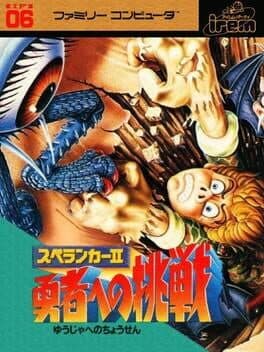
Spelunker II: Yuusha he no Chousen
NOW Production1987
Spelunker II: Yuusha he no Chousen is a Japan-exclusive action video game released for the Family Computer in 1987. An unofficial translation to English was made as a ROM hack. Despite being titled as a sequel to Spelunker, Spelunker II: Yūsha e no Chōsen features vastly different gameplay. There was a separate arcade sequel, titled Spelunker II: 23 no Kagi, which features similar gameplay to the first Spelunker game as well. The two Spelunker II games are separate entries in the series and are not related.
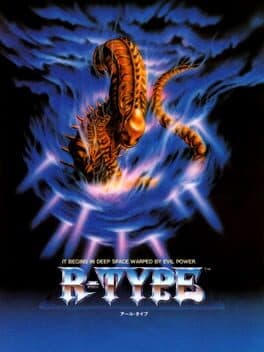
R-Type
Irem1987
R-Type is set in the 22nd century, and the player flies a futuristic fighter craft called the R-9a "Arrowhead", named for its shape, and because it is the ninth model in the 'R' series of fighter craft (but it is the first of the series to actually be used in combat; the previous models were all prototypes). The mission is to 'blast off and strike the evil Bydo Empire'. The R- in the series title originally stood for "ray", as in a ray of light. It was a reference to the many different types of ray-like weapons in the first R-Type. his was later retconned in R-Type Final to refer specifically to the production code as well as a term of endearment for the player fighter craft, the "Round Canopy". The original R-Type was well received by most gaming critics. However, it was also infamous for its relentless difficulty. It earned 7th place in IGN's Top 10 most difficult games to beat. The gameplay of R-Type is noticeably distinct among shoot 'em ups. Invariably the player will lose, not because of an inequality in firepower, but because of the design of the levels themselves. There is usually a 'correct' way to get through a level, but players must learn these by experience - i.e. by losing and restarting from earlier in the level. The game innovated with its weapon system compared to contemporary shooters, featuring a chargeable shot (beam-meter), and detachable 'force' pod; levels were designed to require different tactics and ideal weapons (air-air, diagonal, or air-ground laser).
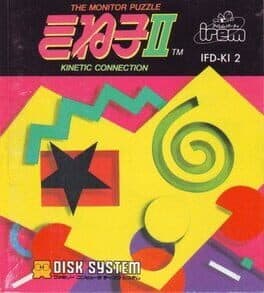
Monitor Puzzle Kineko: Kinetic Connection Vol. II
Tamtex1987
An image puzzle game and the follow-up to the original Kinetic Connection, it was developed by Tamtex and published by Irem for the Famicom Disk System. Monitor Puzzle Kineko: Kinetic Connection Vol. II is a follow-up to Tamtex's Kinetic Connection, featuring more animated pictures to assemble from composite pieces like a jigsaw puzzle. As with its forebear, the trick to Kinetic Connection Vol. 2 is to closely observe the moving parts in each piece as the animation goes through its loop, to glean hints as to where each piece belongs. Though very much more of the same, the new puzzles have some new ideas behind them. The hardest puzzles are Defender-like games that respond to the player's movements as they try to assemble the puzzle.
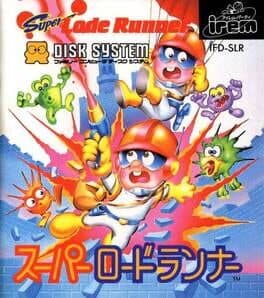
Super Lode Runner
1987
The game keeps the typical gameplay of the Lode Runner series. Players have to collect all the gold on the stage, while either avoiding or trapping the robotic guards who are constantly giving them chase. The game also features a level editor so players can create their own stages to play on.
Yokai Yashiki
Casio1986
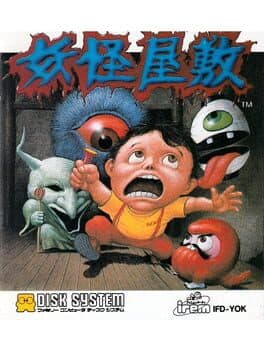
In Youkai Yashiki, you control a boy armed with a flashlight who must explore five stages and locate five talisman before locating and gaining access to a stage boss. The flashlight serves as a weapon against the monsters which inhabit each stage. Your life meter takes the form of a set of batteries. As your life diminishes, the batteries drain and the power of your flashlight, that is the distance that the beams can travel, decreases.
The Monitor Puzzle Kineko: Kinetic Connection
Tamtex1986
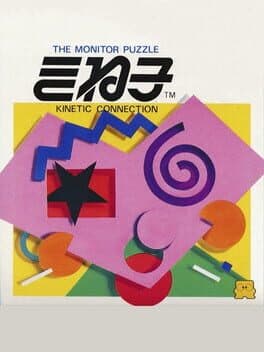
An image puzzle game similar to a jigsaw puzzle, except the picture it creates is animated. It was published by Irem in Japan only for the Famicom Disk System. Kinetic Connection, which has a longer title of Monitor Puzzle Kineco: Kinetic Connection for its original FDS release, is a puzzle game in which the player has to assemble a picture from a number of pieces like a jigsaw. However, the image (and thus the smaller pieces of the image) is constantly moving as it loops through an animation: This makes putting the puzzle together even more complicated, though it's occasionally made easier by carefully watching how pieces interact with each other. The game was developed by Tamtex, a subsidiary of Irem that made computer games, and published by Irem in Japan. The game would be later ported to the MSX and C64 home computers, as well as on the Sega Game Gear. It was also followed a year later with a FDS-only sequel, Kineco II, which was only available via the Disk Writer service.
Deadly Towers
Lenar1986
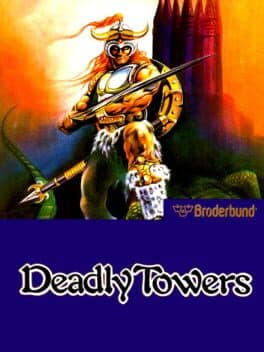
On the moonlit eve of his coronation ceremony, pensive Prince Myer sits at the lakeside to ponder the future of the kingdom. Suddenly, a shadowy kami called Khan rises from the lake and coalesces into the form of a man. Although he doesn't identify himself, the figure greets Prince Myer by name, and informs him that the wizard Rubas, the "Devil of Darkness", is preparing to overtake Willner Kingdom by using seven magic bells capable of
Kaiketsu Yanchamaru
Irem1986
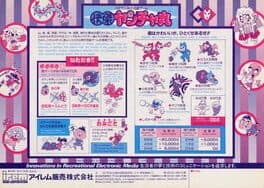
One day in Feudal Japan, Kid Niki, the most radical of ninjas, is training at his Ninja School. Suddenly, a passing bird is struck down by an arrow and lands at Niki's feet. Attached is a note explaining that Niki's girlfriend, Princess Margo, has been kidnapped by the evil Stone Wizard. With the cry of "Will help you!" Niki bursts through the wall of his school and sets off on his quest to save Margo.
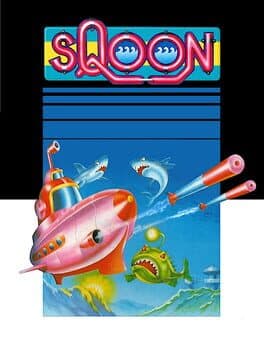
Sqoon
Home Data1986
Sqoon is a side-scrolling shooter game published in 1986 by Irem for the Nintendo Entertainment System.
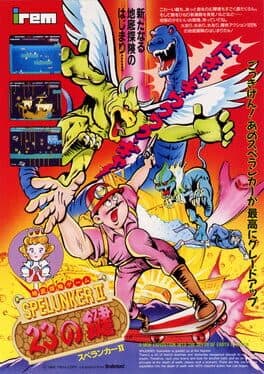
Spelunker II
MicroGraphicImage1986
The player contols a miner who is looking for treasures in a huge mine. Find the key that opens the door to the next level and along the way, collect items that can help or reward points. Collect life potions to regenerate and shoot your enemies.
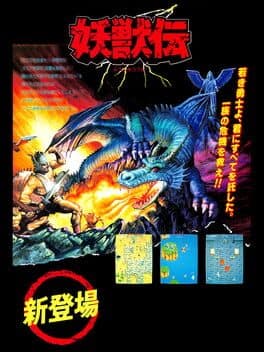
Heroic Episode
Irem1986
Heroic Episode is a 2D top-down fantasy shooter, similar to Commando or Ninja Princess in an ancient land. The player controls a small, bearded man who wears a horned helmet, goes straight forward and shoots various enemies and bosses. He has unlimited bullets, but the weapon has a very limited range.
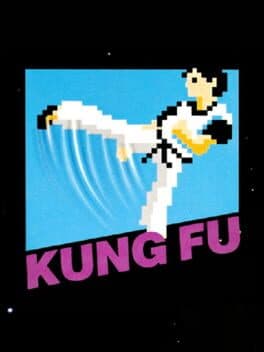
Kung Fu
Irem1985
The NES port of Spartan X for the Famicom, which is itself a port of the Arcade game Spartan X.
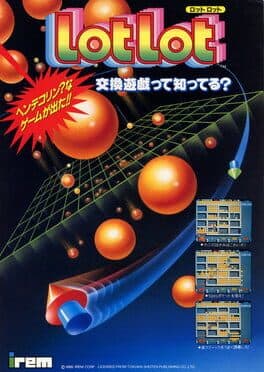
Lot Lot
1985
Manipulate the balls so they fall into the pits for points. Get enough points and you will move on to the next round.
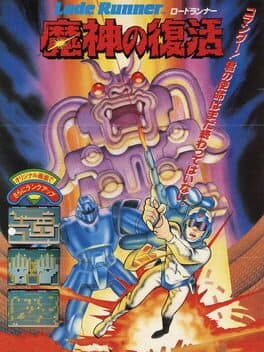
Lode Runner III - The Golden Labyrinth
Irem1985
In 1985, Irem released the third of four arcade conversions of Lode Runner. This third version, like the second contained 30 selected levels from the 150 original levels. It is pretty much the same game as the previous version, with different levels.
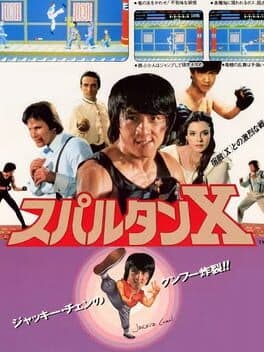
Spartan X
Irem1984
Spartan X, known in North America by the Kung-Fu Master port, is a 1984 beat 'em up arcade game developed and published in Japan by Irem. It was later published in North America by Data East, without the movie license. The Japanese version was based on the Jackie Chan movie Wheels on Meals, known as Spartan X in Japan, and credited "Paragon Films Ltd., Towa Promotion", who produced the film upon which it was based. The game is considered by many to be the first beat 'em up video game, and contains elements of Bruce Lee's Game of Death.
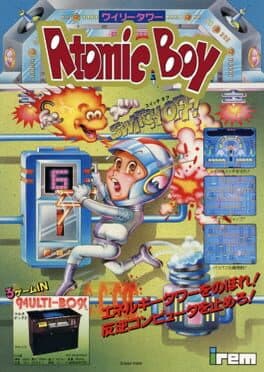
Atomic Boy
Irem1984
A platform game where you must climb around lattice of pipes to deactivate power switches for main computer while avoiding robots. Jump on generators to send out disrupters and kill robots.
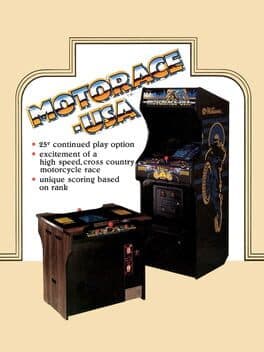
MotoRace USA
Irem1983
MotoRace USA is a basic arcade motorcycle racing game that alternated between a bird's eye view and an over the shoulder view throughout the race. The player controls a racer who must travel on a motorcycle from Los Angeles to New York City.
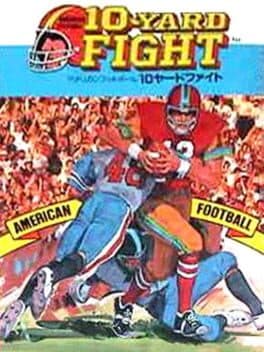
10-Yard Fight
Irem1983
The game is viewed in a top-down perspective and is vertical scrolling. The player does not select plays for either offense or defense. On offense, the player simply receives the ball upon the snap and either attempt to run with the quarterback, toss the ball to a running back, or throw the ball to the one long distance receiver - basically the option offense. On defense, the player chooses one of two players to control, and the computer manipulates the others. The ball can also be punted or a field goal can be attempted. 10-Yard Fight has five levels of difficulty; from easiest to most difficult: high school, college, professional, playoff, and Super Bowl. If the player wins both halves of an "accelerated real time" 30-minute half at an easier level, the player advanced to the next level of difficulty, like a career mode.
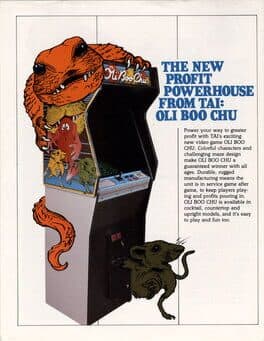
Oli Boo Chu
Irem1982
Pac Man inspired maze game
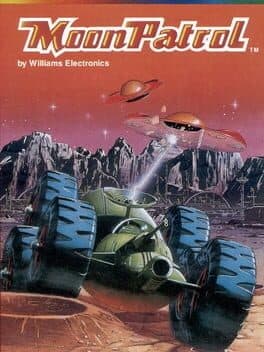
Moon Patrol
Irem1982
Moon Patrol is a side-scrolling shooter that puts players at the controls of a six-wheeled moon rover that can jump and shoot. The goal is to move through the entire course as quickly as possible while shooting enemies for additional points. Cannons are mounted on the front and top of the vehicle, and both fire simultaneously when the fire button is pressed. Rocks, mines, and pits in the course prevent you from just holding to the right for maximum speed. Rocks and mines can be shot, but pits must be jumped. Some enemies fire shots that create new pits in the course, forcing players to react quickly.
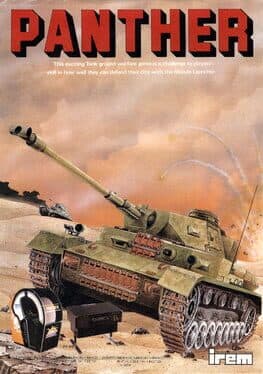
Panther
Irem Corporation1981
You have to defend your city with your tank from the approaching enemy tanks.
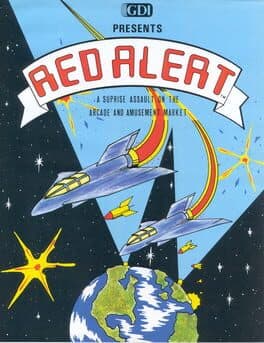
Red Alert
Irem1981
Defend six cities against attacking enemies. Assault waves consist of planes, helicopters, night bombers, and MIRV bombs.
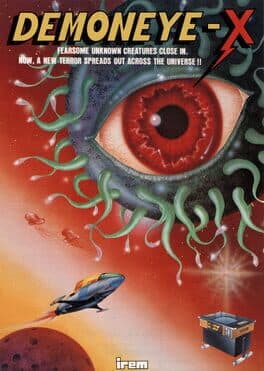
Demoneye-X
Irem1981
This game is similar to space invaders.
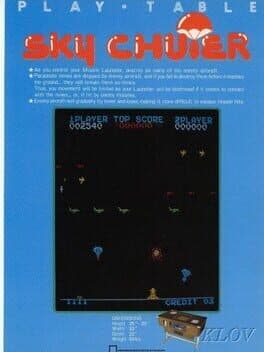
Sky Chuter
Irem1980
In Sky Chuter, the player guides their missile launcher that must fire at planes that appear from the left and right edges of the screen, then make their way down towards the player. While they are homing in on the player, not only do the planes fire down on the player, but they also release parachutes containing bombs that must be dealt with before they reach the surface. Once the player manages to kill the last airplane, the game proceeds to the next pattern. If the player loses all their lives, the game ends.
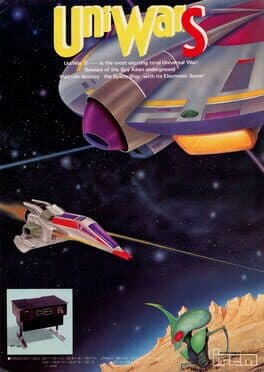
UniWar S
1980
Gingateikoku no Gyakushū (銀河帝国の逆襲), released as UniWar S in the United States is a fixed shooter arcade game that was released by Irem in 1980; it runs upon Namco's Galaxian hardware (a Zilog Z80 running at 3.072 MHz). The player must use the two-way joystick to direct a yellow ship left and right (across the bottom of the screen), with a single button to make it fire shots up at the various types of enemies - and the first stage will see it fighting a formation of "Super Mosquitoes", which are worth 20 points apiece. The second stage, which sees a dotted orange line under the ship, will see it fighting a formation of "Hovering Attackers" which are worth 30 points apiece, and the third stage will see it fighting a formation of "Demon Flies", which are worth 40; some of the "Demon Flies" will leave "Spy Aliens" when killed, which will fall down to the bottom of the screen underneath that line, and try to stab the ship from behind. The only way to kill them (for 100 points apiece), is to destroy the "Killer King" when he appears - and the fourth and last unique stage will see the ship fighting a formation of "Rolling Fires", which are worth 50 points apiece and will also occasionally leave "Spy Aliens" behind when killed. After the last unique stage has been cleared, the four-stage cycle will start all over again.
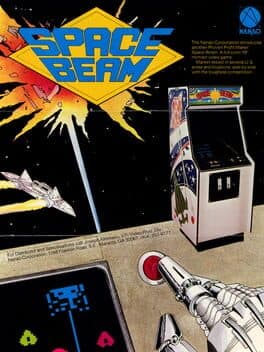
Space Beam
Irem Corporation1979
Top-down space shooter in which the player's and his opponent's spacecrafts are at the opposite sides of the screen. Both try to shoot their opponent first while moving left and right. Space debris is floating between both players and blocking the respective shots. Furthermore the energy level for the laser has to be filled to the max in order to reach the other side of the screen (and therefore your opponent).