-
Average rating
26
Games
0
Votes cast
Heartbeat
Shipped Titles
Games (26)

Zaojiao Leyuan wo de Tonghua Huiben: Xiaohai tu de Gushi
iQue2011
iQue DSi exclusive interactive storybook which translates to "The Sea Hare", a censored version of the Grimm's fairy tale under the same name.

Spotto!
Nintendo2009
Spotto! is a puzzle game in which the player takes control of Spotto, adjusting his bomb toss trajectory with the stylus to throw bombs into the ghosts’ mouths, either directly or via obstacles located throughout the environment. While ghosts and obstacles may be moving in some of the fifty stages, Spotto remains stationary in the lower left corner all the time. In the Story Mode, the player gets five bombs at the beginning of each stage and loses one for every toss that doesn't kill an enemy. After a kill, a super bomb which causes more damage, is sometimes awarded. Besides the ghosts, some boss characters will have to be beaten.

Metal Torrent
2009
Prepare yourself for one of the most intense shoot ‘em ups to hit Nintendo DSiWare. Your mission is simple: get the highest score possible, across eight phases of fierce vertical-scrolling action.
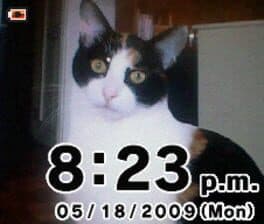
Photo Clock
Nintendo2009
Photo Clock allows you to enjoy the photos taken with your Nintendo DSi Camera application in a new way.
Clubhouse Games Express: Strategy Pack
2009
A DSiWare game based on the original Clubhouse Games.

Clubhouse Games Express: Card Classics
2009
DSi ware card game.
Touch Solitaire
Nintendo SPD2009
Touch Solitaire features two of the most popular versions of Solitaire—Spider and Klondike—with simple Touch Screen controls and an easy to understand interface. Various difficulty levels are available for both games, allowing beginners or experts to enjoy the game at their own pace.
Brain Age Express: Math
2008
Dr Kawashima brings his popular brain exercise software to Nintendo DSi, with fun, new features and the return of many Brain Training favourites!
WarioWare: Snapped!
Nintendo SPD Production Group No. 12008
A downloadable WarioWare game for the DSi which lets the player use the camera to play a variety of absurd microgames.
Dr. Mario Express
2008
Dr. Mario Express, known in Japan and PAL regions as A Little Bit of... Dr. Mario (ちょっとDr. MARIO Chotto Dr. Mario?),[5] is a Mario action puzzle video game published by Nintendo. The game was released exclusively as a DSiWare title for the Nintendo DSi platform. Dr. Mario Express was first released as a launch title for the DSiWare service in Japan on December 24, 2008, and was released in both North America and PAL regions in 2009. The game was developed by Arika, which had also created Dr. Mario Online Rx for WiiWare. Dr. Mario Express features the general gameplay of earlier Dr. Mario puzzle games, which focus on eliminating colored viruses from the playing field by matching them with colored capsules. Dr. Mario Express received generally positive reviews, but was criticized for offering fewer playable game modes than earlier Dr. Mario titles.

Clubhouse Games Express: Family Favorites
2008
This is a downloadable game recently released on the Nintendo DSiWare shop.

Paper Airplane Chase
Nintendo2008
Spread your wings with this irresistibly simple action game for one or two players! Simply manoeuvre the paper plane through a winding course - and don't collide with the obstacles. But that's easier said than done!

Bird & Beans
Nintendo2008
He’s a small bird with a very long tongue and an insatiable appetite for beans. Luckily for Pyoro, beans drop constantly from the sky. However, if Pyoro lets a bean fall, it breaks a hole in the ground that he can’t cross.
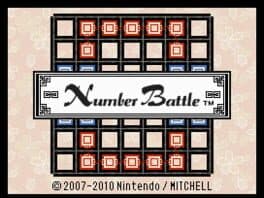
Number Battle
Mitchell Corporation2007
Number Battle (Sujin Taisen: Number Battles) is a new kind of board game that combines puzzle and strategy. You take turns against human or computer opponents in an attempt to reach a target score by placing numbered tiles on the board.
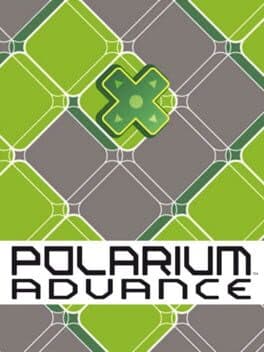
Polarium Advance
Mitchell Corporation2005
A GBA follow-up for Polarium (Nintendo DS), Nintendo's simple, stylish puzzle game. Make your line through the game board, flipping black and white tiles to change and match their color.
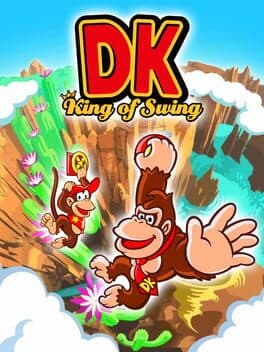
DK: King of Swing
Paon2005
The normally quiet jungle is abuzz with excitement, because it's time for the ceremony to choose the king of the jungle! Or at least it would be if King K. Rool hadn't stolen the special medallion meant for the winner. Donkey Kong and his friends must swing their way through the jungle to get the medallion back and, along the way, rescue Diddy, Dixie, and Funky Kong from King K. Rool's minions. A unique control system lets you swing through the trees and spin to build up momentum for a mighty leap. Innovative level design combines elements of platform and puzzle games: Grab gears and spin to crank doors open. Watch out for bolts that loosen as you spin, or you might find yourself falling flat. You'll need steady hands to make the leap-of-faith that takes you to the treetops.

Polarium
Mitchell Corporation2004
Polarium mixes way-cool gameplay with an electronica soundtrack for the trippiest experience yet on the DS. It's the first game that would look cool at a rave. Polarium is a simple, stylish puzzle game you play entirely with the Nintendo DS touch screen and a stylus. Draw lines to flip black and white tiles and make patterns and puzzles disappear. Use the stylus to draw a stroke, flipping black and white tiles to change and match their color. Three game modes and scores of puzzles will put your puzzle-solving abilities and stylus skills to the test. Challenge a friend to a duel over a wireless connection.
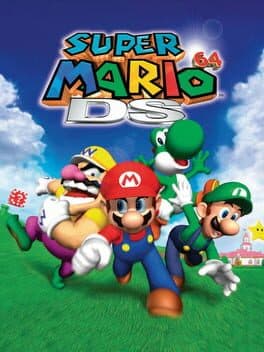
Super Mario 64 DS
Nintendo Entertainment Analysis & Development2004
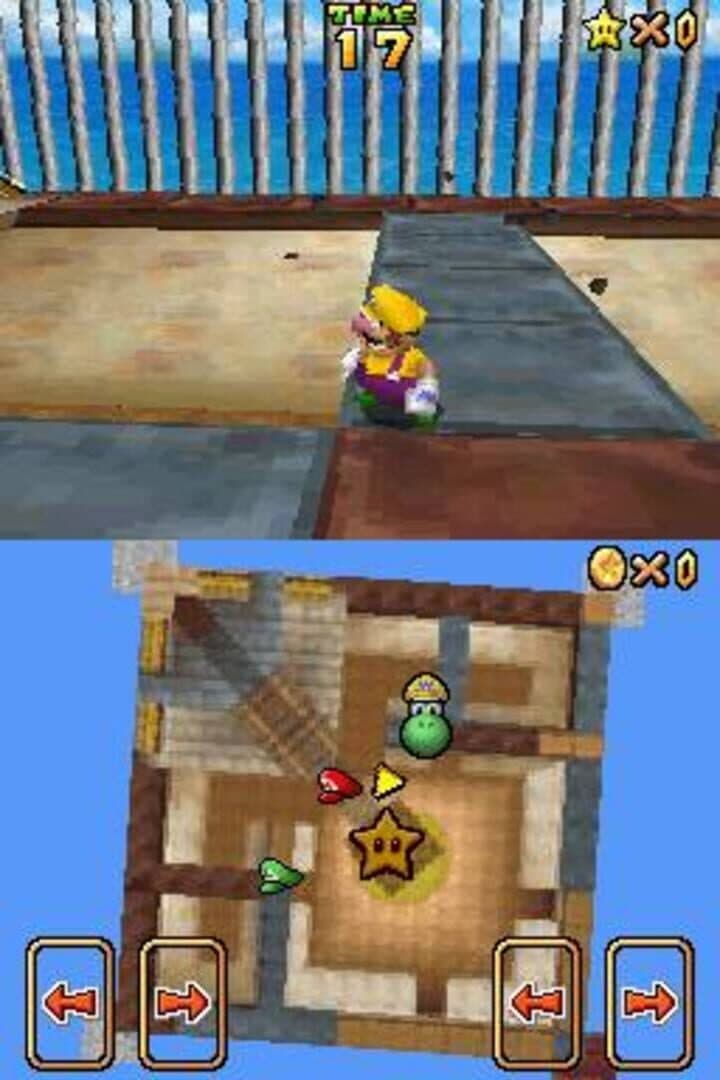
Super Mario 64, the classic 3D platformer for the Nintendo 64, arrives on the Nintendo DS with all-new features that take advantage of the portable system's dual screens, touch screen, and wireless multiplayer capability. Like the original game, Super Mario 64 DS challenges you to find all the power stars hidden throughout the royal castle in the effort to free Peach imprisoned inside the castle. This time, you can play as Mario, Luigi, Wario, and Yoshi, each of whom has unique abilities. Overcome the challenges on your own or battle up to three of your friends in the multiplayer modes.
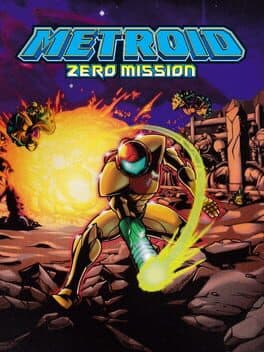
Metroid: Zero Mission
Nintendo R&D12004
The full story of Samus Aran's first mission finally unfolds... The first Metroid game just scratched the surface of the cataclysmic events on planet Zebes, and at long last the rest of the tale has come to light. Experience the first of Samus's legendary adventures through all-new cut-scenes and action sequences as the bounty hunter races through the deeps toward her showdown with the leader of the Space Pirates. But will the end of Mother Brain really mean the end of the story...? Completion of the game unlocks an emulated version of the original Metroid game. Zero Mission also allow players to unlock the Metroid Fusion picture gallery by linking between Zero Mission and Fusion cartridges via the Game Boy Advance Game Link Cable.
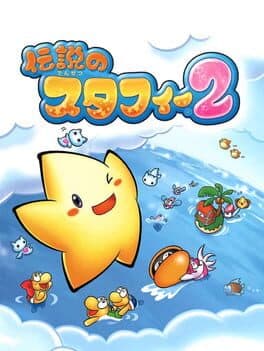
Densetsu no Starfy 2
Tose2003
Stafy is now back at Pufftop Palace, playing with his friend Moe. Ogura, imprisoned inside the Magic Jar, unleashes his children into the sky. Ogura's children cause a series of thunderstorms and earthquakes that shake Pufftop Palace, causing the Magic Jar to shatter and release Ogura.
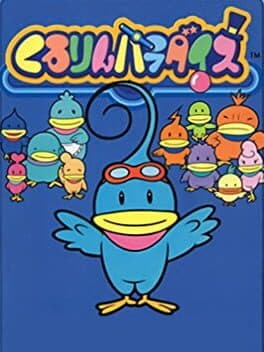
Kururin Paradise
Eighting2002
Kururin Paradise revolves around avoiding collisions as the player maneuver a robot through levels. The robot is shaped like a stick, and constantly spins. The second in the Kururin franchise, Paradise involves navigating complex levels with a constantly-rotating robot. Spring objects within levels change the direction of rotation when collided with, and an unlockable ability allows for increasing the speed of rotation. The player has three hit points. After three collisions with objects in the level (discounting the aforementioned springs), the level is re-started. Some levels have intermediate points that replenish health fully. However, they do not save progress. If the player loses all of his or her hit points, they still restart the level from the beginning. Almost all of the game is in Japanese.
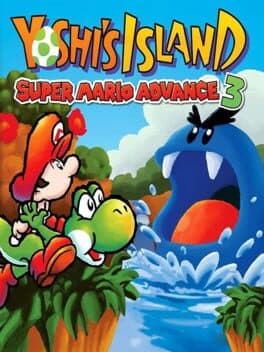
Yoshi's Island: Super Mario Advance 3
Nintendo R&D22002
Super Mario Advance 3 is a GBA remake for the SNES with the dinosaur Yoshi and his friends as main characters carrying Baby Mario and Luigi on their back. Super Mario Advance is a four-part series for the GBA with Super Mario games of the NES and SNES era. The remakes came with adjusted graphics, sound and additional content. Each game of the series includes additionally the arcade-classic "Mario Bros" which can be played in multiplayer via link cable.

Densetsu no Starfy
Tose2002
In the beginning, Starfy was moving things around Pufftop Palace, until he tripped and dropped some things he was moving. One of them fell into the ocean, which was the Magic Jar, an object that seals the evil being known as Ogura.
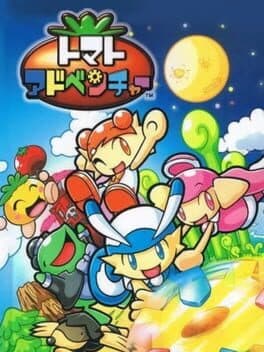
Tomato Adventure
AlphaDream2002
From AlphaDream and Graphic Research, Tomato Adventure is an RPG released only in Japan. Taking place in a kingdom with tomatoes abound, the gameplay is similar to that of the Mario & Luigi series. Tomato Adventure, in terms of gameplay mechanics, is the predecessor of the Mario & Luigi series of games, even having its engine reused in the first installment on the GameBoy Advance. Originally developed for the Game Boy Color, Tomato Adventure transitioned to its successor, the Game Boy Advance, when the latter was released. The main difference between the two versions is believed to lie in the quality of audio and graphics, although little substantial information exists on the Game Boy Color version. Tomato Adventure incorporates a number of RPG standards such as leveling up and travelling to various places to advance the plot. However, the battle system itself is substantially different than most games in the genre, as players have a more active role in how the fights turn out. During the player's turn, they can select a character's attack and then their target. From there, they must perform one of a number of different minigames which determines how successful the attack is. These range from simple button mashers to stopping a meter at a specific point. While attacks can land without reaching the optimal point, their effectiveness tends to be severed in the process. Additionally, each attack has a separate amount of usage points which dictate how many times the player can use that specific attack before needing to revitalize themselves.
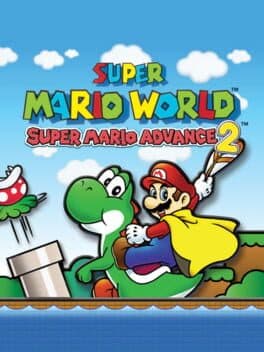
Super Mario World: Super Mario Advance 2
Nintendo R&D22001
Super Mario Advance 2: Super Mario World is a remake of Super Mario World for the Game Boy Advance starring Mario's dinosaur friend Yoshi for the first time. Super Mario Advance is a four-part series for the GBA with Super Mario games of the NES and SNES era. The remakes came with adjusted graphics, sound and additional content. Each game of the series includes additionally the arcade-classic "Mario Bros" which can be played in multiplayer via link cable.
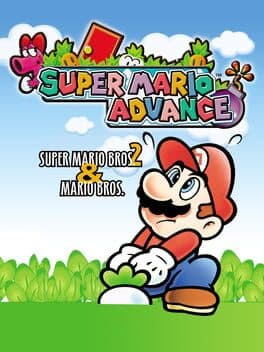
Super Mario Advance
Nintendo R&D22001
An updated re-release of Super Mario Bros. 2 (the American reskin of "Yume Kōjō: Doki Doki Panic," later re-released in Japan as "Super Mario USA") as a Game Boy Advance launch title. Based heavily on the Super Mario All-Stars version of the game, it also features an updated version of the original Mario Bros. arcade game, which can be played with up to three other players via link cable.