-
Average rating
5
Games
0
Votes cast
Heartbeat
Shipped Titles
Games (5)
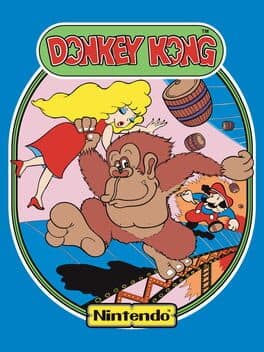
Donkey Kong
Nintendo1981
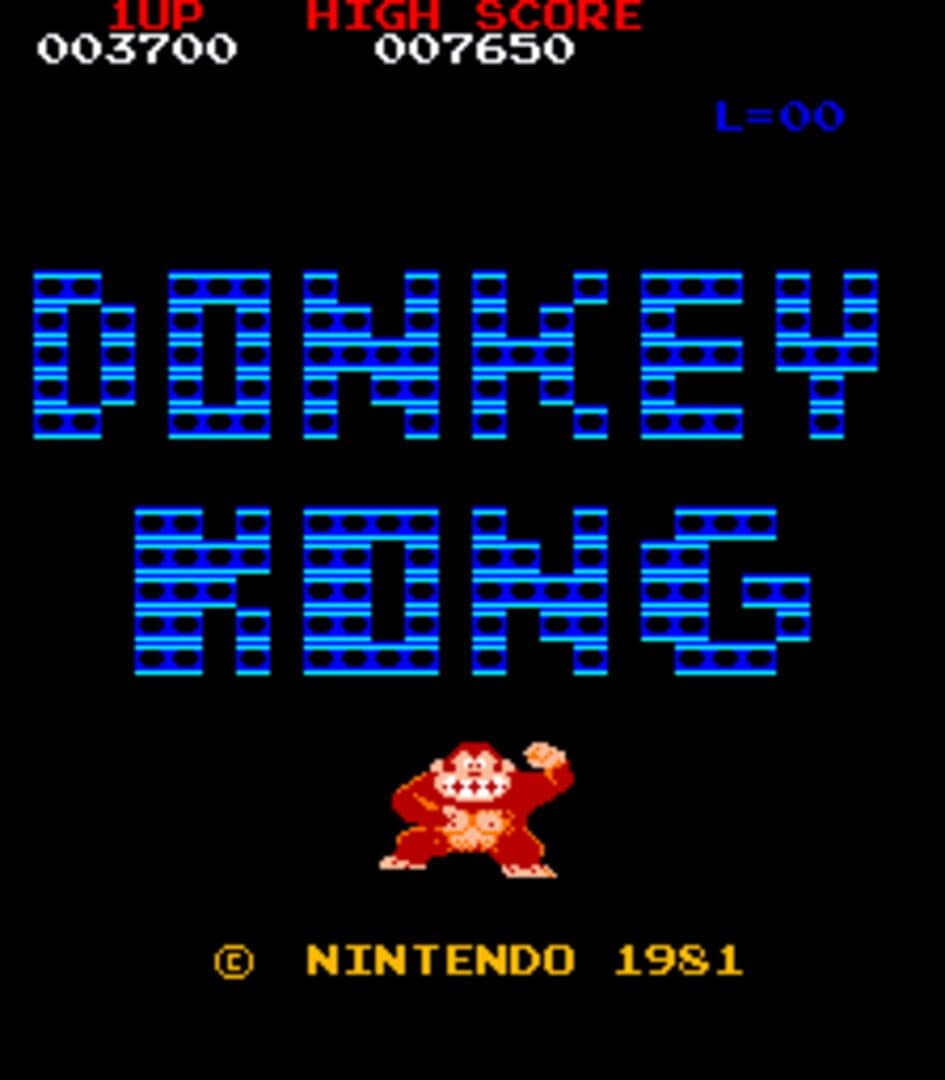
Donkey Kong is not only Nintendo's first real smash hit for the company, but marks the introduction for two of their most popular mascots: Mario (originally "Jumpman") and Donkey Kong. The game is a platform-action game that has Mario scale four different industrial themed levels (construction zone, cement factory, an elevator-themed level, and removing rivets from girders) in an attempt to save the damsel in distress, Pauline, from the big ape before the timer runs out. Donkey Kong is also notable for being one of the first complete narratives in video game form, told through simplistic cut scenes that advance the story.
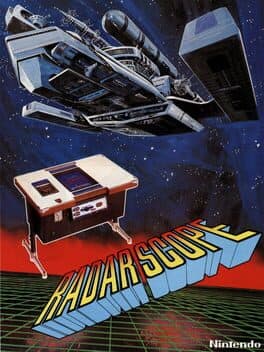
Radar Scope
Nintendo R&D21980
Radar Scope is a 1980 fixed shooter arcade game developed by Nintendo R&D2 and published by Nintendo. The player assumes the role of the Sonic Spaceport starship and must wipe out formations of an enemy race known as the Gamma Raiders before they destroy the player's space station. Gameplay is similar to Space Invaders and Galaxian, but set in a forced perspective angle. Radar Scope was a commercial failure and created a financial crisis for the subsidiary Nintendo of America. Its president, Minoru Arakawa, pleaded for his father-in-law, Nintendo president Hiroshi Yamauchi, to send him a new game that could convert and salvage thousands of unsold Radar Scope machines. This prompted the creation of Donkey Kong. Radar Scope is one of the first video game projects for artist Shigeru Miyamoto and for composer Hirokazu Tanaka. Retrospectively, critics have praised Radar Scope for its gameplay and design being a unique iteration upon the Space Invaders template. One critic labeled it one of Nintendo's most important games because its commercial failure inadvertently led to the creation of Nintendo's mascot character and helped pave the way for the company's entry into the console video game market.
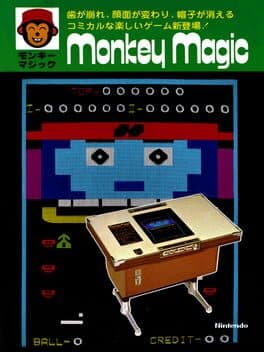
Monkey Magic
Nintendo R&D11979
Monkey Magic is a video game released in arcades by Nintendo in 1979. It is a Breakout clone and one of Nintendo's earliest arcade games. Some sources claim that Ikegami Tsushinki also did design work on Monkey Magic. Players control a paddle to hit the ball at a large number of blocks shaping a monkey's face. Players can also earn different numbers of points by catching blocks that fall, as well as hitting the ball in different places.
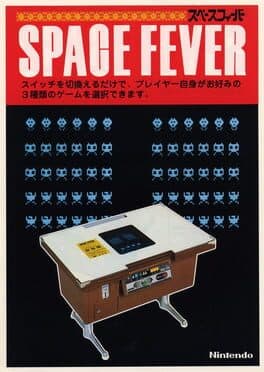
Space Fever
Nintendo R&D21979
Shoot aliens as they move across the screen. Shoot the spaceship for extra points. Choose one of three games. Space Fever is a 1979 arcade game by Nintendo R&D2. Some sources claim that Ikegami Tsushinki also did design work on Space Fever. It was released in both monochrome and color versions. The gameplay is similar to Space Invaders, which had been released by Taito in 1978. It was distributed by Far East Video. The gameplay of Space Fever is reminiscent of Space Invaders (1978), where the player controls a laser cannon situated at the bottom of the screen and must defeat waves of enemy aliens. The aliens are arranged in rows and slowly move to the edge of the screen, before descending and continuing in the opposite direction. As more aliens are defeated, they increase in speed. A UFO will occasionally appear towards the top of the screen, which can be shot down for bonus points. There are three game modes that change the way the aliens move; the first presents two formations of enemies that move in opposite directions, the second continuously adds additional rows of aliens, and the third is functionally identical to Space Invaders.
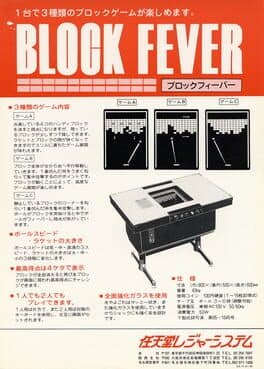
Block Fever
Ikegami Tsushinki1978
Block Fever was a simple Breakout clone that served as one of Nintendo's first video game releases.