-
Average rating
30
Games
0
Votes cast
Heartbeat
Shipped Titles
Games (30)
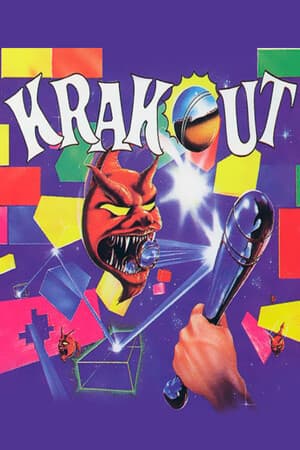
Krakout (C64/CPC/Spectrum)
Gremlin Graphics2023
In this simple twist on classic arcade block-breakers, originally released in 1987, take on the challenge of 100 fiendish levels. Contains the Amstrad CPC, Commodore 64 and ZX Spectrum versions of the game.

Tour de Force
Gremlin Graphics2023
In this unique racing game from 1987, take to the bike track to experience the thrills and excitement of international Grand Prix cycling. Contains both the Amstrad CPC and ZX Spectrum versions of the game.
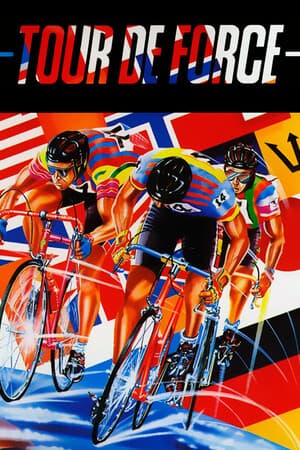
Tour de Force (CPC/Spectrum)
Gremlin Graphics2023
In this unique racing game from 1987, take to the bike track to experience the thrills and excitement of international Grand Prix cycling. Contains both the Amstrad CPC and ZX Spectrum versions of the game.
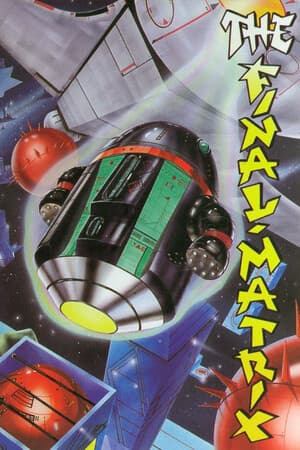
The Final Matrix (CPC/Spectrum)
Gremlin Graphics2023
In this unique top-down shooter, originally released in 1987, take on the role of the plucky little Biopton Nimrod, sent on a dangerous mission to rescue his friends from the 'Matrix' prison planets of the Cratons. Contains both the Amstrad CPC and ZX Spectrum versions of the game.
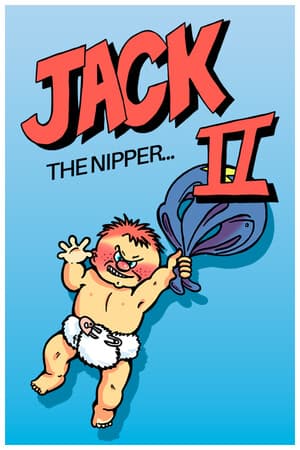
Jack the Nipper II (C64/CPC/Spectrum)
Gremlin Graphics2023
In this cheeky platformer sequel from 1987, jump, climb, swing and toddle through the jungle, picking up useful items and dodging fearsome enemies, all in an attempt to be as naughty as possible! Contains the Amstrad CPC, Commodore 64 and ZX Spectrum versions of the game.
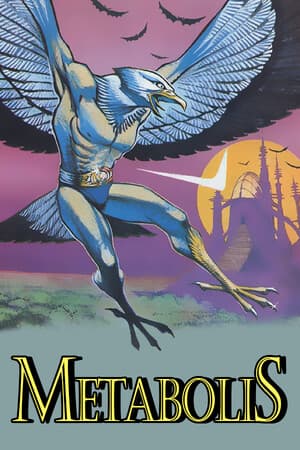
Metabolis (C64/Spectrum)
Gremlin Graphics2023
In this surreal platformer, released in 1985 for the Commodore 64 and ZX Spectrum, you have been transformed into a bird, and must fight to save the human race from the invading Kremins by exploring an expansive world and collecting useful items.
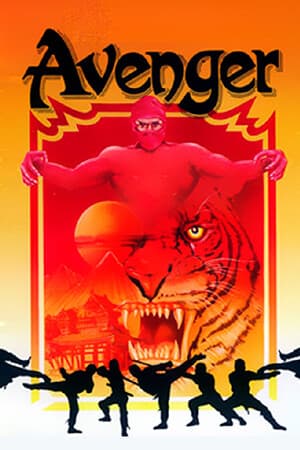
Avenger (C64/CPC/Spectrum)
Gremlin Graphics2023
Find the stolen Scrolls of Kettsuin and avenge your father's death in this top-down action game set in the world of the Way of the Tiger gamebook series, originally released in 1986. Contains the Amstrad CPC, Commodore 64, and ZX Spectrum versions of the game.
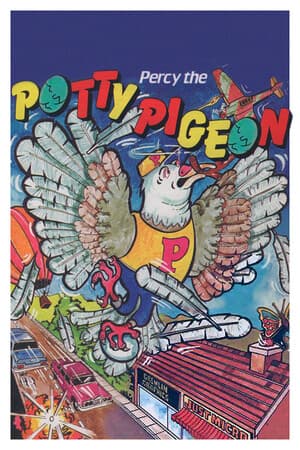
Percy the Potty Pigeon (C64/Spectrum)
Gremlin Graphics2023
In this side-scrolling egg-em-up, released in 1984, take on the role of Percy as he struggles to build a nest and feed his needy offspring. Contains both the Commodore 64 and ZX Spectrum versions of the game.
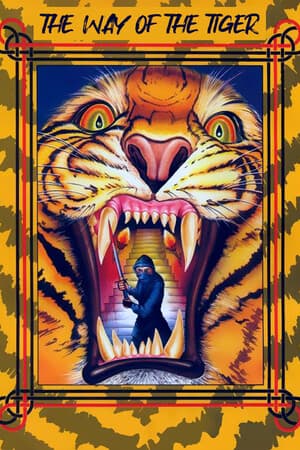
The Way of the Tiger (CPC/Spectrum)
Gremlin Graphics2023
In this beat-em-up from 1986, take on the role of Avenger, the ninja warrior, as he battles the forces of evil in defence of his faith and protection of the weak. Based on the popular series of fantasy adventure gamebooks.
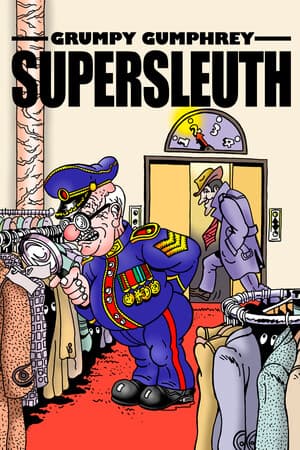
Grumpy Gumphrey: Supersleuth (CPC/Spectrum)
Gremlin Graphics2022
Take on the role of Gilbert 'Grumpy' Gumphrey, veteran store detective, in this classic game from 1985. Perform various tasks, from rescuing children, to putting out fires, to getting the boss a nice cup of tea, but be careful - fail to manage your time correctly and you could get the sack!
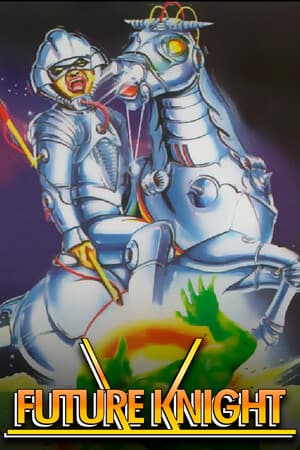
Future Knight (CPC/Spectrum)
Gremlin Graphics2022
In this classic platformer from 1986, take on the role Sir Randolph as he quests to free the fair maid Amelia from the evil clutches of Spegbott the Terrible. Acting upon an inter-dimensional distress signal from the galactic cruiser SS Rustbucket, don your Omnibolt Mark IV and venture forth!
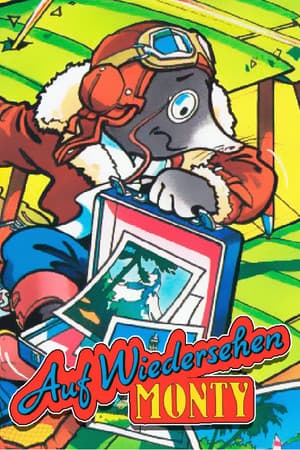
Auf Wiedersehen Monty (CPC/Spectrum)
Gremlin Graphics2022
In this classic platformer from 1987, take on the role of noted small subterranean mammal criminal Monty Mole, fleeing across Europe from the forces of Intermole. Can you collect enough cash to buy an island paradise and live in luxury?
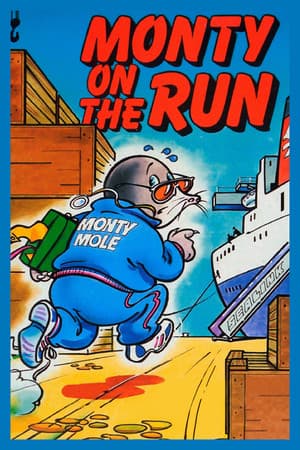
Monty on the Run (CPC/Spectrum)
Gremlin Graphics2022
In this classic platformer from 1985, take on the role of noted small subterranean mammal criminal Monty Mole, recently escaped from Scudmore Prison and fleeing for his life! Can you make the cross-channel ferry in time?
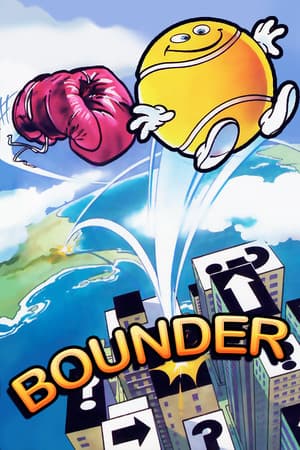
Bounder (CPC/Spectrum)
Gremlin Graphics2022
In this unique top-down platformer from 1985, as a living tennis ball bounce across dozens upon dozens of screens of tricky platforms suspended in the sky. Land on special tiles that produce a number of effects.
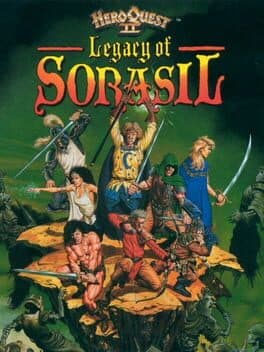
HeroQuest II: Legacy of Sorasil
Gremlin Graphics1994
The isometric role-playing game engine of the original Hero Quest license is reused in this sequel, set in the evil-infested land of Rhia. There are now 9 large missions to take on, with a largely linear progression in the order these are played. You can choose a team of 4 from 8 character classes, adding rangers, mystics, elves and clerics to the original game's 4. The exact abilities of these can be customized before you start. The game is controlled using action icons at the bottom of a screen to set the basic instructions to move, fight, open doors, search for keys and so on. Characters can move individually, allowing for diverse strategies based on the specific strengths and weaknesses of these characters.
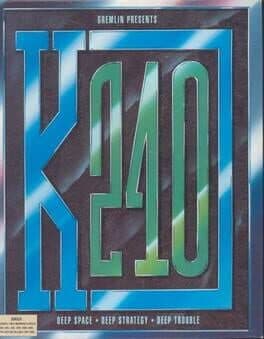
K240
Gremlin Graphics1994
A space-based resource management game, loosely a sequel to the earlier Utopia. You start building your community on an asteroid, whose natural resources must be mined and put to use. You must use generators to power the mines and their auxilliary buildings such as storage facilities, which must be maintained. All of this costs money, but the mined resources can be sold or used. Problems you face include pollution, collisions with other asteroids, worker discontent and alien unrest. Battles against the aliens indigenous to the area must be fought, making building and maintaining a space fleet a priority.
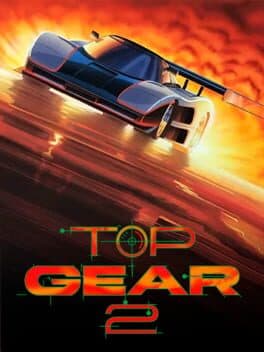
Top Gear 2
Gremlin Graphics1993
This third-person racing game resembles Gremlin's earlier Lotus series, in terms of its general look and feel, right down to the text font used in the game. Your task is to race through 16 countries, each of which features four races, with many real-world circuits recreated in incongruous locations (such as the Monza layout in Ayers Rock, and the old Hockenheim in Vancouver). These four-race blocks each represent their own mini-championship, in which you race against 19 cars, needing to finish in the top 10 to continue, and with the top 6 scoring points 10-6-4-3-2-1, and the respective amount of money in thousands. This can be spent on various upgrades, ranging from engine to tires (wet and dry) and from shocks (front, side and rear) to gearboxes. The ideal approach is to buy the more expensive versions ASAP, as you get no saving when upgrading. If you win the four-race championship, you get the next password. You get a set amount of nitro boost to use during each race, although bonus nitros, money and instant speed-up token appear on many tracks. Hazards such as puddles, barriers and ramps are also frequent.
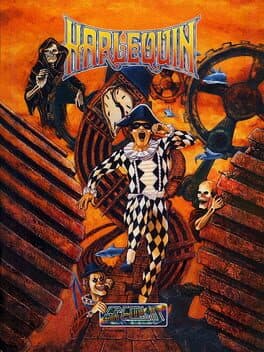
Harlequin
The Warp Factory1992
Harlequin is a strategy-based platform game for the Commodore Amiga and Atari ST released in 1992 by Gremlin Graphics.
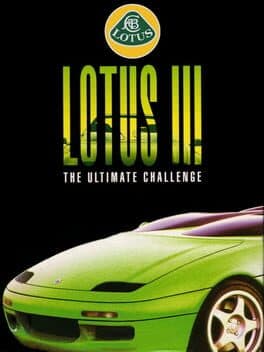
Lotus III: The Ultimate Challenge
Magnetic Fields1992
The third game in the series combined the gameplay aspects of its predecessors, allowing players to choose between racing opponents of Lotus Turbo Challenge or the arcade-like time trials of Lotus 2. The two-player option was retained and the music selection feature returns (Patrick Phelan's soundtrack to Lotus III spawned many modern remixes). Lotus III also added a third car - a concept Lotus M200 automobile - and allowed the player to choose which one to race with. The game recycled most of the graphics from Lotus 2, but added a number of new sceneries.
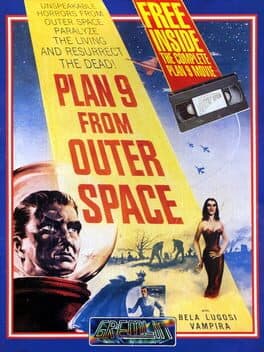
Plan 9 From Outer Space
Gremlin Graphics1992
Plan 9 from Outer Space is a point and click adventure game developed by Gremlin Ireland for the Amiga and Atari ST. It was released in 1992 and published by Gremlin Graphics and Konami. A DOS version was made but only released in the USA and Europe. There were two editions of the game. The rarest one came solely packed with the Plan 9 game, while the other edition came with a VHS copy of the film.
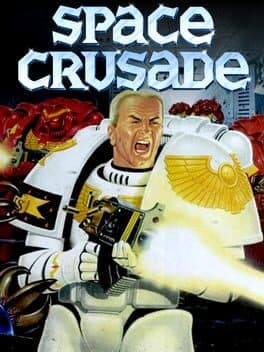
Space Crusade
Gremlin Graphics1992
Space Crusade is an adaptation of Games Workshop/Milton Bradley boardgame of the same name from 1990.
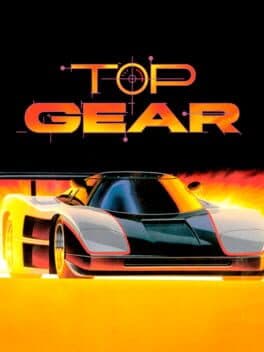
Top Gear
Gremlin Graphics1992
"Top Gear sends players over eight countries around the world with one of four cars, facing sharp turns, pit stops, and debris in this arcade-style racing game."
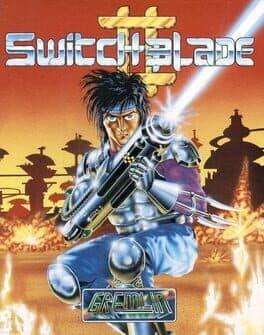
Switchblade II
Gremlin Graphics1991
Switchblade II is a computer action game. It was released for the Amiga and the Atari ST by Gremlin in May 1991, and for the Atari Lynx in 1992. A sequel to Switchblade, Switchblade II is an action-platformer. The action is viewed from the side. The player guides the protagonist, Hiro, through six levels infested with mechanoid, metal-clad enemies. Weapons include a knife, homing missiles, a laser beam, a flame thrower and shuriken. Although the game was developed in the UK, its graphics had a distinctly Japanese style, similar to manga.
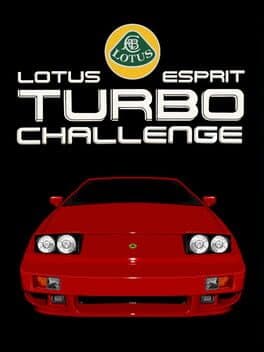
Lotus Esprit Turbo Challenge
Magnetic Fields1990
The first in a series of 3 racing games endorsed by the legendary car company, which is now a part of Proton. The game features a total of 32 fictitious racetracks from around the world, split into 3 difficulty levels. There are 19 computer opponents (15 on the 8-bit versions) and you have to finish in the top 10 (top 8 on the 8-bits) to progress. The higher you finish in one race, the lower down the grid you start for the next race. The opposition drivers have pun names based on the F1 drivers of the day - examples include Ricardo Pastry and Crashhard Banger. You can choose between sound effects or one of a variety of music pieces. The game features a simultaneous 2-player mode, but the 1-player mode only uses half the screen, a simple animation filling the other half. In most races you will have to make a pitstop for fuel in order to reach the finish. The tracks include features such as oil slicks, roadworks, boulders and rivers - contact with these (or the other cars) will slow you, but there is no car damage model.
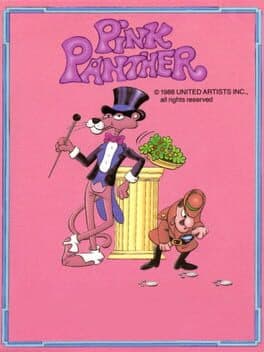
Pink Panther
Magic Bytes1988
A "collect 'em up" where the player must evade a character using cartoon tricks and abilities and collect various objects.

Moley Christmas
1987
Moley Christmas is a video game released in 1987 for the Sinclair ZX Spectrum. It is a sequel to the 1987 video game Auf Wiedersehen Monty, staring Monty Mole. This was available exclusively on the cover tape that came free with 'Your Sinclair' magazine.
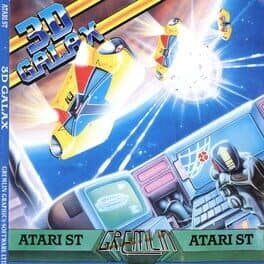
3D Galax
Gremlin Graphics1987
As the name implies, 3D Galax takes the Space Invaders/Galaxian concept into the third dimension. Seen from a first-person cockpit perspective and utilizing flat-shaded polygonal graphics, waves of aliens advance towards the player and must be destroyed with a laser cannon. Unlike in the originals, the aliens never shoot back: the only danger they pose is that of crashing into the player. If any aliens from a wave survive an attack run by not being destroyed before they pass the player, they will try again and again, until either the entire wave or the player is destroyed. The alien formations change every four waves, but not before a bonus stage involving navigating an asteroid field is passed.
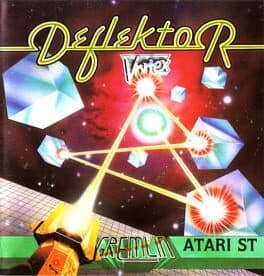
Deflektor
Vortex Software1987
DEFLEKTOR es una experiencia en la lógica del láser. No hay ni héroes ni enemigos, simplemente un magnífico reto de tu habilidad. El objeto de DEFLEKTOR es de completar el circuito óptico. El láser produce un rayo de alta intensidad que debe llegar al receptor antes de que se haya reducido totalmente la energía. Esto se consigue reflejando, refractando y polarizando el rayo por la pantalla; los obstáculos en el camino del rayo pueden reflejar, absorber, o en el caso de la fibra óptica, transportar el rayo. Tienes el poder de controlar el rayo, pero la ruta hasta el receptor está cerrada hasta que hayas utilizado el láser para destruir todas las células. Debes tener cuidado de no sobrecargar el láser tocando minas o reflejando el rayo de nuevo sobre bu propio trazado. Pero no sólo eso: NO ESTAS SOLO... ten cuidado con los Gremlins! CONTROLANDO EL RAYO El láser puede ser dirigido ajustando el ángulo de ios espejos. Los espejos que giran solos pueden parar, o girar más rápido, según la dirección en la que intentes moverlos. Otros factores no pueden ser controlados direc-tamente, pero se pueden usar para afectar al rayo de alguna manera, bien reflej�ndolo, bien rediri-giéndolo. En el caso de la fibra óptica, un rayo que da contra un bloque reaparecerá en otro bloque en otara parte de la pantalla. Situación de sobrecarga Puedes sobrecargar tu láser de tres maneras: 1. Reflejo total. Si el rayo se refleja directamen-te sobre su propio recorrido y vuelve al láser lo sobrecalentará. 2. Demasiada distancia. Si el rayo debe reco-rer una distancia demasiado larga se debilitará y hará fallar el laser. 3. Alerta de minas. El rayo de láser ha colisio-nado con el campo de minas. Se crea un exceso de corriente que llevará rápidamente a un sobrecalentamiento. En todos estos casos debes redirigir de inme-diato el rayo y esperar que vuelva a cero el indicador de sobrecarga.
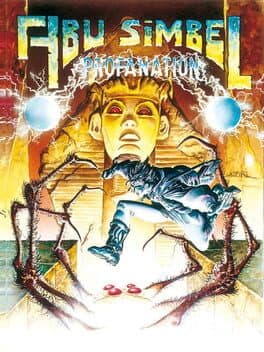
Abu Simbel Profanation
Dinamic Software1985
The protagonist, Johny Jones, have been mutated by the curse of Abu Simbel, becoming a strange creature that only conserves his enormous nose of his old appearance. In order to get rid of the curse he is forced to travel to Egypt to the pyramid where is the tomb of Abu Simbel, and where it must arrive after discovered the keys that will lead him to this place. If he obtains it, he will recover his normal appearance. As logical, the pyramid is filled of traps and strange creatures who will suppose a serious obstacle for our pretensions, and the only weapon is our skill to be jump from a side to another one without falling in the claws of our enemies, or the traps that are in all places. He can do long or short jumps, according to the situation in which one is.
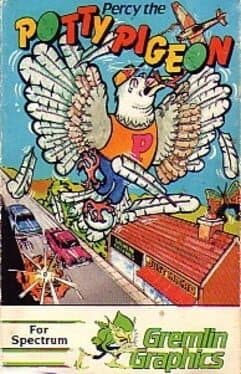
Potty Pigeon
Gremlin Graphics1984
Percy The Potty Pigeon is a 1984 computer game developed by Shaun Hollingworth and released by Gremlin Graphics for the Commodore 64 and ZX Spectrum. The goal was to fly around and collect sticks to build your nest. The player could also deficate on cars, and make them crash. This game marks the beginning of Ben Daglish as a composer, although all he did was write the notes for the death tune in the game, it is still this game that got him into composing game music for the Commodore 64. The Commodore 64 version was programmed by Anthony Crowther.