-
Average rating
8
Games
0
Votes cast
Heartbeat
Shipped Titles
Games (8)

Signal
Fupac2009
A game in the genre of horror that tells you the story of the main character named John who works on the space station Atlant. You will find a leisurely gameplay with elements of small puzzles and story narration through the onboard crew records. Welcome to the space station Atlant!

Houkago wa Gin no Shirabe
Fupac2008
Houkago wa Gin no Shirabe is a visual novel videogame released for the PC & the Playstation 2.

Roommate: Asami - Oku-sama wa Joshikousei
VRIDGE2002
As the newlywed husband of your student Onohara Asami, you live with your student bride and help her with homework as well as the rigors of living together and keeping the marriage a secret in school.

Choujin Heiki Zeroigar
Fupac1997
Choujin Heiki Zeroigar is an action shooter. The player controls Zeroigar as a plane and as a robot. The player is awarded experience points, depending on his performance during a stage. The Galactic Emperor Zemu is conquering one planet after the other, planning to expand his empire to the known limits of the galaxy. The reason for his success are huge robots who fight in his armies, developed with the technology invented by the genius scientist Dr. Lulu. But the doctor understands herself that her inventions have caused misery and destruction to other nations. She runs away, taking design plans for the giant robots with her. She arrives on the Earth (Japan, to be exact) shortly after World War II, and with the help of local scientists, develops a powerful robot, that alone can protect Earth from Zemu's attacks: Super God Trooper Zeroigar! Zeroigar is the only shooter for the PC-FX system, continuing the legacy of vertically scrolling shooters from the PC Engine (TurboGrafx) era. The player controls Zeroigar as a plane and as a robot (for boss battles). As in most shooters, power-ups appear frequently. Every level starts with the default weapon, which can be enhanced with these power-ups. Secondary weapons (bombs, torpedoes, etc.) can also be found. A somewhat unusual feature of "Zeroigar" is its leveling-up system. The player is awarded experience points, depending on his performance during a stage. After completing a stage (or after a Game Over screen), the player is able to use those points to increase Zeroigar's parameters (health, defense, weapon power, etc.). The player is given unlimited continues, but he has to begin the level from the first screen each time. Anime-style movies advance the story between levels.

Roommate: Inoue Ryoko
Fupac1997
Roommate: Inoue Ryōko is a love-simulation adventure game and the first title in the Roommate series. The player can freely move about the apartment, and the game mostly consists of voiced dialogue sequences where the player interacts with Ryōko and can respond to her via multiple-choice answers. Unlike many such games, the two weeks of the in-game story progress in real time using the Saturn's internal clock (or the PocketStation in the PlayStation version), and the time and frequency of the player's visits will affect the events that occur and the protagonist's relationship with Ryōko, leading to several different endings. In Roommate Ryoko you have three years to develop a relationship with her. Using a truly innovative real-time feature, the Saturn's internal clock affects how the game plays out. If you play during the day, she isn't around at times. Most of your "interfacing" with her occurs at night (welcome to the next level, indeed). Bad Three's Company allusions aside, there is a good bit of social interaction that goes on - you actually get to know her and have to reveal a lot about yourself. What is most impressive, though, is that the conversation is never recycled - there are thousands of things that Ryoko can say. Seasonal changes affect the game, and although it isn't played in real time, you must adjust your schedule in the game to hers to catch her (this is done by leaving her notes on your shared white board). Don't get antsy and set the Playstation clock ahead though; the Playstation reads that "skipped" time as time you didn't spend talking to Ryoko, and by the time you get to the "future," she'll have moved out. The graphics in Roommate look pretty good - forget polygons or texture mapping though; everything here is drawn two-dimensionally with special attention to detail. The sound is also pretty sharp because Ryoko actually speaks a lot of her dialogue (while it is correspondingly displayed onscreen). Unfortunately though, the gameplay almost entirely consists of listening to your new roommate and picking an appropriate thing to say (a lot like your freshman year of college really).
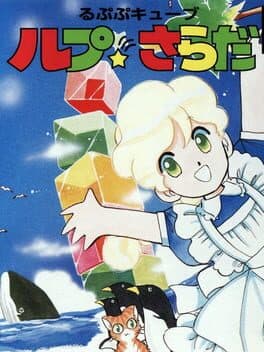
Rupupu Cube: Lup Salad
Fupac1996
Rupupu Cube: Lup Salad is a block-pushing puzzle game developed by Fupac for the PlayStation in Japan only until it offered in the US through PSN Import Classic. It has been ported to both the DS and the PSP in Japan as well. The characters were designed by Izumi Takemoto.

X-Kaliber 2097
Fupac1994
"X-Kaliber 2097" consists of two modes. The first modes gameplay consists of side-scrolling action. The player can jump and swing a sword at enemies. The player can also deflect projectiles with the sword. The game also features one on one boss fights that are set up similar to a fighting game. The second mode is a two player duel that is set up like the one on one boss fights but is between two human controlled players.

Keeper
Fupac1993
Keeper is an action/puzzle game developed by Fupac and published by Bullet-Proof Software, and released only in Japan for the Super Famicom.