-
Average rating
27
Games
0
Votes cast
Heartbeat
Shipped Titles
Games (27)
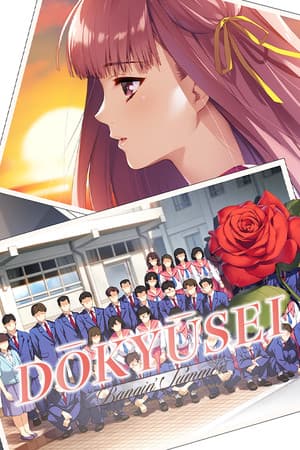
Dōkyūsei: Bangin' Summer
Elf2022
Dōkyūsei is a seminal classic of the dating sim genre that first blew Japan's mind in 1992. This updated remake adds HD art, optional modern features, and for the first time ever, a global release.

ANNOYING ball game
Moronicbody2020
In the ANNOYING ball game you play as a ball. As the ball you go through the obstacle course trying to reach the end. There are 3 endings, it's up to you to find them.

WARIUM
ELF2018
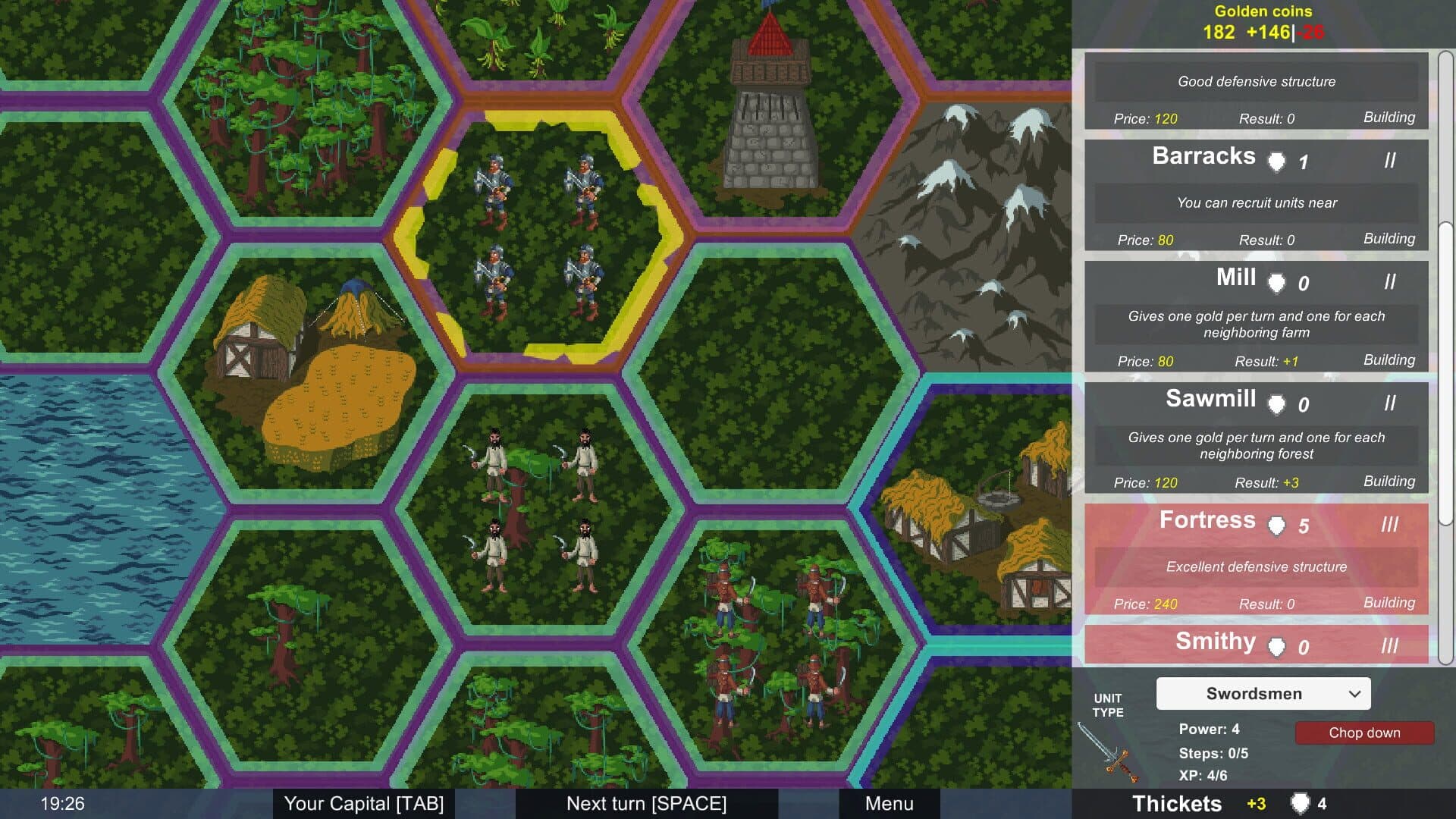
WARIUM is a turn-based strategy for creating your empire. Choose your faction and go ahead. Recruit and upgrade units, build buildings and raise your economy. You are free to choose in which direction to expand your power.
Biniku no Kaori: Bangai Hen
ELF2008
Contains two extra stories - "Ritsuko's sigh" and "Yuki's scent" to Biniku no Kaori.
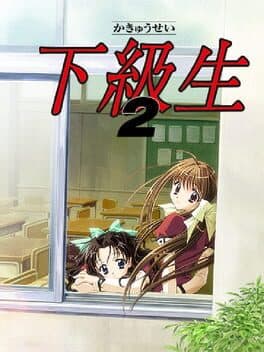
Kakyuusei 2
Elf Co.2004
Kakyūsei 2 is a dating sim and the sequel to 1996's Kakyūsei, itself a spin-off of the Dōkyūsei series. The player is placed in the shoes of a student (default name: Oriya Rouma) during his last year of high school, as he is trying to find a girlfriend before graduation. Over the course of the story, he meets and bounds with nine eligible bachelorettes from his school, and can eventually chose to romance one of them. Much like its predecessors, the gameplay centers around Oriya exploring his school, his local neighborhood, and the city, during which he can enter restaurants, shops, cafés, houses, etc. and potentially encounter the nine dateable girls and learn more about them through having conversations with them. The nature of these conversations usually depends on which location the girl is found at in and tends to feature multiple answers; in most cases these answers will either advance or hinder the progression of the relationship with the girl in question depending on the player's choices, leading to new story events. The game also features an internal clock and calendar, with some events, such as holiday celebrations or birthdays, only happening at certain times or on certain dates. These two systems often times interact, with information given through conversations becoming relevant later down the line - most prominently, the girl in question can give a hint to their tastes in gifts, and if the player later gives them their desired item on their birthdays, it will greatly increase their approval of you. Also like its predecessors, the game features scenes with nudity and explicit sexual situations. [From MobyGames]
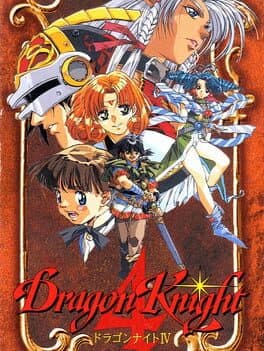
Dragon Knight 4
Vingt et un Systems1996
Dragon Knight 4 is a sequel to Knights of Xentar (Dragon Knight III). Years have passed after Takeru (a.k.a. Desmond, the hero of the previous Dragon Knight games) defeated the ultimate evil. He married his sweetheart Luna, and they had a son named Kakeru. This fifteen-year-old boy has one weakness: he likes naked female elves. But soon he learns that the evil wizard Lushifon wants to turn all people into stones and control the whole world while nobody is able to stop him. Together with the mysterious swordsman Eto and many other heroes, Kakeru must perform his ultimate quest and defeat Lushifon and his minions. The adult content (scenes which include nudity) has been removed from the console releases. The PlayStation version has updated graphics and CG animations.
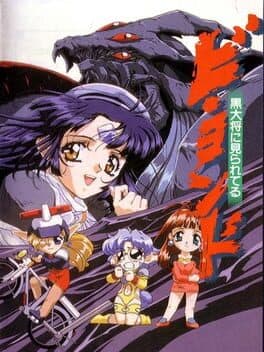
Be-Yond: Kurodaishou ni Mirareteru
ELF1996
When I woke up from the darkness, I learned that I was the legendary Devil of Darkness, that was said to have the power to destroy the universe. The beautiful girls approach me one after another. My shout roars in space. When I pat a villain gently, he is discomposed into molecules... It seems that I have the power... But... am I really the Devil?
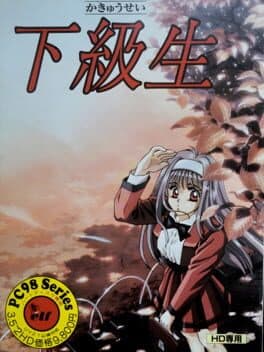
Kakyuusei
ELF Corporation1996
Kakyuusei is a 1996 PC-98 adventure dating sim where the protagonist must date (obviously) a girl or two or a dozen. It was ported to many platforms and has never been localized into any other language besides Japanese officially (only fan translations into Korean and Simplified Chinese). It’s a spin-off of the Doukyuusei titles also made by ELF.
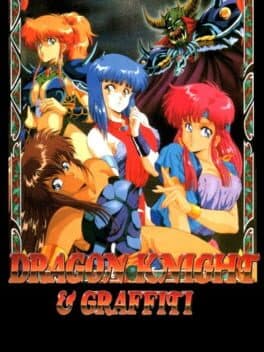
Dragon Knight & Graffiti
Elf Co.1995
Fantasy role-playing game with erotic overtones.
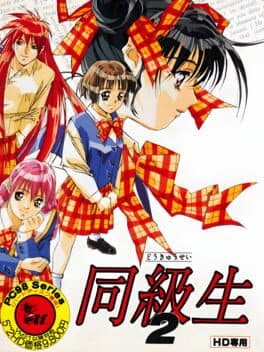
Doukyuusei 2
ELF1995
The sequel to the dating sim that rocked the world (maybe) in 1992! Doukyuusei 2 is a 1995 classic erotic love adventure, a genre that is also referred to as "dating simulations". It has a new location and new protagonist. The aim of the game is the same as the original.
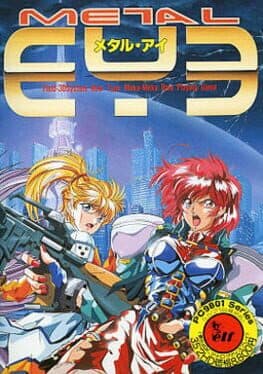
Metal Eye
ELF1993
In Metal Eye, the player takes the role of a young weapons expert named Findhill. His father was apparently involved in a project that dealt with creating artificial life forms. But recently he has disappeared without a trace. Findhill remained alone, in a small town surrounded by vicious monsters. He wants to become a hunter, just like his father once was, to get rid of the monsters roaming the wilderness, and get to the bottom of his father's disappearance and his mysterious project. The game is a rather traditional Japanese RPG: Findhill and his companions, who join the party as dictated by the course of the story, wander around a vast world map, visiting towns, descending into dungeons, and fighting random enemies in turn-based combat viewed from a first-person perspective. The party can carry different types of weapons, including various guns (rifles, shotguns, etc.) with expendable bullets. Weapons and armor are shared by all the characters and need not be equipped on individual combatants. The player can also purchase robotic fighters (called "Metals" in the game) in shops, who would then join the party and participate in battles, controlled by the AI. There are scenes with nudity and sexual situations in the game.
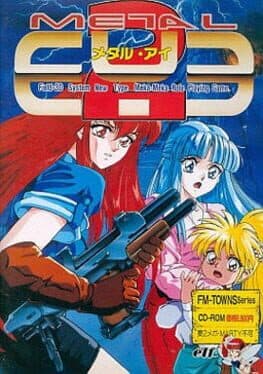
Metal Eye 2
ELF1993
Metal Eye 2 is set in the same sci-fi universe and is closely related story-wise to the first game. In the future, people have built the floating city Zeron, where the best scientists work on creating androids, artificial human beings who look the same way as real ones. Harvest Corporation is the biggest company that creates androids. The hero of the game is a scientist named Wirg, the father of the first game's protagonist. His work is to train the androids after they have been created. One day, the company building is attacked, and Wirg has to escape. He is saved by a nun and brought into a small town in the middle of wasteland, where his adventure begins. The game mostly follows a traditional Japanese RPG template: Wirg and his companions (a party of three) explore the top-down world and fight random enemies in turn-based combat in first-person view. The pictures of enemies appear super-imposed on whatever location the characters are currently in, without separate battle screens. The towns have isometric perspective. Like its predecessor, the game has a large world map that consists of many separate screens, often including dungeon-like locations.
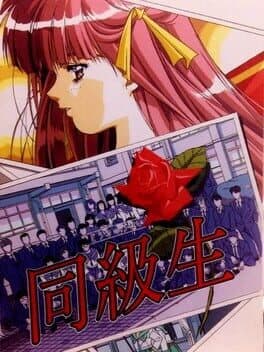
Doukyuu-sei
ELF Corporation1992
Doukyuu-sei is a 1992 erotic dating sim (the first of its kind) where the player can meet 14 girls to have a romantic relationship with. The player takes the role of a high-school student (default name Takurou) in a Japanese town; his parents have just moved into a large mansion in a good district. The boy has to go to the new school, but his mind is preoccupied with one subject only: pretty girls. Instead of studying hard, Takurou decides to explore the city and to find out more about its female inhabitants.
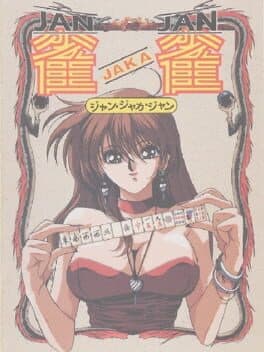
Jan Jaka Jan
ELF Corporation1992
Jan Jaka Jan is a mahjong game in its core, the majority of the gameplay dedicated to mahjong matches (two- as well as four-people) against a variety of opponents. The player can navigate the protagonist around the top-down town and enter various locations, which are viewed from first-person perspective. The player is also able to buy items to increase his parameters during mahjong matches and encounters of sexual nature. Cut scenes occur before and after mahjong games, and many matches and other events are dictated by the story. Defeating a female mahjong opponent usually leads to cut scenes that depict nudity and sexual situations.

De-Ja II
ELF Corporation1992
Like its predecessor, De-Ja II is a Japanese-style adventure. The interface has been enhanced compared to the first game. Most of the commands are still done via the extensive verb menus and object sub-menus; once again, it is usually necessary to use those commands several times in order to gain new information and thus advance the story. However, in certain places, icon-based interface becomes available, with point-and-click interaction. The icons include traditional talking, touching, as well as less common commands such as hitting, and even an icon depicting a condom, for... err... scientific activities that are closer to anatomy than archeology.
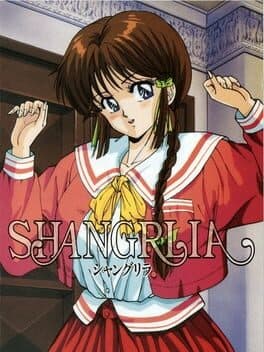
Shangrlia
ELF Corporation1991
Shangrlia is a turn-based tactical game. The ten female commanders reside in the castle and can be approached in any order. Each of them transfers the player to a different location (alternating between urban, dungeon-like, and rural areas) where a tactical battle takes place. Every commander is responsible for a unit type in the army. These types include Lancers, Fighters, Swordsmen, Cannoneers, Horsemen, Archers, Mages, Ninjas, Dragon Riders, and Birds. Enemy forces possess the same unit types. Each type has advantages and disadvantages in terms of power, mobility, range, etc. The goal is to select and position units on the battle field, taking the conditions of the terrain, number of enemies, distance, etc. into consideration. Defending own castle and capturing that of the enemy is the top priority. The battles then proceed in a turn-based fashion. Some unit types can attack from a distance, while others are restricted to fighting on adjacent squares. Battles are displayed as animated sequences on a separate screen, their outcome calculated according to the unit's properties and parameters. After each round of victory, the female general removes an item of her clothing. The final result for each general is an erotic picture with partial nudity and implicit sexual scene, but no explicit images.
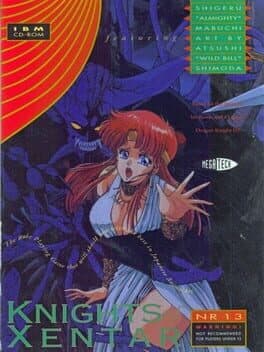
Knights of Xentar
ELF Corporation1991
Dragon Knight III is an eroge role-playing video game released on many Japanese PCs in 1991. It is part of the Dragon Knight series of games created by Japanese game developer ELF, who originally released the game for the NEC PC-9801 computer in 1991, followed by ports for the Sharp X68000 and PC Engine CD platforms. The game is a sequel of Dragon Knight and Dragon Knight II. Its gameplay system is different from that of previous installments of the Dragon Knight series, resembling this of the early Final Fantasy (even more in the PC version) series instead of first-person-view dungeon crawler, and enabling the player to explore the entire world of the game. Some of the characters were renamed in the English and German localized Knights of Xentar release, including the protagonist Takeru's name changed to Desmond.
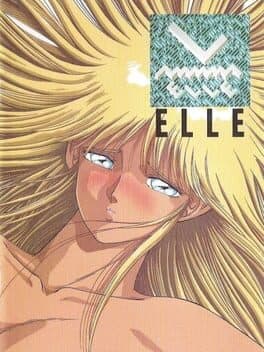
Elle
ELF Corporation1991
Elle is an exciting puzzle game in which you have to collect coins while avoiding encounters with labyrinth keepers. This game is inspired by the legendary Lode Runner.
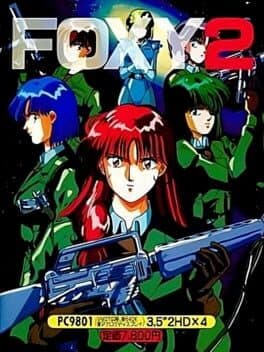
Foxy 2
ELF Corporation1991
Foxy 2 is a turn-based strategy game. The gameplay is similar to its predecessor; it is confined to large-scale strategic battles, in which the player commands different types of units, in an attempt to reach the enemy base, protect his own, and exterminate all enemy units. Like in the first game, the units have distinct strengths and weaknesses, as well as attack range. The game includes even more various types of units, including the traditional infantry, rocket launchers (mobile and stationary), different kinds of tanks, planes, helicopters, etc. The plot is more elaborate than in the first game, and the cut-scenes between the battles typically include more plot-related information. Scenes with nudity and mild sexual content are kept intact.
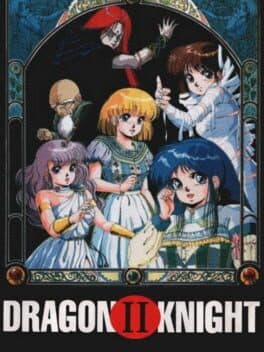
Dragon Knight II
Tamtam1990
Dragon Knight II is the predecessor to Knights of Xentar, the only Dragon Knight game that was ever translated into English. This is a first-person game that is mainly dedicated to dungeon exploring. Takeru has to explore the three dungeons, fighting enemies and sometimes talking to dungeon inhabitants. The enemies are the girls who were turned into monsters by Mesaana. In town, Takeru can also buy weapons, armor, and items, and talk to various people.
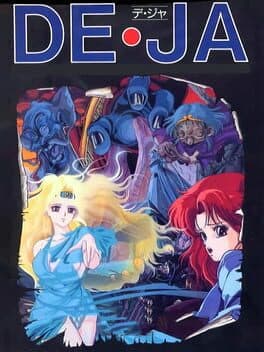
De Ja
ELF Corporation1990
De Ja is a Japanese-style adventure. At every screen, a menu with verb commands appears at the bottom. The commands include Examine, Talk, Ask, Take, Use (an inventory item), Move, as well as other context-specific commands that appear on some screens. Choosing a verb usually leads to an object sub-menu. Typically, the game's story advances once the player has gone through most of the commands and acquired the needed information. The game has some scenes with nudity and mildly depicted sexual situations.
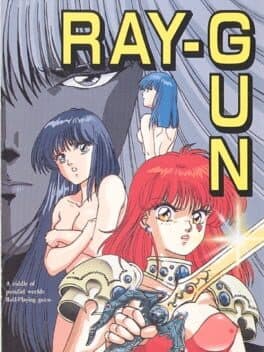
Ray-Gun
ELF Corporation1990
Ray Gun is a traditional Japanese RPG, with top-down navigation, random turn-based battles viewed from first-person perspective, etc. The combat is usually between the player's steroids and enemy ones. Steroids can attack normally or execute special techniques. Many cut scenes feature nudity.
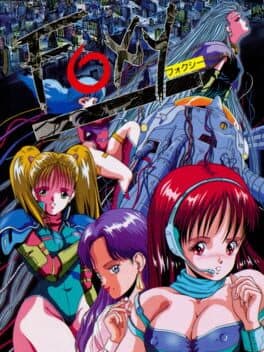
Foxy
ELF Corporation1990
Foxy is a pure strategy game, without any RPG elements. The player is taken from one battle to another; there is no gameplay outside of battles. The battles take place in various city districts. The player navigates his/her units in turn-based fashion. In the beginning, the battles are relatively small-scale, with infantry and tank units; as the game progresses, more unit types are introduced, including massive rocket-launching tanks, jet planes, catapults, etc. Each unit has distinct advantages and disadvantages, different mobility, attack range, etc. For example, infantry units that carry rocket launchers can only attack diagonally, but cannot be hurt when they attack tanks from that position; being attacked frontally, however, makes them very vulnerable. Terrain also plays a role; certain terrain types may slow down certain unit types, or be completely impassable to others. Each next battle features more complex layouts and larger amounts of units. Between the battles there are cut-scenes, most of which are dedicated to rescuing the girls, and feature nudity and mild sexual situations.
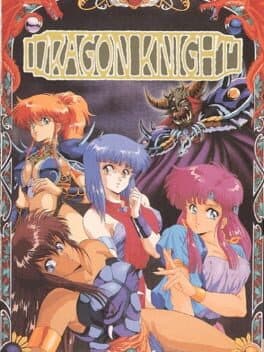
Dragon Knight
ELF Corporation1989
Dragon Knight is a soulslike parody in which you play as the worst knight in the kingdom sent on the classic quest- Take the magic sword, save the monster, slay the girl... err, no, was it…
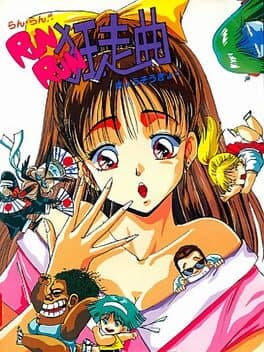
Run Run Kyousoukyoku
ELF Corporation1989
Run Run Kyousoukyoku is an arcade-style on-foot racing game. It uses a split-screen side-scrolling view and can be player against computer-controlled opponents or in a two-player mode. The latter allows players to choose any stage, while the former follows a linear set of levels, starting in Tokyo and advancing to the USA via China and Europe. The courses typically feature platforming sections alongside flat terrain; it is usually required to jump in a timed fashion to succeed, and jumps can vary in height and length depending on how long the player holds the correspondent key. Runners would also take falling damage in certain spots.
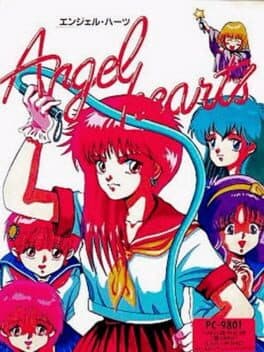
Angel Hearts
ELF Corporation1989
Angel Hearts is a dead simple RPG developed by ELF in 1989. The gameplay resembles that of "dungeon crawlers", meaning that there are no friendly areas; though the view for exploration is top-down rather than first-person (which is reserved for the turn-based battles). The gameplay mechanics are mostly confined to fighting random enemies and earning enough experience points to go up a level and standing a chance against the next "boss" enemy. There is no equipment system, and battle commands are restricted to "Attack", "Escape", and "Item".
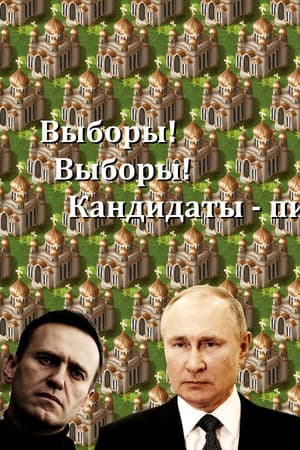
Best Election Simulator In Russia!
ELF
Who is your admiral general communist oligarch in the bright Russia of the future? Putin? Trump? Navalny? #BLM?