-
Average rating
18
Games
0
Votes cast
Heartbeat
Shipped Titles
Games (18)
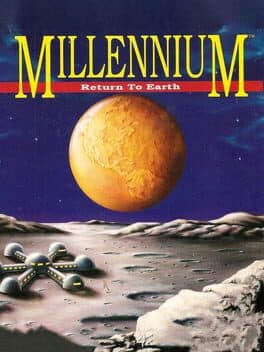
Millenium: Return To Earth
Software Studios1989
Millenium: Return To Earth is a strategy game, in which player commands human colony on the Moon. Gameplay focuses on colonizing other planets, gathering resources and building starships.
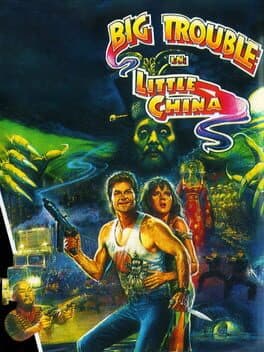
Big Trouble in Little China
Focus Creative Enterprises Ltd., Software Studios1987
Embark on an action-packed adventure tied to the 1986 John Carpenter movie and thwart the wicked plans of Mandarin Lo Pan. Take control of three characters; Jack Burton, Wang Chi and Egg Shen. Each character has an energy bar represented by a Yin and Yang symbol. Find food to replenish their energy. Collect weapons and magic potions to enhance their strength. Make sure to keep their statuses from falling too low to ensure survival. Fight your way through levels, starting in Chinatown where you'll face martial artists and gunmen. Traverse treacherous sewers and reach Lo Pan's lair, confronting formidable Storms. In the Marriage chamber, defeat armored warriors and Lo Pan to rescue the girls.
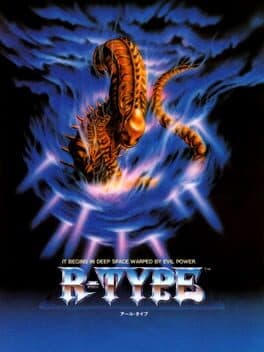
R-Type
Irem1987
R-Type is set in the 22nd century, and the player flies a futuristic fighter craft called the R-9a "Arrowhead", named for its shape, and because it is the ninth model in the 'R' series of fighter craft (but it is the first of the series to actually be used in combat; the previous models were all prototypes). The mission is to 'blast off and strike the evil Bydo Empire'. The R- in the series title originally stood for "ray", as in a ray of light. It was a reference to the many different types of ray-like weapons in the first R-Type. his was later retconned in R-Type Final to refer specifically to the production code as well as a term of endearment for the player fighter craft, the "Round Canopy". The original R-Type was well received by most gaming critics. However, it was also infamous for its relentless difficulty. It earned 7th place in IGN's Top 10 most difficult games to beat. The gameplay of R-Type is noticeably distinct among shoot 'em ups. Invariably the player will lose, not because of an inequality in firepower, but because of the design of the levels themselves. There is usually a 'correct' way to get through a level, but players must learn these by experience - i.e. by losing and restarting from earlier in the level. The game innovated with its weapon system compared to contemporary shooters, featuring a chargeable shot (beam-meter), and detachable 'force' pod; levels were designed to require different tactics and ideal weapons (air-air, diagonal, or air-ground laser).
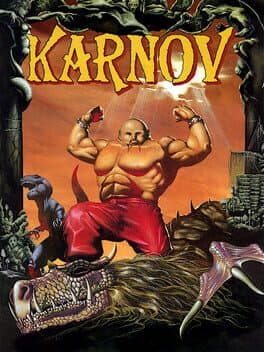
Karnov
Data East1987
Karnov is a 1987 platform arcade game. It is the debut of Data East's mascot of the same name. After Data East became defunct due to bankruptcy in 2003, Paon, a company comprising former Data East staff, acquired the rights to Karnov, along with multiple other Data East games. In the game, players take control of the title character Jinborov Karnovski, or "Karnov" for short. Karnov is a strongman popularly illustrated as being from an unspecified part of the Soviet Union's Central Asian republics as shown on the original arcade flyer and again in Karnov's Revenge.
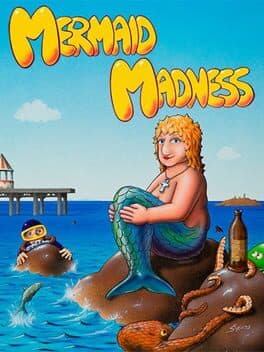
Mermaid Madness
Soft Design Ltd.1986
In Mermaid Madness the player takes the role of the weighty mermaid Myrtle who finally, after 112 years, found the man of her dreams: the diver Gordon. Unfortunately he is not very enthusiastic, flees into the water and jams himself under a ship. Myrtle's first priority is to save Gordon. The player navigates Myrtle through an underwater labyrinth (although there a few screens above ground) and collects items. Those items have to be used in another location to proceed. It is also important to avoid enemies because touching them reduces her life energy, which can be refilled by finding beer bottles. There is no scrolling and Gordon's air supply acts as time limit.
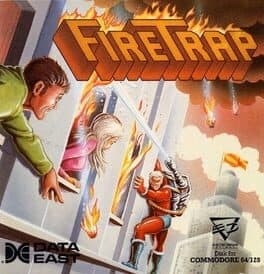
FireTrap
Wood Place Inc.1986
Set Your Computer Alive With FireTrap Firetrap scorched its way through the arcades. Now it's ready to burn its way onto your screen. If you've got cool hands, get ready to climb the burning skyscrapers, putting out fires as you go, to rescue the people trapped inside. Firetrap is hot!
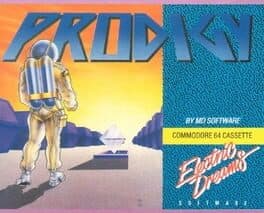
Prodigy
MD Software1986
The tyrannical Wardlock has created two humanoids within his mechanical world, for his own amusement. Solo the Synthelman must lead Nejo the baby out of this nightmare and to safety. There are four worlds to get through, Ice Zone, VegieZone, Tech Zone and Fire Zone. These are linked via teleports and all full of nasties to fend off and protect Nejo from. The Ice Zone contains oxygen bubbles which must be popped to keep you breathing well. Nejo needs feeding and taking to the showers regularly.
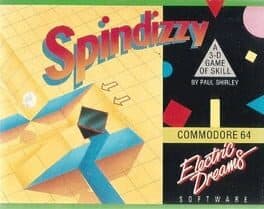
Spindizzy
1986
As GERALD (Gyroscopic ExploRAtion Landing Device) you must explore 385 screens of Hangworld, using limited fuel. The game is viewed isometrically, which means that the controls are rotated through 90 degrees - this, coupled with the fact that many screens have huge gaps and diagonal paths, means that it's hard to get far at first. Falling off ledges loses you time, which is very limited to start with Gerald must collect energy crystals throughout his journey - which can also be shortened by using a complex system of lifts. Sections you have travelled through are automatically mapped.
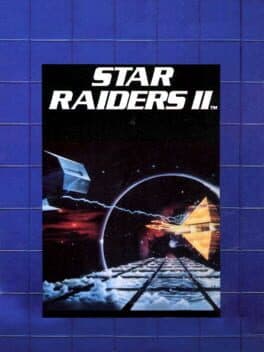
Star Raiders II
Atari Corporation1986
Star Raiders II is a video game released in 1986 for the Atari 8-bit home computers, and later several other home computers and game consoles. The game was originally developed as part of a tie-in with the movie The Last Starfighter, which featured an arcade game of the same name as part of its plotline. Versions for the Atari 5200 and the Atari 8-bit computers were developed in 1984, although those were never released. Later the tie-in was dropped, and the game converted into a sequel to Star Raiders by changing a number of gameplay elements. The gameplay remained quite different from the original Star Raiders.
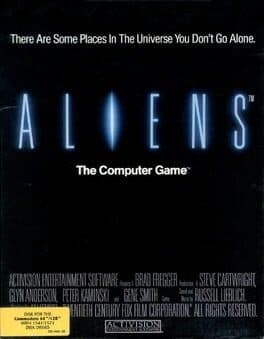
Aliens: The Computer Game
Activision1986
Aliens: The Computer Game is a 1986 video game developed and published by Activision for the Commodore 64, Apple II based on the film of the same title. As Activision's UK subsidiary Electric Dreams Software had independently released their own version of the game with the same title, the game was renamed for European release. Initially planned to be released as Aliens: The Second Part, it was finally published under the title Aliens: US Version with ports for the Amstrad CPC and ZX Spectrum produced by Mr Micro. Aliens is a series of six minigames strung together via graphical interactive sequences, akin to an adventure game, though the only interaction possible is advancing the dialog, displayed in speech balloons. The minigames are mostly action sequences that involve piloting a ship from Sulaco to the planet's surface, recognizing equipment, and fighting aliens.
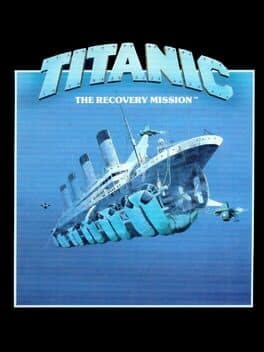
Titanic: The Recovery Mission
Oxford Digital Enterprises Ltd.1986
The game combines both above and below water aspects. Above the water, you must manage the company, press conferences and finances. Below the water, you explore the Titanic and her many secrets by navigating T.S.1 (your underwater robot) through a maze-like environment while trying to find a way to raise the ship to the surface.
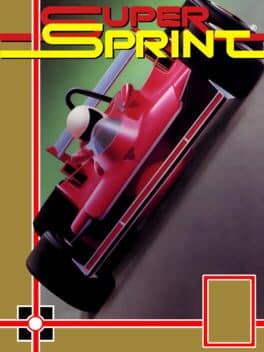
Super Sprint
Atari Games1986
Super Sprint is a racing video game released by Atari Games and Midway Games in 1986. Up to three players drive Formula One-like cars on a circuit that is viewed from above. The game is a successor to Gran Trak 10 and the Sprint series, which were black-and-white games from the 1970s. A sequel, Championship Sprint, was released later in the same year.
Championship Sprint
Atari Games1986
Championship Sprint is an arcade game that was released in 1986 and was the sequel to Super Sprint
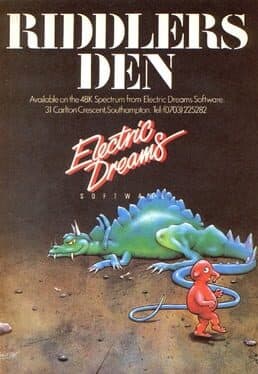
Riddler's Den
ZiggySoft1985
Riddler's Den is similar to Ultimate's games such as SabreWulf or Atic Atac, twinning maze with puzzle-solving elements - and it also includes some RPG elements. Regarding the story, Trunkie, the Manlephant, has entered the Riddler's Den to complete the 1st part of his quest by finding the Golden Tusk and ultimately meet the Great Golden God Gregogo. To be successful in these tasks, Trunkie will have to decipher how to take advantage from the many objects he'll find in the way.
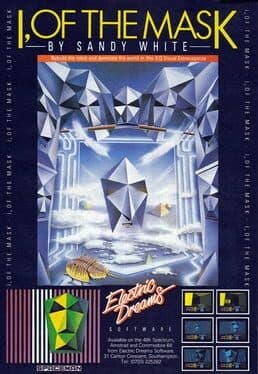
I, of the Mask
Spacemen Ltd1985
A action game in which the task of the player is to search the maze and collect the parts of a robot, in the correct order, before energy is exhausted.

The Rocky Horror Show Computer Game
CRL Group PLC1985
The Rocky Horror Show Computer Game is a 1985 video game for the Commodore 64, Commodore 128, ZX Spectrum and Amstrad CPC created by the CRL Group PLC. The game involved playing as either Brad or Janet and collecting pieces of the Medusa machine scattered around the castle, in order to free your partner from stone and escape the castle before it blasts off. Meanwhile, the other characters in the game can hinder your progress by stealing and hiding your clothes along with what you are carrying. Riff-Raff can kill the player with his laser gun, and Eddie can run the player over with his motorcycle should he thaw out and escape from his freezer.

Deus Ex Machina
Automata U.K. Limited1984
Deus Ex Machina is a 1984 ZX Spectrum and Commodore 64 surrealistic game with a heavy focus on sensory experience above interactive gameplay. You play a defect - a human form that has formed within an all controlling A.I. While the defect police is after you, your humanlike Alter Ego transforms through several stages of a human being. While the game does not offer any audio, the story is progressed through the narrative on the audio cassette which accompanies the game and has a running time of roughly 45 minutes - the amount of time the game is meant to play in one sitting.
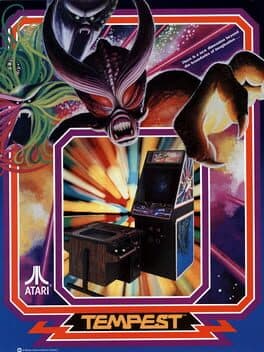
Tempest
Atari1981
Tempest is a 1981 arcade game by Atari Inc., designed and programmed by Dave Theurer. It takes place on a three-dimensional surface, sometimes wrapped into a tube, which is viewed from one end and is divided into a dozen or more segments or lanes. The player controls a claw-shaped spaceship (named Blaster) that crawls along the near edge of the playfield, moving from segment to segment. Tempest was one of the first games to use Atari's Color-QuadraScan vector display technology. It was also the first game to allow the player to choose their starting level (a system Atari dubbed "SkillStep"). This feature increases the maximum starting level depending on the player's performance in the previous game, essentially allowing the player to continue. An official port was released for the Atari ST. An official port that bears the Atari logo was released by Superior Software for the BBC Micro and Acorn Electron in 1985, and another by Electric Dreams for the ZX Spectrum and Amstrad CPC in 1987. Versions for the Atari 2600 and 5200 were in the works in Atari, Inc. during 1984, and unfinished prototypes exist for both of them.