-
Average rating
31
Games
0
Votes cast
Heartbeat
Shipped Titles
Games (31)
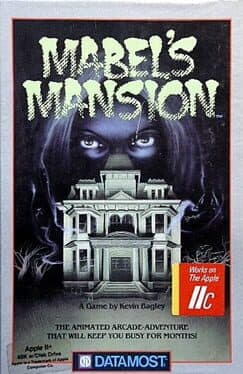
Mabel's Mansion
1984
A 2D action-adventure written by Kevin Bagley in which the player has to solve puzzles in a nintey-room mansion of the recenty died aunt Mabel and collect all the money.
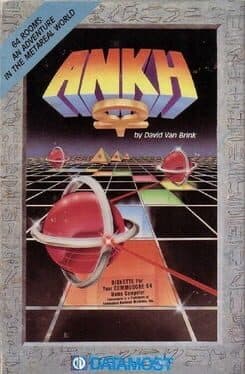
Ankh
1984
In this action game written by David van Brink the player controls a Mindprobe through the 64 rooms of the metareal world of Ankh solving puzzles, collecting treasures and shooting at obejcts that move around.

Earthly Delights
1984
A text adventure in which the player discovers on a world-wide journey who has stolen the peculiar inheritance, the painting Parrish's 'Earthly Delights', that was left by the recently died uncle.
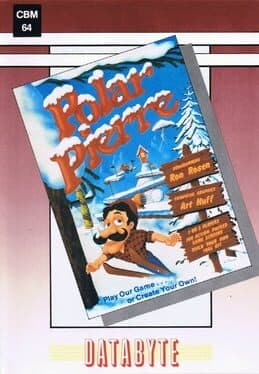
Polar Pierre
1984
A single-screen 2D platformer in which up to two players can compete with each other. The object of the game is for each player to maneouvre his character (Pierre or his cousin Jacques) through each screen, raisng all his flags along the way and then reach as quickly as possible the finish.
Argos
1983
A single-screen shoot'em up written by Ron Lowrance and published by Datamost for the Apple II.

Mating Zone
Datamost1983
A single-screen shoot'em up written by Tom Luhrs and published by Datamost for the Apple II.
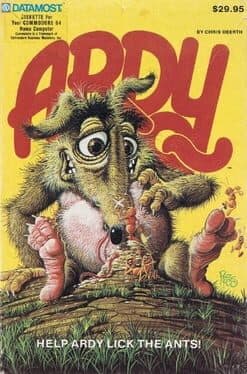
Ardy the Aardvark
1983
A action maze-game based on the coin-op Anteater in which the player controls the tongue of Ardy the aardvark through an underground maze trying to eat drops of food and to evade worms, stinging ants and spiders.
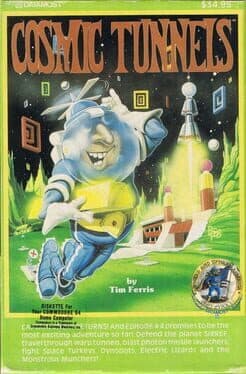
The Cosmic Tunnels
1983
A action game written by Tim Ferris and published by Datamost for the Commodore 64 and the Atari 8-bit family.
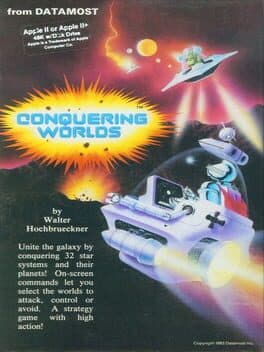
Conquering Worlds
Walter Hochbrueckner1983
A strategy game written by Walter Hochbrueckner and published by Datamost for the Apple II.
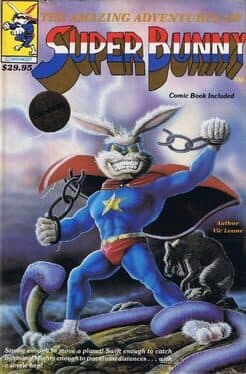
Super Bunny
Datamost1983
A Frogger or Freeway clone written by Vic Leone and published by Datamost for the Apple II, C64 and Atari 8-bit home computers.
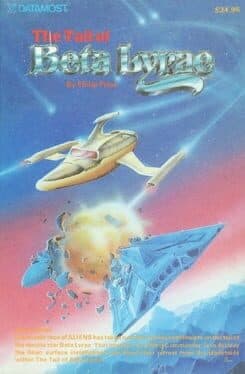
The Tail Of Beta Lyrae
1983
A horizontal scrolling shoot'em up written by Philip Price and published by Datamost for the Atari 8-bit home computers.
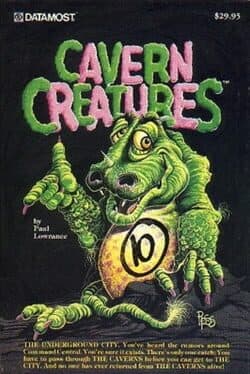
Cavern Creatures
1983
The player controls a small craft, navigating it through a series of winding caverns and tunnels while shooting or avoiding obstacles. The caverns scroll from the bottom of the screen to the top at a fixed speed, so the player must always move forward.
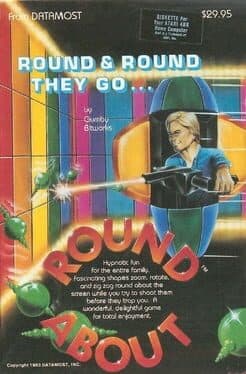
Round About
Gumby Bitworks1983
Abstract shoot'em up for the Atari 8-bit, Apple II and Commodore 64 home computers.
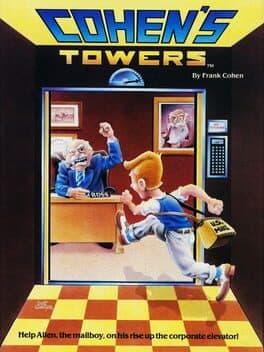
Cohen's Towers
1983
A platformer written by Frank Cohen and published by Datamost. The player controls the delivery boy Allen picking up packages which are scattered around the floors of a tower and delivering them to the mail drop.
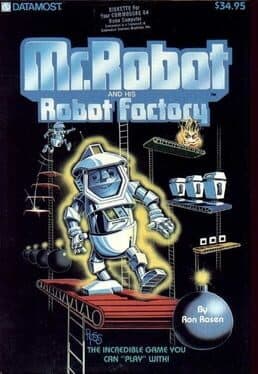
Mr. Robot and His Robot Factory
Datamost1983
Mr. Robot and His Robot Factory is a single-player platform game created for the Atari 8-bit family by Ron Rosen and ported to the Apple II and Commodore 64. The music for the Atari 8-bit version is by Gary Gilbertson (using Philip Price's Advanced Music Processor) and published in 1984 by Datamost. Robert McNally performed the Apple II translation.[2] The player controls a humanoid robot that must climb and jump its way through a factory. The factory is filled with suspended platforms, ladders and conveyors belts. The game includes a built-in level editor.
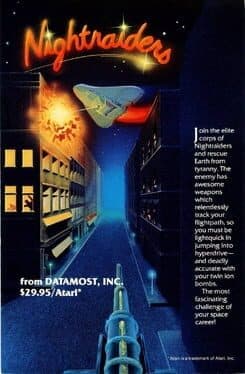
Nightraiders
Sunware Development Company1983
A vertical scrolling shoot'em up written by Peter Filiberti and published by Datamost for the Atari 8-bit home computers.
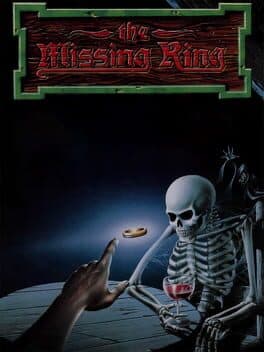
The Missing Ring
Datamost1982
A fantasy adventure RPG in which up to 5 players can take part as they attempt to find the wizard's ancient ring.

Pig Pen
TMQ Software1982
A reverse Pac-Man clone in which the playable character leaves dots instead of collecting them. Developped by TMQ Software and published by Datamost for Apple II and PC systems.
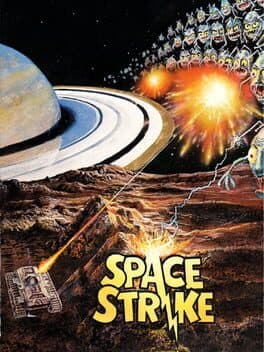
Space Strike
Datamost1982
Space Strike is a commercial Space Invaders clone.
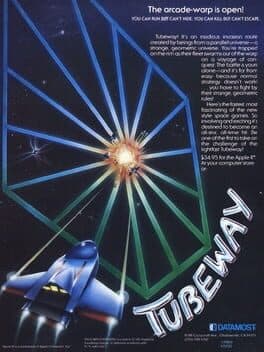
Tubeway
1982
A Tempest inspired shoot'em up written by David Arthur Van Brink and published by Datamost for the Apple II.

Pandora's Box
Lotus Lynn1982
A space themed arcade adventure in psychedelic pixel arts, collect coins to customize your ship color and background as you get through far away galaxies.
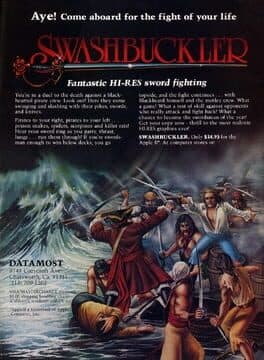
Swashbuckler
Datamost1982
Swashbuckler is an early fighting game for the Apple II family of computers, created by Paul Stephenson and published by Datamost in 1982. The player controls a sword-wielding swashbuckler who must fight and dispatch various attackers. Combat occurs in a wooden-beamed ship's hold littered with skeletons and cobwebs, which the player views from the side.
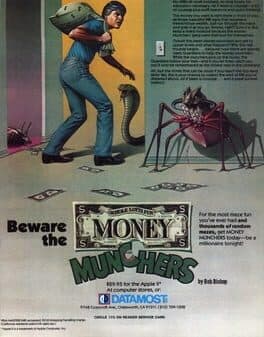
Money Munchers
1982
In this action game, written by Bob Bishop, the player tries to run through a maze collecting money that is lying around.

Mars Cars
Datamost1982
A action game in which the player controls a vehicle through mazes on Mars while avoiding the vicious Mars Cars and collecting Martian treasures.
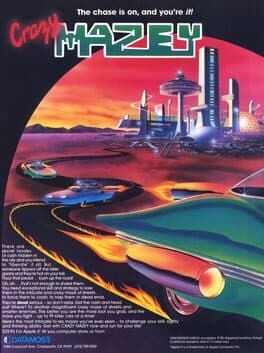
Crazy Mazey
1982
A action game written by Ron Meadows and published by Datamost for the Apple II. The player's goal is to capture all the cash in the maze without being caught by enemy cars.
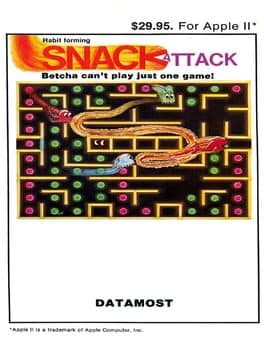
Snack Attack
1982
A Pac-Man variant written by Dan Illowsky and published by Datamost for the Apple II.
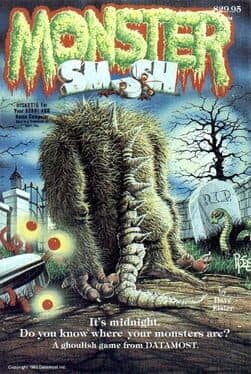
Monster Smash
The Software Farm1982
Monster Smash is a side view single screen platformer where your task is to capture all the monsters that are partying around the local graveyard. The screen has four rows of platforms containing four gravestones on three of the levels and part of the platforms can be turned 90°. The partying monsters appear from the top and left of the screen and move to the right of the screen along the platforms. Turning the platforms makes the monsters move downwards when they hit the turned parts and head to the bottom of the screen. Pressing the fire button makes the gravestones move up and down and when a monster hits a gravestone then they are captured. If the monster hits the other side of the screen then they have escaped and let too many escape, shown by a gauge, then it is game over. Once a certain amount of monsters have been captured then you move to the next level. Before you start the game you can select the level number from one to nine.
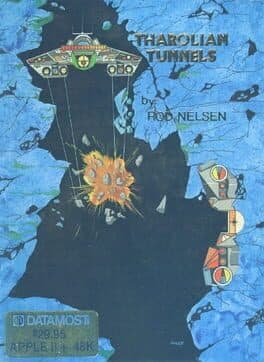
Tharolian Tunnels
1982
A shoot'em up written by Rod Nelsen and published by Datamost for the Apple II.
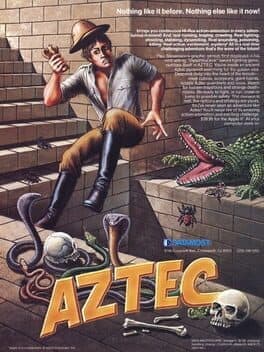
Aztec
Datamost1982
In your search for the Idol you clamber through ancient ruins, evading traps and monsters while searching chests for some rare but much needed items to help you in your quest.
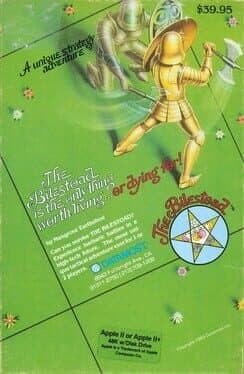
The Bilestoad
1982
In The Bilestoad, players control "meatlings" that hack and battle with axes and shields from a top-view perspective. Although the game may seem medieval, the backstory in the manual explains that the axe fighting is actually a future virtual reality game designed to reduce real violence.
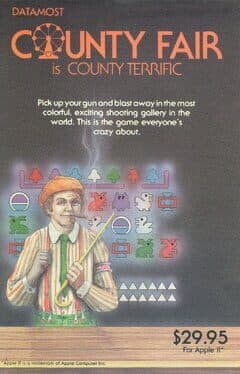
County Fair
1981
A shooting gallery game similar to Sega's Carnival written by Dan Illowsky and published by Datamost for Apple II.