-
Average rating
9
Games
0
Votes cast
Heartbeat
Shipped Titles
Games (9)
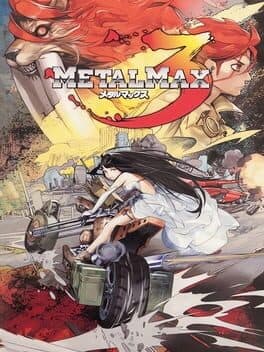
Metal Max 3
Cattle Call2010
Metal Max 3 (メタルマックス3 Metaru Makkusu Surī) is the seventh entry in the Metal Max series (besides Metal Saga series). It is a vehicle combat RPG produced by Cattle Call and co-published by Kadokawa Games, Enterbrain, and Crea-Tech for the Nintendo DS exclusively in Japan in 2010. In 1993, Metal Max 2 was published by Data East, who retained the trademark rights to series until its closure in 2003 and the liquidation of its intellectual properties in 2004. In April 2009, Enterbrain (Kadokawa's subsidiary) obtained the rights and published Metal Max 3 the next year. It is the first numbered entry in the series in 17 years. A remade version in DS of Metal Max 2 was published in 2011, and used Metal Max 3's engine. Similar with its predecessors, the game is open-ended and non-linear.
Metal Saga: Hagane no Kisetsu
Crea-Tech2006
Metal Saga: Hagane no Kisetsu (Japanese: メタルサーガ ~鋼の季節~, literally Metal Saga: Season of Steel) is a post-apocalyptic role-playing video game developed by Crea-Tech and published by Success in 2006. It running in Nintendo DS and it is a full touch screen controlled game. Metal Saga: Hagane no Kisetsu is the fifth game of Metal Max series. Unlike its predecessor Metal Saga, the game wasn't released in North America. And in 2007, a sequel was released on mobile phone as an incarnation of Metal Saga and was released in Japan in 2007. This entry is very different with original games. For example, multiple characters sit in only a tank instead of one person sit in one, and using "durability" instead of tank's armor.
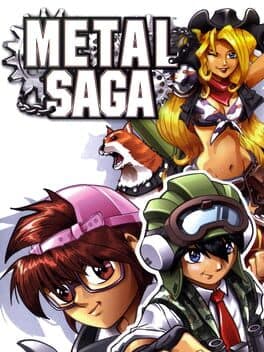
Metal Saga
Crea-Tech2005
A follow-up to the Metal Max games, Metal Saga is set in the same post-apocalyptic world as its predecessors - a world populated by bounty hunters, rangers, bandits, and mutant monsters. You take the role of a bounty hunter who has to travel the world, looking for "wanted" people. Accompanied by a soldier, a mechanic, and a cyborg dog, the hero must survive a journey west that will ultimately take him to remote places and lead him to battles against evil. Metal Saga has a less linear story line that one would normally expect from a Japanese RPG - a story line that develops according to the missions you decide to take, which in their turn lead to new events and finally to different endings. The combat system features traditional party management and turn-based battles, with the addition of Metal Max's trademark tank combat. When you acquire tanks for your characters, you can use them in battles. Tanks get damaged and broken, but you will be able to customize them by finding parts scattered across the world and assembling them to build new models. Based on the model of tank many different kinds of weapons, cannons, and accessories can be equipped to it, making for hundreds of different options. Tanks can even be given a custom paint job that is saved to the memory card.
Itadaki Street 3
Tamsoft2002
The third sequential version of the popular Japanese board game from Enix.
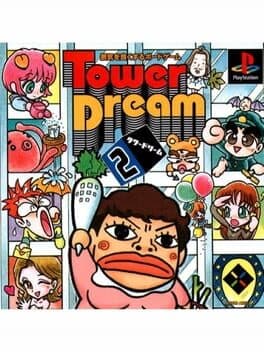
Tower Dream 2
Crea-Tech1998
Tower Dream 2 is the sequel to the SNES game that features 13 different selectable characters and 13 different boards to play, and up to 4 human players can play at the same time using the multitap function.
Genjuu Ryodan
Crea-Tech1998
Genjuu Ryodan is a Strategy game, developed by Crea-Tech and published by Axela, which was released in Japan in 1998.
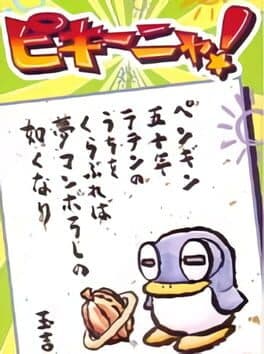
Pikiinya!
Crea-Tech1997
Pikiinya! is a Japan-exclusive action-puzzle video game developed by Crea-Tech and published by ASCII, which was released in 1997 for the Super Famicom. Pikiinya! takes the Tetris-esque formula of blocks falling from the sky, and adds gyrating tropical-type penguins. They excite easily, and sleep when they are alone and/or bored. These penguins just want to live in peace, and throughout the story mode in the game they must constantly fight against people that want to capture them including poachers, witch doctors, and mad scientists. The characters were designed by Tamakichi Sakura (the artist of Super Mario Adventures). The game designers were Hiroshi Miyaoka and Tomoki Tauchi. The voices are from Maki Yagita.
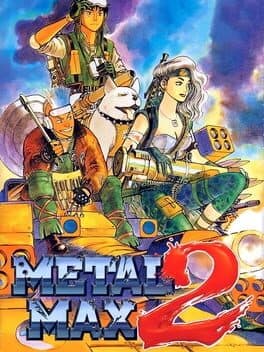
Metal Max 2
Data East1993
Metal Max 2 is the second entry in the Metal Max series. It was a vehicle combat RPG published in Japan by Data East for the Super Famicom in 1993. Ten years later, the game was ported to the Game Boy Advance with a few new bounties by Now Production under the title Metal Max 2 Kai. On December 8, 2011, a full remake with upgraded graphics in the vein of Metal Max 3 and using its game engine was released in Japan for the Nintendo DS and titled Metal Max 2 ReLOADED. Metal Max 2 ReLOADED added a shared inventory, option to play as a female, okama or reijin, new character classes, subclasses and skills from Metal Max 3, new characters, bounties, bosses, sidequests, locations, items and vehicles, expanded storyline and backstories of characters and monsters, increased difficulty over the SNES and GBA versions, the final boss of the game has a third form and a new game+ option has been added.
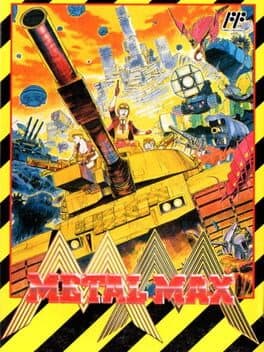
Metal Max
Crea-Tech1991
Metal Max is a 1991 vehicle combat role-playing video game developed by Crea-Tech and published by Data East for the Nintendo Famicom exclusively in Japan on May 24, 1991 and later re-released on the Wii Virtual Console on April 27, 2010. It is the first of the Metal Max series. Metal Max is set in a futuristic post-apocalyptic world, where the surviving humans cluster in underground villages and ruins while "monster hunters" fight the monsters and outlaws outside.